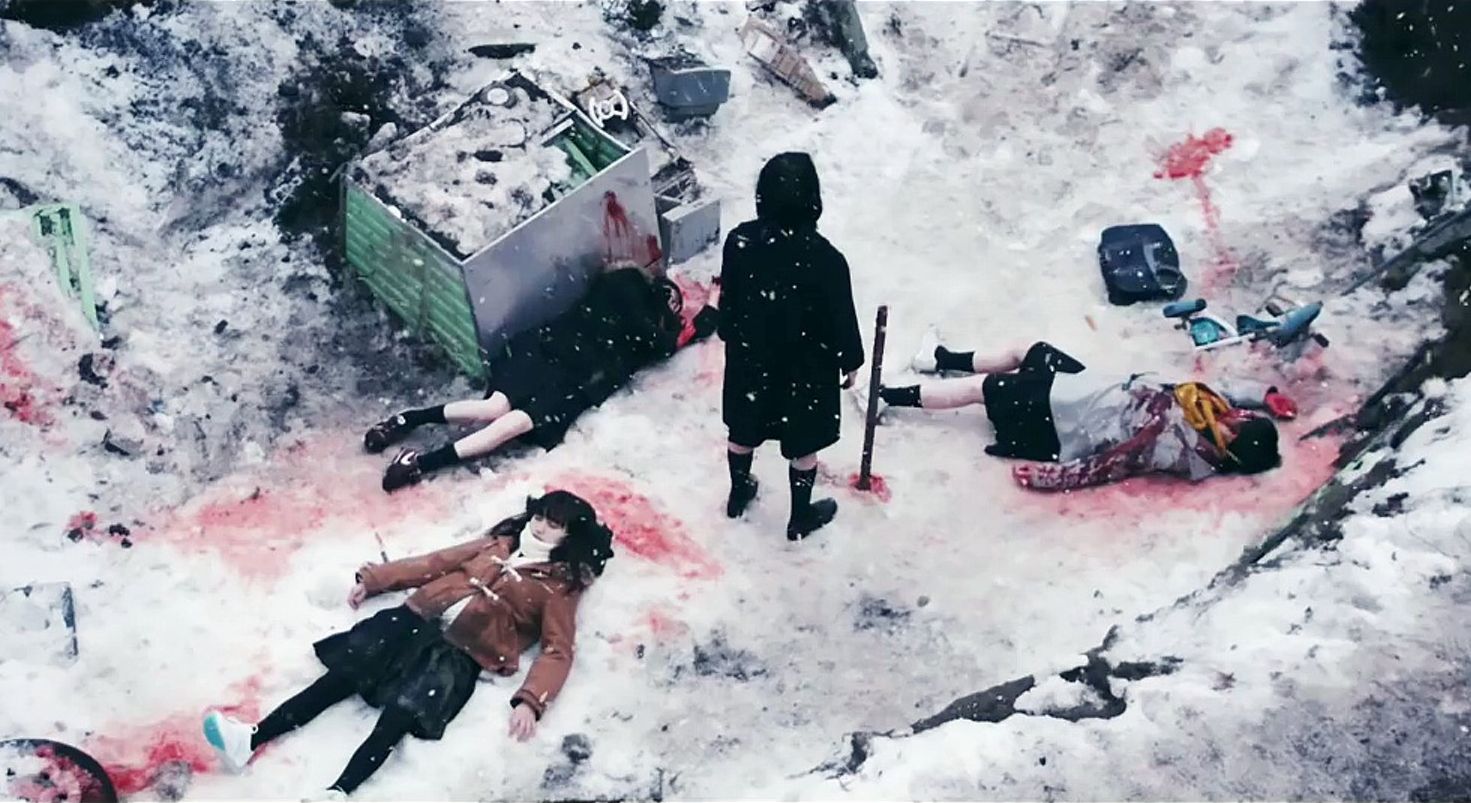
Haruka Nozaki (Yamada) is just a couple of month away from graduating junior high. But will she make it? Because her life is being made a living hell by bullies at the school. Rumour has it that she “stole” a boy, Mitsuru Aiba (Shimizu), from another girl, Taeko Oguro (Ôtani). As a result, Haruka has become the relentless target of other female students. The staff are no help: the school is going to be closed after this class graduates, and the teachers consequently couldn’t care less. Indeed, Haruka’s father, a substitute teacher – that’s why she ended up transferring in – is being victimized by the male bullies, in a similar way to his daughter.
Things come to a head after fire destroys Haruka’s home, killing her parents and putting her perky little sister in the hospital with severe burns. And when I say, “come to a head”, the rest of the film is filled with some of the more disturbing violence I have seen in recent years. The attitude here feels almost like Battle Royale, in that the people inflicting this level of savagery are basically kids. They are not supposed to be this way, folks. There’s not even the distancing element of a dystopian future, which Battle Royale enjoyed. Nor it is simply Haruka. You can’t claim “one bad apple”, because there are a lot of people here, who seem to live by the motto, “Hurt people, hurt people.”
The famous quote, “The only thing necessary for the triumph of evil is for good men to do nothing,” often misattributed to Edmund Burke, came to mind here too. Because, while Mitsuru initially pushes back against the bullies targeting Haruka, it’s a half-hearted effort. Though I guess it’s better than the completely useless adults, from parents through pedagogues, to the all but entirely absent authorities. By the end though, you will perhaps be left questioning whether anyone here genuinely falls into the category of “good.” Everyone has their traumas, which have left them negatively impacted, and many are paying it forward to others. This is most apparent in the character of Rumi Sayama (Ôtsuka), one of the bullies’ victims, who ends up joining their clique.
Naitô directs things with a bleakness appropriate to the story. Much of it unfolds against a backdrop of snowy weather (the title, incidentally, refers to a winter flower). If there’s one shot of red, red blood splattering across a snowdrift, there’s a dozen. But it’s such an iconic image, I can’t blame him for using it more than once. I note that Naitô himself used to be a teacher. This isn’t the only case where that previous career seems to inform his work, if the title of a previous movie is any guide: Let’s Make the Teacher Have a Miscarriage Club. I’ve seen enough movies that my level of concern for the Japanese educational system, and those who go through it, is certainly non-zero. This ensures it won’t be going down any time soon.
I’ve to say this anime show is kind of unusual. While after the show there were some attempts to use the story as the basis for a manga series, it is not based on one – unlike what feels like 95% of all anime – but instead on a “visual novel”. I have absolutely no knowledge what a “visual novel” is. Wikipedia has this to say about them: “Visual novels are often associated with the medium of video games, but are not always labeled as such themselves. They combine a textual narrative with static or animated illustrations and a varying degree of interactivity. The format is more likely referred to as a visual novel game.” Well, so much for that. I guess it is similar to these old, “choose your own adventure” books of my youth, where you would make a choice at the end of the page, and depending on your decision would turn to a specific, other page, therefore creating an individual story narrative.
Canaan was inspired by a bonus on Wii visual novel 428 Shibuya Scramble. The game itself, I believe, featured live cut-scenes with real actors, but had extra content consisting of drawn anime-style images. As the game was extremely successful at the time of its 2008 release, it is unsurprising that an anime spin-off was produced in 2009. The original concept was by Type-Moon, with anime studio being P.A. Works. The original visual novel could go into different genres, depending on the protagonist the player chose. So it’s significant that the genre of the anime series also changes over time. In the beginning it can rightly be called a mystery, since you have no idea what happens here and why. Yet at the very end, it is full-blown action with a conspiracy plot sprinkled in, and elements bordering on science fiction. Albeit more “science fact”, because they are not far from possible reality, though quite exaggerated.
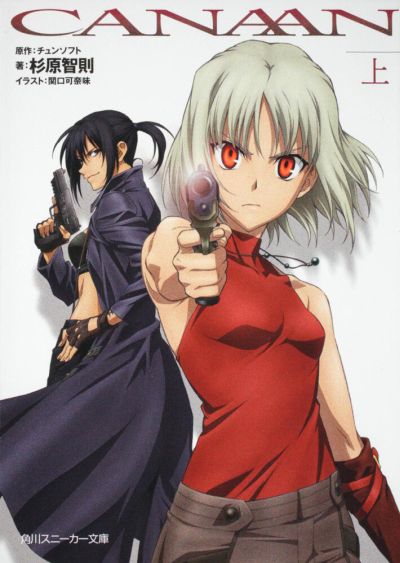
The new story starts two years after the “Shibuya event”, a viral attack on a train in Tokyo. Reporter Minoru Minorikawa journeys to Shanghai to find interesting stories, accompanied by young assistant photographer Maria Osawa. Osawa was involved in the event and came close to death, but was saved from the deadly virus by her father Kenji. Due to her trauma she has no clear memories of what happened there. In Shanghai, “there are a lot of stories, if people only opened their eyes to see them”, as Osawa puts it. A number of mysterious deaths lead her to meet Canaan again, a mysterious girl who once saved her life and that she longed to see once more.
Obviously, the girls feel strongly for each other and there are traces of the so-called “yuri” genre (girls in love) here. But Western audiences should be careful not to think this equates to lesbianism. Yuri is seen by many fan-girls in Japan as something “pure” and “cute”. Many fans would feel embarrassed if something so concrete and direct as sexuality was superimposed on such a relationship. I guess there are cultural particularities that cannot translate 1:1 into our Western cultural understanding, because they are so very different. Anyway, what’s at stake here is much bigger. One problem is, there are a lot of different things, elements and characters introduced at the beginning, which initially don’t make sense at all. Only slowly, as the story progresses, is it revealed how they connect with each other. I wonder if players of the game maybe had it easier?
We are introduced to all the main characters in the first episode (of 13), but they still have to meet each other and their knowledge is not the same. Minorikawa feels there is a story that he can’t quite grasp, Maria is happy to meet Canaan again, but after a key incident realizes that her friend is a trained assassin. Santana, the aggressive owner of a Karaoke bar, with his mute buxom employee and girl friend, Hakko, also doesn’t reveal his big, dark secret. There is a girl called Yunyun popping up in several different jobs around the city. And why are we being shown dangerous terrorist Alphard, who just escaped a prisoner transport and obviously plans something big, together with her companions, Lian Qi and her servant Cummings?
Then we are confronted with some words at the beginning that we do not yet understand, such as UA virus, borners and unblooms. I’m not really complaining, because I’m actually in favor of a movie or series not giving everything away too early. It’s fine if audiences for once have to work things out for themselves. I liked that aspect of the show very much, but can understand that those less impressed, or just here to see some battling babes, might be disappointed, or unable to connect with the show. Though, you don’t have to be an academic to understand the story. As the story progresses and the blanks are filled in, bit by bit, you start to see the whole. There is also more than one story being told. The characters all have individual parts and roles in the big picture, and are driven not exclusively by “the big thing”, but also more personal motivations.
It turns out there were secret viral experiments, conducted on the population of a small town by the CIA, through the criminal organisation “Snake”. This caused most inhabitants to die, while the survivors developed extraordinary abilities, but with downsides. For example, Hakko can’t speak anymore because her voice creates waves that affect the brains of those who hear her, and could kill them. Yunyun needs medication to not die before her time, and so on. The aim of the experiments was to create another Canaan, as she is a natural-born synesthete (don’t worry, I’ll explain shortly), who was brought up and trained, like Alphard, by the terrorist Siam. Alphard felt betrayed when Siam gave the new girl the same name as her – Canaan – and Siam started to change under the influence of positive-minded Canaan. So she killed Siam. This backstory was included as a bonus with the visual novel, but since you couldn’t assume viewers had played the game, it had to be mentioned in the anime, and becomes a key reveal here.
Synesthesia is a special condition some people are born with, meaning that some sensory perceptions can be “taken over” by other ones. For example, sound can be perceived as colours by these individuals. But it can take many different forms. In Canaan’s case, she “sees the colour of people”, meaning she can tell how they feel right now, as every emotion has a specific color. When she loses this ability at one point in the story, she feels helpless. With that said, the series does not portray synesthesia realistically, rather like some kind of superpower, more or less.
A confusing element is that the characters sometimes do not act or speak as we in the West would. Therefore, it can be quite the task to figure out why they do what they do, and what their motivations are, as they do not necessarily express themselves in a clear manner. Take Alphard, who lets Canaan off the hook more than once. One may wonder why she does that. But if you listen carefully, it becomes clear: Alphard defines herself through her own hatred, and wants Canaan to feel the same. She needs Canaan to be at her best when they fight. She does not just want to overcome Canaan, but destroy what she sees as the embodiment of Siam’s corrupted spirit. In a way, they are fighting about the value of the philosophical legacy belonging to their stepfather and teacher. That’s no small thing for an action story.
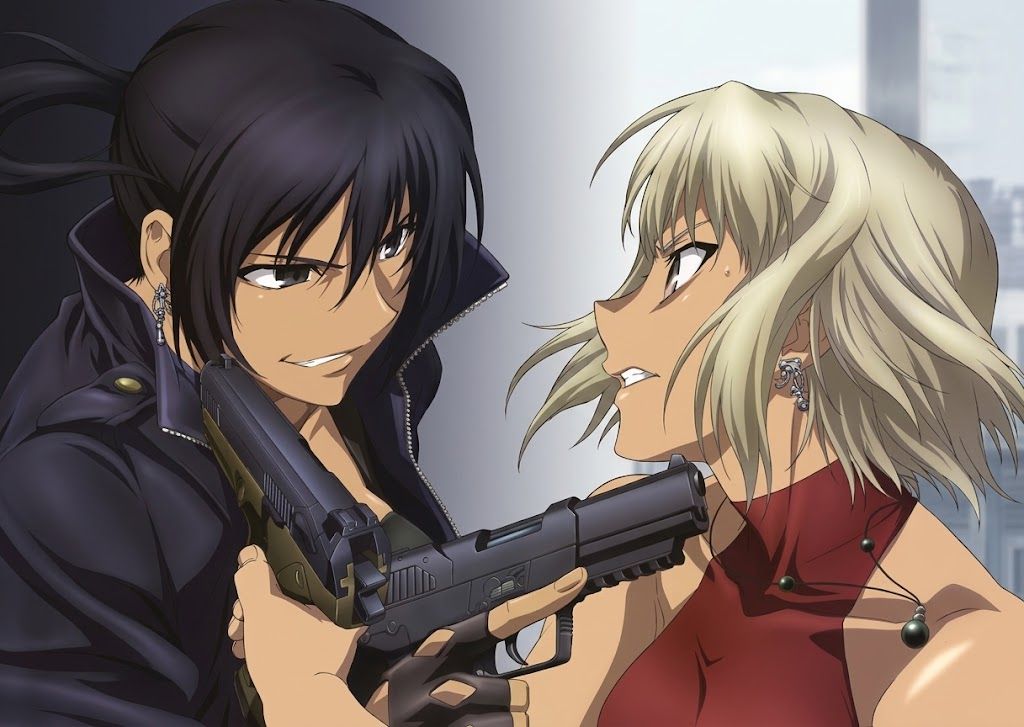
You could say that this is about two women finding closure with the past. Their different attitudes to deal with it become clear: While Canaan suffered as much from the loss of Siam as Alphard did, she was able to move on and establish a new positive relationship with Maria. While Alphard, despite becoming head of the terrorist organization “Snake”, has been eaten up by her hatred and suppressed feelings of guilt. She also can’t reciprocate the obsessive and essentially destructive feelings her “little sister” Lian Qi had for her. Oh, yeah: Lian Qi… She would be a feast for a psychiatrists’ conference! On a deeper level this is not really about bombs, anti-terrorist summits, political maneuverings (the US president and his VP don’t leave a good impression here), human experiments or even the big shoot-outs. It’s about the loneliness and isolation the individual characters suffer, and their hope of finding love and possibly redemption. There is a deep, poetic quality in the series, expressed in the dialogue, often less matter-of-fact but hinting at deeper meanings or feelings.
Some of the scenes depicted here are graphic and definitely not appealing. One scene involves a woman having sex with a dead man which, while you understand the intention behind it, is painful to watch. Another shows surviving town inhabitants that have lost their minds and appear very much like zombies in their behavior. The “unblooms” mentioned above, die a terrible death when they come into direct contact with sunlight. I definitely wouldn’t call this an appropriate show for younger teens. The grown-up storylines recommend it for older viewers, who can better appreciate the nuances it offers. At the same time, the drawing style is very beautiful – as to be expected, given those involved in the production – and the score invokes a haunting, dynamic, sometimes even epic and melancholic feeling.
The final showdown between opponents – not necessarily enemies – Canaan and Alphard is memorable. The audience wonder who will survive, the filmmakers having already demonstrated that they have absolutely no qualms about killing off main characters. While avoiding spoilers, I must say I have never seen a character exit a story in such an incredible manner! The very last scene, which is kind of an Easter egg, coming when the end titles play and after it, suggests a potential continuation of the story (similar to the open ending of Arcane) that never happened. That said, the resolution felt very fitting and “round”, so to speak.
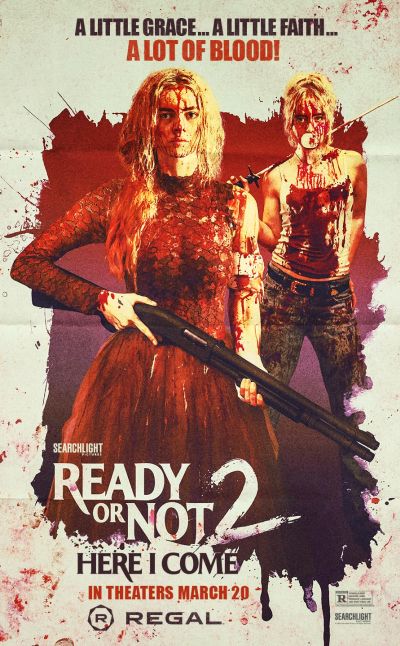
Despite a slightly clunky title, I enjoyed this a little more than the original. It helps that there’s no need for build-up or explanations. We join things immediately after the end of part one, with Grace MacCaullay (Weaving) staggering outside the mansion where she battled and beat the Le Domas family. Understandably, she ends up in hospital and handcuffs, where her sister Faith (Newton) shows up. But it turns out the Le Domas family were just one part – albeit the head – of a larger, Satanic organization, the Council. The remaining families now need to determine a successor. Whoever kills Grace gets to take over, so the siblings are quickly abducted and taken to the Council’s country club complex.
Grace refuses to take part, but using Faith as leverage, they compel her participation. The siblings must battle for survival and, again, try to survive to dawn against a litany of more or less competent adversaries. This was one my main criticisms about part one: the Le Domas members were so inept as to be no threat. While, in some ways, this is true again here, the film does at least lean into the humourous possibilities. The peak is likely reached when Grace has to face off against Francesca, her late husband’s ex. There’s some rocket launcher incompetence, followed by some pepper sprayage, which leaves the two adversaries thrashing about like blind squid, while an 80’s classic tune plays. It’s awesome.
There is a bit of a lull thereafter, because Faith is again used against her sister. This compels Grace, once more, to don bridal attire, as a means of avoiding further bloodshed. Well, “postponing” might be closer to the truth. The ceremony goes off about as well as a typical wedding held by a professional wrestling federation – though with considerably more blood than even the most hardcore fed. It’s all a lot of fun, with the Council families providing a slew of fun characters, in addition to its lawyer (Wood). It provides an interesting contrast in family dynamics between the MacCaullays and the Danforths, represented by Ursula (Sarah-Michelle Gellar – and, yes, there are some potential Buffy references) and her psycho brother, Titus (Hatosy).
I liked the fact that it kept any actual social commentary very much secondary. What makes the Council evil is not particularly race, class or money. It is that they are freakin’ Satanists. The film’s other main strength is Weaving, who cements her position as perhaps the best of the next generation for action heroines. She runs through the whole gamut of emotions here, and it is extremely easy to root for Grace. But let’s be honest, the actress would be forgiven if she had simply worn a “not this shit again” expression for one hundred and ten minutes. While the poor box-office here means it’s unlikely we’ll see a part three, long may Weaving’s shotgun continue to smoke.
Dir: Matt Bettinelli-Olpin and Tyler Gillett Star: Samara Weaving, Kathryn Newton, Shawn Hatosy, Elijah Wood
I previously reviewed an entry from the middle of this series, Ghost in the Cowl, and – probably unsurprisingly – a major complaint was the sensation of being dropped into the middle of the series. This was to some extent due to the book not being clear about it being the tenth (or eleventh, depending on source) entry, since the cover said “Ghost Exile #1”. But I’m not one to hold a grudge, and accepted the chance to pick up the actual first three parts for less than a dollar. It definitely helps, following the story from the beginning. Though at 1,134 pages, you’ll understand why it took four years from purchase to review publication.
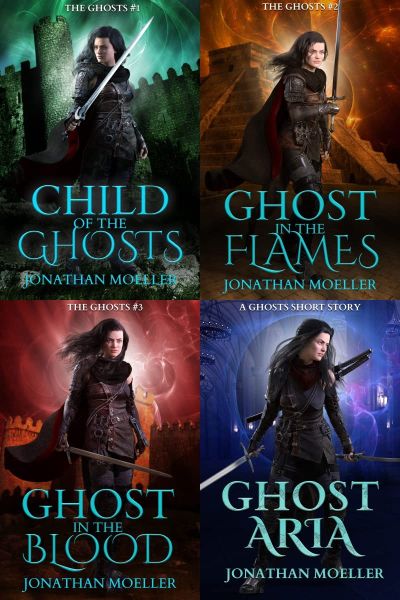
When it begins, the young heroine Caina Amalas is living a somewhat unhappy life, mostly due to her mother being borderline abusive. Eventually, there’s nothing “borderline”, as Mom uses dark magic to turn her husband into a vegetable, and sells his daughter off to sorcerer Maglarion. Caina’s virgin blood is very powerful for his arts, and she is “milked” for all she can provide, kept just this side of death. Fortunately, while the wizard is out, an attack on the facility frees Caina, and she is recruited and trained by the near-mythical group responsible, the Ghosts. These are the Emperor’s spies and assassins, who swear an oath to counter his enemies, by any means necessary.
In particular over these three books, the enemies are those who practice necromancy, beginning in Child of the Ghosts with Maglarion. Now an adult, Caina is very keen to see him receive his just deserts, although in that time, he has become much more powerful. He’s now working towards a ritual which will render him immortal – albeit at the cost of a city-wide human sacrifice. The second book, Ghost in the Flames, sees Caina investigate an increasingly disturbing trend of pyromancy in the city of Rasadda. Finally, in Ghost in the Blood, she has to stop a plot to open a pit under Marsis, which has been sealed for thousands of years – for very good reason. All of these require her to use her talents, both in combat and disguise.
It actually might be a case where reading them one after the other works against them, because they might be a little too similar. I get it is Caina’s specialty, due to her heritage. Yet is there no other threat to the Empire except for power-obsessed magicians? That minor quibble aside, this was a very enjoyable trilogy. The characters on both sides are particularly well-done, with Caina and her allies very likeable: she may not be the biggest bad-ass in the group, an honour likely reserved for Ark. The villains are also suitably terrible people, and there’s almost a Lovecraftian bent to some of the horrors which are unleashed. More will likely follow. Let’s just hope some other adversaries are found for Caina.
Author: Jonathan Moeller Publisher: Azure Flame Media, available through Amazon, as an e-book only. Books 1-3 of 19 in the Ghosts series, plus a bonus short story.
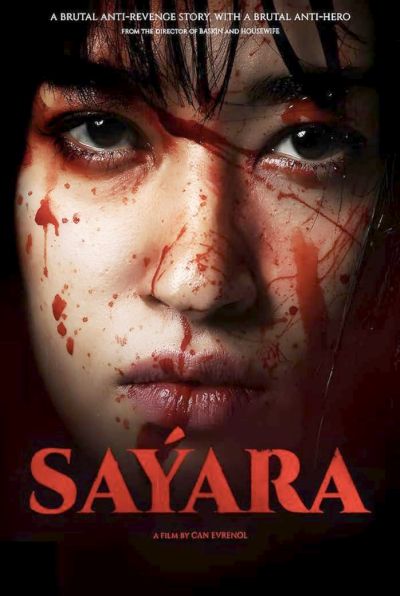
Well, “delight” might not quite be the right word. But who am I to let facts get in the way of a good review tagline? It’s more of a Turkish nightmare, probably the most brutal rape-revenge movie I’ve seen since… Well, probably Revenge. The director is best-known for Baskin, generally considered the best horror movie from Turkey. Though, full disclosure, I wasn’t that impressed by it: strong on atmosphere, but short on a coherent storyline. That’s not an accusation which can be levelled at this. However, the level of savagery and bloodshed arguably puts this into the horror genre as well. It’s the story of two Turkmenistan sisters, Sayara (Kocabiyik) and Yonca (Kosar), both of whom are involved, in different ways, with gym owner Bariş Ataberk (Kizilirmak).
Yonca is having an affair with the married man. But she has been able to leverage this into getting a job at the facility, as a cleaner, for the much quieter Sayara. Bariş offers Sayara a job as a trainer, teaching female clients self-defense, knowing of her skills in this area, but she declines. Worse follows, when Yonca catches Bariş cheating, and threatens to reveal all to his wife. This does not go down well, and ends in Yonca’s death, which is called a suicide officially. It helps that Bariş’s father, Halil Ataberk (Inal), is a senator with a lot of political pull, and can ensure no action is taken against his son.
No official action, anyway. While Sayara may have seemed the quiet and meek sister, we see in flashbacks the relationship she had with her soldier father – now, notably absent. One senses a lot of darkness there. Indeed, he tells his daughter. “I committed many great sins. It doesn’t matter. The darkness in me, is in you too, Sayara. But if someone crosses that line – to you, or your mother, or to your sister – you will go all the way, without blinking. You will go to the bottom of that darkness.” And Sayara does. Boy, does she. Not just against Bariş, but all those involved, even tangentially, and using every weapon at her disposal, from fire to her teeth. The latter provides the film’s most horrific scene.
This establishes its direction early. The first spoken line is “Son of a whore!” and it’s something of a mix of social complaints thereafter. Class, nationality and gender all come into play here in the power dynamics. Though it’s not as one-side as it might seem: Yonca is hardly blameless, and seems to have a fondness for S&M games, as well as no respect for the sanctity of marriage. However, “blurred lines” hardly excuse what happens to her subsequently, and you’ll be firmly behind Sayara on her relentless quest for the bottom of that darkness. You may not find the ending fully satisfying, in the traditional sense. But I’m hard-pushed to deny it’s appropriate, and you will certainly remember it.
Mamoru Hosoda is one of the senior figures in Japanese animation, with thirty-five years of experience since he joined Toei Animation in 1991, after graduating from college. He made his feature debut with One Piece: Baron Omatsuri and the Secret Island in 2006, though this came only after he had almost directed Howl’s Moving Castle for Studio Ghibli. He subsequently left Toei, to go freelance, and his works since have met with both critical and commercial success. Mirai was nominated for an Oscar in 2019 as Best Animated Feature – the first non-Ghibli film to be so honoured. 2021’s Belle , loosely inspired by fairy-tale Beauty and the Beast, was the second-biggest movie at the Japanese box-office that year, domestic or foreign.
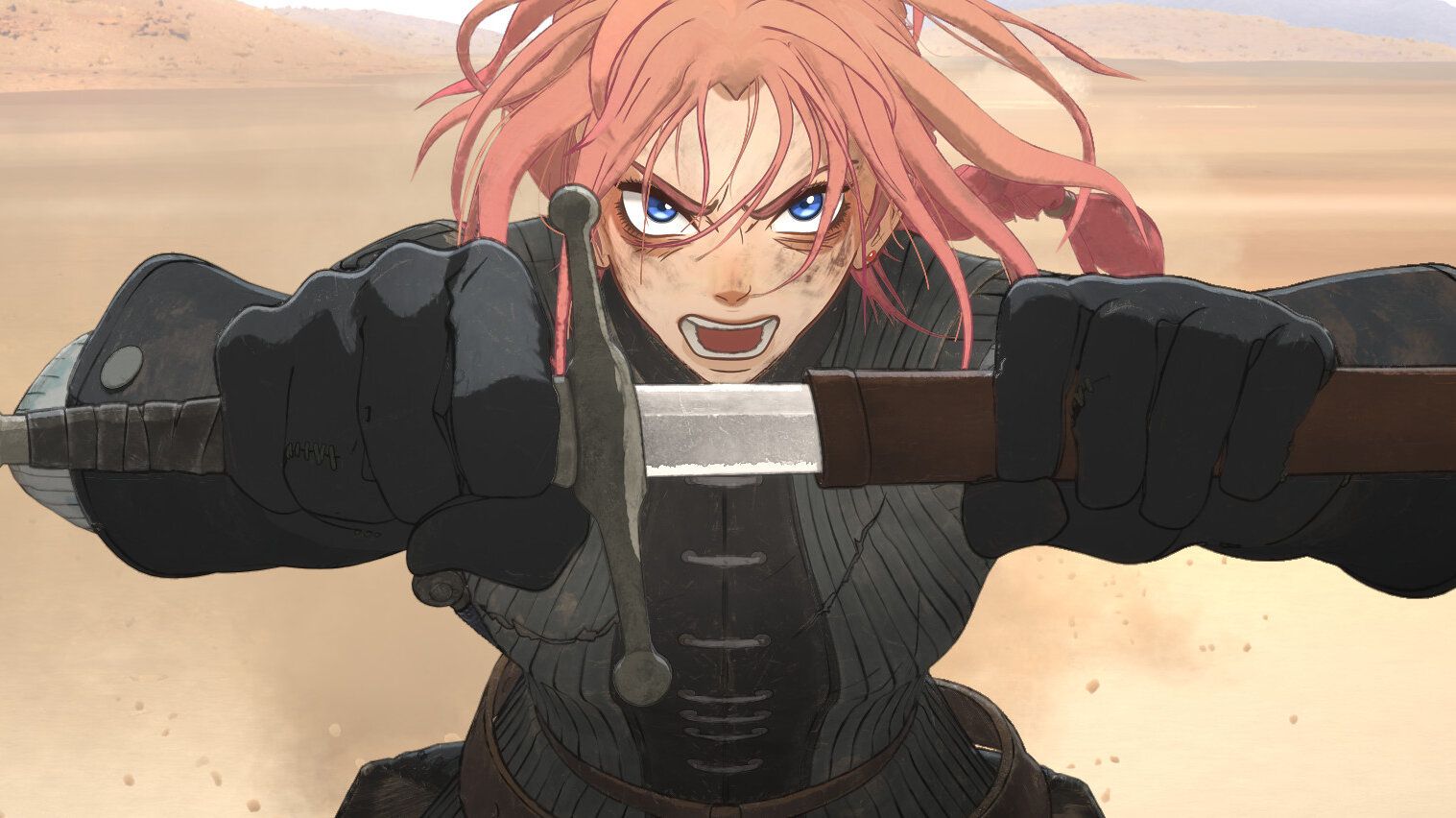
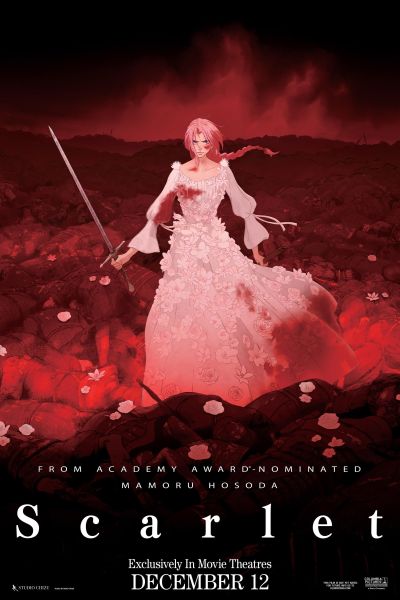
His latest movie and the follow-up to Belle, Scarlet, was a long production, taking four and a half years to complete. It mixes traditional 2D cel animation with computer-generated animation, and is a take on Shakespeare’s story of Hamlet, with its titular heroine seeking vengeance on the people who murdered her father, the monarch of 16th century Denmark. Her first attempt backfires, when she consumes the poison intended for her uncle Claudius, the leader of the plot. Scarlet wakes to find herself in the purgatory of the underworld. She needs to complete her revenge in order to move on to the Infinite Land; otherwise, her spirit will collapse into nothingness. It turns out that Claudius is in the underworld too…
Both Dieter and Jim watched and reviewed this one independently. Below, you’ll find their respective ratings and thoughts, with Dieter going first.
★★★★★
“The undiscovered country from whose bourn no traveler returns”
On the fourth anniversary of Russia invading the Ukraine a movie like this hits harder, I feel. At the same time, the Berlin Film Festival has ended and while a whole lot of boring message movies got awards, this one was not even in competition. I guess it also won’t win any Oscar awards. For the same reason: it’s just too good. It would blow any competing features out of the water. And yes, this is a strongly subjective review. Watch the movie and judge for yourself, I suggest.
But… I’m already starting with the end. I was honestly blown away by this movie. While neither the idea of a female Hamlet is new (see the 1921 Hamlet: The Drama of Vengeance with Asta Nielsen) nor doing a Shakespeare-inspired anime (there is the anime series Romeo x Juliette from 2007) what director Mamoru Hosoda has done here for Studio Chizu, is fascinating. No idea why he chose the story of Hamlet as an entry point: perhaps because it’s the most universally-known revenge story next to Death Wish? It would have worked just as well with new, fictional characters and other names.
I didn’t mind. It only serves as a basis on which the director discusses the general but often overlooked and therefore more essential questions of humankind: What defines our humanity? What do we live for? What does death mean? What is love? What can be forgiven? What cannot? How much are we shaped by the environment we grow up in? And if we spread a loving and peaceful attitude can we change the world for future generations?
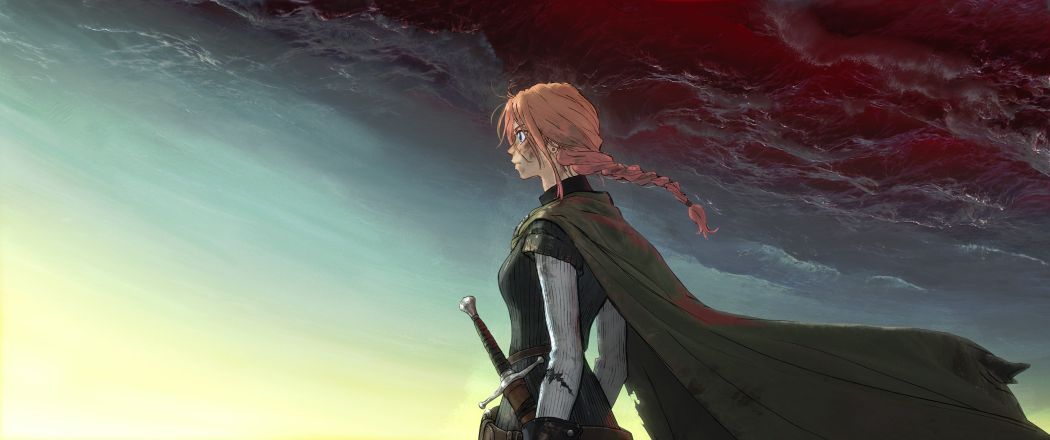
These are big, important ideas which do not normally form a part of “entertainment culture” or political discussions today, as everyone is too much occupied in serving their own self-interest. Actually, I would locate these questions more in the areas of philosophy and religion. At the same time, the animation style itself is impressive: not just the usual 2D cell animation nor CGI animation. I don’t know how to describe it: while most of it seems classically drawn, many of the backgrounds seem photo-realistic as if they are “real”, including the desert, water, ruins and a jungle. Also overwhelming is the sky of this “other land” which looks like waves, over which a giant dragon flies and occasionally erupts in deadly lightning.
While the visual style takes some time to get used to, this is not necessarily a bad thing. It’s different and new and that’s it. I liked it but I can understand if other people might reject this approach. It’s really a matter of individual taste. Putting all these aspects aside, I found the movie really entertaining. It’s an epic, bombastic movie with a passionate heroine, lots of fights (somehow these medieval Danes seem to have quite some knowledge of martial arts) and – surprisingly – beautiful songs. With Scarlet being shown training hard since her early youth, her fighting larger opponents doesn’t seem that much of an overstatement. She also doesn’t always win, which helps to make the fights look more realistic.
If Mamoru Hosoda might not be as famous or successful as Hayao Miyazaki or Makoto Shinkai (Your Name), so far, he has always delivered excellent and interesting movies. Scarlet is his 8th movie (I challenge the uninitiated to discover his other movies, and especially recommend The Girl Who Leapt Through Time and Summer Wars) and was co-produced by Columbia Pictures. I regret that movies like this only ever run for one day here, and occasionally some more in some tiny cinemas as I think they deserve so much more exposure. Here is hoping, I may have contributed to making this excellent movie more well-known, and create some interest in its potential audience watching it, or at least giving it a chance.
★★★
“Better red than dead.”
Up-front confession: I haven’t seen any of Hosoda’s other work, so am not familiar with the style. Indeed, for a while, I was confusing him with Mamoru Oshii, of Ghost in the Shell and Avalon fame. Which isn’t as much of a stretch as it may seem. Oshii’s work seems to rely a lot on a loose narrative, using the virtual world in Avalon as a convenient loophole through which any plot thread can pass. You could make much the same argument for Scarlet, with the underworld being a realm where stuff simply can happen, because it’s the underworld. I’m not a huge fan of this kind of plot armour, and would likely have been happier if Scarlet had been pursuing her vengeance in the everyday world.
The early stages will feel rather familiar to any fan of Game of Thrones. Scarlet can only watch as her father, a beloved figure, is executed in the name of political machinations. She then vows revenge, and undergoes a rigorous training program to that end. Very Arya Stark. Fortunately (or perhaps not?), it finds its own way after she consumes poison, and Scarlet finds herself in the afterlife. It’s necessarily a shock, but she has the mental fortitude to adapt. She’s joined there by Hijiri, a paramedic from the present day. In effect, he acts as her conscience, continuing to treat the wounded as he had done in life, and questioning the need for her revenge. This becomes especially pertinent after we hear the message Scarlet’s late father had for her.
I cannot fault the visual side of things here at all. Dieter encouraged me to see this on the largest screen possible. Unfortunately, it did not last long in cinemas here: two weeks after release, it was down to showing in just twenty-four theatres nationwide. But having seen it in my living-room, I would not have minded a much larger viewing experience, and can only imagine the impact. It’s not seamless, in that you can often tell which sequences were old-school, and which were zeroes and ones. But the overall effect is undeniably impressive, and on that basis alone, I’d say it deserved an Oscar nomination more, say, than Zootopia 2.
However, as the above likely suggests, I was not particularly impressed with the plot. The basic elements were there – you can’t go wrong with revenge of the Shakespearean kind – but there are elements which seem not to serve this. For example, there’s a significant chunk where Scarlet and Hijiri are simply hanging out with elderly souls. It feels like John Wick paused his revenge, to spend an afternoon helping out at the local senior centre. I guess the eventual aim is that Important Lessons™ need to be learned by Scarlet about the value of life. But if you compare this to the works of Hayao Miyazaki, the moral lecturing here comes over as less than subtle.
I did like the contrast between Hijiri and Scarlet. Interesting that the “caregiver” character here was male and from the present times, while the vengeance seeking warrior was female and out of the middle ages. This subversion of standard tropes is thought-provoking, without needing to deliver any explicit messaging, and the relationship between the pair works well. If you’re familiar with Hamlet, you’ll also get a kick out of some of the references (the versions here of Rosencrantz and Guildenstern are particularly memorable). But any film which uses a dragon – another Game of Thrones nod? – as a convenient prop for the story-line, needs to be answering questions about its scripting. It’s this which stopped Scarlet from being more, for me, than just a well-crafted, pretty thing at which to look.
Dir: Mamoru Hosoda Star (voice): Mana Ashida, Masaki Okada, Koji Yakusho, Kōtarō Yoshida
Once upon an unspecified time, somewhere in the cosmos, a human-like, space-faring race called the qhal (or Qujal, in a later dialect) stumbled upon, and subsequently greatly extended, a system of high-tech Gates, a relic of a vanished civilization, which permitted instantaneous travel to other planets and other times. Fearing that travel into the past would prove dangerous, the qhal forbade it; but they used the Gates to travel extensively in space and future time, building up an empire that oppressed and exploited the various despised other races they encountered. This gave them much wealth and power (and universal detestation from others) –until somebody eventually tried past time-travel. The resulting cataclysm (only dimly surmised in the theories of the subsequent scientists) reached as far as the Gates themselves reached, and proved to be an apocalyptic warping of space-time that destroyed civilizations and worlds in its path. But the Gates themselves survived. We learn all of this from an omniscient narrator in the first part of the Prologue.
The other parts of the Prologue are excerpts of various (fictional) documents. In the Journal of the “Union Science Bureau,” we learn of the formation of a team charged with traveling through the Gates, for the sole purpose of closing or destroying them permanently on the far side, to prevent a repeat catastrophe. (Since nobody knows how many Gates there are, this may be a multi-generational task until the last one is reached; and it’s surely going to be a lethally dangerous mission.) Written on a low-tech, medieval-like world, a short text in the Book of Embry tells us that on “the height of Ivrel” still stand ill-regarded, rune-marked “Staines” [stones] of Qujalish origin and still imbued with their “sorceries,” which if touched produce “sich fires of witcherie as taken soul and bodie withal.” This place and others such are sought by those with Qujal blood, recognizable by gray eyes and tall stature, who are thought to lack souls, but “by sorceries liven faire and younge more yeares than Men.”
Finally, a longer passage from the Annals of Baien-an recounts how, “In the year 1431 of the Common Reckoning,” five strangers supposedly from the distant south came to the northern realms, one of them a tall, light-colored young woman named Morgaine (who was thought to be Oujal). They persuaded the northern kings to make war on “…the witch-lord Thiye… lord of Ivrel of the Fires;” but near Ivrel, the great northern army of 10,000 men was unaccountably nearly annihilated, and the five were blamed for the disaster. All of them but Morgaine vanished without trace; pursued, she fled south and supposedly died at another place of Qujalish “Stones,” afterwards called Morgaine’s Tomb. “Here it is said she sleeps, waiting until the great Curse be broken and free her.”
Our story proper begins about 98 years after the disaster at Ivrel, when we meet young (about 20, from later clues) Nhi Vanye –the first name is the clan name, the second the personal one. He’s the out-of-wedlock son of a clan chief, grudgingly taken into the latter’s citadel because his mother, a lady from a hostile clan taken in a raid, died giving birth to him; but (as we learn later) he’s been persecuted and bullied by his two half-brothers from childhood on. By the second page, he’s in serious hot water with his father after a sword-practice bout turned deadly, leaving one half-brother dead and the other badly injured. Outlawed, disowned, dishonored and cast out, he no longer has a clan or a livelihood. His one hope is to try to work his way southward (through the territory of his half-brothers’ mother’s clan, whose members will want to kill him on sight) to an area where he has kin.
We skip over the details of that slow trip, but by the second winter of his outlawhood, surviving by hunting (and stealing what he has to) he’s close to the border –but also close to the unchancey vicinity of Morgaine’s Tomb. And when he wounds a deer, and the fleeing animal blunders through the Gate, it opens on the other side. A century before, Morgaine desperately rode into the Gate, and horse and rider have been held in suspended animation, but now, as she rides out from legend into Vanye’s reality, for her it’s as if she’s been gone just for a moment. And (being, as we can guess, part of the Union Science Bureau’s afore-mentioned team) she still has the same goal on her mind. By the following morning (long story, but sex doesn’t play any part in it; there’s no sexual content in the book), due to the complicated mores of his people, Vanye finds himself oath-bound to service as her vassal for a year. (The old kings had given her “lord-right.”) So this is to be a “quest narrative,” and hers is to close however many Gates there are, starting with taking out the Gate of Ivrel. (On this world, that’s the main Gate; the other two depend on it, and can’t survive without it.) The latter goal is now, perforce, Vanye’s as well. And Morgaine’s grimly committed to seeing it through, if it kills them both (which it very well may).
This is a tale of action and adventure, hardship and danger in a rugged land, with escapes, betrayals and subterfuge. Vanye’s a trained warrior, and Morgaine packs some high-tech weapons that she knows very well how to use; that’s fortunate, because there will be plenty of enemies in their path. Thiye’s still alive, and still ruling in the Ivrel area (and with power and domains greatly increased since the debacle a century ago). But there’s also the problem of clan chieftains who hate and fear Morgaine, or who would like to get their own hands on Qujal “magic” (or both); and a surprise enemy waits in the shadows…. It’s also a powerful tale of complex, nuanced characters, facing very high-stakes moral choices as they struggle with conflicting values, obligations and emotions. While Vanye is our viewpoint character and maker of the most significant choices, and it’s his head we’re inside, it’s Morgaine who’s the center of the tale, and her determination that drives it. (We can fairly say that she’s the protagonist; and she makes decisions too, or bears the pain of decisions made.) Cherryh’s world-building is superb, her plotting impeccable, her prose deft and evocative, and she delivers an emotional impact that’s almost breath-taking. I wasn’t even remotely prepared for how rich and rewarding this novel is!
Though this is the opener of a four-book series, there’s no cliff-hanger; the immediate situation here is brought to closure. But though I intended at first to read this as a stand-alone, I’m now in it for the long haul.
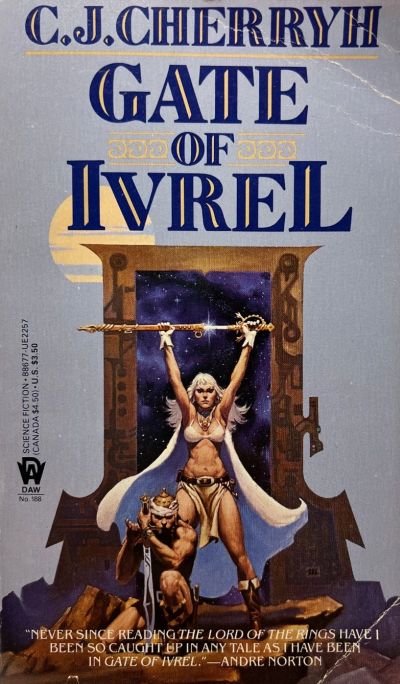
Note: Andre Norton’s two-page Introduction to this DAW printing is spoiler-free, and basically just an eloquent appreciation of the author’s literary achievement here. But though the accompanying map was made by Cherryh herself, it’s crudely-drawn, with hard-to-read place names, and hard to refer to due to its small size. And while Michael Whelan is a leading cover artist in the field of speculative fiction, his work here doesn’t reflect any actual scene in the book, and gives the wrong idea about Morgaine’s character; she doesn’t dress at all revealingly under her fur cloak, and doesn’t act like a sex object!
Author: C.J. Cherryh Publisher: DAW, available through Amazon, only as a paperback. There is an e-book available of the whole series. Book 1 of 4 in The Morgaine Cycle.
This is Broomfield’s second documentary around the topic of Aileen Wuornos, having previously made Aileen Wuornos: The Selling of a Serial Killer. It’s a glorious doc – one of my all-time favorites – but is more tangential, being about those around Wuornos, seeking to exploit her situation for their own personal gain. He thought he was done with the topic, but he was called as a defense witness during Aileen’s final appeal against the multiple death sentences, largely because among those exploiters was her lawyer at the time, Steve Glazer. But around appearing in the witness box, Broomfield decided to make a second documentary, this time focusing on the woman at the centre of proceedings, all the way up to her execution by lethal injection in October 2002.
What I love about Broomfield’s work is, he goes where the story leads him. Some documentarians – and I’m looking at you, Michael Moore – go into production with An Agenda (caps used advisedly). They then craft the end product towards that agenda. To me, that’s less a documentary than propaganda. Broomfield seems to have a much more open mind, and the results sometimes end up going in unexpected directions. Here, it’s clear that he has sympathy for Wuornos, but doesn’t pull any punches about her personality and mental state. He presents footage both of her claiming self-defense and absolutely confessing to having committed cold-blooded murder. The scary thing is, Wuornos appeared to me to be highly credible in each, contradictory situation. Maybe I’m just easily fooled. Sobering.
Certainly, there is evidence of Aileen’s anger issues. During his final interview, we see how she can go from calm discussion to volcanic ferocity in short order, for little or no reason, and storming out while flipping Broomfield the bird. If there had been a firearm to hand during this outburst… Yeah, watching this, the idea of her killing seven in less than a year definitely seemed possible. Rage and easy access to guns is a dangerous combination. But as the film proceeds, it appears Wuornos’s mental situation deteriorates into frequent surges of paranoia, claiming mind-control weapons are being used on her, and that the cops knew who she was after the first murder, and let her continue killing so they could exploit things in the media.
Should someone so clearly ill in the head be executed? Political considerations – it being an election year, with the governor wanting to appear strong on crime – appear to have overridden any judicial concerns. A cursory mental exam pronounced her fit to die, and the sentence was duly carried out. On that day, Broomfield was interviewed by the media (a classic case of the snake eating its own tail). He said, “Here was somebody who is has obviously lost her mind, has totally lost touch with reality. We’re executing a person who’s mad, and I don’t really know what kind of message that gives.” As someone not averse to the death penalty, this documentary certainly made me pause for thought, and that alone proves its quality.
This is a rough, to the point of savage, piece of cinema. If you do not like seeing people get their head blown apart, you should stay away, because that happens more then once here. The provider thereof is Jessica Brok (Jones), who was once part of a black ops operation which went across the border from South Africa into Angola, in search of a poaching ring, only to find far worse. The subsequent ambush wiped out most of her team, though she was able to kill the brother of the poacher’s leader. Over a decade later, she is finished with the business, and living quietly with her young daughter, under a new identity. The business, however, is not finished with her.
For the leader, Lazar Ipacs (Lukunku), has been harbouring a grudge against Jessica, and has finally tracked her down. With the help of a former colleague, Daniel (Berning), he lures her into a trap and prepares to make her regret… Absolutely everything. But Daniel has second thoughts, throwing Jessica a lifeline which lets her escape. The hunt is on. The only question is, who is the hunter and who is the hunted? After a few lower-tier henchmen are taken out, Lazar’s wife Sherri (Mboya) discovers Jessica has a daughter, and Lazar kidnaps her, intending to use the child as leverage. If you’re thinking that might be a bit of a poor decision, give yourself two points.
The best thing I can say about this is, while running comfortably over two hours, it doesn’t feel like it at all. There’s not much of a lull: a brief period of peace depicting Jessica’s new life working on a wildlife sanctuary is as quiet as things get. Once she is kidnapped, there is little pause for breath thereafter. It is fair to say that the action here is more inclined towards the comic-book, rather than the realistic. Jessica, for example, takes more damage than any normal human could be expected to survive. She takes an arrow right through the thigh, and basically shrugs it off, while stepping on a grenade booby-trap leaves her with little more than slight tinnitus. However, the same goes for Lazar and Daniel.
Taken in that spirit, I enjoyed this a great deal, and it’s the first film I’ve watched in 2026 to merit our Seal of Approval. The characters here are broadly-drawn, yet no less effective for it. Credit especially to Lukunku and Mboya, who make a spousal pair who are the stuff of your worst nightmares. The script doesn’t do anything particularly new – especially obvious, the way Lazar and his men spurn opportunity after opportunity to kill Jessica, to the point it begins to feel like a deliberate running joke. Yet it feels like its simplicity leaves the film stripped-down and lean, rather than underwritten. I suspect director/co-writer Orr might be a big fan of Revenge. I am too: there’s much worse from which to take inspiration.
Dir: Alastair Orr Star: Danica De La Rey Jones, Richard Lukunku, Clyde Berning, Hlubi Mboya
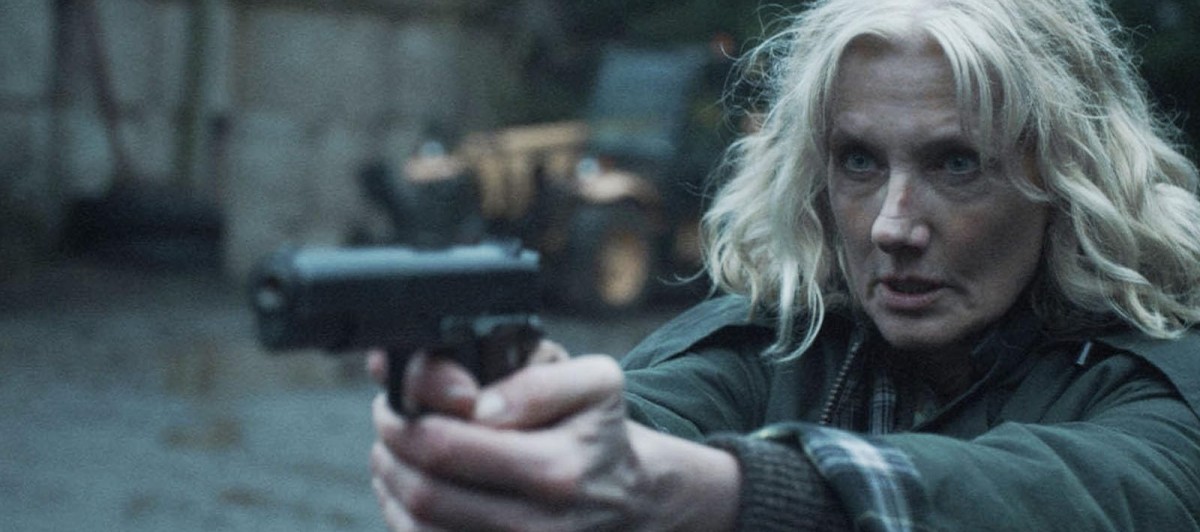
Genuinely good Tubi Original shocker! Well, that’s a bit harsh: there have have been decent ones before – such as Lowlifes, which certainly has some DNA in common. But this is likely the best I’ve yet seen, anchored by an excellent performance from Richardson. This takes place on a dark and stormy night, in a remote Scottish farmhouse. Rose (Richardson) is taking care of her disabled husband, with the help of daughter Maisy (Soverall), where there’s a frantic knocking at the door. It’s two men, Matty (Cadby) and his badly injured brother, Jack (Linpow). Their car got into a wreck nearby, and they are in desperate need of help. Naturally, they aren’t innocent passers-by.
No great surprise there, and it turns out they are fleeing from a robbery, with the intention of getting across the North Sea to Norway. However, there was a third member of the gang, who didn’t survive. He’s the son of the man who planned the heist: for obvious reasons is not happy about the situation, and ends up heading for the farm. However, that is not the biggest problem Matty and Jack face. For it turns out they aren’t the only ones keeping secrets, and they have just chosen the wrongest possible home to invade. Told you it was not dissimilar to Lowlifes. The question of who are the villains here becomes a good deal less clear, the more we know about everyone involved.
To that end, much credit to the script, also written by Linpow in an impressive feature debut. It reveals the necessary information at the right pace, and just when you think you know what’s going on, it’ll throw another twist at you. Loyalties shift from scene to scene as the characters discover more about each other, or themselves, and the situation becomes inextricably messy. You know it’s going to end in messy violence, and the film certainly doesn’t disappoint there. The cast are all solid – though in the credits, I notice the production had a “sensitivity consultant”, which is apparently a thing now. I’d like to offer my services as a crass insensitivity consultant to any movies interested. My qualifications there speak for themselves.
Where was I? Oh, yeah. It is, however, Richardson’s movie, having the toughest arc to handle as she moves from caring and compassionate mother to… Well, I guess technically she is still a caring and compassionate mother. It’s just that, well… /gestures vaguely at the screen. The film opens and closes with meaningful quotes about motherhood and the emotions it can trigger. Although what transpires between them, makes them read in radically different ways. To that end, I was getting notes of French horror flick Inside, another story of maternal instincts gone horribly wrong, or Matriarch, also set in Scotland with visitors getting more than they bargained for. Yet despite the influences, this is its own creature, powered by Richardson, and is a solid thriller to the very last shot.
Dir: Matthias Hoene Star: Joely Richardson, Neil Linpow, Sadie Soverall, Harry Cadby
a.k.a. Little Bone Lodge [A version of this review originally appeared on Film Blitz]



 ★★★★
★★★★ Haruka Nozaki (Yamada) is just a couple of month away from graduating junior high. But will she make it? Because her life is being made a living hell by bullies at the school. Rumour has it that she “stole” a boy, Mitsuru Aiba (Shimizu), from another girl, Taeko Oguro (Ôtani). As a result, Haruka has become the relentless target of other female students. The staff are no help: the school is going to be closed after this class graduates, and the teachers consequently couldn’t care less. Indeed, Haruka’s father, a substitute teacher – that’s why she ended up transferring in – is being victimized by the male bullies, in a similar way to his daughter.
 ★★★★
★★★★ Obviously, the girls feel strongly for each other and there are traces of the so-called “yuri” genre (girls in love) here. But Western audiences should be careful not to think this equates to lesbianism. Yuri is seen by many fan-girls in Japan as something “pure” and “cute”. Many fans would feel embarrassed if something so concrete and direct as sexuality was superimposed on such a relationship. I guess there are cultural particularities that cannot translate 1:1 into our Western cultural understanding, because they are so very different. Anyway, what’s at stake here is much bigger. One problem is, there are a lot of different things, elements and characters introduced at the beginning, which initially don’t make sense at all. Only slowly, as the story progresses, is it revealed how they connect with each other. I wonder if players of the game maybe had it easier?
 You could say that this is about two women finding closure with the past. Their different attitudes to deal with it become clear: While Canaan suffered as much from the loss of Siam as Alphard did, she was able to move on and establish a new positive relationship with Maria. While Alphard, despite becoming head of the terrorist organization “Snake”, has been eaten up by her hatred and suppressed feelings of guilt. She also can’t reciprocate the obsessive and essentially destructive feelings her “little sister” Lian Qi had for her. Oh, yeah: Lian Qi… She would be a feast for a psychiatrists’ conference! On a deeper level this is not really about bombs, anti-terrorist summits, political maneuverings (the US president and his VP don’t leave a good impression here), human experiments or even the big shoot-outs. It’s about the loneliness and isolation the individual characters suffer, and their hope of finding love and possibly redemption. There is a deep, poetic quality in the series, expressed in the dialogue, often less matter-of-fact but hinting at deeper meanings or feelings.
 Grace refuses to take part, but using Faith as leverage, they compel her participation. The siblings must battle for survival and, again, try to survive to dawn against a litany of more or less competent adversaries. This was one my main criticisms about
  When it begins, the young heroine Caina Amalas is living a somewhat unhappy life, mostly due to her mother being borderline abusive. Eventually, there’s nothing “borderline”, as Mom uses dark magic to turn her husband into a vegetable, and sells his daughter off to sorcerer Maglarion. Caina’s virgin blood is very powerful for his arts, and she is “milked” for all she can provide, kept just this side of death. Fortunately, while the wizard is out, an attack on the facility frees Caina, and she is recruited and trained by the near-mythical group responsible, the Ghosts. These are the Emperor’s spies and assassins, who swear an oath to counter his enemies, by any means necessary.
 Yonca is having an affair with the married man. But she has been able to leverage this into getting a job at the facility, as a cleaner, for the much quieter Sayara. Bari
 Mamoru Hosoda is one of the senior figures in Japanese animation, with thirty-five years of experience since he joined Toei Animation in 1991, after graduating from college. He made his feature debut with One Piece: Baron Omatsuri and the Secret Island in 2006, though this came only after he had almost directed Howl’s Moving Castle for Studio Ghibli. He subsequently left Toei, to go freelance, and his works since have met with both critical and commercial success. Mirai was nominated for an Oscar in 2019 as Best Animated Feature – the first non-Ghibli film to be so honoured. 2021’s Belle , loosely inspired by fairy-tale Beauty and the Beast, was the second-biggest movie at the Japanese box-office that year, domestic or foreign.
 I didn’t mind. It only serves as a basis on which the director discusses the general but often overlooked and therefore more essential questions of humankind: What defines our humanity? What do we live for? What does death mean? What is love? What can be forgiven? What cannot? How much are we shaped by the environment we grow up in? And if we spread a loving and peaceful attitude can we change the world for future generations?
 I cannot fault the visual side of things here at all. Dieter encouraged me to see this on the largest screen possible. Unfortunately, it did not last long in cinemas here: two weeks after release, it was down to showing in just twenty-four theatres nationwide. But having seen it in my living-room, I would not have minded a much larger viewing experience, and can only imagine the impact. It’s not seamless, in that you can often tell which sequences were old-school, and which were zeroes and ones. But the overall effect is undeniably impressive, and on that basis alone, I’d say it deserved an Oscar nomination more, say, than Zootopia 2.
 Finally, a longer passage from the Annals of Baien-an recounts how, “In the year 1431 of the Common Reckoning,” five strangers supposedly from the distant south came to the northern realms, one of them a tall, light-colored young woman named Morgaine (who was thought to be Oujal). They persuaded the northern kings to make war on “…the witch-lord Thiye… lord of Ivrel of the Fires;” but near Ivrel, the great northern army of 10,000 men was unaccountably nearly annihilated, and the five were blamed for the disaster. All of them but Morgaine vanished without trace; pursued, she fled south and supposedly died at another place of Qujalish “Stones,” afterwards called Morgaine’s Tomb. “Here it is said she sleeps, waiting until the great Curse be broken and free her.”
 What I love about Broomfield’s work is, he goes where the story leads him. Some documentarians – and I’m looking at
 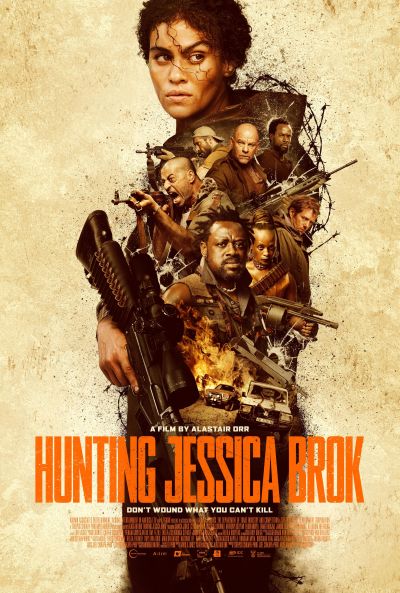 For the leader, Lazar Ipacs (Lukunku), has been harbouring a grudge against Jessica, and has finally tracked her down. With the help of a former colleague, Daniel (Berning), he lures her into a trap and prepares to make her regret… Absolutely everything. But Daniel has second thoughts, throwing Jessica a lifeline which lets her escape. The hunt is on. The only question is, who is the hunter and who is the hunted? After a few lower-tier henchmen are taken out, Lazar’s wife Sherri (Mboya) discovers Jessica has a daughter, and Lazar kidnaps her, intending to use the child as leverage. If you’re thinking that might be a bit of a poor decision, give yourself two points.