



★★½
“Just when you think you’re out…”
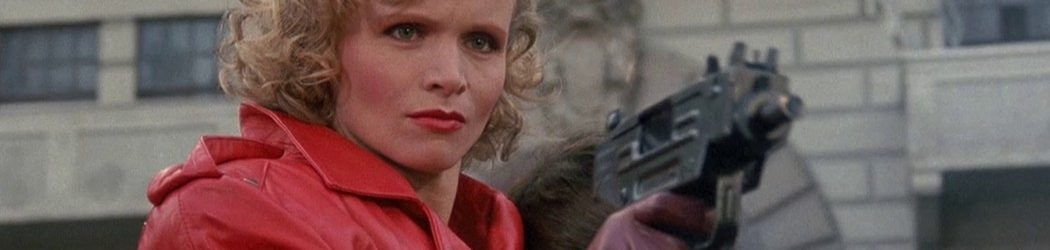
 Yuri Ozone (Ayase) was once one of the most feared assassins in all of Japan, before she vanished off the grid around 1914. A decade later, she is quietly running a brothel. As you do, I guess. Anyway, Shinta Hosomi (Hamura) is a young man, who can only watch as the rest of his family is ruthlessly slaughtered by a party seeking… something. However, he was told in the event of such an incident, to see out Yuri and she would help him. Naturally, this drags her back out of “retirement” – quotes used, since she’s not exactly of pensionable age – and into the middle of a battle between different section of the Japanese military, with war looming on the horizon.
Fortunately, she has some assistance, in the form of Yoshiaki Iwami (Hasegawa). He’s a lawyer, and all round fixer, who is able to help provide Yuri with the information she needs to be able to survive. It turns out that Shinta is in possession of very valuable documents, which are the key to unlocking a large sum embezzled away in government funds. However, it turns out that these are only part of the matter, because whoever has these also needs pass-codes to access the funds, which are held entirely separately. If this all seems quite messy, and perhaps also not dissimilar to The Three Faces of Gloria… Yeah, I would say you are probably right there. With added coincidence, such as Yuri just so happening to find herself on the same train as Shinta.
What works here in particular is the period atmosphere. It’s clear there was a lot of money spent on the production, with the mid-twenties era being lavishly recreated, in costumes, transport and decor. The action in general isn’t bad, with Ayase knowing her way around a fight sequence, though her enemies are strictly from the Imperial Stormtrooper school of firearm training. Even at close range, they are always too slow, too inaccurate, or both, to the extent their incompetence almost begins to feel like a running joke. But there are still some well-staged set pieces, such as one which unfolds in thick fog, giving an otherworldly, and almost ghostly feel to proceedings.
Unfortunately, the film managed to lose my attention entirely in the middle section. With a running-time of 139 minutes, I felt there was a severe lack of focus in the central narrative, with too much attention on various political shenanigans i.e. Army vs. Navy, and secondary characters. I also found the obvious pacifist messaging rather trite, and somewhat ironic given both the copious amounts of violence on show, as well as the actual actions of Japan during the following decade, such as their invasion of Manchuria in 1931. Outside of the period setting, I had a strong sense overall of having been here before. While the action was decent, given the overall length, it seemed spread too thin to, alone, justify the movie’s existence.
Dir: Isao Yukisada
Star: Haruka Ayase, Hiroki Hasegawa, Jinsei Hamura, Kavka Shishido
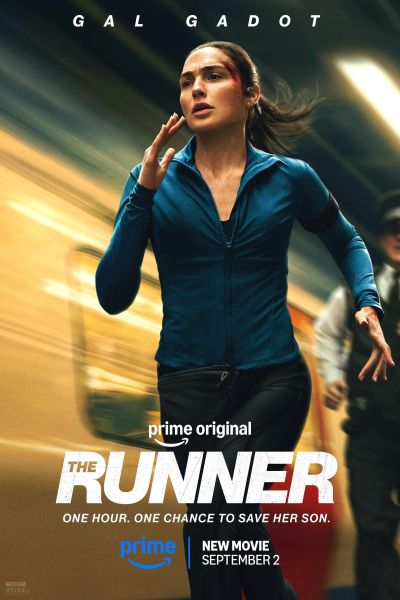 Poor Gal Gadot. Her career since
 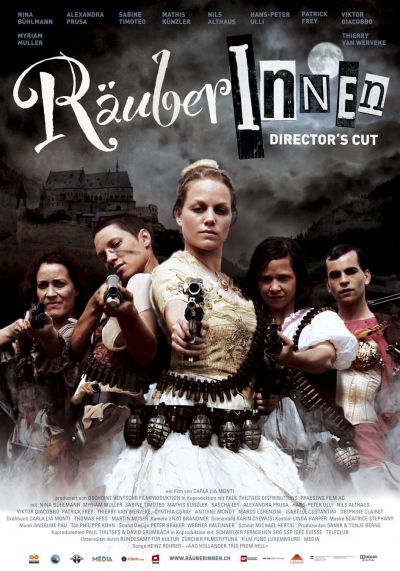 There’s a moment here which is probably a good litmus test for how you’ll react to this overall. The heroine, princess Emily (Bühlmann), opens a locket to look at the picture of her dead father. Only, it’s actually John Waters. If you do not know who that is, this film is probably not for you. If you do know who he is, understand why he is called the ‘Pope of Trash’, and have a limited tolerance for his kind of movies, it is probably not for you either: I fall into this category. I was at least forewarned by the synopsis: “A castle maid-turned-fugitive joins a group of sex workers to create a gang of female bandits that fight against the sexually deviant patriarchy.”
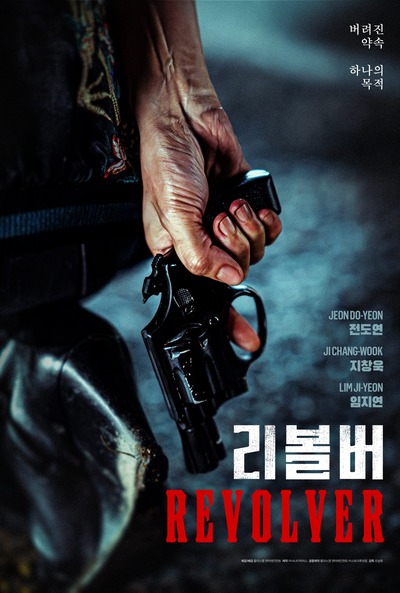 You need to be patient with this. Both in terms of its plot and, more generally, its attitude. This isn’t exactly action-packed. Yet the heroine – and I used the word loosely – is an unstoppable force of nature. Just more like a glacier than a tornado. She never rushes in, always having a plan, and rarely raises her voice. Yet woe beside anyone who tries to get in her way. She is Ha Soo-yeong (Jeon D-y), whom we first meet as she is being released from prison at the end of her sentence. Turns out she was a policewoman, busted for corruption in a scheme also involving her cop boyfriend.
  American SF between the World Wars was a sort of literary ghetto, disdained by critics, and found mainly in a handful of small-circulation niche magazines, dominated by editors committed to the genre’s “hard” tradition, in which the speculative element is strictly based on extrapolation from known science and scientific accuracy is a paramount concern. (Literary matters like character development, well-crafted prose, and original plotting, in that era, was sometimes of less concern.) Weinbaum, like many of the genre’s writers in his generation, had the scientific background and interest to write hard SF, but his English literature education/interest also gave him stylistic skills superior to those of a lot of his contemporaries. Both qualities are evidenced in this short work.
 Despite a slightly clunky title, I enjoyed this a little more than the original. It helps that there’s no need for build-up or explanations. We join things immediately after the end of part one, with Grace MacCaullay (Weaving) staggering outside the mansion where she battled and beat the Le Domas family. Understandably, she ends up in hospital and handcuffs, where her sister Faith (Newton) shows up. But it turns out the Le Domas family were just one part – albeit the head – of a larger, Satanic organization, the Council. The remaining families now need to determine a successor. Whoever kills Grace gets to take over, so the siblings are quickly abducted and taken to the Council’s country club complex.
 Grace refuses to take part, but using Faith as leverage, they compel her participation. The siblings must battle for survival and, again, try to survive to dawn against a litany of more or less competent adversaries. This was one my main criticisms about
 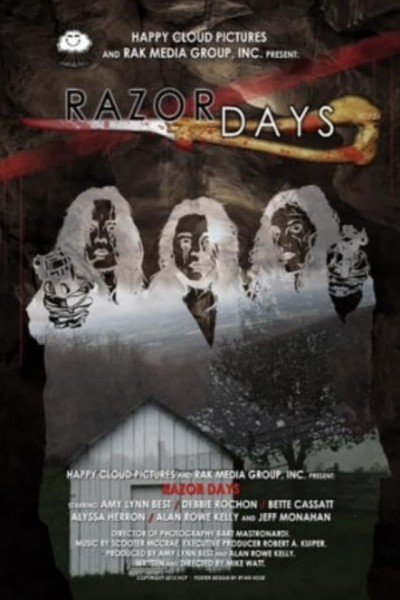 This was certainly not what I expected. That, in itself, would not have been a problem – I’m quite used to, and indeed do not mind, films which confound my preconceptions. I respect what this is attempting to do as well, which is a different take on the revenge movie. The problem here is fumbled execution: more on the directorial, writing and technical fronts, though in some of the performances too. Even allowing for the obviously limited resources this had to play with, by the end, it was definitely a struggle to get through, with a lack of narrative thrust in particular, meaning it failed to hold my attention. That’s a bit of a shame. Only a bit, mind you.
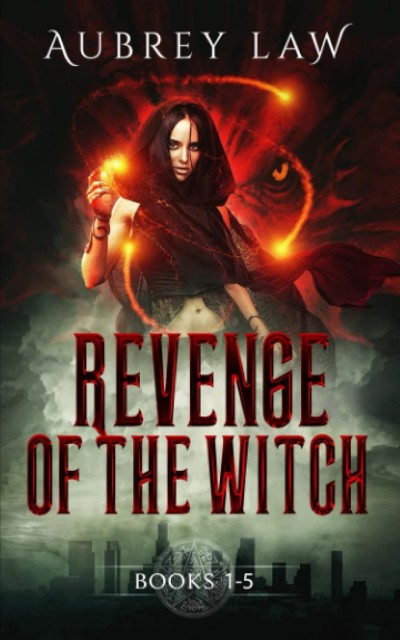 I previously reviewed the first volume in the series,
  Written, directed by, and starring husband and wife team Sam and Johnna Hodge, this is the kind of film it would be easy to deride as poverty-row garbage from the bottom drawer. There’s precious little plot, some of the performances are painfully amateur, and it seems to exist mostly as a show-reel for spraying around corn syrup with red food colouring in it. And yet… If Chris and I made a movie – something we have discussed – it might well end up being not too dissimilar to this. On the other hand, if we had a spare $55,000 lying around – the budget here, according to the IMDb – we’d probably go on a nice holiday instead.
  For a good while, this struggled to retain my interest, and when it did, the problems outweighed the positive aspects. Fortunately, after a solid hour of faffing around in ways that provoked mostly rolling of my eyes, the film found its stride. That’s funny, because it’s a running reference. Ok, not very funny. Down the stretch it both figuratively and literally pushes the pedal to the metal, in quite an impressive manner. My reaction was divided. Part of me wondered, where the heck this was earlier on? However, rather than petering out like a sad trombone, there’s no question it’s better for a film to finish strongly, and give the viewers something positive to take away with them.