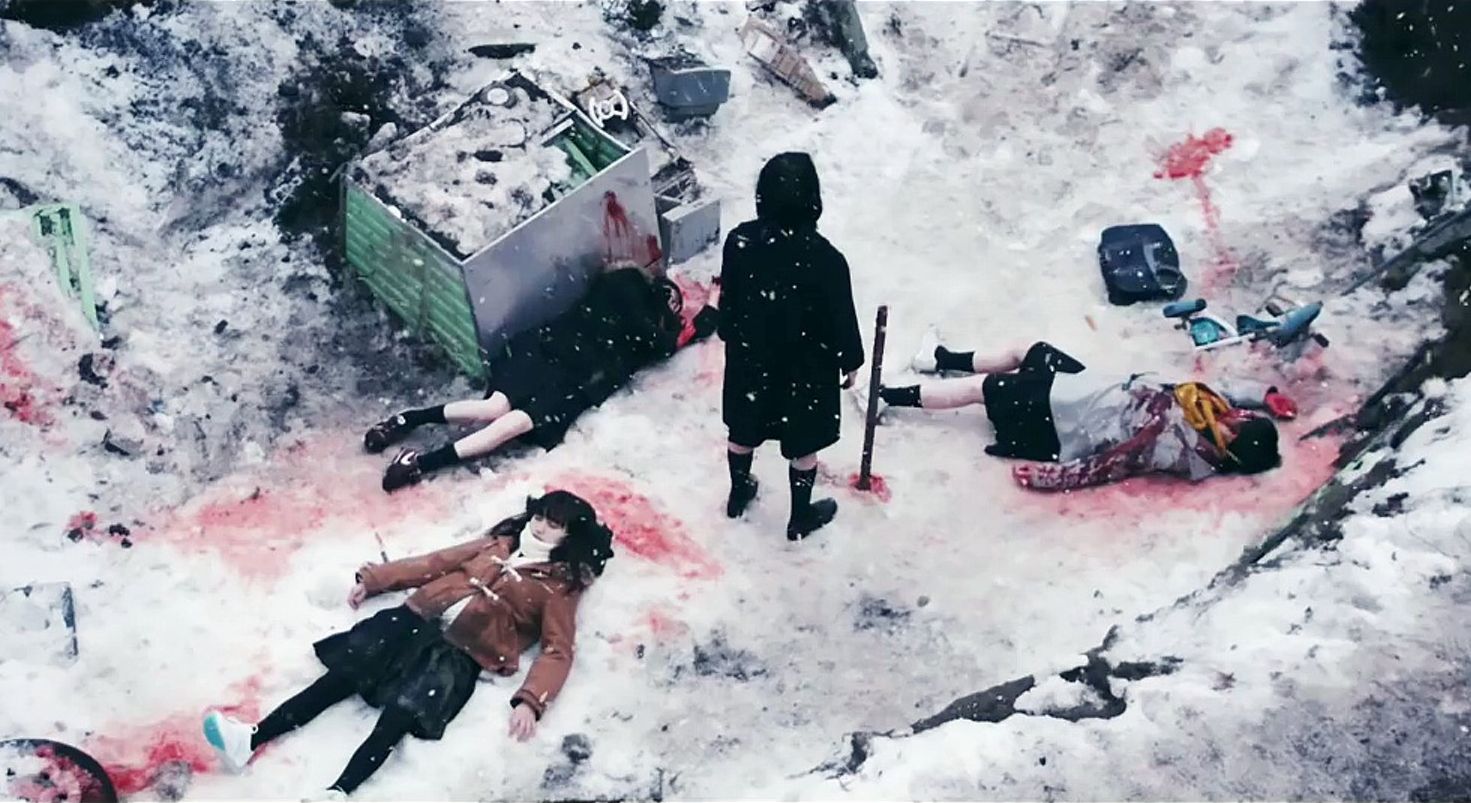
Haruka Nozaki (Yamada) is just a couple of month away from graduating junior high. But will she make it? Because her life is being made a living hell by bullies at the school. Rumour has it that she “stole” a boy, Mitsuru Aiba (Shimizu), from another girl, Taeko Oguro (Ôtani). As a result, Haruka has become the relentless target of other female students. The staff are no help: the school is going to be closed after this class graduates, and the teachers consequently couldn’t care less. Indeed, Haruka’s father, a substitute teacher – that’s why she ended up transferring in – is being victimized by the male bullies, in a similar way to his daughter.
Things come to a head after fire destroys Haruka’s home, killing her parents and putting her perky little sister in the hospital with severe burns. And when I say, “come to a head”, the rest of the film is filled with some of the more disturbing violence I have seen in recent years. The attitude here feels almost like Battle Royale, in that the people inflicting this level of savagery are basically kids. They are not supposed to be this way, folks. There’s not even the distancing element of a dystopian future, which Battle Royale enjoyed. Nor it is simply Haruka. You can’t claim “one bad apple”, because there are a lot of people here, who seem to live by the motto, “Hurt people, hurt people.”
The famous quote, “The only thing necessary for the triumph of evil is for good men to do nothing,” often misattributed to Edmund Burke, came to mind here too. Because, while Mitsuru initially pushes back against the bullies targeting Haruka, it’s a half-hearted effort. Though I guess it’s better than the completely useless adults, from parents through pedagogues, to the all but entirely absent authorities. By the end though, you will perhaps be left questioning whether anyone here genuinely falls into the category of “good.” Everyone has their traumas, which have left them negatively impacted, and many are paying it forward to others. This is most apparent in the character of Rumi Sayama (Ôtsuka), one of the bullies’ victims, who ends up joining their clique.
Naitô directs things with a bleakness appropriate to the story. Much of it unfolds against a backdrop of snowy weather (the title, incidentally, refers to a winter flower). If there’s one shot of red, red blood splattering across a snowdrift, there’s a dozen. But it’s such an iconic image, I can’t blame him for using it more than once. I note that Naitô himself used to be a teacher. This isn’t the only case where that previous career seems to inform his work, if the title of a previous movie is any guide: Let’s Make the Teacher Have a Miscarriage Club. I’ve seen enough movies that my level of concern for the Japanese educational system, and those who go through it, is certainly non-zero. This ensures it won’t be going down any time soon.
Yuri Ozone (Ayase) was once one of the most feared assassins in all of Japan, before she vanished off the grid around 1914. A decade later, she is quietly running a brothel. As you do, I guess. Anyway, Shinta Hosomi (Hamura) is a young man, who can only watch as the rest of his family is ruthlessly slaughtered by a party seeking… something. However, he was told in the event of such an incident, to see out Yuri and she would help him. Naturally, this drags her back out of “retirement” – quotes used, since she’s not exactly of pensionable age – and into the middle of a battle between different section of the Japanese military, with war looming on the horizon.
Fortunately, she has some assistance, in the form of Yoshiaki Iwami (Hasegawa). He’s a lawyer, and all round fixer, who is able to help provide Yuri with the information she needs to be able to survive. It turns out that Shinta is in possession of very valuable documents, which are the key to unlocking a large sum embezzled away in government funds. However, it turns out that these are only part of the matter, because whoever has these also needs pass-codes to access the funds, which are held entirely separately. If this all seems quite messy, and perhaps also not dissimilar to The Three Faces of Gloria… Yeah, I would say you are probably right there. With added coincidence, such as Yuri just so happening to find herself on the same train as Shinta.
What works here in particular is the period atmosphere. It’s clear there was a lot of money spent on the production, with the mid-twenties era being lavishly recreated, in costumes, transport and decor. The action in general isn’t bad, with Ayase knowing her way around a fight sequence, though her enemies are strictly from the Imperial Stormtrooper school of firearm training. Even at close range, they are always too slow, too inaccurate, or both, to the extent their incompetence almost begins to feel like a running joke. But there are still some well-staged set pieces, such as one which unfolds in thick fog, giving an otherworldly, and almost ghostly feel to proceedings.
Unfortunately, the film managed to lose my attention entirely in the middle section. With a running-time of 139 minutes, I felt there was a severe lack of focus in the central narrative, with too much attention on various political shenanigans i.e. Army vs. Navy, and secondary characters. I also found the obvious pacifist messaging rather trite, and somewhat ironic given both the copious amounts of violence on show, as well as the actual actions of Japan during the following decade, such as their invasion of Manchuria in 1931. Outside of the period setting, I had a strong sense overall of having been here before. While the action was decent, given the overall length, it seemed spread too thin to, alone, justify the movie’s existence.
I’ve to say this anime show is kind of unusual. While after the show there were some attempts to use the story as the basis for a manga series, it is not based on one – unlike what feels like 95% of all anime – but instead on a “visual novel”. I have absolutely no knowledge what a “visual novel” is. Wikipedia has this to say about them: “Visual novels are often associated with the medium of video games, but are not always labeled as such themselves. They combine a textual narrative with static or animated illustrations and a varying degree of interactivity. The format is more likely referred to as a visual novel game.” Well, so much for that. I guess it is similar to these old, “choose your own adventure” books of my youth, where you would make a choice at the end of the page, and depending on your decision would turn to a specific, other page, therefore creating an individual story narrative.
Canaan was inspired by a bonus on Wii visual novel 428 Shibuya Scramble. The game itself, I believe, featured live cut-scenes with real actors, but had extra content consisting of drawn anime-style images. As the game was extremely successful at the time of its 2008 release, it is unsurprising that an anime spin-off was produced in 2009. The original concept was by Type-Moon, with anime studio being P.A. Works. The original visual novel could go into different genres, depending on the protagonist the player chose. So it’s significant that the genre of the anime series also changes over time. In the beginning it can rightly be called a mystery, since you have no idea what happens here and why. Yet at the very end, it is full-blown action with a conspiracy plot sprinkled in, and elements bordering on science fiction. Albeit more “science fact”, because they are not far from possible reality, though quite exaggerated.
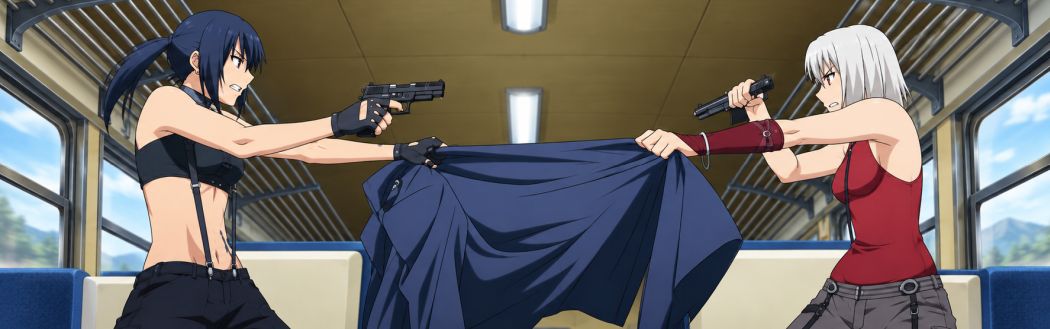
The new story starts two years after the “Shibuya event”, a viral attack on a train in Tokyo. Reporter Minoru Minorikawa journeys to Shanghai to find interesting stories, accompanied by young assistant photographer Maria Osawa. Osawa was involved in the event and came close to death, but was saved from the deadly virus by her father Kenji. Due to her trauma she has no clear memories of what happened there. In Shanghai, “there are a lot of stories, if people only opened their eyes to see them”, as Osawa puts it. A number of mysterious deaths lead her to meet Canaan again, a mysterious girl who once saved her life and that she longed to see once more.
Obviously, the girls feel strongly for each other and there are traces of the so-called “yuri” genre (girls in love) here. But Western audiences should be careful not to think this equates to lesbianism. Yuri is seen by many fan-girls in Japan as something “pure” and “cute”. Many fans would feel embarrassed if something so concrete and direct as sexuality was superimposed on such a relationship. I guess there are cultural particularities that cannot translate 1:1 into our Western cultural understanding, because they are so very different. Anyway, what’s at stake here is much bigger. One problem is, there are a lot of different things, elements and characters introduced at the beginning, which initially don’t make sense at all. Only slowly, as the story progresses, is it revealed how they connect with each other. I wonder if players of the game maybe had it easier?
We are introduced to all the main characters in the first episode (of 13), but they still have to meet each other and their knowledge is not the same. Minorikawa feels there is a story that he can’t quite grasp, Maria is happy to meet Canaan again, but after a key incident realizes that her friend is a trained assassin. Santana, the aggressive owner of a Karaoke bar, with his mute buxom employee and girl friend, Hakko, also doesn’t reveal his big, dark secret. There is a girl called Yunyun popping up in several different jobs around the city. And why are we being shown dangerous terrorist Alphard, who just escaped a prisoner transport and obviously plans something big, together with her companions, Lian Qi and her servant Cummings?
Then we are confronted with some words at the beginning that we do not yet understand, such as UA virus, borners and unblooms. I’m not really complaining, because I’m actually in favor of a movie or series not giving everything away too early. It’s fine if audiences for once have to work things out for themselves. I liked that aspect of the show very much, but can understand that those less impressed, or just here to see some battling babes, might be disappointed, or unable to connect with the show. Though, you don’t have to be an academic to understand the story. As the story progresses and the blanks are filled in, bit by bit, you start to see the whole. There is also more than one story being told. The characters all have individual parts and roles in the big picture, and are driven not exclusively by “the big thing”, but also more personal motivations.
It turns out there were secret viral experiments, conducted on the population of a small town by the CIA, through the criminal organisation “Snake”. This caused most inhabitants to die, while the survivors developed extraordinary abilities, but with downsides. For example, Hakko can’t speak anymore because her voice creates waves that affect the brains of those who hear her, and could kill them. Yunyun needs medication to not die before her time, and so on. The aim of the experiments was to create another Canaan, as she is a natural-born synesthete (don’t worry, I’ll explain shortly), who was brought up and trained, like Alphard, by the terrorist Siam. Alphard felt betrayed when Siam gave the new girl the same name as her – Canaan – and Siam started to change under the influence of positive-minded Canaan. So she killed Siam. This backstory was included as a bonus with the visual novel, but since you couldn’t assume viewers had played the game, it had to be mentioned in the anime, and becomes a key reveal here.
Synesthesia is a special condition some people are born with, meaning that some sensory perceptions can be “taken over” by other ones. For example, sound can be perceived as colours by these individuals. But it can take many different forms. In Canaan’s case, she “sees the colour of people”, meaning she can tell how they feel right now, as every emotion has a specific color. When she loses this ability at one point in the story, she feels helpless. With that said, the series does not portray synesthesia realistically, rather like some kind of superpower, more or less.
A confusing element is that the characters sometimes do not act or speak as we in the West would. Therefore, it can be quite the task to figure out why they do what they do, and what their motivations are, as they do not necessarily express themselves in a clear manner. Take Alphard, who lets Canaan off the hook more than once. One may wonder why she does that. But if you listen carefully, it becomes clear: Alphard defines herself through her own hatred, and wants Canaan to feel the same. She needs Canaan to be at her best when they fight. She does not just want to overcome Canaan, but destroy what she sees as the embodiment of Siam’s corrupted spirit. In a way, they are fighting about the value of the philosophical legacy belonging to their stepfather and teacher. That’s no small thing for an action story.
You could say that this is about two women finding closure with the past. Their different attitudes to deal with it become clear: While Canaan suffered as much from the loss of Siam as Alphard did, she was able to move on and establish a new positive relationship with Maria. While Alphard, despite becoming head of the terrorist organization “Snake”, has been eaten up by her hatred and suppressed feelings of guilt. She also can’t reciprocate the obsessive and essentially destructive feelings her “little sister” Lian Qi had for her. Oh, yeah: Lian Qi… She would be a feast for a psychiatrists’ conference! On a deeper level this is not really about bombs, anti-terrorist summits, political maneuverings (the US president and his VP don’t leave a good impression here), human experiments or even the big shoot-outs. It’s about the loneliness and isolation the individual characters suffer, and their hope of finding love and possibly redemption. There is a deep, poetic quality in the series, expressed in the dialogue, often less matter-of-fact but hinting at deeper meanings or feelings.
Some of the scenes depicted here are graphic and definitely not appealing. One scene involves a woman having sex with a dead man which, while you understand the intention behind it, is painful to watch. Another shows surviving town inhabitants that have lost their minds and appear very much like zombies in their behavior. The “unblooms” mentioned above, die a terrible death when they come into direct contact with sunlight. I definitely wouldn’t call this an appropriate show for younger teens. The grown-up storylines recommend it for older viewers, who can better appreciate the nuances it offers. At the same time, the drawing style is very beautiful – as to be expected, given those involved in the production – and the score invokes a haunting, dynamic, sometimes even epic and melancholic feeling.
The final showdown between opponents – not necessarily enemies – Canaan and Alphard is memorable. The audience wonder who will survive, the filmmakers having already demonstrated that they have absolutely no qualms about killing off main characters. While avoiding spoilers, I must say I have never seen a character exit a story in such an incredible manner! The very last scene, which is kind of an Easter egg, coming when the end titles play and after it, suggests a potential continuation of the story (similar to the open ending of Arcane) that never happened. That said, the resolution felt very fitting and “round”, so to speak.
By coincidence, I watched this after Baby Assassins 3, without realizing the star here plays Chisato in that franchise; the director here was also its action director. Discovering the overlap is a minor demerit against Ghost Killer, because it counts as something of a waste of her talents. It’s a lovely idea – if you’re just an action fan in general, then it likely scores half a star higher. However, specifically as an action heroine film, there is room for improvement. It begins with the assassination of an assassin. Hideo Kudo (Mimoto) works for a criminal organization, and his death occurs in somewhat murky circumstances. The spent cartridge used to kill him, takes on his vengeful spirit, and the casing is picked up by an innocent college student Fumika Matsuoka (Takaishi).
After a period of mutual adjustment to being haunted and doing the haunting, Fumika agrees to help Kudo find out who was responsible for his murder, and take revenge. She is the only person who can see and talk to Kudo, and when she grasps his hand, that allows him to take over her body, with all the associated hitman abilities. Along the road to his vengeance, they will have to deal with a date-rapey triple tag-team, as well as another assassin in the same organization, a former student of Kudo, Toshihisa Kagehara (Kuroba). That pair’s relationship is a little fraught, even after Kagehara is convinced about the reality of what is happening.
The first half of this is very solid, highlighted by the performance of Takaishi as both a college student and a vengeful killer – simultaneously, which makes it all the more remarkable. It means she has to be an expert fighter, and somebody who wouldn’t say “Boo!” to a goose, as her and Kudo tussle for control. I feel as if that enough would have been sufficient to propel the narrative of the entire film. However, it ends up diverting into less interesting Yakuza-based activities in the middle, and it almost becomes easy to forget that Kudo is dead. There aren’t really any surprises once the framework of the situation has been established, heading towards the eventual and predictable confrontation between Kudo and his killer.
And that’s the problem. It’s between Kudo and his killer, not Fumika. It’s still “in her body,” and I enjoyed the scenes where Kudo is guiding her to hide – telling her when to go around a pillar, for example. But when battle is joined, the film shows Mimoto doing the fighting, not Takaishi. Don’t get me wrong: it’s a very good fight, and that’s why I’d say a general viewer is still likely to be satisfied by it. But I was looking forward to seeing the actress really getting to let loose. After all, having experienced the Baby Assassins trilogy, there’s no issue about her martial arts abilities. Seeing her largely sidelined at the end was a disappointing way to finish things off.
Dir: Kensuke Sonomura Star: Akari Takaishi, Masanori Mimoto, Mario Kuroba
Mamoru Hosoda is one of the senior figures in Japanese animation, with thirty-five years of experience since he joined Toei Animation in 1991, after graduating from college. He made his feature debut with One Piece: Baron Omatsuri and the Secret Island in 2006, though this came only after he had almost directed Howl’s Moving Castle for Studio Ghibli. He subsequently left Toei, to go freelance, and his works since have met with both critical and commercial success. Mirai was nominated for an Oscar in 2019 as Best Animated Feature – the first non-Ghibli film to be so honoured. 2021’s Belle , loosely inspired by fairy-tale Beauty and the Beast, was the second-biggest movie at the Japanese box-office that year, domestic or foreign.
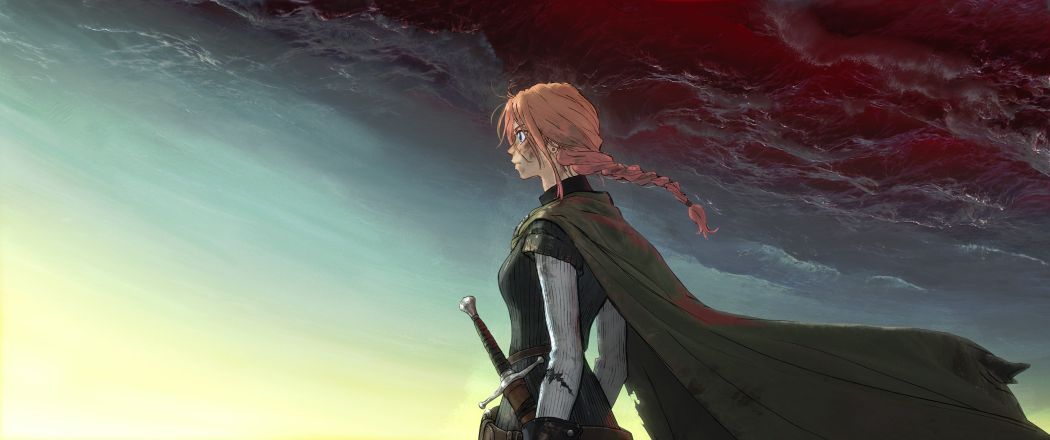
His latest movie and the follow-up to Belle, Scarlet, was a long production, taking four and a half years to complete. It mixes traditional 2D cel animation with computer-generated animation, and is a take on Shakespeare’s story of Hamlet, with its titular heroine seeking vengeance on the people who murdered her father, the monarch of 16th century Denmark. Her first attempt backfires, when she consumes the poison intended for her uncle Claudius, the leader of the plot. Scarlet wakes to find herself in the purgatory of the underworld. She needs to complete her revenge in order to move on to the Infinite Land; otherwise, her spirit will collapse into nothingness. It turns out that Claudius is in the underworld too…
Both Dieter and Jim watched and reviewed this one independently. Below, you’ll find their respective ratings and thoughts, with Dieter going first.
★★★★★
“The undiscovered country from whose bourn no traveler returns”
On the fourth anniversary of Russia invading the Ukraine a movie like this hits harder, I feel. At the same time, the Berlin Film Festival has ended and while a whole lot of boring message movies got awards, this one was not even in competition. I guess it also won’t win any Oscar awards. For the same reason: it’s just too good. It would blow any competing features out of the water. And yes, this is a strongly subjective review. Watch the movie and judge for yourself, I suggest.
But… I’m already starting with the end. I was honestly blown away by this movie. While neither the idea of a female Hamlet is new (see the 1921 Hamlet: The Drama of Vengeance with Asta Nielsen) nor doing a Shakespeare-inspired anime (there is the anime series Romeo x Juliette from 2007) what director Mamoru Hosoda has done here for Studio Chizu, is fascinating. No idea why he chose the story of Hamlet as an entry point: perhaps because it’s the most universally-known revenge story next to Death Wish? It would have worked just as well with new, fictional characters and other names.
I didn’t mind. It only serves as a basis on which the director discusses the general but often overlooked and therefore more essential questions of humankind: What defines our humanity? What do we live for? What does death mean? What is love? What can be forgiven? What cannot? How much are we shaped by the environment we grow up in? And if we spread a loving and peaceful attitude can we change the world for future generations?
These are big, important ideas which do not normally form a part of “entertainment culture” or political discussions today, as everyone is too much occupied in serving their own self-interest. Actually, I would locate these questions more in the areas of philosophy and religion. At the same time, the animation style itself is impressive: not just the usual 2D cell animation nor CGI animation. I don’t know how to describe it: while most of it seems classically drawn, many of the backgrounds seem photo-realistic as if they are “real”, including the desert, water, ruins and a jungle. Also overwhelming is the sky of this “other land” which looks like waves, over which a giant dragon flies and occasionally erupts in deadly lightning.
While the visual style takes some time to get used to, this is not necessarily a bad thing. It’s different and new and that’s it. I liked it but I can understand if other people might reject this approach. It’s really a matter of individual taste. Putting all these aspects aside, I found the movie really entertaining. It’s an epic, bombastic movie with a passionate heroine, lots of fights (somehow these medieval Danes seem to have quite some knowledge of martial arts) and – surprisingly – beautiful songs. With Scarlet being shown training hard since her early youth, her fighting larger opponents doesn’t seem that much of an overstatement. She also doesn’t always win, which helps to make the fights look more realistic.
If Mamoru Hosoda might not be as famous or successful as Hayao Miyazaki or Makoto Shinkai (Your Name), so far, he has always delivered excellent and interesting movies. Scarlet is his 8th movie (I challenge the uninitiated to discover his other movies, and especially recommend The Girl Who Leapt Through Time and Summer Wars) and was co-produced by Columbia Pictures. I regret that movies like this only ever run for one day here, and occasionally some more in some tiny cinemas as I think they deserve so much more exposure. Here is hoping, I may have contributed to making this excellent movie more well-known, and create some interest in its potential audience watching it, or at least giving it a chance.
★★★
“Better red than dead.”
Up-front confession: I haven’t seen any of Hosoda’s other work, so am not familiar with the style. Indeed, for a while, I was confusing him with Mamoru Oshii, of Ghost in the Shell and Avalon fame. Which isn’t as much of a stretch as it may seem. Oshii’s work seems to rely a lot on a loose narrative, using the virtual world in Avalon as a convenient loophole through which any plot thread can pass. You could make much the same argument for Scarlet, with the underworld being a realm where stuff simply can happen, because it’s the underworld. I’m not a huge fan of this kind of plot armour, and would likely have been happier if Scarlet had been pursuing her vengeance in the everyday world.
The early stages will feel rather familiar to any fan of Game of Thrones. Scarlet can only watch as her father, a beloved figure, is executed in the name of political machinations. She then vows revenge, and undergoes a rigorous training program to that end. Very Arya Stark. Fortunately (or perhaps not?), it finds its own way after she consumes poison, and Scarlet finds herself in the afterlife. It’s necessarily a shock, but she has the mental fortitude to adapt. She’s joined there by Hijiri, a paramedic from the present day. In effect, he acts as her conscience, continuing to treat the wounded as he had done in life, and questioning the need for her revenge. This becomes especially pertinent after we hear the message Scarlet’s late father had for her.
I cannot fault the visual side of things here at all. Dieter encouraged me to see this on the largest screen possible. Unfortunately, it did not last long in cinemas here: two weeks after release, it was down to showing in just twenty-four theatres nationwide. But having seen it in my living-room, I would not have minded a much larger viewing experience, and can only imagine the impact. It’s not seamless, in that you can often tell which sequences were old-school, and which were zeroes and ones. But the overall effect is undeniably impressive, and on that basis alone, I’d say it deserved an Oscar nomination more, say, than Zootopia 2.
However, as the above likely suggests, I was not particularly impressed with the plot. The basic elements were there – you can’t go wrong with revenge of the Shakespearean kind – but there are elements which seem not to serve this. For example, there’s a significant chunk where Scarlet and Hijiri are simply hanging out with elderly souls. It feels like John Wick paused his revenge, to spend an afternoon helping out at the local senior centre. I guess the eventual aim is that Important Lessons™ need to be learned by Scarlet about the value of life. But if you compare this to the works of Hayao Miyazaki, the moral lecturing here comes over as less than subtle.
I did like the contrast between Hijiri and Scarlet. Interesting that the “caregiver” character here was male and from the present times, while the vengeance seeking warrior was female and out of the middle ages. This subversion of standard tropes is thought-provoking, without needing to deliver any explicit messaging, and the relationship between the pair works well. If you’re familiar with Hamlet, you’ll also get a kick out of some of the references (the versions here of Rosencrantz and Guildenstern are particularly memorable). But any film which uses a dragon – another Game of Thrones nod? – as a convenient prop for the story-line, needs to be answering questions about its scripting. It’s this which stopped Scarlet from being more, for me, than just a well-crafted, pretty thing at which to look.
Dir: Mamoru Hosoda Star (voice): Mana Ashida, Masaki Okada, Koji Yakusho, Kōtarō Yoshida
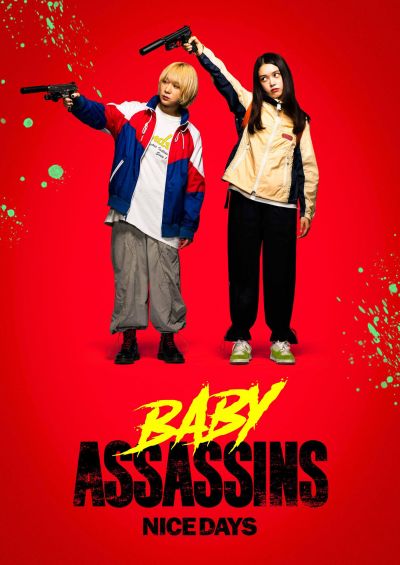
I am increasingly coming to the conclusion that the Baby Assassins franchise may be some kind of surrealist joke, being played on me by its makers. I really want to love the series and, as with both Part 1 and Part 2, there are moments where I do. At points, I was genuinely considering this as a Top 10 movie I saw this year – not just among GWG movies either. But then, it’ll grind to a halt, with such dedication to being mind-numbingly tedious, that it feels almost like wilful self-sabotage. In reality, I think it’s more likely to be cultural and societal impenetrability. Some elements here are ones which are relatable to a Western audience. Others? Not so much.
It takes place in Miyazaki, a seaside city in Japan. Our heroines, Chisato (Takaishi) and Mahiro (Izawa) are on a working holiday there. Or a holiday where work keeps interrupting, it’s hard to say. However, their commission becomes an issue, because another, non-guild assassin, Fuyumura (Ikematsu), is also on the job. The guild are unhappy, and order the pair not just to complete the commission, but also eliminate Fuyumura for cutting in on their turf. This will be easier said than done, even with the largely unwelcome help of guild supervisor, Minami (Maeda). She is less than impressed with the Gen Z approach of Chisato and Mahiro, who would rather be in a restaurant eating the renowned local beef.
As before, it’s the action which really resonated with me, in particular a stunning series of close-quarters battles. And when I say “close”, I mean fights where the combatants are frequently inches from each other. The early sequence where Chisato goes up against Fuyumura is a good example: while there is a gun involved, there’s not enough space between them, for either to point it effectively at their opponent. [This is when I was thinking, potential top ten movie] It’s also notable that, in this installment, most of the sequences involve professional assassins going up against each other in one-on-one, or two-on-one, action, not the mass brawls of previous films. This exchange of quality for quantity is a better opportunity for the participants to show off actual skills.
But the stuff between the fights? Dear lord, this is mostly terrible. And, in a film which runs an entirely unnecessary one hundred and twelve minutes, it’s terrible at near-excruciating length. There are only so many times you can listen to Mahiro worry about forgetting Chisato’s 20th birthday before it becomes a chore, rather than a pleasure. For me, that limit is “once.” Being charitable, this kind of stuff probably plays better to a local audience, or maybe simply one closer to the protagonists’ ages. My tolerance for Gen Z shit is certainly closer to Minami’s, and may be lower still. I’ve no doubt I’ll be waiting for Baby Assassins 4; I just hope the makers decide that joke isn’t funny any more.
With that title, you’ll understand why it’s one I opted not to make part of family movie night. I mean, you can’t argue with the forthrightness, though I’ve little doubt it’s as “true” as most films which make that claim i.e. barely at all. However, the bigger problem is that it’s fairly borderline “pinky violence”, being considerably more interested in the pink than the violence: it’s arguably more of a roman porno. It’s as if someone presented a checklist of cliches from the woman in prison genre, and asked the director to cross them off as rapidly as possible. The resulting speed-run lasts barely more than seventy minutes, especially impressive considering the amount of time devoted to soft-core sex couplings, in various combinations.
We begin with the arrival in prison of serial re-offender Harumi Matsunaga (Seri*), a prostitute now on her fourth stay, and the taciturn Mayumi Hojo (Kozue), sent to jail for… Well, the film holds back on that information for a while, so I’m not going to spoiler it. After the obligatory induction into prison life, her silence quickly brings Mayumi into conflict with her cell’s resident top dog, Sadako Nogawa (Hiromi*), and the pair butt heads. Inevitably, eventual mutual respect develops, especially when a key is found, which could give both women the opportunity to escape the hellish environment of the facility.
The gap between these and the likes of Female Prisoner #701: Scorpion, made three years earlier, could hardly be greater, and its not in this film’s favour. It begins with Kozue’s fairly bland portrayal of the heroine, in sharp contrast to Meiko Kaji. Given the absence of a strong central character, the film subsequently feels more like porn. Albeit porn with decent production values, though an apparently loose grasp on the concept of “informed consent”. Though I was somewhat impressed with the scene in which a guard has sex with an inmate being held in solitary confinement, through a slot in the cell door. The inventive means by which prisoners are checked for contraband – it involves a custom set of stairs – was also momentarily interesting.
But it’s mostly about sex: what else would you expect, from the director of the similarly-imaginatively titled, White Rose Campus: Then Everybody Gets Raped. And a great deal of sex too – in a variety of configurations, be it straight, gay, or solo. Let’s just say, in hindsight, giving the sexually repressed prisoners clay might have been a questionable decision by whoever is in charge of leisure activities. You’ll be left to tick off the items from your list. Sleazy prison doctor? Check. Extended sequence in the shower? Check. Revenge on the person responsible for incarceration? Take a guess. It’s all extremely formulaic, and doesn’t do it with enough energy to overcome its limitations, despite a funky soundtrack, courtesy of the Downtown Boogie Woogie Band.
Dir: Kôyû Ohara Star: Hitomi Kozue, Meika Seri, Maya Hiromi, Rie Ozawa
* – There’s discrepancies between who plays who listed in reviews, and those in the IMDb. I’ve gone with the latter.
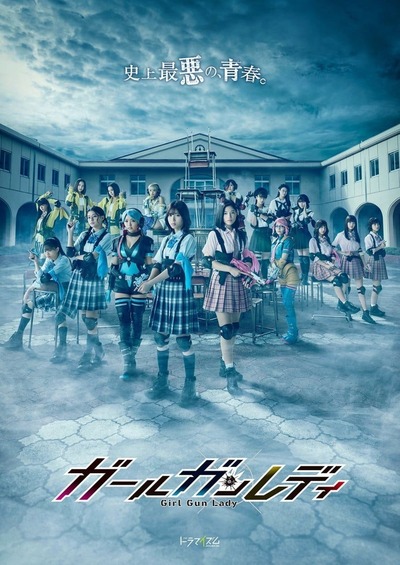
With its combination of alternate reality sci-fi and stylized action, this feels like it could have come from the mind of Mamoru Oshii, creator of things such as Avalon and Assault Girls. It’s not. Instead, it was created by toy manufacturer Bandai – like most of their shows, it works largely as a 25-minute long advertisement for product, in this case specifically model kits. But there are some interesting ideas to be found here, though they are somewhat let down by action that clearly has no interest in being realistic, and a tendency towards maudlin emotion. I was left wondering who, exactly, it was aimed at, because the sentimentality feels at odds with the young men who are likely the target consumers.
It takes place in a high school where the favoured hobby of Koharu Tachibana (Shiraishi) is making plastic models. After buying kits of a gun and a figure called Alice, and assembling them, she wakes to find herself an unwilling participant in ‘Girl Gun Fight’. Four teams of three young women, are pitted against each other in battle, overseen by each team’s commander – hers being Alice (Ohara). Between rounds she’s returned to school, along with the other participants, but naturally, nobody believes this story. There’s an awkward twist, in that if you lose all three of your lives in the game, that’s it. You do not get back to the real world, with all trace of you, including other people’s memories, being wiped out.
That’s a wonderfully dark concept, which we see realized as members of the team’s try, and fail, to protect their last life. But it also possesses almost industrial levels of perkiness, particularly reflected in idol-like pop video inserts, and bumpers of enthusiastic model-making. Tonally, it’s all over the place. I suspect that might be the point, in the same way I don’t know at whom it’s aimed. I’m inclined to go for male wish fulfillment, with Koharu being about as far as possible from the typical model-building nerd. On the other hand, it has a lot in common with the “magical schoolgirl” trope, often found in anime, and it’s driven largely by the power of friendship.
That’s especially true in the final two episodes, when Koharu, Alice and the survivors meet the wizard behind the curtain. It all gets a bit too sentimental for my tastes, with the protagonists falling over themselves in a rush to self-sacrifice. The other weakness is action that, in the main, is nothing special – it’s very stagey, in a way at which Power Rangers might look askance. More hard-hitting fights would have added nicely to the contrast with the cheesier elements. Still, I burned through the ten episodes in three sittings, and was entertained, though the emotional impact I felt fell short of what the show was aiming to generate. I also do not feel any strong urge to take up kit-building as a hobby.
Dir: Yûsuke Taki Star: Sei Shiraishi, Yuno Ohara, Anna Ishii, Natsuki Deguchi
This is actually an improvement over the same director’s Ninja Girl (Kunoichi), made two years later. Just do not ask me what’s going on in detail. It begins with the following caption, which I transcribe as it appeared: “It was the Sengoku Era, a few years before the events of Honnoji [1582]. The Iga relied on a hierarchical system in which the jyonin ruled over the genin, before Oda’s forces destroyed their nation. [Jyonin: high-ranking ninja] This meant that countless genin and female shinobi died by orders of the jyonin, [Genin: low-ranking ninja] without the chance [Shinobi: ninja] to flee their villages.” I hope that has cleared everything up. Because, trust me, that’s more or less all you’re going to get.
The heroine is Uragami (Hijii), and she is a… [/checks notes] shinobi, I guess? She’s part of a war between two groups of ninjas, though she’s not exactly getting much support from her own side, with some of her colleagues suggesting a career in farming or even child-minding. Still, even though she’s not great on the “obeying orders” department, her talents prove enough to keep her occupied, such as a mission to bring back an intelligence report from a genin who infiltrated enemy territory. However, all that goes to one side, after her long-time friend, Kamari, is abducted. She decides to go rogue, and will not let anything stop her from freeing Kamari, despite the unpleasant truth which is revealed as a result.
Well, somewhat unpleasant, I guess. Due to the confusion surrounding the various plot elements – in particular, who is doing what to who, and why – the emotional impact of it all is close to zero. It doesn’t help that the pacing is weird: we get what feels like it should be the final fight, and the film then dawdles along for another ten minutes of idle chit-chat, revealing more stuff about which I couldn’t bring myself to care. Fortunately, the film is saved by some decent action sequences. Hijii seems to know her way around a fight, and if the editing is occasionally a little too kinetic, it’s rarely bad enough to make you lose sight of the face-off’s overall progress.
While I was hard-pushed to care much about events in general, Uragami makes for a decent heroine, with a feisty attitude, and a zero-tolerance policy for glass ceilings. Or whatever the equivalent is for 16th-century Japanese shinobi. I was worried that in the final battle against [name redacted for spoiler purposes – and not at all because I failed to make a note of it…], she would end up needing help from one of her male allies. Pleased to report that wasn’t the case, with this sister capable of doin’ it for herself from beginning to end. That even includes a battle in the middle of a forest, where all I could think about was the uneven footing inevitably resulting from such a location. Nice heroine: shame about the plot.
Dir: Seiji Chiba Star: Mika Hijii, Masayuki Izumi, Mickey Koga
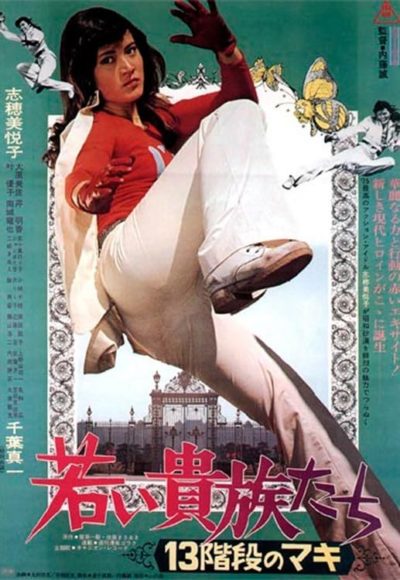
Made by Toei, this is very much a straightforward “pinky violence” film in concept, telling the story of the Wildcats and, in particular, their leader Maki Hyuga. What separates this – in ways both good and bad – from the pack is that Maki is played by Sue Shiomi, best known for her roles in the Sister Streetfighter series of films. That means the action in this is considerably improved on the typical pinky violence movie, with Shiomi capable of holding her own, even when fighting many opponents. In particular, her skills with a pair of nunchaku is a sight to behold. The scenario here provides plenty of opportunities for her to show all her abilities off.
However, the downside is that Shiomi is simply too “good” to play a bad girl. When you put her beside the titans of the genre, like Meiko Kaji or Reiko Ike, Shiomi just does not have the necessary edge to succeed as the leader of an all-female gang of delinquents. Any group led by Shiomi would, I feel, be more likely to sell you cookies or help old ladies across the road, than beat you up and take your lunch money. It’s notable that, while this is certainly not short on the nudity required in the field, Shiomi remains firmly attached to her clothes. Others take care of this onerous duty, with the heroine instead providing the second half of the sex ‘n’ violence recipe.
The story sees Maki running foul of Yakuza chief Ryunosuke Daimon (Nawa) after rescuing a girl from his white slavery operation, and also annoying rich bitch Takako Ebihara (Ohara). Their revenge ends in Maki being framed and sent to prison, while the rest of her gang get hooked on smack by Daimon, and turned into compliant slaves. However, she gets help from an unexpected quarter, in the form of Daimon’s top bodyguard Tetsuya Eto (Nanjô), an honourable ex-boxer who grows increasingly unhappy with his boss’s sleazy business practices. Takako is also unimpressed when she discovers she’s going to be married off to Daimon, whether she wants to be or not. That comes after he has blown up Takako’s father with a car-bomb.
Things unfold as you’d expect. Maki wins the respect of her cell-mates, breaks out and, with Tetsuya are her back, storms the headquarters of Daimon’s yakuza clan, just as he is in the process of getting married to Takako. She’s not there to bring the gang boss a toaster or some nice crockery. If almost entirely predictable, the presence of Shiomi, and resulting upgrade in the quality of the fight sequences does make it feel relatively fresh in style – just not in content. The main factor which stops it reaching the top tier for the genre is the sense Shiomi is almost cos-playing as a bad girl, something you never doubted with the Queens of Pinky Violence. There’s good reason she only dabbled in this field.




 ★★★★
★★★★ Haruka Nozaki (Yamada) is just a couple of month away from graduating junior high. But will she make it? Because her life is being made a living hell by bullies at the school. Rumour has it that she “stole” a boy, Mitsuru Aiba (Shimizu), from another girl, Taeko Oguro (Ôtani). As a result, Haruka has become the relentless target of other female students. The staff are no help: the school is going to be closed after this class graduates, and the teachers consequently couldn’t care less. Indeed, Haruka’s father, a substitute teacher – that’s why she ended up transferring in – is being victimized by the male bullies, in a similar way to his daughter.
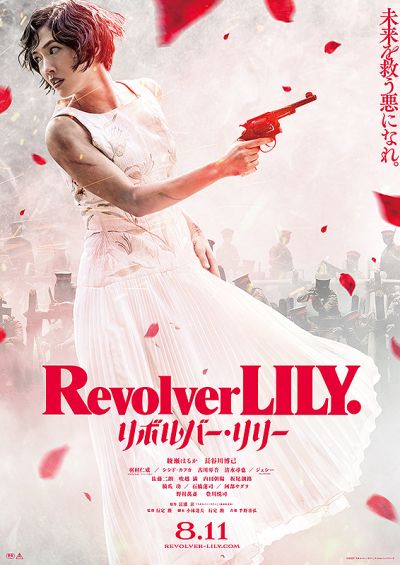 Yuri Ozone (Ayase) was once one of the most feared assassins in all of Japan, before she vanished off the grid around 1914. A decade later, she is quietly running a brothel. As you do, I guess. Anyway, Shinta Hosomi (Hamura) is a young man, who can only watch as the rest of his family is ruthlessly slaughtered by a party seeking… something. However, he was told in the event of such an incident, to see out Yuri and she would help him. Naturally, this drags her back out of “retirement” – quotes used, since she’s not exactly of pensionable age – and into the middle of a battle between different section of the Japanese military, with war looming on the horizon.
  ★★★★
★★★★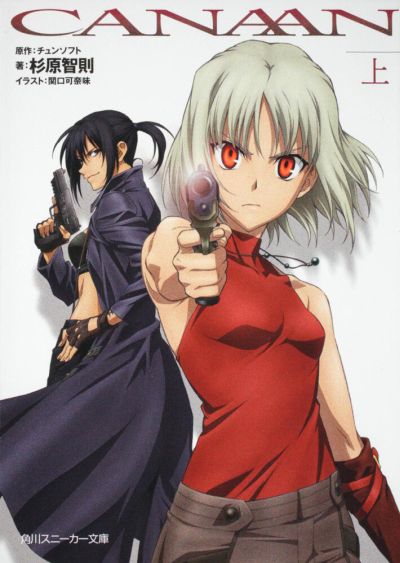 Obviously, the girls feel strongly for each other and there are traces of the so-called “yuri” genre (girls in love) here. But Western audiences should be careful not to think this equates to lesbianism. Yuri is seen by many fan-girls in Japan as something “pure” and “cute”. Many fans would feel embarrassed if something so concrete and direct as sexuality was superimposed on such a relationship. I guess there are cultural particularities that cannot translate 1:1 into our Western cultural understanding, because they are so very different. Anyway, what’s at stake here is much bigger. One problem is, there are a lot of different things, elements and characters introduced at the beginning, which initially don’t make sense at all. Only slowly, as the story progresses, is it revealed how they connect with each other. I wonder if players of the game maybe had it easier?
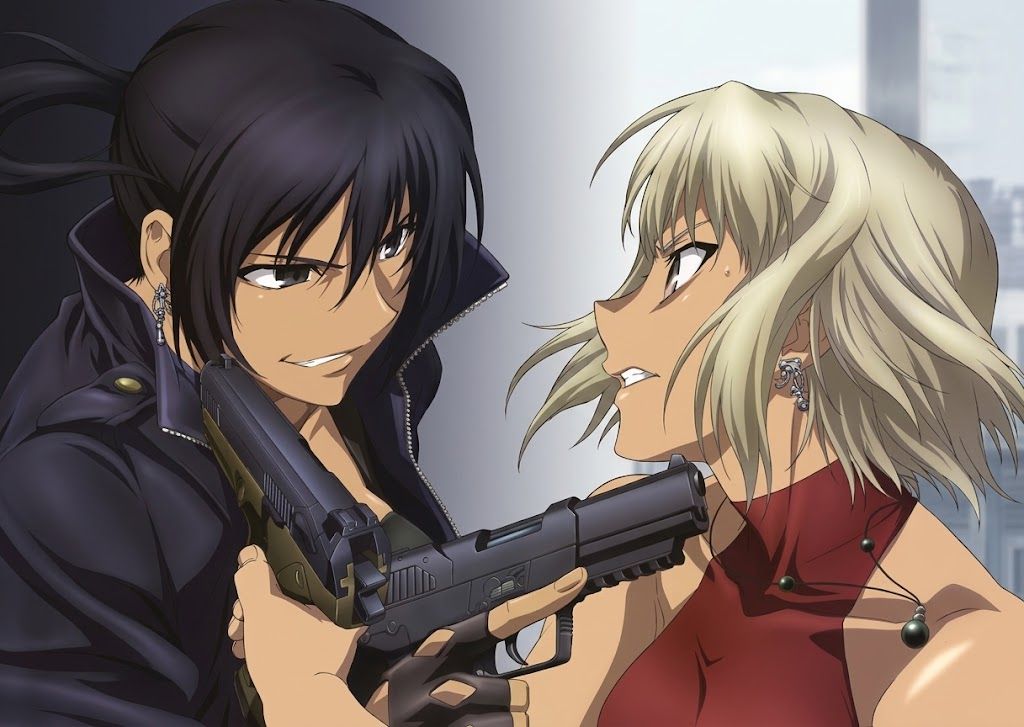 You could say that this is about two women finding closure with the past. Their different attitudes to deal with it become clear: While Canaan suffered as much from the loss of Siam as Alphard did, she was able to move on and establish a new positive relationship with Maria. While Alphard, despite becoming head of the terrorist organization “Snake”, has been eaten up by her hatred and suppressed feelings of guilt. She also can’t reciprocate the obsessive and essentially destructive feelings her “little sister” Lian Qi had for her. Oh, yeah: Lian Qi… She would be a feast for a psychiatrists’ conference! On a deeper level this is not really about bombs, anti-terrorist summits, political maneuverings (the US president and his VP don’t leave a good impression here), human experiments or even the big shoot-outs. It’s about the loneliness and isolation the individual characters suffer, and their hope of finding love and possibly redemption. There is a deep, poetic quality in the series, expressed in the dialogue, often less matter-of-fact but hinting at deeper meanings or feelings.
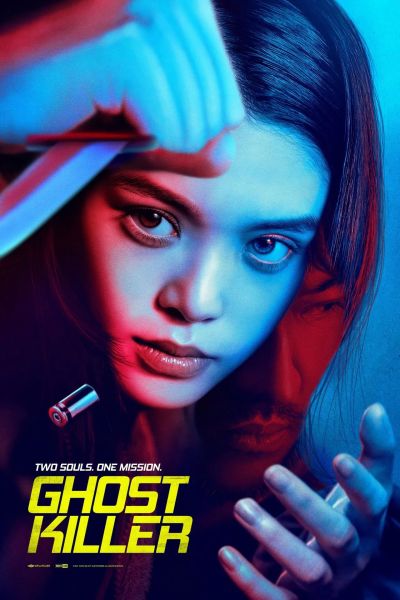 By coincidence, I watched this after
 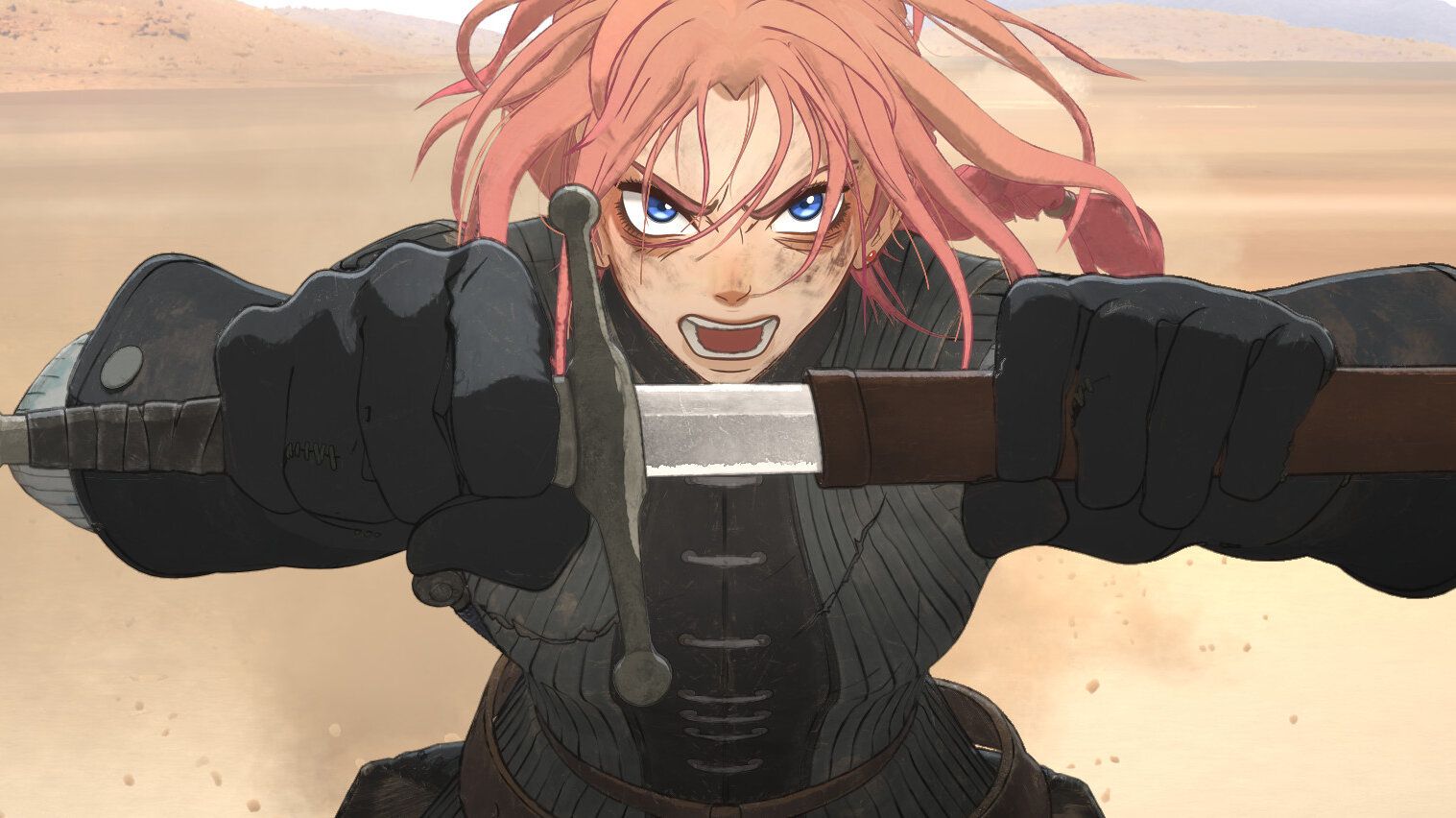 Mamoru Hosoda is one of the senior figures in Japanese animation, with thirty-five years of experience since he joined Toei Animation in 1991, after graduating from college. He made his feature debut with One Piece: Baron Omatsuri and the Secret Island in 2006, though this came only after he had almost directed Howl’s Moving Castle for Studio Ghibli. He subsequently left Toei, to go freelance, and his works since have met with both critical and commercial success. Mirai was nominated for an Oscar in 2019 as Best Animated Feature – the first non-Ghibli film to be so honoured. 2021’s Belle , loosely inspired by fairy-tale Beauty and the Beast, was the second-biggest movie at the Japanese box-office that year, domestic or foreign.
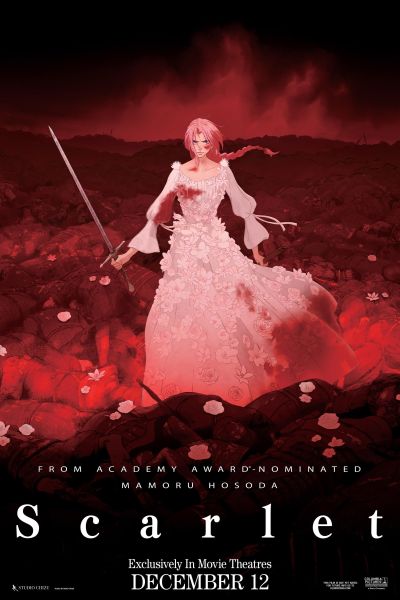 I didn’t mind. It only serves as a basis on which the director discusses the general but often overlooked and therefore more essential questions of humankind: What defines our humanity? What do we live for? What does death mean? What is love? What can be forgiven? What cannot? How much are we shaped by the environment we grow up in? And if we spread a loving and peaceful attitude can we change the world for future generations?
 I cannot fault the visual side of things here at all. Dieter encouraged me to see this on the largest screen possible. Unfortunately, it did not last long in cinemas here: two weeks after release, it was down to showing in just twenty-four theatres nationwide. But having seen it in my living-room, I would not have minded a much larger viewing experience, and can only imagine the impact. It’s not seamless, in that you can often tell which sequences were old-school, and which were zeroes and ones. But the overall effect is undeniably impressive, and on that basis alone, I’d say it deserved an Oscar nomination more, say, than Zootopia 2.
 I am increasingly coming to the conclusion that the Baby Assassins franchise may be some kind of surrealist joke, being played on me by its makers. I
  With that title, you’ll understand why it’s one I opted not to make part of family movie night. I mean, you can’t argue with the forthrightness, though I’ve little doubt it’s as “true” as most films which make that claim i.e. barely at all. However, the bigger problem is that it’s fairly borderline “pinky violence”, being considerably more interested in the pink than the violence: it’s arguably more of a roman porno. It’s as if someone presented a checklist of cliches from the woman in prison genre, and asked the director to cross them off as rapidly as possible. The resulting speed-run lasts barely more than seventy minutes, especially impressive considering the amount of time devoted to soft-core sex couplings, in various combinations.
 With its combination of alternate reality sci-fi and stylized action, this feels like it could have come from the mind of Mamoru Oshii, creator of things such as
  This is actually an improvement over the same director’s
  Made by Toei, this is very much a straightforward “pinky violence” film in concept, telling the story of the Wildcats and, in particular, their leader Maki Hyuga. What separates this – in ways both good and bad – from the pack is that Maki is played by Sue Shiomi, best known for her roles in the