



Literary rating: ★★★★★
Kick-butt quotient: ☆
Tessa Lancaster, the co-protagonist of this exceptionally well-written novel set in San Francisco and the Bay area, is Asian-American (as is the author), the daughter of an ethnic Japanese mother and an Anglo father, who abandoned his family when Tessa was a child. While Japanese people tend to be short-statured, she inherited a tall physique from the Lancaster side, and also took martial arts lessons (courtesy of her maternal uncle Teruo) as a bullied kid. Being something of a tomboy to start with, and having a fraught relationship with her girly-girl sister and their mother (who favored the sister), she early took to hanging out a lot with her male cousins. They weren’t the greatest moral influence, since the males on that side of the family all belonged to the Yakuza, Japan’s equivalent of the Mafia; and Teruo headed up the San Francisco branch.
Starting at age 16, she went to work for him as an enforcer. Over the next seven years, fighting to earn and maintain respect in a family/organization steeped in a traditionally sexist culture that definitely devalues women, she acquired a well-deserved reputation for toughness, combat skills, and willingness to inflict considerable mayhem on opponents (though her aunt and essentially second mother Kayoko, Teruo’s wife, saw to it that she wasn’t tasked with actually killing anybody). The Prologue shows us how, at the age of 23, out of love for her uncle, she voluntarily took the blame for the crime when Teruo’s piece-of-trash son Freddie killed his girlfriend in a temper fit.
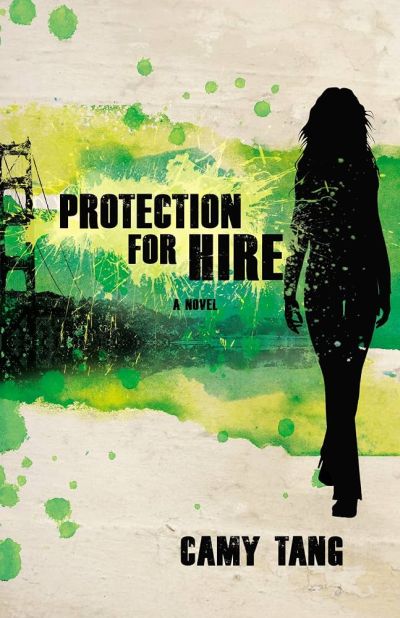 Our main story begins seven years later. Tessa served a seven-year sentence for manslaughter; the terms of her plea-bargain had called for a maximum of five, but the judge added two more, on the recommendation (although Tessa doesn’t know that part) of his clerk and case-background researcher, recent law school graduate Charles Britton. She’s been a Christian (also like the author) for three years, but the last two years in prison were especially painful; when Kayoko died, Tessa couldn’t visit her in the hospital, nor attend the funeral. Having been out now for about three months, she’s living with her mom, vainly looking for a job (not easy with her prison record and known Yakuza connections!), steadfastly refusing her uncle’s insistent invitations to take up her old job, and donating time as a volunteer at a battered women’s shelter. (Long story!)
That’s where she meets Elizabeth St. Amant, a young woman married to an abusive private-equity mogul –and who bolted, with their child, the first time her husband hit the little boy instead of her. Afraid for her life (with good reason), she hires Tessa as a bodyguard. (Of course, she can’t actually pay her right away; being from a wealthy family herself, she has money of her own, but for now hubby’s managed to tie it all up.) Elizabeth’s family connections are about to throw co-protagonist Charles (now a full-fledged lawyer) into Tessa’s path again. All three are about to embark on a suspenseful and mortally dangerous adventure, which will involve more mystery than meets the eye, organized crime, murder and mayhem, and some serious moral decisions for both main characters.
While the book is written in third person, Tessa and Charles alternate as our viewpoint characters. This is a serious novel, dealing with some important issues, involving life-and-death stakes, and evoking heavy-duty emotions that are often not of a pleasant sort. As mysteries go, though it has no bad language or explicit sex, it’s not really what I’d see as “cozy;” there’s a fair amount of violence. (Tessa can’t pack a gun like she did in her Yakuza days, because of the terms of her “parole” –I’m not sure why that should be a factor, since she served her full sentence, but I haven’t researched the law– but her martial arts skills, and ability to handle dangerous driving maneuvers, are put to the test several times here, and she’s no slouch in either department. Tang handles action scenes well.)
But it’s also, in places, genuinely funny; the author has a good understanding of the value of comic relief, and endows both of our main characters with a wry sense of humor. (Barb and I read this together, and the interactions between both of them with their families had us both laughing aloud in places.) Our viewpoint characters’ honest reflections about, and attempts to live out, their Christian faith adds a spiritual depth to the book, but doesn’t come across as particularly “preachy.” It’s not a spoiler to say that Tessa and Charles are attracted to each other, physically and as persons; but the relationship is …complicated. We’re given a well-crafted, page-turning plot with some surprises. All of these factors make for a read that easily earns five stars.
Though raised in Hawaii, evangelical (and prolific!) author Tang now lives in San Jose, in the Bay area; she exhibits a solid knowledge of the area that enhances her tale. This book is the start of a duology (Barb and I have started reading the second book); but she’s written, by Goodreads’ count, 121 “distinct works” altogether under her own name and 75 more under her “Camille Elliot” pen name, which she uses for romantic and/or espionage-themed historical fiction set in the Regency milieu. Following this first experience with her work, I’d certainly be open to reading more of it (besides the sequel)!
Author: Camy Tang
Publisher: Zondervan; available through Amazon, currently only as a printed book.
Book 1 of 2 in the Protection for Hire series. A version of this review previously appeared on Goodreads.
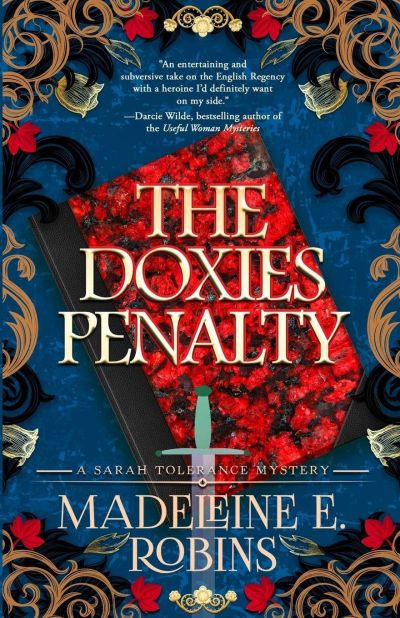 So, for the benefit of readers who haven’t read, or don’t remember, the earlier books or my earlier reviews, Miss Tolerance (born Sarah Brereton) is a scion of a lower-nobility family, which disowned her as a teen when she ran off with her brother’s fencing master. (The pair were in love, and would have married if her father hadn’t forbade it.) After her man died young, Sarah took shelter with the one relative who’d have her, an also-disowned aunt who owns a high-end brothel (fortunately, there’s a small cottage out back); and rather than resort to prostitution like many young women in her situation, she’s created a profession for herself as an “Agent of [discreet] Inquiry.” (She’s smart, inquisitive, able to blend in a variety of social settings and pass as a man if she has to; and since she packs pistols and learned how to fence from her late life-partner, she can handle rough stuff if it’s thrown at her.)
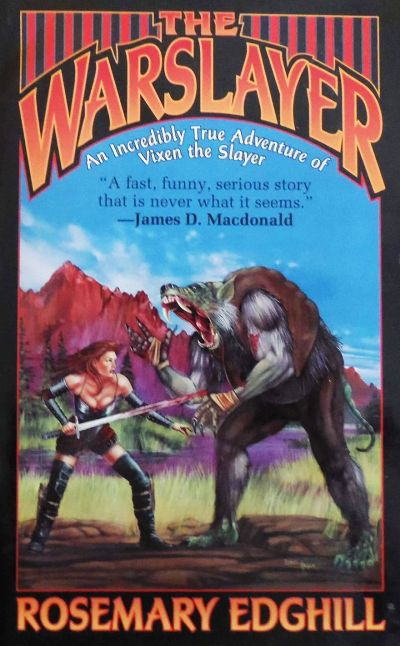 The cover blurb/Goodreads description creates the impression that this is a light exercise in humorous fantasy; and it actually does have a lot of humor (I read it to my wife, and she laughed out loud in several places). Both TITAoVtS and Xena are shows that offer mostly action-oriented entertainment without a lot of serious content, which might also lead readers to expect the same here. However, The Warslayer has its unexpectedly deep and serious side. Glory can deliver a fair amount of wry humor; but we’ll also see her bleed, vomit, and cry. While there’s some intense physical combat going on here at times, the battles aren’t all going to be physical, and the author has some really important things to say. (I’m not going to try to summarize them, because the story is the message, and you need to experience it the way she wrote it.) Her plotting here is not at all predictable. (But it’s deeply satisfying!)
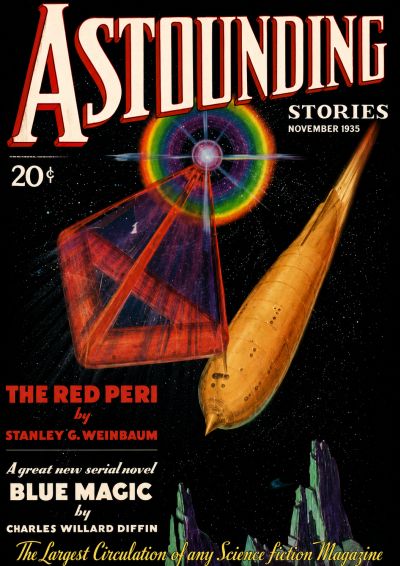 American SF between the World Wars was a sort of literary ghetto, disdained by critics, and found mainly in a handful of small-circulation niche magazines, dominated by editors committed to the genre’s “hard” tradition, in which the speculative element is strictly based on extrapolation from known science and scientific accuracy is a paramount concern. (Literary matters like character development, well-crafted prose, and original plotting, in that era, was sometimes of less concern.) Weinbaum, like many of the genre’s writers in his generation, had the scientific background and interest to write hard SF, but his English literature education/interest also gave him stylistic skills superior to those of a lot of his contemporaries. Both qualities are evidenced in this short work.
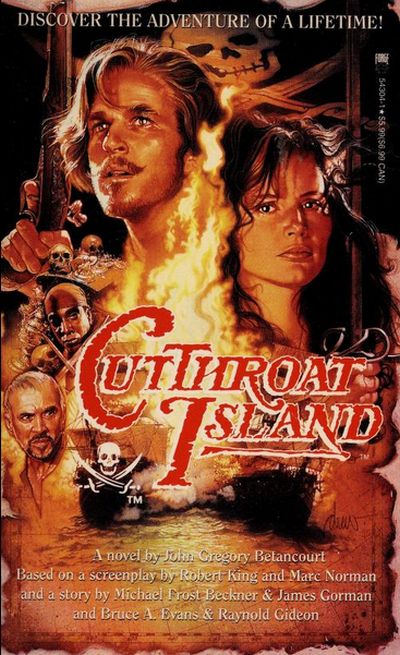 The tale opens in 1688. In the movie, the opening scenes are on, or just off, the coast of Jamaica; in the book, they’re moved inexplicably to Tortuga, off the northern coast of Haiti, and we then move to Jamaica in one day (which I doubt is actually possible for a wind-driven sailing ship). But we soon learn some crucial backstory. In 1619, a pirate captain named “Fingers” Adams captured a Spanish treasure ship loaded with “the richest cargo ever to leave the Americas;” but his ship was subsequently wrecked on the uncharted titular Cutthroat Island, with Adams as the lone survivor. He secreted the treasure there; but after returning to civilization, instead of mounting a retrieval expedition, he contented himself with making a map to the treasure’s location. (Apparently, pirates didn’t steal their booty to do anything like selfishly spend it; they just liked to leave it for posterity.) He divided the map into three parts, bequeathing one piece each to his three in-wedlock sons, all pirate captains in their own right. A fourth son, pirate captain Douglas Brown, nicknamed Dog or Mad Dog (Betancourt always affects the spelling “Dawg,” though that wouldn’t be pronounced any differently) was left out because he was born out of wedlock.
 Once upon an unspecified time, somewhere in the cosmos, a human-like, space-faring race called the qhal (or Qujal, in a later dialect) stumbled upon, and subsequently greatly extended, a system of high-tech Gates, a relic of a vanished civilization, which permitted instantaneous travel to other planets and other times. Fearing that travel into the past would prove dangerous, the qhal forbade it; but they used the Gates to travel extensively in space and future time, building up an empire that oppressed and exploited the various despised other races they encountered. This gave them much wealth and power (and universal detestation from others) –until somebody eventually tried past time-travel. The resulting cataclysm (only dimly surmised in the theories of the subsequent scientists) reached as far as the Gates themselves reached, and proved to be an apocalyptic warping of space-time that destroyed civilizations and worlds in its path. But the Gates themselves survived. We learn all of this from an omniscient narrator in the first part of the Prologue.
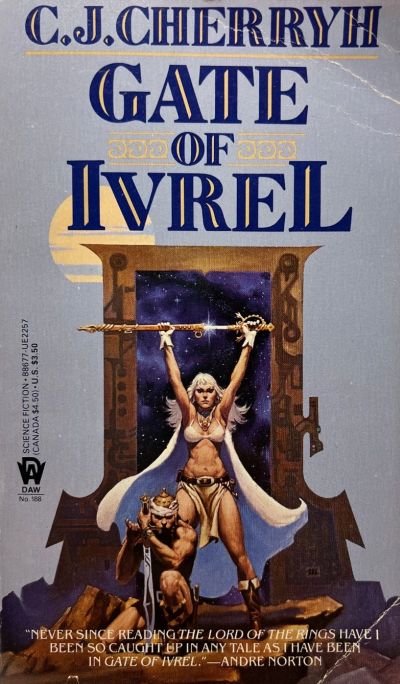 Finally, a longer passage from the Annals of Baien-an recounts how, “In the year 1431 of the Common Reckoning,” five strangers supposedly from the distant south came to the northern realms, one of them a tall, light-colored young woman named Morgaine (who was thought to be Oujal). They persuaded the northern kings to make war on “…the witch-lord Thiye… lord of Ivrel of the Fires;” but near Ivrel, the great northern army of 10,000 men was unaccountably nearly annihilated, and the five were blamed for the disaster. All of them but Morgaine vanished without trace; pursued, she fled south and supposedly died at another place of Qujalish “Stones,” afterwards called Morgaine’s Tomb. “Here it is said she sleeps, waiting until the great Curse be broken and free her.”
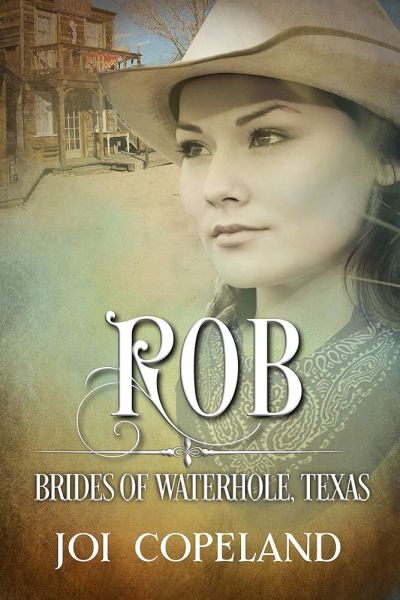 This is the last (and at 120 pages, slightly the longest) book in the Sheriff Bride series, each installment written by a different author, which my wife Barb and I read together. (She appreciates these books much more than I do.) Here, our focus is on the youngest Hardin sister, Rob (Roberta); and three years have passed since the opening of the first book, so she’s now very close to 18, and probably is 18 by the end of this installment. (In western Texas in the late 1870s or early 80s, she would be viewed as of legitimately marriageable age –and the series title is a clue that this might be a relevant consideration.) While I don’t go so far as to recommend the series to most readers, if you do read it, I recommend doing so in order; you need the understanding of the situation and the characters as these have developed over time in the earlier books in order to properly experience this one.
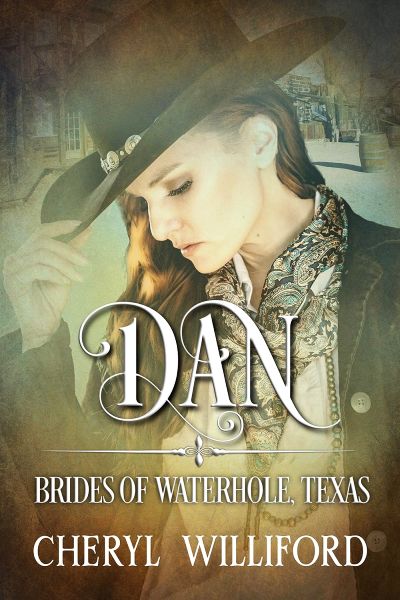 Despite the fact that all of the books of this series are written by different authors, they exhibit a lot of similarity in style, and also in literary quality. Since the quality tends to be wanting, that’s not a good thing. (My wife Barb really likes these books, which is why we read them together; and even I find the premise novel and intriguing. But it suffers from mediocre and even amateurish execution.) However, Williford has a bit smoother, less pronoun-averse and a trifle more textured prose style than her colleagues, and also a more realistic and less “vegetarian” approach to the realities of lethal force in law enforcement than the first two books displayed. There are situations that can arise where killing a determined aggressor is the only way to protect innocent lives; and she recognizes both the fact that a decent person doesn’t want to do that and may be severely torn up by the pain of doing it, and that neither the reluctance nor the pain change the moral necessity of doing it at times. In fairness to the author of the first book, Teresa Ives Lilly, her heroine realized this as well, but was able to make a decision to disable rather than kill in the particular case she had to confront. But circumstances may not always provide that option…
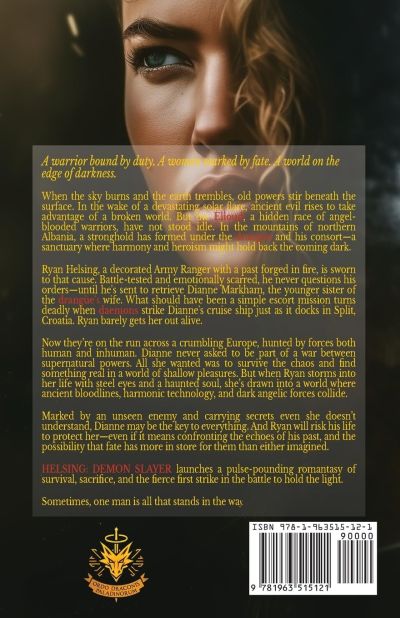 As reader’s of the latter know, Zane’s premise is that, from antediluvian times on down to the present, there have been some sub rosa matings between angels (mostly fallen ones, but occasionally celestial ones as well) and humans, and that the children of these unions walk among us, sometimes aware of their heritage, sometimes not. These Elioud have (latent, or more developed) super-human abilities from their angelic genes; and in the ongoing cosmic strife between God and Satan, they may be knowingly enlisted on one side or the other, or just imagine that they can ignore spiritual realities and be neutral. (This premise is taken for granted in the present novel, which should definitely be read after at least the original trilogy, if not necessarily the prequel; the reader needs that to fully understand the situation and to really know some of the important characters.)
 Related to this, although like all of the author’s books, this one has a strong good vs. evil orientation which is explicitly understood in Christian terms of God vs. Satan, there’s not a strong note of necessary personal decision to repent of self-will and turn to Christ in salvation. (Granted, Christian conversion is typically a gradual process of internal changes in response to moral and spiritual influence; but there does come a distinct tipping point in which personal loyalty flips Christ’s way. We don’t get a real sense of that here; Dianne starts out as essentially a heathen, albeit one who’s having a bit of a moral awakening; but insofar as she changes spiritually, the change appears to be more about her relationship to Ryan than to Christ.)
 My rating for the first book was two and ½ stars. Several aspects of this second one, though, don’t work as well for me in terms of realism, and I wasn’t able to give it more than two stars. First, while (for at least some Native American peoples) tribal law may have allowed the fathers of young women to sell or gamble them away as slaves, by the late 1870s U.S. law didn’t countenance that. So the community’s project of buying Morning Glory’s freedom was unnecessary. Given the long warfare between Texans and the Comanches, and the ill-feeling of many whites in that era towards Indians, as well as Texas’ secession in the previous decade with defense of slavery as one of its officially-avowed reasons, the community’s unanimous sympathy with Morning Glory also seems a bit of a stretch. Though it’s true that slavery was much less entrenched in arid west Texas than in the east Texas cotton country; and Jo’s mother was apparently Northern-born, since her two brothers died fighting for the Union.
Second, it’s a standard romance-genre trope that at least one party to the romance has hang-ups to overcome, but Tom’s here seem sort of contrived. Yes, his previous fiancee broke their engagement because she didn’t want to live in a place like Waterhole; but it’s patently obvious that Jo doesn’t have that problem, and by now the community is becoming more female-friendly than it was then. His fear for her safety in a potentially violent job is more credible (if she has a problem shooting a deer, might she not also have a fatal hesitancy in shooting a human, even with her life on the line?), but the denouement here doesn’t actually discredit that fear. That brings me to some issues with the denouement.
In the first book, I had no trouble believing that a sober woman with quick reflexes, who’s trained and experienced with a pistol, could outdraw a partly-drunk male, even if he and a bunch of cowed townsfolk thought he was pretty hot stuff with his gun. It was said in the Old West that, “God created men and women, but Col. Colt made them equal.” But here, I did have trouble believing that a woman could tackle and physically overpower a presumably bigger and stronger armed male; and not much respect for her intelligence in trying it, when she could easily have covered him with her own gun from behind and demanded his surrender. Her two armed sisters didn’t display much smarts there, either.
If I were Tom, that incident would have exacerbated my concern for her, not laid it to rest. The outcome of the tale here also depends on believing (which I’m not certain that I do) that it can automatically be assumed that every cave in west Texas is inhabited by a swarm of bats which will emerge at sunset; and we’re also asked to believe that Jo’s love for animals makes her the only Hardin sister who would know this, when all of them are wilderness-wise. I also had a problem with our heroines letting an arrested petty thief just walk out of jail, even on the condition that he leave the area, in exchange for a tip leading to the arrest of bigger prey. Finally, although I give Cox credit for treating inter-racial romance positively, the secondary romance here came across to me as implausible and unconvincing.
All of this said, I did finish the book (my wife and I read it together – and she liked it much better than I did, her taste in Westerns not being nearly as critical), and it held my interest. Cox’s characterizations aren’t deep, but most of the characters are likable. Like the author, the main characters are evangelical Christians, and there’s a positive portrayal of the role of faith in their lives. We also see the effects of Christian conversion in a couple of cases, though we’re not privy to the scenes/conversations where those conversions take place (so there’s no lengthy evangelistic exposition). The series can appeal to fans of Westerns, Western romance and “Christian fiction” who don’t expect much depth and just want some harmless, time-passing entertainment.
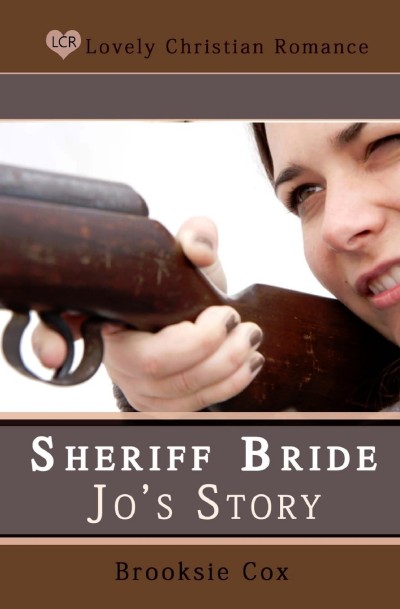
A brief word about the cover art is in order. It’s a nice bit of action-heroine iconography, and does depict an actual scene from the book (a rifle-shooting contest). But while the young lady here has lovely brown eyes, we’re told in the books that Jo and all of her sisters are green-eyed; and the kind of colored nail polish this markswoman is wearing didn’t come into vogue until the 1920s. So, no awards for accuracy here!
Author: Brooksie Cox
Publisher: Lovely Christian Romance Press, available
My rating for the first book was two and ½ stars. Several aspects of this second one, though, don’t work as well for me in terms of realism, and I wasn’t able to give it more than two stars. First, while (for at least some Native American peoples) tribal law may have allowed the fathers of young women to sell or gamble them away as slaves, by the late 1870s U.S. law didn’t countenance that. So the community’s project of buying Morning Glory’s freedom was unnecessary. Given the long warfare between Texans and the Comanches, and the ill-feeling of many whites in that era towards Indians, as well as Texas’ secession in the previous decade with defense of slavery as one of its officially-avowed reasons, the community’s unanimous sympathy with Morning Glory also seems a bit of a stretch. Though it’s true that slavery was much less entrenched in arid west Texas than in the east Texas cotton country; and Jo’s mother was apparently Northern-born, since her two brothers died fighting for the Union.
Second, it’s a standard romance-genre trope that at least one party to the romance has hang-ups to overcome, but Tom’s here seem sort of contrived. Yes, his previous fiancee broke their engagement because she didn’t want to live in a place like Waterhole; but it’s patently obvious that Jo doesn’t have that problem, and by now the community is becoming more female-friendly than it was then. His fear for her safety in a potentially violent job is more credible (if she has a problem shooting a deer, might she not also have a fatal hesitancy in shooting a human, even with her life on the line?), but the denouement here doesn’t actually discredit that fear. That brings me to some issues with the denouement.
In the first book, I had no trouble believing that a sober woman with quick reflexes, who’s trained and experienced with a pistol, could outdraw a partly-drunk male, even if he and a bunch of cowed townsfolk thought he was pretty hot stuff with his gun. It was said in the Old West that, “God created men and women, but Col. Colt made them equal.” But here, I did have trouble believing that a woman could tackle and physically overpower a presumably bigger and stronger armed male; and not much respect for her intelligence in trying it, when she could easily have covered him with her own gun from behind and demanded his surrender. Her two armed sisters didn’t display much smarts there, either.
If I were Tom, that incident would have exacerbated my concern for her, not laid it to rest. The outcome of the tale here also depends on believing (which I’m not certain that I do) that it can automatically be assumed that every cave in west Texas is inhabited by a swarm of bats which will emerge at sunset; and we’re also asked to believe that Jo’s love for animals makes her the only Hardin sister who would know this, when all of them are wilderness-wise. I also had a problem with our heroines letting an arrested petty thief just walk out of jail, even on the condition that he leave the area, in exchange for a tip leading to the arrest of bigger prey. Finally, although I give Cox credit for treating inter-racial romance positively, the secondary romance here came across to me as implausible and unconvincing.
All of this said, I did finish the book (my wife and I read it together – and she liked it much better than I did, her taste in Westerns not being nearly as critical), and it held my interest. Cox’s characterizations aren’t deep, but most of the characters are likable. Like the author, the main characters are evangelical Christians, and there’s a positive portrayal of the role of faith in their lives. We also see the effects of Christian conversion in a couple of cases, though we’re not privy to the scenes/conversations where those conversions take place (so there’s no lengthy evangelistic exposition). The series can appeal to fans of Westerns, Western romance and “Christian fiction” who don’t expect much depth and just want some harmless, time-passing entertainment.
A brief word about the cover art is in order. It’s a nice bit of action-heroine iconography, and does depict an actual scene from the book (a rifle-shooting contest). But while the young lady here has lovely brown eyes, we’re told in the books that Jo and all of her sisters are green-eyed; and the kind of colored nail polish this markswoman is wearing didn’t come into vogue until the 1920s. So, no awards for accuracy here!
Author: Brooksie Cox
Publisher: Lovely Christian Romance Press, available