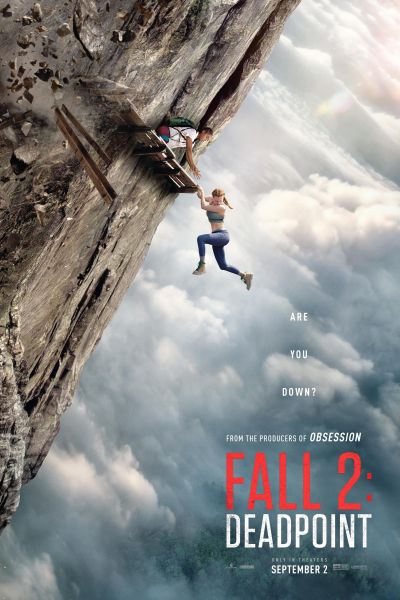
The original Fall was a sleeper hit, which found thoroughly deserved new life on streaming. I watched it again recently on BluRay, and yep: it still triggers a visceral, physical reaction in me, unlike almost any other film. A sequel was inevitable, and probably equally as inevitably, it doesn’t reach the same heights – pun absolutely intended – as the original. While pleasant enough entertainment, it comes over with roughly the same impact as a mid-season episode of American Ninja Warrior. Though it wasn’t long before Chris was re-confirming her desire to avoid any leisure activity involving heights (hanging Halloween decoration from the garage is about her limit), my palms stayed more or less dry throughout.
It follow Jax (Slater), the younger sister of Shiloh (Gardner, who appears in flashbacks), the daredevil from the original movie. She’s contacted by Luce (Thomas), a friend of Shiloh’s. She convinces Jax to join her on a plank walk in Thailand, clearly inspired by the notorious Mount Huashan plank walk in China. Even the shape of the mountain here is similar, though the real location is much shorter, little more than a hundred yards long. Naturally, things do not go well. They are cut of from their guide, Jon (Brittney), by one rockfall; when trying to make their way back, another cuts off the return path. And with this being an unauthorized expedition, rescue will not be coming for them any time soon.
It does remain well-made, and there is a genuine sense of being a long way from the ground. So I’m not quite certain why it never engaged with the primordial part of my brain in the same way as its predecessor. I was somewhat less impressed with the characters, whose count of poor decisions certainly surpasses the last installment. Luce, in particular, seemed more irritating than anything, though to be fair, later revelations do provide some explanation. There’s also a sub-plot involving drug smuggling, which doesn’t make a lot of common sense, unless the price of fentanyl in Thailand is about ten times the price here. These problem infect in particular the first and third acts, replacing the smooth simplicity of Fall.
However, the middle still has its share of credible chills, with the horizontal nature of the route – albeit over a drop of several thousand feet – being what generates the Ninja Warrior similarities. Swinging and progressing laterally becomes the key to survival, using the remnants of the plank walk as tools, although they sometimes become hazards. Figuring out the mechanics for this is likely where the movie is at is strongest, focusing strictly on Problem > Solution > Repeat. Everything else is an unnecessary burden, because the viewers disbelief is already suspended out of bare necessity. If you need to ask “Why?” after the first shot of the precipitous drop below, this is probably not for you. Competent enough to make me amenable to Fall 3, albeit only just.
Dir: The Spierig Brothers Star: Harriet Slater, Arsema Thomas, Tom Brittney, Virginia Gardner
To recap. I was unimpressed with the first Enola Holmes movie, but pleasantly surprised by the sequel. Unfortunately, the third time here is very much not the charm. It’s a regression to the irritating approach of the original, which seems more interested in virtue signalling – and of a highly questionable authenticity at that. I sincerely doubt any of the ruling classes in Victorian England genuinely gave a damn, in the slightest, about any exploitation of the British Empire colonies. It was what they were there for. We did not take over half the world, out of a desire to introduce countries to the delights of cricket. Mention “reparations” in the 19th century, and you’d have been locked up in the loony bin.
That’s where this ends up, though it takes a while to get there. We begin with Enola Holmes (Brown) in Malta, where she is about to get married to Lord Tewkesbury (Partridge). But second thoughts, and the discovery that her brother Sherlock (Henry Cavill) has been kidnapped, cause her to leave her fiancé standing at the altar. When his mother also disappears shortly thereafter, the game is truly afoot. Turns out that this is all part of a scheme by Professor Moriarty (Duncan-Brewster), who has broken out of jail. She aims to get her hands on gold stolen by the British Army – including Tewkesbury’s father – from Afghanistan, which is now hidden in a Maltese cave. But she needs Enola to find the loot.
Yes, she. Because Moriarty here is a woman. And black. I know the character was in #2, but it was a minor sidelight and could safely be ignored. Here, she’s front and centre, begging the question. If you want a black, female villainess, why not invent one, rather than forcing an existing, well-known character to undergo a sex-change? And, worse, a race-change? This is just one of a number of missteps here, in a film whose Victorian atmosphere is repeatedly undermined by poor choices of costume, make-up and dialogue. Basically, it feels like the makers couldn’t decide if they wanted a modern heroine or a period setting, tried to do both, and ended up breaking each equally badly.
The Maltese locations are attractive and well-used, while the cast are… okay. Not the film’s biggest problems, shall we say. Brown is now in awkward stage where she’s trying to move on from child stardom, and is currently transitioning. No, not that way. To adulthood. While it’s all a bit awkward, the supporting players are able to… Well, support her. But it would take Meryl Streep to be able to work with this script. The resulting downturn in viewership was notable, and you have to wonder if Netflix might decide to pull the plug on what is obviously not a cheap franchise. Despite the pleasures to be found in the second installment, I don’t think I would shed any tears should this be the end.
Dir: Philip Barantini Star: Millie Bobby Brown, Louis Partridge, Himesh Patel, Sharon Duncan-Brewster
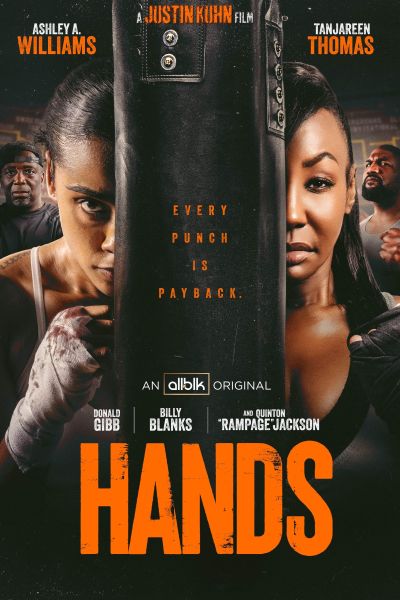
This is a film I wanted to rate higher than I have. The performances are generally decent to good, and I don’t doubt the sincerity of those involved. However, both the script and the core action leave a bit to be desired. To start with the former, I’m not saying this story was written by AI. But if you did train ChatGPT with every combat sports cliché, and then ask it for a script… You probably wouldn’t be too far from what you get here. There’s Naomi (Williams) and Carter (Black), a couple united by their love of mixed martial arts. Until, that is, Carter refuses to take a dive in an underground tournament final, as ordered by the slimy Mindy (Thomas).
When he doesn’t, he gets sucker punched by the aptly named Killgore (MMA legend Quinton ‘Rampage’ Jackson) and dies. Two years later, Naomi has a chance in an underground tournament of her own. Absolutely no prizes will be offered for guessing who the bracket sets her up to face in the final. There are some other well-worn tropes, such as Naomi’s father (action film veteran Billy Blanks), a former boxer who gave up his career for the sake of his family. To be fair, it does not resolve quite as expected. While there is still the obvious confrontation between Naomi and Mindy, it doesn’t take place in the tournament setting. That’s about the extent of the deviation from genre norms you should expect here.
As noted, I did like the performances, which all hit the required notes. Of particular appeal was Thomas, who makes for a suitably hissable villain, with her Resting Bitch Eyebrows. I also liked Gibb, who took genre cliché #17, the Grizzled Old Coach, and brought it to life. Watching these two face off was close to the highlight of the film, from a dramatic standpoint. I appreciated the occasional dry moments of humour too, such as when tournament promoter Gregor mocks the large bad guy: “What type of name is that anyway? ‘Killgore’. His name is probably Marcus or Brandon.” So, the acting side of things, all told, was fine. It certainly was not the chore it could have been.
Unfortunately, the action is underwhelming, and that applies particularly on the distaff side. Jackson, Black and Blanks all know their way around a fight: Kuhn and Thomas, very much less so. We see little of Naomi in action for the first hour, and when the “tournament” gets under way, the fights all seem to be over in thirty seconds or less. Mindy is even less of a threat. As the Big Bad, she needs to be established as an existential physical threat to the heroine, and that is something the film fails to do. It’s not often entries in this genre work better as drama than as action, yet such is certainly the case here. Given my interests, the results have to be classed as disappointing, albeit not fatally so.
Dir: Justin Kuhn, Tanjareen Thomas, Donald Gibb, James M. Black
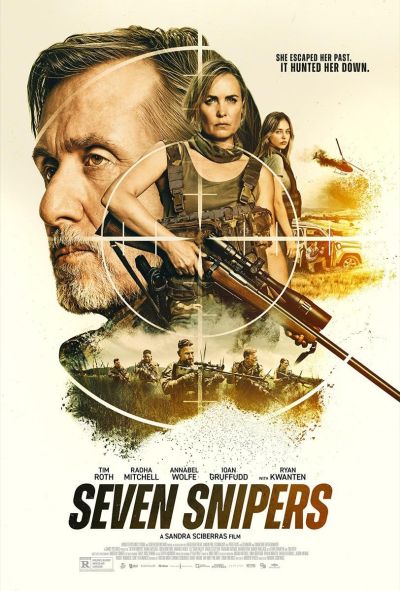
I’m not normally a stickler for accuracy in movies. My disbelief gets suspended so easily, there’s a hook for it beside the TV set. But I have to say, this provided a parade of occasions where it didn’t exactly feel like the characters were elite snipers. Indeed, at points, it seemed like this was the first time certain actors had held a gun, since they were pretending to be soldiers in the school playground, with a stick. In particular, they appear woefully unaware of the idea of concealment. I was painfully reminded of the Monty Python sketch, “How Not to be Seen”. Also, if you’re going to call in your old military pals, I’d go with a range of skills, not just snipers.
That’s probably just me though, and is getting ahead of ourselves here. This unfolds in the Australian outback where former soldier Chris Hendrix (Mitchell, sporting her natural Aussie accent, which confused the heck out of my wife) is living the quiet life with her teenage daughter, Anja (Wolfe). Dad isn’t in the picture. Naturally, the quiet life doesn’t last, with her past catching up with her, in no uncertain fashion, and in the shape of a grudge-bearing former colleague known as The Dragon (Roth). So she sends up a call for help, and her old buddies show up, only to start getting picked off rather quickly. Maybe leaving their heads above the window-sill isn’t exactly the best survival tactic.
All this comes as quite a surprise to Anja, who just wants to bunk off school and hang with her boyfriend. Needless to say, The Dragon has other ideas. I quite liked the set-up here, with the relationship between Chris and her daughter credibly spiky. However, once the snipers show up, the film largely grinds to a halt, losing all momentum. It doesn’t help that, of all the forms of combat, sniping might be the least cinematic. One second you’re there, the next, your head explodes in a cloud of red mist. Kinda dull, really. Of course, we learn the “shocking” truth about Anja’s absent father, which should be absolutely no surprise, providing you have seen any films in the Star Wars universe, shall we say.
That the movie thinks this is a twist gives you some idea of the low ambitions here. It would have been more entertaining had the seven snipers turned up on the side of The Dragon, and Chris has to figure out how to defeat them. I mean, she does calmly tell her daughter about her 116 kills, a number at which Lyudmila Pavlichenko would nod approvingly,. Perhaps Chris could have used the help of Anje, whose archery skills are showcased early, only subsequently not reaching the level of importance I expected. Instead, things proceed to the highly predictable face-off between Chris and The Dragon. All that’s lacking is any particular reason to care much. Nicely shot, making effective use of the locations, yet underwhelming almost everywhere else.
Dir: Sandra Sciberras Star: Radha Mitchell, Tim Roth, Annabel Wolfe, Ioan Gruffudd
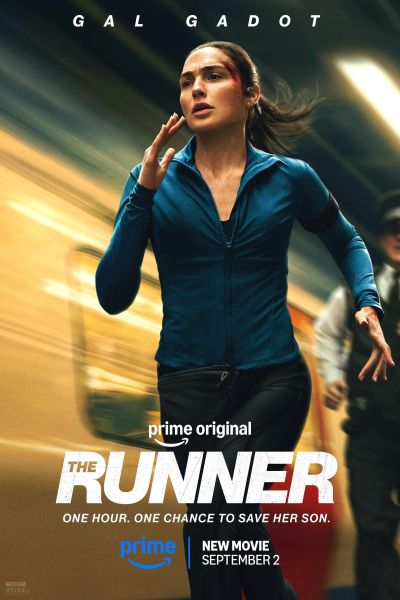
Poor Gal Gadot. Her career since Wonder Woman has basically been one downhill slalom after another. From the disaster which was Wonder Woman 1984, through Heart of Stone, and now this. It feels like everything has been a critical and/or commercial disaster. Even when not the star, she has been catching strays, such as Red Notice and the misconceived (to put it mildly) live-action Snow White remake. It’s at the point where her presence in a project is almost more a warning. The reviews for this could be a new low. Worse than Heart of Stone? Surely not. I was braced though. And while I found this less actively annoying, it still certainly isn’t good.
It’s a script which would barely trouble the back of a beer-mat. On the day prosecutor Maia Marten (Gadot) is scheduled to appear in court for the trial of a crime boss, her son Noah (Wilmot) is kidnapped. Unless she does exactly what she’s told by a voice on the phone (Lewis), Noah will die. The end game is Maia shooting the key witness in the hotel where he is sequestered. But to get there, she must run across London, this being contrived required so that the kidnapper can monitor her. He has also hacked her phone, so she is unable to call for help. There’s also some stuff about Maia’s mother having murdered her father. It doesn’t serve much purpose, and can safely be ignored.
This is the perfect movie, if you’re interested in spending eighty minutes, watching Gadot in motion, slowly getting sweatier and more dishevelled. To be honest… There are probably worse things to look at. Heart of Stone and Wonder Woman 1984, to name but two. As someone who lived in London for more than a decade, I also enjoyed trying to work out exactly where they were. This was challenging, given I left twenty-five years ago, and quite a lot has changed since. Still, I got the lie of the land, and unlike some films (Sherlock Holmes having its hero run from Tower Bridge to the Houses of Parliament in two minutes, requiring a sprint speed of 60+ mph), the geography here seems generally to make sense.
But the fact that I was more interested in tourist landmarks, than the plot or the characters, is significant. You may even spend more of the film thinking of easier, less complex ways, for the voice on the phone to achieve the same end goal. For this is very much an example of an Amazon Prime streaming movie. You don’t need to think about the plot, or even pay attention to it. Everything is clear inside ten minutes, and the last five tidies everything up nicely, with a twist you will likely see coming – at least, it shouldn’t come as much of a surprise. In the middle? Running, taunting of Maia by the voice on the phone, and problem-solution on repeat. As Saturday night entertainment, it was… okay, I guess? Never going to watch it again though.
Dir: Kevin Macdonald Star: Gal Gadot, Damian Lewis, Alfred Enoch, Rory Wilmot
This one is fairly fringey, in terms of qualifications for the site. But I do feel, any film where a woman picks up and wields a chainsaw with bad intentions… Yeah, that’s pretty much a golden ticket to inclusion. You will have to be quite patient though. Very patient. It begins with a car crash which leaves Magda (De Mol), very much the worse for wear and badly concussed, in a gully off the road. She is rescued by Guy (Breck), an elderly gentleman who lives nearby, and who insists on nursing Magda back to health. However, matters are complicated by some rather dubious people, including Justin (Mills), who are after Magda and/or something in her possession.
For a large part, this is really more of a relationship drama between Magda and Guy, with the only tension coming from cut-aways to Justin’s attempts at locating her. There’s a gulf in age, life experiences and attitudes between Magda, a Polish immigrant with a bleak past, as well as a murky present, and Guy, a former soldier who now has Alzheimer’s and is struggling against his son’s attempts to put him in a care home. But, probably inevitably, the two begin to discover a mutual understanding and respect. Hands up, anyone who did not see that coming, and pay more attention next time. Though matters there aren’t helped by her being economical with the truth, in part due to convenient cinematic amnesia, until Justin arrives with a truth delivery.
De Mol does not appear to be Polish, and to be honest, this is often rather too apparent. Her line readings are stilted – admittedly, probably deliberately so – but if there’s any point to Magda’s ethnic origins, it’s outweighed by the clunkiness of the resulting performance. I was also significantly distracted by the logistics of a man with Alzheimer’s, who must be in his nineties (given his stories of flying a Lancaster bomber in World War 2), pulling a full-grown, unconscious woman from her car, out of a gorge, and back to his house – all by himself. My father is in his nineties, and I guarantee you, that ain’t happening. Later, Guy falls over, and can’t even get up by himself, so…
Things definitely kick up a gear when Justin arrives, and we find out a great deal more about the realities of events. We’re over eighty minutes in before that happens, and I do reckon it should have taken place considerably sooner, as there’s only so much passive-aggressive chit-chat I can stand between Ray and Magda. There is one strangely affecting scene right before the end where Magda finally opens up completely and, while it certainly leaves me looking more kindly on the film, I wish this had also happened much quicker. [Its poignancy is enhanced by knowing that Breck passed away in 2022; this was shot back in 2020] While the journey is clearly intended as the thing here, I’d have welcomed a straighter line to the eventual, chainsaw-ish destination.
Dir: Phil Peel Star: Melissa De Mol, Alan Breck, Alastair Thomson Mills
Watching reviews by some fans for the new Supergirl movie is like seeing someone being publicly tarred and feathered. But I do understand how this works. A review titled “Supergirl is an acceptable, though not great, summer superhero movie” wouldn’t get you many clicks, right? Almost any big studio movie seems to get the same treatment: heavily, negatively criticized; scrutinized as to its wokeness (which admittedly is a problem in today’s film landscape); and judged as garbage, long before the average Joe or Jane has a chance to see the movie and make up their own opinion about it. The numbers of views on YouTube have a clear message: social media thrives on vitriolic hatred, not a balanced attitude. I sometimes get the impression the reviewers have not even seen the movie themselves, arguably rendering their opinions worthless. How can anyone judge a movie that they have not watched?
This isn’t meant to say there aren’t problems today with the way movies are written, directed, produced or marketed. And the other side of the coin are ‘professional’ journalists, who appear to act as media mouthpieces for the industry. They consider every movie by established directors or big studios as great entertainment, glossing over its faults. There is something foul in Hollywood and I don’t want any of it. The big problem is, the average cinemagoer can’t rely on reviews or critics any more, and I think that’s a shame. Yes, any review will always reflect the author’s personal attitudes. But in the cases above, there is no balance, and the respective review is frequently very far from an objective dissection of the film. Let’s see if I can do better: though in any case, you should decide which movies you’ll support with your money – if at all.
Supergirl already got the YouTubers up in arms, when star Milly Alcock made some potentially ill-considered comments, including stating that Supergirl “probably goes both ways” sexually. That was perhaps not smart – unless the marketing department was targeting an audience which was never really interested in the character to start with. Supergirl, created in the late 1950s by Otto Binder, was originally intended as a tamer version for girls, of what Superman was for boys. Nevertheless, the majority of people who read Supergirl and kept the title alive over the decades were young men. She had a rich comic book history before the ill-fated Supergirl movie from 1984, with the lovely Helen Slater. And though DC decided to kill the character off sensationally in 1985’s “Crisis on Infinite Earths”, she made an indirect comeback in several forms, until officially returning as her true self in 2004.
Most of the buyers of her comics continue to be male. Not because “all men are creeps”. But because Supergirl was a cool character – and admittedly, also very pretty. But I have never heard about the supposed “queerness” a reporter asked Alcock about. From what alternate universe did this journalist come? Alcock continued, “What makes this film beautiful is that it’s not centered around a man, it’s not centered around love at all.” To be fair, the love story in the 1984 movie didn’t really work. But it’s a leap to conclude that a movie about a female action character is immediately better because it does not feature a love story. Look at Wonder Woman, where the love story between Diana and Steve was an integral part of the story, and see how well it worked. It’s really up to the screenwriter.
Comments like Alcock’s – though probably given without much thought – put her in the same category as Rachel Zegler, whose remarks contributed to the justified downfall of the live-action Snow White remake. That’s a shame. If a movie is bad, it’s one thing. But if the main star shoots her own film in the foot… The makers of this Supergirl mistakenly thought they had a movie targeting a female demographic of a certain age. The results of the first week indicate that 59% of those watching were male, the great bulk of those over 25. Contrast Wonder Woman, which drew a majority female audience. It’s a remarkable miscalculation. If you annoy the audience, don’t be surprised if it doesn’t show up for your movie. Who knew? Apparently not Alcock, and the financial flop turns out to be entirely studio-made.
Anyway, what’s the story? Supergirl continues from 2025’s Superman, which in its last scene introduced Supergirl. She is Kara Zor-El, Clark’s cousin, owner of Krypto the Superdog, and together with Clark, the only survivors of the planet Krypton. The Superman movie didn’t show the destruction of Krypton (we have seen that too often on screen in the past) but Craig Gillespie, director of Supergirl, gives us glimpses of it, or flashbacks to Argo City, the city that survived due to SF-technology on a chunk in space. Its inhabitants are nevertheless doomed, due to kryptonic poisoning. So, Kara’s father sends her to Earth, to her cousin who already lives here. The makers generally stay true to Supergirl’s origins, though there is no orphanage into which Superman puts her, nor surrogate parents like the Danvers as in the comics.
However, how it shapes Kara is very different from the original character: this Kara is jaded, cynical and stands in sharp contrast to Clark’s true blue heroism. Even when the movie was in production, she was compared to a “punk rock girl” – more or less the opposite of the original Kara. Obviously, this Supergirl has problems, and in 2026, The Powers That Be have opted out of the traditional image of Supergirl. Separate from any other concerns, it really depends on your acceptance of this new version, and if you are able to enjoy Milly Alcock in that role. Her interpretation has as little in common with the original character, as Daniel Craig’s had with the original James Bond. That this version of Kara would not follow the traditional values was already apparent on the official poster that replaced the famous Superman-Reeves statement “Truth, justice and the American way.” with “Truth. Justice. Whatever.” You either accept that or you won’t like the movie at all.
Supergirl is accompanied by her pet Krypto – still a super-annoying, not very realistic-looking CGI-dog. She celebrates her 23rd birthday in an intergalactic bar, then more or less accidentally gets involved with a 13-year old girl, Ruthye (Eve Ridley). Her parents were killed by the evil Krem of the Yellow Hills (Matthias Schoenaerts). Ruthye wants revenge but Kara is not interested in helping her. That is, until Krem pops up and poisons Krypto with an arrow. As she has only 3 days left until Krypto will die, Kara follows Krem with Ruthye, whom she just can’t shake off. I have to be honest; this is not much of a story. I’ve heard the movie went through different test screenings with audiences, and suspect a lot of what was originally in it ended up on the cutting-room floor. Which I’m generally in favor of, because I don’t really enjoy seeing 160 minutes long superhero movies. But here it felt as if the movie was kind of an emergency patchwork.
Why the flashbacks to Argo City, given we didn’t need any of Krypton in Superman? Yes, it might help frame Kara as a trauma survivor, since she watched her people die, slowly and painfully. But did we need the inserts of Superman (David Corenswet), save for audiences caring more about him than the new Supergirl? Why does bounty hunter Lobo (Jason Momoa) suddenly appear in the movie, only to quickly disappear from it again? Why is there an entire sequence with only Ruthye and Lobo in prison, while Kara is off, recovering from the effects of a green sun? I think Warner Bros. saw a potential flop in the making after test screenings, and tried to save what they could. Reducing the length (= more showings); bringing in Corenswet, whom audiences reacted quite positively to last year; and adding Lobo, a long-time DC comics fan-favourite.
The fact that the production had three different music composers over time, does not reflect well on it. That said, the music of Claudia Sarne, the composer the production finally settled with, is adequate: I liked it. But Gillespie obviously felt (or was forced?) to follow James Gunn’s way of using music: underlay an action scene with a cool rock song. Gunn has been doing this since his first Guardians of the Galaxy movie in 2014, and the result here is even less convincing than in his Superman last year. I yearn for the classic music of a John Williams (1978’s Superman – The Movie) or Jerry Goldsmith (1984’s Supergirl).
The big problem here – apart from the re-interpretation of Supergirl – is that there is little at stake. Kara wants to save her dog. Ruthye wants revenge, though the actress is never really able to deliver this convincingly, coming across as a little brat. Lobo just wants the bounty for someone’s head – and not even Krem’s. When I go to the movies to see a superhero movie, I expect that someone saves the world, prevents global annihilation, or at least brings order to the criminal underworld of Gotham. This movie feels very small because the ambitions of its protagonists are very small. I could at least understand why John Wick went berserk over his dog; I don’t feel an emotional connection here. The villain Krem is evil and… well, that’s it. He feels like lazy screenwriting. Villains should have an attitude, their own worldview, a philosophy, a big objective. Krem doesn’t have any of this. Yes, there is sex trafficking, which seems to be what Krem does. But we never get a good explanation for why or what purpose. Hitchcock once said, “The more successful the villain, the more successful the picture.” The mediocrity of its villain reflects negatively on this movie.
The end is also more than questionable: Supergirl repeatedly tells Ruthye she should not take revenge, because this is not the way, she won’t feel better after it, yadda, yadda, yadda. But then Kara takes revenge on Krem, making her appear a hypocrite. Also, I think heroism usually, albeit not necessarily, comes with a sacrifice. If Kara would have had to give up Krypto for some bigger purpose, e. g. saving all the girls captured by Krem, the story might have had a much bigger impact. Bonus: I would finally have gotten rid of this obnoxious CGI dog. Honestly, I despise him so much and don’t think he is cute at all. But be careful what you wish for; they might replace him with Streaky the Supercat!
There are editing and creative choices that baffled me. Instead of showing a bar brawl with Kara, the camera focuses on Ruthye in front of us, hiding from the fight. Mind you, in action scenes, the camera often gets so close we can barely tell who is fighting whom. In one flashback Clark tells Kara her powers will set in “right now” – and we cut away to another scene of Kara sitting in a room listening to music on her headphones. A couple who wants to trade Kara and Ruthye for their kidnapped daughter, poisons Kara – how did they know that their poison would work on her? In another scene in a prison, small, lightly-built Ruthye takes on a henchman around double her size, possibly four times as heavy, and easily beats him. There is no explanation given how she does that. While Kara isn’t physically big either, we know what kind of power Kryptonians have. But Ruthye?
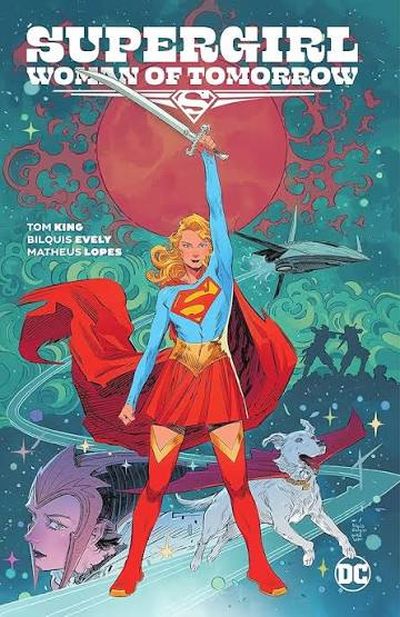
Some people have pointed out that the colour palette of this movie is mainly brown, dark or garish and I agree with them. While I personally didn’t have a big problem with it, I do prefer more colour in my superhero movies. This film was based on Supergirl: Woman of Tomorrow (left), by Tom King. While I haven’t read this myself, most reports say the movie has little resemblance with the original comic and changed its ending. Although the comic itself was an “Elseworlds” story, so you could argue it’s not really representative of Supergirl. All quite negative, right? Why am I then not as harsh as the YouTube fan critics mentioned above?
First of all, I still found the movie entertaining, despite all its flaws. That doesn’t sound much, but believe me, there are many movies out there which are either plain boring or don’t even try to be fun. Case in point: the week before, I saw The Death of Robin Hood with Hugh Jackman. Supergirl is far from perfect but at least it tries. Milly Alcock is indeed fun and a good actress. I figured what direction “her” Supergirl would go, when she was cast. I had seen her as a relentless rebel girl in Australian series Upright, and a larger audience discovered her in the first season of House of the Dragon as Rhaenyra. She has and is a great talent: while this movie doesn’t do her justice, she could have a great career in the right roles.
Eve Ridley does her best as Ruthye, but the part doesn’t offer much and she was not really convincing in it. The idea here is obviously that Ruthye is a counterpoint to Supergirl, creating a conflict between different objectives. It kind of works, though, I would have preferred the movie without an annoying teenager who constantly repeats herself like an NPC, and is little help during the search for Krem. Jason Momoa has been the fan-choice for Lobo, as long as there have been plans for a Lobo movie. Though this version seems a tame, “free from 12 years on” version, he is very enjoyable. I really, really would like to see a single movie with him as the Czarnian bounty hunter. But the new DC film universe under the current Warner Bros. management is already imploding. Again.
There are moments I like. If you can accept the idea of Kara being a more complex, work in progress (the ending suggests she may finally settle on Earth and support Clark), then that may help you enjoy the movie more. This Kara has a quite cocky attitude which sometimes made me chuckle quite a bit. At the same time, Alcock can bring the gravitas to more serious scenes if she is given those. To repeat myself: it’s all in the writing. I have to say, I expected more from Craig Gillespie, who directed the great I, Tonya a couple of years ago. But directors are dependent on the scripts they are given. A lot of the creative decisions concerning the movie (such as Supergirl killing Krem), were apparently made by Gunn, not Gillespie who seems more the “yes”-man of the production.
I understand screenwriter Ana Nogueira had never written a real movie before which is astonishing considering that it is said to have a budget of $170 million. It also seems questionable that she has already been chosen by Gunn to write upcoming DC movies Teen Titans and Wonder Woman. It’s estimated that the movie needs to make $300 million to cover its costs. At the time of writing, it’s a lot less than half that, only $116 million worldwide, and is losing screens rapidly. That doesn’t bode well for the movie. Though, it has been said that Gunn has further plans for Supergirl, as she plays a part in the next Superman-themed movie Man of Tomorrow – this time hopefully at her cousin’s side. Let’s hope, it’s not once again centered around the insufferable Krypto!
Dir: Craig Gillespie Star: Milly Alcock, Matthias Schoenaerts, Eve Ridley, Jason Momoa
There’s no denying that this is considerably weakened by coming in the wake of Ready or Not 2. There’s just too much similarity for it to be otherwise. A woman having to fight her way through a bunch of Satanists, in order to save her kid sister? Yeah, there’s a strong sense of deja vu, in its most literal meaning. Yet it would be unfair to write this off as some kind of mockbuster. While the “elevator pitch” may be similar, the details and the approach taken are different. This skews considerably more towards the horror elements. Many reviews cite Sam Raimi and Quentin Tarantino as influences, and that’s not wrong. To the point I might have used fewer homages, to be honest.
The heroine is Asia Reaves (Beetz), who is jailed after trying to protect her sister, Maria (Myha’la) from their abusive father. Ten years later, she gets out of prison, and seeks to be reunited with Maria. The trail leads to The Virgil, a massive apartment building. Asia gets a job there as a maid, using an assumed identity, under the oversight of building supervisor Lilith Woodhouse (Arquette). It turns out, the building is home to a cult of Satan worshippers, who trade human sacrifices for immortality. But after a decade in the penal system, Asia has the skills to defend herself, and won’t let anyone – or anything – get in the way of her mission to rescue her sister.
Save Kill Bill, I’m not a huge fan of Tarantino. It appears Sokolov is, going by the number of jarring needle-drops and, to be honest, shots of women’s feet. There are points where the style seems to be more important than the substance. However, there are some excellent sequences as well. The use by Asia of a fiery axe is top-tier carnage, and the near-unlimited ability of her opponents to take damage leads to some spectacular gore. They may be immortal: they still spray blood like enthusiastic geysers. When one has her head reduced to the consistency of porridge, one eyeball continues to operate on its own, independent basis.
I do think the immortality thing is a double-edged sword. It robs the fights of much impact, because decapitation is barely an inconvenience. Naturally, there is a solution, and I figured it out, more or less, as soon as it was mentioned. Beetz makes a fierce and unstoppable heroine, no mistake about it. You will also see things you have not witnessed before, especially during a thoroughly unhinged ending. It consequently makes Ready or Not 2 seem positively down to earth and realistic, so the stabs – word chosen advisedly – at social commentary consequently feel misplaced, even more than usual. I note Sokolov’s previous (non-GWG) film was called Why Don’t You Just Die! I’ve a feeling there may be a theme running through his work. Suspect I will still end up checking it out, hoping for the pure and undiluted carnage I didn’t quite get here.
Despite a slightly clunky title, I enjoyed this a little more than the original. It helps that there’s no need for build-up or explanations. We join things immediately after the end of part one, with Grace MacCaullay (Weaving) staggering outside the mansion where she battled and beat the Le Domas family. Understandably, she ends up in hospital and handcuffs, where her sister Faith (Newton) shows up. But it turns out the Le Domas family were just one part – albeit the head – of a larger, Satanic organization, the Council. The remaining families now need to determine a successor. Whoever kills Grace gets to take over, so the siblings are quickly abducted and taken to the Council’s country club complex.
Grace refuses to take part, but using Faith as leverage, they compel her participation. The siblings must battle for survival and, again, try to survive to dawn against a litany of more or less competent adversaries. This was one my main criticisms about part one: the Le Domas members were so inept as to be no threat. While, in some ways, this is true again here, the film does at least lean into the humourous possibilities. The peak is likely reached when Grace has to face off against Francesca, her late husband’s ex. There’s some rocket launcher incompetence, followed by some pepper sprayage, which leaves the two adversaries thrashing about like blind squid, while an 80’s classic tune plays. It’s awesome.
There is a bit of a lull thereafter, because Faith is again used against her sister. This compels Grace, once more, to don bridal attire, as a means of avoiding further bloodshed. Well, “postponing” might be closer to the truth. The ceremony goes off about as well as a typical wedding held by a professional wrestling federation – though with considerably more blood than even the most hardcore fed. It’s all a lot of fun, with the Council families providing a slew of fun characters, in addition to its lawyer (Wood). It provides an interesting contrast in family dynamics between the MacCaullays and the Danforths, represented by Ursula (Sarah-Michelle Gellar – and, yes, there are some potential Buffy references) and her psycho brother, Titus (Hatosy).
I liked the fact that it kept any actual social commentary very much secondary. What makes the Council evil is not particularly race, class or money. It is that they are freakin’ Satanists. The film’s other main strength is Weaving, who cements her position as perhaps the best of the next generation for action heroines. She runs through the whole gamut of emotions here, and it is extremely easy to root for Grace. But let’s be honest, the actress would be forgiven if she had simply worn a “not this shit again” expression for one hundred and ten minutes. While the poor box-office here means it’s unlikely we’ll see a part three, long may Weaving’s shotgun continue to smoke.
Dir: Matt Bettinelli-Olpin and Tyler Gillett Star: Samara Weaving, Kathryn Newton, Shawn Hatosy, Elijah Wood
How far Charlize Theron has come. It has been interesting to follow her transition from a clothes-horse to an Oscar-winning actress playing a serial killer in Monster, and then her unexpected turn to become perhaps the leading action heroine of the past decade (despite mis-steps such as Aeon Flux). She’s now in her fifties, so we’ll see how long she keeps going, but for now, I’m happy to enjoy her output. Here, there’s nothing particularly special, but as Netflix Originals go, this is certainly better than Thrash, the mediocre shark movie we also watched this weekend. It fares particularly better on the character side, giving the audience solid performances from both the heroine and the villain.
The former is Sasha (Theron), a rock-climber who lost her husband, Tommy (Bana), after an accident climbing the ‘Troll Wall’ in Norway [a real, three thousand feet high cliff-face]. It’s basically the same opening as Fall. However, things then diverge, as Sasha goes to Australia for a hike into the Wandarra National Park, also involving climbing and a little white-water rafting. Silly girl: doesn’t she know that everything in Australia is trying to kill you? She soon learns this, encountering first a sketchy pair of locals, before meeting Ben (Egerton). Since this element is in the trailer, I don’t feel I need to hide the fact that he is the real threat. He hunts and then captures Sasha, taking her back to his dank cave lair, where…
Yeah, it’s a bit more than being your garden variety psycho, and Egerton plays it to the hilt. Theron, meanwhile, has the necessary skills to fight for her survival, in a way that Ben’s numerous previous victims did not. I’m not sure exactly how much of the work here was performed by Theron. There is clearly some composite work going on, especially with the numerous falls. But I’ve a feeling, from Charlize’s previous efforts, she’ll have done as much as humanly possible, with regard to the climbing and canoeing. Kormákur does a good job of capturing things right from the start, with some queasy cliff-face camerawork, and drone work that really shows off the immense size of the wilderness in which Ben hunts.
It is all rather predictable, but gets by on the charisma of the two leads. Theron manages to look the part, convincing the viewer of her credentials as a climber, in a way much younger actresses struggle to do (hello, Daisy Ridley). Meanwhile, Egerton proves an admirable foil, capable of flicking a switch to go from pitiable to pretty damn scary, in the blink of an eye. There were a couple of points towards the end where I found myself thinking of ways this could have tweaked the formula to better effect. But Netflix is all about meeting the viewers’ expectations, not confounding them. If you’re looking for something entertaining, without any intention of pushing the envelope, this does exactly that: no more, no less.
Dir: Baltasar Kormákur Star: Charlize Theron, Taron Egerton, Eric Bana




 The original Fall was a sleeper hit, which found thoroughly deserved new life on streaming. I watched it again recently on BluRay, and yep: it still triggers a visceral, physical reaction in me, unlike almost any other film. A sequel was inevitable, and probably equally as inevitably, it doesn’t reach the same heights – pun absolutely intended – as the original. While pleasant enough entertainment, it comes over with roughly the same impact as a mid-season episode of American Ninja Warrior. Though it wasn’t long before Chris was re-confirming her desire to avoid any leisure activity involving heights (hanging Halloween decoration from the garage is about her limit), my palms stayed more or less dry throughout.
 To recap. I was unimpressed with the first
  This is a film I wanted to rate higher than I have. The performances are generally decent to good, and I don’t doubt the sincerity of those involved. However, both the script and the core action leave a bit to be desired. To start with the former, I’m not saying this story was written by AI. But if you did train ChatGPT with every combat sports cliché, and then ask it for a script… You probably wouldn’t be too far from what you get here. There’s Naomi (Williams) and Carter (Black), a couple united by their love of mixed martial arts. Until, that is, Carter refuses to take a dive in an underground tournament final, as ordered by the slimy Mindy (Thomas).
 I’m not normally a stickler for accuracy in movies. My disbelief gets suspended so easily, there’s a hook for it beside the TV set. But I have to say, this provided a parade of occasions where it didn’t exactly feel like the characters were elite snipers. Indeed, at points, it seemed like this was the first time certain actors had held a gun, since they were pretending to be soldiers in the school playground, with a stick. In particular, they appear woefully unaware of the idea of concealment. I was painfully reminded of the Monty Python sketch, “How Not to be Seen”. Also, if you’re going to call in your old military pals, I’d go with a range of skills, not just snipers.
 Poor Gal Gadot. Her career since
  This one is fairly fringey, in terms of qualifications for the site. But I do feel, any film where a woman picks up and wields a chainsaw with bad intentions… Yeah, that’s pretty much a golden ticket to inclusion. You will have to be quite patient though. Very patient. It begins with a car crash which leaves Magda (De Mol), very much the worse for wear and badly concussed, in a gully off the road. She is rescued by Guy (Breck), an elderly gentleman who lives nearby, and who insists on nursing Magda back to health. However, matters are complicated by some rather dubious people, including Justin (Mills), who are after Magda and/or something in her possession.
 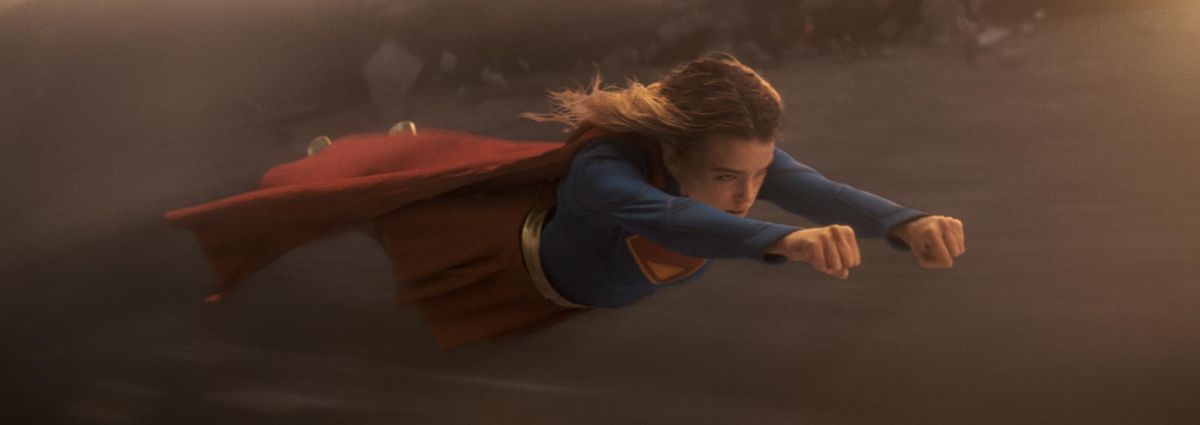 ★★★
★★★ Anyway, what’s the story? Supergirl continues from 2025’s Superman, which in its last scene introduced Supergirl. She is Kara Zor-El, Clark’s cousin, owner of Krypto the Superdog, and together with Clark, the only survivors of the planet Krypton. The Superman movie didn’t show the destruction of Krypton (we have seen that too often on screen in the past) but Craig Gillespie, director of Supergirl, gives us glimpses of it, or flashbacks to Argo City, the city that survived due to SF-technology on a chunk in space. Its inhabitants are nevertheless doomed, due to kryptonic poisoning. So, Kara’s father sends her to Earth, to her cousin who already lives here. The makers generally stay true to Supergirl’s origins, though there is no orphanage into which Superman puts her, nor surrogate parents like the Danvers as in the comics.
 There are editing and creative choices that baffled me. Instead of showing a bar brawl with Kara, the camera focuses on Ruthye in front of us, hiding from the fight. Mind you, in action scenes, the camera often gets so close we can barely tell who is fighting whom. In one flashback Clark tells Kara her powers will set in “right now” – and we cut away to another scene of Kara sitting in a room listening to music on her headphones. A couple who wants to trade Kara and Ruthye for their kidnapped daughter, poisons Kara – how did they know that their poison would work on her? In another scene in a prison, small, lightly-built Ruthye takes on a henchman around double her size, possibly four times as heavy, and easily beats him. There is no explanation given how she does that. While Kara isn’t physically big either, we know what kind of power Kryptonians have. But Ruthye?
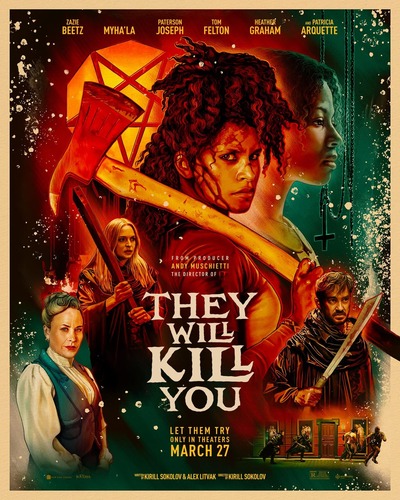 There’s no denying that this is considerably weakened by coming in the wake of Ready or Not 2. There’s just too much similarity for it to be otherwise. A woman having to fight her way through a bunch of Satanists, in order to save her kid sister? Yeah, there’s a strong sense of deja vu, in its most literal meaning. Yet it would be unfair to write this off as some kind of mockbuster. While the “elevator pitch” may be similar, the details and the approach taken are different. This skews considerably more towards the horror elements. Many reviews cite Sam Raimi and Quentin Tarantino as influences, and that’s not wrong. To the point I might have used fewer homages, to be honest.
  Despite a slightly clunky title, I enjoyed this a little more than the original. It helps that there’s no need for build-up or explanations. We join things immediately after the end of part one, with Grace MacCaullay (Weaving) staggering outside the mansion where she battled and beat the Le Domas family. Understandably, she ends up in hospital and handcuffs, where her sister Faith (Newton) shows up. But it turns out the Le Domas family were just one part – albeit the head – of a larger, Satanic organization, the Council. The remaining families now need to determine a successor. Whoever kills Grace gets to take over, so the siblings are quickly abducted and taken to the Council’s country club complex.
 Grace refuses to take part, but using Faith as leverage, they compel her participation. The siblings must battle for survival and, again, try to survive to dawn against a litany of more or less competent adversaries. This was one my main criticisms about
 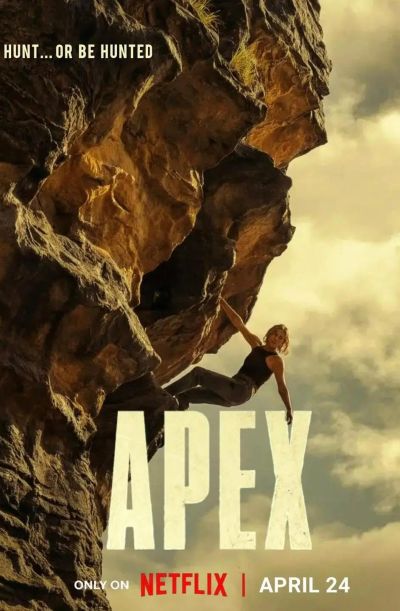 How far Charlize Theron has come. It has been interesting to follow her transition from a clothes-horse to an Oscar-winning actress playing a serial killer in