



★★★½
“Better living through crime.”
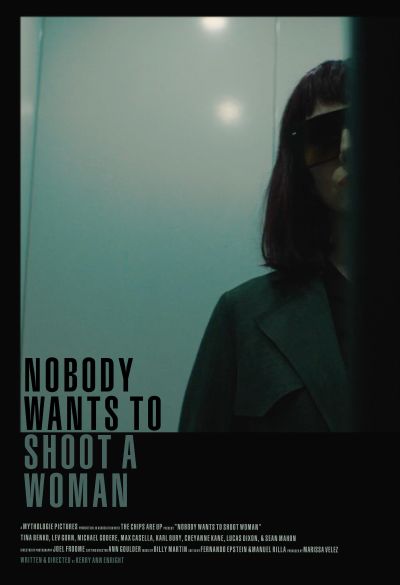 Mary (Benko) moves in to a new Brooklyn neighbourhood, along with her husband, John (Gorn) and teenage son, Johnny. But neither of them are comfortable, the middle-class morality being an ill fit for John’s career as a bank robber. Unfortunately, John has an addictive fondness for gambling, which leads to him being gunned down on their front porch. This leaves Mary excluded by most of the other residents, and in a precarious financial position, unable to find legitimate employment. Eventually, she convinces John’s sketchy associate Sean (Godere), to bring her on board for his next robbery, and Mary discovers a hidden talent for such activities. This brings with it a new-found inner confidence in her everyday life.
The film reminds me of Monica la mitraille, though that was based on a real bank-robber, while this appears entirely spun from fictional cloth. However, it has the ring of plausibility to it, writer-director Enright creating characters and situations which feel distinctly lived-in. Mary’s character arc is strong and well-defined. She begins as someone stuck in an abusive relationship, though it seems only a matter of time before John’s self-destructive behaviour does, indeed, self-destruct. The question throughout it, how far will her subsequent path mirror that of her late husband? The police are circling, not least because of the media fuss resulting over the unusual gender of this criminal, nicknamed “Machine Gun Mary” by the press. There are also suggestion Mary may be growing a fondness for gambling too.
It’s this tension which pulled me along the narrative. It does occasionally lean too hard into the obvious tropes – I may have rolled my eyes at the “one last job” plot point, with Mary repeatedly stating she’s only doing this so she can provide for her son. In addition, none of the male characters are anywhere near as well-developed as the heroine. However, it manages to avoid relying entirely on them – or, at least, twists them in interesting ways. For example, the relationship between Mary and Johnny’s teacher doesn’t unfold as expected. Nor does that “one last job” turn out the way you think, although with hindsight, I could perhaps have predicted the resolution.
You should not expect much on the action side of things, since this is, understandably, limited. While she does wield the automatic weapon after which Mary is nicknamed, this is purely for intimidation purposes. A few rounds loosed into the ceiling is more than sufficient, and she doesn’t shoot anybody, because she does not need to do so. Mary is smarter than that and, with the possible exception of the detective on her heels, is clearly the most intelligent person in the movie. She is definitely the least in thrall to the seductive addiction of criminal activity. However, how far will that take her, in a game where the house – by which, I mean the authorities – always win, sooner or later? That’s the key issue here, and I found it more than enough.
Dir: Kerry Ann Enright
Star: Tina Benko, Michael Godere, Lev Gorn, Dane Zagarino
 I gave serious consideration as to not covering this here, since it is kinda fringe. The protagonist, Rebecca Kamen (Cornish), spends much of the movie handcuffed. This is not particularly conducive to action. But there are just about enough moments, as shown, where she gets her hands on a firearm, to crawl over the qualifying threshold. Don’t expect much in the way of girls-with-guns action. In fact, don’t expect much, full stop. For as the tagline above suggests, I preferred this the first time I watched it, when it was called The Usual Suspects. It begins with the police investigating a scene involving arson and murder, where one victim attempted to paint a name in their blood on the wall: “Jovan”.
 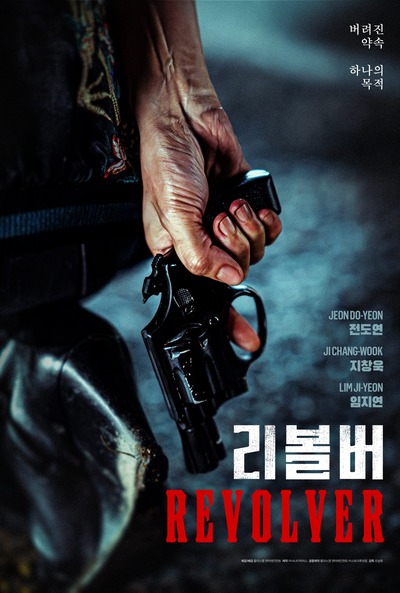 You need to be patient with this. Both in terms of its plot and, more generally, its attitude. This isn’t exactly action-packed. Yet the heroine – and I used the word loosely – is an unstoppable force of nature. Just more like a glacier than a tornado. She never rushes in, always having a plan, and rarely raises her voice. Yet woe beside anyone who tries to get in her way. She is Ha Soo-yeong (Jeon D-y), whom we first meet as she is being released from prison at the end of her sentence. Turns out she was a policewoman, busted for corruption in a scheme also involving her cop boyfriend.
 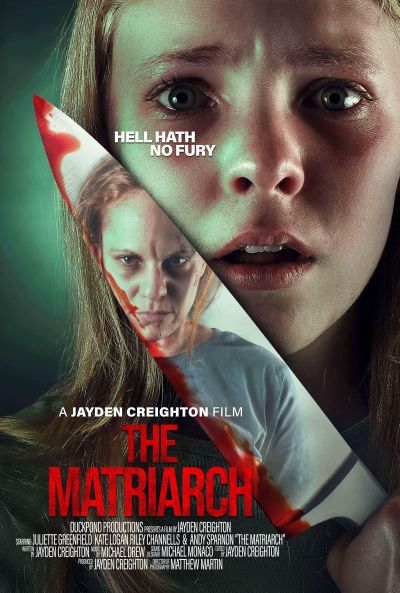 I’m always amused when I check the reviews on the IMDb for a film, and they are almost all “Totally amazing!” or “Worst film ever!”. The former tend to come from the movie’s friends; the latter, from people miffed by the positive reviews, and seeking to counter them. The reality is usually somewhere in the middle, and that’s the case here. Given this was reportedly made for forty thousand dollars – and those are Australian dollars, which right now is about 67 US cents – it’s quite impressive, and certainly doesn’t look low budget, despite a cast of basically three and a single location. However, it’s a film where, if anyone had behaved sensibly, proceedings would have been all over in about ten minutes.
  Bella Thorne’s struggle to appear in a film which reaches three stars on this site, continues unabated. While probably not helped by my tendency to confuse her with Kristen Stewart, that’s five attempts now. Although, for a minute here, I thought this might be the one where she finally cracked it, with a potentially interesting first half. But it could not sustain itself, and as the final credits rolled, and I saw Guinevere Turner’s name as the co-writer… Yeah, it all made sense. I mean, she wrote
  ★★
★★ By coincidence, I watched this after
  We have written about some of the women who worked behind enemy lines for British intelligence during World War II. Names like
  Well, “delight” might not
  Yonca is having an affair with the married man. But she has been able to leverage this into getting a job at the facility, as a cleaner, for the much quieter Sayara. Bari
 Despite an impressive poster, this is a fairly humdrum action film. If it had been a Western production in the nineties, I would have described it as “straight to video.” I imagine the appropriate comparison here would be “straight to iQIYI”, the streaming service through which I saw this. It’s technically competent, make no mistake. However, there’s not very much to stick in the mind, and it feels like both the script and performances have been carried out with the bare minimum of effort. It’s the kind of thing you could have on in the background, while carrying out light household chores, and it would not impact the level of entertainment value obtained very much.