
Literary rating: ★★★★★
Kick-butt quotient: ☆☆☆☆½
 Once upon an unspecified time, somewhere in the cosmos, a human-like, space-faring race called the qhal (or Qujal, in a later dialect) stumbled upon, and subsequently greatly extended, a system of high-tech Gates, a relic of a vanished civilization, which permitted instantaneous travel to other planets and other times. Fearing that travel into the past would prove dangerous, the qhal forbade it; but they used the Gates to travel extensively in space and future time, building up an empire that oppressed and exploited the various despised other races they encountered. This gave them much wealth and power (and universal detestation from others) –until somebody eventually tried past time-travel. The resulting cataclysm (only dimly surmised in the theories of the subsequent scientists) reached as far as the Gates themselves reached, and proved to be an apocalyptic warping of space-time that destroyed civilizations and worlds in its path. But the Gates themselves survived. We learn all of this from an omniscient narrator in the first part of the Prologue.
The other parts of the Prologue are excerpts of various (fictional) documents. In the Journal of the “Union Science Bureau,” we learn of the formation of a team charged with traveling through the Gates, for the sole purpose of closing or destroying them permanently on the far side, to prevent a repeat catastrophe. (Since nobody knows how many Gates there are, this may be a multi-generational task until the last one is reached; and it’s surely going to be a lethally dangerous mission.) Written on a low-tech, medieval-like world, a short text in the Book of Embry tells us that on “the height of Ivrel” still stand ill-regarded, rune-marked “Staines” [stones] of Qujalish origin and still imbued with their “sorceries,” which if touched produce “sich fires of witcherie as taken soul and bodie withal.” This place and others such are sought by those with Qujal blood, recognizable by gray eyes and tall stature, who are thought to lack souls, but “by sorceries liven faire and younge more yeares than Men.”
 Finally, a longer passage from the Annals of Baien-an recounts how, “In the year 1431 of the Common Reckoning,” five strangers supposedly from the distant south came to the northern realms, one of them a tall, light-colored young woman named Morgaine (who was thought to be Oujal). They persuaded the northern kings to make war on “…the witch-lord Thiye… lord of Ivrel of the Fires;” but near Ivrel, the great northern army of 10,000 men was unaccountably nearly annihilated, and the five were blamed for the disaster. All of them but Morgaine vanished without trace; pursued, she fled south and supposedly died at another place of Qujalish “Stones,” afterwards called Morgaine’s Tomb. “Here it is said she sleeps, waiting until the great Curse be broken and free her.”
Our story proper begins about 98 years after the disaster at Ivrel, when we meet young (about 20, from later clues) Nhi Vanye –the first name is the clan name, the second the personal one. He’s the out-of-wedlock son of a clan chief, grudgingly taken into the latter’s citadel because his mother, a lady from a hostile clan taken in a raid, died giving birth to him; but (as we learn later) he’s been persecuted and bullied by his two half-brothers from childhood on. By the second page, he’s in serious hot water with his father after a sword-practice bout turned deadly, leaving one half-brother dead and the other badly injured. Outlawed, disowned, dishonored and cast out, he no longer has a clan or a livelihood. His one hope is to try to work his way southward (through the territory of his half-brothers’ mother’s clan, whose members will want to kill him on sight) to an area where he has kin.
We skip over the details of that slow trip, but by the second winter of his outlawhood, surviving by hunting (and stealing what he has to) he’s close to the border –but also close to the unchancey vicinity of Morgaine’s Tomb. And when he wounds a deer, and the fleeing animal blunders through the Gate, it opens on the other side. A century before, Morgaine desperately rode into the Gate, and horse and rider have been held in suspended animation, but now, as she rides out from legend into Vanye’s reality, for her it’s as if she’s been gone just for a moment. And (being, as we can guess, part of the Union Science Bureau’s afore-mentioned team) she still has the same goal on her mind. By the following morning (long story, but sex doesn’t play any part in it; there’s no sexual content in the book), due to the complicated mores of his people, Vanye finds himself oath-bound to service as her vassal for a year. (The old kings had given her “lord-right.”) So this is to be a “quest narrative,” and hers is to close however many Gates there are, starting with taking out the Gate of Ivrel. (On this world, that’s the main Gate; the other two depend on it, and can’t survive without it.) The latter goal is now, perforce, Vanye’s as well. And Morgaine’s grimly committed to seeing it through, if it kills them both (which it very well may).
This is a tale of action and adventure, hardship and danger in a rugged land, with escapes, betrayals and subterfuge. Vanye’s a trained warrior, and Morgaine packs some high-tech weapons that she knows very well how to use; that’s fortunate, because there will be plenty of enemies in their path. Thiye’s still alive, and still ruling in the Ivrel area (and with power and domains greatly increased since the debacle a century ago). But there’s also the problem of clan chieftains who hate and fear Morgaine, or who would like to get their own hands on Qujal “magic” (or both); and a surprise enemy waits in the shadows…. It’s also a powerful tale of complex, nuanced characters, facing very high-stakes moral choices as they struggle with conflicting values, obligations and emotions. While Vanye is our viewpoint character and maker of the most significant choices, and it’s his head we’re inside, it’s Morgaine who’s the center of the tale, and her determination that drives it. (We can fairly say that she’s the protagonist; and she makes decisions too, or bears the pain of decisions made.) Cherryh’s world-building is superb, her plotting impeccable, her prose deft and evocative, and she delivers an emotional impact that’s almost breath-taking. I wasn’t even remotely prepared for how rich and rewarding this novel is!
Though this is the opener of a four-book series, there’s no cliff-hanger; the immediate situation here is brought to closure. But though I intended at first to read this as a stand-alone, I’m now in it for the long haul.
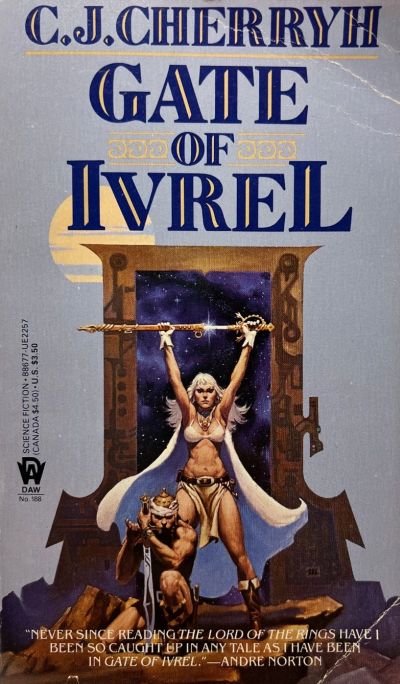
Note: Andre Norton’s two-page Introduction to this DAW printing is spoiler-free, and basically just an eloquent appreciation of the author’s literary achievement here. But though the accompanying map was made by Cherryh herself, it’s crudely-drawn, with hard-to-read place names, and hard to refer to due to its small size. And while Michael Whelan is a leading cover artist in the field of speculative fiction, his work here doesn’t reflect any actual scene in the book, and gives the wrong idea about Morgaine’s character; she doesn’t dress at all revealingly under her fur cloak, and doesn’t act like a sex object!
Author: C.J. Cherryh
Publisher: DAW, available through Amazon, only as a paperback. There is an e-book available of the whole series.
Book 1 of 4 in The Morgaine Cycle.
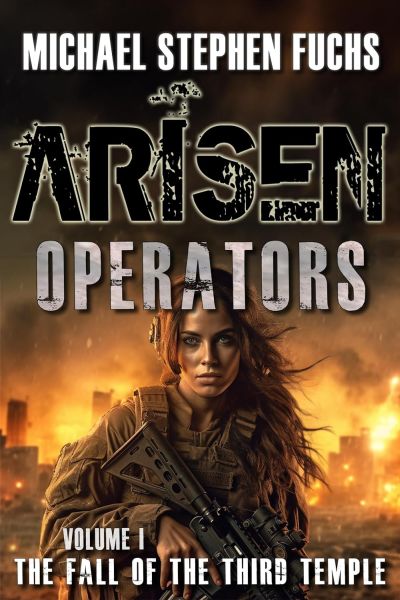 Yeah, this is the first book to ever get a five-star action rating from me. It just doesn’t stop. There’s a sub-genre called “hard SF,” which according to Wikipedia, is “characterized by concern for scientific accuracy and logic.” I suggest this could be labelled as hard action, with a great deal of information about hardware, like guns and vehicles. Here’s a sample paragraph: “The boat itself is a low-observable, reconfigurable, multi-mission surface tactical mobility craft with a primary role to insert and extract SOF in high-threat environments, but can also be used for fire support, maritime interdiction, and VBSS missions, as well as CT and FID ops.” I’m not sure what much of that means. Though I suddenly have a strong urge for a glass of whisky and a cigar.
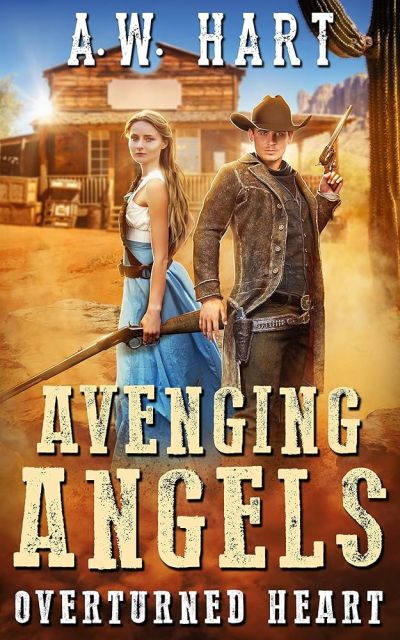 No exact dates are given here; but since the first book began in 1865 (the next book would have to have been set in 1866) and judging from the number of intervening adventures, I’d guess the main storyline here to be set no earlier than 1870, making co-protagonists George Washington (“Reno”) and Sara Bass in their early 20s at least. But the book opens with three short Prologue vignettes, the first dated “twelve months ago,” from the viewpoint of an unnamed female pushed off of a bridge to a 40-foot drop into a raging river, followed by two more dated, respectively, three and two “months ago.” None of these give us much information; but we are told that she survived, that her brother Robert Stirling-Hamer was a wealthy Arizona copper-mining magnate who has been murdered, and that his accused killer “Don” was in turn killed by bounty hunters (guess who?), but that Don’s brother in New York has now gotten an anonymous letter claiming that his brother was innocent.
 ★★★★½
★★★★½ To be honest though, I really couldn’t tell based on the end product. I have read a lot of criticism suggesting, in brief, “Nobody asked for this.” While that’s dumb – nobody asked for John Wick either – there is an element of truth in it. If they wanted a spin-off, they might have been better using Sofia Al-Azwar, the existing character played by Halle Berry, who was key to one of the best scenes in John Wick: Chapter 3 – Parabellum. It’s worth noting, the script by Shay Hatten, written back in 2017, was not originally part of the Wick universe (although Hatten was inspired by the trailer for John Wick 2), and subsequently got tooled into it. But I wonder, how often are spin-off movies ever successful? Ok, except the Minions franchise.
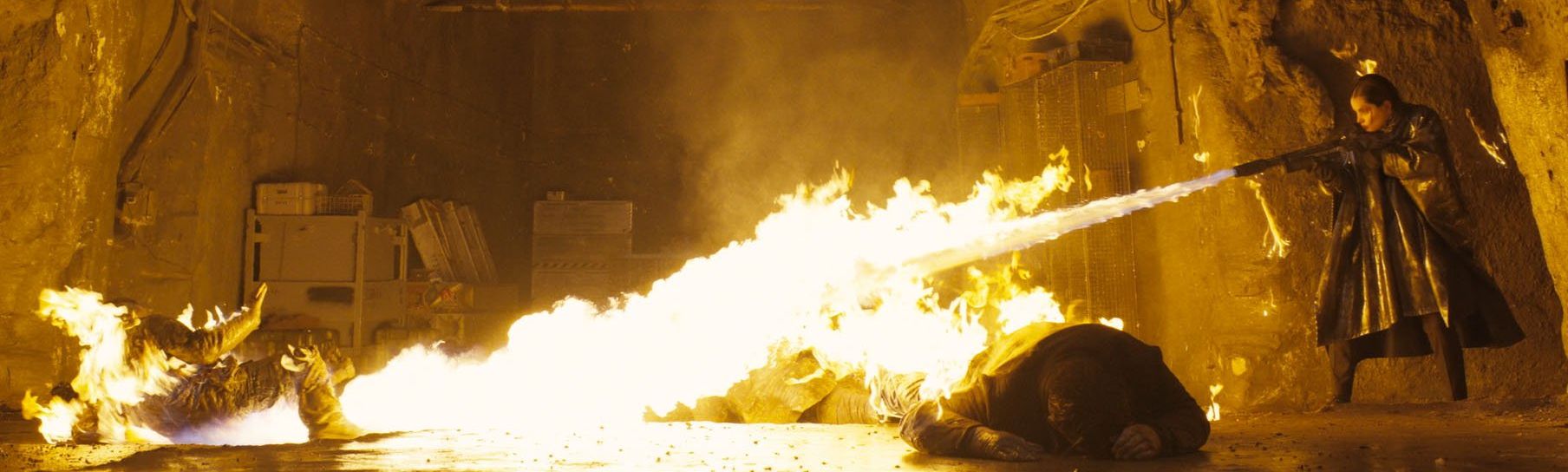
 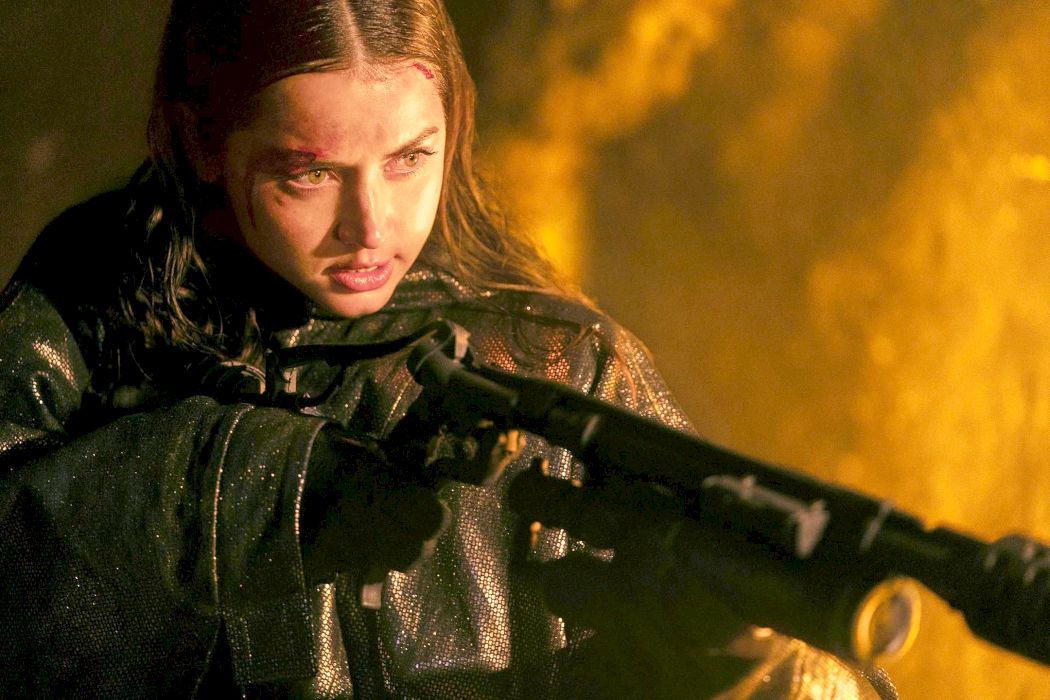 It’s borderline awesome, and on occasion, there’s no “borderline” about it. Let’s just say, I will now be looking into acquiring a flamethrower for home defense. Ok, I should explain. There’s a scene where Eve and one of the Cult members have a – bold font, capital letters, please – DUEL WITH FLAMETHROWERS. It’s every bit as epic and wonderful as that sounds, and it escapes me how they could possibly have achieved it, without reducing the entire stunt team to charcoal briquettes. That’s just the action highlight in a film which has a number of them. I was also impressed with the nightclub sequence – is this obligatory for every film in the Wick-iverse? – of Eve’s first mission, as much for the thumping techno tunes, as for the high-quality fisticuffs.
 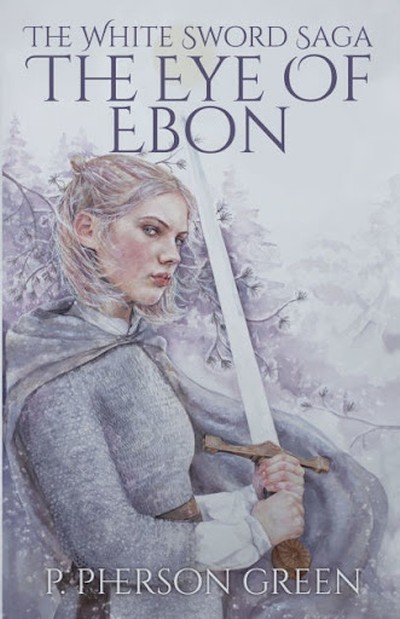 For all that, Green is his own person with his own literary vision and style; The Eye of Ebon is not a direct LOTR knock-off, in the way that Terry Brooks’ The Sword of Shanarra is. A major difference, of course, is the distaff perspective. While Tolkien’s Eowyn is an action-capable female, she’s not the heroine of the saga; his major characters, and most of the characters who display any real agency, or play a direct role in defeating evil, are male. Here, the two viewpoint characters, protagonist Samiare (whom you see depicted on the book’s cover) and essentially co-protagonist Rugette are both female, and formidable fighting females who carry the brunt of the book’s down-and-dirty struggle against evil, and who make the key, crucial gut wrenching and difficult moral decisions at the climactic points. (I was already inclined to rate the book at five stars, but those were the moments that clinched it, and for me moved this tale into the ranks of great, rather than merely good, literature!)
 We all know professional wrestling is staged, with the outcomes predetermined, right? [Do not used the word “fake”: I will cut you!] Here, things are… murkier. This treads a delicate line between that and kayfabe, the wrestling term for promoting it as reality, and genuine competition. The stance here is interesting, suggesting that while those in charge, like promoter Toshikuni Matsunaga (Saitoh), can have a result in mind, that relies on those in the ring agreeing to it. This isn’t always the case [one wrestling show I remember attending definitely had a genuine fight, for backstage reasons], and here, Matsumoto is a loose cannon, prepared to go to any lengths to put herself over. Or her character: the lines are certainly blurred here, to the point of near invisibility.
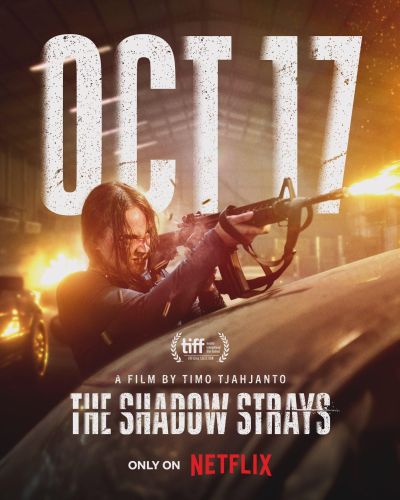 The Shadows are a sect of assassins, who are basically unstoppable. 13 (Ribero) is a teenage trainee, who screws up a mission in Japan alongside her instructor, Umbra (Malasan), and barely survives. 13 gets put on administrative leave, and her enforced idleness is where the problems start. In a thread strongly reminiscent of Leon, she watches a neighbour get killed by a gang, and takes care of the son, Monji. However, he vanishes, apparently abducted by the gang, and 13 isn’t standing for that. Beginning by turning low-level enforcer, Jeki (Emmanuel), she works her way up the power structure, which goes right to the top of Indonesian political society. The resulting chaos threatens to expose the Shadows, so Umbra is then dispatched to terminate their rogue agent.
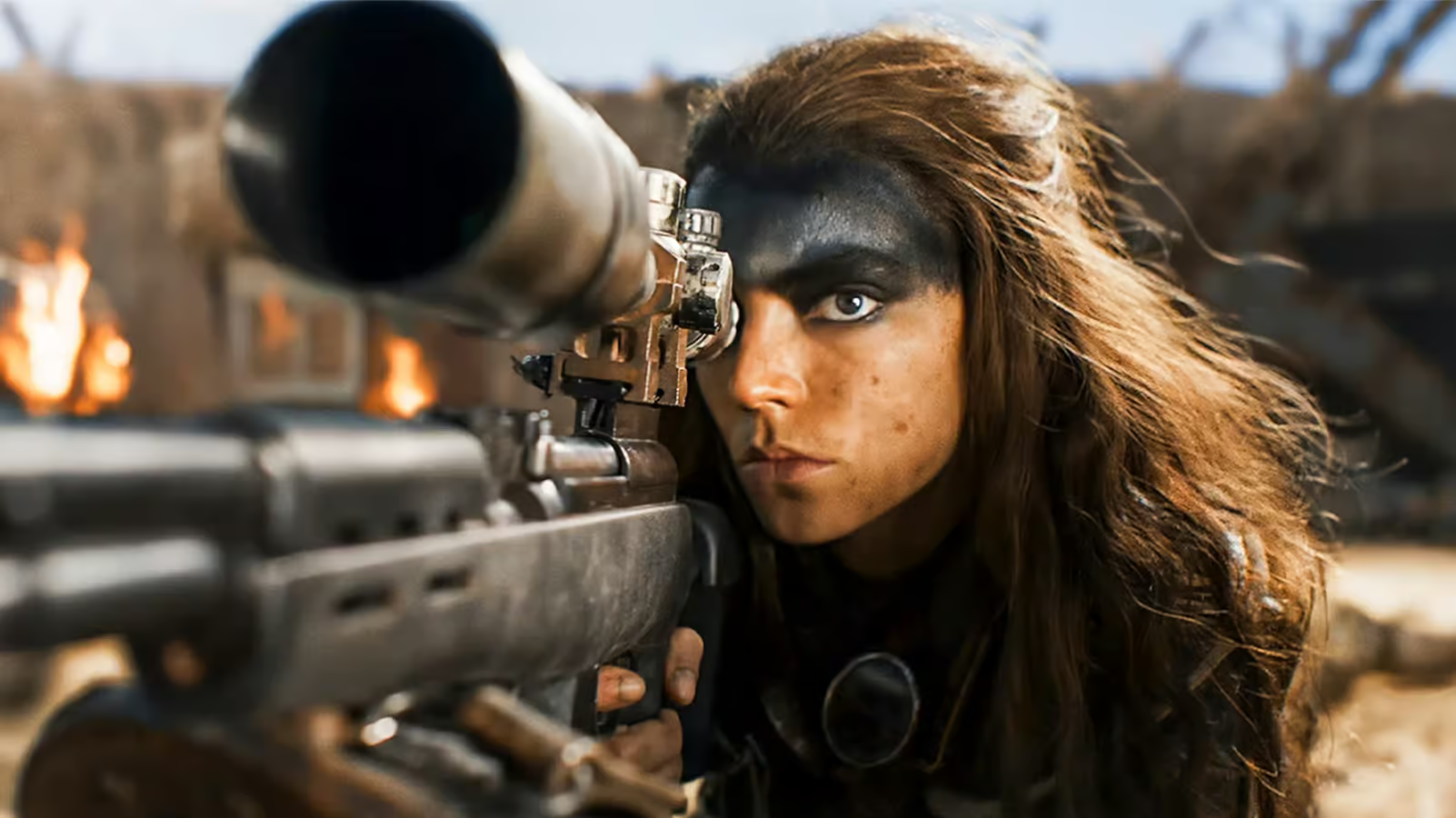 ★★★★½
★★★★½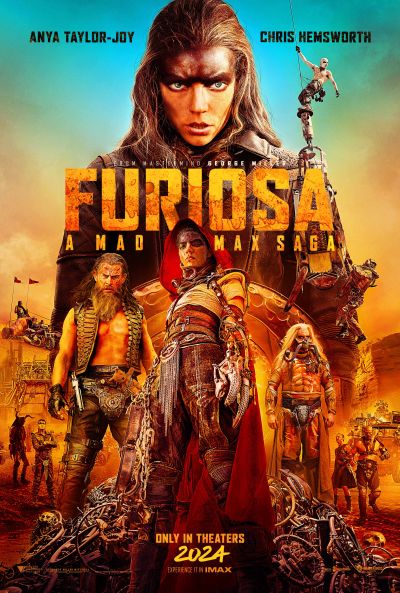 The counterpoint is experiences like this, a full-on, bombastic, in your face event that made full use of everything IMAX has in its locker, and surpassed anything I could get at home. Now, your mileage may vary. Poor Chris, in particular, found it
 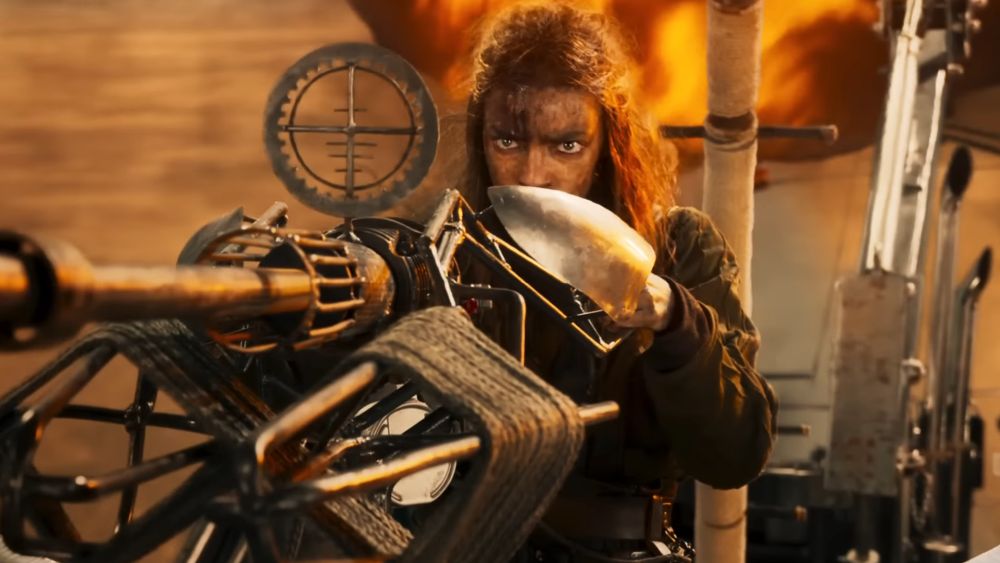 You would be hard-pushed to argue that the $168 million budget is not up on screen. I lost count of the times when I wondered whether what I was looking at really existed in the physical world, or was matte paintings and CGI. Part of me wants to peer behind the curtain and watch the behind the scenes videos. However, part of me would prefer to sustain the illusion, which was a factor in the sense of wonder that often washed over me during the screening. It’s the quest for that sense of awe which keeps me going to cinemas, even if most of the time, I end up leaving disappointed [I’m looking at you, Godzilla X Kong…]
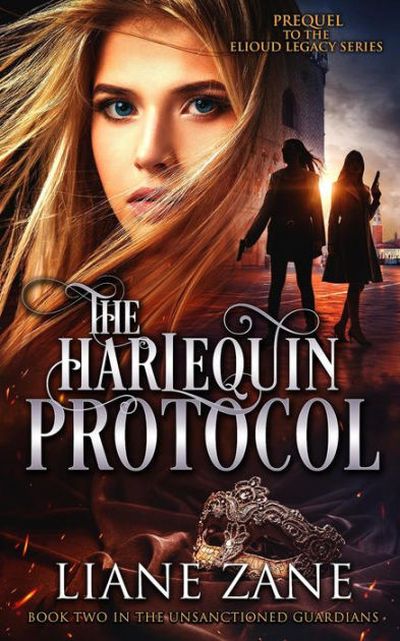 Because the author and I are Goodreads friends, she graciously gifted me with a review copy of the paperback edition of this book, as she has with all of her books, as soon as it was published; though she knew I’d really liked the previous book, she didn’t pressure me for a favorable review, but trusted that the book would stand on its merits. It definitely did; I actually liked this one even better! What earned the added appreciation (and the fifth star) was what I felt was the heightened dimension of moral challenge and choice here, which for me often makes the difference between great and merely good fiction, and which isn’t as strongly present in the first book. Discerning what the right thing is here requires thinking for oneself, not just obeying orders; and deciding to do it comes with a real risk, not just of harm to life and limb, but of disapproval from the powerful, of serious repercussions to one’s career, and maybe of legal punishment. The strong, distinct characterizations of the three heroines, who are each very different individuals though sharing a basic gut instinct for justice and decency, is also a positive feature that makes the book stand out from the pack.
 ★★★★½
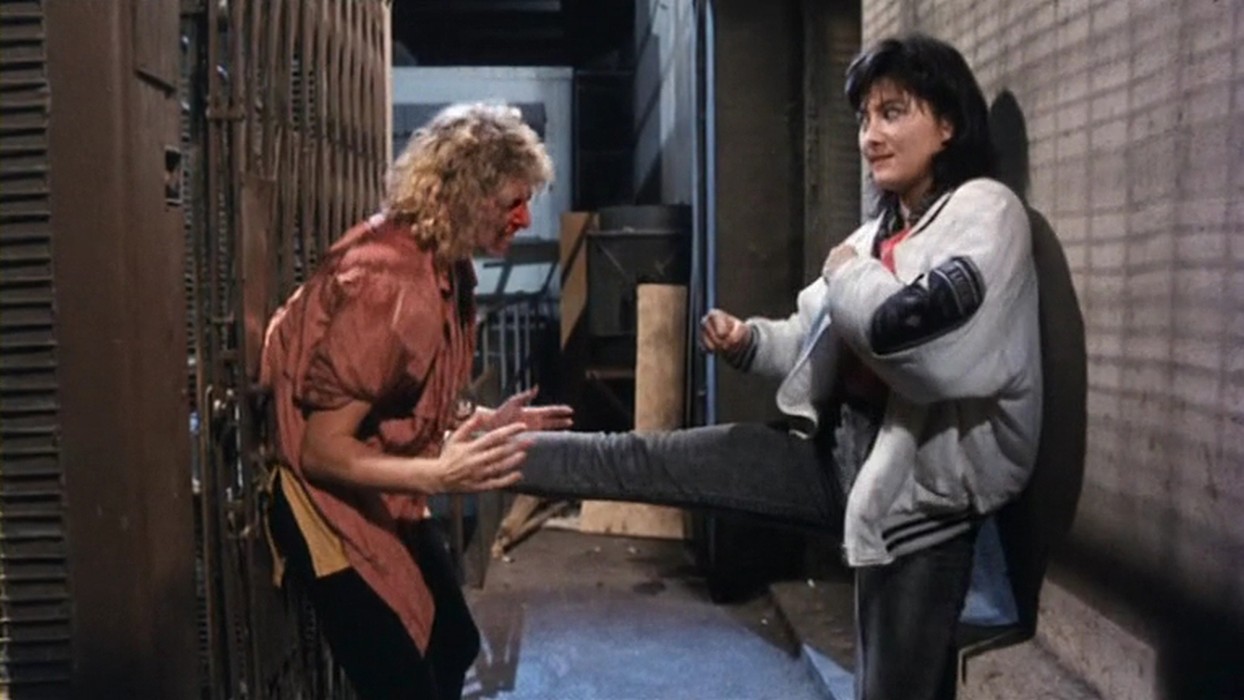
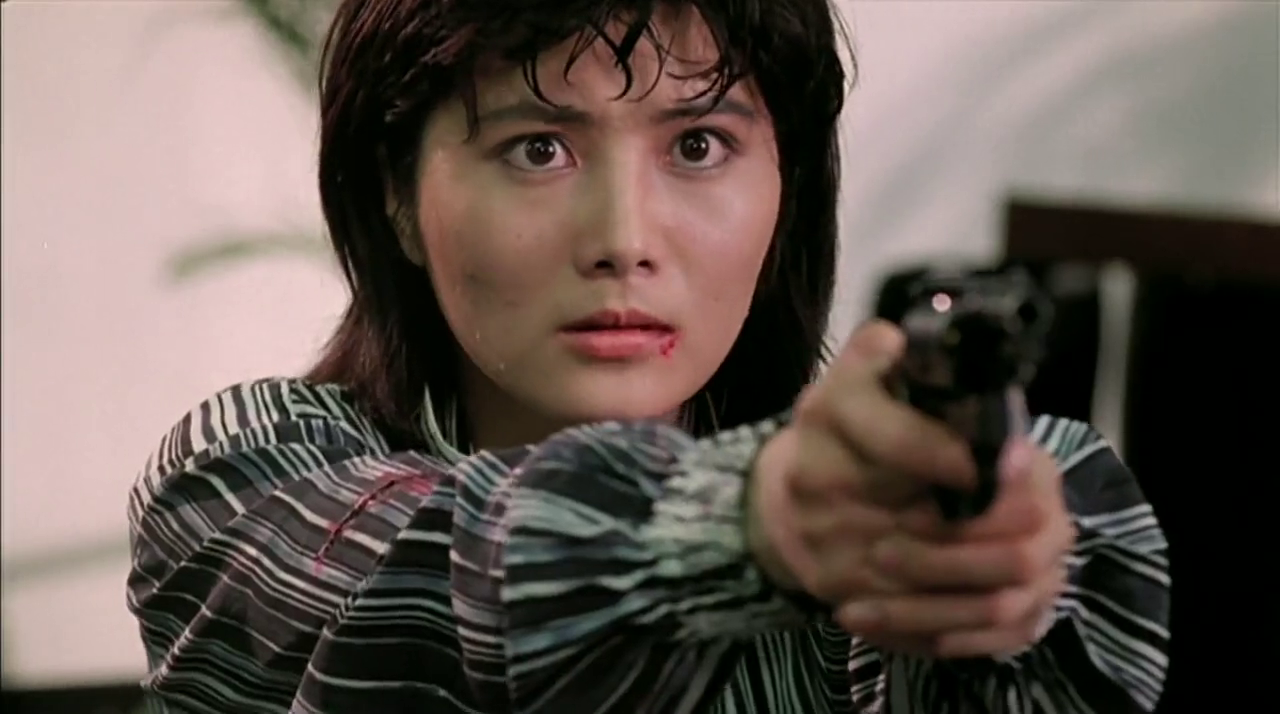
★★★★½ Back in the early nineties, I saw a double-bill of this and Jackie Chan’s Police Story at the late, lamented Scala Cinema in London, and it blew my mind. I had literally never seen anything like them before. The only martial arts movies I’d watched previously were crappy American ones, which made little or no impression. That afternoon changed my life, and awakened a love of the genre that persists to this day. But would In the Line of Duty 4 stand the test of time? There are certainly movies I loved from the same era, which are now a bit cringe, to put it mildly. So it was with some trepidation that I hit play…
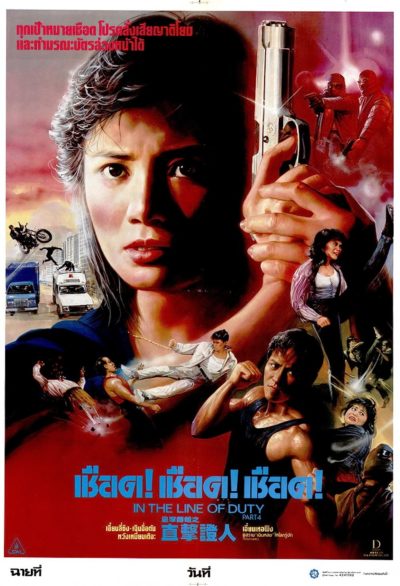 For when all is said and done, the fights are flat-out awesome. It’s not just Khan and Yen, though they obviously get most to do. Everyone here is well up to the task, both showing off their own stuff and letting the stars look good by selling for them. On the female front, I want to give special praise to Farlie Ruth Kordica, who fights Cynthia around a lift-shaft in another sequence which feels disturbingly life-threatening. She only appeared in a couple of other films, which feels like a real shame, based on her performance here. It’s a wonderfully inventive scene (bottom), taking full advantage of the potential in the environment.