I’m not normally a stickler for accuracy in movies. My disbelief gets suspended so easily, there’s a hook for it beside the TV set. But I have to say, this provided a parade of occasions where it didn’t exactly feel like the characters were elite snipers. Indeed, at points, it seemed like this was the first time certain actors had held a gun, since they were pretending to be soldiers in the school playground, with a stick. In particular, they appear woefully unaware of the idea of concealment. I was painfully reminded of the Monty Python sketch, “How Not to be Seen”. Also, if you’re going to call in your old military pals, I’d go with a range of skills, not just snipers.
That’s probably just me though, and is getting ahead of ourselves here. This unfolds in the Australian outback where former soldier Chris Hendrix (Mitchell, sporting her natural Aussie accent, which confused the heck out of my wife) is living the quiet life with her teenage daughter, Anja (Wolfe). Dad isn’t in the picture. Naturally, the quiet life doesn’t last, with her past catching up with her, in no uncertain fashion, and in the shape of a grudge-bearing former colleague known as The Dragon (Roth). So she sends up a call for help, and her old buddies show up, only to start getting picked off rather quickly. Maybe leaving their heads above the window-sill isn’t exactly the best survival tactic.
All this comes as quite a surprise to Anja, who just wants to bunk off school and hang with her boyfriend. Needless to say, The Dragon has other ideas. I quite liked the set-up here, with the relationship between Chris and her daughter credibly spiky. However, once the snipers show up, the film largely grinds to a halt, losing all momentum. It doesn’t help that, of all the forms of combat, sniping might be the least cinematic. One second you’re there, the next, your head explodes in a cloud of red mist. Kinda dull, really. Of course, we learn the “shocking” truth about Anja’s absent father, which should be absolutely no surprise, providing you have seen any films in the Star Wars universe, shall we say.
That the movie thinks this is a twist gives you some idea of the low ambitions here. It would have been more entertaining had the seven snipers turned up on the side of The Dragon, and Chris has to figure out how to defeat them. I mean, she does calmly tell her daughter about her 116 kills, a number at which Lyudmila Pavlichenko would nod approvingly,. Perhaps Chris could have used the help of Anje, whose archery skills are showcased early, only subsequently not reaching the level of importance I expected. Instead, things proceed to the highly predictable face-off between Chris and The Dragon. All that’s lacking is any particular reason to care much. Nicely shot, making effective use of the locations, yet underwhelming almost everywhere else.
Dir: Sandra Sciberras Star: Radha Mitchell, Tim Roth, Annabel Wolfe, Ioan Gruffudd
This gets an extra half-star, simply for trying to go in some unexpected directions. I’ve seen enough of these urban flicks to know the template from which they are largely stamped. Now and again, this doesn’t so much colour outside the lines, as forget about the lines entirely. It doesn’t always work. God knows, it doesn’t always work. Still, I respect the attempt. It used the word “duplicitous” inside the first minute, and you get a voice-over saying things like, “The crimson stains of her actions seemed to fade momentarily, offering a fleeting illusion of absolution. A fragile attempt to reconcile the duality of her existence.” That’s some fancy-ass, hi-falutin’ language for a film in this sub-genre.
Unfortunately, it also manages to be an incoherent mess. Perhaps it makes sense to those involved in the production. I note that, on the IMDb, there are six writers. Okay, technically, one “created by”, one writer, a story editor, two story consultants AND a “screenplay by”. It feels as if they were all operating independently, and only met each other at the movie’s premiere. Because I cannot offer much more insight to the plot than the official synopsis. To wit, “Three formidable women, Nia (Lindsay), Bella (Hankerson), and Dragon (Love) rise to power in the male-dominated realm of organized crime.” Even here, I have questions. For it’s not exactly ‘male-dominated’ – the subject of gender barely crops up.
Indeed, it seems the trio’s biggest threat is also a woman, the very strange Goldie (Rosario J Anglin), who also goes by another name. “I love blood, that’s why they call me the Stallion,” she says. Um, what? I can see that leading to a nickname like the Tiger, or Wolf. But a male herbivore? Though I will say, she might be the best character here, simply because she acts permanently off her face on pharmaceuticals. It’s disconcerting, and if I’m not sure I’d call it good acting, you will remember it. The basic idea is that our heroines decide to get in on the drug trade, after first robbing a high-stakes gambling night. However, the illusion there is rather fragile, given it seems to be taking place in a studio apartment.
Anyway, they use the seed money obtained there to bribe Dr. Martin (Barnhardt) into supplying them with opioids. Lots of opioids. This doesn’t go down well with a number of people, eventually leading to the trio becoming the target of a robbery themselves. Things seem to get sorted, until a “Six months later” caption, further violence, and we are informed that Street Queens 2 will be coming soon. I’m unsure whether this is a threat or a promise. The coolest thing here might be the animated, comic-book style opening credits; it’s certainly the last point at which much of this makes any sense. It did keep me watching – more or less. Just do not ask me probing questions about anything that transpired.
This is a slim little book – more of a booklet, really, coming in at only 74 pages in length. But since it combines both our topic of discussion and local interest, because I live in Arizona, it was an easy decision to pick up a copy, after Dieter brought it to my attention. It does use quite a loose definition of “outlaw” – it is something only really discussed in the book’s epilogue, dividing them into three categories. Most obviously, are the ones Gavin calls “The Breakers of Law”, such as stagecoach robber Pearl Hart, whose exploits were dramatized in The Woman Who Robbed the Stagecoach. “Their crimes were against the statutes of the state.”
As well as Hart, this covers Eva Dugan, the only woman executed in Arizona, who was hung in 1930 [Not-so fun fact: the executioner misjudged the drop, causing Dugan to be decapitated!], and the state’s most notorious killer, Winnie Ruth Judd, “The Trunk Murderess”. Are these latter two what I’d call “outlaws”? Or just criminals? There is a difference, albeit perhaps more so in perception than dictionary definition. Although there is also uncertainty as to whether both Bugan and Judd even committed the murders of which they were convicted. It is kinda disappointing that, in the true sense of the word, one woman who committed one (1) robbery, is about all Gavin could find in the history of the state, and back to when it was a territory.
Nor am I entirely convinced they “stood against power”, as Gavin claims. That feels more like an attempt to force post-feminist ideology onto them, though it might be more applicable to his third category, “The Breakers of Power… Women whose very existence challenged the authority of the state itself.” In this, he puts Apache warrior Lozen (whom I’d first heard of in the Warrior Women series hosted by Lucy Lawless); entrepreneur China Mary of Tombstone; and Teresa Urrea, the “Saint of Cabora.” who became a Joan of Arc-like figure for Mexican freedom fighters, on both sides of the border. But, again: Lozen is the only one whose “challenge of authority” seems like it was a conscious act.
In between, we find “the Breakers of Convention… women whose primary crime was a refusal to be caged by the rigid expectations of their society.” These might be the most interesting figures, and it’s here where the limited space perhaps hurts most. While it’s laudable Gavin sticks to facts, without engaging in the speculation often seen around the likes of Calamity Jane, the average space allowed here is barely half a dozen pages. It’s enough to sketch only the basic details of a life, when some of them deserve much greater exploration. Pauline Cushman’s life as a Civil War spy, turned de facto sheriff, certainly merits more detail that her Wikipedia page provides. As a pointer towards some topics for further research, this is adequate. Just don’t expect much more.
Author: Mike Gavin Publisher: Self-published, available through Amazon, both as a paperback and an e-book Stand-alone volume.
I believe I have previously written disparagingly about “cinematic amnesia”, where a plot revolves around the lead character’s loss of memory. Inevitably, it comes back at exactly the points required for the plot, and to maximize drama. Unless the maker is very skilled, it always seems highly contrived, and I tend to find it distracting. This may be the first time I’ve read a case of such blatant literary amnesia, and much the same problems result. As soon as “the A word” cropped up – page 37 – I was bracing myself for what was to come. The book did not disappoint in this area.
The heroine is “Phoenix” – not her real name, since she can’t remember her real one. She was picked up out of a burnt-out grocery store, and taken to become a member of an elite military unit run by the United Nations (there’s another clue, since the UN cannot actually organize the proverbial piss-up in a brewery). They roam the world, with their mission being to “track, contain or terminate threats to global safety”, under General Cobra. No, really: that’s what he’s called. He’s a former Colombian government operative, who left the country after his hardcore tactics made him too many enemies. But he’s now going back, with Phoenix as his undercover wife, to take out weapons dealer Li Julong and his associate, Dr. Max Devereaux.
You will no doubt be shocked – SHOCKED! – to hear that the pair have a previous connection to Phoenix and, indeed, might perhaps have something to do with how she ended up in the grocery store. Before we get there though, we have to grind our way through so much Unresolved Sexual Tension between Phoenix and Cobra. Initially, she hates him, but as soon as they start having to play house, her thoughts immediately become hot ‘n’ sweaty. A sample: “I didn’t want to admit it, but I had it bad for him… Only a few days ago I hated the sight of him; now I wanted to rub up against him like a cat in heat. I had to do something about it.” Yeah. It’s like that.
Then the switch in her head gets flicked, all of her memories come back, and Cobra is all but forgotten. I’m not sure this is how amnesia works, though to be fair, this isn’t your usual “bang on the head” flavour of that. After a brisk opening, this is more or less downhill all the way, and there’s not even particularly much in the way of action. Between first her UST, and then discovering the truth about her pre-amnesia life, there isn’t much room for anything else, and consequently, this becomes an increasing drag. About the only bit to stick in my mind is an extended near-death experience, which is well-written, yet doesn’t add much. Preferable to more UST or amnesia, however.
Author: Heather Ramsay Publisher: Titan Inkorp, though it appears weirdly unavailable on Amazon at this point/ Book 1 of 3 in the Alpha Squad series.
Bella Thorne’s struggle to appear in a film which reaches three stars on this site, continues unabated. While probably not helped by my tendency to confuse her with Kristen Stewart, that’s five attempts now. Although, for a minute here, I thought this might be the one where she finally cracked it, with a potentially interesting first half. But it could not sustain itself, and as the final credits rolled, and I saw Guinevere Turner’s name as the co-writer… Yeah, it all made sense. I mean, she wrote Bloodrayne. And I’m one of the few people who didn’t utterly hate that. She has… a certain type of script, shall we say, and leave it at that.
Here, the heroine is Clare Bleecker (Thorne), a high school student – Thorne was 24 when this was filmed, so about that… – recently transferred in from the East coast after the death of her parents. She’s staying with her grandmother (De Mornay), and moonlights as a vigilante. We first see her allowing herself to get picked up by a sketchy driver, whom she strangles and stabs to death. The resulting police interrogation brings her to the attention of Detective Timmons (Phillippe). But Clare is undaunted, and proceeds to look into the string of girls who have gone missing in the town, crimes going back decades which have never been solved. When her friend Julianna (Rovaris) becomes the latest to vanish, Clare decides the time for passive investigation has gone.
The early stages are, as noted, interesting enough to be intriguing. There’s a nice touch where her conscience is represented by regular visits from the ghost of one of her victims – albeit an accidental one. However, he all but vanishes after she discovers there’s a bigger problem in town than just random scum-bag men, and the film’s issues tend to multiply thereafter. It’s never adequately explained why Clare has gone all Death Wish in her teenage years, or the Joan of Arc inspiration. Perhaps the book on which the film is based, Clare At 16 (or, I guess, at 24), does a better job of that, but without a particular motivation beyond “Men are bad, m’kay?”, the flaws in plotting became increasingly apparent to me.
And others too, apparently: it took three years to get distribution. I do respect Thorne for trying, even if the results have been underwhelming, and would encourage her to keep trying. As I suspect I’ve said before: she isn’t particularly the problem here, so much as the material. There’s an entire thread about Clare trying to get a part in the school play which is spectacularly out of place. But Thorne’s post-Disney career has never exactly been one known for her making good choices: witness the whole OnlyFans debacle. I was more interest in watching Clare operate as a small-town version of Dexter, punishing the guilty while maintaining a facade of normality. The further this went, the more ludicrous this instead became.
Dir: Mitzi Peirone Star: Bella Thorne, Ryan Phillippe, Joy Rovaris, Rebecca De Mornay
Watching reviews by some fans for the new Supergirl movie is like seeing someone being publicly tarred and feathered. But I do understand how this works. A review titled “Supergirl is an acceptable, though not great, summer superhero movie” wouldn’t get you many clicks, right? Almost any big studio movie seems to get the same treatment: heavily, negatively criticized; scrutinized as to its wokeness (which admittedly is a problem in today’s film landscape); and judged as garbage, long before the average Joe or Jane has a chance to see the movie and make up their own opinion about it. The numbers of views on YouTube have a clear message: social media thrives on vitriolic hatred, not a balanced attitude. I sometimes get the impression the reviewers have not even seen the movie themselves, arguably rendering their opinions worthless. How can anyone judge a movie that they have not watched?
This isn’t meant to say there aren’t problems today with the way movies are written, directed, produced or marketed. And the other side of the coin are ‘professional’ journalists, who appear to act as media mouthpieces for the industry. They consider every movie by established directors or big studios as great entertainment, glossing over its faults. There is something foul in Hollywood and I don’t want any of it. The big problem is, the average cinemagoer can’t rely on reviews or critics any more, and I think that’s a shame. Yes, any review will always reflect the author’s personal attitudes. But in the cases above, there is no balance, and the respective review is frequently very far from an objective dissection of the film. Let’s see if I can do better: though in any case, you should decide which movies you’ll support with your money – if at all.
Supergirl already got the YouTubers up in arms, when star Milly Alcock made some potentially ill-considered comments, including stating that Supergirl “probably goes both ways” sexually. That was perhaps not smart – unless the marketing department was targeting an audience which was never really interested in the character to start with. Supergirl, created in the late 1950s by Otto Binder, was originally intended as a tamer version for girls, of what Superman was for boys. Nevertheless, the majority of people who read Supergirl and kept the title alive over the decades were young men. She had a rich comic book history before the ill-fated Supergirl movie from 1984, with the lovely Helen Slater. And though DC decided to kill the character off sensationally in 1985’s “Crisis on Infinite Earths”, she made an indirect comeback in several forms, until officially returning as her true self in 2004.
Most of the buyers of her comics continue to be male. Not because “all men are creeps”. But because Supergirl was a cool character – and admittedly, also very pretty. But I have never heard about the supposed “queerness” a reporter asked Alcock about. From what alternate universe did this journalist come? Alcock continued, “What makes this film beautiful is that it’s not centered around a man, it’s not centered around love at all.” To be fair, the love story in the 1984 movie didn’t really work. But it’s a leap to conclude that a movie about a female action character is immediately better because it does not feature a love story. Look at Wonder Woman, where the love story between Diana and Steve was an integral part of the story, and see how well it worked. It’s really up to the screenwriter.
Comments like Alcock’s – though probably given without much thought – put her in the same category as Rachel Zegler, whose remarks contributed to the justified downfall of the live-action Snow White remake. That’s a shame. If a movie is bad, it’s one thing. But if the main star shoots her own film in the foot… The makers of this Supergirl mistakenly thought they had a movie targeting a female demographic of a certain age. The results of the first week indicate that 59% of those watching were male, the great bulk of those over 25. Contrast Wonder Woman, which drew a majority female audience. It’s a remarkable miscalculation. If you annoy the audience, don’t be surprised if it doesn’t show up for your movie. Who knew? Apparently not Alcock, and the financial flop turns out to be entirely studio-made.
Anyway, what’s the story? Supergirl continues from 2025’s Superman, which in its last scene introduced Supergirl. She is Kara Zor-El, Clark’s cousin, owner of Krypto the Superdog, and together with Clark, the only survivors of the planet Krypton. The Superman movie didn’t show the destruction of Krypton (we have seen that too often on screen in the past) but Craig Gillespie, director of Supergirl, gives us glimpses of it, or flashbacks to Argo City, the city that survived due to SF-technology on a chunk in space. Its inhabitants are nevertheless doomed, due to kryptonic poisoning. So, Kara’s father sends her to Earth, to her cousin who already lives here. The makers generally stay true to Supergirl’s origins, though there is no orphanage into which Superman puts her, nor surrogate parents like the Danvers as in the comics.
However, how it shapes Kara is very different from the original character: this Kara is jaded, cynical and stands in sharp contrast to Clark’s true blue heroism. Even when the movie was in production, she was compared to a “punk rock girl” – more or less the opposite of the original Kara. Obviously, this Supergirl has problems, and in 2026, The Powers That Be have opted out of the traditional image of Supergirl. Separate from any other concerns, it really depends on your acceptance of this new version, and if you are able to enjoy Milly Alcock in that role. Her interpretation has as little in common with the original character, as Daniel Craig’s had with the original James Bond. That this version of Kara would not follow the traditional values was already apparent on the official poster that replaced the famous Superman-Reeves statement “Truth, justice and the American way.” with “Truth. Justice. Whatever.” You either accept that or you won’t like the movie at all.
Supergirl is accompanied by her pet Krypto – still a super-annoying, not very realistic-looking CGI-dog. She celebrates her 23rd birthday in an intergalactic bar, then more or less accidentally gets involved with a 13-year old girl, Ruthye (Eve Ridley). Her parents were killed by the evil Krem of the Yellow Hills (Matthias Schoenaerts). Ruthye wants revenge but Kara is not interested in helping her. That is, until Krem pops up and poisons Krypto with an arrow. As she has only 3 days left until Krypto will die, Kara follows Krem with Ruthye, whom she just can’t shake off. I have to be honest; this is not much of a story. I’ve heard the movie went through different test screenings with audiences, and suspect a lot of what was originally in it ended up on the cutting-room floor. Which I’m generally in favor of, because I don’t really enjoy seeing 160 minutes long superhero movies. But here it felt as if the movie was kind of an emergency patchwork.
Why the flashbacks to Argo City, given we didn’t need any of Krypton in Superman? Yes, it might help frame Kara as a trauma survivor, since she watched her people die, slowly and painfully. But did we need the inserts of Superman (David Corenswet), save for audiences caring more about him than the new Supergirl? Why does bounty hunter Lobo (Jason Momoa) suddenly appear in the movie, only to quickly disappear from it again? Why is there an entire sequence with only Ruthye and Lobo in prison, while Kara is off, recovering from the effects of a green sun? I think Warner Bros. saw a potential flop in the making after test screenings, and tried to save what they could. Reducing the length (= more showings); bringing in Corenswet, whom audiences reacted quite positively to last year; and adding Lobo, a long-time DC comics fan-favourite.
The fact that the production had three different music composers over time, does not reflect well on it. That said, the music of Claudia Sarne, the composer the production finally settled with, is adequate: I liked it. But Gillespie obviously felt (or was forced?) to follow James Gunn’s way of using music: underlay an action scene with a cool rock song. Gunn has been doing this since his first Guardians of the Galaxy movie in 2014, and the result here is even less convincing than in his Superman last year. I yearn for the classic music of a John Williams (1978’s Superman – The Movie) or Jerry Goldsmith (1984’s Supergirl).
The big problem here – apart from the re-interpretation of Supergirl – is that there is little at stake. Kara wants to save her dog. Ruthye wants revenge, though the actress is never really able to deliver this convincingly, coming across as a little brat. Lobo just wants the bounty for someone’s head – and not even Krem’s. When I go to the movies to see a superhero movie, I expect that someone saves the world, prevents global annihilation, or at least brings order to the criminal underworld of Gotham. This movie feels very small because the ambitions of its protagonists are very small. I could at least understand why John Wick went berserk over his dog; I don’t feel an emotional connection here. The villain Krem is evil and… well, that’s it. He feels like lazy screenwriting. Villains should have an attitude, their own worldview, a philosophy, a big objective. Krem doesn’t have any of this. Yes, there is sex trafficking, which seems to be what Krem does. But we never get a good explanation for why or what purpose. Hitchcock once said, “The more successful the villain, the more successful the picture.” The mediocrity of its villain reflects negatively on this movie.
The end is also more than questionable: Supergirl repeatedly tells Ruthye she should not take revenge, because this is not the way, she won’t feel better after it, yadda, yadda, yadda. But then Kara takes revenge on Krem, making her appear a hypocrite. Also, I think heroism usually, albeit not necessarily, comes with a sacrifice. If Kara would have had to give up Krypto for some bigger purpose, e. g. saving all the girls captured by Krem, the story might have had a much bigger impact. Bonus: I would finally have gotten rid of this obnoxious CGI dog. Honestly, I despise him so much and don’t think he is cute at all. But be careful what you wish for; they might replace him with Streaky the Supercat!
There are editing and creative choices that baffled me. Instead of showing a bar brawl with Kara, the camera focuses on Ruthye in front of us, hiding from the fight. Mind you, in action scenes, the camera often gets so close we can barely tell who is fighting whom. In one flashback Clark tells Kara her powers will set in “right now” – and we cut away to another scene of Kara sitting in a room listening to music on her headphones. A couple who wants to trade Kara and Ruthye for their kidnapped daughter, poisons Kara – how did they know that their poison would work on her? In another scene in a prison, small, lightly-built Ruthye takes on a henchman around double her size, possibly four times as heavy, and easily beats him. There is no explanation given how she does that. While Kara isn’t physically big either, we know what kind of power Kryptonians have. But Ruthye?
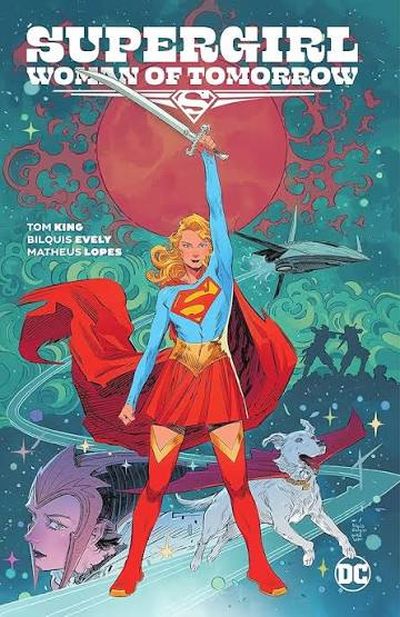
Some people have pointed out that the colour palette of this movie is mainly brown, dark or garish and I agree with them. While I personally didn’t have a big problem with it, I do prefer more colour in my superhero movies. This film was based on Supergirl: Woman of Tomorrow (left), by Tom King. While I haven’t read this myself, most reports say the movie has little resemblance with the original comic and changed its ending. Although the comic itself was an “Elseworlds” story, so you could argue it’s not really representative of Supergirl. All quite negative, right? Why am I then not as harsh as the YouTube fan critics mentioned above?
First of all, I still found the movie entertaining, despite all its flaws. That doesn’t sound much, but believe me, there are many movies out there which are either plain boring or don’t even try to be fun. Case in point: the week before, I saw The Death of Robin Hood with Hugh Jackman. Supergirl is far from perfect but at least it tries. Milly Alcock is indeed fun and a good actress. I figured what direction “her” Supergirl would go, when she was cast. I had seen her as a relentless rebel girl in Australian series Upright, and a larger audience discovered her in the first season of House of the Dragon as Rhaenyra. She has and is a great talent: while this movie doesn’t do her justice, she could have a great career in the right roles.
Eve Ridley does her best as Ruthye, but the part doesn’t offer much and she was not really convincing in it. The idea here is obviously that Ruthye is a counterpoint to Supergirl, creating a conflict between different objectives. It kind of works, though, I would have preferred the movie without an annoying teenager who constantly repeats herself like an NPC, and is little help during the search for Krem. Jason Momoa has been the fan-choice for Lobo, as long as there have been plans for a Lobo movie. Though this version seems a tame, “free from 12 years on” version, he is very enjoyable. I really, really would like to see a single movie with him as the Czarnian bounty hunter. But the new DC film universe under the current Warner Bros. management is already imploding. Again.
There are moments I like. If you can accept the idea of Kara being a more complex, work in progress (the ending suggests she may finally settle on Earth and support Clark), then that may help you enjoy the movie more. This Kara has a quite cocky attitude which sometimes made me chuckle quite a bit. At the same time, Alcock can bring the gravitas to more serious scenes if she is given those. To repeat myself: it’s all in the writing. I have to say, I expected more from Craig Gillespie, who directed the great I, Tonya a couple of years ago. But directors are dependent on the scripts they are given. A lot of the creative decisions concerning the movie (such as Supergirl killing Krem), were apparently made by Gunn, not Gillespie who seems more the “yes”-man of the production.
I understand screenwriter Ana Nogueira had never written a real movie before which is astonishing considering that it is said to have a budget of $170 million. It also seems questionable that she has already been chosen by Gunn to write upcoming DC movies Teen Titans and Wonder Woman. It’s estimated that the movie needs to make $300 million to cover its costs. At the time of writing, it’s a lot less than half that, only $116 million worldwide, and is losing screens rapidly. That doesn’t bode well for the movie. Though, it has been said that Gunn has further plans for Supergirl, as she plays a part in the next Superman-themed movie Man of Tomorrow – this time hopefully at her cousin’s side. Let’s hope, it’s not once again centered around the insufferable Krypto!
Dir: Craig Gillespie Star: Milly Alcock, Matthias Schoenaerts, Eve Ridley, Jason Momoa
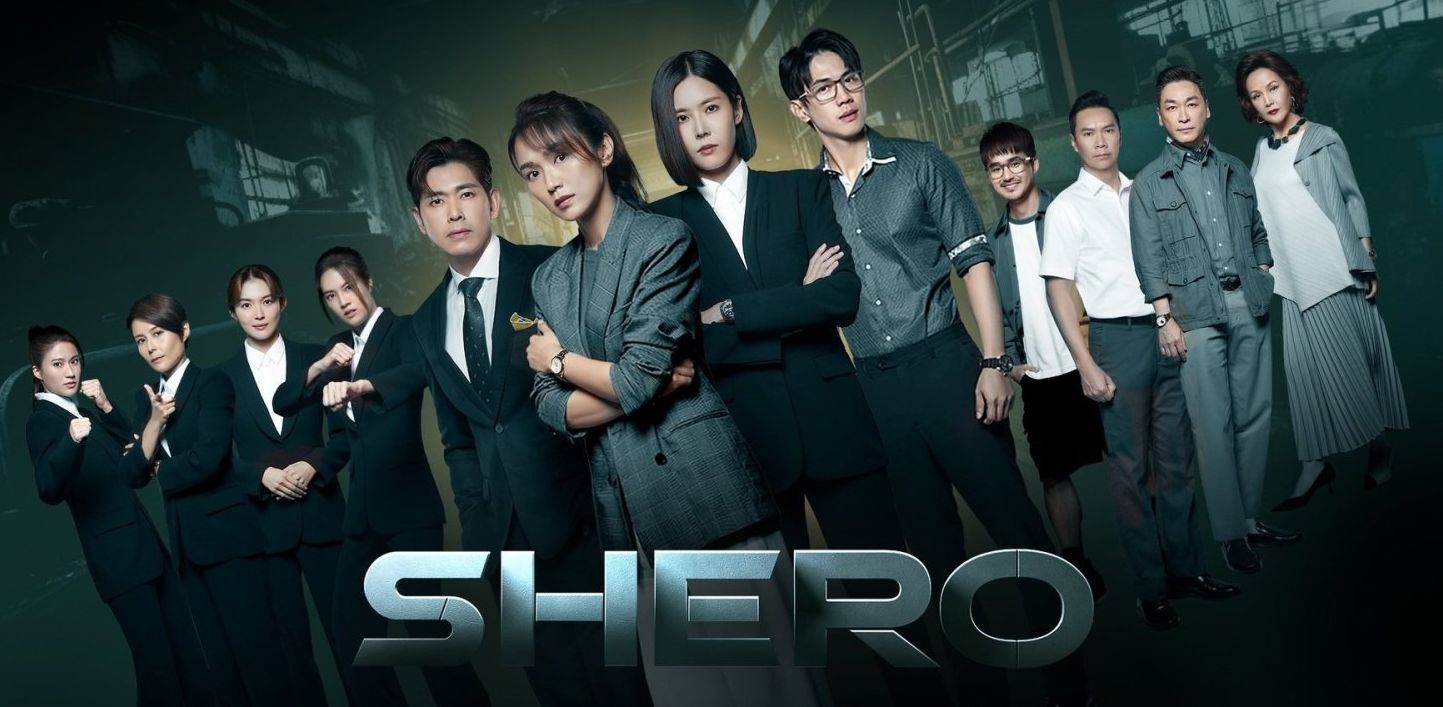
Not to be confused with Sheroes – because I know I did – this is a TV series from Singapore, marking the country’s first appearance on this site. So that’s nice. It’s the story of the Zhang sisters, Yin Xi (Wong), who runs an (almost) all-female bodyguard company, SHERO, and her younger sibling, photographer Yin Chen (Peh). While on a job in Australia, Yin Xi is attacked, and disappears: unknown to anyone, she is hospital, having lost her memory. Yin Chen takes over the company, and works to unravel the mystery of why her sister was attacked, with the help of Yue Rui Xiang (Tan), the CEO of a shipbuilding company who is a client of SHERO.
Turns out, there is a lot going on here – as you can imagine, given there are twenty episodes, each around 45-50 minutes long. Fifteen and a quarter hours, in total. So, for example, there’s an eventual connection to the murder of the sisters’ parents, seven years previously, which needs to be addressed. It also feels like SHERO need to ramp up the background checks on their employees, since it feels like all of them have secrets. Or as another example, there’s one worker who was a former drug addict – which is okay, this was known when she was employed. But her mother is a raging alcoholic, now victim to a blackmailer; a situation now seriously affecting her daughter’s work for the company.
So, really, there’s as much soap opera here as action, with romantic entanglements and family drama very much the order of the day. I was expecting something a little more like Pamela Anderson’s V.I.P. series (which I feel I must get round to reviewing), but this is much more one over-arching story-line across all twenty episodes, with occasional side-plots. Everyone in the show is almost weirdly attractive, and while I get that Singapore is one of the richest countries in the world, this feels almost a promotional video for the country [Makers Mediacorp are a state-owned media company, so that may be a factor]. Certainly, the Australian capital of Canberra gets its product placement in – and they are not the only ones.
There are some action scenes, mostly martial arts based, though guns seems to end up doing most of the killing. But they’re competent rather than particularly outstanding. The use of both amnesia and multiple personality disorder as plot points is hackneyed, both of these coming and going as the plot requires. Though I was impressed by how unexpectedly bleak the show ends up being. While I might not have made it to the end had I been more actively watching it, it was simply something not too demanding, to distract me while I got my daily exercise in. As such, it filled the gap in my morning regime adequately. Yeah, “adequate” seems like the right word for this overall.
Dir: Chen Yiyou Star: Joanne Peh, Romeo Tan, Carrie Wong, Nick Teo The whole series is available with subtitles on YouTube.
This gains something for novelty value, coming from Jamaica – a country from which I think I have only ever seen one film before, reggae classic The Harder They Come. It’s also so obscure, there’s no listing for it in the IMDb. Unfortunately, despite being available to watch on Tubi, the presentation leaves a lot to be desired, particularly in the subtitles. The film’s dialogue is in a roughly equal mix of heavily-accented English, and Jamaican patois, often in the same sentence. It feels like the subs were generated purely by an audio to text application, so the English captioning is spotty and there’s no translation at all for the patois. As subtitles go, they’re basically useless.
I was still able to discern the plot easily enough, though details like the lead character’s name remain a mystery, in part because of the lack of other sources of information. I’m going to call her Sister (Francis), in line with the title. She is a soldier, who is also responsible for taking care of her 16-year-old sibling, Blessing (Wallace). Unfortunately, Blessing has just confessed that she is pregnant, and worse, there are two possible fathers. Sister is less than happy about this. After confronting the young men, and getting nowhere, she goes to the police and convinces Officer Dibble (Vassell) to arrest them. This lasts only until the mother of one, Sonia (Russell), bribes Dibble to let them go, having failed to bribe Sister to drop the case.
It’s therefore up to Sister to make sure justice is served herself. She abducts one of the perpetrators, and makes him confess, an act which allows the case to go up above Dibble’s head. Sonia then pays Dibble more, to take care of Sister permanently, but her military training makes him no match. [To be fair, when he goes to see the men, he’s holding his hand-gun sideways, then tucks it into the front pocket of his jeans. Jamaican police are rather loose with firearms training, it appears]. She then repeats the exercise with Sonia, extracting a confession on video of her bribery, allowing her and Blessing to achieve closure, apparently deciding they will raise the child together.
It seems very basic, though given the subtitle situation, this is no bad thing. The first half in particularly is very chatty, basically an extended series of conversations: Sister & Blessing; Sister, Blessing & Dibble; Sister & Sonia; Sonia & Dibble. Director Brown doesn’t seem to have a lot of shots in his locker, so these have to sustain on the acting, and that’s a mixed bag. Francis and Russell are the best, and the scenes between the two guardians do crackle, but Wallace is unconvincing, and I was never particularly on Blessing’s side. [The sex seems to have been entirely consensual] I’m reluctant to be too harsh, since the presentation certainly doesn’t help. Outside of being a groundbreaking curiosity, I’m not convinced there’s much of note here.
Dir: Richard Brown Star: Jessica Francis, Jayvia Wallace, Candice Russell, Andrew Vassell
There’s a strong parallel between this TV movie and Judgment Night, a theatrical feature, also from 1993, starring Emilio Estevez and Cuba Gooding Jr. Both involve a group stranded in an urban war-zone who incur the enmity of a local gang, and consequently have to fight to eescape. The difference with this – and why it’s here – is the victims are three women: psychiatrist Victoria (Powers), her daughter Julie (Robertson) and sister Stacey (Helen Shaver). They are on their way home after a family Thanksgiving dinner, when a quest for fuel leaves them stranded in the South Bronx. That is just start of their problems, courtesy of Ice (Graham) and his vicious gang of thugs.
Before long, the trio of women are being chased through the streets, buildings and underground passages of the neighbourhood. They need to dig deep into their inner fortitude, with the help of renegade gang member, TJ (Shepherd), who quits them after seeing Ice stab another member dead. There are times where, yes, violence is the answer. This would be one of them, with the women using their wits to build traps for their hunters. As well as dropping an engine block on one. For a TVM from the nineties, this is surprisingly (read: impressively) violent and bloody. The cops are basically useless too: reluctant to get involved, and when they do, Ice disposes of them with almost ludicrous ease.
You can, however, tell how the script tip-toes around the obvious. Ice’s gang of thugs is remarkably multicultural, and this consequently comes across as more of a class conflict, with the obviously well-off Victoria and family, being threatened by the poors. The same racial blindness was the case in Judgment Night, where the gang leader was played by Dennis Leary. He was actually much more effective than Graham, who comes over as someone cosplaying as a gang leader, instead of being one. While it’s Stacey who initially proves the most adept at self-defense, Victoria in particular has a nice arc, realizing the only way to survive is to become as vicious as Ice. Again, it’s a surprising moral given the medium and the era of production.
It’s a bit of a time-capsule, in this depicting how parts of New York were perceived in the nineties. And having visited the city during the decade, it’s not wrong. Indeed, the version you get here is likely tidier. Toronto stood in as a location for the actual Big Apple, and isn’t particularly convincing in this case. Director Corcoran has a lot of experience in the field, and it shows. Takes a while for things to get going – we need to be introduced to everyone, on all sides, even the irrelevant cops. But after about twenty minutes, when things kick off, the pace is maintained well. This is a solid enough movie by most standards, and by TVM ones, that makes it a cut above.
Dir: Bill Corcoran Star: Stefanie Powers, Kathleen Robertson, Chaz Lamar Shepherd, Currie Graham
Well, “delight” might not quite be the right word. But who am I to let facts get in the way of a good review tagline? It’s more of a Turkish nightmare, probably the most brutal rape-revenge movie I’ve seen since… Well, probably Revenge. The director is best-known for Baskin, generally considered the best horror movie from Turkey. Though, full disclosure, I wasn’t that impressed by it: strong on atmosphere, but short on a coherent storyline. That’s not an accusation which can be levelled at this. However, the level of savagery and bloodshed arguably puts this into the horror genre as well. It’s the story of two Turkmenistan sisters, Sayara (Kocabiyik) and Yonca (Kosar), both of whom are involved, in different ways, with gym owner Bariş Ataberk (Kizilirmak).
Yonca is having an affair with the married man. But she has been able to leverage this into getting a job at the facility, as a cleaner, for the much quieter Sayara. Bariş offers Sayara a job as a trainer, teaching female clients self-defense, knowing of her skills in this area, but she declines. Worse follows, when Yonca catches Bariş cheating, and threatens to reveal all to his wife. This does not go down well, and ends in Yonca’s death, which is called a suicide officially. It helps that Bariş’s father, Halil Ataberk (Inal), is a senator with a lot of political pull, and can ensure no action is taken against his son.
No official action, anyway. While Sayara may have seemed the quiet and meek sister, we see in flashbacks the relationship she had with her soldier father – now, notably absent. One senses a lot of darkness there. Indeed, he tells his daughter. “I committed many great sins. It doesn’t matter. The darkness in me, is in you too, Sayara. But if someone crosses that line – to you, or your mother, or to your sister – you will go all the way, without blinking. You will go to the bottom of that darkness.” And Sayara does. Boy, does she. Not just against Bariş, but all those involved, even tangentially, and using every weapon at her disposal, from fire to her teeth. The latter provides the film’s most horrific scene.
This establishes its direction early. The first spoken line is “Son of a whore!” and it’s something of a mix of social complaints thereafter. Class, nationality and gender all come into play here in the power dynamics. Though it’s not as one-side as it might seem: Yonca is hardly blameless, and seems to have a fondness for S&M games, as well as no respect for the sanctity of marriage. However, “blurred lines” hardly excuse what happens to her subsequently, and you’ll be firmly behind Sayara on her relentless quest for the bottom of that darkness. You may not find the ending fully satisfying, in the traditional sense. But I’m hard-pushed to deny it’s appropriate, and you will certainly remember it.




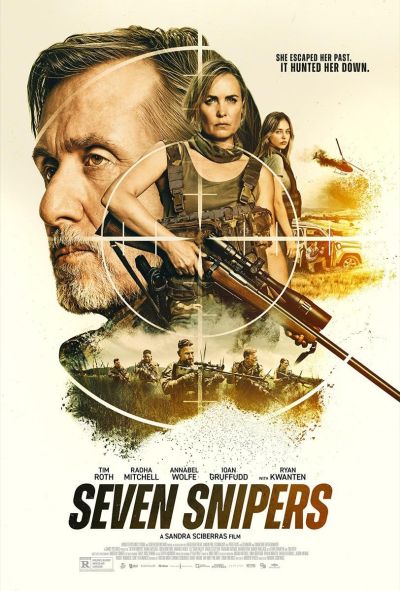 I’m not normally a stickler for accuracy in movies. My disbelief gets suspended so easily, there’s a hook for it beside the TV set. But I have to say, this provided a parade of occasions where it didn’t exactly feel like the characters were elite snipers. Indeed, at points, it seemed like this was the first time certain actors had held a gun, since they were pretending to be soldiers in the school playground, with a stick. In particular, they appear woefully unaware of the idea of concealment. I was painfully reminded of the Monty Python sketch, “How Not to be Seen”. Also, if you’re going to call in your old military pals, I’d go with a range of skills, not just snipers.
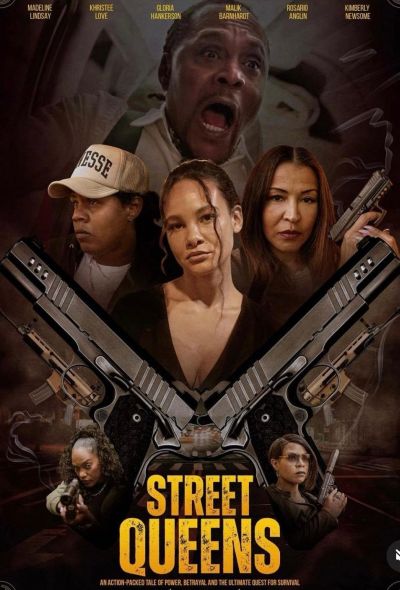 This gets an extra half-star, simply for trying to go in some unexpected directions. I’ve seen enough of these urban flicks to know the template from which they are largely stamped. Now and again, this doesn’t so much colour outside the lines, as forget about the lines entirely. It doesn’t always work. God knows, it doesn’t always work. Still, I respect the attempt. It used the word “duplicitous” inside the first minute, and you get a voice-over saying things like, “The crimson stains of her actions seemed to fade momentarily, offering a fleeting illusion of absolution. A fragile attempt to reconcile the duality of her existence.” That’s some fancy-ass, hi-falutin’ language for a film in this sub-genre.
 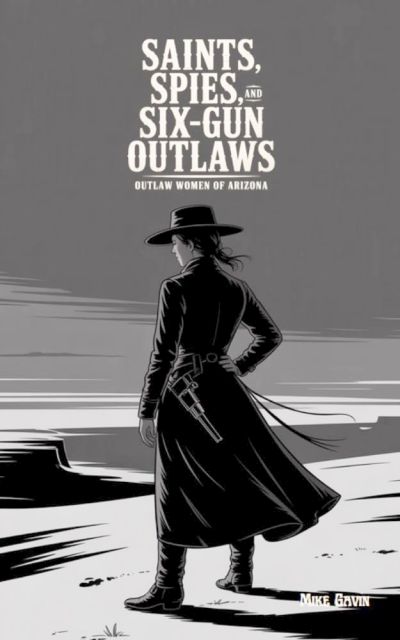 This is a slim little book – more of a booklet, really, coming in at only 74 pages in length. But since it combines both our topic of discussion and local interest, because I live in Arizona, it was an easy decision to pick up a copy, after Dieter brought it to my attention. It does use quite a loose definition of “outlaw” – it is something only really discussed in the book’s epilogue, dividing them into three categories. Most obviously, are the ones Gavin calls “The Breakers of Law”, such as stagecoach robber Pearl Hart, whose exploits were dramatized in
 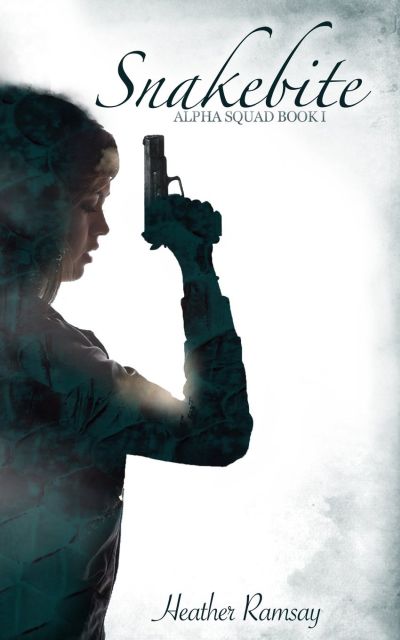 I believe I have previously written disparagingly about “cinematic amnesia”, where a plot revolves around the lead character’s loss of memory. Inevitably, it comes back at exactly the points required for the plot, and to maximize drama. Unless the maker is
  Bella Thorne’s struggle to appear in a film which reaches three stars on this site, continues unabated. While probably not helped by my tendency to confuse her with Kristen Stewart, that’s five attempts now. Although, for a minute here, I thought this might be the one where she finally cracked it, with a potentially interesting first half. But it could not sustain itself, and as the final credits rolled, and I saw Guinevere Turner’s name as the co-writer… Yeah, it all made sense. I mean, she wrote
 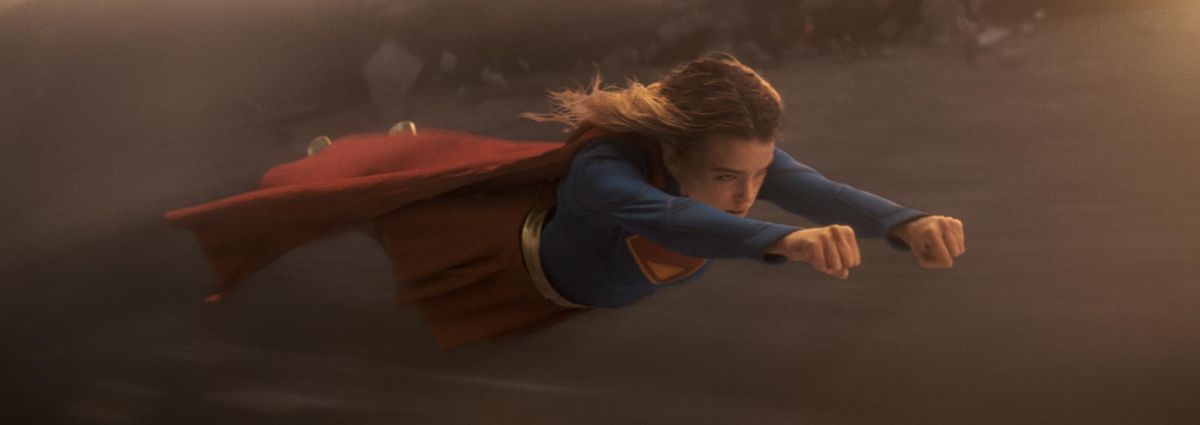 ★★★
★★★ Anyway, what’s the story? Supergirl continues from 2025’s Superman, which in its last scene introduced Supergirl. She is Kara Zor-El, Clark’s cousin, owner of Krypto the Superdog, and together with Clark, the only survivors of the planet Krypton. The Superman movie didn’t show the destruction of Krypton (we have seen that too often on screen in the past) but Craig Gillespie, director of Supergirl, gives us glimpses of it, or flashbacks to Argo City, the city that survived due to SF-technology on a chunk in space. Its inhabitants are nevertheless doomed, due to kryptonic poisoning. So, Kara’s father sends her to Earth, to her cousin who already lives here. The makers generally stay true to Supergirl’s origins, though there is no orphanage into which Superman puts her, nor surrogate parents like the Danvers as in the comics.
 There are editing and creative choices that baffled me. Instead of showing a bar brawl with Kara, the camera focuses on Ruthye in front of us, hiding from the fight. Mind you, in action scenes, the camera often gets so close we can barely tell who is fighting whom. In one flashback Clark tells Kara her powers will set in “right now” – and we cut away to another scene of Kara sitting in a room listening to music on her headphones. A couple who wants to trade Kara and Ruthye for their kidnapped daughter, poisons Kara – how did they know that their poison would work on her? In another scene in a prison, small, lightly-built Ruthye takes on a henchman around double her size, possibly four times as heavy, and easily beats him. There is no explanation given how she does that. While Kara isn’t physically big either, we know what kind of power Kryptonians have. But Ruthye?
 ★★½
★★½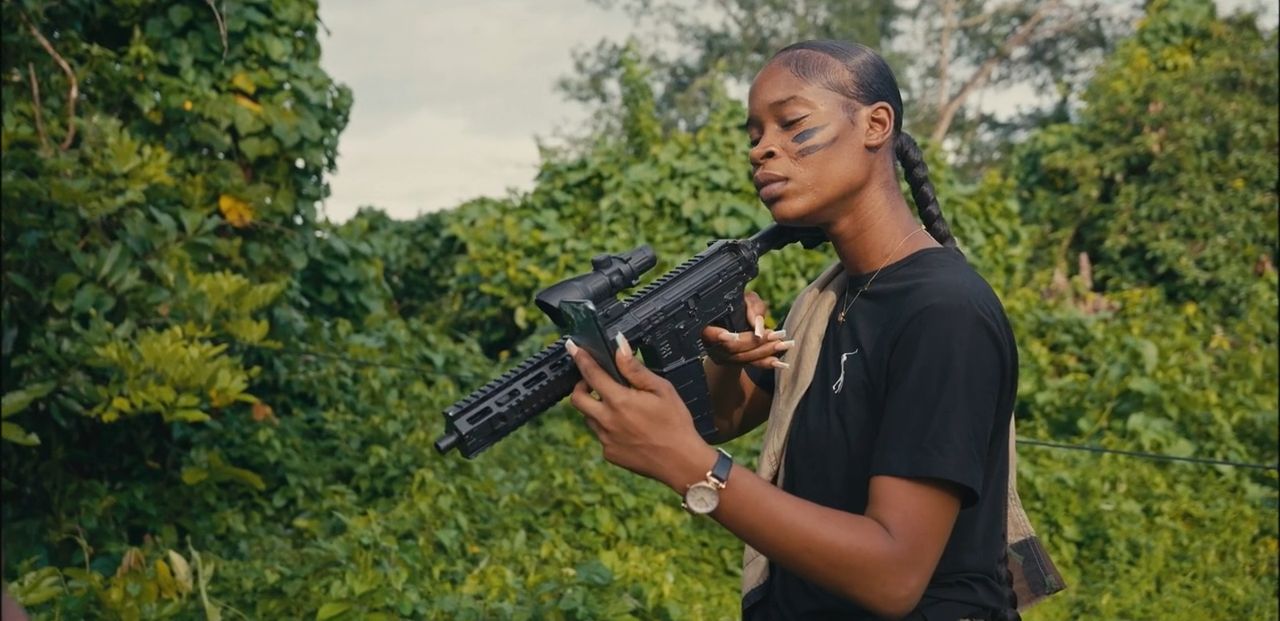 ★★
★★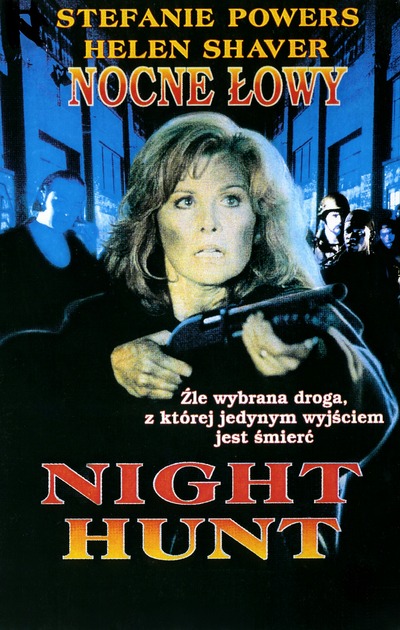 There’s a strong parallel between this TV movie and Judgment Night, a theatrical feature, also from 1993, starring Emilio Estevez and Cuba Gooding Jr. Both involve a group stranded in an urban war-zone who incur the enmity of a local gang, and consequently have to fight to eescape. The difference with this – and why it’s here – is the victims are three women: psychiatrist Victoria (Powers), her daughter Julie (Robertson) and sister Stacey (Helen Shaver). They are on their way home after a family Thanksgiving dinner, when a quest for fuel leaves them stranded in the South Bronx. That is just start of their problems, courtesy of Ice (Graham) and his vicious gang of thugs.
 Well, “delight” might not
 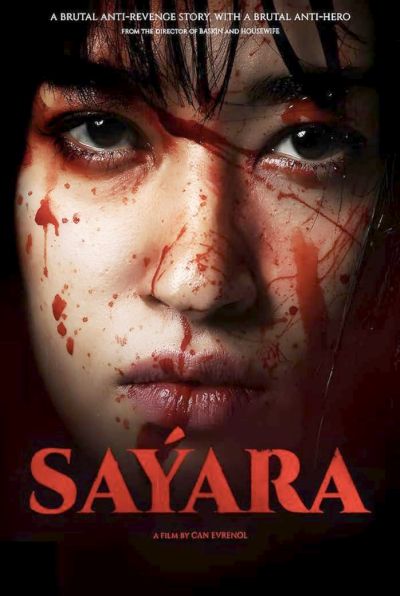 Yonca is having an affair with the married man. But she has been able to leverage this into getting a job at the facility, as a cleaner, for the much quieter Sayara. Bari