
Razor Days

★★
“Just not sharp enough, I’m afraid.”

This was certainly not what I expected. That, in itself, would not have been a problem – I’m quite used to, and indeed do not mind, films which confound my preconceptions. I respect what this is attempting to do as well, which is a different take on the revenge movie. The problem here is fumbled execution: more on the directorial, writing and technical fronts, though in some of the performances too. Even allowing for the obviously limited resources this had to play with, by the end, it was definitely a struggle to get through, with a lack of narrative thrust in particular, meaning it failed to hold my attention. That’s a bit of a shame. Only a bit, mind you.

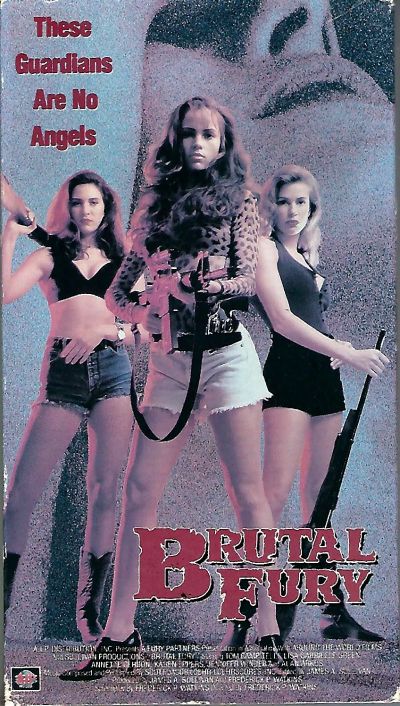
There are three central characters here: Anita (Best), Jessamay (Rochon) and Rena (Monahan). Two of them have severe cases of post-traumatic stress disorder, resulting from their kidnapping and savage treatment at the hands of a rural family, the Logans, who may have cannibalistic tendencies. Jessamay, in particular, suffered brutally, losing an eye and being left with a badly-scarred face. Rena, meanwhile, has largely retired from society. But with the reluctant help of Anita, Jessamay tracks her down and convinces Rena to join them as they head to the Logan farm. As Jessamay puts it, “Time to tell God that he can’t fuck with us and not have any repercussions.” But this does not exactly have the healing consequences for which the trio were hoping. 

And that’s the point: revenge is not clean or cathartic. Indeed, part of the message here seems to be that it can end up turning you into the monster too. To quote Friedrich Nietzsche, “Beware that, when fighting monsters, you yourself do not become a monster… for when you gaze long into the abyss, the abyss gazes also into you.” If someone optioned that line and made a movie of it, you’d probably end up with this. Which works for Rochon’s character, because she has the necessary acting chops to pull it off. Despite her reputation as a “scream queen”, she has always been a cut above that in her talent. The others though? Not nearly so much.

Not helping: bad audio, which will either have you leaping for the remote or, in my case, turning it almost all the way down and relying on the subtitles. There are interesting ideas for a revenge film, such as that we don’t see the victims’ ordeal until after the revenge – and even then, it’s through Jessamay’s dreams, an unreliable narrator if ever there were one. Unfortunately, the execution is sloppy and dilutes the points the movie is trying to make. It’s an interesting contrast to the recently reviewed Undercover, where the story was nothing new, but it did it brilliantly. Here, there’s no shortage of innovation, but Watt doesn’t know how to go about getting them off the page and onto the screen. 

Dir: Mike Watt
Star: Amy Lynn Best, Debbie Rochon, Bette Cassatt, Jeff Monahan

Extremities

★★★
“Not so extreme.”

In the mid-eighties, Farrah Fawcett underwent a bit of sharp change in career path. The previous decade had seen her become one of the biggest sex symbols of the seventies, a star in the first season of Charlie’s Angels, and selling millions of posters a year. But here and in 1984’s TV movie The Burning Bed, which addressed the largely taboo topic of domestic abuse, Fawcett’s work took on a pro-feminist tone. While Bed hit screens before this, her connection to Extremities predated it. The concept was originally a stage play, and Fawcett appeared in the original New York production – incidentally, replacing Susan Sarandon (Karen Allen, Ellen Barkin and Helen Mirren have also taken on the lead role). 

She was thus an easy choice for the film adaptation, to a mixed reception. While nominated for a Golden Globe, critics Siskel & Ebert called it one of the worst movies of the year – alongside the brilliance of The Hitcher, so I’m ignoring them. The origins on-stage are fairly obvious. The bulk of this takes place in the house shared by Marjorie (Fawcett), Terry (Scarwid) and Pattie (Woodard). Marjorie is recovering from narrowly escaping a rape attempt. With the attacker wearing a mask, the police are unable to act, and she is now living in fear, knowing her attacker has her wallet, and so knows where she lives. Rightfully so, for when Joe (Russo) shows up on her doorstep, it’s not with good intentions. 

With the help of a convenient can of wasp spray, she is able to turn the tables on her attacker. Joe is knocked out and tied up, while Marjorie prepares her own brand of justice, digging a grave in the garden, in which he will be buried alive. However, the return of first Terry and then Pattie to the house complicate matters, not least because Joe claims he’s the victim, and he and Marjorie knew each other before. Using information he had found in the mail-box, he’s able to spread dissension in the ranks, with Pattie – a social worker, so clearly a do-gooder on the side of the criminal – particularly averse to Marjorie’s plans. We also learn about an incident in Terry’s past, which colours her opinion.

In contrast to other entries like Hard Candy, there’s no doubt as to the antagonist’s guilt, and that certainty makes it a bit less interesting to me. I was impressed with Fawcett’s performance – the switch from victim to relentless avenging angel is sudden, yet does not feel unwarranted. Russo also deserves credit, for playing a compelling slimeball, who is also convincing enough when pleading innocence. The strong leads help counter what feels unnecessarily restrained, compared to other eighties entries in the genre, both in terms of the rape and the revenge: there were points where I wondered if this was a TV movie. The ending would be one such. I guess we discover that the way to a rapist’s heart, involves his crotch, a sharp blade and threats in lieu of actual mutilation.

Dir: Robert M. Young
Star: Farrah Fawcett, James Russo, Diana Scarwid, Alfre Woodard

Take the Shot, by J.T. Skye

Literary rating: ★★½
Kick-butt quotient: ☆☆☆

To a certain extent, this feels like two separate novels joined at the hip, albeit sharing the same protagonist. The first half takes place on the planet of  Hoganth, which is a gritty urban dystopia, with teenage heroine Rishi Tremayne trying desperately to survive, as she is ruthlessly hunted by a powerful family with ambitious aspirations. The second, however, largely takes place in outer space, as she becomes the weapons operator on a ship piloted by Earthman Derek Hamilton, as they try to shutdown the plot. There are a lot of space battles, and I have to say, I found it rather more generic, and consequently less interesting. But let’s rewind.

With her mother and brother too sick to work, Rishi is the family sole provider, and even that is on shaky grounds. However, she has found work as a data processor, looking for space junk which could potentially be recycled. She finds what appears to be a giant asteroid, and dutifully files a report. Except, it’s actually a two-kilo long spaceship, secretly being built by House Forsythe in preparation for a coup attempt against the Empress. They’re not happy about its discovery, and send forces to wipe out everyone who knows about it, which includes a drone bombing Rishi’s apartment. Fortunately, a retired warrioress, Aun Twil, lives nearby and comes to Rishi’s rescue – except, this puts her on the Forsythe radar too.

It’s this section which is the most entertaining, Aun using her skills to help Rishi avoid meeting the same fate as her employers. This initially involves trying to get out of town, avoiding or defeating the Forsythe agents sent, with increasing aggression, to finish the job. It takes a while before Rishi is able to figure out why she’s being targeted for elimination. When she does, the goal becomes to get Rishi to someone who can act on what she knows, and Aum is able to use her contacts to get the young woman into the Empress’s inner circle. It’s a little implausible a street rat like Rishi would be accepted, rather than (at best!) thanked for the information and sent on her way, while the adults solve the problem. 

She does manage to hang around, and weirdly, the assassination attempts continue: seems a bit pointless by this point, and although there’s the death of a significant character, it has weirdly little emotional weight. Still, Rishi has to stick around, for her role in a climax which might well remind you of a certain well-known SF movie, also requiring an “impossible” shot to destroy a massive superweapon… It certainly did me. On the positive side, the lack of much romance beyond an odd passing attraction is appreciated, and the world-building here is decent. But by the end, I was getting rather bored of dogfights in space, where I felt I needed a chart to keep track of proceedings.

Author: J.T. Skye
Publisher: Self-published, available through Amazon, both as a paperback and an e-book
Stand-alone novel, though part of the Trigellian Universe.

Natassa

★★½
“A blonde, not having more fun.”

I am reluctant to be overly harsh on this one, because I suspect I didn’t get to see this in its best format. The fact it feels very choppy and disjointed could potentially be a result of the IMDb giving this a running time of 136 minutes, but the only print available ran a good half-hour less. It was also dubbed from Greek into English and pan-and-scanned. Pretty much the holy trinity of cinematic suckage, right there. It’s the story of Natassa Arseni (Vougiouklaki), who lives in Greece when the Nazis invade during World War II. She’s initially largely unconcerned, but gradually becomes involved in the local resistance.

There are two men in her life. A former college friend, Max (Karras), followed his father’s German heritage, and is now a member of the occupying forces, who has feelings for Natassa. Her affections are elsewhere, haven fallen in love at first sight with Orestis (Papamichael), a partisan dedicated to ridding his home country of the occupying forces. She marries him and throws her lot in with the resistance, but is captured by the Nazis, and tortured for information. Except, this was a cold-blooded decision to sacrifice them, in order to provide false information to Germany about the location of a future Allied invasion. Orestis escapes capture, and hatches a daring plan to disguise himself and his men as the Nazi firing squad sent to execute Natassa. Fate, however, has other plans.

There are some good ideas here. The character of Max, with a foot in both camps is an interesting one, and I liked how there are biggest issues at play, requiring sacrifices – unwittingly, admittedly – from those on the front lines. Some scenes are very effective. The wedding of Orestis and Natassa, where they are ambushed on the way to the church, and she pushes through with the ceremony despite being shot, would be one. Then again, I’m a sucker for a bloodstained wedding dress. Vougiouklaki is strikingly blonde, and rather unGreek. However – again, perhaps due to the editing down to the most dramatic scenes, or maybe the dubbing – it feels as if she has her acting permanently set at a level of “11”, occasionally toppling over into overacting.

There are points where this is justified: I mean, you’re being interrogated and tortured (even if Max points out, “I’m not in the Gestapo, I’m in the SS” – not sure that makes much difference…), a little hysteria would seem fair enough. But when it seems most scenes are played out like that, it reduces the impact when it’s needed most. There are also moments which dangle awkwardly, such as the opening, where a post-war Natassa visits Dachau, or when she’s a singer, bursting into(presumably patriotic?) song when the Nazis show up. That feels like a knock-off of the Marseillaise bit from Casablanca. I don’t recall the heroine wielding an automatic weapon at any point, as the poster suggests, either. I’ve read that this was the biggest-grossing local movie in Greece for years after its release. Needs a remake, I’d say. 

Dir: Nikos Foskolos
Star: Aliki Vougiouklaki, Dimitris Papamichael, Kostas Karras, Kakia Panagiotou
a.k.a. Lieutenant Natassja or Battlefield Constantinople

The Protector

★★½
“Post-apocalypse, talk will still be in abundant supply.”

[Note: not to be confused with Protector] The year is 2042. A plague knows as The Rot has decimated the land, and those who survived it are in a precarious state, with the water supply having almost run out. There is one source left: an underground aquifer which has enough water for a century. Needless to say, its highly coveted, but access to it has been cut off by the native American tribe under whose land it sits, with the road heavily mined by Chief Brand (Greene, in what must have been close to his final role before passing away). Warlord Gael (Aryeh-Or) lets Key (Moreau) out of jail, knowing she has a map through the minefield and can give him control of the aquifer.

But, wait! There’s more! Because another issue facing society is mass infertility, with children almost non-existent since The Rot. Key finds herself acting as guardian to one rare kid, Kellan (Lane) on her journey. Oh, and there’s also a mad pastime called “Dirt-Joust”, which is like jousting, only with hot-rods replacing horses – it appears fuel is not hard to come by – on which the combatants ride on the bonnet. It’s not a career choice with a pension plan, shall we say. To be honest, it’s a shame we didn’t get to see more of this sport, since the scene we do get is kinda rad. But then, doing so would have only been possible by cutting out the many, many scenes of chit-chat. 

That’s the main problem here, I found. The obvious point of comparison is Mad Max, and in its female protagonist, particularly the new iterations of the franchise, such as Fury Road. However, there, the plot was basically there to act as a delivery mechanism for jaw-dropping action scenes. Here, it’s as a vehicle for moral lectures, pontification and general conversation. It feels as if writer-director Gasteazoro did not understand the assignment, or the rules of the sub-genre. It’s a shame, because there are elements here which work. Not the least of which is Moreau, who looks the part of a world-weary heroine who has had it up to here, and carries herself well, on the rare occasions when she is called into action. 

The film also looks pretty nifty. I haven’t been able to find out the budget: it likely wasn’t a huge amount, yet unlike things like Road Wars: Max Fury, it rarely if ever looks cheap. Some wobbly CGI flames are about the worst element on offer. , It instead feels like the film is mostly intended to be a vehicle – pun not intended – for Gasteazoro’s liberal views on a variety of topics, from ecology, through the rights of indigenous people, to same-sex marriage. I would venture to suggest that a post-apocalyptic film might not be the best route to change minds and influence people on these subjects. Give me ninety minutes of dirt-jousting instead, and I might be prepared to listen to you. 

Dir: Raul Gasteazoro
Star: Marguerite Moreau, Aryeh-Or, Mark Lane III, Graham Grene

Protector

★★★½
“You must be Miss-taken…”

There are certain actors who are capable of elevating the material with which they work. Peter Cushing. Rutger Hauer. Klaus Kinski. They could all appear in B-movies, and make them B-plus films. I’m steadily, increasingly convinced that Milla Jovovich deserves to be thought of similarly. I am pretty sure that, without her in the lead role, its rating would be an entire star lower, if not beyond that. But she compels the viewer’s attention, and the end result is considerably more enjoyable than with almost anyone else. It is, after all, not much apart from a combo platter of elements from Taken and Rambo. Indeed, director Grünberg was responsible for Rambo: Last Blood. He knows disgruntled veterans.

The one here is Nikki Halsted (Jovovich), whose daughter Chloe (Myers) sneaks out to party with friends on her 16th birthday. She gets roofied, and abducted by a sex trafficking group called The Syndicate, run by a shadowy figure known only as The Chairman. However, Nikki is a former Special Ops soldier, which returned from the Middle East specifically to be with Chloe, after the death of her husband, Chloe’s father. So she’s not letting any well-dressed (but curiously white) pimps get in the way. And Nikki has the very particular set of skills necessary to make The Syndicate pay for having taken, um, I mean abducted Chloe. Neither the cops, led by Captain Michaels (Sweeney), nor her former commanding officer, Colonel Lavelle (Modine) can stop her.

There are a couple of odd stylistic choices. It basically skips the first burst of vigilante activity for Nikki, jumping from Chloe’s abduction to Nikki hanging upside down in a meat-packing warehouse. It was rather disconcerting. My other gripe was a fondness for things to unfold in darkness or a close cousin thereof. We are here to see Milla carving off the ears of traffickers, or gnawing chunks out of their faces with her teeth. Not peering into the darkness and “using our imaginations”. Maybe it was a ploy to avoid ratings board issues? Certainly, this does not skimp on the old ultraviolence in general. After a couple of Netflix movies which were very restrained, I found the savagery here quite refreshing. 

Then there’s the ending, which… It would be an example of “go big or go home”, with a twist I did not see coming. But does it work? While it does explain some things that seemed a little strange at the time, it may pose more questions than it answers. I think my main concern though, is that writer Bong-Seob Mun has added an unnecessary level of complexity to proceedings. I was enjoying this perfectly well before the revelation showed up, and while it certainly came as a shock, did it add anything overall? Did it really? Mind you, I would be there for a film simply entitled Milla Jovovich Punches People For 85 Minutes – so what do I know?

Dir: Adrian Grünberg
Star: Milla Jovovich, Isabel Myers, Matthew Modine, D.B. Sweeney

Apex

★★★
“Aileen vs. Predator”

How far Charlize Theron has come. It has been interesting to follow her transition from a clothes-horse to an Oscar-winning actress playing a serial killer in Monster, and then her unexpected turn to become perhaps the leading action heroine of the past decade (despite mis-steps such as Aeon Flux). She’s now in her fifties, so we’ll see how long she keeps going, but for now, I’m happy to enjoy her output. Here, there’s nothing particularly special, but as Netflix Originals go, this is certainly better than Thrash, the mediocre shark movie we also watched this weekend. It fares particularly better on the character side, giving the audience solid performances from both the heroine and the villain. 

The former is Sasha (Theron), a rock-climber who lost her husband, Tommy (Bana), after an accident climbing the ‘Troll Wall’ in Norway [a real, three thousand feet high cliff-face]. It’s basically the same opening as Fall. However, things then diverge, as Sasha goes to Australia for a hike into the Wandarra National Park, also involving climbing and a little white-water rafting. Silly girl: doesn’t she know that everything in Australia is trying to kill you? She soon learns this, encountering first a sketchy pair of locals, before meeting Ben (Egerton). Since this element is in the trailer, I don’t feel I need to hide the fact that he is the real threat. He hunts and then captures Sasha, taking her back to his dank cave lair, where…

Yeah, it’s a bit more than being your garden variety psycho, and Egerton plays it to the hilt. Theron, meanwhile, has the necessary skills to fight for her survival, in a way that Ben’s numerous previous victims did not. I’m not sure exactly how much of the work here was performed by Theron. There is clearly some composite work going on, especially with the numerous falls. But I’ve a feeling, from Charlize’s previous efforts, she’ll have done as much as humanly possible, with regard to the climbing and canoeing. Kormákur does a good job of capturing things right from the start, with some queasy cliff-face camerawork, and drone work that really shows off the immense size of the wilderness in which Ben hunts. 

It is all rather predictable, but gets by on the charisma of the two leads. Theron manages to look the part, convincing the viewer of her credentials as a climber, in a way much younger actresses struggle to do (hello, Daisy Ridley). Meanwhile, Egerton proves an admirable foil, capable of flicking a switch to go from pitiable to pretty damn scary, in the blink of an eye. There were a couple of points towards the end where I found myself thinking of ways this could have tweaked the formula to better effect. But Netflix is all about meeting the viewers’ expectations, not confounding them. If you’re looking for something entertaining, without any intention of pushing the envelope, this does exactly that: no more, no less. 

Dir: Baltasar Kormákur
Star: Charlize Theron, Taron Egerton, Eric Bana

Burner

★★½
“Crime does pay…”

Kiki (Owens) was in a detrimental relationship with drug dealer Axar (Wheatley), until an arrest and subsequent jail time acted as a wake-up call. She cleaned up her act while inside, got out on probation, and has just succeeded in winning back custody of her teenage daughter, Lola Ray (Wylie). However, Axar – who slid out from charges on a technicality involving mishandled evidence – comes crawling out of the woodwork, wanting to resume their relationship, and offering one last score which will set the family up for life. This goes badly and violently wrong (of course!), but Kiki ends up in control of a cryptocurrency wallet containing close to a million dollars. Naturally, that’s not where the story ends. 

Indeed, the early going goes bouncing about in time like a rubber ball, beginning with Kiki being hauled out of a van by a masked man, in the middle of the desert. We then kick back to see the various events which led up to that point, as outlined above. I’m not sure this approach necessarily adds much, beyond offering an immediate hook at the start. It always feels like the use of this gimmick indicates film-makers are unsure about the overall strength of their narrative, having to cherry-pick an incident to lure people in. That is somewhat the case here, with a story that doesn’t have much to offer which wasn’t familiar.

For example, the mother prepared to go to dodgy lengths for her child is rather clichéd, and the supposed twist provided by the reveal at the end, of what actually happened, is nowhere near as much a surprise as the makers think. However, there are enough positives in other elements to make this a tolerable watch. Owens’s performance gives Kiki a commitment which helps paper over the cracks, and there are a couple of excellent supporting actors. Veteran Lew Temple only has one scene, as the detective investigating the shootout, but almost steals the film with his probing interrogation of Kiki. He knows for sure something is up; he just can’t prove it, given Kiki’s stonewalling. Similarly, Jolene Andersen is great in her single scene as very bad cop Stanikov.

However, these moments only highlight the rest of the film, which is nothing special at all. I didn’t feel Kiki was particularly sympathetic, not least because she jumps back in with Axar far too easily for my tastes. Certain subsequent events – part of the reveal – also suggest she’s hardly a good person or a fit mother. Indeed, you could credibly argue she’s worse than Axar, and certainly little worse than Stanikov. Again, this feels like a misstep by the makers, who seem to like their lead character more than they give the viewer reason to do so. Having a kid feels very much a lazy and insufficient excuse for her actions. While it’s understandable, this does leave the film touting a questionable moral, albeit unintentionally.

Dir: Robert Orr
Star: Kacy Owens, James Oliver Wheatley, Akina Wylie, Robert Laenen

Infiltrate

★★★
“Canadian bakin’.”

Thanks to Chris for finding this one. Albeit through a clip on a Chinese site under the name “Rescue From the Abyss”. This led to a significant diversion into movies about submarines, before eventually finding the correct, entirely submarine-free movie. No question, this is the hardest hitting film I’ve seen so far in 2026, though once you get past the action, things get more wobbly. Lily Chen (Ladouceur-Nguyen) is an operative for a shadowy government law enforcement group. She just learned about a potential promotion, though husband Jonathan is less enthusiastic and storms out. Before further discussion can occur, she gets a phone-call. The voice (Goad) informs her Jonathan is his hostage, and Lily needs to do exactly what he says.

His subsequent orders involve working her way through the criminal organization belonging to Marcel LaFleur (Moussi). Matters are complicated, as the voice eventually reveals that not everyone in Lily’s organization is as honest as she is. Can she trust even her boss, Director Bass (Berry)? There’s also backstory about a traumatic event in our heroine’s past, though this is largely irrelevant and can safely be ignored. Indeed, I’d say that overall, the scripting is the weakest link. The eventual explanation, while I can’t discuss it in detail due to spoilers, left me with a lot of questions. The supporting cast are a mixed bag too. LaFleur’s mismatched hair and beard colours irritated the hell out of me for some reason, as did his unexplained facial scars. 

But when he’s not doing pretentious things like painting in blood or debating Shakespeare… It takes a while to get to the expected Lily vs. Marcel battle. However, it is worth the wait, and is thoroughly convincing, despite the significant size disparity. It’s long, gruelling and brutal. I did have to laugh at the obvious stunt table, which stands out in LaFleur’s apartment like a sore thumb. The best fight might actually be earlier, when Lily has to take on a particularly psychosexual pair of henchmen. Though the opening scene sets bar for savagery quite high as well. Mark’s background in stunts is apparent, though I think I preferred his earlier feature, Control. While its script was imperfect, the flaws were less apparent. 

This Canadian production must be out of Quebec, given the significant sprinkling of French here. But, in another in the series of micro-aggressions the film commits, the font used for the subtitles is hard to read. I don’t recall the last time a film got the core element – here, the action – so right, yet appeared entirely dedicated to screwing things up around the edges. I could go on. The whiny nature of Jonathan, who doesn’t appear to realize it is no longer the Victorian era. Occasional forays by the director into shaky-cam. Despite that, there were still enough positives to keep me interested, and I look forward to seeing what both Mark and Ladouceur-Nguyen are able to deliver down the road. 

Dir: James Mark
Star: Orphée Ladouceur-Nguyen, Alain Moussi, Lisa Berry, Jonathan Goad

Away Bus

★★★½
“Just the ticket.”

And this will cross Ghana off the list of countries for action heroines, in a charming and rather fascinating little glimpse into African culture. After their mother falls ill, Bibi (Mumin) and Kiki (Makafui), have to raise 20,000 cedi that day, to fund her medical treatment. I presume that’s a lot of money in local terms. After failing to do so by legitimate means, they team up with a dubious pal, Padlock (Asante), to hijack and rob a bus as it rolls through the countryside. There are four rules he tells them they must abide by. Keep to the plan; speed is key; don’t get caught; and…  Well, he can’t remember the last one, but it probably doesn’t matter, does it?

Of course, it inevitably turns out to be the most crucial of all: “Always have an exit plan.” The lack of planning in this department leaves them stranded in the bush alongside their increasingly aggrieved victims, who are beginning to suspect the guns used on them might not be real. Worse is to follow, when the real robbers who maraud along that section of highway arrive, with weapons which are very definitely not fake. Oh, and the police show up too, leaving the sisters increasingly out of their depth as rookie criminals. Meanwhile, their black sheep and criminal uncle, Bob Pinto (Berko), holds court over his thugs, and complains about.. Just about everything.

This is packed with local colour, though it feels surprisingly accessible to a Western audience. Some things, it appears are universal: when Bibi and Kiki go to their local church to ask for help, the minister apologizes, saying, “The church just bought me the latest Mercedes. That has reduced our finances. But, we stand with you in prayer.” On the bus, in-journey entertainment is provided by a child preacher, Prophet Awukye (Samuel Yaw Dabo, in a scene-stealing performance). He unwittingly encourages the siblings, just when they’re having doubts about their crime, by telling them, “Whatever mission you’re embarking on today, you’ll triumph with ease… If you fail, then, there’s no God.” There’s a generally cynical attitude towards organized religion here, if that isn’t already obvious. 

It is kinda loose, in the sense that I expected Uncle Bob to play a bigger part than he does – for example, by having direct ties to the genuine robbers. Similarly, there’s another career criminal on the bus, but he proves rather superfluous to the plot as well. Technically, there are some odd audio dropouts at point, and there were points where the subtitles just give up, translating a multi-sentence rant into a few words. But generally, this looked impressively polished, and I bought into the performances across the board, far more than I expected. I laughed out loud on more than one occasion, and found myself genuinely invested in seeing the sisters succeed. So I’m not going to complain if the way it ended, perhaps felt a little too tidy.

Dir: Kofi Asamoah and Peter Sedufia
Star: Salma Mumin, Fella Makafui, Richard Asante, Mikki Osei Berko