




★½
“The unspeakable in pursuit of the uneatable”
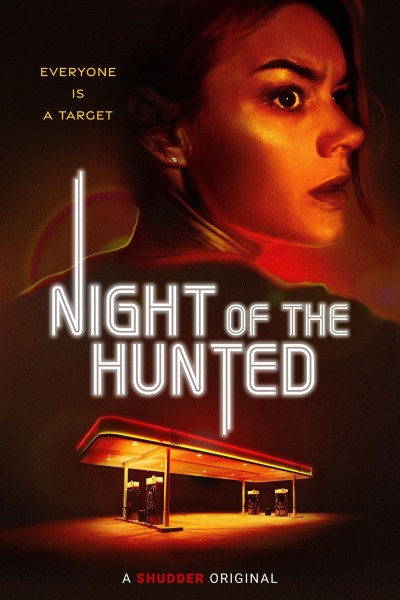 It has got to the point where ‘A Shudder Original’ has become more a threat than a promise. I was hoping for much more from Khalfoun, who gave us the brilliant Maniac remake. However, here he is hogtied by a terrible script, more interested in providing left-wing political messaging than entertainment – the very definition of “woke”. At one point, the heroine actually says, “My whole life has been about pleasing men.” Seems like a you problem, honey. But it sums up the tone of this whole misbegotten endeavour. Though to be fair, watching this a week before the Presidential election didn’t help: I reached my annual quota of smug bullshit months ago.
The missteps begin almost immediately, when we’re introduced to pharmaceutical executive Alice (Rowe), who is about to leave a convention, being clumsily reminded by her husband at home that she has a fertility appointment. Seconds later, we discover she’s having an affair with co-worker John (Scippio). “What a great way to get our empathy!” said no audience, ever. On the way home, they pull into a gas-station only to find it’s the bullseye for a sniper (Stanic), who has already killed the sole overnight employee. He’s operating from a nearby billboard (top) which, in one of the film’s few interesting moments, can be read in two, diametrically opposite ways. Paul is quickly dispatched leaving Alice alone, except for a walkie-talkie through which she communicates with the active shooter.
Turns out, he has a laundry list of grudges, with his lines apparently created by a Twitter-scraping bot, or possibly an AI told to parody right-wing talk radio. I certainly can’t believe it took four human writers to come up with this garbage. It’s exactly the kind of scenario where the killer doesn’t need a reason, and all the efforts to give him one backfire completely. Compare and contrast the more effective Downrange, and you’ll see what I mean. It may have had its flaws, going too far into enigmatic. It’s still preferable to having the killer self-identify as “The right-wing nut, the conspiracy theorist, stop the lie, storm the Capitol, election fraud, domestic terrorist, anti-vaxxer, anti-this, anti-that.” You’ll be forgiven for mentally tuning out mid-sentence.
Things only get worse thereafter. For naturally, the shooter idiotically ends up leaving his position of strength, and wandering around inside the gas station. This is so he can drop vague hints as to the specific nature of his motivation (which seems curiously focused on Alice), but more importantly, allows the heroine to battle him hand-to-hand. Do not expect either of these aspects to approach remotely satisfying, and my reaction when the end credits rolled was “That’s it? Really?” Of all the reasons I watch genre movies, getting political lectures from Frenchmen is pretty far down the list. This has pissed away all of Khalfoun’s goodwill, and a good chunk of that for producer Alexandre Aja too. As for Shudder? I will not be subscribing.
Dir: Franck Khalfoun
Star: Camille Rowe, Stasa Stanic, Jeremy Scippio, J. John Bieler
[A version of this review previously appeared on Film Blitz]
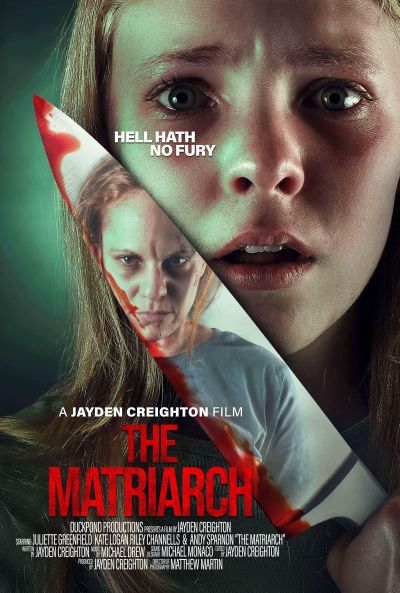 I’m always amused when I check the reviews on the IMDb for a film, and they are almost all “Totally amazing!” or “Worst film ever!”. The former tend to come from the movie’s friends; the latter, from people miffed by the positive reviews, and seeking to counter them. The reality is usually somewhere in the middle, and that’s the case here. Given this was reportedly made for forty thousand dollars – and those are Australian dollars, which right now is about 67 US cents – it’s quite impressive, and certainly doesn’t look low budget, despite a cast of basically three and a single location. However, it’s a film where, if anyone had behaved sensibly, proceedings would have been all over in about ten minutes.
 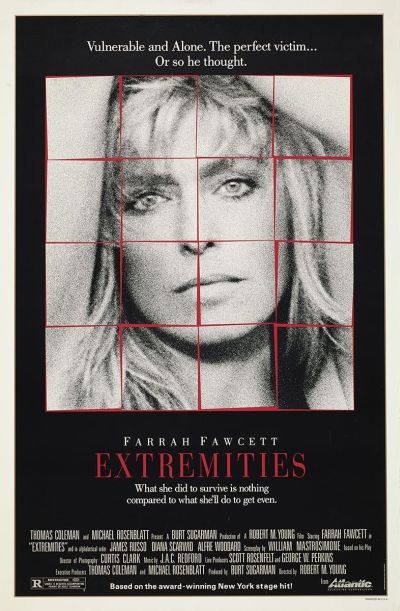 In the mid-eighties, Farrah Fawcett underwent a bit of sharp change in career path. The previous decade had seen her become one of the biggest sex symbols of the seventies, a star in the first season of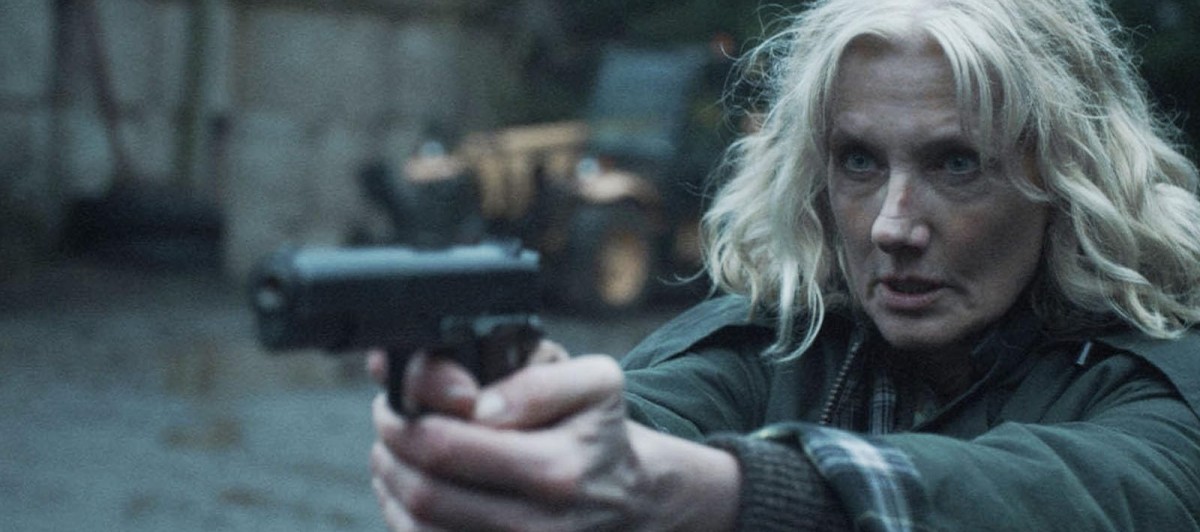
 Genuinely good Tubi Original shocker! Well, that’s a bit harsh: there have have been decent ones before – such as Lowlifes, which certainly has some DNA in common. But this is likely the best I’ve yet seen, anchored by an excellent performance from Richardson. This takes place on a dark and stormy night, in a remote Scottish farmhouse. Rose (Richardson) is taking care of her disabled husband, with the help of daughter Maisy (Soverall), where there’s a frantic knocking at the door. It’s two men, Matty (Cadby) and his badly injured brother, Jack (Linpow). Their car got into a wreck nearby, and they are in desperate need of help. Naturally, they aren’t innocent passers-by.
 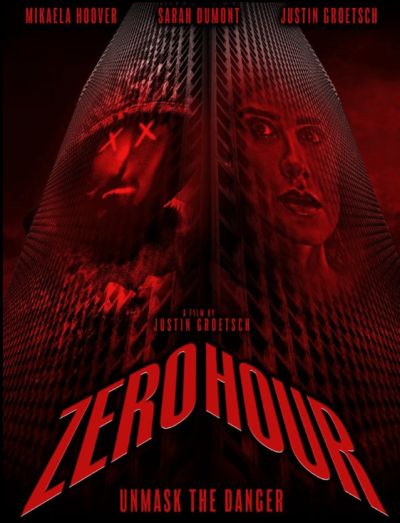 Not to be confused, in any way, with Zero Hour!, the 1957 Canadian film which was spoofed mercilessly in Airplane! This unfolds mostly over one night in a high-rise, where Ida (Hoover) is the last person left in the building, having taken over from best friend Katrina (Dumont). She finds herself being harassed by a pair of masked figures, and simultaneously receiving messages on her phone and computer from her husband, Isaac (Groetsch). Which is perhaps even more disturbing to her, because Isaac was killed in the home invasion which opens the movie. So what’s going on? Has he become a ghost in the machine? Do they have cellphones in the afterlife? Or is there a more prosaic explanation?
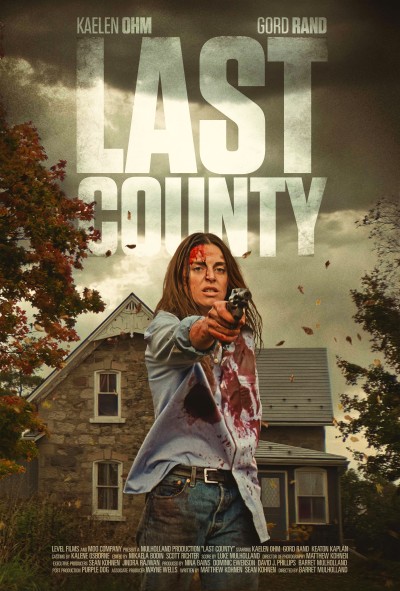 I suspect the main problem here is a story which takes too long to get going. By the time things do kick off, my interest was already on… if not quite life support, it was likely seeing a doctor regularly. While things do then perk up in the second half, it feels too late. We begin with Abby Gardner (Ohm), a recovering alcoholic and mother to a young daughter, whose marriage falls apart after a car accident with the child in the back-seat. Her husband gets custody, and Abby begs for them to come visit her. Before that can happen, her home is entered by Bennet (Rand) and his wounded partner, who have absconded with a duffel-bag full of drug money.
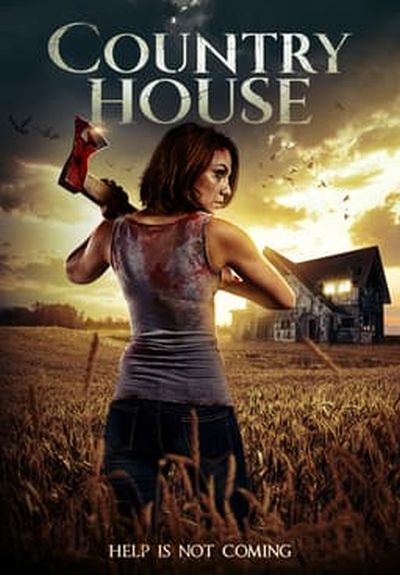 The title above is the one by which it appeared on Tubi, though everywhere else calls it Aggression. I guess both are appropriate, in different ways. Neither shed a great deal of light on proceedings here. Then again, you could argue, the film itself is largely deficient in the area of enlightenment too. It takes place in rural France, where Sarah (Nicklin) has been reunited with her sister Marie (Duchez), after twelve years living in England. The circumstances are not happy, the visit being the result of their father’s death. However, there appears to be a dark past surrounding the circumstances of Sarah’s departure. Meanwhile, Marie is mute, although this does not play into the scenario which unfolds.
  It generally makes sense for a film to escalate over its duration. The problem here is, what escalated was my annoyance. It began as irritation, but by the end I was deeply peeved, because the stupidity is strong in this one. It begins with two different strands. In one, former desperado Lee Hughes is visited in his mountain resort by ex-colleague Jimmy Montague (Fafard) and his minions. They want to know the location of two million in proceeds from a previous crime Lee and Jimmy pulled. In the other, lesbian couple Lane (Newton) and Megan (McClay) are busy being lesbionic with each other, because they’re lesbians. Did I mention they are a same-sex couple?
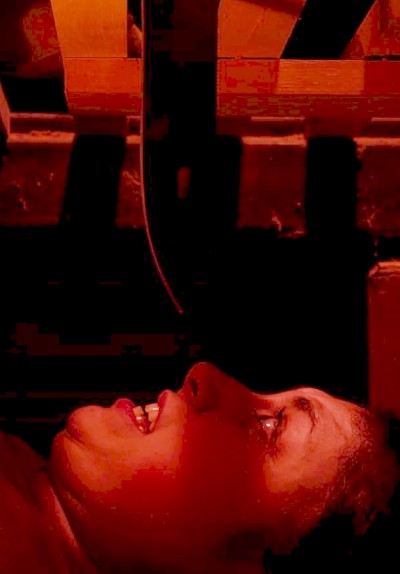 This is fairly sparse, unfolding entirely in the single location of a furniture factory, over the course of a single night. The central character is Karen (Terrazzino), a single mother who has just taken on the job of a cleaner and overnight security guard at the premises, in order to provide for her young daughter, who is ill on the night Karen has to start work. These issues quickly pale into insignificance – though not irrelevance – when a group of masked men enter the building, looking to hunt down and kill her. With the doors chained from the outside and the phone lines cut, Karen is entirely on her own against the bigger and stronger, but fortunately not smarter, intruders.
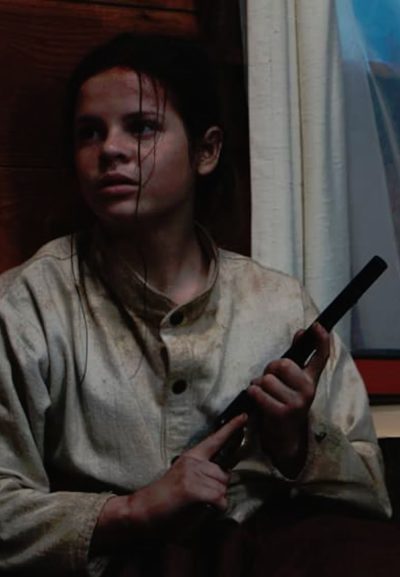 This one does take a while to reach the necessary threshold: probably only truly qualifies for the final twenty minutes or so, though it does talk a good game until that point. Also, it’s a decent enough combination of Western and home-invasion genres to that point, to pass muster. Nothing special, mind you. It just knows its limitations and is careful enough to work within them. It takes place in the Old West. whee Beth (Bernadette) and her twin children, Brian and Irene (Betsy) now live with her new husband, Robert (Krause). The trio appear to have escaped an abusive relationship, and it’s not long after a railroad surveyor pays a visit, before Irene is cheerfully telling him, she’s going to go back and kill her father some day.