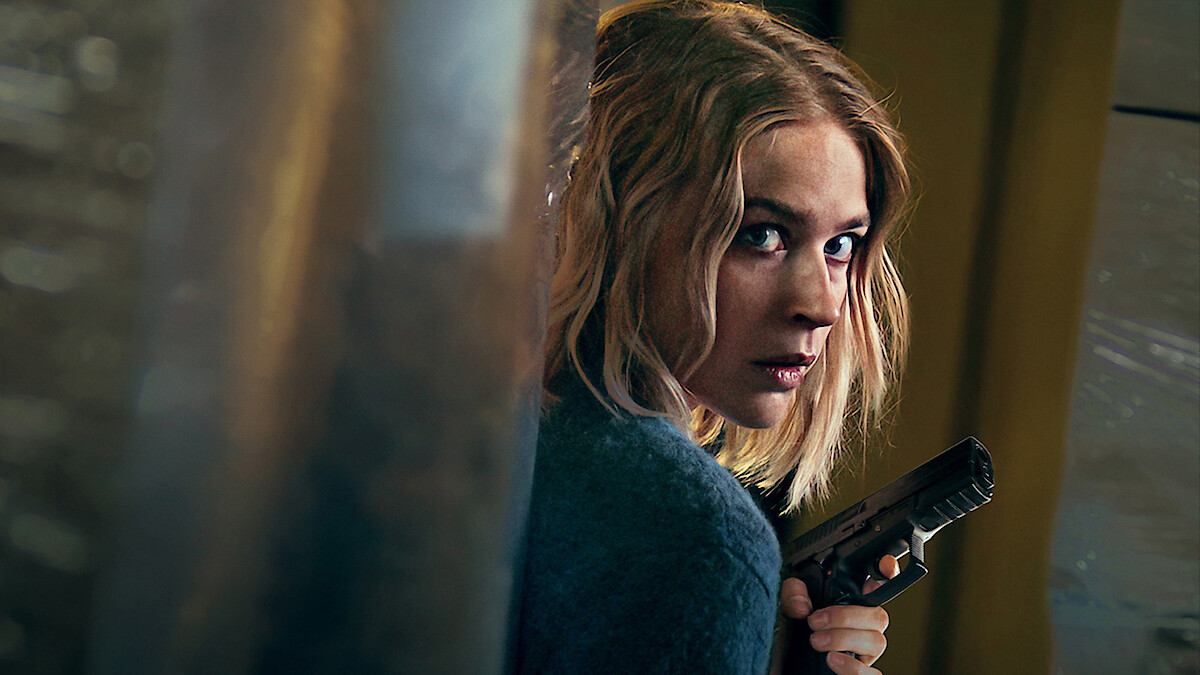
Poor Gal Gadot. Her career since Wonder Woman has basically been one downhill slalom after another. From the disaster which was Wonder Woman 1984, through Heart of Stone, and now this. It feels like everything has been a critical and/or commercial disaster. Even when not the star, she has been catching strays, such as Red Notice and the misconceived (to put it mildly) live-action Snow White remake. It’s at the point where her presence in a project is almost more a warning. The reviews for this could be a new low. Worse than Heart of Stone? Surely not. I was braced though. And while I found this less actively annoying, it still certainly isn’t good.
It’s a script which would barely trouble the back of a beer-mat. On the day prosecutor Maia Marten (Gadot) is scheduled to appear in court for the trial of a crime boss, her son Noah (Wilmot) is kidnapped. Unless she does exactly what she’s told by a voice on the phone (Lewis), Noah will die. The end game is Maia shooting the key witness in the hotel where he is sequestered. But to get there, she must run across London, this being contrived required so that the kidnapper can monitor her. He has also hacked her phone, so she is unable to call for help. There’s also some stuff about Maia’s mother having murdered her father. It doesn’t serve much purpose, and can safely be ignored.
This is the perfect movie, if you’re interested in spending eighty minutes, watching Gadot in motion, slowly getting sweatier and more dishevelled. To be honest… There are probably worse things to look at. Heart of Stone and Wonder Woman 1984, to name but two. As someone who lived in London for more than a decade, I also enjoyed trying to work out exactly where they were. This was challenging, given I left twenty-five years ago, and quite a lot has changed since. Still, I got the lie of the land, and unlike some films (Sherlock Holmes having its hero run from Tower Bridge to the Houses of Parliament in two minutes, requiring a sprint speed of 60+ mph), the geography here seems generally to make sense.
But the fact that I was more interested in tourist landmarks, than the plot or the characters, is significant. You may even spend more of the film thinking of easier, less complex ways, for the voice on the phone to achieve the same end goal. For this is very much an example of an Amazon Prime streaming movie. You don’t need to think about the plot, or even pay attention to it. Everything is clear inside ten minutes, and the last five tidies everything up nicely, with a twist you will likely see coming – at least, it shouldn’t come as much of a surprise. In the middle? Running, taunting of Maia by the voice on the phone, and problem-solution on repeat. As Saturday night entertainment, it was… okay, I guess? Never going to watch it again though.
Dir: Kevin Macdonald Star: Gal Gadot, Damian Lewis, Alfred Enoch, Rory Wilmot
I’m always amused when I check the reviews on the IMDb for a film, and they are almost all “Totally amazing!” or “Worst film ever!”. The former tend to come from the movie’s friends; the latter, from people miffed by the positive reviews, and seeking to counter them. The reality is usually somewhere in the middle, and that’s the case here. Given this was reportedly made for forty thousand dollars – and those are Australian dollars, which right now is about 67 US cents – it’s quite impressive, and certainly doesn’t look low budget, despite a cast of basically three and a single location. However, it’s a film where, if anyone had behaved sensibly, proceedings would have been all over in about ten minutes.
This is the unfortunate story of Missy (Greenfield), a 13-year-old girl living with her dysfunctional, drug-addicted single mother Annette (Logan). Things go from bad to worse when her super-sketchy boyfriend, Trent (Sparnon), gets out of jail and moves in with them. He has… history with Missy, so she’s immediately on her guard, taking a carving knife to bed with her. Rightfully so, and Trent duly gets the punishment he deserves. Annette is none too happy about this, and decides that Missy needs to be disposed of as well. From here, things escalate relentlessly, as Missy tries to get out of the house of horrors, and her mother tries to prevent this, by any means necessary. Which includes a significantly escalating body count.
You definitely will have to suspend your disbelief in a number of ways. Firstly, in accepting that Annette’s maternal instincts are so shallow, that her reaction to the situation, is to try and murder her own child. Then, most obviously, Australian cops are dumber than a eucalyptus tree full of koala bears. Because the ones that show up here, behave in a way which isn’t just in defiance of police protocol, it goes against all notions of common sense. There are times too, where it feels like Missy is actively trying to stay in the house, though given her young age, her idiocy is likely more forgivable. This runs through the heart of the film, to a point where it feels almost like a parody.
Fortunately, I didn’t find it too tricky to put aside such considerations and just enjoy the lurid pleasures this has to offer. It feels like an Antipodean cross between The Shining and Home Alone, combining the disintegrating mindset of the former’s antagonist, with the latter’s impromptu attitude to survival tricks. Greenfield is particularly effective, and I found it almost impossible to believe that this was her on-screen debut. She is highly convincing as she gets put through the emotional, spiritual and physical meat-grinder by her own mother. Creighton, also helming his first feature, shows a firm grasp of the basics, and you won’t find much slack present. However, I would suggest Jayden the director fires Jayden the writer for next time – or, at the very least, has a lengthy chat.
Dir: Jayden Creighton Star: Juliette Greenfield, Kate Logan, Andy Sparnon
There are certain actors who are capable of elevating the material with which they work. Peter Cushing. Rutger Hauer. Klaus Kinski. They could all appear in B-movies, and make them B-plus films. I’m steadily, increasingly convinced that Milla Jovovich deserves to be thought of similarly. I am pretty sure that, without her in the lead role, its rating would be an entire star lower, if not beyond that. But she compels the viewer’s attention, and the end result is considerably more enjoyable than with almost anyone else. It is, after all, not much apart from a combo platter of elements from Taken and Rambo. Indeed, director Grünberg was responsible for Rambo: Last Blood. He knows disgruntled veterans.
The one here is Nikki Halsted (Jovovich), whose daughter Chloe (Myers) sneaks out to party with friends on her 16th birthday. She gets roofied, and abducted by a sex trafficking group called The Syndicate, run by a shadowy figure known only as The Chairman. However, Nikki is a former Special Ops soldier, which returned from the Middle East specifically to be with Chloe, after the death of her husband, Chloe’s father. So she’s not letting any well-dressed (but curiously white) pimps get in the way. And Nikki has the very particular set of skills necessary to make The Syndicate pay for having taken, um, I mean abducted Chloe. Neither the cops, led by Captain Michaels (Sweeney), nor her former commanding officer, Colonel Lavelle (Modine) can stop her.
There are a couple of odd stylistic choices. It basically skips the first burst of vigilante activity for Nikki, jumping from Chloe’s abduction to Nikki hanging upside down in a meat-packing warehouse. It was rather disconcerting. My other gripe was a fondness for things to unfold in darkness or a close cousin thereof. We are here to see Milla carving off the ears of traffickers, or gnawing chunks out of their faces with her teeth. Not peering into the darkness and “using our imaginations”. Maybe it was a ploy to avoid ratings board issues? Certainly, this does not skimp on the old ultraviolence in general. After a couple of Netflix movies which were very restrained, I found the savagery here quite refreshing.
Then there’s the ending, which… It would be an example of “go big or go home”, with a twist I did not see coming. But does it work? While it does explain some things that seemed a little strange at the time, it may pose more questions than it answers. I think my main concern though, is that writer Bong-Seob Mun has added an unnecessary level of complexity to proceedings. I was enjoying this perfectly well before the revelation showed up, and while it certainly came as a shock, did it add anything overall? Did it really? Mind you, I would be there for a film simply entitled Milla Jovovich Punches People For 85 Minutes – so what do I know?
Dir: Adrian Grünberg Star: Milla Jovovich, Isabel Myers, Matthew Modine, D.B. Sweeney
Kiki (Owens) was in a detrimental relationship with drug dealer Axar (Wheatley), until an arrest and subsequent jail time acted as a wake-up call. She cleaned up her act while inside, got out on probation, and has just succeeded in winning back custody of her teenage daughter, Lola Ray (Wylie). However, Axar – who slid out from charges on a technicality involving mishandled evidence – comes crawling out of the woodwork, wanting to resume their relationship, and offering one last score which will set the family up for life. This goes badly and violently wrong (of course!), but Kiki ends up in control of a cryptocurrency wallet containing close to a million dollars. Naturally, that’s not where the story ends.
Indeed, the early going goes bouncing about in time like a rubber ball, beginning with Kiki being hauled out of a van by a masked man, in the middle of the desert. We then kick back to see the various events which led up to that point, as outlined above. I’m not sure this approach necessarily adds much, beyond offering an immediate hook at the start. It always feels like the use of this gimmick indicates film-makers are unsure about the overall strength of their narrative, having to cherry-pick an incident to lure people in. That is somewhat the case here, with a story that doesn’t have much to offer which wasn’t familiar.
For example, the mother prepared to go to dodgy lengths for her child is rather clichéd, and the supposed twist provided by the reveal at the end, of what actually happened, is nowhere near as much a surprise as the makers think. However, there are enough positives in other elements to make this a tolerable watch. Owens’s performance gives Kiki a commitment which helps paper over the cracks, and there are a couple of excellent supporting actors. Veteran Lew Temple only has one scene, as the detective investigating the shootout, but almost steals the film with his probing interrogation of Kiki. He knows for sure something is up; he just can’t prove it, given Kiki’s stonewalling. Similarly, Jolene Andersen is great in her single scene as very bad cop Stanikov.
However, these moments only highlight the rest of the film, which is nothing special at all. I didn’t feel Kiki was particularly sympathetic, not least because she jumps back in with Axar far too easily for my tastes. Certain subsequent events – part of the reveal – also suggest she’s hardly a good person or a fit mother. Indeed, you could credibly argue she’s worse than Axar, and certainly little worse than Stanikov. Again, this feels like a misstep by the makers, who seem to like their lead character more than they give the viewer reason to do so. Having a kid feels very much a lazy and insufficient excuse for her actions. While it’s understandable, this does leave the film touting a questionable moral, albeit unintentionally.
Dir: Robert Orr Star: Kacy Owens, James Oliver Wheatley, Akina Wylie, Robert Laenen
I was quite startled to read some of the scathing reviews this received. For I genuinely enjoyed it, to the point it likely came one element (which I’ll get to) from a seal of approval. Sure, it’s nothing particularly new overall. However, I found it consistently enjoyable, to the level I felt no desire to look at my phone at any point. These days, that’s high praise indeed. It takes place in a slightly alternate London, where gang bosses Frasier Mahoney (Charles Dance) and Mrs. Christina Vine (Krige) are on the edge of a war for control of the city. There’s also a rogue element, in the Mushka Gang, who have turned an East End estate into a no-go area.
Ada (Beckinsale) doesn’t have much to do with this, until her brother Edward (Hardiker) gets deep in debt to Mahoney. He kidnaps her daughter to ensure the money gets paid back. This forces Ada to carry out a heist on a jewellery store run by Vine, which is only the start in a series of problems. She does have assistance, in the shape of former lover Roman (Tan), who can help fence the product. Meanwhile, Ada is trying to get Mahoney blamed for the robbery, to start an inter-factional war that can cover their escape. Meanwhile meanwhile, we discover Ada and Edward’s past, and encounter a number of colourful characters, such as the foul-mouthed Galloway (Tom Bennett, channeling Budget Nick Frost).
There are a lot of moving parts, but Nunn keeps things clear. He has plenty of action experience, including the wonderful Scott Adkins vehicle One Shot, which was my favourite movie of 2021. This isn’t quite as relentlessly kinetic, yet keeps a good pace throughout. Tan actually gets as many action scenes as Beckinsale, and this brings me to the issue mentioned above. While she still looks the part – and very good for 52 – there’s an awful lot of shots from behind, strongly suggesting heavy stunt doubling. And it’s not subtly done. They might as well just have hired Laura Vörtler, Beckinsale’s stunt double, to play the part and been done with it. Still, despite clearly more limited resources, I preferred this to her last couple of actioners, Canary Black and Jolt.
It helps to have the likes of Krige and Dance in the supporting cast. The latter is barely seen until the end, though makes up for lost time with a blistering anecdote about his late wife. I really enjoyed Krige, whose character can go from comforting a grandchild troubled by bad dreams, to torturing an employee for information, without more than a blink. There are some elements which feel underdeveloped, such as a weird club which seems little more than a flimsy excuse to tie Beckinsale up. But overall, I enjoyed this, and particularly appreciated the bone-dry British humour peppered throughout. Although the lead may not have many more action films in her, Nunn continues to prove his credentials.
Dir: James Nunn Star: Kate Beckinsale, Lewis Tan, Rasmus Hardiker, Alice Krige
I’m always down for an Olga Kurylenko film. She’s been in some good entries on the site previously, including Sentinelle and High Heat. Her track record gets her the benefit of the doubt, for an entry like this, which might be a bit marginal if it starred another actress. Though American, it takes place in Bari, Italy where recovering junkie Karina (Kurylenko) is putting her life back together, and looking forward to the arrival of her young daughter, Lucy (Astons). However, on the way home from a late-night shift at the bakery where she works, she stumbles into a murder commited by mob courier Covek (Trevena), which becomes a car-chase, ending in a fiery crash.
The problem is, this burned up the drugs Covek was supposed to be delivering to Silvio (Keitel). He “recruits” – quotes used advisedly – Karina to acquire a replacement stash, a process which drags them both through the Italian underworld over the course of the night. Matters are not helped by a couple of factors. Silvio has Covek’s son as a hostage, so noncompliance is not an option. Oh, and did I mention that Covek is actually an Interpol agent, who will go to any lengths to make sure Silvio faces justice? On the other side, Karina will go to any lengths to make sure her own daughter is not harmed. But the trail of destruction being left in the wake of her and Covek’s hunt for heroin is not exactly subtle.
I wanted to like this more than I ended up doing. It feels as if Karina needs to be more central than she is. She ends up spending too much time either doing Covek’s bidding, or following him around, and that’s not what I wanted to see. Kurylenko > Trevena, except the film doesn’t seem to realize it. Keitel, another actor I like, is also underused. To the point where, up until the very end, I half-wondered if he filmed all his scenes somewhere else, and was then spliced into the movie during the editing stage. That turns out not to be the case. But the mere fact it seems possible is another illustration of the wobbly execution.
Even basic stuff like the film’s title, which is both strikingly generic and never explained, is maddening. Opening with a quote from Nietzche sets intellectual aspirations the rest of the movie isn’t able to sustain. I will say, it is technically decent: I appreciated little things, like them deciding to blow up a genuine car, rather than faking it with CGI. When given the chance, Kurylenko does well in the action, though quite why Karina has these skills is never explained. It would have been improved by being the film depicted in the poster (I must have missed Kurylenko’s pleather suit), simply having Karina trying to get the replacement drugs herself. In that scenario, Covek becomes surplus to the film’s requirements. A win-win, I’d say.
Dir: Scott Weintrob Star: Olga Kurylenko, Oliver Trevena, Harvey Keitel, Alice Astons
Genuinely good Tubi Original shocker! Well, that’s a bit harsh: there have have been decent ones before – such as Lowlifes, which certainly has some DNA in common. But this is likely the best I’ve yet seen, anchored by an excellent performance from Richardson. This takes place on a dark and stormy night, in a remote Scottish farmhouse. Rose (Richardson) is taking care of her disabled husband, with the help of daughter Maisy (Soverall), where there’s a frantic knocking at the door. It’s two men, Matty (Cadby) and his badly injured brother, Jack (Linpow). Their car got into a wreck nearby, and they are in desperate need of help. Naturally, they aren’t innocent passers-by.
No great surprise there, and it turns out they are fleeing from a robbery, with the intention of getting across the North Sea to Norway. However, there was a third member of the gang, who didn’t survive. He’s the son of the man who planned the heist: for obvious reasons is not happy about the situation, and ends up heading for the farm. However, that is not the biggest problem Matty and Jack face. For it turns out they aren’t the only ones keeping secrets, and they have just chosen the wrongest possible home to invade. Told you it was not dissimilar to Lowlifes. The question of who are the villains here becomes a good deal less clear, the more we know about everyone involved.
To that end, much credit to the script, also written by Linpow in an impressive feature debut. It reveals the necessary information at the right pace, and just when you think you know what’s going on, it’ll throw another twist at you. Loyalties shift from scene to scene as the characters discover more about each other, or themselves, and the situation becomes inextricably messy. You know it’s going to end in messy violence, and the film certainly doesn’t disappoint there. The cast are all solid – though in the credits, I notice the production had a “sensitivity consultant”, which is apparently a thing now. I’d like to offer my services as a crass insensitivity consultant to any movies interested. My qualifications there speak for themselves.
Where was I? Oh, yeah. It is, however, Richardson’s movie, having the toughest arc to handle as she moves from caring and compassionate mother to… Well, I guess technically she is still a caring and compassionate mother. It’s just that, well… /gestures vaguely at the screen. The film opens and closes with meaningful quotes about motherhood and the emotions it can trigger. Although what transpires between them, makes them read in radically different ways. To that end, I was getting notes of French horror flick Inside, another story of maternal instincts gone horribly wrong, or Matriarch, also set in Scotland with visitors getting more than they bargained for. Yet despite the influences, this is its own creature, powered by Richardson, and is a solid thriller to the very last shot.
Dir: Matthias Hoene Star: Joely Richardson, Neil Linpow, Sadie Soverall, Harry Cadby
a.k.a. Little Bone Lodge [A version of this review originally appeared on Film Blitz]
Bec ‘Rowdy’ Rawlings is an Australian mixed martial-artist, who fought in the UFC for a bit, and then became the first woman to win a bare-knuckle boxing world title. This documentary covers her life, from growing up as a teenage tearaway, through motherhood transforming her character, her discovery of mixed martial-arts, a disastrous and highly toxic first marriage, and escaping that to become eventually the Bare Knuckle Fighting Championship federation’s Women’s Featherweight World Champion. Phew. That’s quite a lot to get through in less than eighty minutes. The film does a decent job of covering its bases, through interviews with Bec, and her family and friends, plus no shortage of archive footage of Rawlings, both in and out of the ring.
Everyone in it, but Bec in particular, comes over as down-to-earth: it might be an Aussie thing. Certainly, she makes for an interesting contrast to the more… outspoken American and male MMA fighters, like Conor McGregor. Rawlings seems almost humble, speaking of the respect she has for anyone tough enough to get in the ring. Admittedly, this is likely in contrast to her early years when she was very much on the path to delinquency. Particularly awkward, since her sister was a police officer, who remembers getting a radio call describing a suspect, and knowing immediately that it was her sibling. But parenthood flicked a switch, and Bec realized after having her first son Zake, she needed to take responsibility for her actions.
However, life took a darker turn in her relationship with fellow MMA fighter, Dan Hyatt. For three years, he abused her, both physically and mentally. At one point in the documentary, the interviewer asks for specifics of what he did, and… Well, to be honest, it feels unnecessarily invasive, and almost exploitative: I didn’t feel like the details added anything. Eventually, she was able to escape the situation, and it certainly appears to be a case of “What doesn’t kill you, makes you stronger.” While the recovery process took a number of years, she can now look back on the horrors of that period in her life, and as Rawlings says, it happened to her, but does not define who she is, an awesome attitude.
To be honest though, I was more interested in the sporting side of the documentary, which follows Bec as she prepares to defend her title belt in Cancun, Mexico, against Cecilia Flores. She won – hey, it’s on her Wikipedia page – although it’s a little odd that this fight took place back in February 2019, but the film basically ends there, with only a couple of captions covering the five years between then and its release. I had, again, to check Wikipedia for more up-to-date information. After spending time fighting for Bellator, she’s now back fighting for the BKFC, winning her last (at time of writing) bout in January 2025. More power to her, both in the ring and as a mother.
Dir: Tom Haramis Star: Bec Rawlings, Adrian Rodriguez, Mal Van, Jacqui Rawlings
You could accuse this film of pulling a bait-and-switch. The first thirty minutes are set up to point emphatically towards one scenario. It then goes off in a completely different direction for much of the final hour – one very clearly inspired by French New Wave of Horror masterpiece, À l’interieur (Inside). Then it circles back around to kinda-sorta tie up the loose ends. Fortunately, I came into this one with almost no preconceptions. A poster of a nun wielding a shotgun? That’s all it took to add this one to my watch-list, and whatever happened thereafter was alright with me. Providing it delivered on the promise of a heavily-armed Sister of No Mercy on the advertising, at least.
It does, somewhat – though I have reason to doubt her nun authenticity. It’s Amanda (Hoffman), whom we first see forcing a man into the trunk of her car at the point of her boomstick. We then flashback to her working as a hotel maid, alongside BFF Rebecca (Casey). One day, Amanda is raped by a hotel guest (Jousset), whom we recognize as the man getting trunked, and ends up getting pregnant. She decides to keep it – that’s a discussion in itself – but to offer the baby up for adoption, and the selected parent is Dr. Catherine Gilden (Rubino), who initially appears perfect. Key word there: initially. Because Catherine becomes too stalkery for Amanda’s tastes, so she breaks off the arrangement. Which is where the film makes a sharp right.
Admittedly, in the annals of poor decisions, Amanda escaping her stalker by going to a remote cabin owned by Rebecca’s dad, is probably not the best idea. Anyone who has ever seen a horror movie can predict how well this works, i.e. not at all. After a brief homage to The Shining, we’re off to the races, with Catherine and Amanda engaged in a no-holds barred battle over the unborn child. Well, some holds barred: Inside, now that was truly no-holds barred, most memorably when Beatrice Dalle tried to excavate the disputed foetus with scissors from its mother. Nothing so extreme here, although this does have its moments. For good reason does Amanda proclaim, “Why won’t you fucking die?”
I would probably have to admit, this is rather more fun than the early going, though the relationship between Amanda and Rebecca feels genuine. You will probably learn more about the process of cleaning hotel rooms than you wanted to know, and it feels as if the makers suddenly realized the movie they originally set out to make wasn’t very interesting. I feel the second half makes up for it, and it’s clear by the end, when we circle round to her assailant, that Amanda has been changed by her experience. I certainly have questions, not least about Rebecca’s fate, and its definitely not as grindhouse as it thinks it is. But as a nasty slice of female empowerment, I reckon this certainly has its moments.
Dir: Brian Darwas Star: Kate Hoffman, Rosanne Rubino, Christy Casey, William Jousset
The term “Netflix Original” covers a range of productions, from pre-made movies they buy for distribution, through to movies commissioned from the ground up by the company. The results are equally variable. For every What Happened to Monday, there’s an Interceptor. This one came out of Germany: not exactly renowned for action, particularly action heroines. But it quickly and unexpectedly became the most-watched foreign language movie on the streaming service, worldwide. Does it deserve the success? We watched it and wrote up our thoughts independently, which have been edited and combined below. But, first: some introduction, and let’s find out what the movie is about.
Dieter: This movie was produced by long-established studio German Constantin Film, who in the 60s gave us the famous (or notorious, depending on your perspective) Karl May westerns, as well as German Edgar Wallace thrillers. It went bankrupt in the 70s but was saved and lead to new successes due to late producer Bernd Eichinger. He produced films such as The Never-ending Story, The Name of the Rose, House of Spirits, the first Fantastic Four movie (yes, that was German), the Resident Evil series and Downfall. After his death Constantin Film has mostly been hit and miss.
Interestingly, in the end credits you can see that Oliver Berben was involved in its production. Berben is a successful producer, now leading manager of Constantin Film, and son of well-known German actress Iris Berben, who played detective inspector Rosa Roth for a good 2 decades on TV. He has produced a number of movies with her in the leading role, as well other movies and countless TV productions. His most well-known movie might be Roman Polanski’s Carnage, with Jodie Foster. I’m not sure if this movie was produced by Constantin, then sold to Netflix, or if Netflix “ordered” Constantin Film to produce the movie. Looking at the results, I get the feeling this was from the get-go a collaboration between the two.
Jim: The heroine is Sara Wulf (Goursaud), a former Bundeswehr soldier, whose husband was killed in action, and who suffers from a touch of PTSD herself. She’s working to move to the US with her son, Josh, and has a visa appointment at the consulate in Frankfurt. But while she’s waiting to be seen, Josh vanishes. The consular chief of security, Erik Kynch (Scott) is sympathetic, until the surveillance footage shows Sara arriving alone. She’s locked up pending her being escorted off the premises. But, naturally, she escapes, and encounters a young woman (Abova), being held in an apartment in the complex. They agree to help each other – but it increasingly becomes clear that there’s a lot more going on than a missing child.
Dieter: Color me surprised when finding out the movie is… not bad at all. Actually, it is quite watchable. While the typical “diversity agenda” of Netflix is at play here, fortunately, there is no virtue-signaling, and I’m happy for it. I had some problems with Sara being a “special forces elite soldier” and “combat trained”. It’s true German soldiers were in Afghanistan but they were not involved in any combat missions but were mainly helping in re-building projects, or the training and aid of Afghani security forces. Since the end of World War II, Germany has had a strict rule of not getting involved in any military battles with the idea “that no war should ever come from Germany again”. So, a German soldier being involved in a direct military action, as scenes in this movie seem to indicate, is highly questionable.
Also, German “elite forces”? I don’t know. I won’t say it is impossible: there are probably certain groups for specific tasks that I am not aware of. But having done my – at that time obligatory – army service in the Bundeswehr 30 years ago, I have my doubts. I’m willing to suspend my disbelief here. The movie echoes popular action thriller plots of the past such as Jodie Foster’s Flight Plan and Panic Room, Angelina Jolie’s The Foreign Son, and of course Liam Neeson’s Taken. So, the plot won’t win any awards for originality. It’s also happy to re-use elements from other sources: Tom Cruise window climbing; Mel Gibson shoulder dislocation; or a MacGyver-like improvised explosives.
Jim: Yeah – I may have yelled, “A few household chemicals in the proper proportions” at the screen there! I thought this was entertaining. It’s main strength is Goursaud, who manages to be both a bad-ass and a vulnerable mother, often simultaneously. She comes across as fairly credible in the fights, even when going up against bigger opponents. The script puts some effort into establishing her credentials, and she has a lithe toughness to her which works well.
Dieter: You must understand: we Germans are pretty lousy when it comes to action movies. The few there are, usually have actors attempting a weak, second-rate impression of the American attitude of “Look how big my balls are”. This always feels fake, because we Germans simply don’t see ourselves like that. We have no problems seeing us in roles of evil Nazis or “the good German”, e. g. Armin Mueller-Stahl, but hardly ever as action heroes. That definitely has to do with our history, the idea of “German heroism” being exploited and abused by the Nazis. So at first I was going to dismiss the movie as not interesting.
Surprisingly, it doesn’t commit the usual mistake of making its protagonist an unbeatable heroine. To “do it the German way”, you must put things into a more nuanced context. We wouldn’t expect it from an American movie, but definitely would in a German one. I know it’s unfair to home-grown productions, but we judge them on a different basis. Yes, there is the early scene where Sara gets pushed around and immediately gets into combat mode (because… you know… PTSD). But I think it’s the only scene I found unbelievably overdone. I feared the movie would continue that way – but luckily it didn’t!
Instead, it shows that – in contrast to someone like Angelina Jolie in Salt – though she is “trained for this” as she says, the reality sets in quickly. Even a single man with some combat training is always in a better position and will eventually overpower her. If she wins a fight, it is because she uses everything at her disposal in her environment. There seems to be an extra shot of adrenaline when push comes to shove and her trauma sets in. Nothing is won easily for the protagonist here and female power fantasies are left at the door! The fact that Goursaud actually has some muscles, is a further plus.
Jim: There might be a bit less actual action than I expected, but what there is, is done well, with a couple of sequences edited together to look like a single take. The peak is likely a battle against two assassins in an apartment. It’s no Atomic Blonde, in length or quality. Then again, who is? I also appreciated the way she’s not infallible. Witness the way her first attempt to get around the consulate, ends in her bouncing off a balcony, and falling to the ground.
Dieter: The acting is for once not a distraction, as so often in German movies. German-French actress Goursaud is in most scenes very believable, playing a stressed mother as well as in combat mode. Lera Abova who plays the role of Russian Kira doesn’t fare quite so well. Despite being Russian, I never got the feeling that she was, and sometimes had problems understanding what she was saying: she definitely had no Russian accent either.
The big surprise was Dougray Scott, who last time I saw him, had a role in Desperate Housewives. I could imagine that a consular officer would react exactly as he did in the situations here. What really stood out were his German language skills, speaking fluently with only a very slight accent. You have to understand how difficult it is to speak German like that. The movie refers to it in the beginning, when Sara demonstrates to her son how his father spoke German with a broad American accent. Contrast a scene in Tomorrow Never Dies where Pierce Brosnan spoke in German and I couldn’t understand what he was saying. The language skills Scott demonstrates in this movie here are excellent. And I say that as a German. I was mightily impressed.
Jim: I noticed in the end credits that there were two dialogue coaches for him: one to speak German and the other to help him sound American. Seems like both did their job! Chris found no reason to complain about the latter, and she has an ear for that, both in English and Spanish (you should hear her eviscerate any non-Cubans trying to sound Cuban!). While I’m here, I noticed that the credits listed an “intimacy co-ordinator”. Weird, since there was nothing at all on screen to suggest one would be needed. Maybe Zübert is going to pull a Zack Snyder and realize an unrated cut, with all the missing sex and violence?
Dieter: The most fascinating thing for me was the consulate itself. I’ve never been in one, so I don’t know, but I could imagine that it might look like this. You get the feeling this is not just a building but almost its own village with an auditorium, conference and office rooms, warehouse, cafeteria, locker rooms, swimming pool, nursery, hospital room, guest apartments, truck departure hall and safety room. Are consulates really that big? Or was that made up? The movie is supposed to take place in Frankfurt, Germany’s fifth-biggest city, and early shots of the city and its central station are genuine. So I was quite surprised to read in the end titles “filmed in and around Vienna”. Aha…???
Jim: I was less enthralled with the story. There are points where it seems like a parade of clichés, such as the PTSD, which never serves much purpose. Or the scene at the end, where the villain lays out his plan to the heroine in all its intricate detail. It’s also crafted to raise questions, such as what would have happened if Sara hadn’t unilaterally decided to leave Josh alone in the consulate play-room? It’s certainly quite easy to come up with simpler ways for the bad guy to achieve his goals.
Dieter: The whole plot has a typical thriller solution which is a bit far-fetched and over-complicated. But I liked the idea of the villain of the piece giving an explanation for his actions. The previous day, I had seen Steven Soderbergh’s spy thriller Black Bag, and the characters’ emotions and motivations seemed thin, and not quite understandable. Kudos to the writers here for creating believable motives and emotions.
Jim: Despite my qualms about the script, it’s not significantly worse in this area than your typical straight-to-video actioner. That might be the best way to approach this, as a throwback to a simpler era, where one man – or woman now – could go up against a parade of enemies, and emerge battered but unbowed. I’m certainly happier to see my Netflix subscription used towards this kind of thing than overblown nonsense like The Electric State.
Dieter: A little tidbit: When I graduated, I briefly considered applying for jobs in German embassies overseas. One big drawback was being regularly required to move to other places in the world, making it difficult to settle anywhere and build a life. This is one reason the villain here gives for his acts and it absolutely made sense to me. But overall, this was a good action movie, and from Germany, no less. Even a believable, and perhaps the first real, girls with guns movie from here. It’s really astonishing to me. I expected this to fall flat on its face, especially when replicating American action formulas. But despite my utter disbelief something like this could be possible from my country, the film succeeds. Signs and wonders still do happen, as we used to say here!




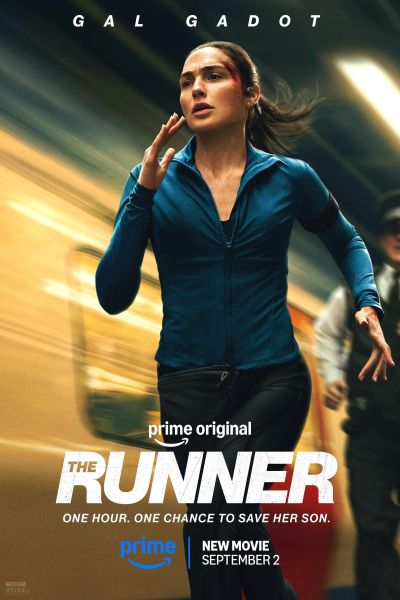 Poor Gal Gadot. Her career since Wonder Woman has basically been one downhill slalom after another. From the disaster which was Wonder Woman 1984, through Heart of Stone, and now this. It feels like everything has been a critical and/or commercial disaster. Even when not the star, she has been catching strays, such as Red Notice and the misconceived (to put it mildly) live-action Snow White remake. It’s at the point where her presence in a project is almost more a warning. The reviews for this could be a new low. Worse than Heart of Stone? Surely not. I was braced though. And while I found this less actively annoying, it still certainly isn’t good.
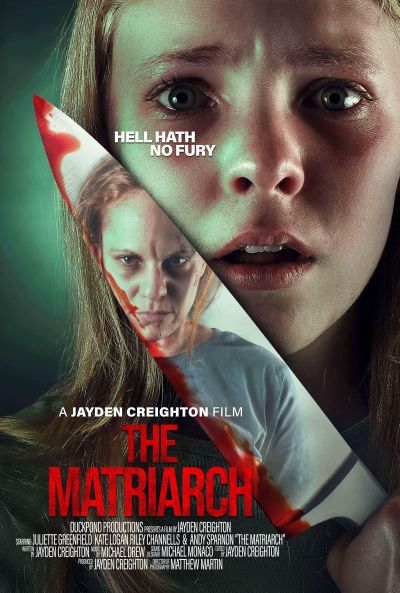 I’m always amused when I check the reviews on the IMDb for a film, and they are almost all “Totally amazing!” or “Worst film ever!”. The former tend to come from the movie’s friends; the latter, from people miffed by the positive reviews, and seeking to counter them. The reality is usually somewhere in the middle, and that’s the case here. Given this was reportedly made for forty thousand dollars – and those are Australian dollars, which right now is about 67 US cents – it’s quite impressive, and certainly doesn’t look low budget, despite a cast of basically three and a single location. However, it’s a film where, if anyone had behaved sensibly, proceedings would have been all over in about ten minutes.
 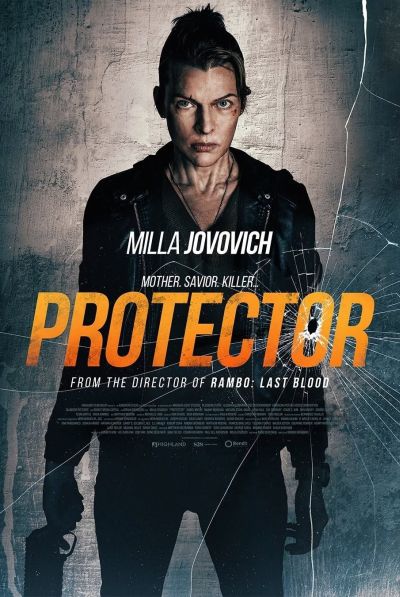 There are certain actors who are capable of elevating the material with which they work. Peter Cushing. Rutger Hauer. Klaus Kinski. They could all appear in B-movies, and make them B-plus films. I’m steadily, increasingly convinced that Milla Jovovich deserves to be thought of similarly. I am pretty sure that, without her in the lead role, its rating would be an entire star lower, if not beyond that. But she compels the viewer’s attention, and the end result is considerably more enjoyable than with almost anyone else. It is, after all, not much apart from a combo platter of elements from Taken and Rambo. Indeed, director Grünberg was responsible for Rambo: Last Blood. He knows disgruntled veterans.
 ★★½
★★½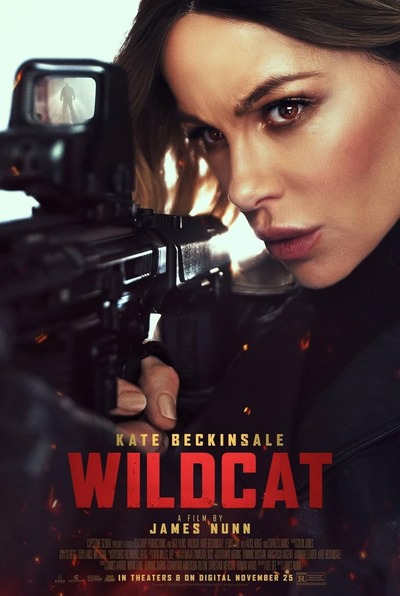 I was quite startled to read some of the scathing reviews this received. For I genuinely enjoyed it, to the point it likely came one element (which I’ll get to) from a seal of approval. Sure, it’s nothing particularly new overall. However, I found it consistently enjoyable, to the level I felt no desire to look at my phone at any point. These days, that’s high praise indeed. It takes place in a slightly alternate London, where gang bosses Frasier Mahoney (Charles Dance) and Mrs. Christina Vine (Krige) are on the edge of a war for control of the city. There’s also a rogue element, in the Mushka Gang, who have turned an East End estate into a no-go area.
 I’m always down for an Olga Kurylenko film. She’s been in some good entries on the site previously, including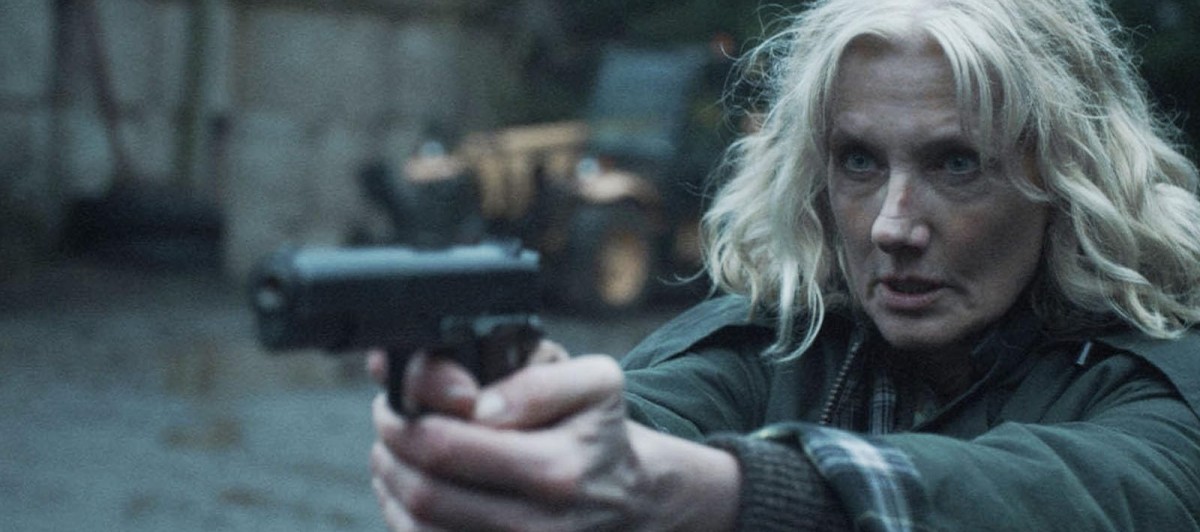
 Genuinely good Tubi Original shocker! Well, that’s a bit harsh: there have have been decent ones before – such as Lowlifes, which certainly has some DNA in common. But this is likely the best I’ve yet seen, anchored by an excellent performance from Richardson. This takes place on a dark and stormy night, in a remote Scottish farmhouse. Rose (Richardson) is taking care of her disabled husband, with the help of daughter Maisy (Soverall), where there’s a frantic knocking at the door. It’s two men, Matty (Cadby) and his badly injured brother, Jack (Linpow). Their car got into a wreck nearby, and they are in desperate need of help. Naturally, they aren’t innocent passers-by.
  Bec ‘Rowdy’ Rawlings is an Australian mixed martial-artist, who fought in the UFC for a bit, and then became the first woman to win a bare-knuckle boxing world title. This documentary covers her life, from growing up as a teenage tearaway, through motherhood transforming her character, her discovery of mixed martial-arts, a disastrous and highly toxic first marriage, and escaping that to become eventually the Bare Knuckle Fighting Championship federation’s Women’s Featherweight World Champion. Phew. That’s quite a lot to get through in less than eighty minutes. The film does a decent job of covering its bases, through interviews with Bec, and her family and friends, plus no shortage of archive footage of Rawlings, both in and out of the ring.
 You could accuse this film of pulling a bait-and-switch. The first thirty minutes are set up to point emphatically towards one scenario. It then goes off in a completely different direction for much of the final hour – one very clearly inspired by French New Wave of Horror masterpiece,
  ★★★
★★★ Also, German “elite forces”? I don’t know. I won’t say it is impossible: there are probably certain groups for specific tasks that I am not aware of. But having done my – at that time obligatory – army service in the Bundeswehr 30 years ago, I have my doubts. I’m willing to suspend my disbelief here. The movie echoes popular action thriller plots of the past such as Jodie Foster’s Flight Plan and Panic Room, Angelina Jolie’s The Foreign Son, and of course Liam Neeson’s Taken. So, the plot won’t win any awards for originality. It’s also happy to re-use elements from other sources: Tom Cruise window climbing; Mel Gibson shoulder dislocation; or a MacGyver-like improvised explosives.