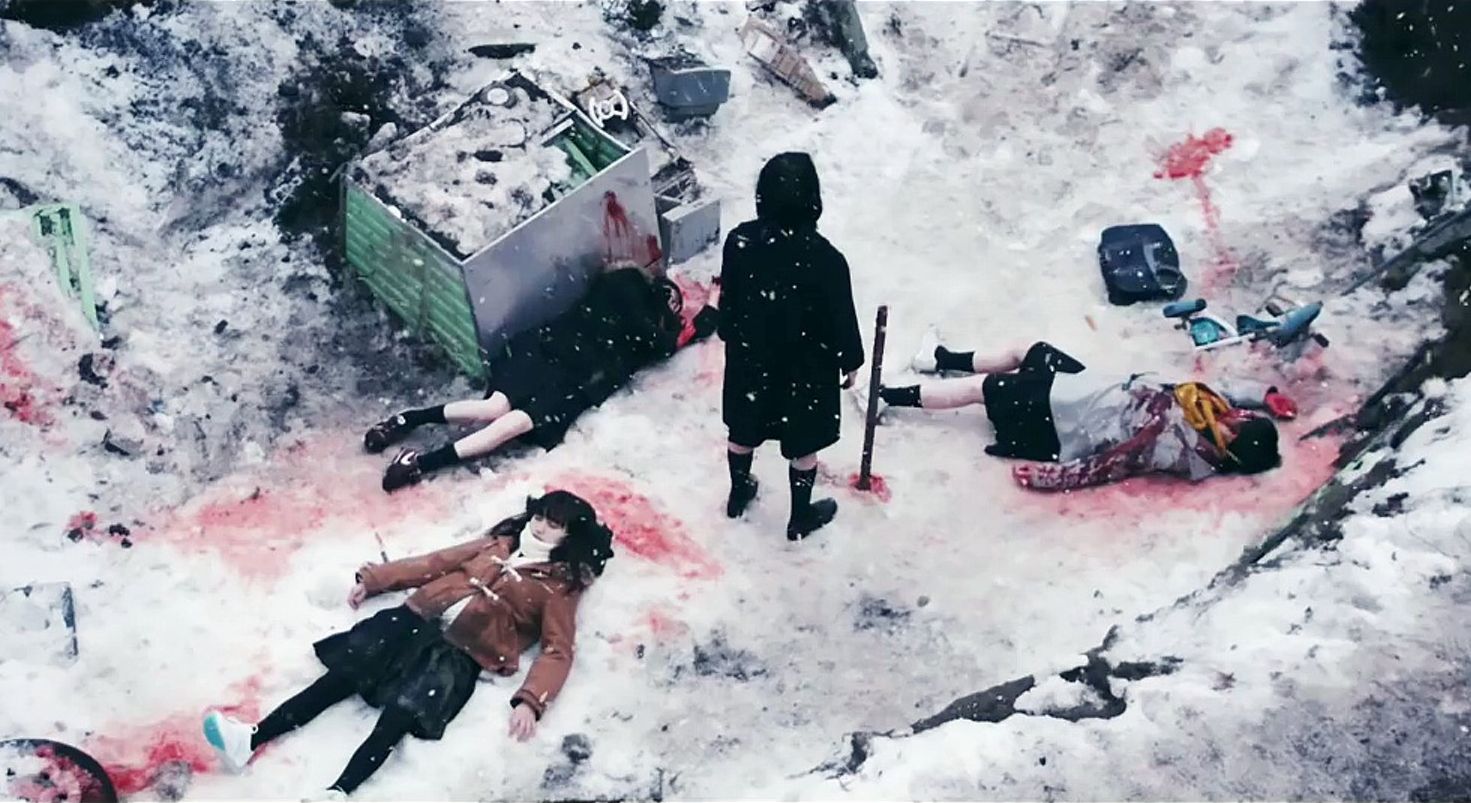
Haruka Nozaki (Yamada) is just a couple of month away from graduating junior high. But will she make it? Because her life is being made a living hell by bullies at the school. Rumour has it that she “stole” a boy, Mitsuru Aiba (Shimizu), from another girl, Taeko Oguro (Ôtani). As a result, Haruka has become the relentless target of other female students. The staff are no help: the school is going to be closed after this class graduates, and the teachers consequently couldn’t care less. Indeed, Haruka’s father, a substitute teacher – that’s why she ended up transferring in – is being victimized by the male bullies, in a similar way to his daughter.
Things come to a head after fire destroys Haruka’s home, killing her parents and putting her perky little sister in the hospital with severe burns. And when I say, “come to a head”, the rest of the film is filled with some of the more disturbing violence I have seen in recent years. The attitude here feels almost like Battle Royale, in that the people inflicting this level of savagery are basically kids. They are not supposed to be this way, folks. There’s not even the distancing element of a dystopian future, which Battle Royale enjoyed. Nor it is simply Haruka. You can’t claim “one bad apple”, because there are a lot of people here, who seem to live by the motto, “Hurt people, hurt people.”
The famous quote, “The only thing necessary for the triumph of evil is for good men to do nothing,” often misattributed to Edmund Burke, came to mind here too. Because, while Mitsuru initially pushes back against the bullies targeting Haruka, it’s a half-hearted effort. Though I guess it’s better than the completely useless adults, from parents through pedagogues, to the all but entirely absent authorities. By the end though, you will perhaps be left questioning whether anyone here genuinely falls into the category of “good.” Everyone has their traumas, which have left them negatively impacted, and many are paying it forward to others. This is most apparent in the character of Rumi Sayama (Ôtsuka), one of the bullies’ victims, who ends up joining their clique.
Naitô directs things with a bleakness appropriate to the story. Much of it unfolds against a backdrop of snowy weather (the title, incidentally, refers to a winter flower). If there’s one shot of red, red blood splattering across a snowdrift, there’s a dozen. But it’s such an iconic image, I can’t blame him for using it more than once. I note that Naitô himself used to be a teacher. This isn’t the only case where that previous career seems to inform his work, if the title of a previous movie is any guide: Let’s Make the Teacher Have a Miscarriage Club. I’ve seen enough movies that my level of concern for the Japanese educational system, and those who go through it, is certainly non-zero. This ensures it won’t be going down any time soon.
I’ve to say this anime show is kind of unusual. While after the show there were some attempts to use the story as the basis for a manga series, it is not based on one – unlike what feels like 95% of all anime – but instead on a “visual novel”. I have absolutely no knowledge what a “visual novel” is. Wikipedia has this to say about them: “Visual novels are often associated with the medium of video games, but are not always labeled as such themselves. They combine a textual narrative with static or animated illustrations and a varying degree of interactivity. The format is more likely referred to as a visual novel game.” Well, so much for that. I guess it is similar to these old, “choose your own adventure” books of my youth, where you would make a choice at the end of the page, and depending on your decision would turn to a specific, other page, therefore creating an individual story narrative.
Canaan was inspired by a bonus on Wii visual novel 428 Shibuya Scramble. The game itself, I believe, featured live cut-scenes with real actors, but had extra content consisting of drawn anime-style images. As the game was extremely successful at the time of its 2008 release, it is unsurprising that an anime spin-off was produced in 2009. The original concept was by Type-Moon, with anime studio being P.A. Works. The original visual novel could go into different genres, depending on the protagonist the player chose. So it’s significant that the genre of the anime series also changes over time. In the beginning it can rightly be called a mystery, since you have no idea what happens here and why. Yet at the very end, it is full-blown action with a conspiracy plot sprinkled in, and elements bordering on science fiction. Albeit more “science fact”, because they are not far from possible reality, though quite exaggerated.
The new story starts two years after the “Shibuya event”, a viral attack on a train in Tokyo. Reporter Minoru Minorikawa journeys to Shanghai to find interesting stories, accompanied by young assistant photographer Maria Osawa. Osawa was involved in the event and came close to death, but was saved from the deadly virus by her father Kenji. Due to her trauma she has no clear memories of what happened there. In Shanghai, “there are a lot of stories, if people only opened their eyes to see them”, as Osawa puts it. A number of mysterious deaths lead her to meet Canaan again, a mysterious girl who once saved her life and that she longed to see once more.
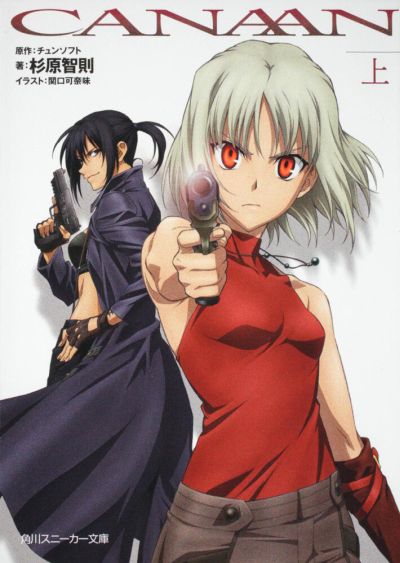
Obviously, the girls feel strongly for each other and there are traces of the so-called “yuri” genre (girls in love) here. But Western audiences should be careful not to think this equates to lesbianism. Yuri is seen by many fan-girls in Japan as something “pure” and “cute”. Many fans would feel embarrassed if something so concrete and direct as sexuality was superimposed on such a relationship. I guess there are cultural particularities that cannot translate 1:1 into our Western cultural understanding, because they are so very different. Anyway, what’s at stake here is much bigger. One problem is, there are a lot of different things, elements and characters introduced at the beginning, which initially don’t make sense at all. Only slowly, as the story progresses, is it revealed how they connect with each other. I wonder if players of the game maybe had it easier?
We are introduced to all the main characters in the first episode (of 13), but they still have to meet each other and their knowledge is not the same. Minorikawa feels there is a story that he can’t quite grasp, Maria is happy to meet Canaan again, but after a key incident realizes that her friend is a trained assassin. Santana, the aggressive owner of a Karaoke bar, with his mute buxom employee and girl friend, Hakko, also doesn’t reveal his big, dark secret. There is a girl called Yunyun popping up in several different jobs around the city. And why are we being shown dangerous terrorist Alphard, who just escaped a prisoner transport and obviously plans something big, together with her companions, Lian Qi and her servant Cummings?
Then we are confronted with some words at the beginning that we do not yet understand, such as UA virus, borners and unblooms. I’m not really complaining, because I’m actually in favor of a movie or series not giving everything away too early. It’s fine if audiences for once have to work things out for themselves. I liked that aspect of the show very much, but can understand that those less impressed, or just here to see some battling babes, might be disappointed, or unable to connect with the show. Though, you don’t have to be an academic to understand the story. As the story progresses and the blanks are filled in, bit by bit, you start to see the whole. There is also more than one story being told. The characters all have individual parts and roles in the big picture, and are driven not exclusively by “the big thing”, but also more personal motivations.
It turns out there were secret viral experiments, conducted on the population of a small town by the CIA, through the criminal organisation “Snake”. This caused most inhabitants to die, while the survivors developed extraordinary abilities, but with downsides. For example, Hakko can’t speak anymore because her voice creates waves that affect the brains of those who hear her, and could kill them. Yunyun needs medication to not die before her time, and so on. The aim of the experiments was to create another Canaan, as she is a natural-born synesthete (don’t worry, I’ll explain shortly), who was brought up and trained, like Alphard, by the terrorist Siam. Alphard felt betrayed when Siam gave the new girl the same name as her – Canaan – and Siam started to change under the influence of positive-minded Canaan. So she killed Siam. This backstory was included as a bonus with the visual novel, but since you couldn’t assume viewers had played the game, it had to be mentioned in the anime, and becomes a key reveal here.
Synesthesia is a special condition some people are born with, meaning that some sensory perceptions can be “taken over” by other ones. For example, sound can be perceived as colours by these individuals. But it can take many different forms. In Canaan’s case, she “sees the colour of people”, meaning she can tell how they feel right now, as every emotion has a specific color. When she loses this ability at one point in the story, she feels helpless. With that said, the series does not portray synesthesia realistically, rather like some kind of superpower, more or less.
A confusing element is that the characters sometimes do not act or speak as we in the West would. Therefore, it can be quite the task to figure out why they do what they do, and what their motivations are, as they do not necessarily express themselves in a clear manner. Take Alphard, who lets Canaan off the hook more than once. One may wonder why she does that. But if you listen carefully, it becomes clear: Alphard defines herself through her own hatred, and wants Canaan to feel the same. She needs Canaan to be at her best when they fight. She does not just want to overcome Canaan, but destroy what she sees as the embodiment of Siam’s corrupted spirit. In a way, they are fighting about the value of the philosophical legacy belonging to their stepfather and teacher. That’s no small thing for an action story.
You could say that this is about two women finding closure with the past. Their different attitudes to deal with it become clear: While Canaan suffered as much from the loss of Siam as Alphard did, she was able to move on and establish a new positive relationship with Maria. While Alphard, despite becoming head of the terrorist organization “Snake”, has been eaten up by her hatred and suppressed feelings of guilt. She also can’t reciprocate the obsessive and essentially destructive feelings her “little sister” Lian Qi had for her. Oh, yeah: Lian Qi… She would be a feast for a psychiatrists’ conference! On a deeper level this is not really about bombs, anti-terrorist summits, political maneuverings (the US president and his VP don’t leave a good impression here), human experiments or even the big shoot-outs. It’s about the loneliness and isolation the individual characters suffer, and their hope of finding love and possibly redemption. There is a deep, poetic quality in the series, expressed in the dialogue, often less matter-of-fact but hinting at deeper meanings or feelings.
Some of the scenes depicted here are graphic and definitely not appealing. One scene involves a woman having sex with a dead man which, while you understand the intention behind it, is painful to watch. Another shows surviving town inhabitants that have lost their minds and appear very much like zombies in their behavior. The “unblooms” mentioned above, die a terrible death when they come into direct contact with sunlight. I definitely wouldn’t call this an appropriate show for younger teens. The grown-up storylines recommend it for older viewers, who can better appreciate the nuances it offers. At the same time, the drawing style is very beautiful – as to be expected, given those involved in the production – and the score invokes a haunting, dynamic, sometimes even epic and melancholic feeling.
The final showdown between opponents – not necessarily enemies – Canaan and Alphard is memorable. The audience wonder who will survive, the filmmakers having already demonstrated that they have absolutely no qualms about killing off main characters. While avoiding spoilers, I must say I have never seen a character exit a story in such an incredible manner! The very last scene, which is kind of an Easter egg, coming when the end titles play and after it, suggests a potential continuation of the story (similar to the open ending of Arcane) that never happened. That said, the resolution felt very fitting and “round”, so to speak.
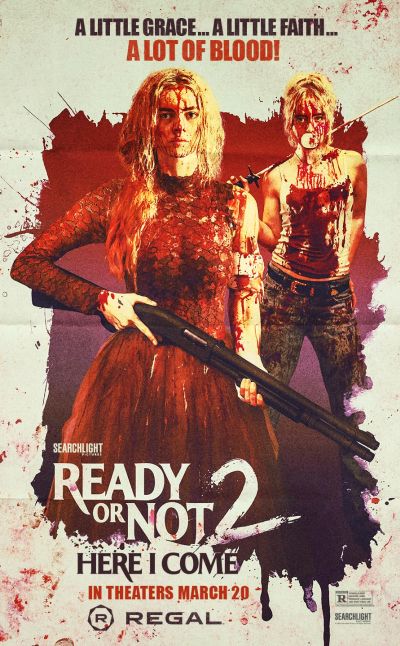
Despite a slightly clunky title, I enjoyed this a little more than the original. It helps that there’s no need for build-up or explanations. We join things immediately after the end of part one, with Grace MacCaullay (Weaving) staggering outside the mansion where she battled and beat the Le Domas family. Understandably, she ends up in hospital and handcuffs, where her sister Faith (Newton) shows up. But it turns out the Le Domas family were just one part – albeit the head – of a larger, Satanic organization, the Council. The remaining families now need to determine a successor. Whoever kills Grace gets to take over, so the siblings are quickly abducted and taken to the Council’s country club complex.
Grace refuses to take part, but using Faith as leverage, they compel her participation. The siblings must battle for survival and, again, try to survive to dawn against a litany of more or less competent adversaries. This was one my main criticisms about part one: the Le Domas members were so inept as to be no threat. While, in some ways, this is true again here, the film does at least lean into the humourous possibilities. The peak is likely reached when Grace has to face off against Francesca, her late husband’s ex. There’s some rocket launcher incompetence, followed by some pepper sprayage, which leaves the two adversaries thrashing about like blind squid, while an 80’s classic tune plays. It’s awesome.
There is a bit of a lull thereafter, because Faith is again used against her sister. This compels Grace, once more, to don bridal attire, as a means of avoiding further bloodshed. Well, “postponing” might be closer to the truth. The ceremony goes off about as well as a typical wedding held by a professional wrestling federation – though with considerably more blood than even the most hardcore fed. It’s all a lot of fun, with the Council families providing a slew of fun characters, in addition to its lawyer (Wood). It provides an interesting contrast in family dynamics between the MacCaullays and the Danforths, represented by Ursula (Sarah-Michelle Gellar – and, yes, there are some potential Buffy references) and her psycho brother, Titus (Hatosy).
I liked the fact that it kept any actual social commentary very much secondary. What makes the Council evil is not particularly race, class or money. It is that they are freakin’ Satanists. The film’s other main strength is Weaving, who cements her position as perhaps the best of the next generation for action heroines. She runs through the whole gamut of emotions here, and it is extremely easy to root for Grace. But let’s be honest, the actress would be forgiven if she had simply worn a “not this shit again” expression for one hundred and ten minutes. While the poor box-office here means it’s unlikely we’ll see a part three, long may Weaving’s shotgun continue to smoke.
Dir: Matt Bettinelli-Olpin and Tyler Gillett Star: Samara Weaving, Kathryn Newton, Shawn Hatosy, Elijah Wood
I previously reviewed an entry from the middle of this series, Ghost in the Cowl, and – probably unsurprisingly – a major complaint was the sensation of being dropped into the middle of the series. This was to some extent due to the book not being clear about it being the tenth (or eleventh, depending on source) entry, since the cover said “Ghost Exile #1”. But I’m not one to hold a grudge, and accepted the chance to pick up the actual first three parts for less than a dollar. It definitely helps, following the story from the beginning. Though at 1,134 pages, you’ll understand why it took four years from purchase to review publication.
When it begins, the young heroine Caina Amalas is living a somewhat unhappy life, mostly due to her mother being borderline abusive. Eventually, there’s nothing “borderline”, as Mom uses dark magic to turn her husband into a vegetable, and sells his daughter off to sorcerer Maglarion. Caina’s virgin blood is very powerful for his arts, and she is “milked” for all she can provide, kept just this side of death. Fortunately, while the wizard is out, an attack on the facility frees Caina, and she is recruited and trained by the near-mythical group responsible, the Ghosts. These are the Emperor’s spies and assassins, who swear an oath to counter his enemies, by any means necessary.
In particular over these three books, the enemies are those who practice necromancy, beginning in Child of the Ghosts with Maglarion. Now an adult, Caina is very keen to see him receive his just deserts, although in that time, he has become much more powerful. He’s now working towards a ritual which will render him immortal – albeit at the cost of a city-wide human sacrifice. The second book, Ghost in the Flames, sees Caina investigate an increasingly disturbing trend of pyromancy in the city of Rasadda. Finally, in Ghost in the Blood, she has to stop a plot to open a pit under Marsis, which has been sealed for thousands of years – for very good reason. All of these require her to use her talents, both in combat and disguise.
It actually might be a case where reading them one after the other works against them, because they might be a little too similar. I get it is Caina’s specialty, due to her heritage. Yet is there no other threat to the Empire except for power-obsessed magicians? That minor quibble aside, this was a very enjoyable trilogy. The characters on both sides are particularly well-done, with Caina and her allies very likeable: she may not be the biggest bad-ass in the group, an honour likely reserved for Ark. The villains are also suitably terrible people, and there’s almost a Lovecraftian bent to some of the horrors which are unleashed. More will likely follow. Let’s just hope some other adversaries are found for Caina.
Author: Jonathan Moeller Publisher: Azure Flame Media, available through Amazon, as an e-book only. Books 1-3 of 19 in the Ghosts series, plus a bonus short story.
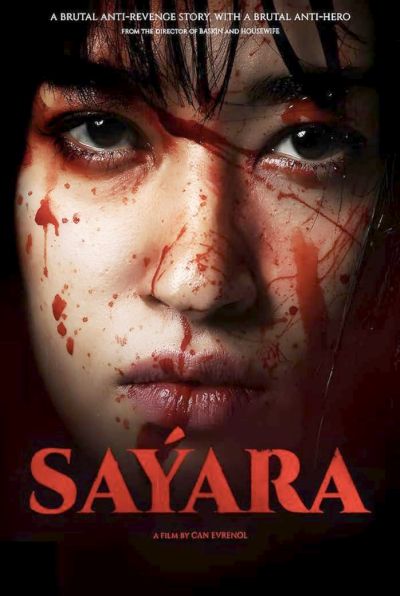
Well, “delight” might not quite be the right word. But who am I to let facts get in the way of a good review tagline? It’s more of a Turkish nightmare, probably the most brutal rape-revenge movie I’ve seen since… Well, probably Revenge. The director is best-known for Baskin, generally considered the best horror movie from Turkey. Though, full disclosure, I wasn’t that impressed by it: strong on atmosphere, but short on a coherent storyline. That’s not an accusation which can be levelled at this. However, the level of savagery and bloodshed arguably puts this into the horror genre as well. It’s the story of two Turkmenistan sisters, Sayara (Kocabiyik) and Yonca (Kosar), both of whom are involved, in different ways, with gym owner Bariş Ataberk (Kizilirmak).
Yonca is having an affair with the married man. But she has been able to leverage this into getting a job at the facility, as a cleaner, for the much quieter Sayara. Bariş offers Sayara a job as a trainer, teaching female clients self-defense, knowing of her skills in this area, but she declines. Worse follows, when Yonca catches Bariş cheating, and threatens to reveal all to his wife. This does not go down well, and ends in Yonca’s death, which is called a suicide officially. It helps that Bariş’s father, Halil Ataberk (Inal), is a senator with a lot of political pull, and can ensure no action is taken against his son.
No official action, anyway. While Sayara may have seemed the quiet and meek sister, we see in flashbacks the relationship she had with her soldier father – now, notably absent. One senses a lot of darkness there. Indeed, he tells his daughter. “I committed many great sins. It doesn’t matter. The darkness in me, is in you too, Sayara. But if someone crosses that line – to you, or your mother, or to your sister – you will go all the way, without blinking. You will go to the bottom of that darkness.” And Sayara does. Boy, does she. Not just against Bariş, but all those involved, even tangentially, and using every weapon at her disposal, from fire to her teeth. The latter provides the film’s most horrific scene.
This establishes its direction early. The first spoken line is “Son of a whore!” and it’s something of a mix of social complaints thereafter. Class, nationality and gender all come into play here in the power dynamics. Though it’s not as one-side as it might seem: Yonca is hardly blameless, and seems to have a fondness for S&M games, as well as no respect for the sanctity of marriage. However, “blurred lines” hardly excuse what happens to her subsequently, and you’ll be firmly behind Sayara on her relentless quest for the bottom of that darkness. You may not find the ending fully satisfying, in the traditional sense. But I’m hard-pushed to deny it’s appropriate, and you will certainly remember it.
This is Broomfield’s second documentary around the topic of Aileen Wuornos, having previously made Aileen Wuornos: The Selling of a Serial Killer. It’s a glorious doc – one of my all-time favorites – but is more tangential, being about those around Wuornos, seeking to exploit her situation for their own personal gain. He thought he was done with the topic, but he was called as a defense witness during Aileen’s final appeal against the multiple death sentences, largely because among those exploiters was her lawyer at the time, Steve Glazer. But around appearing in the witness box, Broomfield decided to make a second documentary, this time focusing on the woman at the centre of proceedings, all the way up to her execution by lethal injection in October 2002.
What I love about Broomfield’s work is, he goes where the story leads him. Some documentarians – and I’m looking at you, Michael Moore – go into production with An Agenda (caps used advisedly). They then craft the end product towards that agenda. To me, that’s less a documentary than propaganda. Broomfield seems to have a much more open mind, and the results sometimes end up going in unexpected directions. Here, it’s clear that he has sympathy for Wuornos, but doesn’t pull any punches about her personality and mental state. He presents footage both of her claiming self-defense and absolutely confessing to having committed cold-blooded murder. The scary thing is, Wuornos appeared to me to be highly credible in each, contradictory situation. Maybe I’m just easily fooled. Sobering.
Certainly, there is evidence of Aileen’s anger issues. During his final interview, we see how she can go from calm discussion to volcanic ferocity in short order, for little or no reason, and storming out while flipping Broomfield the bird. If there had been a firearm to hand during this outburst… Yeah, watching this, the idea of her killing seven in less than a year definitely seemed possible. Rage and easy access to guns is a dangerous combination. But as the film proceeds, it appears Wuornos’s mental situation deteriorates into frequent surges of paranoia, claiming mind-control weapons are being used on her, and that the cops knew who she was after the first murder, and let her continue killing so they could exploit things in the media.
Should someone so clearly ill in the head be executed? Political considerations – it being an election year, with the governor wanting to appear strong on crime – appear to have overridden any judicial concerns. A cursory mental exam pronounced her fit to die, and the sentence was duly carried out. On that day, Broomfield was interviewed by the media (a classic case of the snake eating its own tail). He said, “Here was somebody who is has obviously lost her mind, has totally lost touch with reality. We’re executing a person who’s mad, and I don’t really know what kind of message that gives.” As someone not averse to the death penalty, this documentary certainly made me pause for thought, and that alone proves its quality.
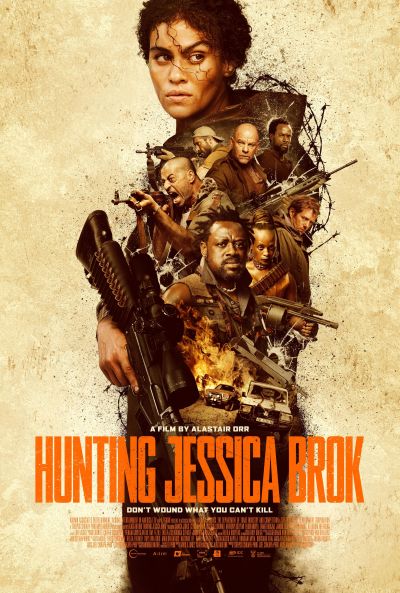
This is a rough, to the point of savage, piece of cinema. If you do not like seeing people get their head blown apart, you should stay away, because that happens more then once here. The provider thereof is Jessica Brok (Jones), who was once part of a black ops operation which went across the border from South Africa into Angola, in search of a poaching ring, only to find far worse. The subsequent ambush wiped out most of her team, though she was able to kill the brother of the poacher’s leader. Over a decade later, she is finished with the business, and living quietly with her young daughter, under a new identity. The business, however, is not finished with her.
For the leader, Lazar Ipacs (Lukunku), has been harbouring a grudge against Jessica, and has finally tracked her down. With the help of a former colleague, Daniel (Berning), he lures her into a trap and prepares to make her regret… Absolutely everything. But Daniel has second thoughts, throwing Jessica a lifeline which lets her escape. The hunt is on. The only question is, who is the hunter and who is the hunted? After a few lower-tier henchmen are taken out, Lazar’s wife Sherri (Mboya) discovers Jessica has a daughter, and Lazar kidnaps her, intending to use the child as leverage. If you’re thinking that might be a bit of a poor decision, give yourself two points.
The best thing I can say about this is, while running comfortably over two hours, it doesn’t feel like it at all. There’s not much of a lull: a brief period of peace depicting Jessica’s new life working on a wildlife sanctuary is as quiet as things get. Once she is kidnapped, there is little pause for breath thereafter. It is fair to say that the action here is more inclined towards the comic-book, rather than the realistic. Jessica, for example, takes more damage than any normal human could be expected to survive. She takes an arrow right through the thigh, and basically shrugs it off, while stepping on a grenade booby-trap leaves her with little more than slight tinnitus. However, the same goes for Lazar and Daniel.
Taken in that spirit, I enjoyed this a great deal, and it’s the first film I’ve watched in 2026 to merit our Seal of Approval. The characters here are broadly-drawn, yet no less effective for it. Credit especially to Lukunku and Mboya, who make a spousal pair who are the stuff of your worst nightmares. The script doesn’t do anything particularly new – especially obvious, the way Lazar and his men spurn opportunity after opportunity to kill Jessica, to the point it begins to feel like a deliberate running joke. Yet it feels like its simplicity leaves the film stripped-down and lean, rather than underwritten. I suspect director/co-writer Orr might be a big fan of Revenge. I am too: there’s much worse from which to take inspiration.
Dir: Alastair Orr Star: Danica De La Rey Jones, Richard Lukunku, Clyde Berning, Hlubi Mboya
Genuinely good Tubi Original shocker! Well, that’s a bit harsh: there have have been decent ones before – such as Lowlifes, which certainly has some DNA in common. But this is likely the best I’ve yet seen, anchored by an excellent performance from Richardson. This takes place on a dark and stormy night, in a remote Scottish farmhouse. Rose (Richardson) is taking care of her disabled husband, with the help of daughter Maisy (Soverall), where there’s a frantic knocking at the door. It’s two men, Matty (Cadby) and his badly injured brother, Jack (Linpow). Their car got into a wreck nearby, and they are in desperate need of help. Naturally, they aren’t innocent passers-by.
No great surprise there, and it turns out they are fleeing from a robbery, with the intention of getting across the North Sea to Norway. However, there was a third member of the gang, who didn’t survive. He’s the son of the man who planned the heist: for obvious reasons is not happy about the situation, and ends up heading for the farm. However, that is not the biggest problem Matty and Jack face. For it turns out they aren’t the only ones keeping secrets, and they have just chosen the wrongest possible home to invade. Told you it was not dissimilar to Lowlifes. The question of who are the villains here becomes a good deal less clear, the more we know about everyone involved.
To that end, much credit to the script, also written by Linpow in an impressive feature debut. It reveals the necessary information at the right pace, and just when you think you know what’s going on, it’ll throw another twist at you. Loyalties shift from scene to scene as the characters discover more about each other, or themselves, and the situation becomes inextricably messy. You know it’s going to end in messy violence, and the film certainly doesn’t disappoint there. The cast are all solid – though in the credits, I notice the production had a “sensitivity consultant”, which is apparently a thing now. I’d like to offer my services as a crass insensitivity consultant to any movies interested. My qualifications there speak for themselves.
Where was I? Oh, yeah. It is, however, Richardson’s movie, having the toughest arc to handle as she moves from caring and compassionate mother to… Well, I guess technically she is still a caring and compassionate mother. It’s just that, well… /gestures vaguely at the screen. The film opens and closes with meaningful quotes about motherhood and the emotions it can trigger. Although what transpires between them, makes them read in radically different ways. To that end, I was getting notes of French horror flick Inside, another story of maternal instincts gone horribly wrong, or Matriarch, also set in Scotland with visitors getting more than they bargained for. Yet despite the influences, this is its own creature, powered by Richardson, and is a solid thriller to the very last shot.
Dir: Matthias Hoene Star: Joely Richardson, Neil Linpow, Sadie Soverall, Harry Cadby
a.k.a. Little Bone Lodge [A version of this review originally appeared on Film Blitz]
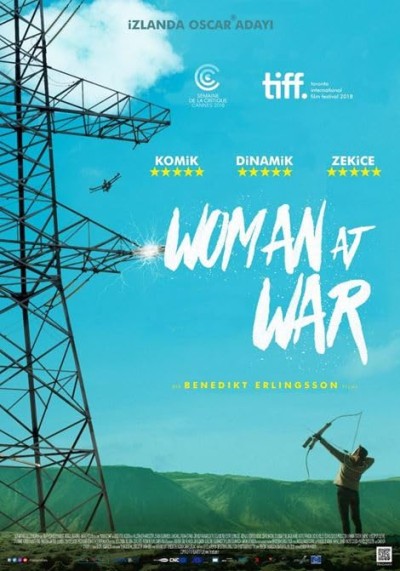
This was a real and pleasant surprise. I wasn’t even sure if this would qualify for the site, or if it would end simply being too gentle. Whole it’s not going to get any awards for hard-core action, it does fit in here. More impressively, it managed to make my empathize with someone whose views are ones I’d generally disagree with. It takes place in Iceland, where Halla (Geirharðsdóttir) is a middle-aged, single woman, waging a near one-person campaign of sabotage against heavy industry, mostly by disabling the power-lines which supply electricity to it, disfiguring the landscape and exacerbating climate change. It’s a game of cat and mouse, with the authorities keen to stop the eco-terrorist from dissuading foreign investors.
However, Halla has issues of her own, beyond the net closing in on her property destruction. A long-dormant adoption request is suddenly approved, and she can’t risk further criminal acts, as a conviction would bar her from proceeding. She intends to go out with a declaration of her manifesto, literally flung from the Reykjavik roof-tops, and a final act, stealing Semtex to blow up a key electricity pylon. Her accomplice, government employee Baldvin (Ragnarsson) is increasingly concerned about the “one last job” trope, and twin sister Ása (also Geirharðsdóttir), a yoga teacher, threatens to put a spoke in the adoption process too, by vanishing off to India for two years to live with her guru.
It’s charming, quirky and rather subversive, all at the same time. It could easily have toppled over into preachiness, but is leavened with enough humour to keep the messaging secondary to the medium. For example, there’s a poor Spanish tourist (Estrada), who is perpetually getting blamed for the attacks, simply by being in the wrong place at the wrong time, leading to his tent getting SWATted. There’s also the soundtrack, which shows up on screen as a three-piece band, and a trio of singers, who play whatever music is needed to accompany the scenes. Every character is a pleasure, not least the farmer (Johanson) who becomes Halla’s leading accomplice. I will say, any wannabe eco-warriors might well get some helpful tips here, such as the best place to hide your explosives…
But it’s Geirharðsdóttir’s film, in both of her roles. She has a quiet yet absolute commitment to her cause, and it’s thoroughly convincing, even to someone like me who thinks “Earth First” means, “We can strip-mine the other planets later.” I still found myself rooting for her, as she scurried across the Icelandic moors, using low-tech means to counter the authorities with their drones and thermal imaging cameras. For what’s as much a comedic drama as anything, these sequences pack their share of tension, and I was left wondering how it would get resolved. It is a bit of a cheat – are the Icelandic authorities that incompetent? I’ll let it pass, since this demonstrates the way message movies should be executed.
Dir: Benedikt Erlingsson Star: Halldóra Geirharðsdóttir, Jon Johanson, Juan Camilo Román Estrada, Jörundur Ragnarsson
[A modified version of this review first appeared on Film Blitz]
Murder by the Lake is a TV crime series co-producted between the second public German TV channel ZDF and the public TV channel of Austria ORF. It started in 2014 with a 90-minute long TV movie, followed by a further movie each year until 2017, when the yearly output was doubled. Since 2024, there have been three movies each year. So far, 22 episodes have come out, with #23 scheduled for later this year. The German title Die Toten vom Bodensee translates as “The Dead of Lake Constance” – “Bodensee” is literally “Ground Sea”, but is called Lake Constance in English. When I saw the first movie I was struck by its surprising quality. If you have read my reviews here, you know I usually don’t think much of the quality of German film productions. This is different: not only is it a show that I always watched, but one where I bought the DVDs.
German crime shows tend to be boring and tedious, though I admit some have become much much better in the 20-odd years. This is one of those exceptions: The series captured my attention from the get-go; I found the single episodes remarkable and was quickly invested in the characters, who were very well portrayed by the actors. In short: It had a different dynamic and feel than most German shows. I wondered why it felt like that until I realized something: The creators of the show have borrowed heavily from successful recent Scandinavian TV crime series, so that you easily could call this “Scandinavian Noir, German style”.
It starts with Lake Constance, which is split between Germany, Austria and Switzerland. When a crime happens that falls under the jurisdiction of Germany and Austria, the commissariats of both countries decide to work together. A new special commission of “German-Austrian Crime Prevention” is formed, headed by German chief inspector Micha Oberländer (Matthias Koeberlin) and Austrian detective inspector Hannah Zeiler (Nora Waldstätten). Also involved, though more in secondary functions, are Austrian chief detective inspector Thomas Komlatschek (Hary Prinz), as well as a pathologist.
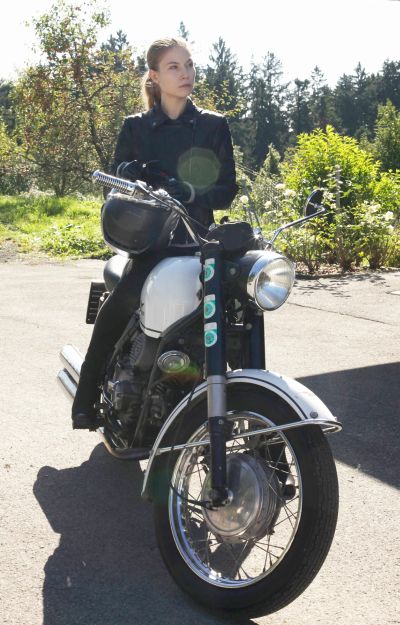
Sounds familiar? Well, then you probably have seen The Bridge. It had a Danish and Swedish inspector working together, in a concept used for many remakes around the world. Then there is the Swedish-German-Norwegian crime series The Sandhamn Murders, perhaps the first show to adapt ScandiNoir for a warm summer environment, rather than the usual harsh, cold surroundings of typical Scandinavian shows. The same goes for Lake Constance, whose beautiful surroundings immediately inspire viewers to plan their next holidays there. And last but not least is the character of Hannah Zeiler who is unlike any ever seen in any German TV show, let alone as a police investigator. With her hair combed back tightly, a nice Lara Croft braid, and a Spock-like mind, she moves like a cat. Unless she’s driving her 1971 Moto Gucci Nuovo Falcone motorcycle.
But most interesting is her behavior. When she first appears, she is strictly business. She says hardly a word otherwise, with no interest in getting to know the wife and daughter of her new colleague. She lets no one in emotionally, and shows an aversion to personal connection. Her behavior feels awkward, even upsetting, until you get used to it. Some watchers complained she mumbled her lines, but then, most characters here speak with an Austrian accent which can be a bit difficult to understand for Germans. It might also have something to do with the idea of a character who only slowly reveals her secrets to the audience. Because what I realized after a while, was that Hannah Zeiler is actually a more clinical, streamlined and slightly tamer Austrian version of Lisbeth Salander. Or at least her distant relative.
Similar to Lisbeth, Hannah has childhood trauma, as the sole survivor of a boat accident 20 years ago, where she lost both parents. While her mother died, her father’s body was never found. Hannah was raised by her adoptive father and now boss, Ernst Gschwendner (August Schmölzer), who plays an important role here. But in contrast to her Swedish predecessor, Hannah was never physically or psychologically abused, though the accident has left her with a fear of taking to the water. Also, the idea her father might still be alive has not entirely left her. This is a larger story arc that concludes four years later in episode 6, “The Returner”. It’s fascinating to realize how the “MCU method” of preparing a story arc over years, can pay off handsomely in the end.
Like Salander, Zeiler is a social recluse, and lives in a big house inherited from her parents. Her controlled external demeanor is in contrast to the chaotic life of Oberländer. He has family problems, with a wife who feels chained to the house and their child. He is constantly on the job, driving an old Volkswagen bus: he sometimes even spends the nights there, drunk, and it’s usually not very clean. Zeller and Oberländer are bound to clash; for a long time, it was the main reason for me to watch the series. Initially, their characters seem to come from different planets – the comparison of “like cats and dogs” is very fitting. Yet they learn to respect and rely on each other. It is touching to see Zeiler start to trust Oberländer, slowly open up to him, and their relationship develop.
There was a lot of personal development around the duo, which kept the audience coming back every year, and these were good storytelling moves. The original idea was to have cases with some kind of mystic or mythological touch, although after the first movie, it was then entirely forgotten for the next nine. Mind you, this isn’t The X-Files. The angle is more related to folk customs, superstition or single elements. For example, in the first episode a murder seems related to a Celtic mask found in the lake. In another, a dead girl is found in a mermaid costume. One episode happens during a traditional and ancient local parade. Another has a belief that a house is cursed because it was built on a former path. Or there’s a film that begins with finding a baby in a basket in the lake – was this meant to be a reference to Moses?
However, these serve only as local colour for the stories, and not much more. The stories themselves are often very complicated, with the present crimes related to ones in the past. There is a common theme of how the sins of the fathers (or mothers) are visited on the sons and daughters. Very often the results are tragic. Though thanks to the officials, these family stories are revealed and there might be a chance for a better future. For example, one episode involved two men swapped at birth by accident, and brought up by the other’s mother; when one of them finds out, it leads to tragedy. Another theme through the show, is the inability of characters to communicate with each other. and say what they feel or know. That begins with Zeiler, who is so tight-lipped in the beginning, you could get the impression that she keeps state secrets, though a logical and understandable explanation emerges later.
Yeah, tragedy is very much ingrained in the lives of the show’s protagonists. Oberländer in particular is faced with this a lot: An old love returns and tries to kill him with the rabies virus(!). His wife cheats on him, only then to die in a car accident. He has significant problems with his teenage daughter Luna, who doesn’t stay the lovely little girl she was in the first episodes. What Zeiler and Oberländer have in common, is that they are essentially both lone wolves whose main focus is their work, with Komlatschek in the middle as the well-meaning and warmhearted successor of Gschwendner. He partly balances out the behavior of Oberländer, who often appears overtly aggressive and angry, and Zeiler, who especially in the beginning seems cold-hearted, odd and a bit inhuman.
Action-wise, the show isn’t anything special, though for a German TV crime show, it moves with surprising narrative speed. Guns are drawn quite often, but shooting remains a last resort, even if a rabid dog roams the woods. But I really got to enjoy Zeiler driving her fast motorcycle over long empty roads, through beautiful landscapes. I will say, over time the show lost a bit of its attraction, after her epic arc finished; I cared less and less for Oberländer’s private problems. That said, I still watched every episode. Then in 2022, Zeiler left on a motorcycle trip, never to return. What had happened? Nora Waldstätten (seen in movies such as Carlos the Jackal, and next to Kirsten Stewart in Personal Shopper) had other projects she wanted to take precedence. Since the ZDF had endured a bad experience with an actress in another crime show, resulting in no new episodes for 4 years, they moved quickly to replace Waldstätten, though no-one directly admitted the actress was fired.
In episode 16 (“Nemesis”) Oberländer got a new Austrian partner in Luisa Hoffmann (Alina Fritsch, above). Zeiler was declared dead in the final scene, Oberländer getting a phone call informing him she had a fatal motorcycle accident – strangely in Spain. Honestly, I felt quite cheated by this cheap way to write a character out of a show. The powers that be could have come up with a better, more fitting and respectful way to get the character out of the series, especially considering she was the main reason to watch in the first place. I did get a strong feeling the writers and producers chickened out from what would have been the next logical step, after the relationship building over all those years: making Oberländer and Zeiler a couple! For let’s face it: both were so special, in their own way, that any relationship with a “normal” person was doomed. Yet, they connected with each other and always understood that “the job comes first”.
But the powers that be again ignored their own character and story build-up completely – see my review for Arcane season 2 – and pulled a former girlfriend of Oberländer out of nowhere. Unfortunately, she was a criminal that betrayed him and would be shot later by Komlatschek. I gave the new actress one quick glance and, without condemning her performance, realized that special… strangeness, charisma, aura, call it whatever you want, her predecessor exuded en masse, just wasn’t there at the slightest. You won’t be surprised that I didn’t watch any of the subsequent episodes.
Oddly, while Waldstätten lasted 15 episodes, Fritsch threw in the towel after 6 (her last one, “Medusa”, was shown January 2025). The final episode I saw had Oberländer and Komlatschek becoming the new investigative couple, and it apparently stays like that for the new episodes. It’s kind of sad when I think of how Waldstätten has been getting guest roles in other, definitely inferior TV crime shows since her dismissal. I wonder who will be the next woman colleague to turn up? After all, I think TV audiences like to see a good-looking interesting female character next to the boorish, angry Oberländer. As the films usually (and still) have between 6-8 million viewers for each new episode, it would be quite risky to change the recipe for success.
Creator: Sam Davis et al Star: Matthias Koeberlin, Nora Waldstätten, Alina Fritsch, Hary Prinz
a.k.a. Die Toten vom Bodensee English-speaking audiences can watch the series with subtitles, on MHz Choice, also through Amazon Prime.



 ★★★★
★★★★ Haruka Nozaki (Yamada) is just a couple of month away from graduating junior high. But will she make it? Because her life is being made a living hell by bullies at the school. Rumour has it that she “stole” a boy, Mitsuru Aiba (Shimizu), from another girl, Taeko Oguro (Ôtani). As a result, Haruka has become the relentless target of other female students. The staff are no help: the school is going to be closed after this class graduates, and the teachers consequently couldn’t care less. Indeed, Haruka’s father, a substitute teacher – that’s why she ended up transferring in – is being victimized by the male bullies, in a similar way to his daughter.
 ★★★★
★★★★ Obviously, the girls feel strongly for each other and there are traces of the so-called “yuri” genre (girls in love) here. But Western audiences should be careful not to think this equates to lesbianism. Yuri is seen by many fan-girls in Japan as something “pure” and “cute”. Many fans would feel embarrassed if something so concrete and direct as sexuality was superimposed on such a relationship. I guess there are cultural particularities that cannot translate 1:1 into our Western cultural understanding, because they are so very different. Anyway, what’s at stake here is much bigger. One problem is, there are a lot of different things, elements and characters introduced at the beginning, which initially don’t make sense at all. Only slowly, as the story progresses, is it revealed how they connect with each other. I wonder if players of the game maybe had it easier?
 You could say that this is about two women finding closure with the past. Their different attitudes to deal with it become clear: While Canaan suffered as much from the loss of Siam as Alphard did, she was able to move on and establish a new positive relationship with Maria. While Alphard, despite becoming head of the terrorist organization “Snake”, has been eaten up by her hatred and suppressed feelings of guilt. She also can’t reciprocate the obsessive and essentially destructive feelings her “little sister” Lian Qi had for her. Oh, yeah: Lian Qi… She would be a feast for a psychiatrists’ conference! On a deeper level this is not really about bombs, anti-terrorist summits, political maneuverings (the US president and his VP don’t leave a good impression here), human experiments or even the big shoot-outs. It’s about the loneliness and isolation the individual characters suffer, and their hope of finding love and possibly redemption. There is a deep, poetic quality in the series, expressed in the dialogue, often less matter-of-fact but hinting at deeper meanings or feelings.
 Grace refuses to take part, but using Faith as leverage, they compel her participation. The siblings must battle for survival and, again, try to survive to dawn against a litany of more or less competent adversaries. This was one my main criticisms about
  When it begins, the young heroine Caina Amalas is living a somewhat unhappy life, mostly due to her mother being borderline abusive. Eventually, there’s nothing “borderline”, as Mom uses dark magic to turn her husband into a vegetable, and sells his daughter off to sorcerer Maglarion. Caina’s virgin blood is very powerful for his arts, and she is “milked” for all she can provide, kept just this side of death. Fortunately, while the wizard is out, an attack on the facility frees Caina, and she is recruited and trained by the near-mythical group responsible, the Ghosts. These are the Emperor’s spies and assassins, who swear an oath to counter his enemies, by any means necessary.
 Yonca is having an affair with the married man. But she has been able to leverage this into getting a job at the facility, as a cleaner, for the much quieter Sayara. Bari
 What I love about Broomfield’s work is, he goes where the story leads him. Some documentarians – and I’m looking at
  For the leader, Lazar Ipacs (Lukunku), has been harbouring a grudge against Jessica, and has finally tracked her down. With the help of a former colleague, Daniel (Berning), he lures her into a trap and prepares to make her regret… Absolutely everything. But Daniel has second thoughts, throwing Jessica a lifeline which lets her escape. The hunt is on. The only question is, who is the hunter and who is the hunted? After a few lower-tier henchmen are taken out, Lazar’s wife Sherri (Mboya) discovers Jessica has a daughter, and Lazar kidnaps her, intending to use the child as leverage. If you’re thinking that might be a bit of a poor decision, give yourself two points.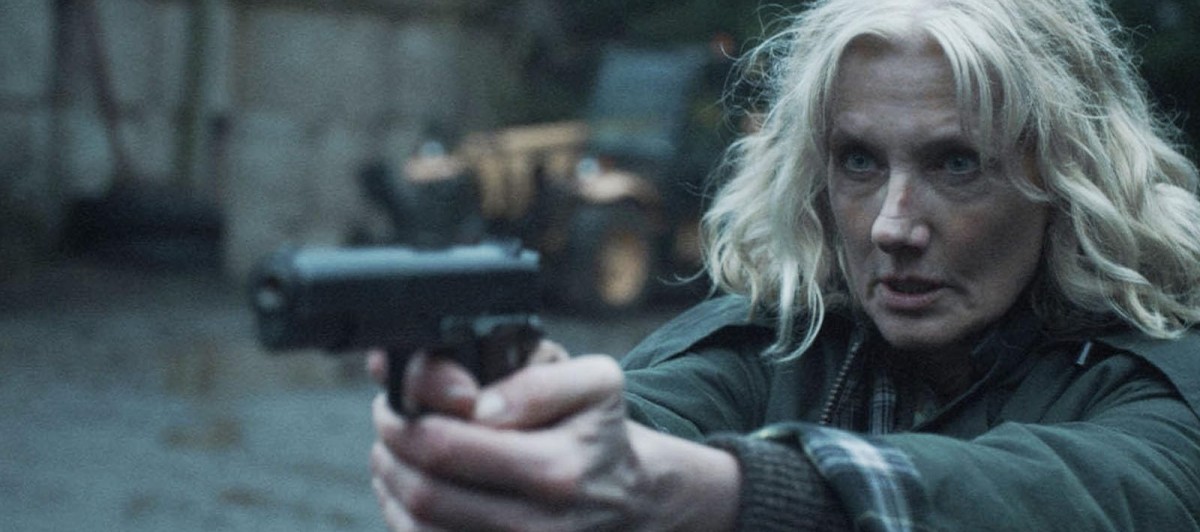
 However, Halla has issues of her own, beyond the net closing in on her property destruction. A long-dormant adoption request is suddenly approved, and she can’t risk further criminal acts, as a conviction would bar her from proceeding. She intends to go out with a declaration of her manifesto, literally flung from the Reykjavik roof-tops, and a final act, stealing Semtex to blow up a key electricity pylon. Her accomplice, government employee Baldvin (Ragnarsson) is increasingly concerned about the “one last job” trope, and twin sister Ása (also Geirharðsdóttir), a yoga teacher, threatens to put a spoke in the adoption process too, by vanishing off to India for two years to live with her guru.
 ★★★★
★★★★ But most interesting is her behavior. When she first appears, she is strictly business. She says hardly a word otherwise, with no interest in getting to know the wife and daughter of her new colleague. She lets no one in emotionally, and shows an aversion to personal connection. Her behavior feels awkward, even upsetting, until you get used to it. Some watchers complained she mumbled her lines, but then, most characters here speak with an Austrian accent which can be a bit difficult to understand for Germans. It might also have something to do with the idea of a character who only slowly reveals her secrets to the audience. Because what I realized after a while, was that Hannah Zeiler is actually a more clinical, streamlined and slightly tamer Austrian version of Lisbeth Salander. Or at least her distant relative.