Chanda Bajaj is the very epitome of a troubled protagonist. A former soldier, she left the service after she and her comrades took part in the mass murder of “synths” – synthetic humans, and has been plagued by guilt and nightmares ever since. She has become an independent bounty hunter (or “Lancer” – short for “freelancer”), and has just landed on the ferociously hostile mining planet of Reitman, far out in the frontier colonies. The corporation which runs Reitman has an issue, with some of its employees – who are, really, more like indentured serfs – turning them into drug fuelled and violent killers.
Chanda, along with a group of like-minded Lancers, are hired to take the worst of the worst into custody, so justice can be served. Except, inevitably, it’s not as easy as that. Word of their mission gets out, and they’re greeted by an increasingly ugly mob, who see them as company mercs. Almost simultaneously, the colony is the target of a terrorist attack, leaving Chanda and her colleagues stuck in the network of tunnels beneath the planet’s surface. Their original mission is changed, and becomes key to the entire survival of Reitman and its inhabitants. But there are people with a strong interest in them not succeeding, or living to tell the tale. Especially, after they discover a very nasty little incident in the corporation’s past, where an attempt to replace the human employees with synths did not go well.
Once things kick off here, it’s an almost relentless cycle of Problem > Solution > Slight progress. Some issues are physical ones, such as a surge of radiation resulting from the terrorist attack. Others are more psychological: whether or not to use lethal force against the mob who vastly outnumber the Lancers. There’s also a great deal of internal tension within the group, because not a lot of love is lost between certain members. Some have even figured out that the fewer the number of the group that survive, the bigger their own share of the payout will be. This is not exactly conducive to team-building and working together, standing in contrast to Chanda’s military background, and “no man left behind” philosophy.
Naturally, there’s a revelation towards the end which upends a lot of what you thought you knew. Though I can’t say this came as too much of a surprise, and provoked more of a “Huh, makes sense,” rather than anything else. It does rely on some convenient literary amnesia from Chanda, though the book does a decent job of managing this, since it makes sense that she would take a drug specifically in order to repress the most troublesome memories. Interestingly, the other books in the series appear to be about different Lancers, with likely just a single volume falling in our area. However, I’d not be surprised to see a review of that one here, a little way down the road.
Author: P.R. Adams Publisher: Promethean Tales, available through Amazon, both as a paperback and an e-book Book 1 of 6 in the Lancers series.
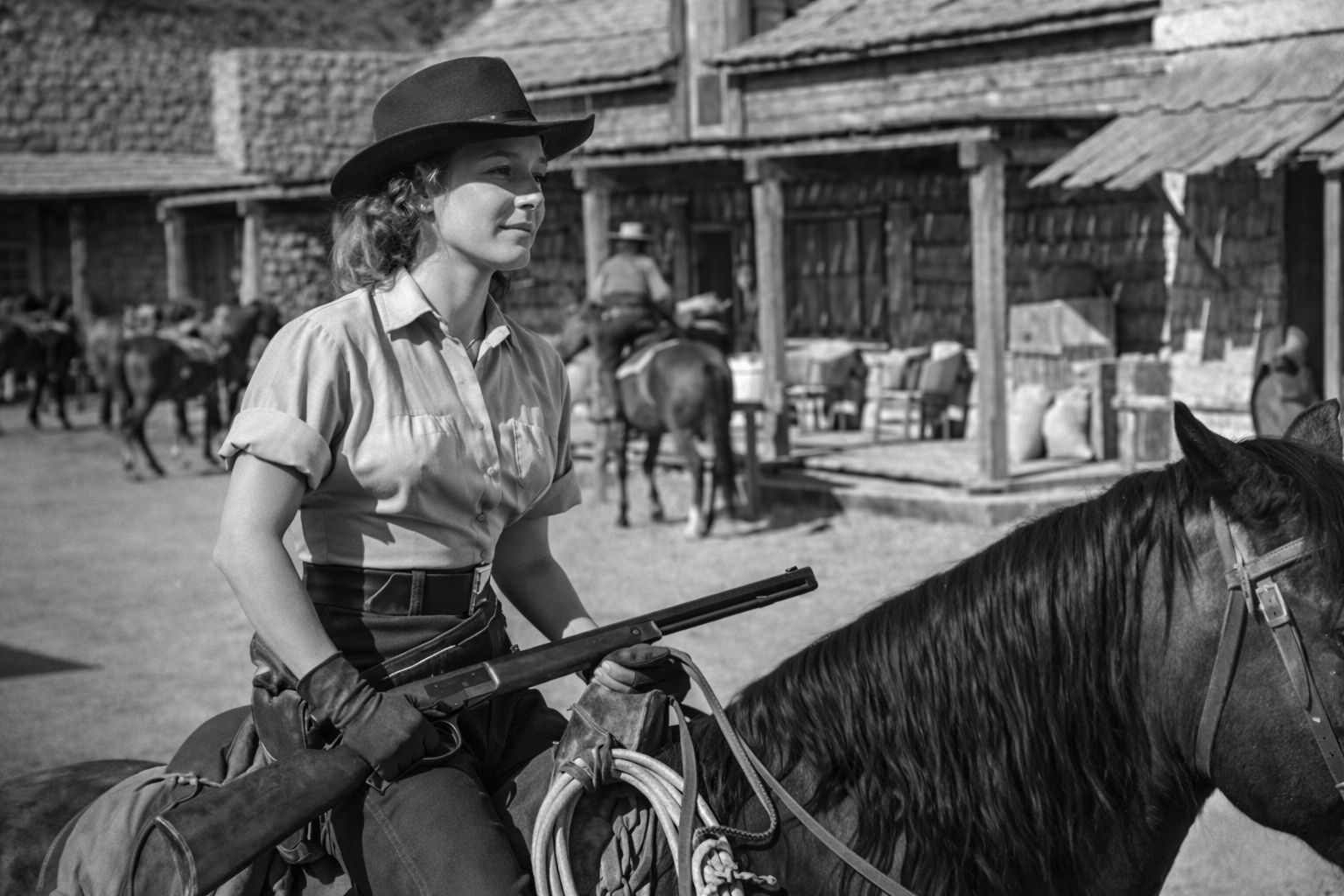
After one of her henchmen kills a local marshal, a posse is sent from Antioch to deal with outlaw Belle Starr, who had previously been in an uneasy truce with the town. However, when they arrive, they find Belle dead, and the gang subsequently scatters. Her daughter, Rose (Roman) mistakenly blames the new marshal, Tom Jackson (Montgomery), for her mother’s death. She apparently takes up honest work as a waitress, and Jackson falls in love with the young woman, initially unaware of her felonious ancestry. But Rose ends up leaving town with Bob Yauntis (Cameron) – he’s a former member of the gang who, unknown to her, was the actual killer of Belle and the previous marshal.
I guess this is something of a follow-up to Belle Starr – or maybe Badman’s Territory, since Isabell Jewell played Belle in both movies. This certainly has a similarly loose approach, taking historical fact as a jumping-off point for fictional adventure. Belle did indeed have a child: however, she was named Pearl Starr. Rather than an outlaw, she became a prostitute and ended up running several bordellos herself, and died in Arizona in 1925 (I’m a little surprised she wasn’t covered in Outlaw Women of Arizona). This appears to be taking another Western wild woman, Cimarron Rose, and making her Belle’s daughter. In reality, that Rose did hang with a criminal nicknamed ‘Bitter Creek’, as Bob is called here. She was supposedly involved in the Battle of Ingalls, an 1893 gunfight between outlaws and law-enforcement.
Back in the cinematic world, it’s a shame Belle doesn’t survive longer into the movie. Having her, not just be an outlaw, but being the leader of an entire gang, is not something you see much on Westerns, particularly from this era. Obviously, the apple doesn’t fall very far from the tree, but you don’t get the idea Rose is exactly the sharpest tool in the box, letting Bob manipulate her at every step of the way. She refuses to accept the truth, well beyond the point at which any sensible person would be going, “Wait a minute…” While Roman might not be Gene Tierney in Belle Starr, there is something of a resemblance. She passes muster in a “We have Gene Tierney at home” way.
It is a little disappointing how she ends up sidelined in the middle, in favour of Marshal Jackson hunting after Bitter Creek Yauntis and his gang. Rose just becomes one of the gang, though the way she isn’t treated particularly differently from anyone else, is somewhat refreshing. She does take the lead in trying to help an injured gang member, leaping off her horse to help him when he collapses into a river. Bob’s callous indifference here is what helps turn Rose against him, and she flees (across some very nice scenery), with Bob and his henchmen in pursuit. No prizes for guessing who arrives to save the day: having a woman who could save herself was still a little too advanced for Hollywood.
Dir: Lesley Selander Star: Ruth Roman, George Montgomery, Rod Cameron, Wallace Ford
Poor Gal Gadot. Her career since Wonder Woman has basically been one downhill slalom after another. From the disaster which was Wonder Woman 1984, through Heart of Stone, and now this. It feels like everything has been a critical and/or commercial disaster. Even when not the star, she has been catching strays, such as Red Notice and the misconceived (to put it mildly) live-action Snow White remake. It’s at the point where her presence in a project is almost more a warning. The reviews for this could be a new low. Worse than Heart of Stone? Surely not. I was braced though. And while I found this less actively annoying, it still certainly isn’t good.
It’s a script which would barely trouble the back of a beer-mat. On the day prosecutor Maia Marten (Gadot) is scheduled to appear in court for the trial of a crime boss, her son Noah (Wilmot) is kidnapped. Unless she does exactly what she’s told by a voice on the phone (Lewis), Noah will die. The end game is Maia shooting the key witness in the hotel where he is sequestered. But to get there, she must run across London, this being contrived required so that the kidnapper can monitor her. He has also hacked her phone, so she is unable to call for help. There’s also some stuff about Maia’s mother having murdered her father. It doesn’t serve much purpose, and can safely be ignored.
This is the perfect movie, if you’re interested in spending eighty minutes, watching Gadot in motion, slowly getting sweatier and more dishevelled. To be honest… There are probably worse things to look at. Heart of Stone and Wonder Woman 1984, to name but two. As someone who lived in London for more than a decade, I also enjoyed trying to work out exactly where they were. This was challenging, given I left twenty-five years ago, and quite a lot has changed since. Still, I got the lie of the land, and unlike some films (Sherlock Holmes having its hero run from Tower Bridge to the Houses of Parliament in two minutes, requiring a sprint speed of 60+ mph), the geography here seems generally to make sense.
But the fact that I was more interested in tourist landmarks, than the plot or the characters, is significant. You may even spend more of the film thinking of easier, less complex ways, for the voice on the phone to achieve the same end goal. For this is very much an example of an Amazon Prime streaming movie. You don’t need to think about the plot, or even pay attention to it. Everything is clear inside ten minutes, and the last five tidies everything up nicely, with a twist you will likely see coming – at least, it shouldn’t come as much of a surprise. In the middle? Running, taunting of Maia by the voice on the phone, and problem-solution on repeat. As Saturday night entertainment, it was… okay, I guess? Never going to watch it again though.
Dir: Kevin Macdonald Star: Gal Gadot, Damian Lewis, Alfred Enoch, Rory Wilmot
I have some friends – people whose opinions I typically respect – who swear by Jesus (Jess) Franco. For example, Tony, who used to run Psychotronic Video in London, and whose all-time favourite movie is Faster, Pussycat! Kill! Kill! This is clearly a man of taste. But he also likes Franco movies. Me? God knows, I’ve tried. On multiple occasions. Sober and drunk. But the vast majority of the ones I’ve seen seem mediocre hack jobs, showing no directorial talent at all. The one I might give a pass to is Faceless, which is lurid enough to be fun. But otherwise? Plodding and dull, despite the typical presence of some undeniably attractive lead actresses. This does not break that mould.
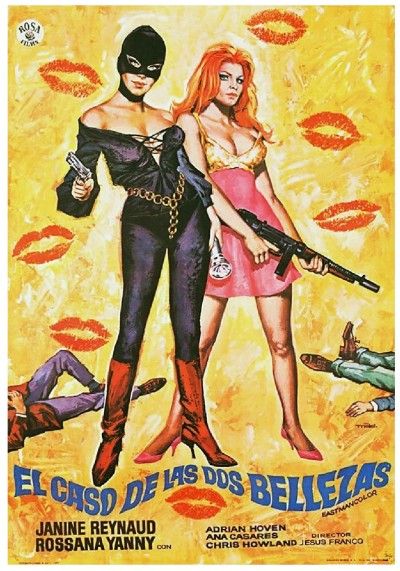
It was just in a number of films featuring the two lead characters, a pair of female detectives called the Red Lips. There’s the blonde Regina (Vanni) and the redheaded Diana (Renaud). Here, they are hired by businessmen Mr. Radek for $50,000, to investigate the disappearance of Lita Regnier, a model who is the latest in a series of mysteriously abducted beautiful women. The trail eventually leads the due to enigmatic, reclusive painter and sculptor Karl Tiller (Hoven), for whom Lita had previously modelled. Turns out he’s a bit mad. Along with his werewolf-like assistant Morpho (Lemoine), who does the actual abductions, Tiller photographs the women as they’re being terrorized and murdered by Morpho, and turns the corpses into statues.
If this sounds vaguely familiar, it’s because Franco is ripping off ideas from previous, much better, movies, such as PeepingTom and House of Wax. Of course, there are a lot of other influences too, from the Bond films through to Danger: Diabolik and the other Euro-crime movies popular in the decade. Franco’s inability to stage scenes in ways that generate the slightest excitement, more than counterbalance the fact that he has lovely eye-candy in the shapely shapes of his two leads. The problem is, far too many scenes which are only of tangential relation to the main story, such as the go-go dancing, or romantic dalliances for one of the Red Lips, more or less unnecessary to the plot.
Initially, it seemed as if this might be a parody along the lines of Our Man Flint. Virtually the first time we see Regina, she is naked under the sheets in bed and breaks the fourth wall to proclaim to the viewer that she can’t possibly get up unless we look elsewhere – the camera duly obliges by staying on her face in medium close-up. But consistency would be too much to expect from Franco, and there’s nothing like it the rest of the way. Nor, despite that genuinely impressive poster, is there much in the way of action. Even when a bomb in a bouquet is delivered, our heroines don’t open a window and toss it out. No, they run through the house with it, down the stairs and over next to the swimming pool before tossing it away. I do not find such idiocy endearing or amusing.
Dir: Jesus Franco Star: Janine Reynaud, Rosanna Yanni, Adrian Hoven, Michel Lemoine
a.k.a. Sadisterotica
If you’re a film-maker, just sitting on the sofa and waiting for Hollywood to come calling, you’d better have a sandwich ready. Because you’ll be there for a while. The best thing any film-maker can do – at the risk of stating the obvious – is make films. By any means necessary. Sometimes this is a process which takes a while, obviously. But if you truly want to make a film, then you will make a film. Which brings us to Zoe Kavanagh, who has basically gone down that road, not once but twice. First with Taryn Barker: Demon Hunter (a.k.a. Demon Hunter) in 2016, and now with the long-awaited sequel, Demon Hunter: Time 2 Kill. We talked to Zoe about the journey for both movies, the lessons learned and what the future might hold.
What got you into film-making initially?
A lot of things come to mind when I think of this question. Film is forever and the idea that I could record my imagination somehow, translate it to screen and it would exist long after I am gone was one of the biggest appeals of wanting to be a filmmaker. There was also the fact that I had so many stylish visuals in my head and I felt confident I could go out there and see if others would like my style. This was why I initially got attracted to doing music videos for bands.
You’ve been making movies about demon hunters since well before K-Pop showed an interest! Where did the central idea come from?
Yeah, over a decade! Yet K-Pop has suffocated the demon hunter algorithm! The idea originates all the way to the feeling of melancholy and angst. I was in my bedroom and I illustrated a gothic young woman, looking pissed off and holding a sword in the rain. I said to myself ‘what is she fighting, why is she so pissed off?’. I looked around my room for inspiration. So I called her Taryn Barker and that name came from two places. I always felt Taryn was a rare and unique name, but it felt strong somehow and I love Nightmare on Elm Street 3: Dream Warriors – so I figured that would work. I chose Barker because I am a Clive Barker fan: not just Hellraiser but Books of Blood, Cabal (Nightbreed), etc.
The music blasting on my CD player – yes, a CD player, in the mid 2000s! – was a song that was on the Resident Evil: Apocalypse soundtrack, ‘Demon Hunter – My Heartstrings Come Undone’. So the picture was painted, and I knew the concept – the world then expanded over the years, as I think about it all the time. But that was the central idea’s origins.
Niamh Hogan is the face of the franchise. How did you meet her, and in your opinion, what does she bring to Taryn?
I originally met her in 2014 when we held auditions in Bowsie Workshop to recast the role, two weeks before filming began. She just had the passion and was a trooper about diving into the deep end on this! Actually, a funny story. When Niamh got the role, I actually had no credit on my phone – was kind of broke that day. I had to send her a ‘call me’ text, so she could call me back! Anyway, she did, took the role, and I can’t imagine anyone else as Taryn.
Niamh is Taryn Barker. She owns that role, and has essentially become Taryn! When this film ends, you think back about all the variety she brought to this role. From the insane stunts, the front flips, scorpion kicks, jumping through walls, smashing through cubicles, falling through time! That’s next level! Then there’s the brilliant comedic timing, and being able to adapt to the change or evolution of Taryn in this film. Niamh gets it, but she has been heavily involved in a lot of aspects of Demon Hunter: Time 2 Kill – we really care for this world. We both knew the fighting had to be improved for the sequel and dialled up past 11, to show that we can fully deliver on what the audience wants from a film like this.
I’ve noticed that a few people have compared Niamh’s performance to Bruce Campbell’s Ash Williams character and that is so great to read! I feel after Ash rode off into the dystopian sunset of season 3 of Ash vs. Evil Dead, there kinda has been a void in the horror scene. It needs a new cocky, sardonic badass demon hunter. I hope Taryn fills that gap for people, as the best days of B-movies I feel are in the past.
There must have been a huge learning curve making Demon Hunter. Tell us the lessons you took from the experience.
Absolutely there was. Look, there’s a few things I will say in defence of the first film. Budget was €70K, so we were limited. The intention was to make a dark character origins film, and build the world. I was not making the film for an audience. Myself and Tony Flynn co-wrote that film, focused on character and style. In the film Taryn lost her sister – that’s a dark place to be, and I wanted us to experience her pain and yearn for vengeance.
When the film was picked up for distribution and released in the US it was mismarketed, I believe. That trailer that they put out, that you can see on Joblo Movie Trailers, is horrendous. It has no heart, no soul and ADHD editing that nearly gives me an epileptic fit. People went at the film, because they expected an action-filled film – when it wasn’t that kind of movie. So when I decided I wanted to make another, I was aware of what people didn’t like about the first film, and felt I needed to make sure the sequel gave that audience what they wanted – whilst I got to make something that I would love to see. Taryn had evolved in my head as a sardonic badass and if people wanted to see lots of demon hunting, we were gonna give it to them this time. So nobody can claim there isn’t enough demon hunting!
When writing Demon Hunter: Time 2 Kill I made a checklist:
So they think it’s too serious- make it campy
The lore makes no sense – expand on it
There’s not enough demon hunting- have Taryn fight almost every scene
Those were my main takeaways, and I just went in with that mindset.
You’ve made a number of music videos, for bands such as Clan of Xymox. How does that influence your cinematic style?
With all of my work, I always think musically. Usually when I write a script, I create a Spotify playlist that helps to navigate my feelings and writing process. It also helps me imagine the scenes and visualize the style and pace. I consider directing music videos as a style workout. Sometimes the artist tells you exactly what they want, sometimes you can make whatever you want, with their approval – but you have the freedom to experiment at all times.
Demon Hunter: Time 2 Kill is a very musical film. It’s stacked with bands like The Birthday Massacre, Clan of Xymox, House of Serpents, Chastain, Warlord, Jessie Frye, Nightstop, etc. It was important that it kinda had that tone and vibe to it. The film is kind of a showreel of all the skills I’ve learned over the last ten years.
It has been the best part of a decade since the original film – what have you been up to in the meantime?
I wish it wasn’t a decade, but yeah – time just flies past. I spent years trying to get different projects off the ground and falling through. I almost had an agent in the US and was attached to a feature, until 2020 caused all of that to collapse. Making a sequel to Taryn Barker: Demon Hunter was a challenge. The first film was seen by millions due to piracy, but it was a victim of me being naive about the accounting and business sides of sales and distribution. However, knowing millions of people saw it, made me feel confident about giving Taryn a second shot and maybe making a film that connects with genre fans.
In between the first film and Time 2 Kill, I directed commercials, Swedish pet training videos and music videos. I was living in Sweden in 2021 and was kind of accepting that I may not get to make another feature film. The first film was self financed and had cost me a lot of money – yet other people made so much money exploiting my film. I saw multiple uploads of a Russian dub with casino sponsorships and millions of views. Who pays these people? There was a lot of crazy stuff like that. There were third party unofficial licensors to the film, licensing the film to fourth parties and they were all making bank. I saw an upload on YouTube called Hunter of the Devil with a Jennifer Lawrence thumbnail on it and 1.5million views.
It was so depressing, and an absolute disaster – the film was a huge success, but not for me. I remember a few years back when some Facebook page listed a URL to pirate the film, I reported it and got the entire pirate site taken down. Only for the pirate to email me, and send a bunch of bots to 1/10 the film on IMDB. Yet all those 1/10s got counted but the 8/10, 9/10 and 10/10s are not counted for that film. So even though the arithmetic mean should have the film at a 5.6/10, it’s at a 3.5/10… I figured, if I was to do another feature, I would have to approach it like I would never get to direct ever again. I then came up with the insane idea for Time 2 Kill and decided I needed cash asap. So I did a one year course in cybersecurity, got a job doing that and saved up money. Then I called Niamh Hogan, Kevin O’Malley and Leeona Duff and said, ‘We’re making another!’.
I had hope and motivation, because the idea for Demon Hunter: Time 2 Kill was so ridiculous nobody would ever give money to such a film, so we never even tried to go that route. So I contacted a US producer I know and I flew to the US to recce locations. We filmed in late 2022, and here and there in 2023, but post production took 3 years because we couldn’t get any completion funds. That’s why IMDb has set the year as 2024. They claim the work-in-progress, 111 min cut with unfinished VFX and none of the final licensed songs, counts as the release version of the film for some reason, because it was a public screening.
I was still in post up to January 2026 because the VFX for the final battle took 9 months to do. I was sending the film to festivals whilst it was still in post production. I should have gotten a sales agent in advance. as that would have allowed us to get some of the bigger festivals but I only learned that afterwards. So the IMDb is wrong: the film was released in the US July 7th by X4 pictures on VOD & Physical Media as well as a rerelease of the original film now retitled Taryn Barker: Demon Hunter.
Demon Hunter: Time 2 Kill brings a big eighties horror vibe to proceedings – plus time travel! Why did that combination appeal?
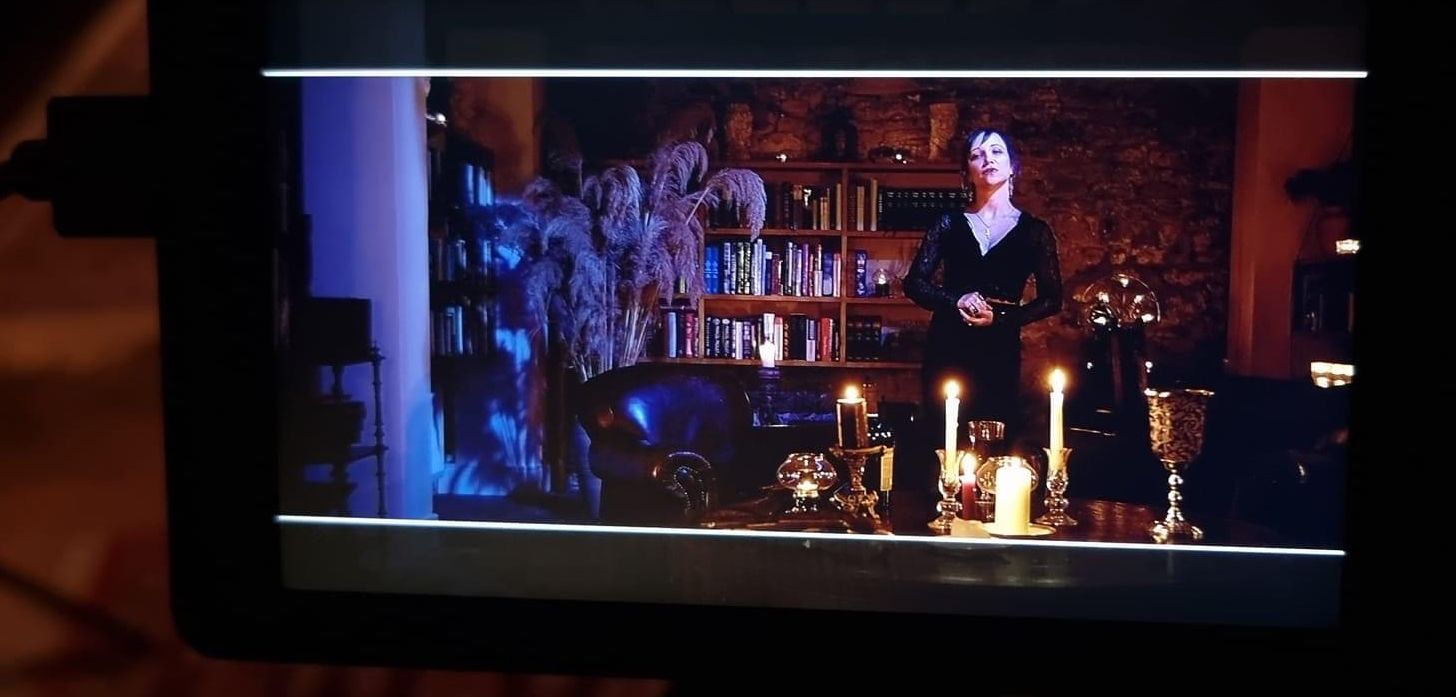
My favourite films that I comfort watch are all from the 80s. I love watching Evil Dead 2, Big Trouble in Little China, Nightmare on Elm Street, Friday the 13th etc. Also some of the best music is from the 80s! Gary Numan, Ultravox, Iron Maiden, Alice Cooper, Duran Duran etc. And look at some of the composers of the era such as Tangerine Dream, Vangelis, John Carpenter. I wanted to make a fun film that felt authentic to the era that could be rewatchable. The goal was that people would wanna relive the adventure over and over again. So originally this script wasn’t a Demon Hunter sequel, it was a period 80s horror called Hack N’ Slasher. It was set in 1987 and there was no Taryn Barker. I wanted to make a slasher horror comedy, that felt like a lost movie from that period.
How the time travel happened, with Taryn and her world mixing into it, became a thing because of a few changes. When I originally brought Taryn into the script, I modernized it. But Niamh highlighted the issue of teens having access to phones and modern technology. Wo we agreed to go the time travel route, but also Taryn needed more to do! So I realized you cannot just add in Taryn. You need the city, you need her to fight demons, ride a motorbike, have her techie Ethan by her side and a bigger bad looming over, to emphasize the satirical anti-authoritarian themes in the IP. So I came up with billionaire, oligarch, time witch Elysia Cronika, CEO of Illumini Industries, who causes the plot to happen. That opened up the world building even more – and now that we have time travel, we gotta deliver on what you would want from time travel!
The sequel is also different in style, and seems to be leaning more into humour. Was this a conscious choice or did it just happen?
It was intentional. I am not the type of person to make the same film twice. I love horror films, I love comedies and I love adventure films. I have been writing the Taryn Barker: Demon Hunter novelization for years now – hopefully I will have it finished soon! But Taryn is hilarious and evolved with me over the years; I used her as my way to satirize and lovingly mock the problems with cinema and cliche storytelling. Also, in other aspects such as the bad CGI Lizard Man. I wrote him as a bad CGI Lizard Man in the script because I knew he would get some laughs. He vibes like a Saturday morning cartoon villain. Writing the film, I felt comedy was the only way you are going to pull off an insane story and just go along with the trashy ride.
Niamh adapted seamlessly to the cheesy one liners and Kevin just knocked it out of the park as Ethan, as well as the brilliant ensemble cast who got what we were making – especially Lisa Wilcox. I told Lisa that we are making a Saturday morning cartoon for adults, but its live action!
I read an interview about the first film, where you said A Nightmare on Elm St 4 was an influence. And now, lead actress Wilcox is your villain! How did you get her on board?
Yeah, I was referring to the “tool-up” montage in The Dream Master, where after all of Alice’s friends get killed off, she claims their powers. Now she is in her room, tearing the photos off her mirror, tooling up and training her skills to a guitar solo rendition of Go West’s Don’t Be Afraid of Your Dreams. I liked that imagery and its stuck with me. That film has superhero elements. I got Lisa on board when I had an agent – for the brief moment I had one! I reached out to her, as we were attached to another project, but the pandemic seemed to have caused the project to collapse. Lisa was on board because she loved Taryn Barker: Demon Hunter, and I wrote the role specfically for her. I was delighted she did, and feel so lucky and appreciative.
The first film was made in Ireland, but the second shot mostly in Kentucky. Why the change, and can you compare the two locations?
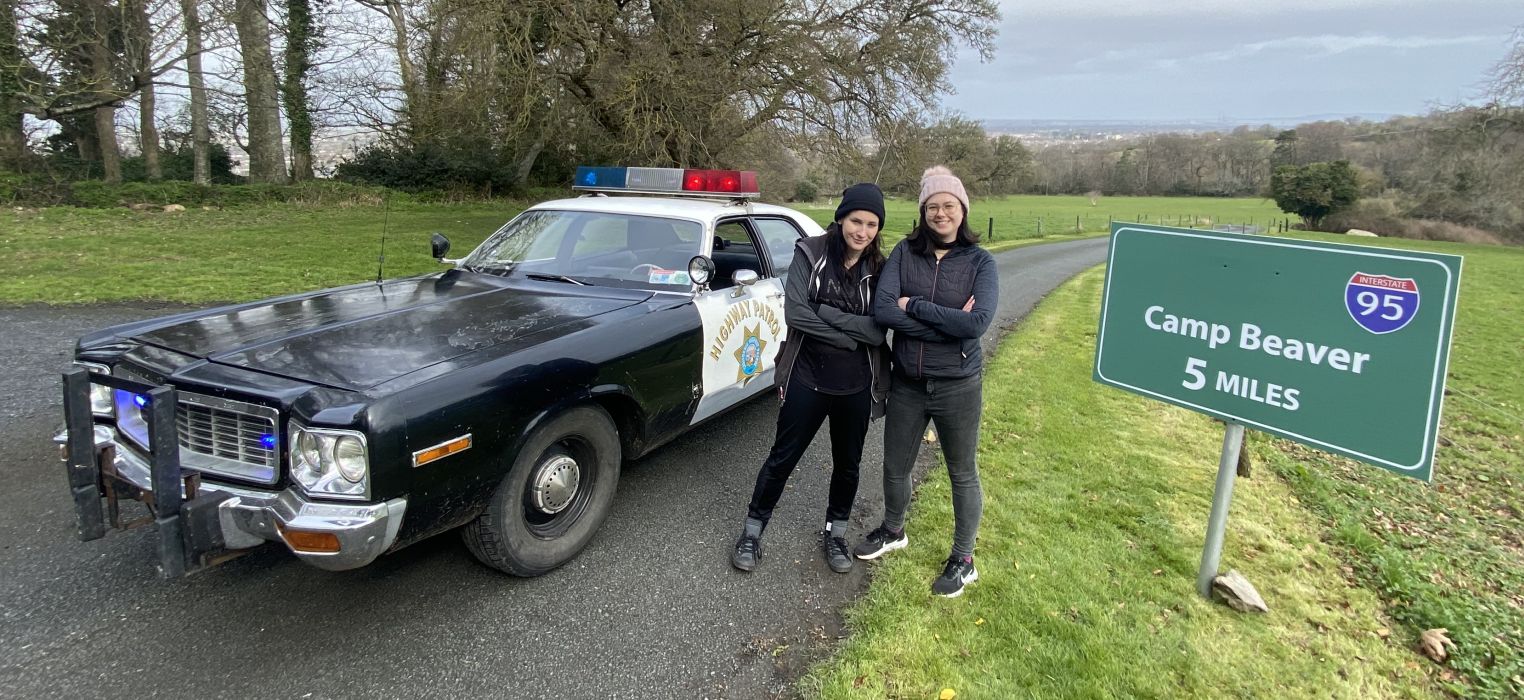
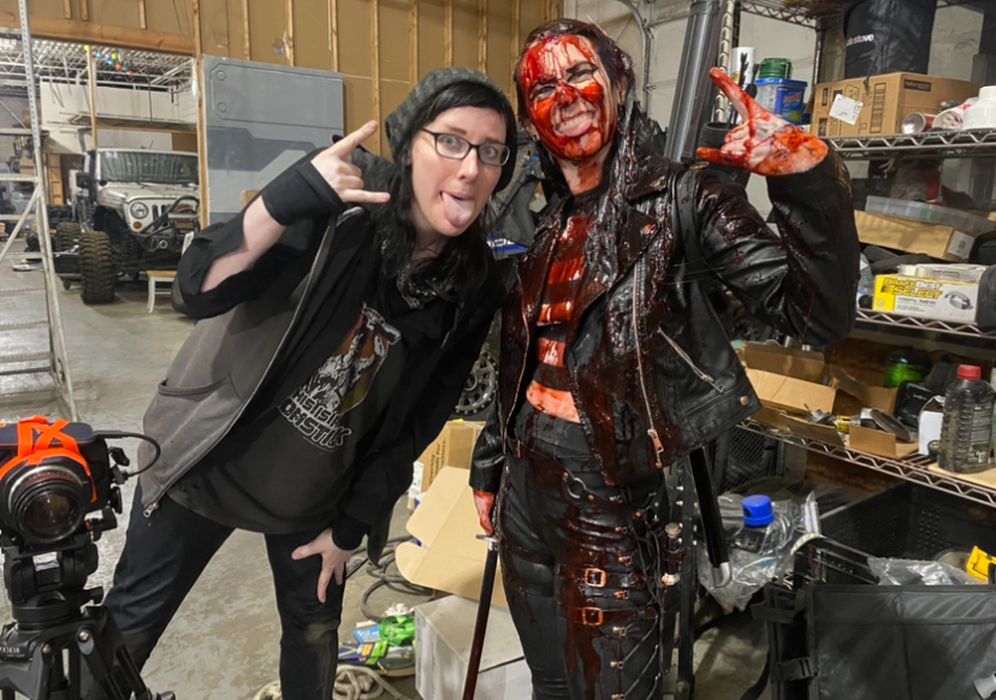
We moved to the US for the sequel was because America now has become a very dark place and someone like Taryn Barker should be moving her operations to the belly of the beast, it only makes sense. Also for the summer camp slasher stuff, it wouldn’t be authentic to film that in Ireland. It usually doesn’t work for me, when films try to be American slashers. Summer camp slashers are part of American culture and I wanted the audience to retain the experience like all of the 80s slashers they watch. Plus it was exciting to take the risk lf shooting in the US for the sequel, I think it was a great idea.
Comparing the two? Both countries have great locations but Ireland is a smaller country and all our best spots from cities, castles, heritage spots are easily accessible. The challenge with the US is you could be moving crew on a 6 hour road trip to get to your next location. They both have their ups and downs, I feel.
Was the sequel easier or harder to make than the first film?
In terms of production it was an easier film to make: we were very lucky and we prepped. Leeona Duff collaborated with Ken Daniels and Steven Patek to get this co-production moving and a reality. I can’t think of any issues that got in our way. The only compromise made was to shoot fast, on a BMPCC 6K and keep moving. So time was against us, but we pulled it off. It’s a relief it worked out, and we got a great film out of it.
How has the reaction been to the new movie?
Demon Hunter: Time 2 Kill did very well at film festivals where it won Best Feature film at Fright Nights, Best Horror/Thriller feature film at the Always Late TV Movie Awards, Best Underground film at Light Till Dark, Best Horror and Best Editor at Dublin Underground Cinema Film Festival, amongst many others. Despite that, a lot factors were stacked against this film. It was really difficult to find the right distributor for the film as a lot of companies passed on it at EFM. Luckily it landed a home at X4 Pictures where both films currently reside. It’s amazing to see the glowing reviews and the audience over at Letterboxd seem to be raving about the film. Such a relief, and hopefully word of mouth will help others discover it.
You’ve hopes for a third film: where would that take Taryn?
The third film will take Taryn back into the IPs habitat: the big city, urban fantasy action. We have done time travel, the next film is actually gonna be a hybrid of two screenplays I’ve written. In the next chapter Anne de Chantraine is a rock star who is in fear of being next on the list to be wiped out from Taryns crew, the K.A.I.C. she is currently on tour and is planning to turn her fans at her big concert into demons with her new song, she summons Iscariot (a big Terminator-like demon) to hunt down the KAIC) and it becomes a crazy thrill ride. We also have the big bad, which is Taryn’s father and we may get some answers to some mysteries unresolved from the first film.
Expect the same personality from Taryn from Time 2 Kill; an expansion of Taryn’s crew as it becomes an ensemble film; and a lot of demon hunting. There wont be any 80s vibes in this one, more goth, industrial and metal stuff. I really hope we can make it! Would be cool to get to do that chapter.
Go back in time twenty years: what advice would you give yourself?
Well if I had that skill, my advice would be to always read every contract you sign and not give up. Invest in buying camera and lighting equipment because then everyone will be calling you to shoot their projects and you will be making a mint and then you can easily self finance your indie features faster. I am too broke now to buy any camera and lighting gear! I suppose I would also tell myself the lottery numbers, who won sports matches and place bets so that would also make me rich. If, of course, you are suggesting time travel, and going back to talk to myself from 20 years ago!
If you got to make a big-budget film, who would be your fantasy cast?
I generally don’t like to name names but I would like to continue the working with Niamh Hogan and other cast I have collaborated with over the years. If I was ever to have an opportunity to do a big film, my fantasy cast would be the people who stood by me, and I could give them a shot too!
Many thanks to Zoe for her time and help. And now, let’s review! First the original Demon Hunter piece from 2018, and then we take a look at the new film…
Demon Hunter
★★★
“Hey-ho… Let’s go!”
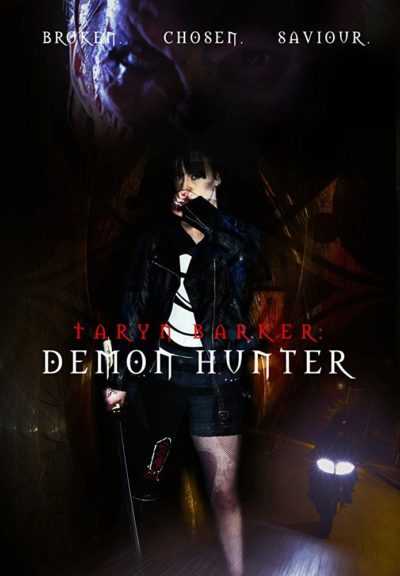
Behind a remarkably generic and forgettable title sits an entirely reasonable slice of low-budget Irish action-horror. It’s clear creator Kavanagh knows what has gone before, and if the resources here don’t allow her to reproduce them on anything approaching the same scale, she knows her limitations and works well enough within them. Besides, who can resist a film that works a Ramones lyric into its dialogue? Taryn (Hogan) feels responsible for the death of her little sister, abducted and killed on the way home from school. She gets a chance to do something about it, when approached by the mysterious Falstaff (Parle) after her sister’s funeral. He reveals a secret world of demons and sacrifices – Taryn’s sister being one of the latter – and offers Taryn a chance for revenge, if she’ll come and work for him.
We don’t actually learn much of the above until some way into this. We start with the heroine stalking and enthusiastically decapitating one such demon, only to be arrested by the local cops. They’re peeved she won’t reveal where the severed head of the victim is located – not least because she insists this is necessary to ensure he stays dead. Falstaff, meanwhile, has not intention of letting his minion remain in police custody, and informs them there will be a fresh murder every 24 hours they do not let her go. For, it turns out, Falstaff has an entirely separate and significantly less helpful agenda with regard to Taryn, and has simply been using her towards his own ends.
The main asset this film has is Hogan, whom production kinda lucked into, after the original actress pulled out two weeks before shooting started. For Hogan is a third-degree black belt in Shotokan karate, with a slew of titles both national and international. The physicality her experience allows her to bring to proceedings can’t be learned at drama school, and bumps up the action credibility several notches. Given this, it’s a shame that we don’t get see more of her: after the opening head-removal, Taryn is then locked up in custody for the rest of of the first half, and we also have to go through the flashbacks explaining how she became a demon hunter. It might have been better for the makers to figure out whether they wanted to tell an origin story or subsequent tale: this is a little of each, and both likely suffer as a result.
The lazy comparison would be Buffy, but that can be applied to virtually anything where a young woman is battling supernatural creatures. Bloody Mallory is probably closer, with its heroine who is more surly and aggressive than frothy and ironic, and the dark tone here has echoes of The Crow as well. Kavanagh was working on the project for close to a decade before it reached the screen. The struggle to find funding is apparent in some rough edges, and her lack of experience in a story that can’t sustain itself for the full duration. Yet it’s still remarkably polished for not just a first feature, close to Kavanagh’s first narrative film of any kind, with her background being mostly in music videos. I’m looking forward to seeing where she (and Hogan) might go from here.
Dir: Zoe Kavanagh Star: Niamh Hogan, Alan Talbot, Michael Parle, Aisli Moran
Demon Hunter: Time 2 Kill
★★★½
“KPop sold very separately.”
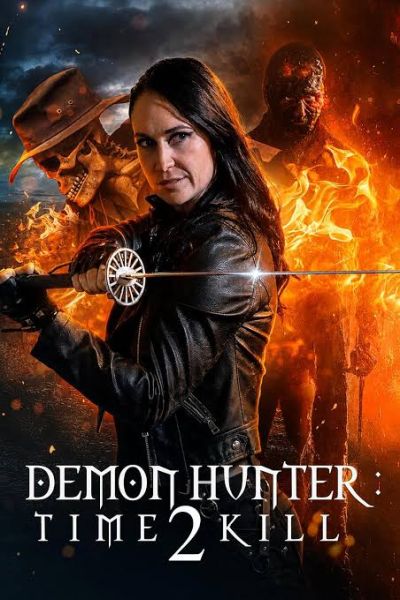
This falls into the category of unexpected surprise. It was over eight years ago that I reviewed Demon Hunter, and concluded “I’m looking forward to seeing where [Zoe Kavanagh] and Niamh Hogan might go from here.” After such a long lay-off, I’d largely given up hope. But, wait! For there is indeed more! The titular heroine, Taryn Barker (Hogan) is back: a little older, a little more weary of the world, but still as snarky and enthusiastically violent as ever. By this point, she’s like Lady Macbeth: “I am in blood stepped in so far that, should I wade no more, returning were as tedious as go o’er.” Only, y’know, with swearing in place of the iambic pentameter.
I wouldn’t worry if you haven’t seen its predecessor. This one is self-contained enough. Still part supernatural action, but it’s also a love letter to eighties cinema – in particular, the decade’s horror movies. If you know my non-GWG tastes, you’ll know I am more than fine with this. The Macguffin for which Taryn is hunting here ia a medallion known as the Necrux, which has been split into two pieces. She needs to stop them from falling into the hands of Elysia Cronika (Wilcox), the CEO of Illumini Industries, who are apparently a subsidiary of EvilCorp, Inc. Taryn’s interference eventually makes Elysia so peeved, she carries out a ritual which sends the huntress, along with a few others as collateral damage, back in time. They all arrive in the year 1986 at Camp Beaver, the site of an infamous bloody massacre.
There is, as a result, a lot going on, between Taryn’s struggle to survive in the decade (complete with a nifty faux-eighties soundtrack), and trusty sidekick Ethan (O’Malley), who is trying to fix things in the present day. I likely preferred the former, simply because the film engaged an extra gear whenever Taryn was on screen – it was faster, funner and feistier. Wilcox plays a fine villain: of course, there’s bonus cultural resonance from her being part of the Nightmare on Elm Street franchise, one of most iconic of horror series. Things build to a battle between Elysia and Taryn, during which our heroine is hurled into different eras, over the last millennium and more. This is rather awesome, having strayed in from a far larger film.
Elsewhere, it’s not quite as universally successful: there are a couple of scenes where the editor from Taken 3 seems to have been in charge, and there’s a palpable gap between the impressive lead performances and some of the supporting ones. But this is the kind of production where you should expect a few rough edges – and I’d argue, they made me root for this scrappy little film a little bit more. Anyone mourning the cancellation of the Buffy reboot, might well find solace in the combination of quips and cracking heads to be found here. Let’s just hope it’s not another eight years before Taryn straps on her weapons and bad attitude once more.
Dir: Zoe Kavanagh Star: Niamh Hogan, Lisa Wilcox, Kevin O’Malley, Angel Nichole Bradford
This falls into the category of unexpected surprise. It was over eight years ago that I reviewed Demon Hunter, and concluded “I’m looking forward to seeing where [Zoe Kavanagh] and Niamh Hogan might go from here.” After such a long lay-off, I’d largely given up hope. But, wait! For there is indeed more! The titular heroine, Taryn Barker (Hogan) is back: a little older, a little more weary of the world, but still as snarky and enthusiastically violent as ever. By this point, she’s like Lady Macbeth: “I am in blood stepped in so far that, should I wade no more, returning were as tedious as go o’er.” Only, y’know, with swearing in place of the iambic pentameter.
I wouldn’t worry if you haven’t seen its predecessor. This one is self-contained enough. Still part supernatural action, but it’s also a love letter to eighties cinema – in particular, the decade’s horror movies. If you know my non-GWG tastes, you’ll know I am more than fine with this. The Macguffin for which Taryn is hunting here ia a medallion known as the Necrux, which has been split into two pieces. She needs to stop them from falling into the hands of Elysia Cronika (Wilcox), the CEO of Illumini Industries, who are apparently a subsidiary of EvilCorp, Inc. Taryn’s interference eventually makes Elysia so peeved, she carries out a ritual which sends the huntress, along with a few others as collateral damage, back in time. They all arrive in the year 1986 at Camp Beaver, the site of an infamous bloody massacre.
There is, as a result, a lot going on, between Taryn’s struggle to survive in the decade (complete with a nifty faux-eighties soundtrack), and trusty sidekick Ethan (O’Malley), who is trying to fix things in the present day. I likely preferred the former, simply because the film engaged an extra gear whenever Taryn was on screen – it was faster, funner and feistier. Wilcox plays a fine villain: of course, there’s bonus cultural resonance from her being part of the Nightmare on Elm Street franchise, one of most iconic of horror series. Things build to a battle between Elysia and Taryn, during which our heroine is hurled into different eras, over the last millennium and more. This is rather awesome, having strayed in from a far larger film.
Elsewhere, it’s not quite as universally successful: there are a couple of scenes where the editor from Taken 3 seems to have been in charge, and there’s a palpable gap between the impressive lead performances and some of the supporting ones. But this is the kind of production where you should expect a few rough edges – and I’d argue, they made me root for this scrappy little film a little bit more. Anyone mourning the cancellation of the Buffy reboot, might well find solace in the combination of quips and cracking heads to be found here. Let’s just hope it’s not another eight years before Taryn straps on her weapons and bad attitude once more.
Dir: Zoe Kavanagh Star: Niamh Hogan, Lisa Wilcox, Kevin O’Malley, Angel Nichole Bradford
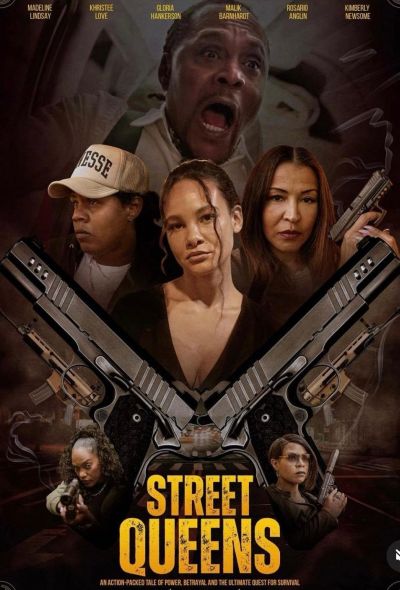
This gets an extra half-star, simply for trying to go in some unexpected directions. I’ve seen enough of these urban flicks to know the template from which they are largely stamped. Now and again, this doesn’t so much colour outside the lines, as forget about the lines entirely. It doesn’t always work. God knows, it doesn’t always work. Still, I respect the attempt. It used the word “duplicitous” inside the first minute, and you get a voice-over saying things like, “The crimson stains of her actions seemed to fade momentarily, offering a fleeting illusion of absolution. A fragile attempt to reconcile the duality of her existence.” That’s some fancy-ass, hi-falutin’ language for a film in this sub-genre.
Unfortunately, it also manages to be an incoherent mess. Perhaps it makes sense to those involved in the production. I note that, on the IMDb, there are six writers. Okay, technically, one “created by”, one writer, a story editor, two story consultants AND a “screenplay by”. It feels as if they were all operating independently, and only met each other at the movie’s premiere. Because I cannot offer much more insight to the plot than the official synopsis. To wit, “Three formidable women, Nia (Lindsay), Bella (Hankerson), and Dragon (Love) rise to power in the male-dominated realm of organized crime.” Even here, I have questions. For it’s not exactly ‘male-dominated’ – the subject of gender barely crops up.
Indeed, it seems the trio’s biggest threat is also a woman, the very strange Goldie (Rosario J Anglin), who also goes by another name. “I love blood, that’s why they call me the Stallion,” she says. Um, what? I can see that leading to a nickname like the Tiger, or Wolf. But a male herbivore? Though I will say, she might be the best character here, simply because she acts permanently off her face on pharmaceuticals. It’s disconcerting, and if I’m not sure I’d call it good acting, you will remember it. The basic idea is that our heroines decide to get in on the drug trade, after first robbing a high-stakes gambling night. However, the illusion there is rather fragile, given it seems to be taking place in a studio apartment.
Anyway, they use the seed money obtained there to bribe Dr. Martin (Barnhardt) into supplying them with opioids. Lots of opioids. This doesn’t go down well with a number of people, eventually leading to the trio becoming the target of a robbery themselves. Things seem to get sorted, until a “Six months later” caption, further violence, and we are informed that Street Queens 2 will be coming soon. I’m unsure whether this is a threat or a promise. The coolest thing here might be the animated, comic-book style opening credits; it’s certainly the last point at which much of this makes any sense. It did keep me watching – more or less. Just do not ask me probing questions about anything that transpired.
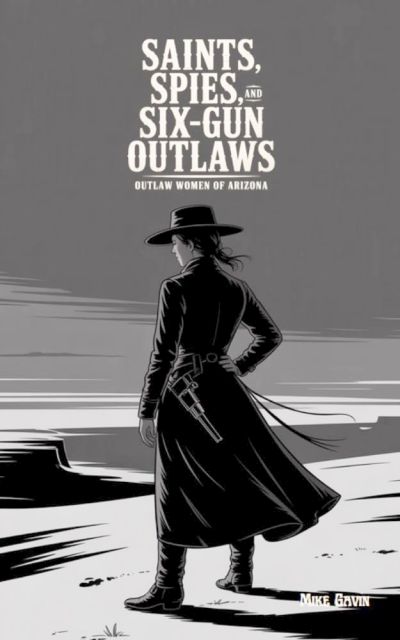
This is a slim little book – more of a booklet, really, coming in at only 74 pages in length. But since it combines both our topic of discussion and local interest, because I live in Arizona, it was an easy decision to pick up a copy, after Dieter brought it to my attention. It does use quite a loose definition of “outlaw” – it is something only really discussed in the book’s epilogue, dividing them into three categories. Most obviously, are the ones Gavin calls “The Breakers of Law”, such as stagecoach robber Pearl Hart, whose exploits were dramatized in The Woman Who Robbed the Stagecoach. “Their crimes were against the statutes of the state.”
As well as Hart, this covers Eva Dugan, the only woman executed in Arizona, who was hung in 1930 [Not-so fun fact: the executioner misjudged the drop, causing Dugan to be decapitated!], and the state’s most notorious killer, Winnie Ruth Judd, “The Trunk Murderess”. Are these latter two what I’d call “outlaws”? Or just criminals? There is a difference, albeit perhaps more so in perception than dictionary definition. Although there is also uncertainty as to whether both Bugan and Judd even committed the murders of which they were convicted. It is kinda disappointing that, in the true sense of the word, one woman who committed one (1) robbery, is about all Gavin could find in the history of the state, and back to when it was a territory.
Nor am I entirely convinced they “stood against power”, as Gavin claims. That feels more like an attempt to force post-feminist ideology onto them, though it might be more applicable to his third category, “The Breakers of Power… Women whose very existence challenged the authority of the state itself.” In this, he puts Apache warrior Lozen (whom I’d first heard of in the Warrior Women series hosted by Lucy Lawless); entrepreneur China Mary of Tombstone; and Teresa Urrea, the “Saint of Cabora.” who became a Joan of Arc-like figure for Mexican freedom fighters, on both sides of the border. But, again: Lozen is the only one whose “challenge of authority” seems like it was a conscious act.
In between, we find “the Breakers of Convention… women whose primary crime was a refusal to be caged by the rigid expectations of their society.” These might be the most interesting figures, and it’s here where the limited space perhaps hurts most. While it’s laudable Gavin sticks to facts, without engaging in the speculation often seen around the likes of Calamity Jane, the average space allowed here is barely half a dozen pages. It’s enough to sketch only the basic details of a life, when some of them deserve much greater exploration. Pauline Cushman’s life as a Civil War spy, turned de facto sheriff, certainly merits more detail that her Wikipedia page provides. As a pointer towards some topics for further research, this is adequate. Just don’t expect much more.
Author: Mike Gavin Publisher: Self-published, available through Amazon, both as a paperback and an e-book Stand-alone volume.
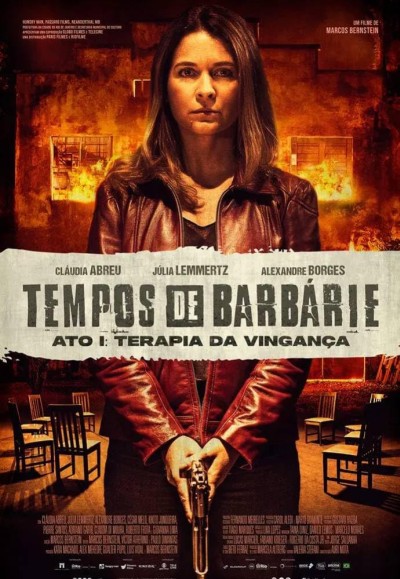
This begins with a caption detailing the horrendous number of gun deaths annually in Brazil, including several thousand per year in police actions. Given the synopsis, I wondered how the film was going to reconcile this with its own subject – would the answer to gun violence be… more gun violence? The answer is, the film doesn’t really bother to try, instead embracing the contradictions in a way that permits no logical conclusion. Indeed, it fails to offer one. The original title translates as Barbaric Times – Act I: Revenge Therapy, hinting at more to come – this explains, if not excuses, the abrupt and unfinished ending.
Carla (Abreu) is a happily married attorney, until her daughter is shot during a botched street robbery. This sends her spiralling down into an increasingly dark place, as it becomes clear there will be no conventional closure, the case simply being one of too many for the authorities. A self-help group doesn’t, and nor does mercenary vigilante justice, the operative in question believing one dead thug is as good as any other. Her husband (Mello) leaves Carla as she won’t let go, and her spiral culminates in an attempt to shoot herself in the same spot as her daughter. Yet this proves a potential turning point, Carla realizing only one person can take revenge for her. But how far up the chain should her quest for vengeance take Carla?
It certainly gets you into the head of its heroine, on her descent into psychological hell. The refusal to take a stance regarding the morality of her position is admirable, and I found myself pulled first one way, then the other. I particularly enjoyed Carla yanking the rug out from under the pacifist proclamations of the self-help group’s leader (Lemmertz), by offering her the murderer of her parents on a plate. I suspect it’s this kind of moral equivalency which led to some of the more sniffy critical opinions in the film’s home country. Me? I acknowledge and respect the position that, yes, sometimes violence is the solution, thank you very much.
Aside from the abrupt ending, it does feel stretched quite thin, and the pacing is a little weird, with the narrative bouncing around in time. It surges with a pulse-pounding chase sequence through the streets after Carla encounters the criminal responsible. Then it circles with a notable lack of aim or purpose for extended periods, before reeling you back in with a change of direction. The overall impact is positive, and occasionally shocking, such as the discovery that in Brazil, buying a car involves casually deciding the degree of bullet-proofing you want. Bernstein intends it to be the first in a trilogy about violence in Brazilian society. On the strength of this, I hope he gets the chance to make further installments, despite clearly being more interested in asking hard questions than providing difficult answers.
Dir: Marcos Bernstein Star: Cláudia Abreu, César Mello, Júlia Lemmertz, Alexandre Borges
a.k.a. Tempos de Barbárie – Ato I: Terapia da Vingança
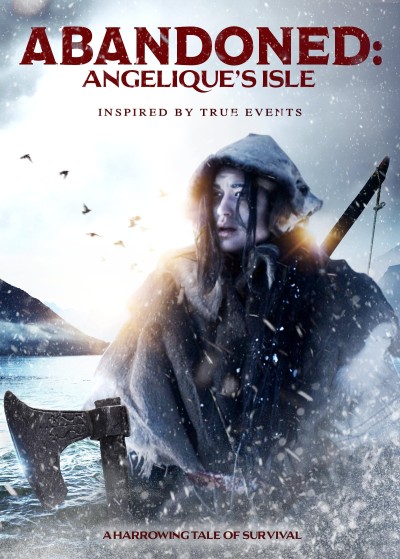
This is based on the true story of Angelique Mott. In 1845, she and her husband Charlie were part of a prospecting expedition which landed on Isle Royale, an island in the middle of Lake Superior. The objective was to prospect for copper, and when their search was successful, the Motts were left to guard the claim, in the expectation they’d be there for only a couple of weeks, before being relieved. However, nobody showed up, and the couple were left to fend for themselves through a ferocious mid-Western winter. They ran entirely out of food before Christmas, but Angelique was not rescued until May, after more than ten months as a castaway – by which point, Charlie had passed away.
It’s an impressive story of wilderness survival, in the face of incredible hardship, so what went wrong here? It’s mostly the plotting, which manages to squander almost all the tension inherent in the story. As the tagline above suggests, we’re big fans of survival show Alone [albeit while sitting safely on the couch, munching Doritos and passing critical comment on the contestants’ fire-making skills], and I was hoping for something similar here. I mean, it’s reported that one of the ways she survived was “by pulling out her own hair, plaiting the strands, and creating snares with it, by which she caught rabbits.” That’s hard-core, and is the kind of detail which would have brought the move alive.
Instead, we get almost nothing about the details of how Angelique survives on a daily level. The film also makes it seem Isle Royale was tiny, but it’s actually over two hundred square miles in size – now, it has become the least visited national park in the continental US. Instead, we get a lot of the couple just sitting around, looking sadder and hungrier by the scene. Dramatic tension is limited to Charlie going a bit mad, which apparently did take place shortly before he died. I did wonder if, after his passing, Angelique was going to go all Uruguayan rugby team on him, but she just closes up the shack and moves into another shelter. [The ground was perhaps too hard for burial]
As something of a saving grace, the film does a good job building its characters. Angelique (Jones) is an interesting character, depicted here as a Christian, but one whose heritage was from the Ojibwe tribe. In particular, she’s shown as close to her grandmother (Young), giving her a mixed cultural identity. Charlie (Carrick) is less well-defined, though does have a very nice beard. The photography also helps, though it appears Thunder Bay in Ontario, stood in for the real Isle Royale. It still captures the terrible isolation and the ferocious climate, which explains why there has never been a permanent settlement established on the island. But this is not the story I wanted to see, and I don’t feel it does justice to the tenacity displayed by the real character.
Dir: Marie-Hélène Cousineau, Michelle Derosier Star: Julia Jones, Charlie Carrick, Tantoo Cardinal, Aden Young




 Chanda Bajaj is the very epitome of a troubled protagonist. A former soldier, she left the service after she and her comrades took part in the mass murder of “synths” – synthetic humans, and has been plagued by guilt and nightmares ever since. She has become an independent bounty hunter (or “Lancer” – short for “freelancer”), and has just landed on the ferociously hostile mining planet of Reitman, far out in the frontier colonies. The corporation which runs Reitman has an issue, with some of its employees – who are, really, more like indentured serfs – turning them into drug fuelled and violent killers.
 ★★½
★★½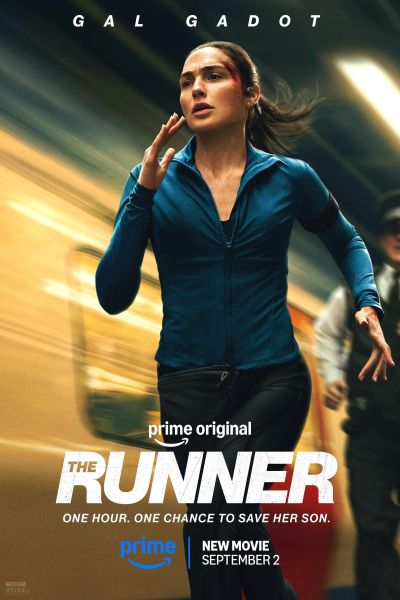 Poor Gal Gadot. Her career since
  I have some friends – people whose opinions I typically respect – who swear by Jesus (Jess) Franco. For example, Tony, who used to run Psychotronic Video in London, and whose all-time favourite movie is
 You’ve made a number of music videos, for bands such as Clan of Xymox. How does that influence your cinematic style?
 Demon Hunter: Time 2 Kill brings a big eighties horror vibe to proceedings – plus time travel! Why did that combination appeal?
  The first film was made in Ireland, but the second shot mostly in Kentucky. Why the change, and can you compare the two locations?
 Behind a remarkably generic and forgettable title sits an entirely reasonable slice of low-budget Irish action-horror. It’s clear creator Kavanagh knows what has gone before, and if the resources here don’t allow her to reproduce them on anything approaching the same scale, she knows her limitations and works well enough within them. Besides, who can resist a film that works a Ramones lyric into its dialogue? Taryn (Hogan) feels responsible for the death of her little sister, abducted and killed on the way home from school. She gets a chance to do something about it, when approached by the mysterious Falstaff (Parle) after her sister’s funeral. He reveals a secret world of demons and sacrifices – Taryn’s sister being one of the latter – and offers Taryn a chance for revenge, if she’ll come and work for him.
 This falls into the category of unexpected surprise. It was over eight years ago that I reviewed
  This gets an extra half-star, simply for trying to go in some unexpected directions. I’ve seen enough of these urban flicks to know the template from which they are largely stamped. Now and again, this doesn’t so much colour outside the lines, as forget about the lines entirely. It doesn’t always work. God knows, it doesn’t always work. Still, I respect the attempt. It used the word “duplicitous” inside the first minute, and you get a voice-over saying things like, “The crimson stains of her actions seemed to fade momentarily, offering a fleeting illusion of absolution. A fragile attempt to reconcile the duality of her existence.” That’s some fancy-ass, hi-falutin’ language for a film in this sub-genre.
  This is a slim little book – more of a booklet, really, coming in at only 74 pages in length. But since it combines both our topic of discussion and local interest, because I live in Arizona, it was an easy decision to pick up a copy, after Dieter brought it to my attention. It does use quite a loose definition of “outlaw” – it is something only really discussed in the book’s epilogue, dividing them into three categories. Most obviously, are the ones Gavin calls “The Breakers of Law”, such as stagecoach robber Pearl Hart, whose exploits were dramatized in
  This begins with a caption detailing the horrendous number of gun deaths annually in Brazil, including several thousand per year in police actions. Given the synopsis, I wondered how the film was going to reconcile this with its own subject – would the answer to gun violence be…
  This is based on the