If it hadn’t been for the lack of an ending, this would likely have got a seal of approval. The problem is, this web series came out in 2017, and as we close in on a decade later, I am beginning to suspect we may never see all the loose ends addressed. It begins with a quinceanera party, the traditional Mexican celebration to mark the coming of age of a young woman. In this case, it is being thrown in honour of Alejandra Santos (Xitlali), whose father Reynaldo (Mendoza) runs a Mexican restaurant. She really doesn’t want to be there, and her doubts prove well-justified, because it gets gate-crashed by Chavo Del Rio (Retamal) and his thugs.
I was going to tag this as “Die Hard at a quinceanera“, since initially that’s what seems to be happening. Turns out Dad made a business deal with very sketchy people to “hold” various items. When some of these go missing, he is blamed (it’s actually due to ne’er-do-well son Santiago and his pal), leading to the unexpected arrival of Chavo. Reynaldo’s denials lead to things getting very bloody, but Alejandra is able to get the drop on one of the thugs: there’s a death by sceptre which has to be the most symbolic weapon used, since Zoe Tamerlis used an iron to crack a rapist’s skull in Ms. 45. It’s after this, where things divert significantly from the expected route.
I will admit that Alejandra’s transition from truculent teenager to avenging angel is rather abrupt. However, it does eventually become clear that she has a lot of heritage on her side, not least her abuela or grandmother (Reynoso), who clearly has some history of her own. Indeed, on the Del Rio side there’s no shortage of bad-add mujeres either: the matriarch, Bertila (Bertila Damas), has some very strong views on this topic. By the end, it’s almost girls with guns the whole way down on both sides (albeit for some quite loose definition of “girls”, in regard to their age!). There has been a lot of ground covered, in around only seventy minutes: this is a web series of seven episodes, each being little more than ten minutes long.
I was very surprised to discover this was a Canadian production, filmed in and around British Columbia. There’s a strong Southwestern feel (something I’m familiar with, living just a couple of hours from the Mexican border), and I will certainly be checking out more from the makers. At first, I had concerns it would end up being more of a teen soap opera – think The OC, with a side of salsa. Fortunately, the company name, Luchagore Productions, is a clue that it won’t pull its punches: I think the moment I realized this was where a party guest had his mustache carved off his face with a machete. Yeah, it’s like that, and the red stuff flows like the Rio Grande thereafter. Just do not expect any resolution.
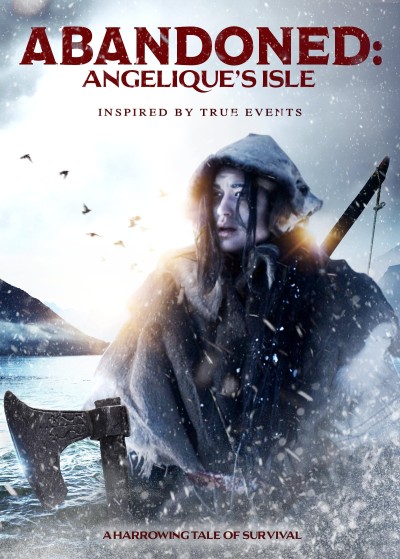
This is based on the true story of Angelique Mott. In 1845, she and her husband Charlie were part of a prospecting expedition which landed on Isle Royale, an island in the middle of Lake Superior. The objective was to prospect for copper, and when their search was successful, the Motts were left to guard the claim, in the expectation they’d be there for only a couple of weeks, before being relieved. However, nobody showed up, and the couple were left to fend for themselves through a ferocious mid-Western winter. They ran entirely out of food before Christmas, but Angelique was not rescued until May, after more than ten months as a castaway – by which point, Charlie had passed away.
It’s an impressive story of wilderness survival, in the face of incredible hardship, so what went wrong here? It’s mostly the plotting, which manages to squander almost all the tension inherent in the story. As the tagline above suggests, we’re big fans of survival show Alone [albeit while sitting safely on the couch, munching Doritos and passing critical comment on the contestants’ fire-making skills], and I was hoping for something similar here. I mean, it’s reported that one of the ways she survived was “by pulling out her own hair, plaiting the strands, and creating snares with it, by which she caught rabbits.” That’s hard-core, and is the kind of detail which would have brought the move alive.
Instead, we get almost nothing about the details of how Angelique survives on a daily level. The film also makes it seem Isle Royale was tiny, but it’s actually over two hundred square miles in size – now, it has become the least visited national park in the continental US. Instead, we get a lot of the couple just sitting around, looking sadder and hungrier by the scene. Dramatic tension is limited to Charlie going a bit mad, which apparently did take place shortly before he died. I did wonder if, after his passing, Angelique was going to go all Uruguayan rugby team on him, but she just closes up the shack and moves into another shelter. [The ground was perhaps too hard for burial]
As something of a saving grace, the film does a good job building its characters. Angelique (Jones) is an interesting character, depicted here as a Christian, but one whose heritage was from the Ojibwe tribe. In particular, she’s shown as close to her grandmother (Young), giving her a mixed cultural identity. Charlie (Carrick) is less well-defined, though does have a very nice beard. The photography also helps, though it appears Thunder Bay in Ontario, stood in for the real Isle Royale. It still captures the terrible isolation and the ferocious climate, which explains why there has never been a permanent settlement established on the island. But this is not the story I wanted to see, and I don’t feel it does justice to the tenacity displayed by the real character.
Dir: Marie-Hélène Cousineau, Michelle Derosier Star: Julia Jones, Charlie Carrick, Tantoo Cardinal, Aden Young
When we think of the tough women in the old West, the first ones that come to mind are usually, the criminals. Let’s face it, most people we celebrate as “legends of the old West” today were not really heroes. More often, they were people who broke the law, or highly questionable personalities such as Calamity Jane, Belle Starr, Pearl Hart or Etta Place. But we should not forget there is also the other side of the law! Though women were present in quite a number of job areas and were vital in the development of the country, very often history writing has focused rather on the achievements of men, overlooking the women’s part of the success story. But now and again, an interesting yet forgotten character is rediscovered and attracts new attention.
One of these characters is Kate Warne (sometimes spelled Warn), born in 1833 in New York. Coming from a poor background, life turned even more challenging after she became a widow at just 23 years old. She was working as a cleaning woman when she saw an advertisement in a newspaper. Allan Pinkerton, head of Pinkerton’s detective agency, was looking for new employees, interested in working for him. The agency were involved in quite a number of fascinating cases, such as the “Molly Maguires”. Those events were referenced in the Sherlock Holmes novel The Valley of Fear, and subsequently became the basis for a 1970 movie with Sean Connery and Richard Harris. Warne was able to convince Pinkerton to employ a female, arguing that women have an eye for details and are excellent observers. Indeed, it seems that Pinkerton grew quite fond of her as he spoke highly of her after her death.
Warne was active in solving crime cases and is said to have played an essential role in discovering a plot to kill Abraham Lincoln in 1861. She guarded him when his train passed locations where an attack was planned. (Unfortunately, she wasn’t around in 1865.) For the whole story I refer you to Warne’s Wikipedia page. But I especially like the following sentence there: “It is believed that Pinkerton came up with the slogan to his agency “we never sleep” as a result of Warne’s guard of Lincoln that night.” How much of that is true is difficult to say. Pinkerton himself was rumored to invent his own stories. He was definitely a man who knew how to blow his own trumpet. Though he had successes which prove the quality of his agency, and for a long time the Pinkertons were the most well-known and respectable detective agency.
The real Kate Warne
Kate had become the head of the female detectives department at Pinkerton’s, but died young, at just 35 years old in Chicago, of pneumonia. The Great Fire of 1871 there destroyed a lot of the company’s records, so not so much is known about Warne, apart from what Pinkerton himself reported about her and the cases in which she was involved. But in recent years this highly interesting character has had a resurgence in popular media. Among others, there have been a couple of children’s books, a novel, a non-fiction book about the female detectives at Pinkertons, a comic book and a low-budget movie on Amazon Prime, Pinkerton, in which she appears. She also played a very small role in the three-part TV series about Lincoln on the History Channel, and there has been talk of a big-budget Amazon MGM film, with Emily Blunt playing her and Jaume Collet-Serra directing.
I’m not quite sure when and why this new interest in Warne arose. But I wouldn’t be surprised if it started with this small, Canadian TV series from 2014, that ran until the following May. The Pinkertons was made by Rosetta Media and Buffalo Gal Pictures, in partnership with Channel Zero. Only one season with 22 episodes was produced, and obviously, it was not successful enough to get a second season. Which is, actually, kind of a pity, as the show ended with a cliffhanger. It’s a Western show, yes. But it is also a detective show, making it a very unusual hybrid. We are not used to seeing cowboys and detectives in the same series, and it is a smart way to cater to two different potential audiences: Western and crime fans.
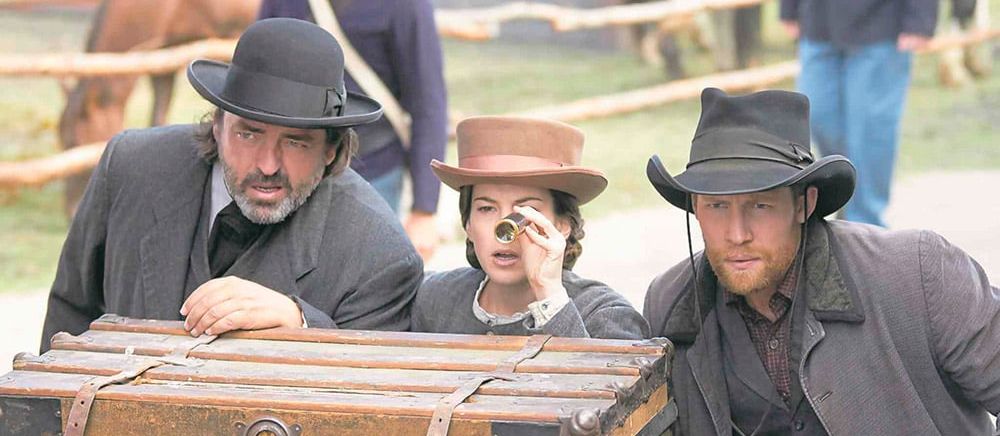
It must be said, the budget was not very high: over the course of the series, we get to see the same sets again and again. The farm where Kate (Martha MacIsaac) lives for the time being, working for the elder Pinkerton, Allan (Angus MacFadyen). The local saloon in which she and young William Pinkerton (Jacob Blair) regularly meet. And the Sheriff’s office where suspects are imprisoned. Also, a lot of episodes take place in the woods or large fields, with single buildings housing the perpetrators or victims. The whole series is set in Kansas City, Missouri in 1865. Pinkerton Sr. thinks a lot of shady things happen here, which is why he insists that his son and new employee Kate stay there and work “undercover”. The Lincoln story discussed above is mentioned, but doesn’t play any role here.
The cases themselves are well-thought out. Not so complicated as to become ridiculous, nor easily and quickly figured out by viewers. They cover a wide range from murder and identity theft, to the killing of a dog. The three main characters are generally given equal attention, for this was before female characters in modern media started to become the center of everything (mostly by showing how inadequate or ridiculous men are, in the opinion of modern TV/film executives). There’s no such need here; while Will is initially not very happy about Kate, especially because his father makes her his superior, he quite quickly acknowledges her expertise and knowledge. They subsequently form a good team and work well together.
The pairing makes it possible for them to investigate different places and witnesses at the same time. Luckily, they also keep tabs on each other, with episodes where one would have been killed if the other hadn’t been around. Allan himself pops up now and again in the show, before he vanishes off to do something else. Other regulars include AnnaLee Webb (Jennifer Pudavick) who owns the saloon and the brothel in it; a black worker on Kate’s farm, John Bell; local sheriff Lawrence Logan; and Kenji Harada, a Japanese man who is initially a client, before becoming a Pinkerton apprentice. MacIsaac plays Kate Warne as a sophisticated young woman without attitude. She is neither a bombshell nor a spinstery type. She is always polite, well-dressed and appears a bit out of place in this typically Western town, as if she does belong more in the big city.
Meanwhile, Will is a bit of a rascal and wants to prove his worth as a detective to his grumpy but sympathetic father. But he and Kate get along well, developing a friendly working relationship. She doesn’t reveal much about her background. I wonder if screenwriters maybe wanted to set up something along the lines of the Benedict Cumberbatch version of Sherlock Holmes, without the extremes. She definitely has a scientific mind, quoting facts that indicate she is well-read, and uses what could be called early forensic investigative methods. But she is not set up as a genius and doesn’t solve the cases alone: this is genuine team work. In the beginning, I wondered if Kate really belonged in the “girls with guns” genre, since an investigator is not necessarily someone involved in much action. But I shouldn’t have worried: there’s enough to confirm her action heroine status!
Regrettably, the show had an open ending. Billy the Kid turns up with a new experimental rifle to take revenge on old Pinkerton, finally challenging young Will to a duel. They have a shoot-out but the outcome has to stay a mystery, as this is where the show ended. It was, of course, a gamble of the producers, in the hope that a second season would be ordered. Unfortunately it didn’t pay off, and we are left with an unfinished story. I do understand why it might not have been a big ratings success. For a Western fan, there might not be enough gun-fighting; and for a crime series fan, the Western tropes might be largely uninteresting. But I did like the mixture. All in all, this is a nice little show.
I did sometimes think there could have been better set design: in the interior of houses, everything looked a bit spartan. Also, I wondered if the way the three main characters were such a good team and got along so well, might have made the show too humdrum for many. Some stronger emotional conflicts or personal problems in their relationships with each other, could have made the whole thing a bit more interesting. But you don’t always need that. Sometimes it’s nice just to have a team that does its work, has a good relationship with each other, and that’s it. This is a well-done detective show that might have helped to reintroduce Kate Warne to the modern public. I liked it well enough, and am indeed curious what a big movie about her might offer, if the proposed production with Emily Blunt should indeed become a reality.
Creators: Kevin Abrams and Adam Moore Star: Martha MacIsaac, Jacob Blair, Angus Macfadyen, Jennifer Pudavick
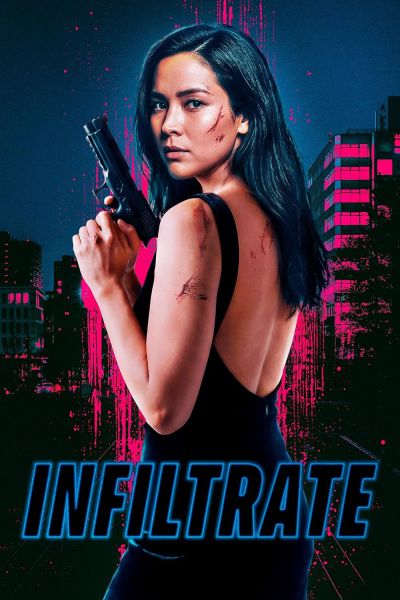
Thanks to Chris for finding this one. Albeit through a clip on a Chinese site under the name “Rescue From the Abyss”. This led to a significant diversion into movies about submarines, before eventually finding the correct, entirely submarine-free movie. No question, this is the hardest hitting film I’ve seen so far in 2026, though once you get past the action, things get more wobbly. Lily Chen (Ladouceur-Nguyen) is an operative for a shadowy government law enforcement group. She just learned about a potential promotion, though husband Jonathan is less enthusiastic and storms out. Before further discussion can occur, she gets a phone-call. The voice (Goad) informs her Jonathan is his hostage, and Lily needs to do exactly what he says.
His subsequent orders involve working her way through the criminal organization belonging to Marcel LaFleur (Moussi). Matters are complicated, as the voice eventually reveals that not everyone in Lily’s organization is as honest as she is. Can she trust even her boss, Director Bass (Berry)? There’s also backstory about a traumatic event in our heroine’s past, though this is largely irrelevant and can safely be ignored. Indeed, I’d say that overall, the scripting is the weakest link. The eventual explanation, while I can’t discuss it in detail due to spoilers, left me with a lot of questions. The supporting cast are a mixed bag too. LaFleur’s mismatched hair and beard colours irritated the hell out of me for some reason, as did his unexplained facial scars.
But when he’s not doing pretentious things like painting in blood or debating Shakespeare… It takes a while to get to the expected Lily vs. Marcel battle. However, it is worth the wait, and is thoroughly convincing, despite the significant size disparity. It’s long, gruelling and brutal. I did have to laugh at the obvious stunt table, which stands out in LaFleur’s apartment like a sore thumb. The best fight might actually be earlier, when Lily has to take on a particularly psychosexual pair of henchmen. Though the opening scene sets bar for savagery quite high as well. Mark’s background in stunts is apparent, though I think I preferred his earlier feature, Control. While its script was imperfect, the flaws were less apparent.
This Canadian production must be out of Quebec, given the significant sprinkling of French here. But, in another in the series of micro-aggressions the film commits, the font used for the subtitles is hard to read. I don’t recall the last time a film got the core element – here, the action – so right, yet appeared entirely dedicated to screwing things up around the edges. I could go on. The whiny nature of Jonathan, who doesn’t appear to realize it is no longer the Victorian era. Occasional forays by the director into shaky-cam. Despite that, there were still enough positives to keep me interested, and I look forward to seeing what both Mark and Ladouceur-Nguyen are able to deliver down the road.
Dir: James Mark Star: Orphée Ladouceur-Nguyen, Alain Moussi, Lisa Berry, Jonathan Goad
In the 90s, Warner Brothers’ animated Batman series received a lot of praise for its artful animation and style. Not surprisingly, a lot of studios and channels tried to jump on the bandwagon and create their own dark, classy animated show. Disney gave us Gargoyles, French Canal+ did The Legend of Calamity Jane, and the Vancouver-based Network of Animation (NoA) produced this series. It was shown on Teletoon in Canada and – for a short time, though not the entire series – on Fox Kids in America. What is most interesting, is the back story of the show, largely forgotten by almost everyone. Though thanks to people seeing it at the time and remembering it, Cybersix has become a cult show. It may be due to its rarity, since you couldn’t see it for a very long time. It was not available on DVD until fifteen years after its original broadcast – a similar fate to the animated Calamity Jane show.
Cybersix originally started as a black-and-white strip, written for an Italian comic magazine from 1991 to 1999. Interestingly, it was developed by two Argentinian comic book creators, Carlos Trillo (story) and Carlos Meglia, both now deceased (Trillo died in 2011, Meglia in 2008). They grew up in Argentinian comic book subculture during the dictatorship, where comics very much had a subversive, underground status. Very often these hand-made, self-distributed comics were political, and didn’t hold back in their depictions. I’m no expert on Argentinean comic book history, but I imagine nothing like the American Comic Code Authority existed in South America. Voicing critical opinions under such an oppressive regime was probably very dangerous, and the no-holds barred approach comic artists grew up with, remained after the end of the military dictatorship.
Therefore, it’s not too astonishing the Cybersix comic reflected that attitude, with its wild, very often over-the-top depiction of violence, nudity and sexuality. These comics have still never been translated for the English-speaking world: those interested will have to buy them in French, Italian or Spanish. It should be noted that not all of the series are available in all of these languages. Having read one of the volumes in French years ago, my judgement on it was that, story-wise, it is quite a strange and jumbled mess. There are scenes of gratuitous nudity and sex, and though not the main focus, they’re definitely not recommended reading for teenagers. It lacks a clear goal, with the plot often meandering, and scenes lack cohesion. Also, José, the main antagonist in that volume is an annoying and disgusting teen character. It appeared to my – admittedly very European – eyes, as a bit crude and short on narrative focus. It is neither like an American superhero saga, nor the typical Franco-Belgian fun comics, but something of its own. Of course, that is my judgement based on one single volume. Maybe I just picked the one rotten apple!
I would like to stress that these comics are not “violence-porn”, as I would personally categorize TV series like Game of Thrones. But they are definitely for a more adult readership, albeit with a bit of a juvenile mind. The drawings of a city that definitely reflect Argentina, and Cybersix, clothed in black leather while running and jumping from roof to roof with a parachute-sized cloak that would make comic anti-hero Spawn blush with envy, convey a respectable artistic style. Someone compared the comics and their 90s edginess to the works of Frank Miller (Sin City, 300), and it is not a bad fit. Actually, I’d say the drawings are more elegant and beautiful than Miller’s style.
The idea was born when one of the creators read an article about a couple who had invested in storing their own embryos, before dying in a plane crash. This resulted in the Australian government arguing about what should happen to the embryos. In the end they were destroyed, but the artists wondered what would happen if they were stolen instead. An idea took shape, though changes would naturally occur; originally the main character was supposed to be a police officer, not a superhero. The comic must have enjoyed some popularity in Argentina, since it was made into a very short-lived live-action TV series in 1995, but had such low ratings it was cancelled after only a few episodes. It is believed lost, though you can find at least one episode online. It’s not really cause to mourn, since those who did see it, generally agree how bad it was.
Nevertheless, the comic was lucky enough to get another adaptation in 1999. As Canadian producers were looking for something to turn into an animated show, their attention was drawn to this work. The show was animated by Japanese studio TMS-Kyokuichi, making this essentially a Canadian-Japanese co-produced adaptation, of an Italian comic, written and drawn by two Argentinians. What a culture mix! But sometimes a lot of different influences are not detrimental to the final product. A big influence on the story is the historical German connection to Argentina. Back in the 19th century there were already economical, and later ideological, ties between the two countries. These became stronger after WWII, when both Nazis and Jewish Germans fled to Argentina. This history is rarely addressed in the media, but the historical legacy here, influences and is referred to by the comic, and therefore the animated show.
The story itself: In the fictive city of Meridiana lives superheroine Cybersix, an escaped experiment of Nazi scientist Von Reichter (though this is never directly stated in the animated show). Von Reichter has created his own Frankenstein-like creations for… nefarious purposes, I guess. These beings must obey his orders, and he uses them to hunt Cybersix, the last survivor of a failed project. But he never does his own dirty work, instead having his own cruel teen clone, José, execute his orders via his soulless monsters: tall, ugly and dumb men called Fixed Ideas. While she doesn’t enjoy it, Cybersix relies on killing these man-monsters, as she needs their life-force for sustenance. When she kills one, the body vanishes, leaving only a small test tube containing a green liquid that she consumes.
This is different – as are many other things – from the comic, where she sucks the life-force out of the bodies, Dracula-style. I guess this would have caused quite a stir in a show supposedly for a younger audience. By day, she poses as a friendly school teacher under the name of Adrian Seidelman, working with friendly colleague and possible love interest, Lucas. At night she has to fight the schemes of Von Reichter and his cohorts, supported by her “brother” – another experiment, where the mind of a child was transferred into the body of a black panther. Though she is faced with an existential dilemma. She has to stop Von Reichter, but if she kills him, she will lose all further “sustenance” and can never become a normal human. Her success would also mean her death.
Unsurprisingly, the more controversial elements of the comics fell to the wayside – namely the violence, nudity and sex. The comic was no stranger to the depiction of sexual abuse and rape, and featured teen clone José sleeping with women and showing a sadistic streak. In no way would this ever have been allowed in an animated series for a much younger audience. An interesting sidenote is that LGBTQ-groups try nowadays to claim Cybersix as one of their own, calling her “the first transgender superhero”. I personally disagree, though understand where this comes from. A queer audience can interpret the show as a metaphor for their own situation, especially given that in the ’90s, non-heteronormative lifestyles were not part of the public discussion, as happens today ad nauseam and ad infinitum.
I think this idea was fueled by the fact that Cybersix – very much a beautiful female, who in the comics sleeps with Lucas and gives birth to a child – lives her cover identity as a male teacher. The explanation is not given in the animated show but can be found in the comics – which few read due to the language issues discussed above. While on the run, Cybersix found the identity card of one Adrian Seidelman, who looked similar to her and had died in a car crash. It’s a simpler, more logical explanation than declaring her transgender. Though, if people want to see certain narratives they can see them. She falls in love with school colleague Lucas, a biology teacher and reporter – obviously you need two jobs in Meridiana to make a living. He is good friends with her as Adrian, but she doesn’t dare reveal to him her true identity. Cybersix fears she will never find someone who loves her for what she is – a human experiment with superpowers, depending on a green liquid.
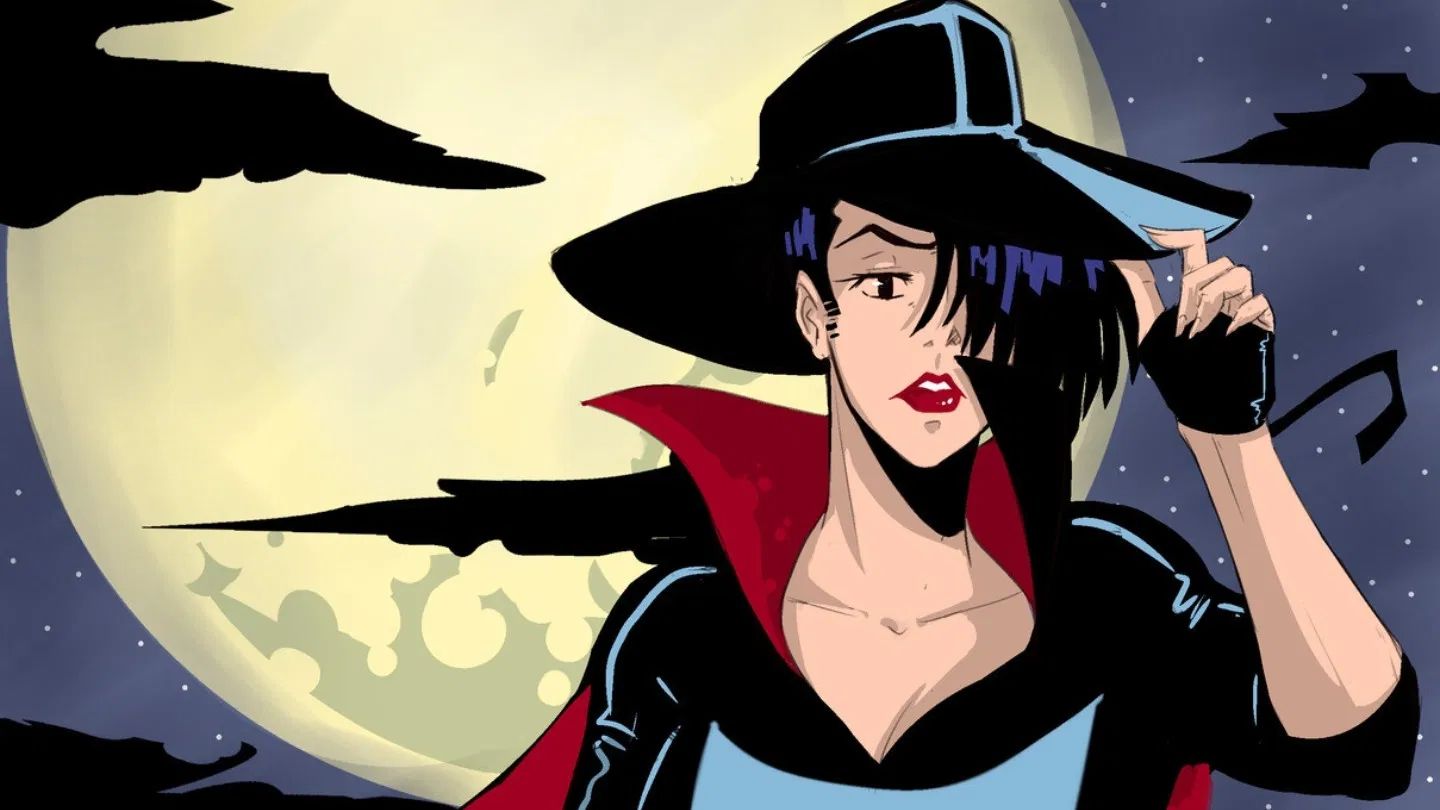
Yes, if you really, really want to, you can find a queer perspective here. But let’s be honest. Isn’t it the same thing Superman/Clark Kent or Batman/Bruce Wayne have done since the dawn of superhero comic books? Also, her Adrian Seidelman persona looks very Clark Kent-ish to me. Though there are several influences in her design. Cybersix’s cape and large hat remind me of classic pulp hero “The Shadow” – but maybe a bit of Carmen Sandiego, too! When she stands on a rooftop overlooking the city, the similarity to images of Batman cannot be denied, and her body costume makes me think of Catwoman.
The show ends on an open note, though nevertheless feels like it achieves some closure. While Von Reichter has been killed by his own monsters, his evil young clone José has survived. At the same time while Cybersix is believed to be dead, Lucas sees a light in her window, indicating that she has survived. Originally, there was a commission for two seasons, but the Canadian and Japanese production studios had different opinions on how to continue the series. The Canadian side wanted it darker, closer to the original comic, while the Japanese side preferred a lighter approach and more humour. Both influences can be found in the show and I dare say that the combination is what makes it appealing for those who like it. I can definitely see a similarity to the Batman animated show. But here, it was a quarrel over the direction the show should take in season two that broke the camel’s back.
It’s a pity, because the potential can be seen and felt throughout the series, though some episodes are weaker than others. Animation-wise the series is well done, and even impressive in the action scenes. Unfortunately, Cybersix was an unknown character, rather than a famous IP like Batman or Superman. So, it’s possible the TV ratings were underwhelming when the show was released. One final point of note: Trillo and Meglio filed a lawsuit against James Cameron – yes, that James Cameron – as they believed his TV show Dark Angel, with Jessica Alba playing a genetically enhanced female super soldier, had plagiarized their show. As they lacked the financial backing to maintain the lawsuit, they had to let it drop. Since both artists are no longer with us, and Cameron will probably not volunteer to talk about this issue, we will never know the truth.
For the show as a whole, I would say it is worth a watch. The basic plot was maybe ahead of its time – but then, considering Dark Angel, maybe not at all that much? The show is entertaining, though it’s mostly a “monster-of-the-week” show, a format at that time already successful in The X-Files. But female superheroes as the main character of an animated show were not common at that time, giving the series a rarity bonus, together with its unusual combination of very different national influences. Overall, it’s a good animated series, and deserves to be rediscovered by a new generation in the same way as Gargoyles or The Legend of Calamity Jane.
Creators: Carlos Meglia and Carlos Trillo Star (voice): Cathy Weseluck, Michael Dobson, Alex Doduk, Janyse Jaud
Printed directly from the finest template of sports movie tropes, this is less a script than a bullet list of plot points you’ve seen a thousand times before. Struggling single mom (check) Paula Taymore (Gilsig) had to give up a promising ice hockey career to take care of her son (check). A bar argument leads to a challenge match against a local men’s team (check). Paula has to assemble a women’s side (check), from a ragtag group (check), including an ex-convict (check), sassy Black girl (check) and a witch (check). Can she overcome adversity and local prejudice (check), find love with hunky single dad Steve Cooper (Priestley, and check) and triumph in the big game? (BIG BOLD CHECK, LARGE FONT).
It’s not just the storyline that comes out like a prepackaged frozen dinner, the style and approach to the content is equally safe, competent and, ultimately, bland. That means training montages, a soundtrack of bland country and pseudo-inspirational pop/rock, and attempts to yank on audience’s emotional heartstrings which could not be more blatantly obvious. Yet there are reasons these things have become overused stereotypes: it’s because they are effective. You may know, with absolute certainty, the women’s team are going to fight back after falling 4-1 down. This doesn’t make it any less heartwarming when it happens, and this is effective enough as undemanding cinematic comfort food. It’s the kind of movie you curl up on the couch with, clutching a cup of hot chocolate, some Sunday afternoon.
What’s odd is that there are moments where it does have the opportunity to break away from the obvious. For example, there’s a plot thread where one of the women absconds with the hard-raised team funds. However, this is discarded almost as soon as it has begun, with no actual resolution. In its place suddenly appears, out of nowhere, the fact that the goalkeeper is throwing the game for gambling purposes. Still, nothing a few stern words from Paula can’t sort out, amIrite? There’s no effort at all put in on the side of their opponents, who might as well be a pack of skating Neanderthals. Their idea of wit is putting a camera in the women’s locker-room, an element that has not aged well, to put it mildly.
The performances are likely better than the material deserves. Kidder, as Paula’s mom, manages to be heartfelt without coming over as insincere or sacchariney, and Gilsig has her moments, mostly when struggling to balance her family responsibilities with her own hopes and goals. Of the supporting cast, Marquis comes off best, making a strong impression as acidic goth Felicity Carelli, though singer Michie Mee seems thoroughly out of place. Whoever thought it made sense to have her rap the Canadian national anthem, probably has found themselves on an RCMP watch-list. You may not need to know anything about hockey to watch this. However, you won’t learn anything about it either.
Dir: Kari Skogland Star: Jessalyn Gilsig, Margot Kidder, Jason Priestley, Juliette Marquis
a.k.a. Hockey Mom or Anyone’s Game
This is is a very small-scale bit of science fiction, with barely a handful of speaking parts, and mostly taking part in a single room. Despite this, and some qualms about the use of cinematically convenient amnesia, it works rather well. Eileen (Mitich) wakes to find herself in a room without windows or doors. A disembodied voice (LeBlanc) tells her to move a pencil on the table. She does and is knocked out. Regaining consciousness, the voice repeats the instruction. Except, Eileen is now chained to her chair. And if she doesn’t complete the test quickly enough, Eileen is informed her daugher, Eve (Loiselle) will be killed. OK, the movie has my attention.
Turns out, Eileen has psychokinetic skills, the ability to move things with her mind. The tests are an escalating series of experiments, designed to force this talent up from her subconscious, to the point where she can control it. Part of the process involves adding her husband, Roger (Tchortov) into the room. Though they’re clearly in there for a lengthy period, leading Chris to pose the question at the top of this review. No answer is ever obtained, and that’s probably the film’s biggest weakness. Not specifically the toilet question, just a tendency to handwave its way past issues. The way Eileen’s lost memories return at the pace needed by the script is also a bit weak, though the validity of these is questionable.
Despite these weaknesses, there’s a lot here that is done right. The positives begin with Mitich, who hits all the points in a fine performance. She shifts from sympathetic through to scary, as the strength of her abilities becomes apparent, then back to poignant when we discover – albeit through that cinematic amnesia – the truth about her situation. Inevitably (and this is kinda obvious, so barely counts as any kind of a spoiler), the decision to torment someone with paranormal talents ends up with Eileen using them against her captors. This is done mostly in an extended sequence where she walks through the complex at a sedate pace, absolutely unstoppable. The effects are more restrained than, say, Marvel or DC, yet are certainly up to the task.
Despite the cover, I don’t remember Eileen actually holding a gun at any point. Not with her hands: one of the trials does involve her assembling a pistol from its component parts, purely with her mind (below). Admittedly, she doesn’t need a physical weapon: the telekinetic abilities she has pose more than enough threat. In hindsight, she does go for more spectacular methods of dispatch than necessary: a simple squeeze of the heart would suffice. However, I’m happy to err on the side of style over substance, and by this point, I was sufficiently invested in Eileen’s past, present and future to buy into whatever might happen. If there’s similarity to another slice of Canadian SF, Cube, the better-defined plot here means it’s something I’m prepared to tolerate.
Dir: James Mark Star: Sara Mitich, George Tchortov, Evie Loiselle, Karen LeBlanc
This rather gloomy slice of social science-fiction seems to take place in a post-apocalyptic version of Canada, albeit a fairly low-key apocalypse. It seems to have led to a rigidly class-based system, with a sharp division between “citizens” and the rest. That leaves the indigenous population on the outside, scrabbling hard to survive and avoid having their kids “re-educated” in military-style academies. [This pointedly echoes something similar which actually took place as recently as the sixties] To avoid being separated, Niska (Tailfeathers) and her daughter Waseese (Letexier-Hart) live off the grid in the countryside. However, after Waseese suffers an accident, they have to seek medical attention back in the city, bringing them to the attention of the authorities.
This ends in Waseese being taken away, and Niska forming a rather uneasy alliance with a local group of native Canadians, who are operating in resistance to the authorities. They have their own encampment, and one of their shamen (shawomen, I guess) had a dream which appears to be a prophecy about a saviour coming from the North. Which seems to fit Niska, much to her discomfort. She reluctantly agrees to help take a group of indigenous children to a supposed “safe haven”, if the group assists her in breaking Waseese out of the academy. Though will her daughter be willing to leave after the relentless brainwashing, telling Waseese her mother abandoned her? Then there’s the imminently looming removal – or worse – of the encampment.
It’s all very earnest, glum and comes up rather short as entertainment. I’m sure the film-makers would respond that entertainment isn’t the point, but if you’re using your movie as a parable, it helps get the message across if people are engaged. We’ve seen this kind of crypto-fascist villain state too often before (most obviously in The Hunger Games), and writer-director Goulet doesn’t bring much new to the table. As bad guys, they’re fairly milquetoast. Indeed, when someone says “Cree can’t take care of their own families”, I was kinda forced to think, “You might have a point,” given Waseese was tramping round the woods and living in an abandoned school bus when we first meet her. A call to CPS hardly seems unmerited.
The best thing about this is the look of the film, which does a very good job capturing the fall of civilization as we know it. While it’s never clear exactly what happened to cause this, what’s left is largely a blasted wasteland of badly-damaged buildings, whose inhabitants are clinging on by their fingertips. However, few of the characters living in this setting are given much in the way of depth, and the plot does things like throw in a virus epidemic which goes nowhere, because it’s 2021 and every self-respecting dystopia needs one. The finale teeters over into the fatuous, with Waseese suddenly being able to mind-control a flock of flying government drones. I’ll admit, I did not see that coming.
It’s kinda interesting to compare this to Mercy Falls. Both concern an ill-fated trip into a scenic wilderness – all trees and waterfalls – by a group of friends, which goes increasingly off the rails. The main difference is, in Mercy, the call was coming from inside the house, as it were. Here, the threat is definitely external. The target is four friends, just finished high school and about to enter the world at large. Jesse (Oulette) will work as a mechanic; his girlfriend Alex (Waisglass) wants to leave their small town and go to college, but hasn’t plucked up the courage to tell Jesse yet. Making matters more complex, her father is part of the Dark Saints, a biker gang and generally criminal enterprise.
This matters, because the Dark Saints just lost a shipment of drugs, the plane carrying it having crashed in a remote region of a nearby national park. Their minions are on the hunt for it, but – what are the odds? – Alex and her friends are first to stumble across it. A discussion ensues about what to do, but it’s all rendered moot after they cross paths with the minions. Before you can say, “implausible plot line,” Jesse has broken his leg and he, plus another of the quartet, pregnant pal Em (Laflamme-Snow) have been captured by the bad guys. It’s up to Alex to figure out what to do, as the only member of the group left able to operate freely.
Which is fortunate, since she’s also the smartest of the people wandering in the woods, and it’s not even close. Let’s just say, pond life would likely rate second or third place among these people, and I’m including both the hikers and the minions in those rankings. Seeing her mental wheels spinning as she out-thinks and outmanoeuvres her enemies is one of the few pleasures this offers. But it’s like watching a grand master playing chess against a pigeon. The only genuine and credible threat is her Dad and the Dark Saints, and they don’t show up until the very end of proceedings. With Alex’s witless friends, dumb and/or unlikable, the ones in peril, the stakes here aren’t enough to engage the viewer either.
I will say, the film does look half-decent, with Diego Guijarro’s cinematography popping nicely off the screen, and the Canadian backdrop is scenic. But too often, the film pulls its punches, whether it’s a character leaping off the waterfalls, depicted with them simply vanishing out of sight, or a pivotal car crash in which it appears no vehicles were actually harmed. This might as well be a TVM, with only the potty-mouths of some inhabitants meriting more than a PG rating. It’s all blandly innocuous, and despite Waisglass’s best efforts, it never gels. Things like Em’s pregnancy, for instance, feel like an afterthought, which goes nowhere and seems like nothing more than a cheap ploy to get audience sympathy. Memo to the film-makers: it didn’t work.
Dir: Egidio Coccimiglio Star: Sara Waisglass, Joel Oulette, Sadie Laflamme-Snow
As soon as I saw the running time of this was one hundred and thirty-one minutes, it immediately went onto the back-burner. I have a busy life, and I’ve going to devote close to two and a quarter hours to a low-budget movie, it is going to be when I have a lot of time to spare. My qualms were obvious, and proved very well-founded. This absolutely had no need to be so long. Indeed, it feels like a first draft, which became a shooting script, and everything filmed then ended up in the end product. Entire scenes are superfluous, and those which aren’t could use between “some” and “an oce-lot” of tightening up.
It’s the story of Ruth Keeley (Huljak), who comes home one day to find her father shot dead in his car. She eventually discovers that he had been a hit-man, working for Rod Porter (Jackson), and ends up following into the family business, as it were. On one job in a hospital, she ends up befriending Mrs. Connors (Wallace), the patient in the next bed to her target, and starts sharing her life with the old woman, who offers zero moral judgement. That includes her relationship with long-suffering boyfriend Cameron (Sanzari), and the quest to find out who was behind the death of her father, and why. Which turns out to be exactly who I expected, from about two hours previously.
The idea at its core is not a bad one. There’s something to be said for the idea of an assassin being plain and unremarkable, allowing them to slide past without attracting attention. Ruth is certainly that, being a waitress until her change in career direction, and Huljak is a good choice. She’s incredibly normal, and about as far from the Luc Besson-style of supermodel hit-woman as you can imagine. I’d like to see a film where we have a hitwoman dealing with everyday issues in between violent killing sprees, such as figuring our taxes, or dealing with annoying neighbours. This, however, is more interested in low-key conversations – and by “low-key”, I mean too many scenes which, to borrow a Python quote, wouldn’t “voom” if you put four million volts through them.
Even Wallace, who brings value to everything she’s in, isn’t able to energize things adequately. Not helping: the film brings in ideas, then discards them again, almost at random. For example, Ruth’s late father shows up and talks to her for a bit, then just… doesn’t. Or she gets a mysterious letter from her father’s killer; an angle which the movie forgets about entirely for a good hour, before bringing it back in, semi-randomly, at the end, to try and achieve closure. Long before that point, this had been reduced to the level of background radiation. It was on, and I was in the same room as it. Much more than that, I can’t commit to. But it definitely fails as action, probably as a thriller, and largely as drama too.
Dir: Nicholas Kinsey Star: Irena Huljak, Dee Wallace, Kevin Jackson, Patrizio Sanzari




 If it hadn’t been for the lack of an ending, this would likely have got a seal of approval. The problem is, this web series came out in 2017, and as we close in on a decade later, I am beginning to suspect we may never see all the loose ends addressed. It begins with a quinceanera party, the traditional Mexican celebration to mark the coming of age of a young woman. In this case, it is being thrown in honour of Alejandra Santos (Xitlali), whose father Reynaldo (Mendoza) runs a Mexican restaurant. She really doesn’t want to be there, and her doubts prove well-justified, because it gets gate-crashed by Chavo Del Rio (Retamal) and his thugs.
  This is based on the
  ★★★½
★★★½
 Meanwhile, Will is a bit of a rascal and wants to prove his worth as a detective to his grumpy but sympathetic father. But he and Kate get along well, developing a friendly working relationship. She doesn’t reveal much about her background. I wonder if screenwriters maybe wanted to set up something along the lines of the Benedict Cumberbatch version of Sherlock Holmes, without the extremes. She definitely has a scientific mind, quoting facts that indicate she is well-read, and uses what could be called early forensic investigative methods. But she is not set up as a genius and doesn’t solve the cases alone: this is genuine team work. In the beginning, I wondered if Kate really belonged in the “girls with guns” genre, since an investigator is not necessarily someone involved in much action. But I shouldn’t have worried: there’s enough to confirm her action heroine status!
 Thanks to Chris for finding this one. Albeit through a clip on a Chinese site under the name “Rescue From the Abyss”. This led to a significant diversion into movies about submarines, before eventually finding the correct, entirely submarine-free movie. No question, this is the hardest hitting film I’ve seen so far in 2026, though once you get past the action, things get more wobbly. Lily Chen (Ladouceur-Nguyen) is an operative for a shadowy government law enforcement group. She just learned about a potential promotion, though husband Jonathan is less enthusiastic and storms out. Before further discussion can occur, she gets a phone-call. The voice (Goad) informs her Jonathan is his hostage, and Lily needs to do exactly what he says.
 ★★★½
★★★½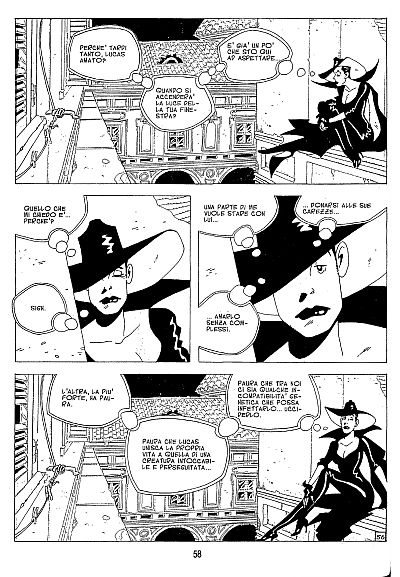 I would like to stress that these comics are not “violence-porn”, as I would personally categorize TV series like Game of Thrones. But they are definitely for a more adult readership, albeit with a bit of a juvenile mind. The drawings of a city that definitely reflect Argentina, and Cybersix, clothed in black leather while running and jumping from roof to roof with a parachute-sized cloak that would make comic anti-hero Spawn blush with envy, convey a respectable artistic style. Someone compared the comics and their 90s edginess to the works of Frank Miller (
 I think this idea was fueled by the fact that Cybersix – very much a beautiful female, who in the comics sleeps with Lucas and gives birth to a child – lives her cover identity as a male teacher. The explanation is not given in the animated show but can be found in the comics – which few read due to the language issues discussed above. While on the run, Cybersix found the identity card of one Adrian Seidelman, who looked similar to her and had died in a car crash. It’s a simpler, more logical explanation than declaring her transgender. Though, if people want to see certain narratives they can see them. She falls in love with school colleague Lucas, a biology teacher and reporter – obviously you need two jobs in Meridiana to make a living. He is good friends with her as Adrian, but she doesn’t dare reveal to him her true identity. Cybersix fears she will never find someone who loves her for what she is – a human experiment with superpowers, depending on a green liquid.
  Printed directly from the finest template of sports movie tropes, this is less a script than a bullet list of plot points you’ve seen a thousand times before. Struggling single mom (check) Paula Taymore (Gilsig) had to give up a promising ice hockey career to take care of her son (check). A bar argument leads to a challenge match against a local men’s team (check). Paula has to assemble a women’s side (check), from a ragtag group (check), including an ex-convict (check), sassy Black girl (check) and a witch (check). Can she overcome adversity and local prejudice (check), find love with hunky single dad Steve Cooper (Priestley, and check) and triumph in the big game? (BIG BOLD CHECK, LARGE FONT).
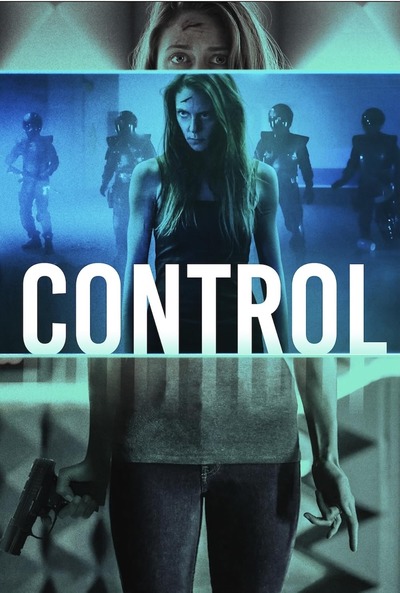 This is is a very small-scale bit of science fiction, with barely a handful of speaking parts, and mostly taking part in a single room. Despite this, and some qualms about the use of cinematically convenient amnesia, it works rather well. Eileen (Mitich) wakes to find herself in a room without windows or doors. A disembodied voice (LeBlanc) tells her to move a pencil on the table. She does and is knocked out. Regaining consciousness, the voice repeats the instruction. Except, Eileen is now chained to her chair. And if she doesn’t complete the test quickly enough, Eileen is informed her daugher, Eve (Loiselle) will be killed. OK, the movie has my attention.
 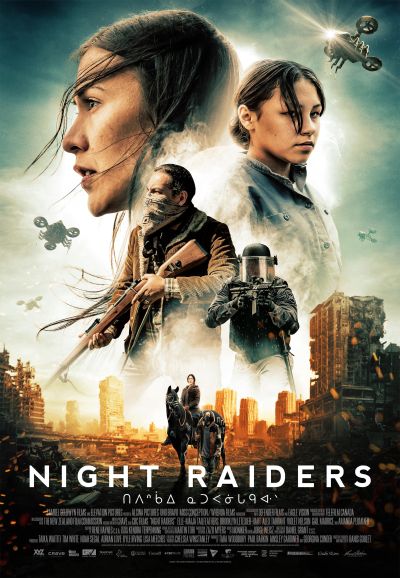 This rather gloomy slice of social science-fiction seems to take place in a post-apocalyptic version of Canada, albeit a fairly low-key apocalypse. It seems to have led to a rigidly class-based system, with a sharp division between “citizens” and the rest. That leaves the indigenous population on the outside, scrabbling hard to survive and avoid having their kids “re-educated” in military-style academies. [This pointedly echoes
 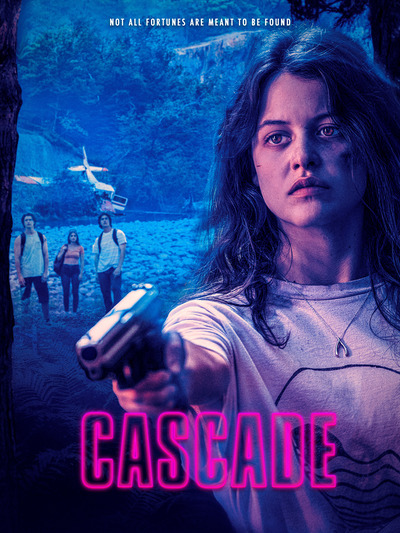 It’s kinda interesting to compare this to
  As soon as I saw the running time of this was one hundred and thirty-one minutes, it immediately went onto the back-burner. I have a busy life, and I’ve going to devote close to two and a quarter hours to a low-budget movie, it is going to be when I have a