




★★★
“Tubi or not Tubi? NOT Tubi.”
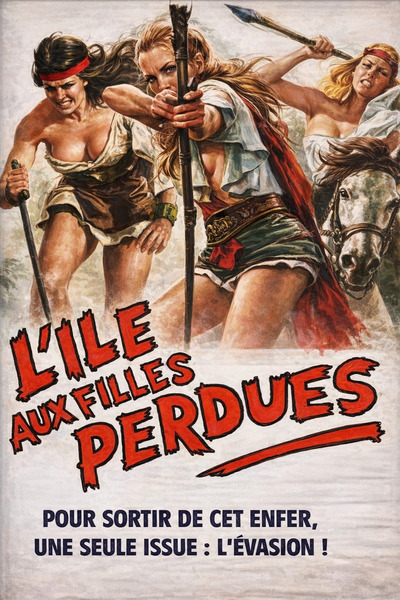 I actually ended up watching this one twice. The first time, on Tubi, was one of the worst prints I have ever seen. It was cropped and the color was so washed-out I could barely tell it wasn’t in black and white. However, the film itself was decent enough to get me hunting for a better copy. YouTube for the win: I found on there a glorious ‘scope version, with tints that fairly pop off the screen (compare and contrast) – and fifteen minutes longer, too. It’s a genuinely good-looking movie, and I don’t mean the copious quantities of attractive continental actresses. Well, not just them, anyway. This Italian-French co-production is an early example of the European women in prison genre, here with a historical bent.
An opening caption tell us this takes place at the end of the 17th century. Though that doesn’t quite fit with other elements, which seem around the French Revolution. Regardless, the government ship off their female prisoners to an island near French Guiana. There, they pan for gold, indulge in community sing-alongs and get eaten by alligators. The latest arrivals include Martine Foucher (Mercier), a noblewoman imprisoned for political reasons. There, she’s reunited with her sister, Jeanette (Ranchi), although she has assumed the identity of another, deceased prisoner. It’s a rough life. The only respite is if you sleep with the sleazy governor, Lefèvre (Muller), or his guards. Martine gets involved in an escape attempt, plotting to take some of the gold with them. It does not go well.
However, things look up with the arrival of new prison boss, Henri Vallière (Madison), who is much more compassionate towards the inmates, telling the staff, “They are not here to be tortured”. However, he is an impostor, not actually the naval officer he’s pretending to be. For Henri is a pirate, planning to stage a heist and steal all the gold. So he doesn’t truly care for the prisoners initially, though proves to be a dab hand at wrestling large reptiles. Key word: initially. Naturally, he develops feelings for Martine. This still leaves the inmates unsure of whether to turn Henri in, or throw their lot in with him.
They eventually decide to fight alongside Henri and his men, in exchange for a shot at winning their freedom. To be fair, this does only occupy a few minutes towards the very end of the film. After Henri’s plan gets revealed, the brisk and entertaining pace the movie had maintained to this point slows considerably. Instead, there’s a bit too much relationship shenanigans: I much preferred the earlier sections, where the women were actively engaged and had agency. For obvious reasons, given this was the early sixties, don’t expect nudity, although there is cleavage, and I concur with another reviewer who noted the similarity of Margaret Rose Kiel to Brigitte Bardot. Better than expected, providing you can find the decent print.
Dir: Domenico Paolella
Star: Michèle Mercier, Guy Madison, Paul Muller, Federica Ranchi
The good YouTube print is embedded below.
 This is a prequel to Argentinian cop movie
 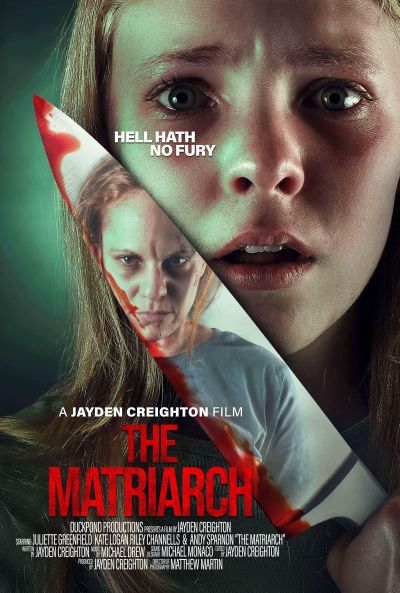 I’m always amused when I check the reviews on the IMDb for a film, and they are almost all “Totally amazing!” or “Worst film ever!”. The former tend to come from the movie’s friends; the latter, from people miffed by the positive reviews, and seeking to counter them. The reality is usually somewhere in the middle, and that’s the case here. Given this was reportedly made for forty thousand dollars – and those are Australian dollars, which right now is about 67 US cents – it’s quite impressive, and certainly doesn’t look low budget, despite a cast of basically three and a single location. However, it’s a film where, if anyone had behaved sensibly, proceedings would have been all over in about ten minutes.
  Bella Thorne’s struggle to appear in a film which reaches three stars on this site, continues unabated. While probably not helped by my tendency to confuse her with Kristen Stewart, that’s five attempts now. Although, for a minute here, I thought this might be the one where she finally cracked it, with a potentially interesting first half. But it could not sustain itself, and as the final credits rolled, and I saw Guinevere Turner’s name as the co-writer… Yeah, it all made sense. I mean, she wrote
  ★★½
★★½ There’s a very strong start here, and this makes the way it implodes at the end all the more disappointing. The film certainly hits the ground running. It’s 1978 in rural California, and ‘Scorpion’ Joe Clay (Hébert) is fleeing from the scene of a botched bank robbery. His wounded partner in crime is bleeding out in the back seat, and there’s a hostage, bank customer Vivian Fontaine (Bell), in the trunk. But when he pulls off the road to sort things out, freeing Vivian so she can help, we discover there are much worse things in the desert than scorpions. For Joe quickly gets his head blown apart.
  For whatever reason, I had a strong sense of deja vu while watching this, but I’ve been unable to track down any record of me having written it up. I may be confusing it with
 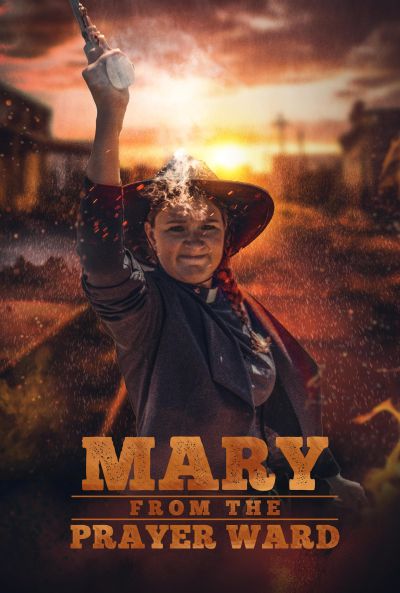 I mean: Stetson wearin’, six-gun shootin’ country gal, on a mission to slay demons, vampires and things that go bump in the West? Yeah, it’s like that. Mind you, there’s a rough start to this, with three minutes of what is likely a top contender for the worst acting of 2026. I guess it’s good to get it out of the way early, and it does make the rest of the cast look like Oscar candidates in comparison. To be fair, Jones is decent enough in the title role. Even when lumbered with some pretty clunky globs of exposition about a 17th-century Satanic cult, she is generally tolerable, and occasionally above that.
 ★★
★★ I have to give this credit for being something different. A vampire sports movie? Not a genre cross I’ve seen before. Especially when the sport is… um, modern pentathlon, the least-watched member of the modern Olympics. It’s a five-discipline event, based on the skills needed by a cavalry officer: running, shooting, fencing, swimming and horse-riding. All five play their part here, mostly in the form of Marcia Lorenz (Dordel), a former pentathlete, who is now a hunting guide. Well, was. She just got fired, and has absconded with valuable antique documents belonging to the customer who was responsible. Driving through remote woods, she stops to help a woman by the road, and that’s where things kick off.