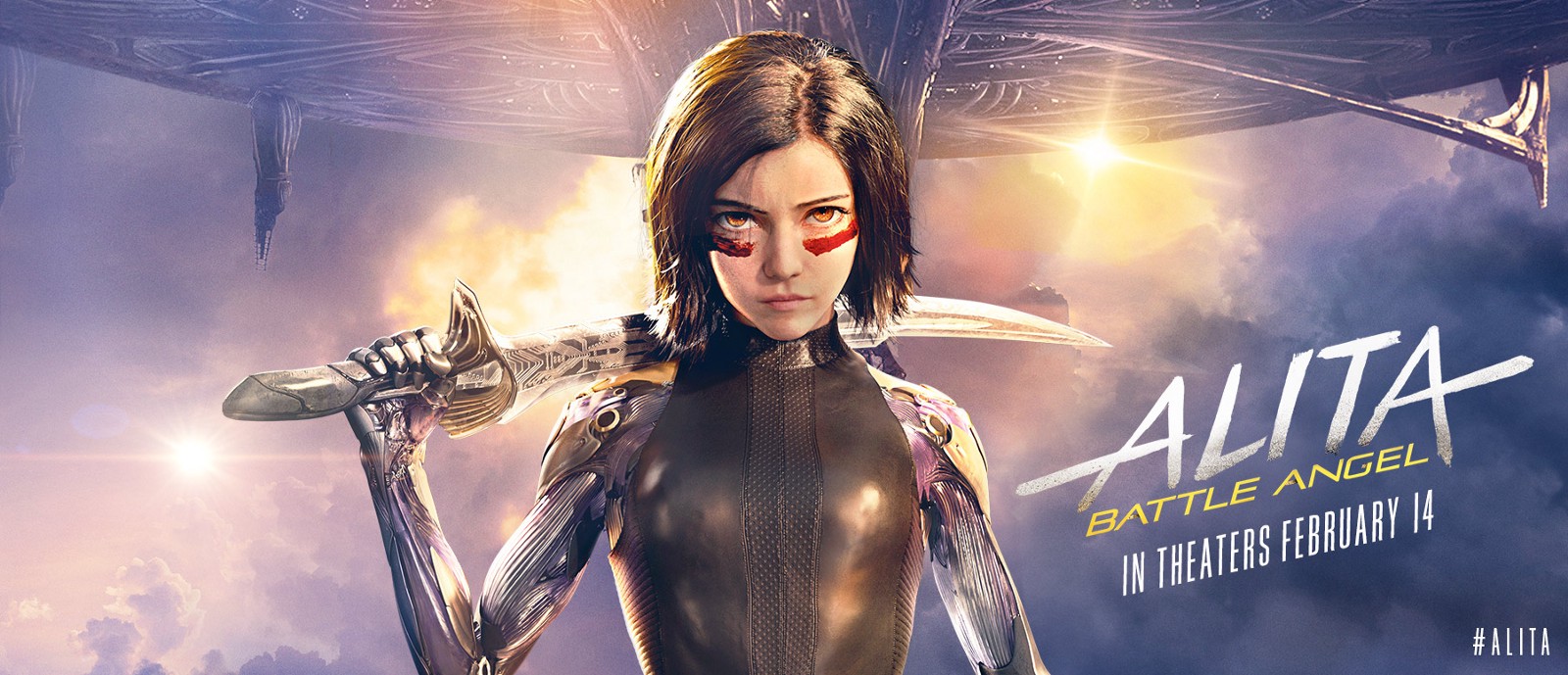
 ★★★★
★★★★
“Mechanical Pixie Dream Girl.”
 Depending on your definition, this is perhaps the most expensive action-heroine film of all time, estimated at more than $200 million before tax incentives. Given the fate of live-action adaptations of manga in the West, most recently Ghost in the Shell, this was always going to be a risky investment, even with the name of James Cameron, the most successful movie-maker in history, attached as a producer. At one point, people were predicting a bomb of Mortal Engines size. While Alita seems to have escaped that fate, it’s going to have to do very well in both China and Japan, the two remaining territories, if it’s to turn any kind of profit, never mind start a franchise.
 That’s a shame, because this is a solid, well-made piece of science-fiction, which does a particularly good job of creating a massive, epic world on the cinema screen. Rodriguez has been squeezing every penny out of his budgets since El Mariachi, and while there may not be much apparent overlap between Alita with Shark Boy and Lava Girl, the latter franchise was excellent training for RR in meshing computer graphics with actors. Sin City also laid similar groundwork, and helped set up the director with the chance to go big or go home. And there’s no doubt: Rodriguez went big. This was my first cinema trip of 2019, and was fully justified.
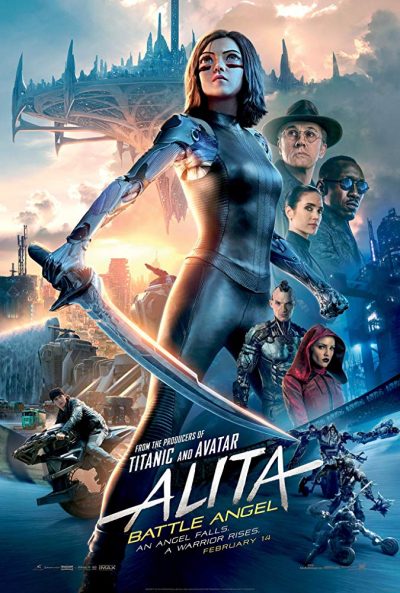
Having recently read the original manga, I was struck by how faithful the film was to most aspects. Right from the get-go, with Doc Ido (Waltz) finding the shattered remains of Alita (Salazar) on the scrap-heap below Zalem, there were shots which could have been story-boarded by the graphic novel. [Again, something Rodriguez also did in Sin City] Ido, in particular, looks exactly like I imagined him, and the same goes for Vector (Mahershala Ali), the shady power behind the scenes in Iron City, as well as Zapan and the rest of the bounty hunters.
The story is generally quite faithful, too. After her rescue, Alita tries to recover her past memories, becomes a bounty-hunter, falls in love with human boy Hugo (Johnson), takes up the brutal sport of Motorball, and experiences personal tragedy. However, the order of the events is shifted: in the manga, the tragedy is what spurs her entry into the Motorball arena. The film also adds Ido’s ex-wife, Chiren (Connolly), a character who was not in the comics, though does appear in the OVA. Here, they had a disabled daughter named Alita, who was killed by one of Ido’s Motorball goons. It’s a rather clunky subplot, which doesn’t add particularly much, beyond explaining from where Alita v2.0’s body came.
There has been much debate over Alita’s eyes, which have been CGI-increased in size to an extent rarely if ever seen in a live-action film. Of course, she’s a cyborg, so whatever. However, it is still something of a distraction, even though it appears they’ve been toned-down in size from early trailers, where it appeared her eyeballs would have occupied most of her brain’s frontal lobe. The eyes are one of the hardest things to get right with computer graphics, and when it isn’t, the results can be horrible, as with the resurrected Peter Cushing in Rogue One. This is better, and at some moments does enhance things, basically acting as a megaphone for Alita’s feelings. However, it also plays into the film’s main weakness: an apparent lack of genuine emotion. I’ll circle back to that a bit later.
As a spectacle, this is grand, offering sweeping vistas of a future world, densely populated with people, things and those in between. As an action movie, it works pretty well too. The two best set-pieces are the bar-brawl where newly-registered bounty hunter Alita proves her worth to her colleagues, and the Motorball game, where everyone else taking part cares only about killing Alita. There’s a palpable sense of progression in her skills over the course of the film. Initially, she’s clearly raw and unfocused, but after she is paired with her “berserker” body… [Inevitably, it has been the subject of PC whining, about it looking ‘too feminine’] Hoo-boy. By the end, she’s a weapon on mass destruction, regardless of the opponent’s size.
 And speaking of the end, one frequently-heard bit of criticism is that the ending is too “open,” apparently fishing for a sequel. I can’t say I felt that way at all. There’s certainly scope for more movies, apparently involving Alita going after the mysterious Nova. Yet the main thread of the film, involving Alita and Hugo, is definitively wrapped up. In comparison, say, to Marvel films, which almost inevitably have an in- or post-credit sequence blatantly signposting the next film, this felt conclusive. While there is perhaps need for a greater sense of escalation, or a bigger climax (that Motorball battle is trivial in its consequences), I’m largely baffled by complaints about the “lack of a genuine ending.”
As mentioned above, a more significant issue is that I hardly “felt” anything for any of the characters. Ido – stuck between paternal instincts of protection and a desire to allow Alita self-determination – perhaps came the closest. The relationship between Alita and Hugo is supposed to provide the film’s emotional engine. But between the former’s CGI make-up and the latter’s generic blandness, it doesn’t make much of a dent. There’s a scene where she literally tears out her heart and gives it to him: everyone, including the film itself, seems faintly embarrassed by the whole incident. Worse still – minor spoiler – the movie even goes so far as to kill a dog, without generating more than a blip of impact. Somewhere, John Wick shakes his head, sadly.
I was initially concerned about the PG-13 rating – not least because the first trailer before the film was for UglyDolls [an animated movie “about acceptance, diversity, joy and friendship” according to its site]. I needn’t have been: this is more From Dusk Till Dawn Robert Rodriguez than the Spy Kids version, with a gleeful approach to the semi-mechanized carnage. For I think it helps on the censorship front, that most of the carnage in inflicted on cyborgs, who are largely able to take a licking and keep on ticking. The manga was heavily into black market spine-ripping; here, it’s mostly limbs, which is slightly more kid-friendly, I guess.
In the end, this is just about everything for which I could have hoped. While I don’t necessarily agree with all of the artistic choices, the positives greatly outweigh the weaknesses. Although this is a low bar (hello, Speed Racer), it’s certainly the best manga/anime adaptation to come out of Hollywood. It’s a world I’d love to see explored further: whether Rodriguez and crew get the chance to do so or not, will remain in doubt until the final box-office figures arrive. Fingers crossed.
Dir: Robert Rodriguez
Star: Rosa Salazar, Christoph Waltz, Keean Johnson, Jennifer Connelly




 While not perfect, I think this one will probably end up sticking in my mind longer than most of the books I read. For one, it helps being a stand-alone and complete work, rather than the first of a multi-volume set. While I understand the rationale behind the latter – that’s where the bread and butter of writing income is made – it was refreshing to get a beginning, middle and proper end, without a cliff-hanger or opening for sequels. It was also different in content, rather than being yet another book which drops fantasy creatures like elves or vampires in a contemporary setting. I’ve seen enough of those this year, thankyouverymuch.
 Space freighter pilot Jason (Sheridan) has his craft hijacked, and is forced to crash-land it on a deserted planet. Blinded and alone, things look grim for him, until he’s fortunate enough to be found by android Reyna (Guzzetta). She’s the product of a maverick genius, who took refuge on the planet, but recently died: she needs Jason, as the systems which power her require a human presence in order to operate. And he needs her – in particular, her advanced combat skills – in order to protect him, both from the planet’s hostile fauna, and the hijacker’s pals, who have followed him down to its surface. Yet, is Reyna entirely trustworthy?
 It’s not often that a film cost less to make, than the television set on which I watched it. But it appears this was the case here, with the budget reportedly coming in at five hundred pounds. No, there’s not a “thousand” missing from that. £500. What you get is probably not too far from what you would expect for that – some of the aerial photography and locations do appear to represent good value for money. Budget isn’t the real issue here though. This British film’s main problem is the drastic shift in story for the final third, when it suddenly morphs, for no reason, from a SF/thriller, into a full-on zombie apocalypse which the makers have neither the budget nor the talent to depict.
 This small-scale production – a cast of little more than half a dozen, and one location, not counting the park scenes which bookend it – packs a wallop significantly above its weight. Psychiatrist Jimmy Fonda (Neil) is brought into a military facility by an old friend, Olivia (Andersen), to interview a young girl, Ellie (Liles), who is being held there. To avoid pre-judging her case, Fonda deliberately avoids reading the documentation about her with which he has been provided. But the stringent security precautions (“In the event the subject escapes the restraints, drop to the floor and cover your head”) under which she’s held, should give him a clue that this is far from a normal nine-year-old. If it didn’t, the conversation with her which follows certainly does.
 The synopsis starts, “
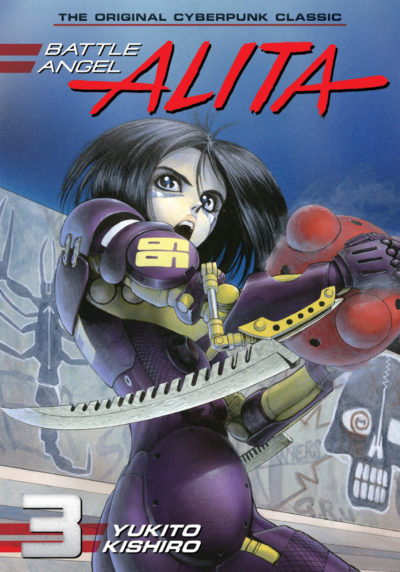
 There have been two (or perhaps three) subsequent comic-book incarnations. First was Battle Angel Alita: Last Order, originally published from 2001-14 in Japan. Then came Battle Angel Alita: Holy Night and Other Stories, though this was a collection of four side-stories – hence the “perhaps three”! Most recently, we had Battle Angel Alita: Mars Chronicle (2015-17). Two of the volumes from the first incarnation were adapted into a pair of 30-minute OVAs (Original Video Animation), released in June 1993. Rumblings of a live-action version have been around almost as long, with James Cameron securing the rights to the comic in 1999, having been introduced to the property by Guillermo Del Toro. By the mid-2000’s, a script had been created, but after developing the project in parallel with Avatar, Cameron decided to devote his efforts to that instead, and Alita went on the back-burner.
 wever, there’s still an amazing amount going on in terms of story-line and universe-building. You can easily see how the feature film will only be able to cover perhaps one-quarter of the series. I presume it will begin with the origin story, in which Ido finds the head of Alita in the scrapyard beneath the floating city of Tiphares, and gives it a cybernetic body. He’s a part-time bounty hunter, only to find out quickly, the combat abilities of his new charge far surpass his own. Unfortunately, she has little or no memory of her prior life; where she got these skills and how she ended up in the scrapyard is only revealed well into the series.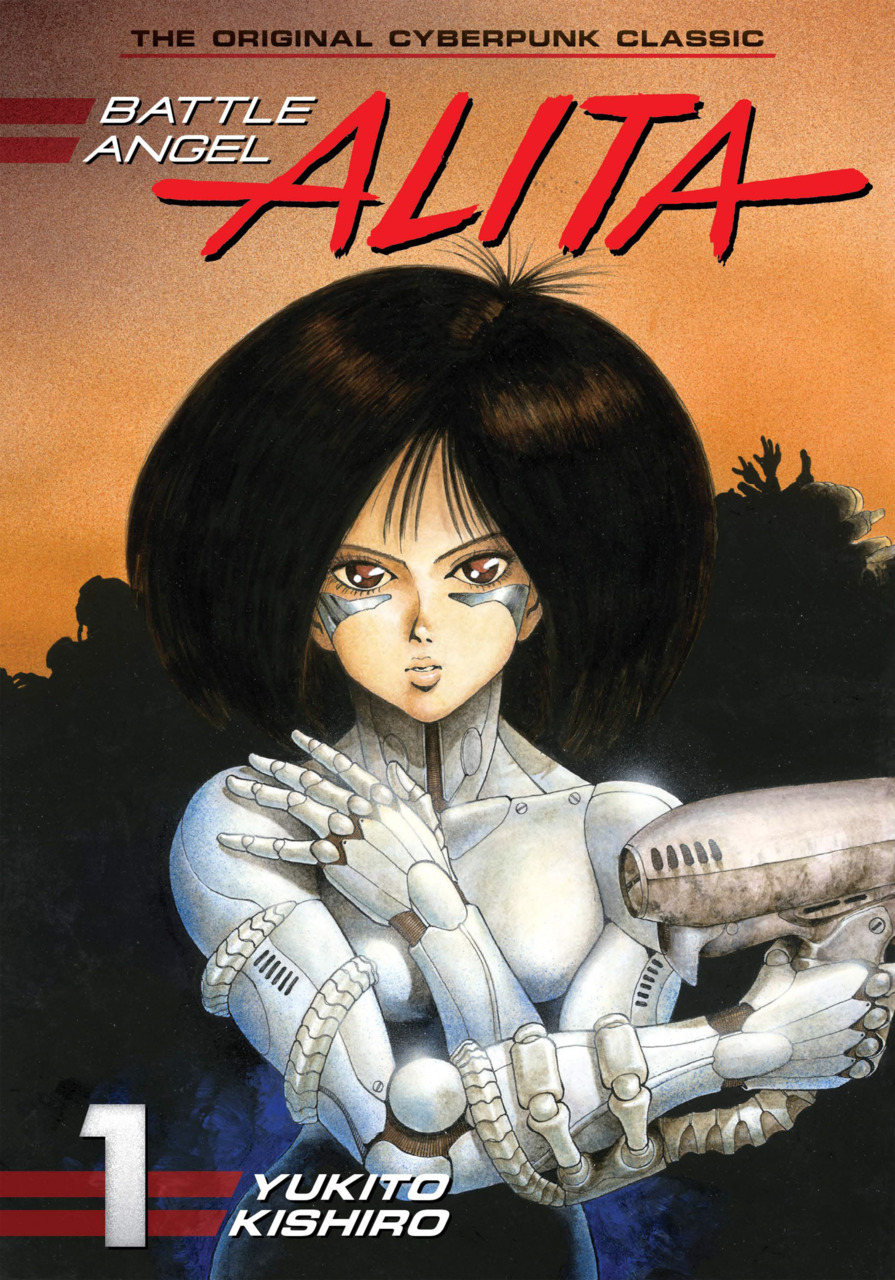
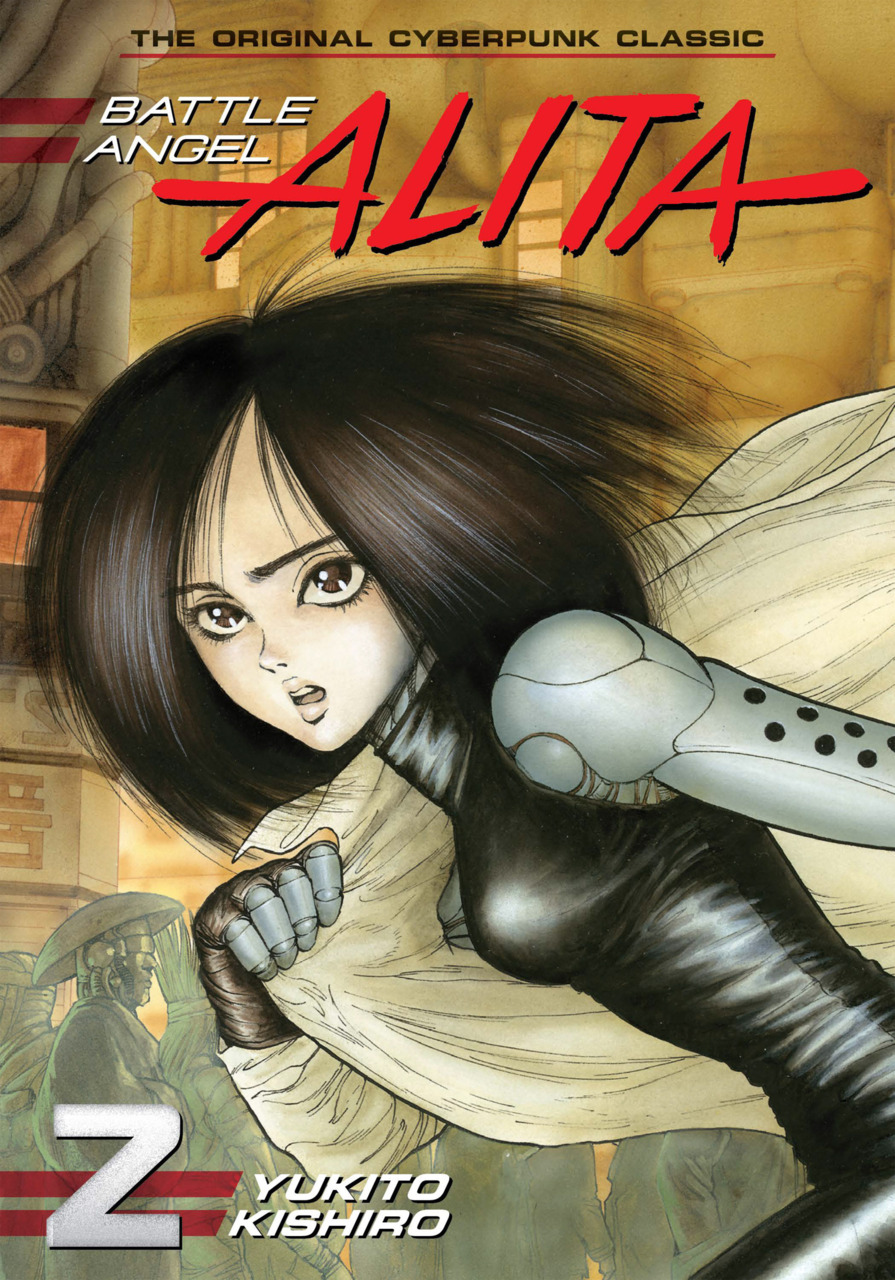
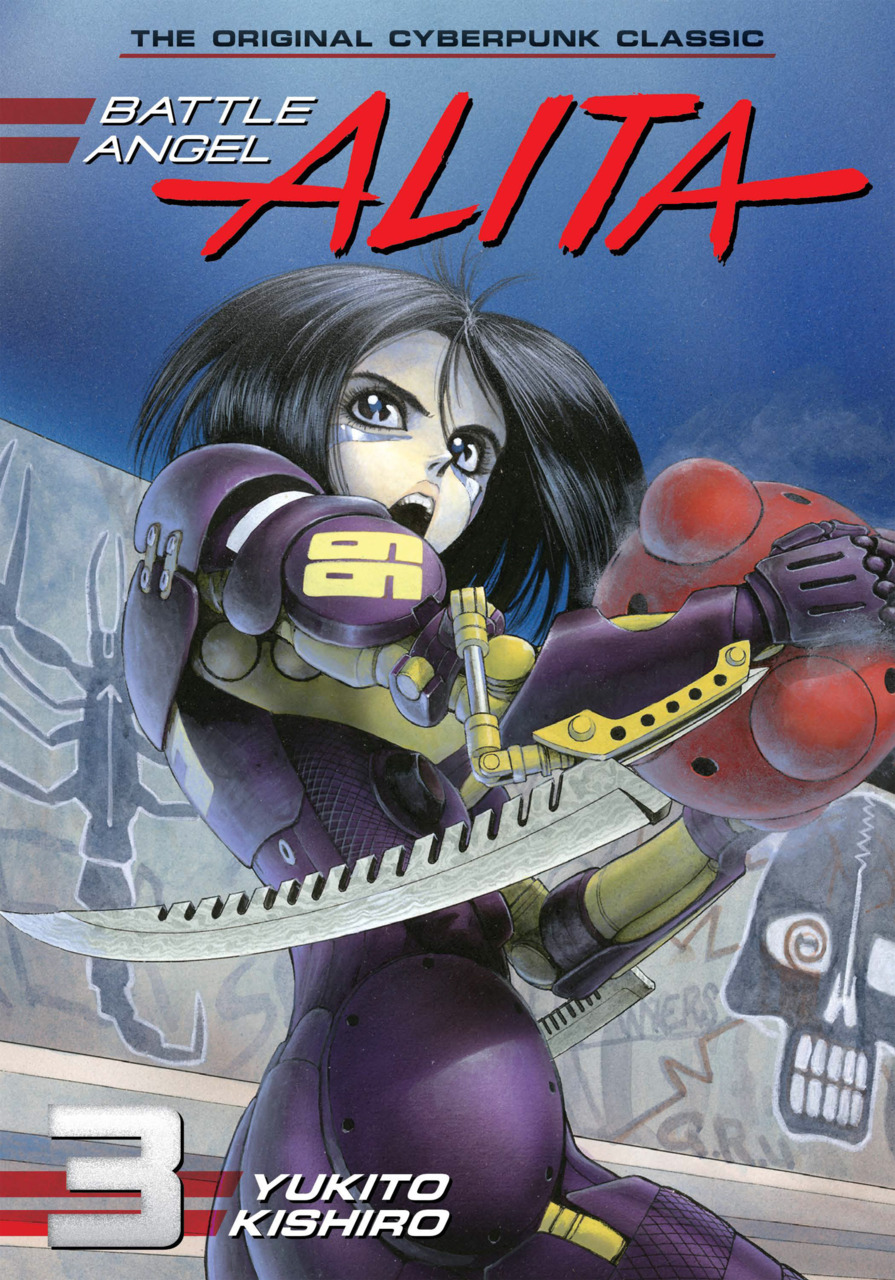



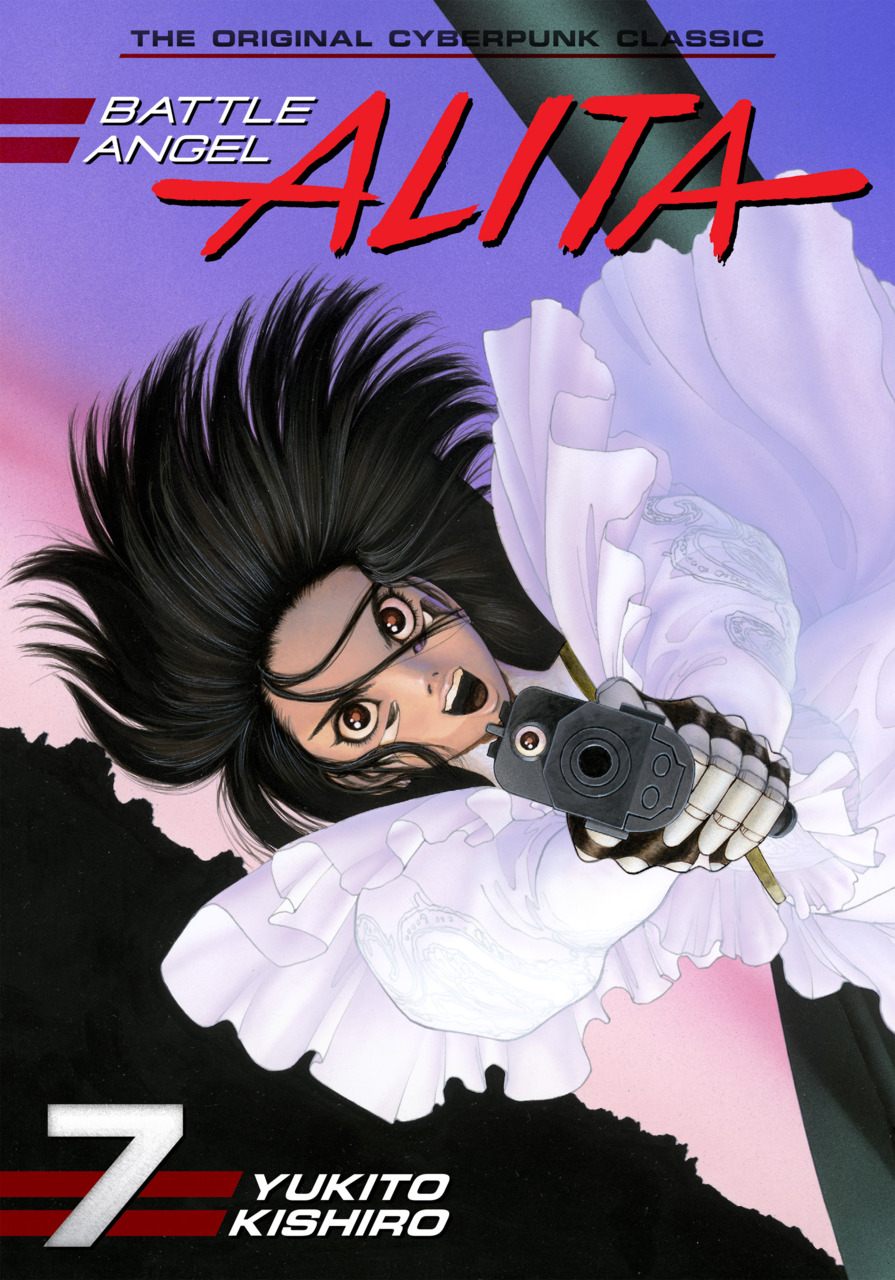
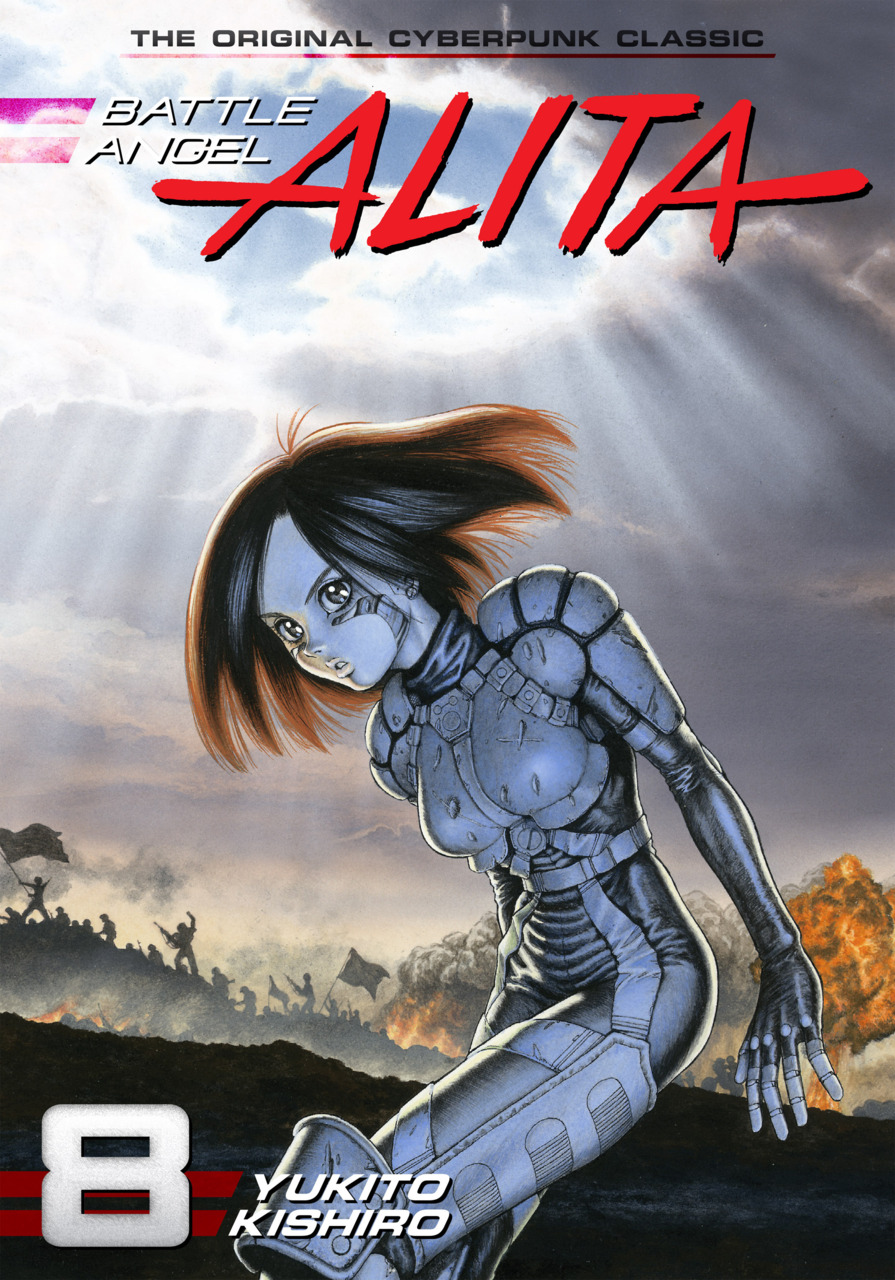
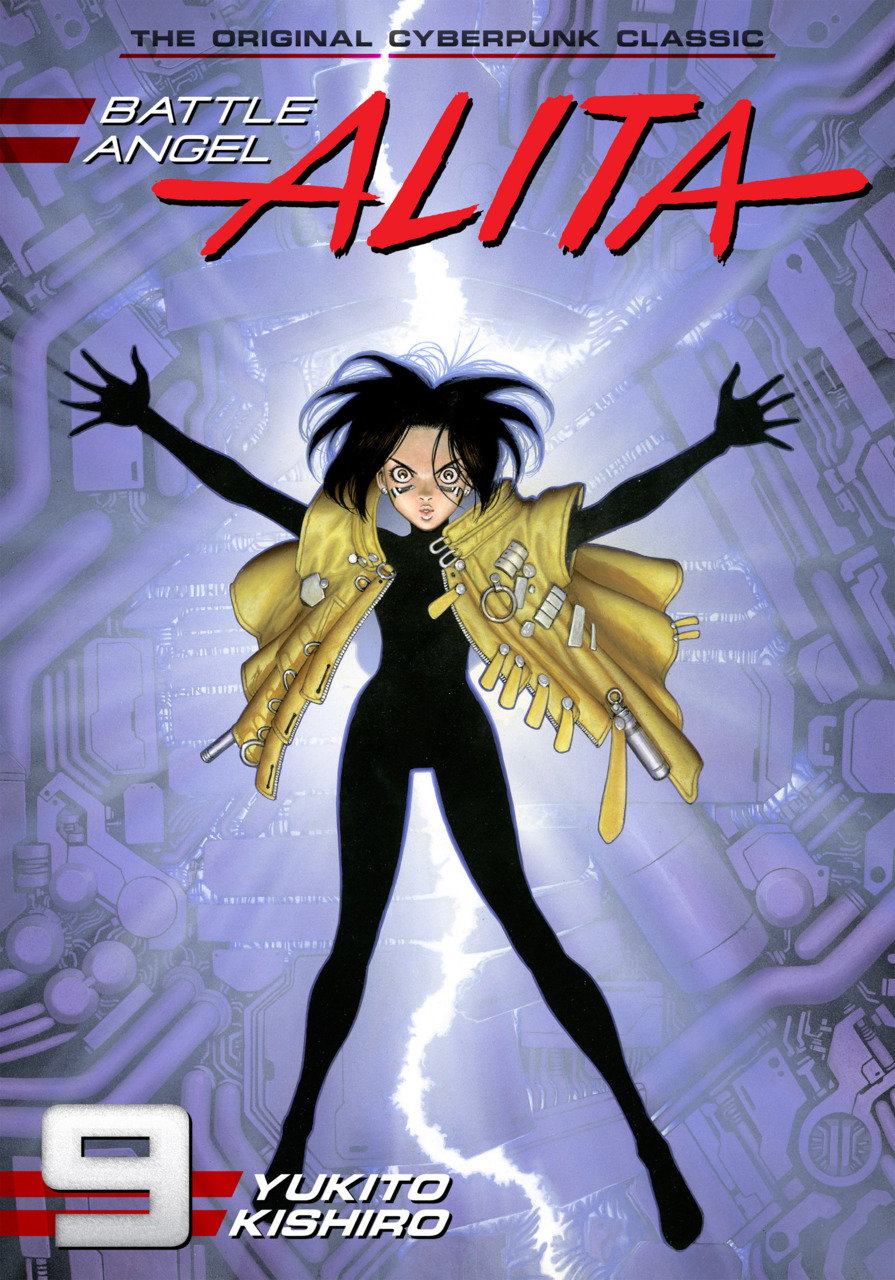
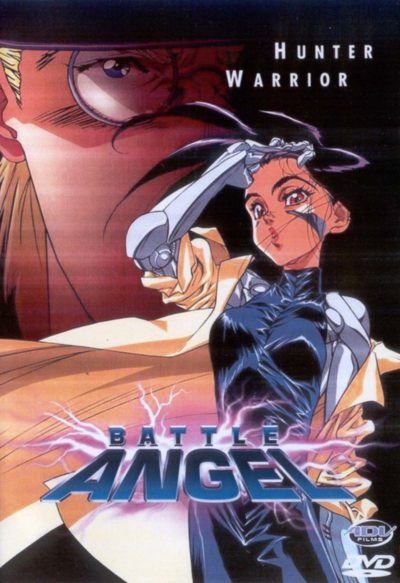 Watching this after having read the manga version, it feels like the anime version can do little more than scratch the surface of the world of Tiphares, in the barely fifty minutes it has to work with across its two OVA (Original Video Animation) volumes. The stories here, originally released in 1993, cover the first two section of the manga, and it looks like much of what we see here will also be included in the live-action film next February. Slightly confusing matters, is the way this uses the original Japanese names. So Tiphares becomes Zalem here, and Hugo is Yugo. Most oddly, the heroine is not called Alita – hence the absence of her name from the title – but Gally. To avoid further confusion, I’m going to be consistent with our other articles on the topic, and stick to the translated ones for what follows.
 From the director of