




★★★
“Fall me twice…”
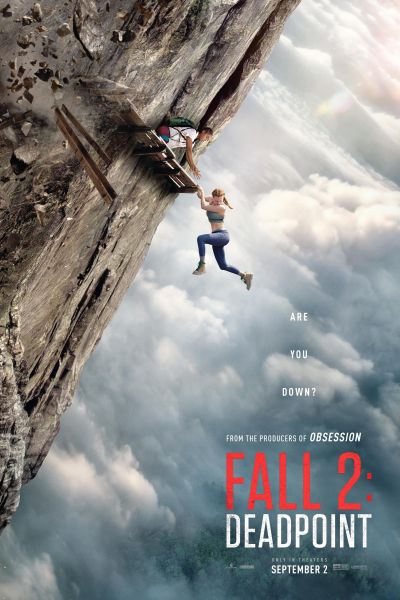 The original Fall was a sleeper hit, which found thoroughly deserved new life on streaming. I watched it again recently on BluRay, and yep: it still triggers a visceral, physical reaction in me, unlike almost any other film. A sequel was inevitable, and probably equally as inevitably, it doesn’t reach the same heights – pun absolutely intended – as the original. While pleasant enough entertainment, it comes over with roughly the same impact as a mid-season episode of American Ninja Warrior. Though it wasn’t long before Chris was re-confirming her desire to avoid any leisure activity involving heights (hanging Halloween decoration from the garage is about her limit), my palms stayed more or less dry throughout.
It follow Jax (Slater), the younger sister of Shiloh (Gardner, who appears in flashbacks), the daredevil from the original movie. She’s contacted by Luce (Thomas), a friend of Shiloh’s. She convinces Jax to join her on a plank walk in Thailand, clearly inspired by the notorious Mount Huashan plank walk in China. Even the shape of the mountain here is similar, though the real location is much shorter, little more than a hundred yards long. Naturally, things do not go well. They are cut of from their guide, Jon (Brittney), by one rockfall; when trying to make their way back, another cuts off the return path. And with this being an unauthorized expedition, rescue will not be coming for them any time soon.
It does remain well-made, and there is a genuine sense of being a long way from the ground. So I’m not quite certain why it never engaged with the primordial part of my brain in the same way as its predecessor. I was somewhat less impressed with the characters, whose count of poor decisions certainly surpasses the last installment. Luce, in particular, seemed more irritating than anything, though to be fair, later revelations do provide some explanation. There’s also a sub-plot involving drug smuggling, which doesn’t make a lot of common sense, unless the price of fentanyl in Thailand is about ten times the price here. These problem infect in particular the first and third acts, replacing the smooth simplicity of Fall.
However, the middle still has its share of credible chills, with the horizontal nature of the route – albeit over a drop of several thousand feet – being what generates the Ninja Warrior similarities. Swinging and progressing laterally becomes the key to survival, using the remnants of the plank walk as tools, although they sometimes become hazards. Figuring out the mechanics for this is likely where the movie is at is strongest, focusing strictly on Problem > Solution > Repeat. Everything else is an unnecessary burden, because the viewers disbelief is already suspended out of bare necessity. If you need to ask “Why?” after the first shot of the precipitous drop below, this is probably not for you. Competent enough to make me amenable to Fall 3, albeit only just.
Dir: The Spierig Brothers
Star: Harriet Slater, Arsema Thomas, Tom Brittney, Virginia Gardner
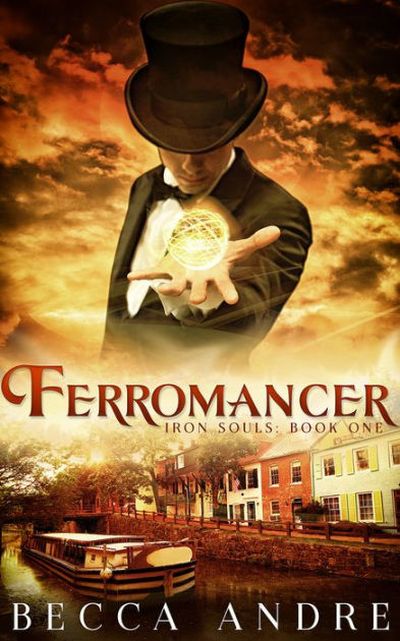 Bridget ‘Briar’ Rose is a rarity: a woman who runs a canal boat, transporting cargo along the waterways which form the Ohio & Erie canal network. However, her livelihood is under threat. The increasing growth of the railway as an alternative method of transportation is increasingly a rival for the jobs she takes, and her cousin, Andrew, is looking to see her barge out from under Briar, so he can invest in the railways instead. However, she suspects he is working with an outlaw: a ferromancer, one of the mages who revolutionized industry in Europe, but who had supposedly been wiped out two decades ago due to the threat they posed.
  I don’t think I’ve ever seen an Italian kung-fu movie before. To be fair, the bulk of the lifting in that department is done by Chinese actress Yaxi Liu, who was a stunt double in the live-action
  Really, this is so shameless in its appropriation as to be almost adorable. Cop
  Bec ‘Rowdy’ Rawlings is an Australian mixed martial-artist, who fought in the UFC for a bit, and then became the first woman to win a bare-knuckle boxing world title. This documentary covers her life, from growing up as a teenage tearaway, through motherhood transforming her character, her discovery of mixed martial-arts, a disastrous and highly toxic first marriage, and escaping that to become eventually the Bare Knuckle Fighting Championship federation’s Women’s Featherweight World Champion. Phew. That’s quite a lot to get through in less than eighty minutes. The film does a decent job of covering its bases, through interviews with Bec, and her family and friends, plus no shortage of archive footage of Rawlings, both in and out of the ring.
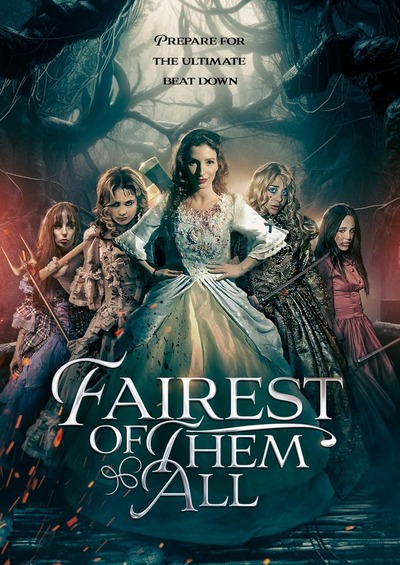 There’s a recent trend for horror films based on public domain characters. The most infamous is likely Winnie-the-Pooh: Blood and Honey, but traditional fairy tales have also been exploited to the same end. This is a sequel of sorts to the same studio’s Cinderella’s Curse (which I have not seen), but basically hurls every princess of legend into the mix. The excuse is Lewis Carroll’s Mad Hatter (Santer), who in this incarnation is a Joker-like psycho, who has kidnapped Alice (Desmond) and made her his slave, courtesy of his magic. He now wants a bride, and to this end abducts a selection of princesses and others e.g. Tinker Bell, as potential candidates. They will fight to the death. Last one alive becomes Mrs. Hatter.
 I liked the idea of this. A gang of five thieves, four women and Liev, give up the game after a robbery goes wrong and Liev gets arrested. He doesn’t give up his accomplices, who include his pregnant girlfriend Willa (Banus), and goes to jail. Six years later their daughter falls ill, and desperately needs matching tissue to repair her heart valve. The bad news: it has to be her father, who’s still in prison. Worse news: he’s in a coma, having been beaten up on the orders of the governor. Willa decides to put the band back together, along with an unlicensed surgeon, to break
  Well, after taking ten years to get from the third film to the first, the gap between first and second is
  El Jardinero
 If you fed an AI all the sports movies ever made, and then asked it to write a script, what you’d get is likely something close to this. Here’s a challenge: write down ten clichés you find in a film like this, then watch the movie (conveniently embedded below), and see how many show up. I’m willing to bet most of those on your list would be present here. The main saving grace is that the execution is done with a complete lack of self-awareness. It feels as if the writers genuinely had no clue they were treading a path which was more of a groove. Everyone involved in this is so earnest, it just about gets away with it.