



★★½
“Slime of your life.”
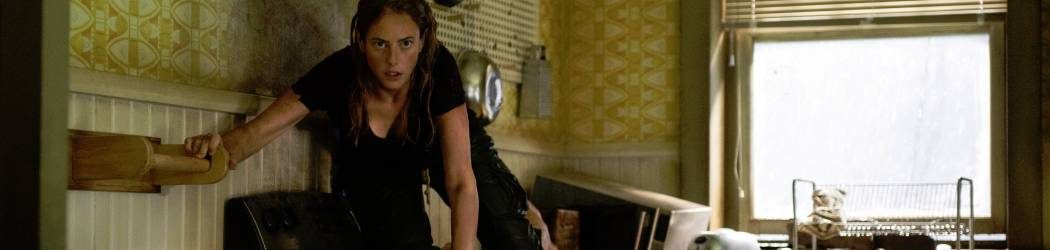
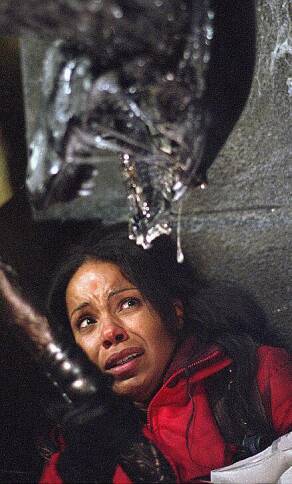 Initially inspired by a throwaway joke in Predator 2 – an alien skull in the Predator’s trophy cabinet – this has been some time in the making. Seven years have passed since the last entry in the Alien franchise, and fourteen since P2. Comics and video games have beaten the movie to the screen, and if truth be told, this film bears more resemblance to them than anything else. This is no surprise, given director Anderson helmed both Mortal Kombat and Resident Evil. Interestingly, it takes place pre-Alien, in the present day. A pyramid is discovered deep under the ice on an island near Antarctica; industrialist Charles Weyland (Henriksen) puts together a team to investigate, led by Alexa (Lathan), the kind of lady who free-climbs ice-walls for kicks. They soon find that the pyramid is a training compound where, every 100 years, the Predators come to hunt aliens, with humans hosts for the acid-blooded critters
It’s a totally ludicrous concept. The Alien life-cycle, from hatching, through infection and chest-bursting, to full-sized monsterhood, is now ridiculously fast. In an idea lifted from Cube, the pyramid floor-plan changes configuration precisely every ten minutes – even though the “minute” wasn’t invented (by the Babylonians, fact fans) when this supposedly “first pyramid” was built. And expending such effort on a stadium used a couple of hours per century is wildly implausible.
There’s never any doubt who the stars are here, and it’s not the humans, who engage in such cliched behavious as showing photos of their kids – which, as we all know, is a death sentence in this kind of film. In addition, they persist in using hand-held flares when they possess perfectly good flashlights, for no reason other than to create spooky shadows. Alexa’s bilingual sidekick Sebastian (Bova) is intensely irritating in both English and Italian, but fortunately the heroine herself makes a decent impression, improving as the film goes on in much the same way as Ripley did in the original. Of course, Lathan is not Sigourney Weaver – but neither was Weaver when she started. [Er, if you see what I mean…]
The film steps up towards the end, finally delivering what we all came to see: full-on, three-way carnage, climaxing in Alexa + Predator vs. the Alien Queen. I’d be lying if I didn’t say this was cool, and the thought crossed my mind: with two of the three combatants being female, is the Predator perhaps one too? If so, this would probably be the ultimate in brawlin’ broads. However, the best moment is actually a flashback to an earlier cycle, with the Predators atop a pyramid, up which thousands of Aliens are swarming. It makes you wish they’d dropped us altogether and just let the titular twosome go at it, head-on.
There are a couple of nice nods to the inspirations, such as Lance Henriksen’s presence in the cast, albeit not playing an android this time. Alexa at one point almost echoes Arnie’s line, “You’re one ugly motherfucker!”, though doesn’t get to complete it, thanks to the film’s PG-13 rating. It’s hard to deny the toning-down this requires hampers the production, limiting the amount of violence that can be done (to the humans, at least – on both Alien and Predator planets, this would likely still be rated R). The effects are mostly adequate to well-done, though Anderson’s style is to cut fast rather than linger so we could give them any scrutiny.
The end result is a disappointment that works better as a high concept than on the screen.  Part of the problem is that we’re never given any reason to root for anyone, from anywhere in the universe. The Aliens are the villains, who must be contained at any cost – fair enough. However, the Predators are equally opaque, and most of the human characters are a far cry from, say, Aliens‘ marine corps. Sure, they were sterotypes, but they proved you could quickly create endearing and memorable characters with well-chosen dialogue. In contrast, there are few memorable lines to be found here. Indeed, few moments will stick in your mind at all – and when they do, you may find yourself wishing they had slid right on past, such as the moment where a facehugger suddenly enters The Matrix. Hey, now there’s an idea for a crossover: Neo and Trinity take on the extra-terrestrials. Quick, where’s my typewriter?
Dir: Paul W.S. Anderson
Star: Sanaa Lathan, Raoul Bova, Lance Henriksen, Ewan Bremner
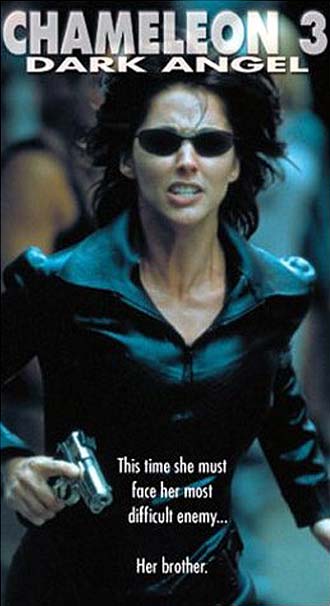
 Part three is a return to form, despite a title which might now seem suspiciously unoriginal, at first glance on the video shelves. But it actually predates James Cameron’s series, leaving his genetically-altered, motorcycle-riding loner firmly in the position of late-comer. The mathematics for this one are harder to define, since the ideas on view are…well, if in light of the first two movies, I’m reluctant to claim originality, they are at least taken from less obvious sources. There is thus an “X” factor to take in account here, where X may or may not be genuine inventiveness.
 I imagine no-one genuinely doubts the answer, but this adds a whole new plot twist, especially as the last time the Mongoose activated his weapon, its impact was pretty heavy. What happens when it’s used here is never really shown, and there is some scientific handwaving about the black hole absorbing all the energy, but it would be gratifying to think that it became necessary to destroy the city in order to save it. Not least because Cameron’s Dark Angel
 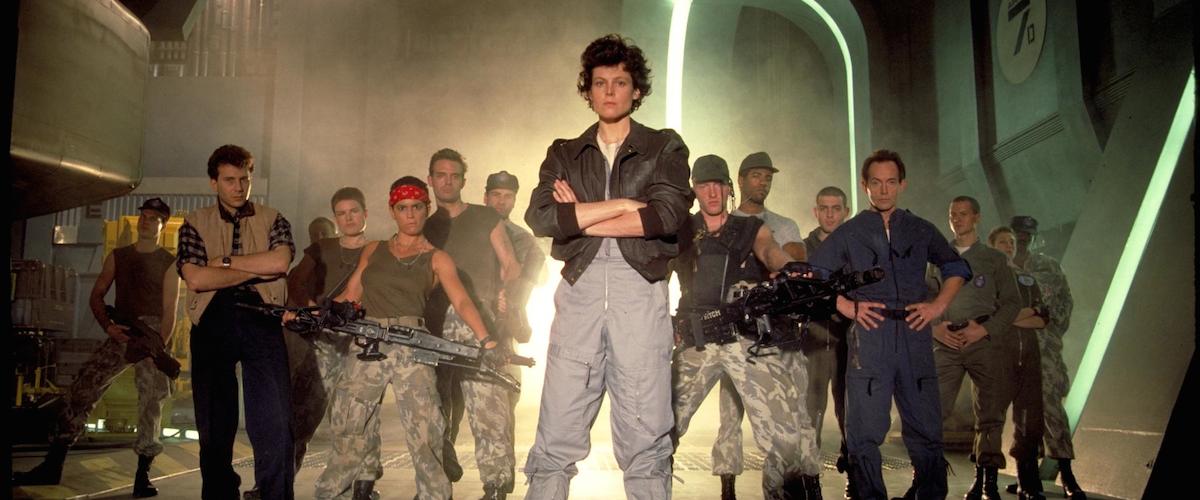 ★★★★★
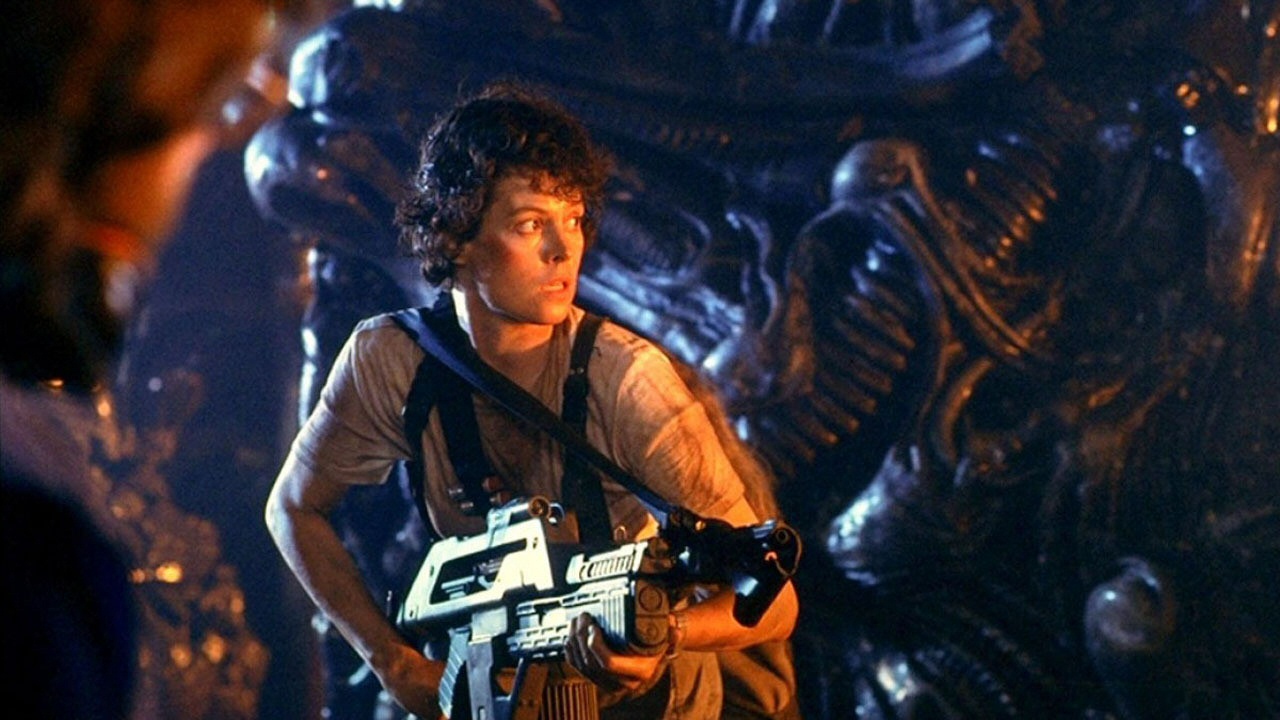
★★★★★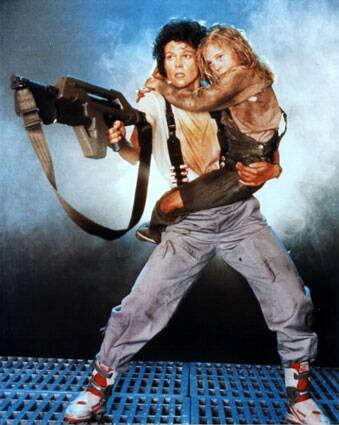 For in many ways, this is a Vietnam allegory. A technologically superior, arrogant military force lands in foreign territory…and gets its butt kicked by a ferocious enemy with no moral qualms, while the non-combatants are happy to plot their demise in pursuit of some other cause. It is likely also significant that Cameron worked on First Blood, Part II, which is perhaps why some reviewers e.g. the Philadelphia Daily News, referred to Aliens as “Rambo in space”.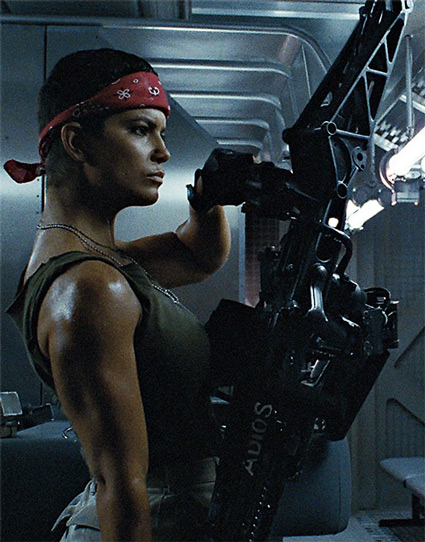

 There’s one sequence with Kam scurrying, lightning-fast, up a ventilation shaft (left) and a rather good brawl involving her that made me sit up and pay attention, offering hope for the rest of the movie. It’s a red herring. The last twenty minutes finally stop slavishly cloning Bruce Willis, with the villain not being who you’d expect (though if you think about who played the bad guys in the Die Hard trilogy, it’s not hard to work out). One good twist at the end is Kam recovering the “loot” and using it for her own ends, which extends her nicely amoral attitude. There’s also a nod to Kam’s not-entirely human origins, and how they affect her emotions, which would be a good avenue for future exploration.
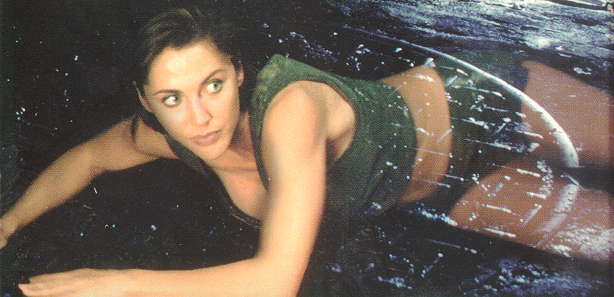
 The setting is the near-future, when corporations have taken over, and even the FBI is now the Incorporated Bureau of Investigations. The star is Bobbie Phillips, who plays Kam, a creation of the IBI. She was made as a special agent, with mostly human DNA, but also traces of cougar, falcon and chameleon. This gives her an interesting power: she can make her skin match her surroundings almost perfectly. Fortunately – or not – this skill is also possessed by her clothes, which is a bit of a plot clunker, designed to avoid both the traditional Invisible Man-styled floating shirts, and gratuitous nudity.
 ★★★★½
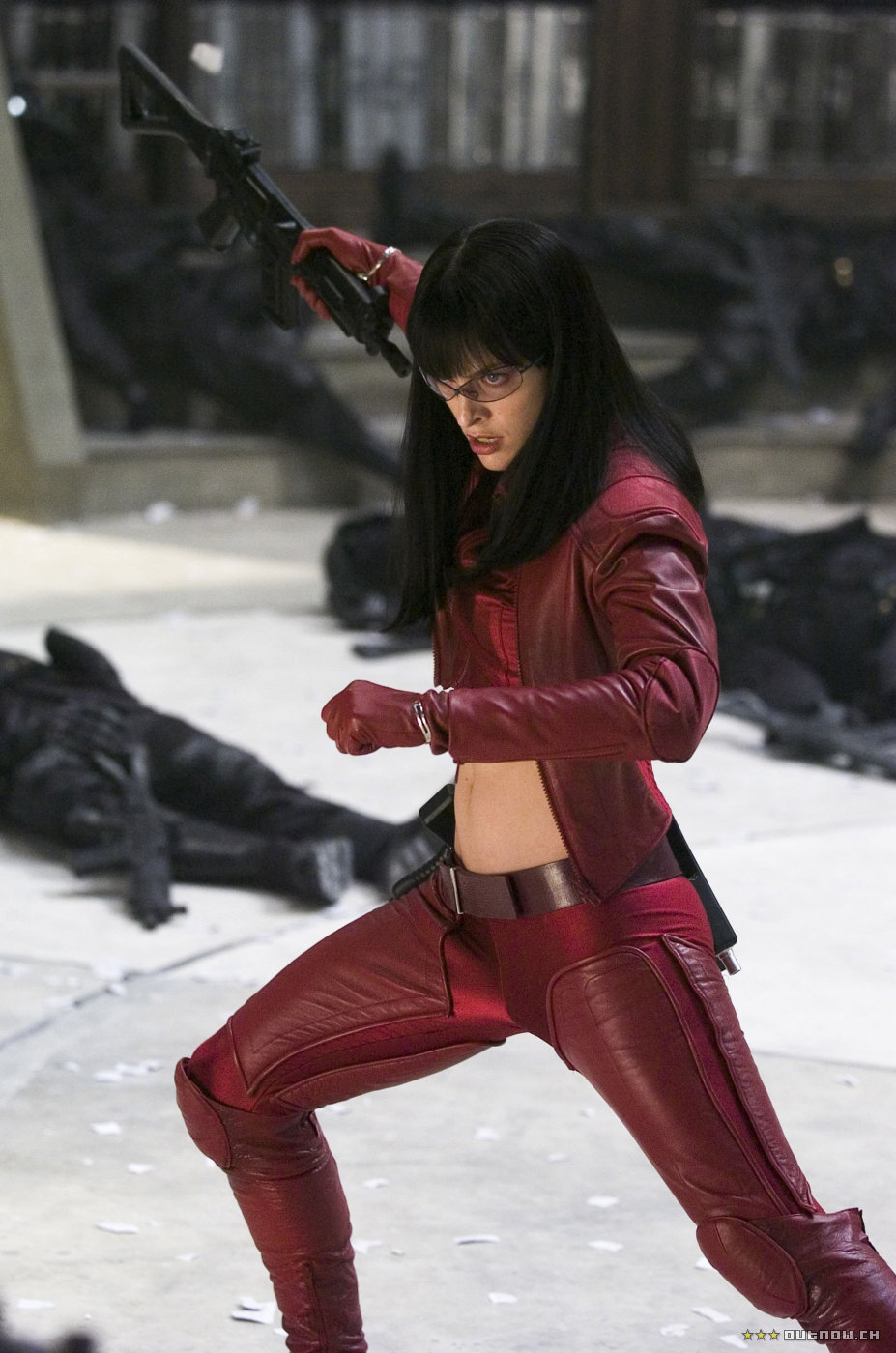
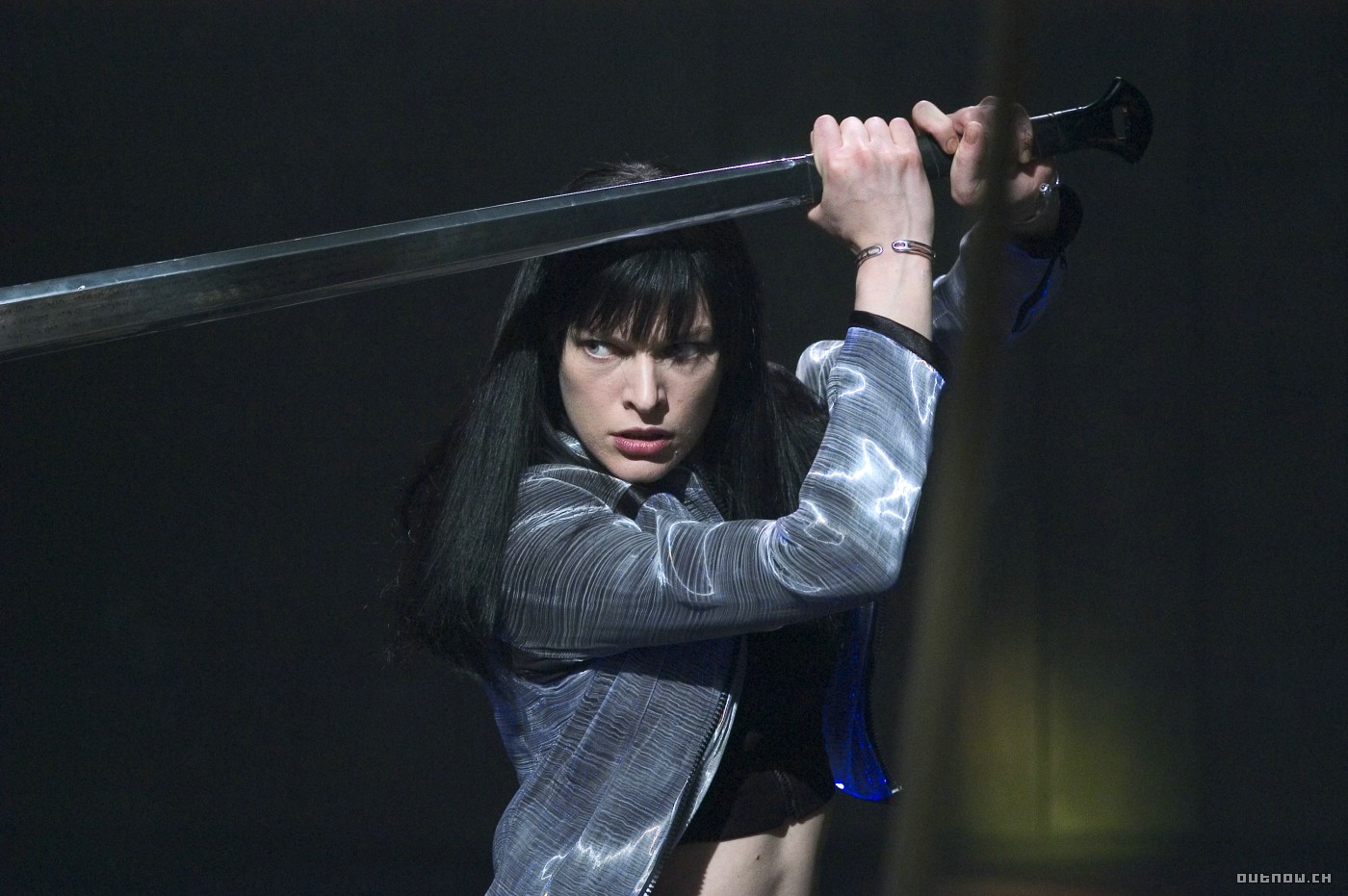
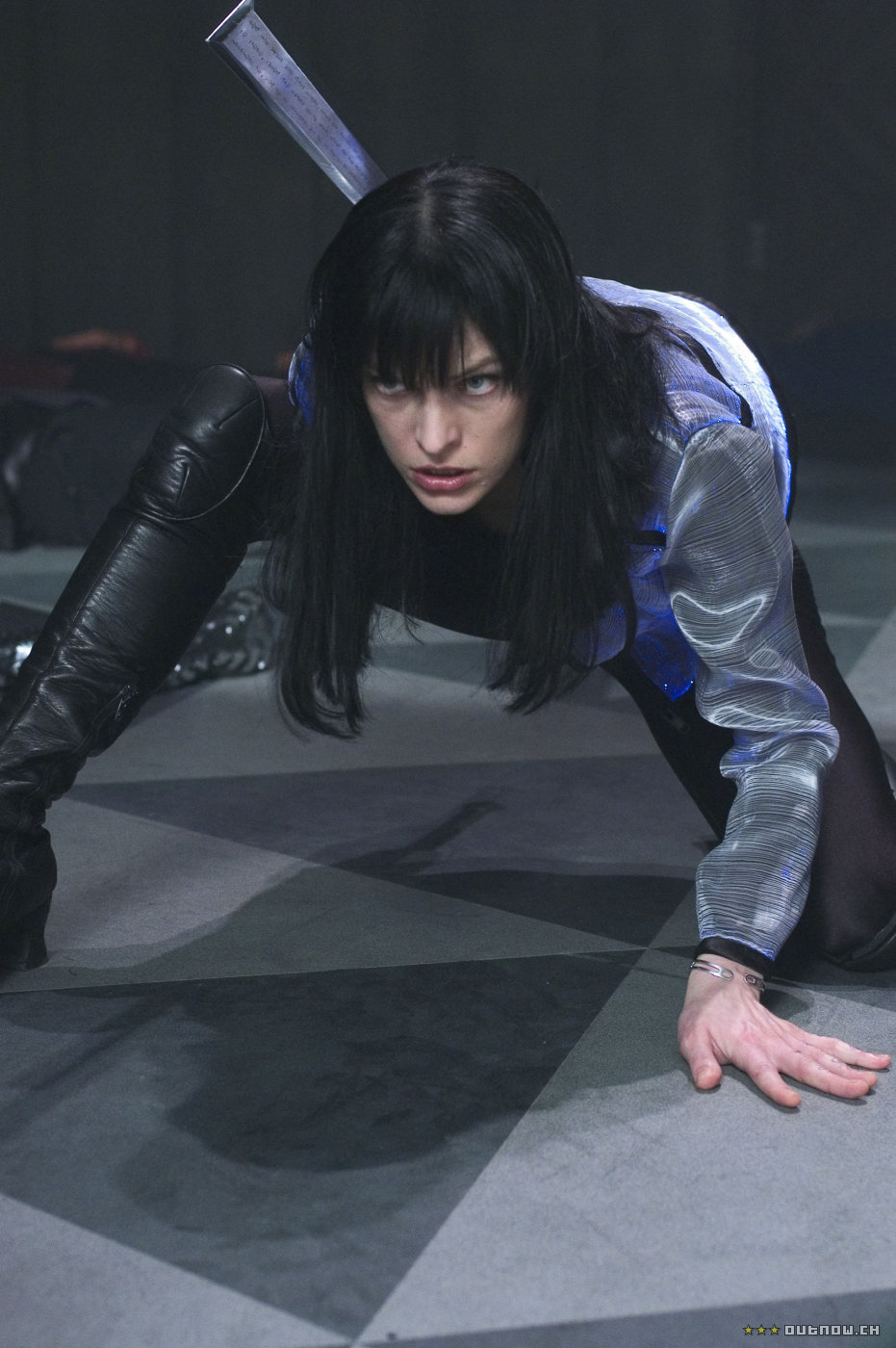
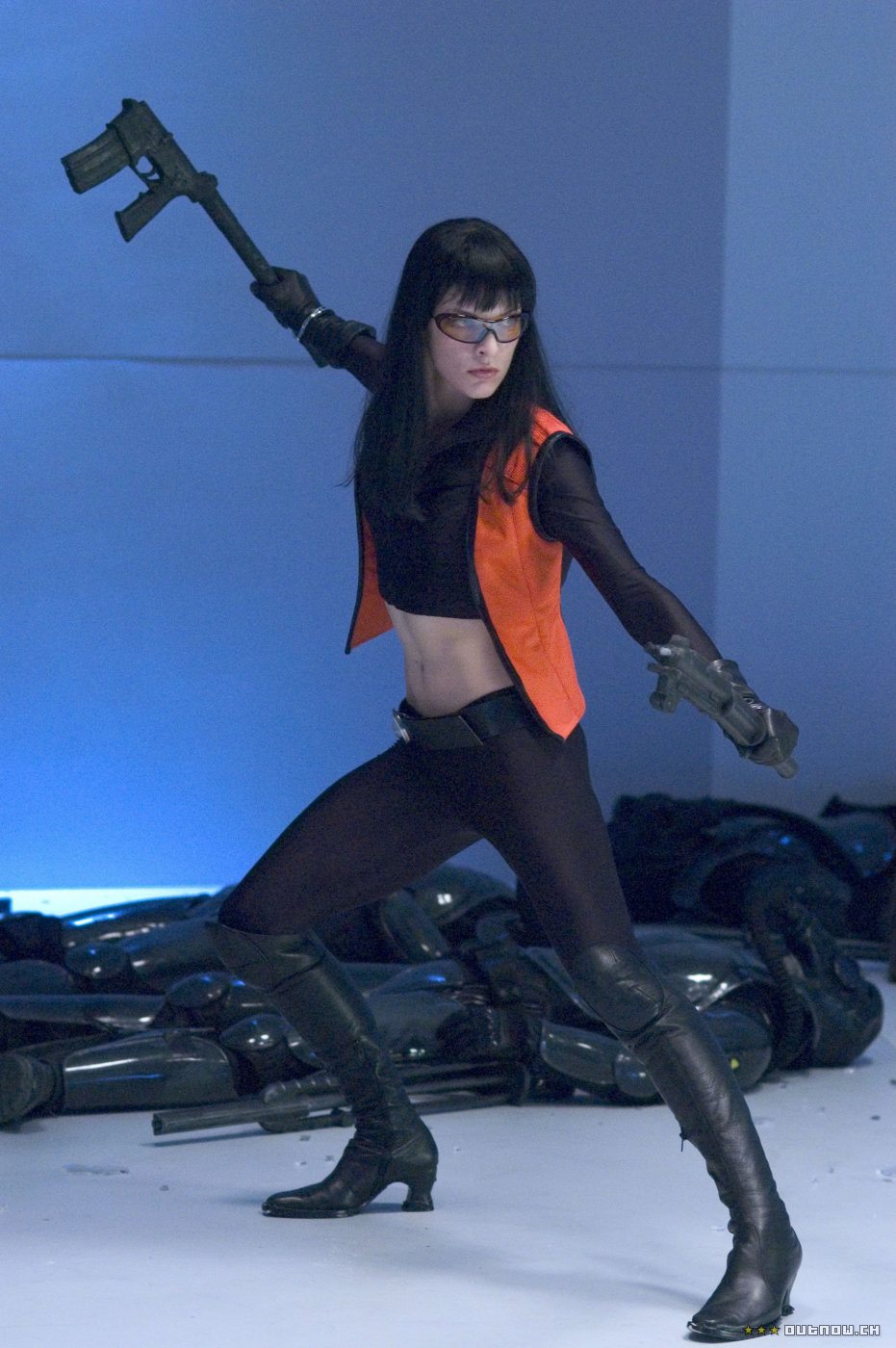
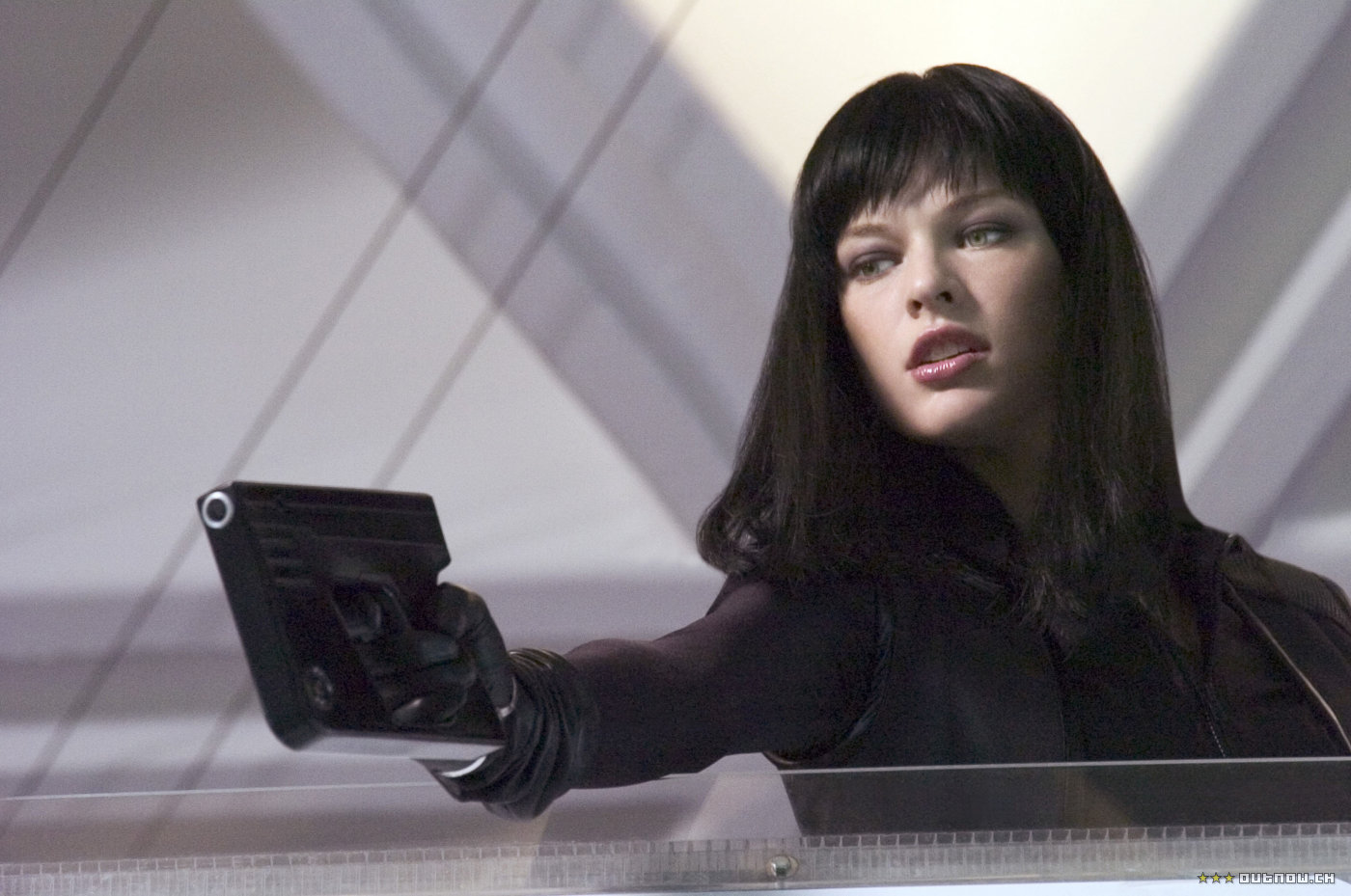
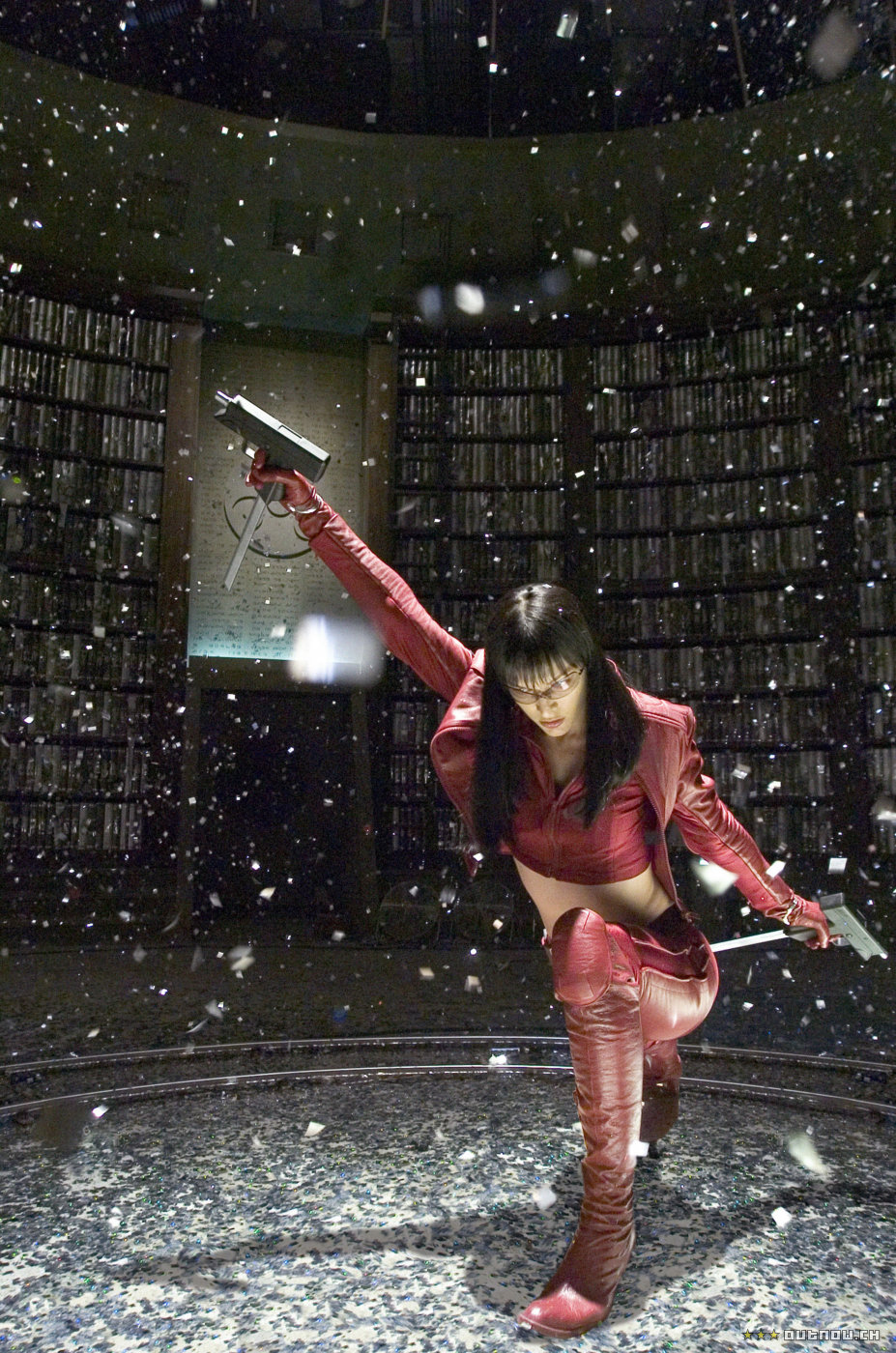
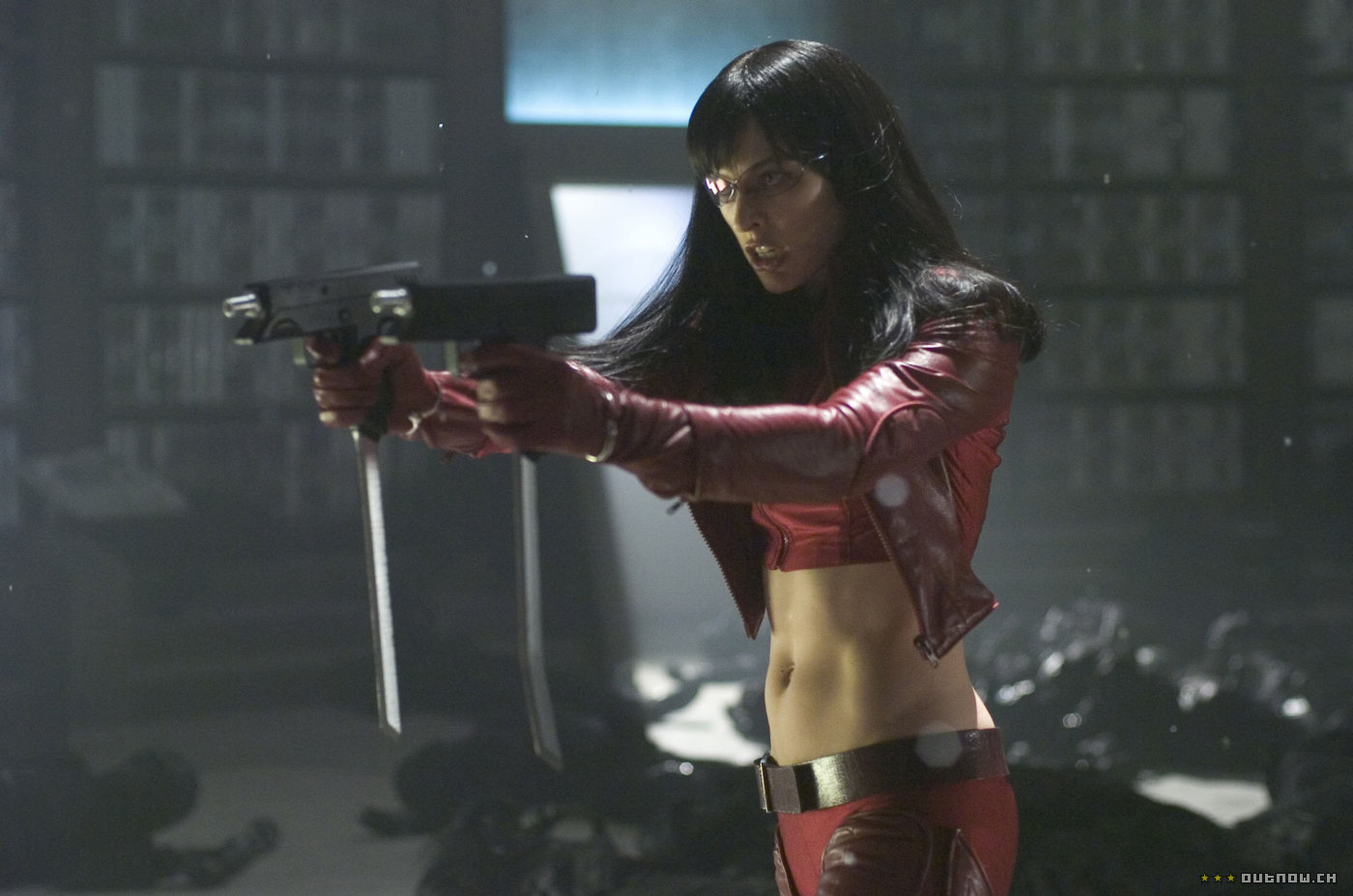
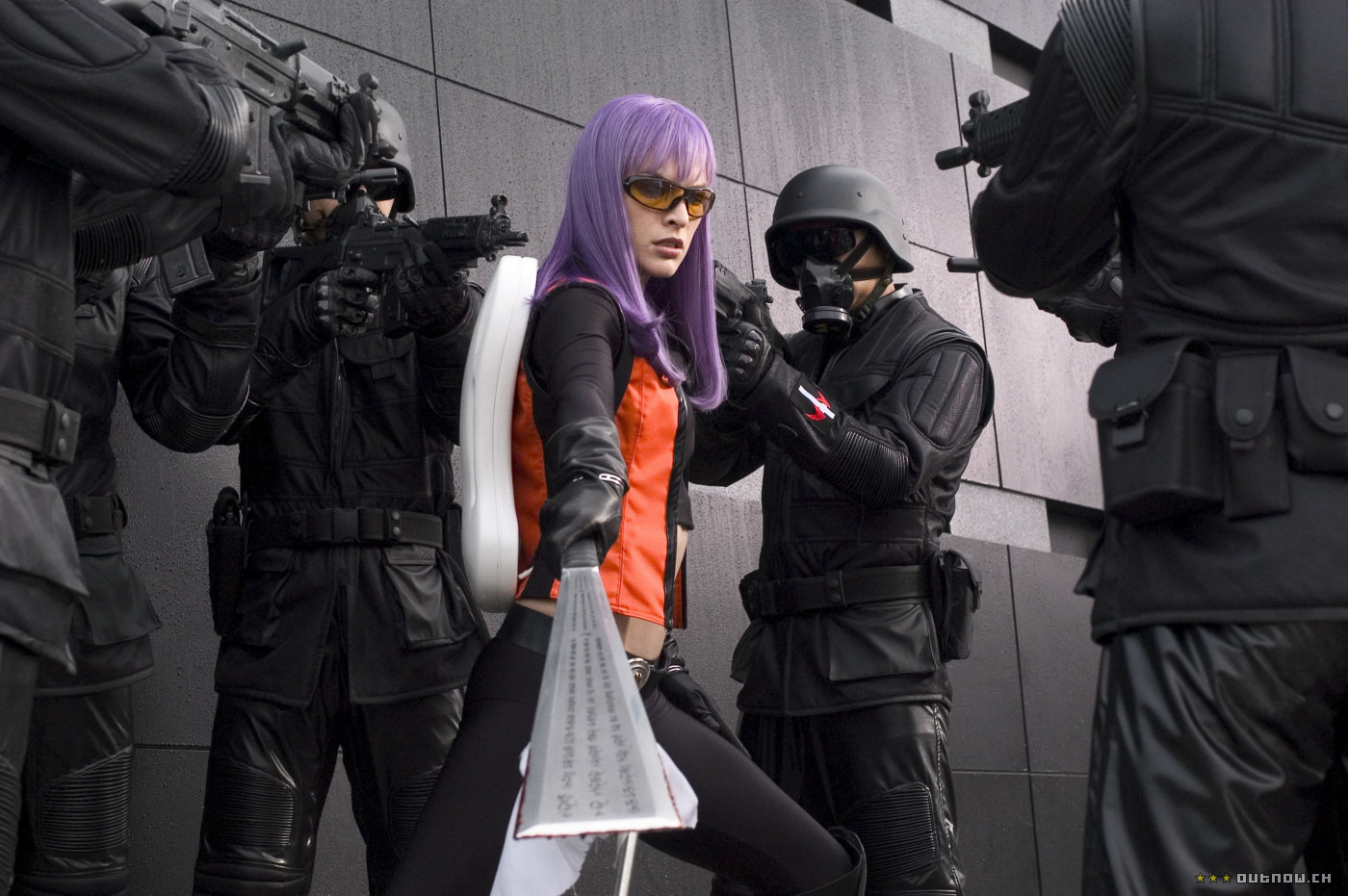
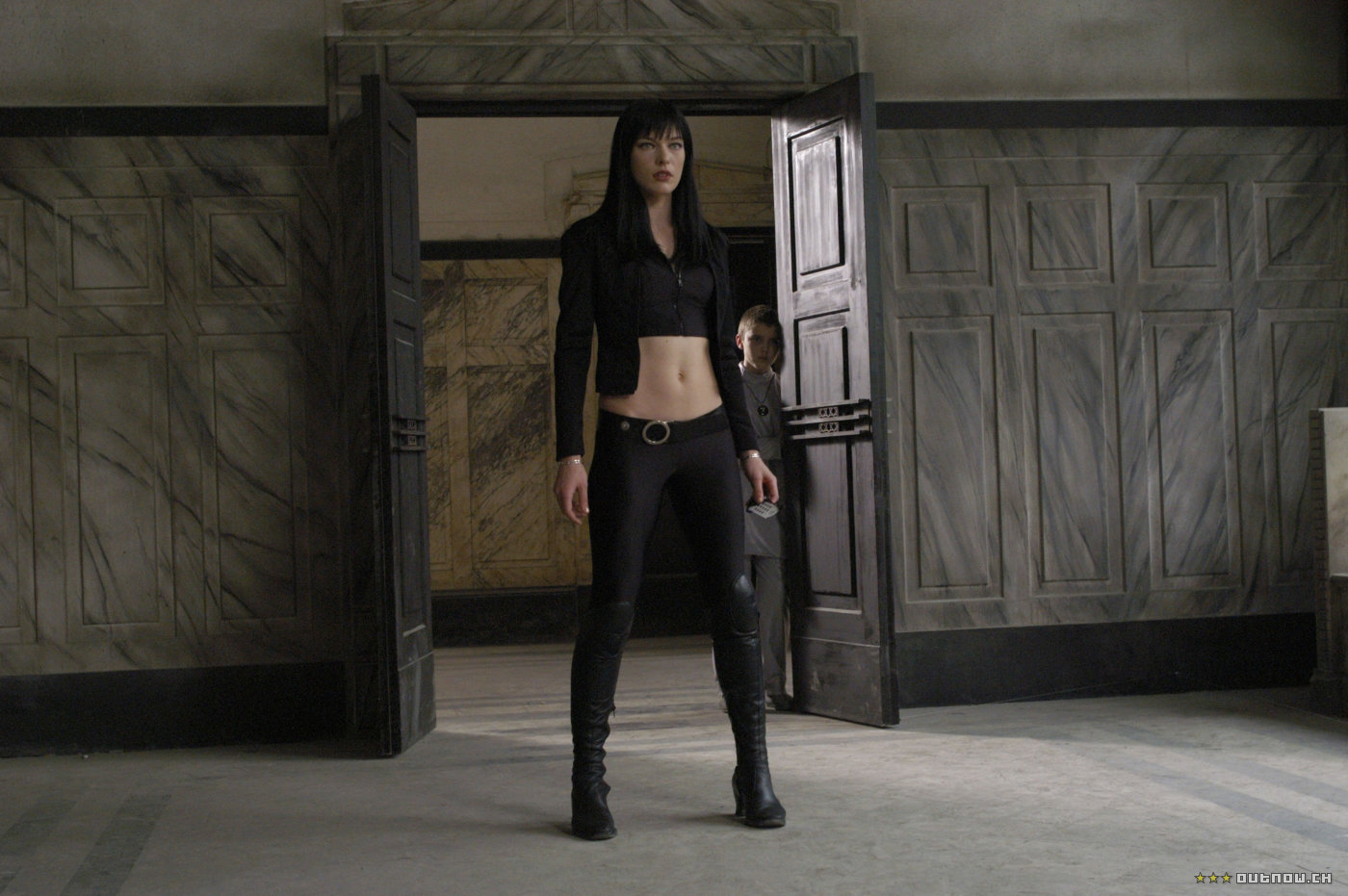
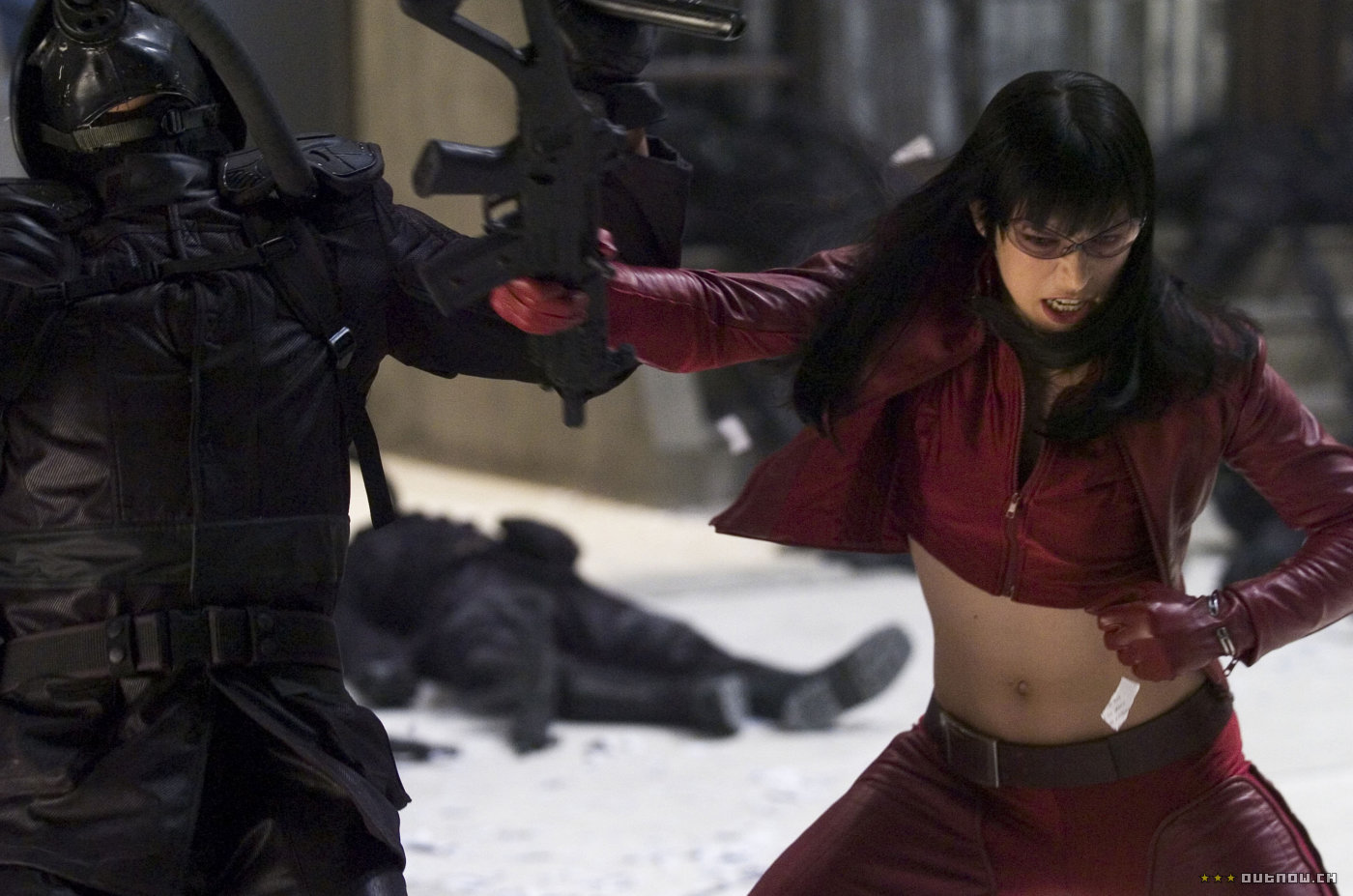
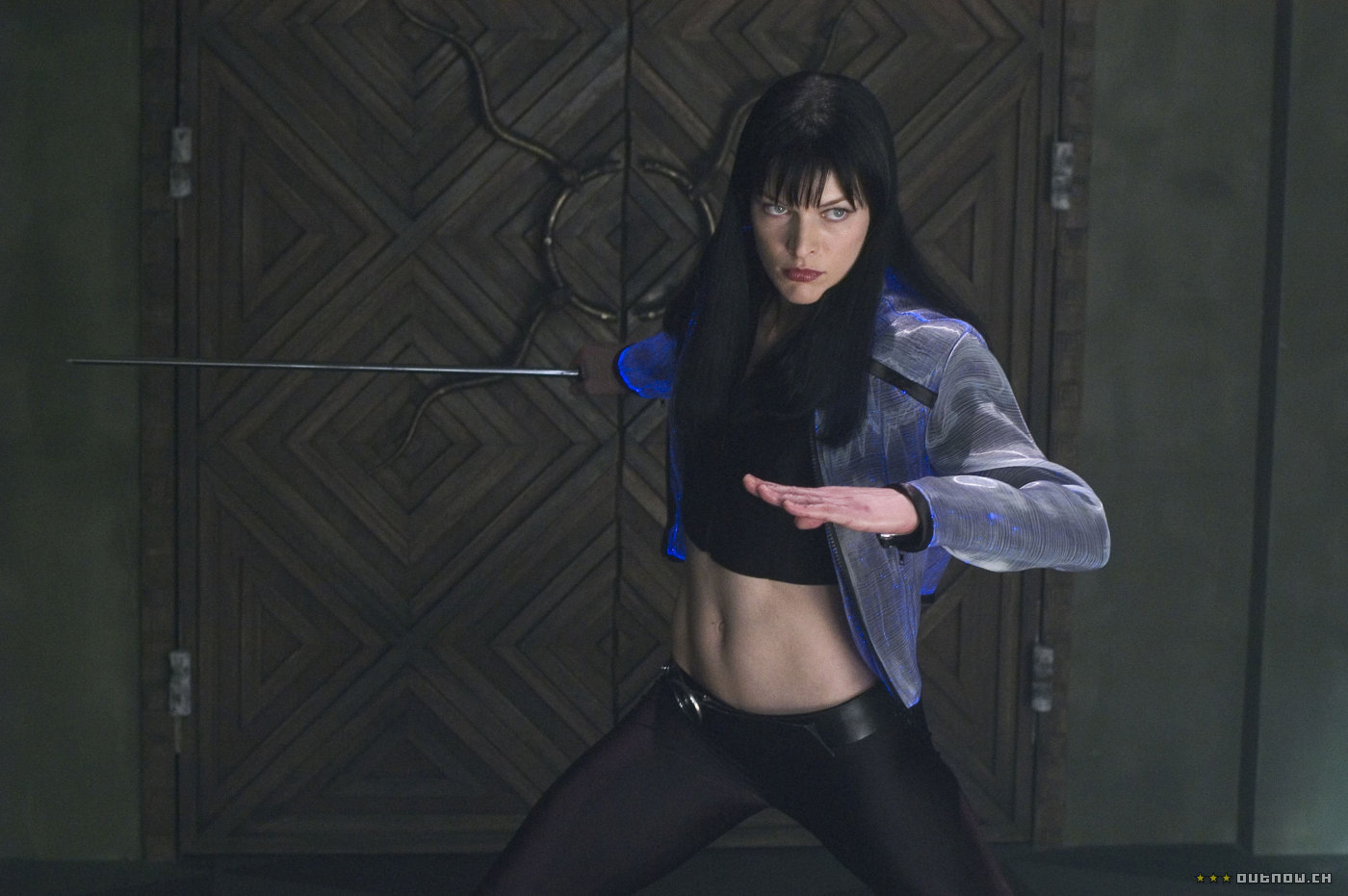
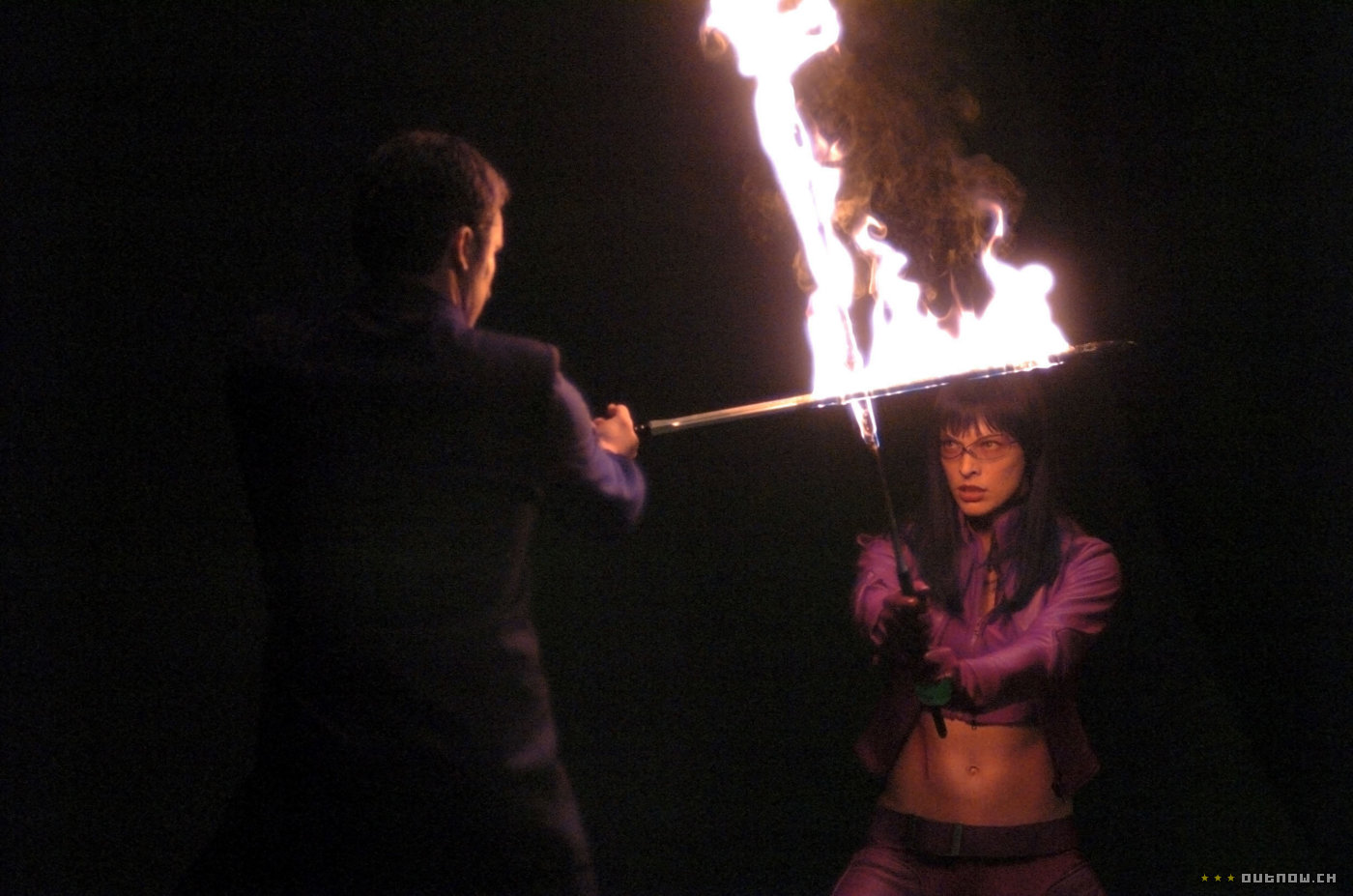
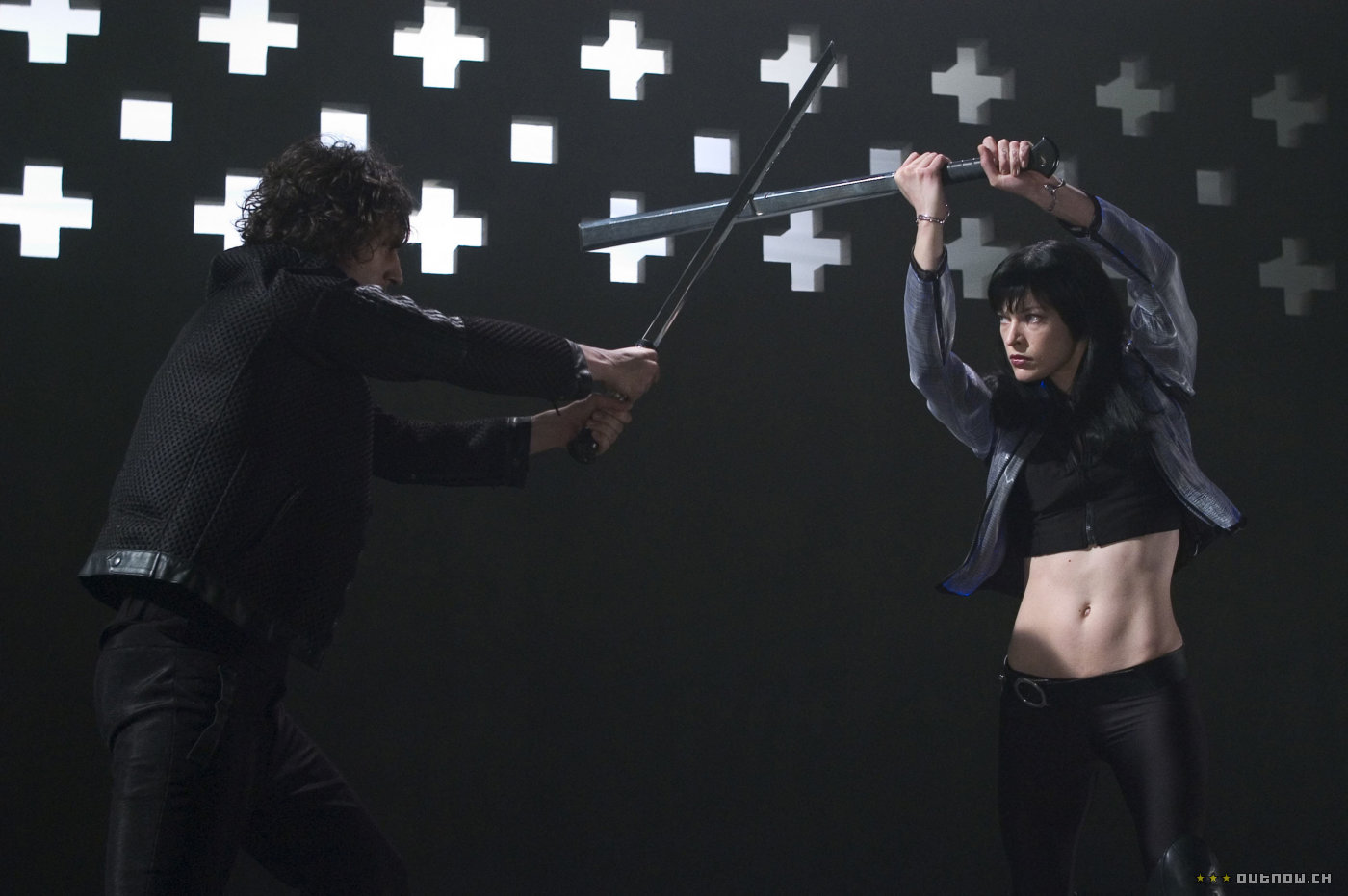
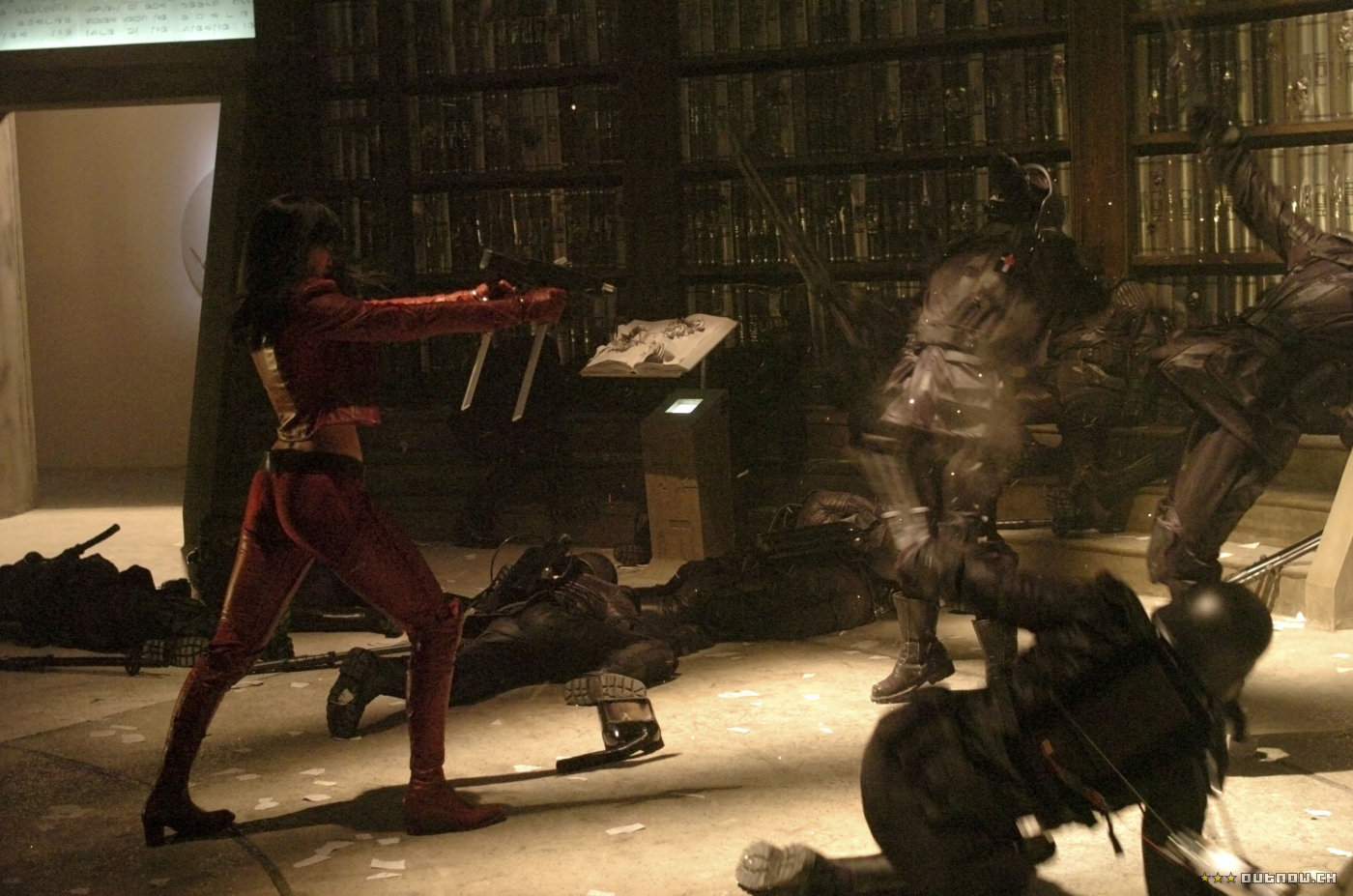
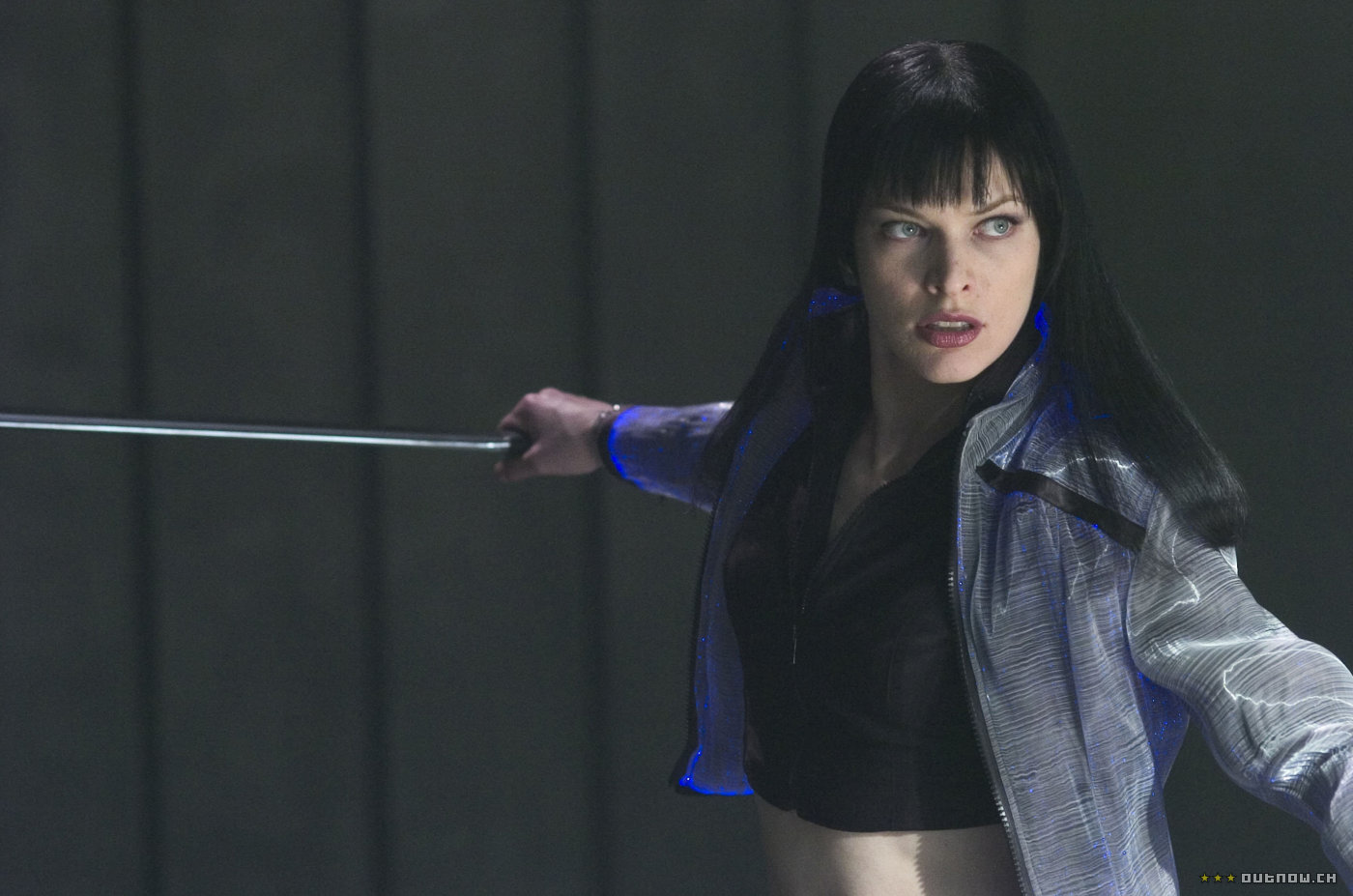
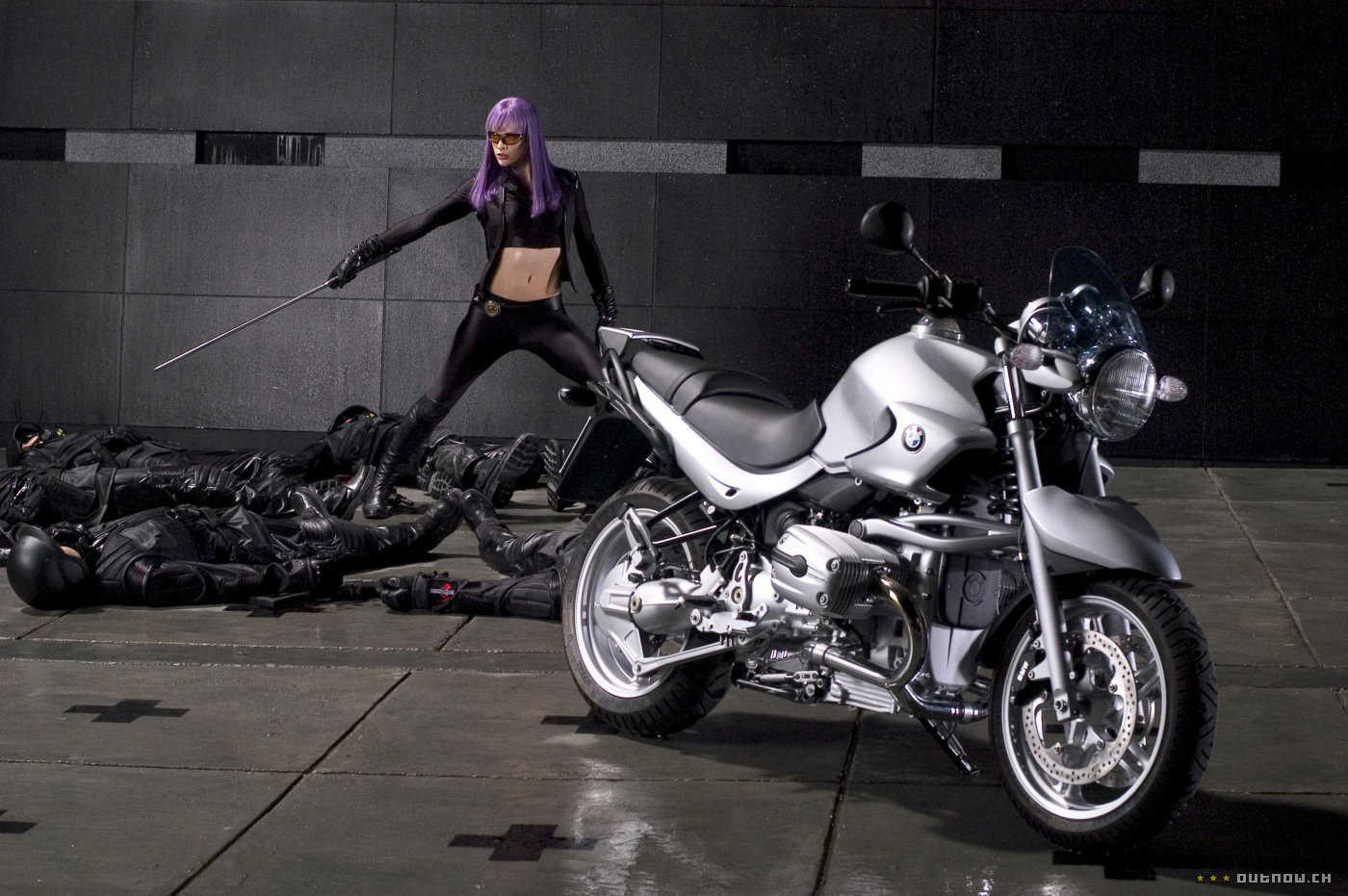
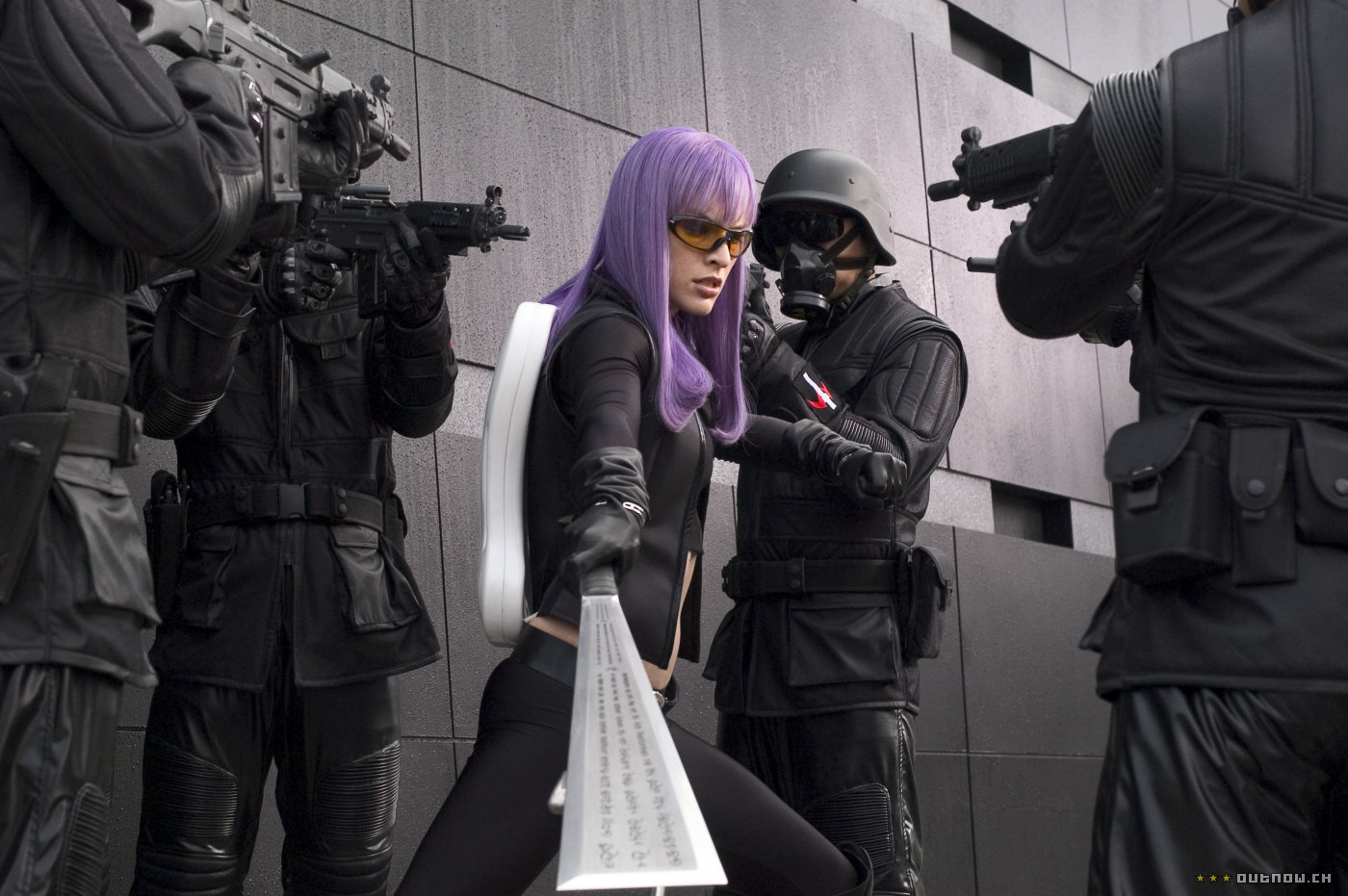
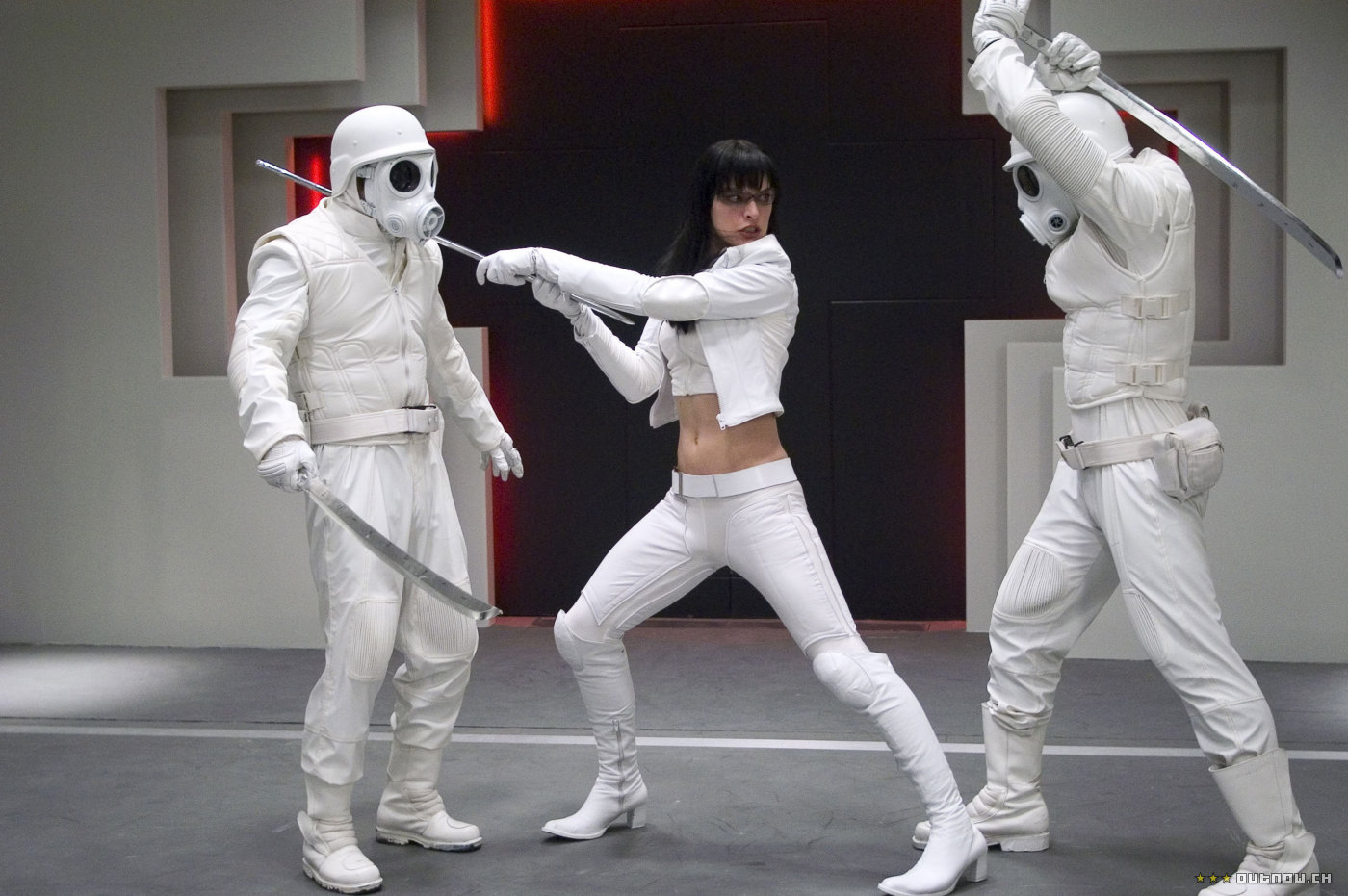
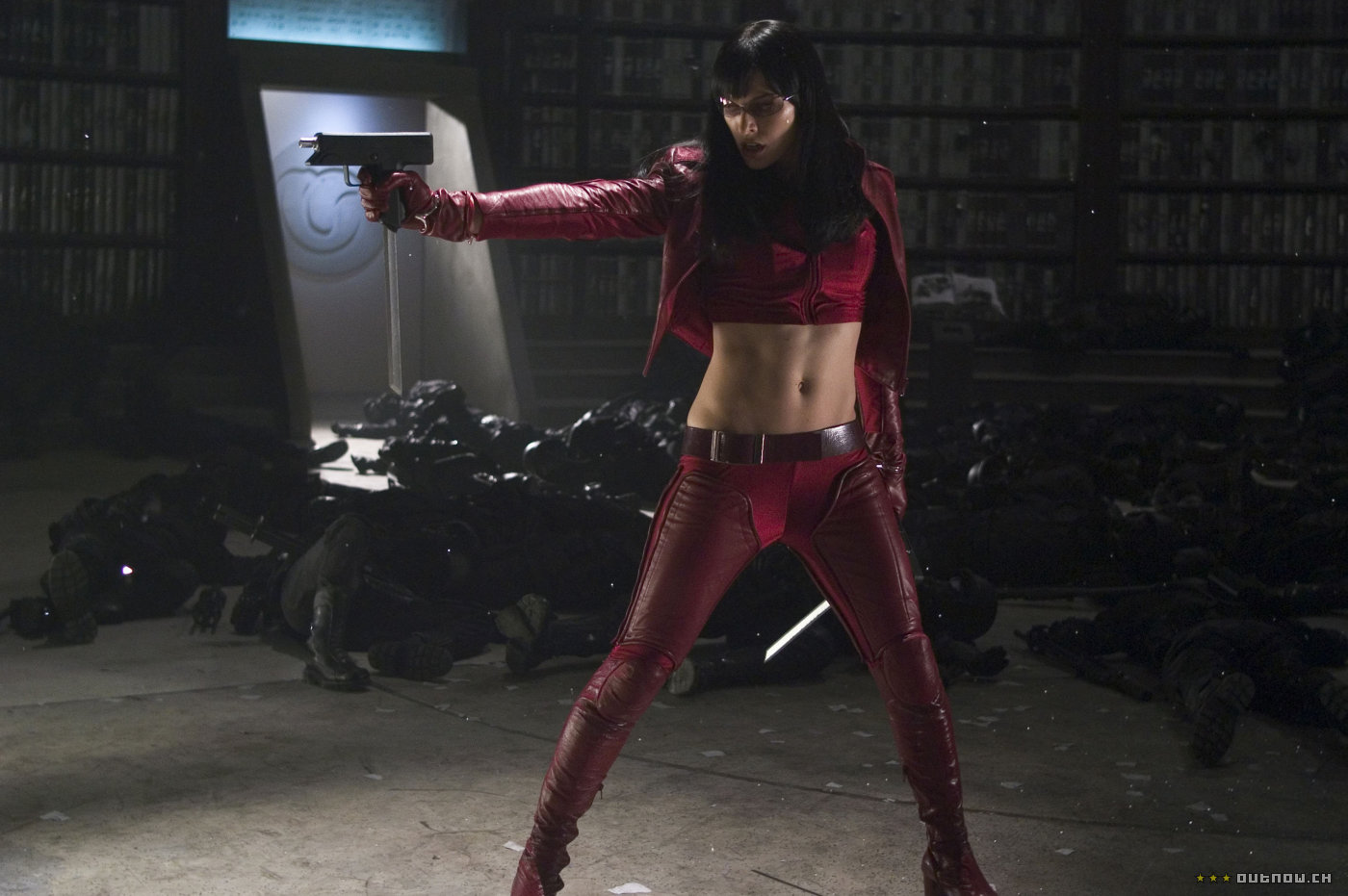
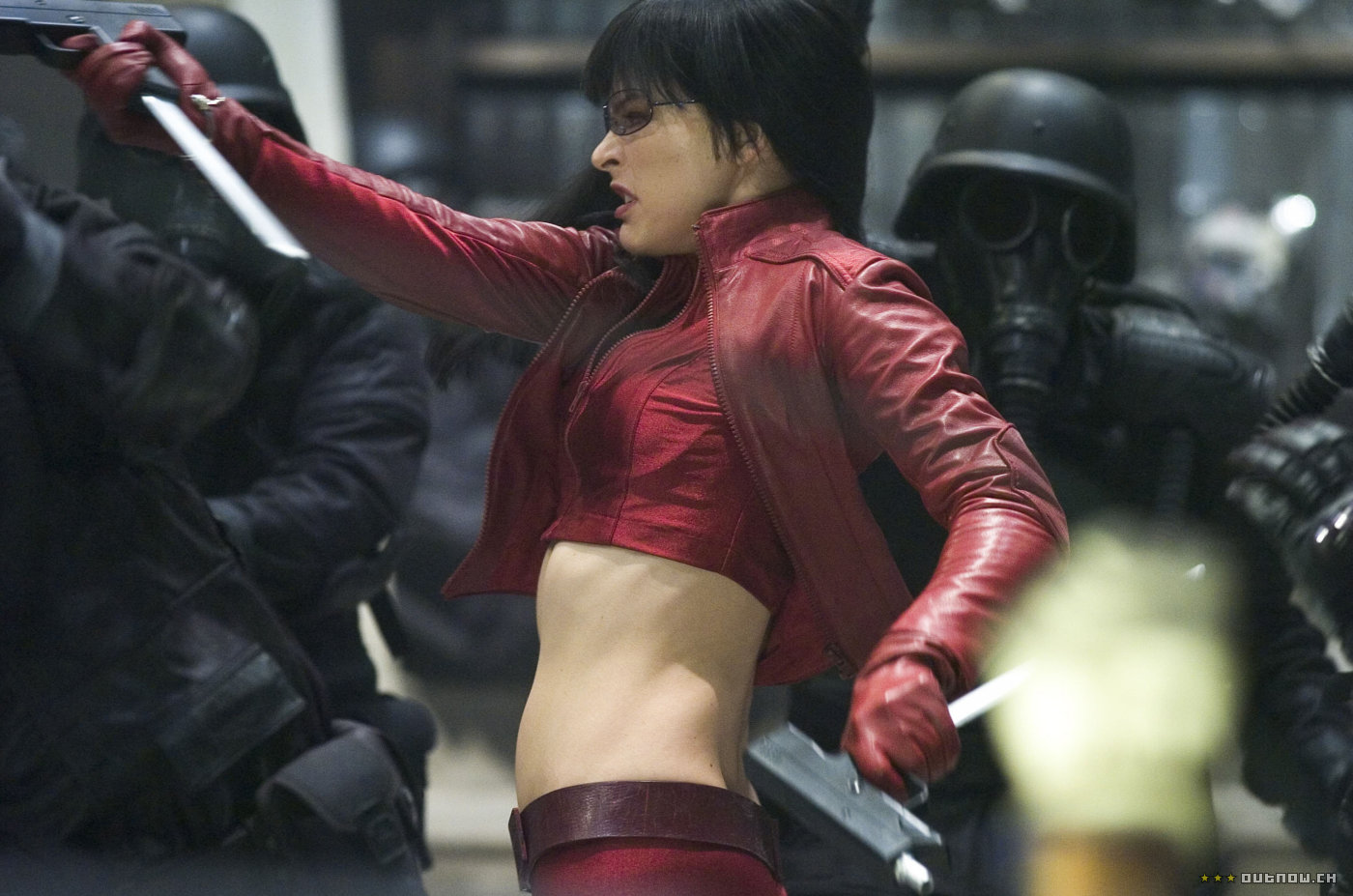
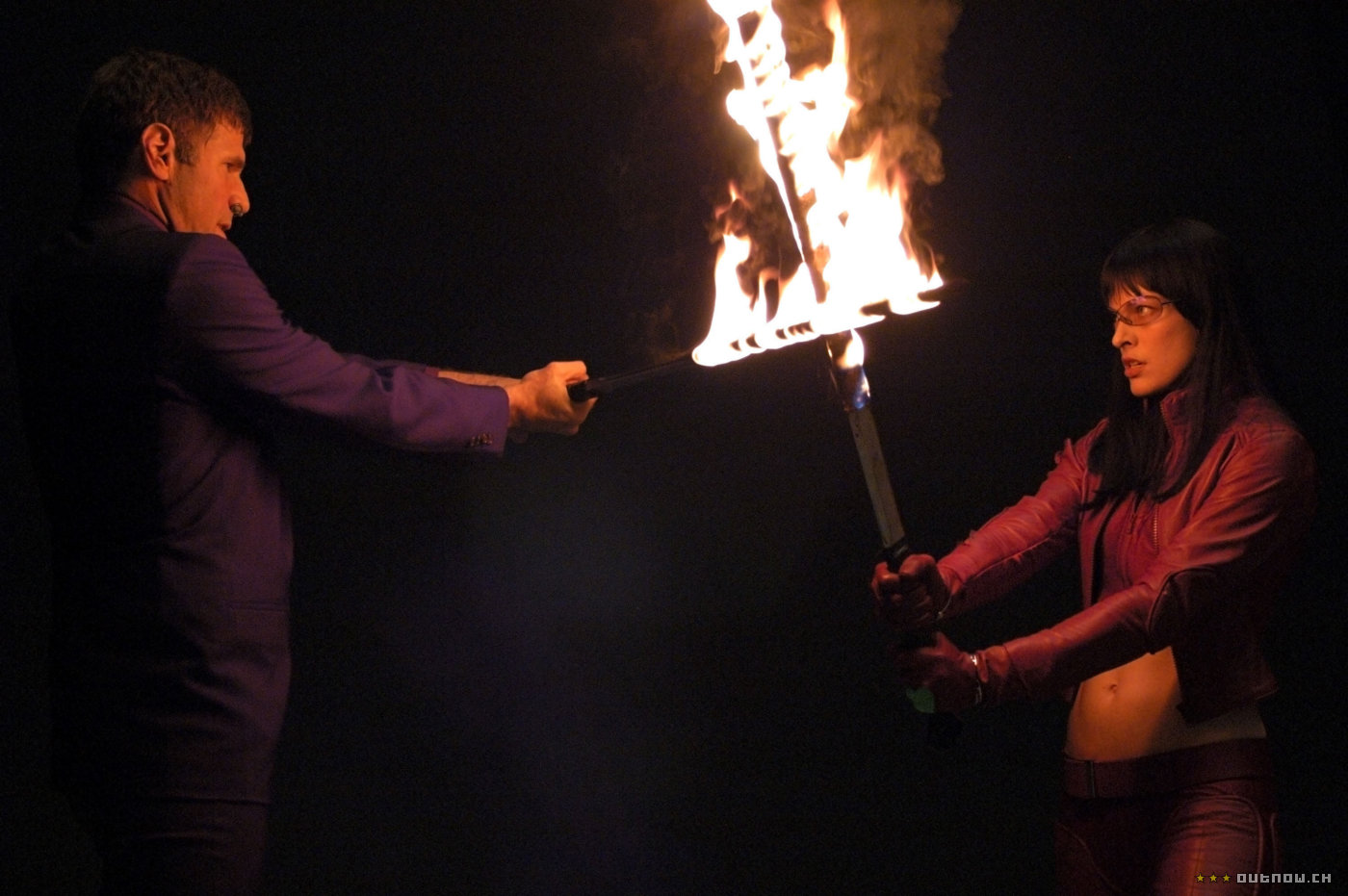
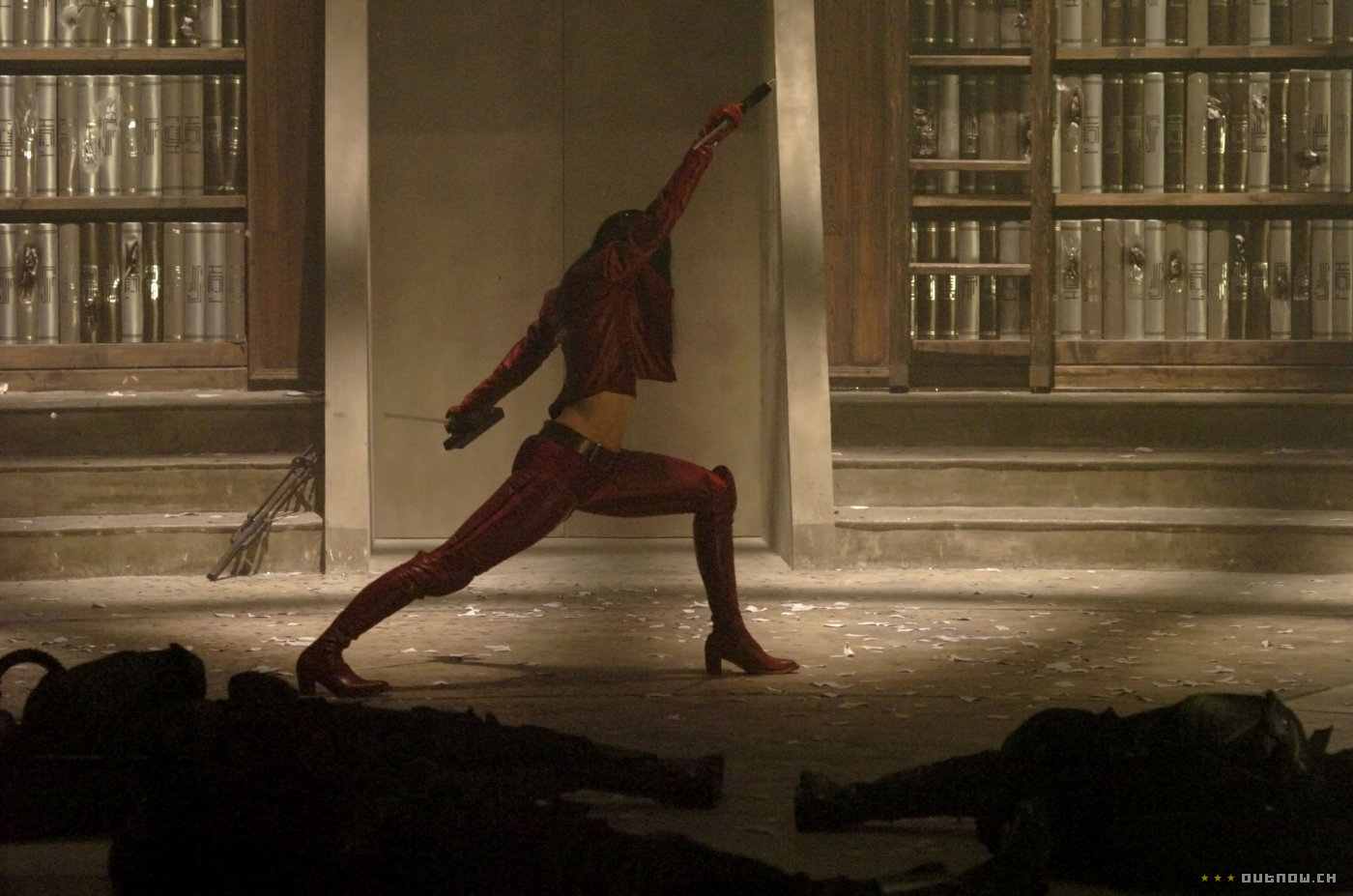
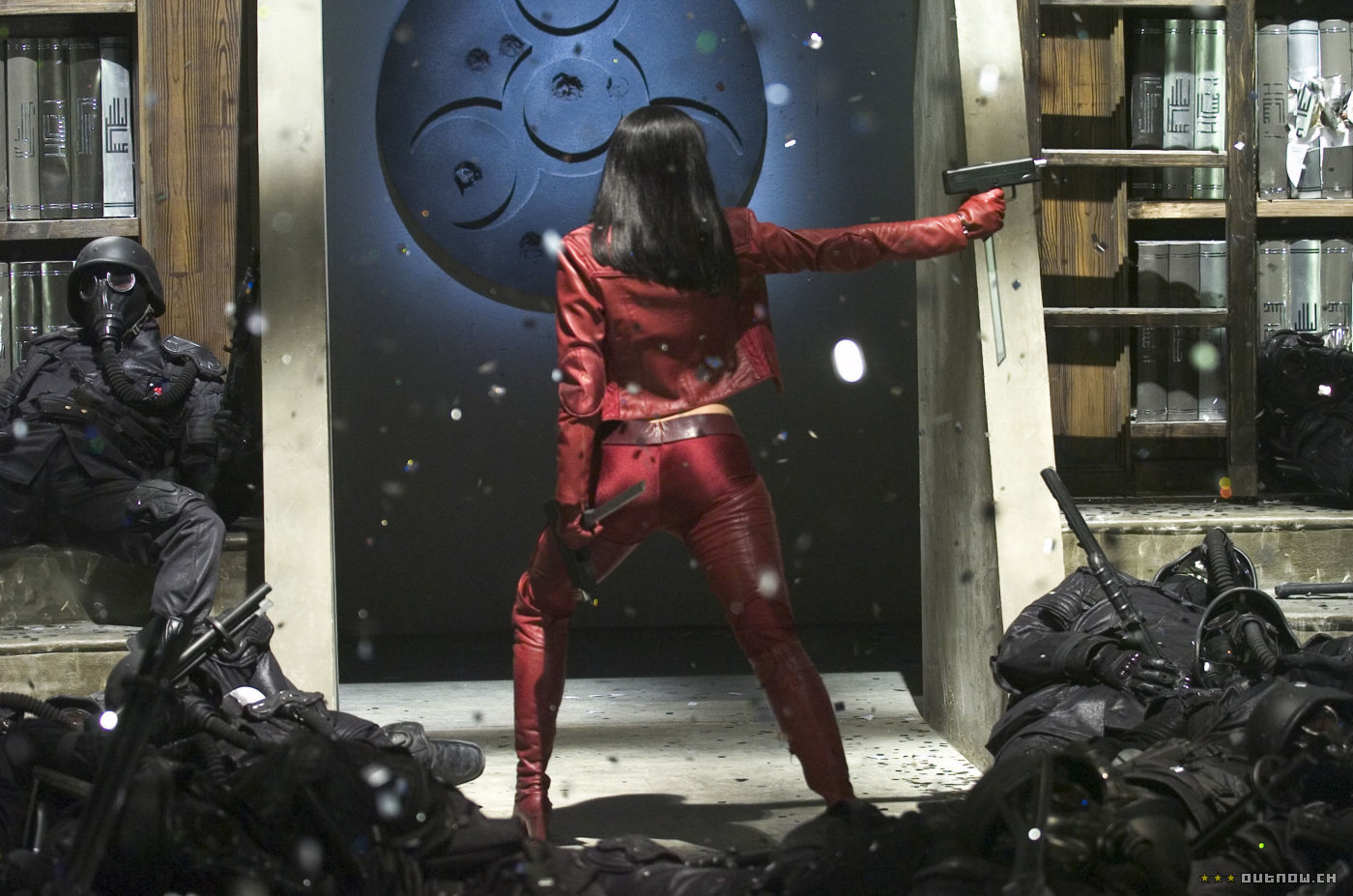
★★★★½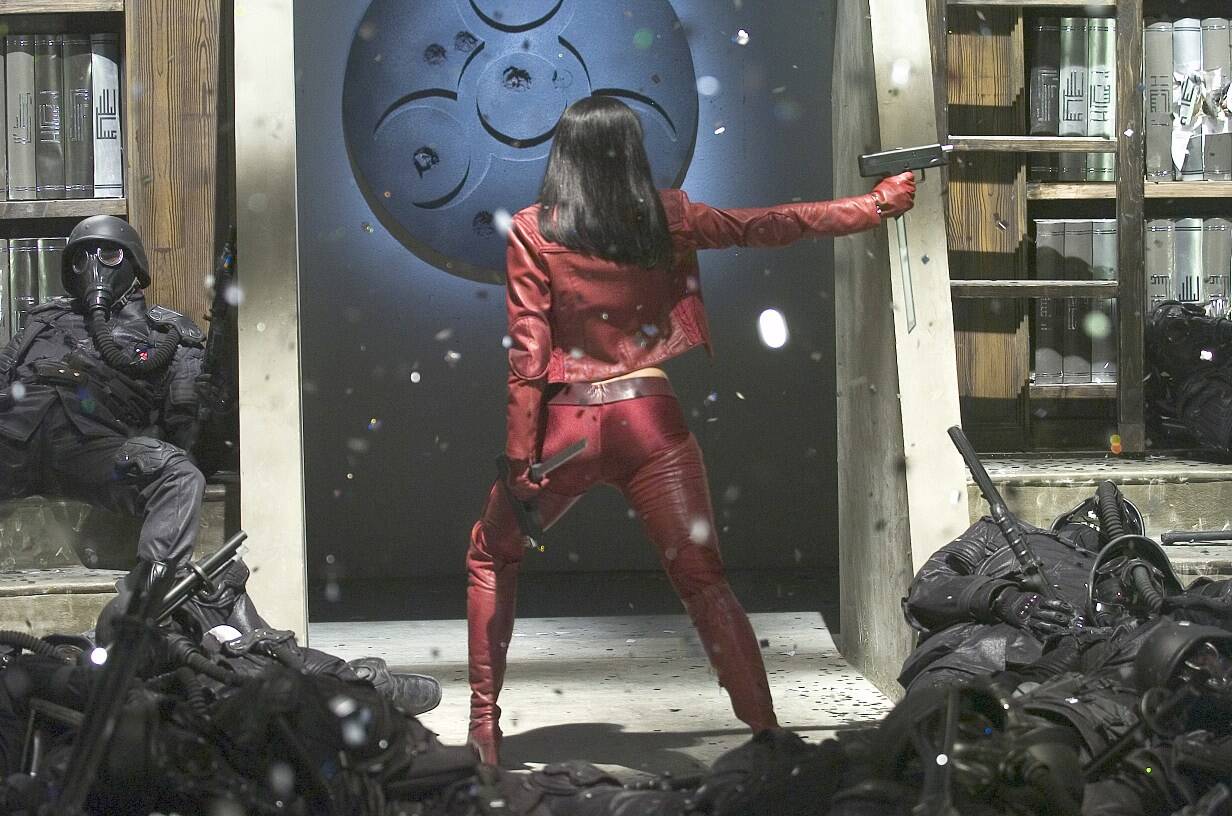 As with Resident Evil, the main asset is Jovovich, who projects just the right mix of chic bad-ass – her belly-button gets so much screen time, it deserved its own credit – with wardrobe and hair changing colour in synch with her mood [and, I believe, it’s far more likely nanotech will be used for this kind of thing than, say, curing cancer] When her co-vampires prepare to take her on, pointing out they’re just as fast and strong as she is, her response is, “Yeah, but are you as pissed-off as I am?”. It’s hard to imagine any other actress who’d come out with such a cheesy line and get away with it.
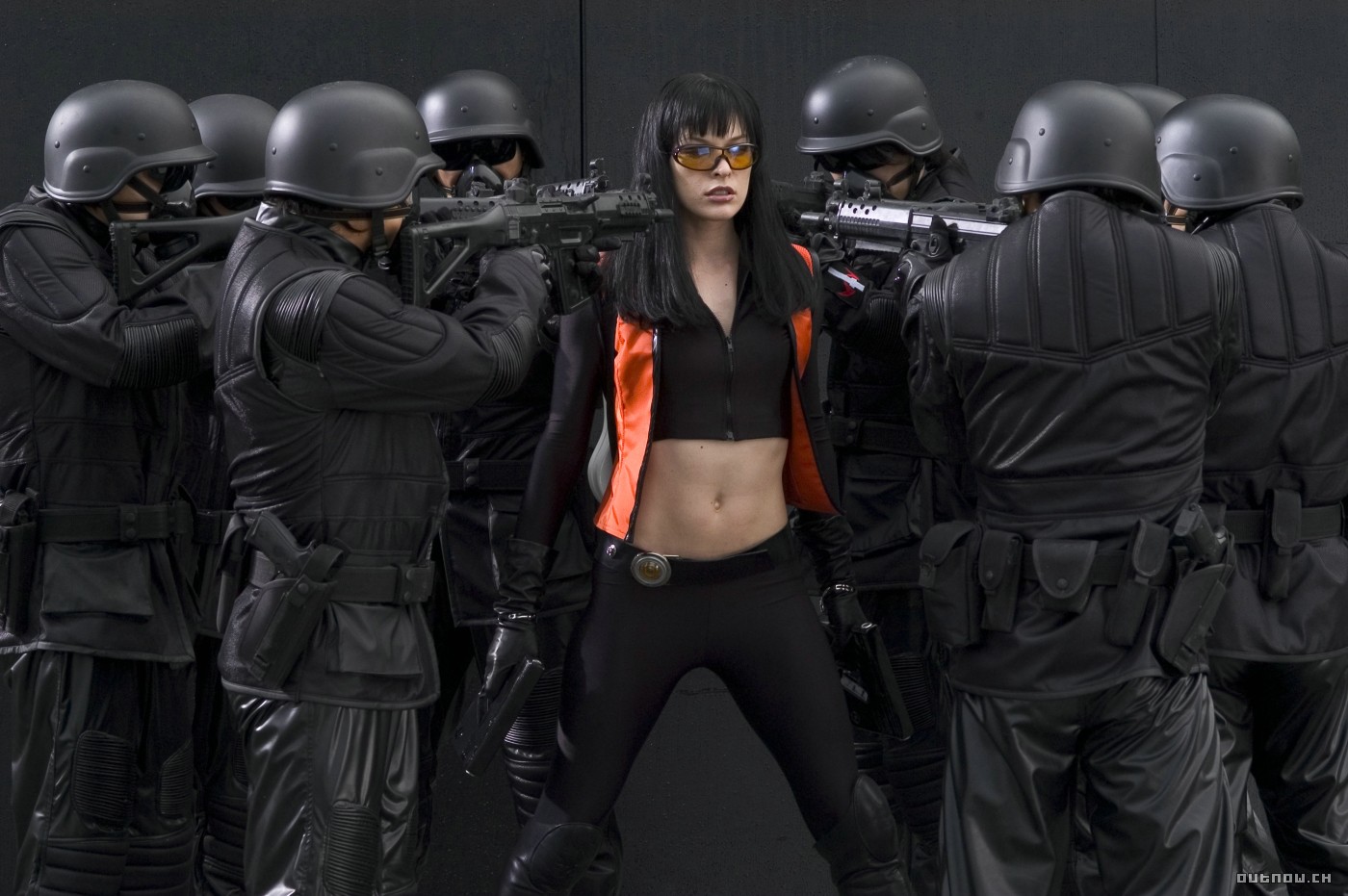
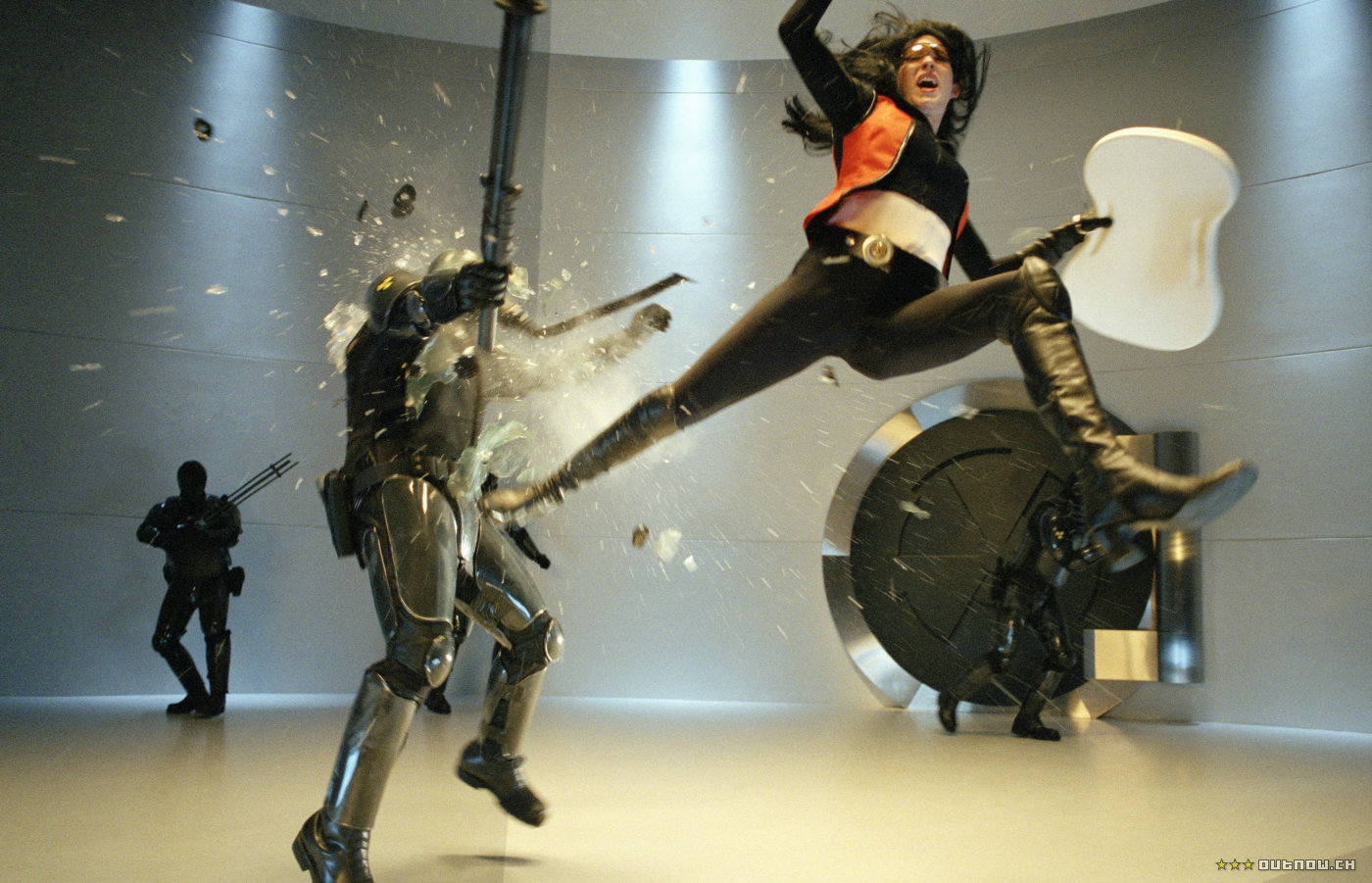
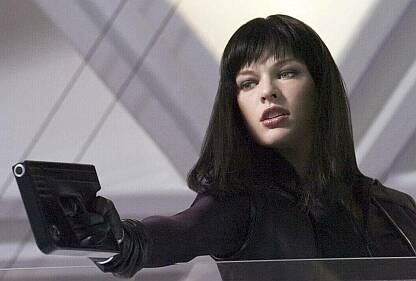 Otherwise, however, the action is excellent, CGI enhancing the impact of the fights. There is a certain sameness, it must be admitted – Violet faces multiple opponents and kicks their arses from here to next week – but Wimmer takes this basic theme and runs enough variations on it that it doesn’t become boring. Visually, it is hard to work out where the sets stop and the plentiful effects work begins (to some extent, that’s true of the supporting cast as well, who don’t have really have much to do, and may be avatars). Either way, it looks fairly good, given the budget: as noted, it isn’t going for photorealism, though the motorcycle chase did look more like an Xbox game. But even little things like disposable mobile phones, indicate genuine thought has gone into the edges. Perhaps more so than the plot, truth be told.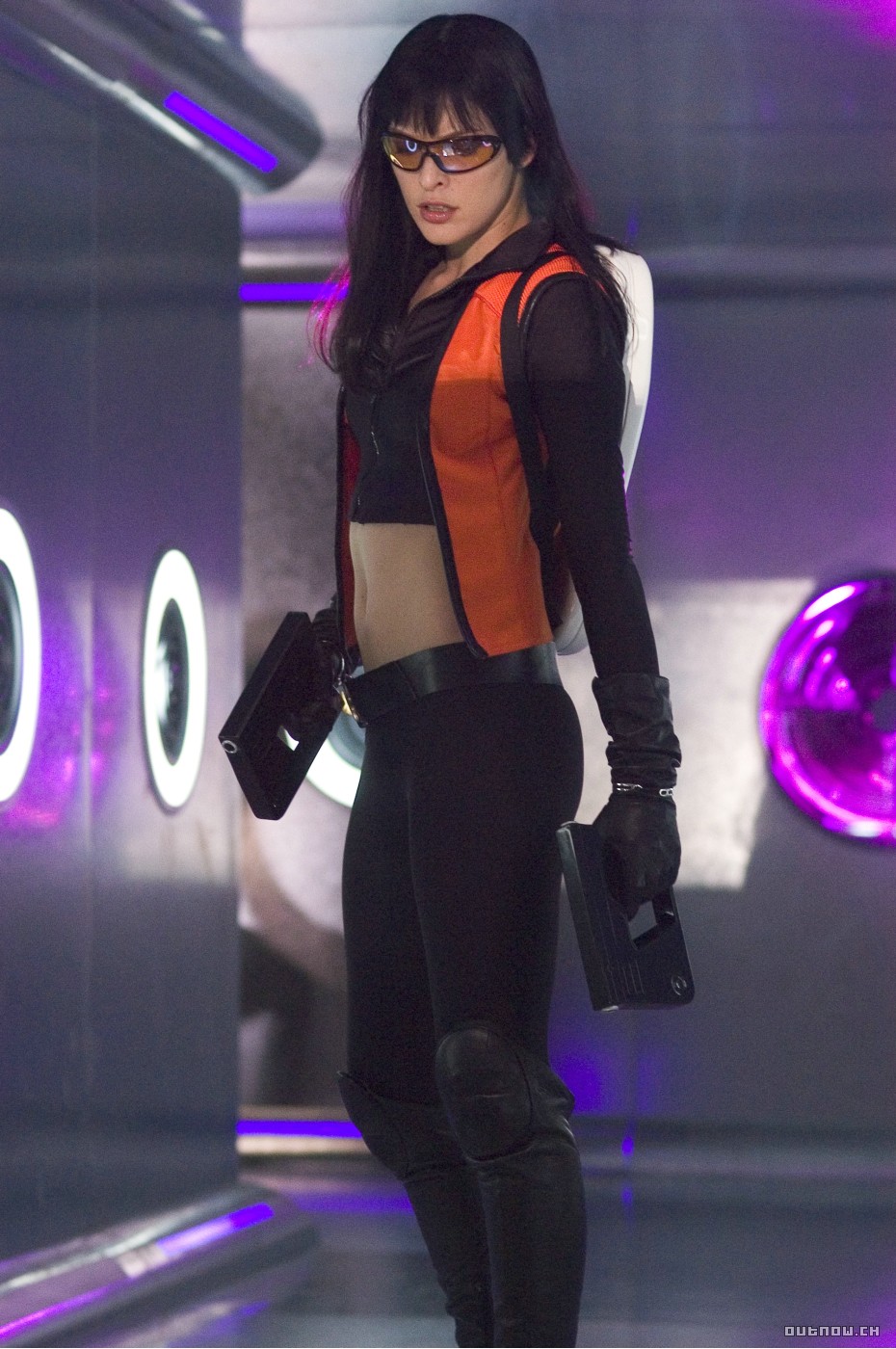













 I feel a certain camaraderie with Arnie, since I’ve largely grown up alongside this series of movies, which is probably his finest work. I was at university when the first one came out; the second saw me living the life of a bachelor in London; and the latest installment finds me a happily married man in Arizona. Just as I’ve evolved, so have his opponents: they’ve become harder, faster and more difficult to kill; my sarcasm has been honed to a lethal edge, thanks to living with two teenagers and a pair of dogs.
 The plot is effectively a retread of the previous entry, with John Connor (Stahl) a drug-confused member of the underclass since his mother died of leukemia (possibly Hollywoodese for “Linda Hamilton wanted too much money”). He goes on the run with former schoolmate Kate (Danes), whose father just happens to be the guy in charge of SkyNet. What are the odds against that? These two are supposed to meet and fall in love, but there’s a bump on their road to happiness, in the shape of a nuclear war due to start at 6:18 pm that night.
 One interesting point, is that nobody ever mentions the T-X’s gender. The concept certainly held potential for a lot of PMS-type comments, but save for one minor joke involving Victoria’s Secret, sexuality is entirely kept out of things. The T-X, with her impossibly perfect hair and the coolest red leather jacket worn by a actress playing a superviolent female robot since Eve of Destruction, just goes about her business like an evil babysitter.