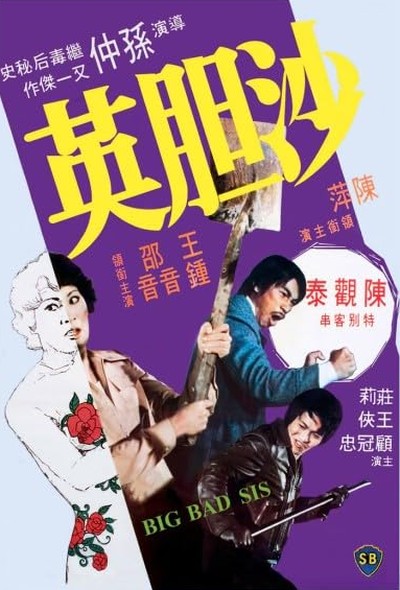
Despite this being from Hong Kong, I’m actually tagging this one in the “Pinky” category, because in a lot of ways, it feels closer to a pinky violence movie from Japan, being basically the story of a posse of bad girls. Except, this being Hong Kong in the seventies, where even juvenile delinquents were expected to hold down a responsible job. In the case of Fung Ying (Ping), this is working in a massive garment shop. It feels almost like prison labour, not least because of various predatory types, to whom Fung takes exception, becoming an unofficial shop steward. It helps she’s a bit of a bad girl herself, a former gang member.
She teams up with a couple of colleagues, and starts helping her co-workers solve their problems. For instance, one girl has been forced into prostitution to pay off her brother’s gambling debts, or another who was dumped by her sleazy boyfriend after she got pregnant (once you get past the first five minutes, there’s a theme here that, if not all men are scum, all scum are men). Needless to say, Fung’s past comes back to haunt her. The factory owner, who I guess is fairly decent as sweatshop proprietors go, is subject to a hostile takeover attempt by her old boss Dai Goa (Hsieh). When Fung derails this, he’s none too happy, and kidnaps her with the intention of burning her alive.
The middle of this is rather too much social drama for my tastes: if Ken Loach was to make a martial arts movie, the end result might be something like this. Fung and her allies seem more concerned with social equity, forming a union to fight against the exploitation of the working classes, sexist men, and so on. Not quite what I expected from a Shaw Brothers production in the mid-seventies. It all comes off as a bit earnest, though the copious nudity – all female, naturally – makes it a little difficult to accept fully any messages of feminist empowerment. It does, however, act as a lovely time-capsule of Hong Kong in that era, in every area from hairdressing through to home decoration.
While well-made, it’s a bit dull until the end. Fung’s kidnapping is followed by a rescue attempt, which leads to a massive extended brawl on a building site, that’s as good as I’ve seen from any heroine of the era. This takes full advantage of the environment, Fung swinging a shovel as if born to it. Naturally, violence cannot be seen to prevail, so this ends in the moralistic style you would, with the authorities – notable by their absence to this point – showing up. Fung and her old pal Shing (Chen) take responsibility for their actions, and are led off to the cheers of their workmates. This finale goes a long way to redeem things, though it’s still guilty of putting its message before the mayhem.
Dir: Chung Sun Star: Ping Chen, Chung Wang, Chen Kuan-Tai, Hsieh Wang
Of late, it seems that the Western action heroine has been staggering from one disaster to another, culminating in one of the year’s biggest flops, Supergirl. I’m not too concerned. The business is cyclical, and I’ve been covering the genre long enough to have survived similar downturns in the past. We lived through Cutthroat Island, Catwoman and Aeon Flux. I think we’ll survive the commercial failures of Furiosa, Ballerina and Madam Web. But a reduction in quantity out of the major Hollywood studios seems likely. However, as in other fields, the Chinese appear willing to step in and pick up the slack, filling the need with lower-cost imports, of varying quality.
I first got into the Chinese streaming services like Youku and iQIYI for their creature features, in early 2022. The oddly charming title Escape of Shark proved the gateway through which I discovered the kind of movies that the late, lamented SyFy Channel used to screen on Saturdays. Not just sharks, but crocodiles, snakes, bees and even cockroaches were the threat to humanity, and I’ve been covering these When Chinese Animals Attack films on my other site. Of course, YouTube gonna YouTube, and the more of direct-to-streaming Chinese films you watch, the more crop up in your feed. I realized they weren’t limited to those movies, but regular action as well. And that included titles which were very much a fit for this site.
It looks like the first such was a cross-over title: Huge Shark, an entry definitely inspired by The Shallows. But since then, there have been a steady stream of such entries: while the quality has been variable (to put it mildly), the best of them are as good as any straight-to-streaming product produced in the West. Sniper Goddess, for example, was among the most purely enjoyable films I saw in 2025. Some have proved successful enough to kick-start their own franchise – that’s not something we’ve seen much here of late. I previously wrote about the Angels of Vengeance trilogy, and figured it was high time to dip my toe into the Chinese waters once again. So, here’s another trilogy: this time, three period pieces set in and around Shanghai between the wars.
The Queen of Kung Fu
★★★
“The queen is crowned.”
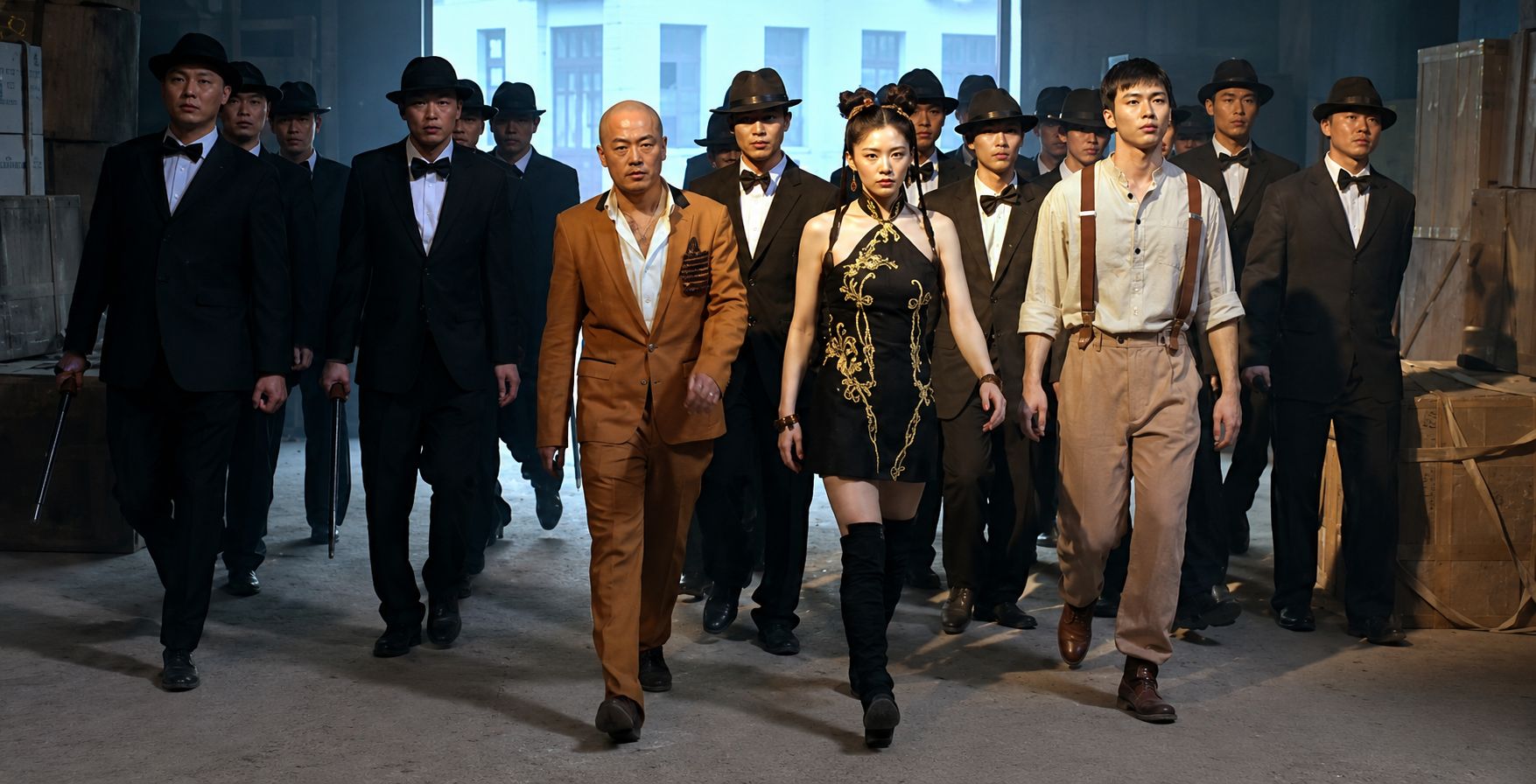
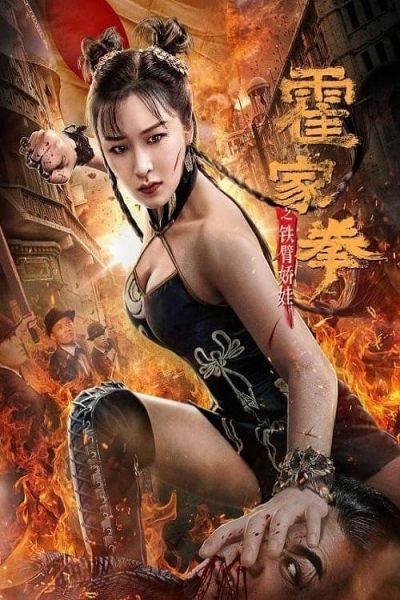
For a film which barely scrapes past the seventy-five minute mark, it feels like there’s a lot going on here. In addition, of course, to the martial arts promised by the title. It likely also claims the title for heroine with the shortest name, this being A Xi (Li). I’d have said her first name might be “Ah”, but the subtitles and other sources are quite insistent on her being “A”. Anyway, she’s a rural village girl, who is being brought to Shanghai to act as a nightclub hostess. Except the martial arts skills she rapidly demonstrates after her arrival, killing one of the local crime bosses after he murders another hostess, make her better suited for another position.
After further proof of her abilities, she’s taken under the wing of the overall head of the area, the eunuch Pei Xiang Lan. She is given her own nightclub to run, and adopts a strict policy of wholesome fun: so, no opium, prostitution or gambling. Whether despite or because of this, the venue flourishes. But when she tries to expand this policy to the rest of the entertainment district, she begins to get significant push back. She is helped by her consigliere (or whatever the Chinese equivalent might be!), Huo Yun Sheng (Ye). He has the schooling to assist the illiterate Xi, who is smart, but more inclined to solve problems with her fists than her brain or tongue.
Not helping matters: the increasing influence of the Japanese in Shanghai, who regard the local population as their inferiors. Or the cops, both good and bad. Oh, and Xi faints at the sight of blood, which is probably not the best trait for a martial artist. So, yeah. this is a busy little film, which helps ensure that the (sometimes sizeable) gaps between the fights are generally interesting enough to keep your attention engaged. I think it’s the characters which are key here. Even relatively minor supporting players are efficiently drawn in a way which I found engaged them. Although there were some plot points and elements which I strongly suspect lost a considerable amount in translation. This applies particularly to the comedic aspects: some moments had the pacing of humour, but I was baffled regarding the joke.
In terms of martial arts, it’s solid rather than spectacular. The action is quite heavily wire-fu, but it’s not as if it’s trying to hide this in any way. While the editing can charitably be designed as crisp, there are occasional moments where Li is present for long enough to give the impression she knows what she is doing. I also have to give a special shout-out to the sets and overall production design. These have a quality which is at a level befitting a movie of a far bigger budget, and the whole thing looks a solid piece of cinema. Good enough to leave me interested where things might go.
Dir: Liu Bayin Star: Mengmeng Li, Leif Ye Xiao-Kai, Qing Feng, Shengli Wang
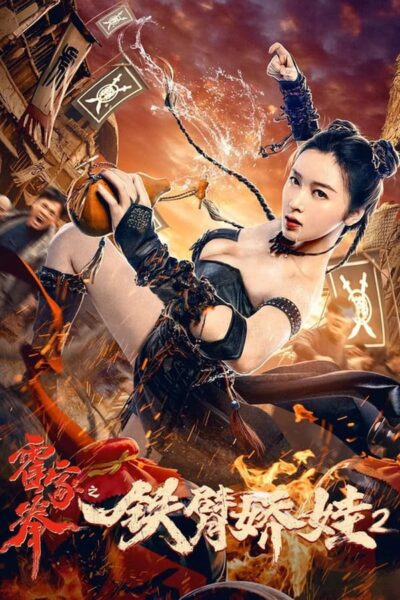
The Queen of Kung Fu 2
★★★½
“More fun when drunk than Supergirl…”
While this follows on from the events of its predecessor, the sequel seems very different in tone. Less comedic, it may also be more traditional, in particular with a heroine who uses a style of alcohol-enhanced fighting, most well-known through Jackie Chan’s Drunken Master films. After losing her one true love A Xi (Li) has abandoned city life in Shanghai, and become a wandering champion of the downtrodden. Her latest target is bandit and warlord wannabe Xia Ba Tian (Yang), who think she’s going to become his latest wife. Not only is he wrong, turns out his three existing wives are also vengeful undercover vixens, although he survives their initial attempt on his life.
He has a plan to set up a fake tea factory, in reality an opium plant, and compel the locals to work for him. Except, the village chosen for the location just happens to be the home town of A, and her parents still live there. Her mother falls victim to the brutality of Xia, driving her father into madness, not helped by opium addiction. Naturally, A isn’t going to stand for that. With the moral support of local guy Mo Bu Yan (Gong) and the more direct assistance of The Ex-Wives Club, she goes up against Xia and his pugilist sidekick, Huang (A). But there may be a more dangerous enemy at hand, in the shape of the army officer with whom Xia was working.
I think it’s interesting the makers opted for a very different direction, though it still has an underlying, and rather communist, subtext of liberating the workers. However, this improves simply by concentrating more on the action. It felt like the original movie put more effort into establishing the setting and the characters – which is why I was a little surprised to see both virtually discarded for the sequel. It does seem like the production values here are less impressive, with “generic Chinese village” replacing the neon glitz of thirties Shanghai. But against that, I found the pacing better, despite a notable lull in the second act. The way it ties back to A’s original sale to Shanghai works, though I’m surprised nobody in town recognizes her, even her own parents.
Yang makes for an impressively hissable villain, despite hair which reminded me of the late Keith Flint from The Prodigy. However, it’s actually Huang who has the best martial arts skills here, with a physical presence which is quite commanding. I wish the final battle had pitted him against our drunken mistress, as the army bosses who actually get that job are a bit underwhelming in comparison. While the editing does continue to teeter on the edge of nausea-inducing at times, I think the fights here are better overall. Li definitely looks to have learned from her previous experience, to the extent I initially thought she was a new, better trained actress entirely.
Dir: Liu Bayin Star: Mengmeng Li, Da Chuan Yang, Xiao Jun Gong, Nuo A
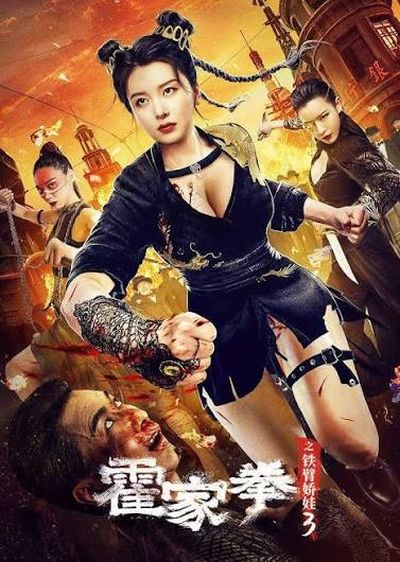
The Queen of Kung Fu 3
★★★
“One more for the road.”
Our favourite drunken mistress, A Xi (Li), returns for the third – and, so far, final – installment of the series. After the rural excursion of part two, it’s back to a more urban setting. Albeit only after a quick excursion home because Xi is trying to escape the criminal life – this goes about as well as it usually does. She returns to Shanghai with her sister Yu (M. Ma) – at least, I’m assuming it’s her sister, explanations are kinda vague. Could be they just trained under the same martial arts master, rather than sharing DNA. However, Shanghai is under the control of Western gangster Hanks (C. Ma – seriously, half the people in this film have the same last name).
As well as trying to put together a school of martial artists who can oppose Hanks, A has to deal with dissension in the ranks. Yu loses an eye during a fight, taking a thrown knife intended for her sister, and is fully intent on getting revenge, regardless of the problems it causes. This eventually leads to a split, and the final fight see A having to take on her friend. To be honest, it’s underwhelming, both in content and resolution. I’ve watched it twice now, and am still not exactly sure what happens at the end. There are certainly considerably better fights earlier on, with A leaning heavily into her drunken boxing style of martial arts from the second movie.
It does feel like the director is gradually getting a better handle on the comedy side. It’s more restrained in this installment, and consequently, more effective. I appreciated a particularly deadpan joke where Yu does, indeed, get revenge by stabbing one of the enemies in the eye, after he calls her a “single-eyed loser.” He then proceeds to stagger around in the background for the rest of the scene, while the rest of the characters calmly discuss their situation. Yet there are also moments of undeniably heartfelt drama, with Yu generally at the heart of these. It’s an odd combination, which probably shouldn’t work, yet in the main, I’d say it does the job well enough – albeit with varying degrees of success across the genres.
Naturally, we’re here for the action in particular and that remains decent in the main. There’s a series of battles over that old standby, who’s the best martial artists, and the struggle for control of the city provides no shortage of opportunities for further conflict even if, as noted, the ending proves a bit of a damp squib. In addition to the unresolved sibling issues mentioned earlier, the storyline remains open in other ways as well, with A basically just wandering off. It appears the makers were interested in continuing the saga (perhaps with further conflict between the sisters). But four years later, we still await the further adventures of A Xi. Maybe the character decided to enter rehab instead and is now teetotal.
Dir: Liu Bayin Star: Mengmeng Li, Muxuan Ma, Osborn Ma, Chao Ma
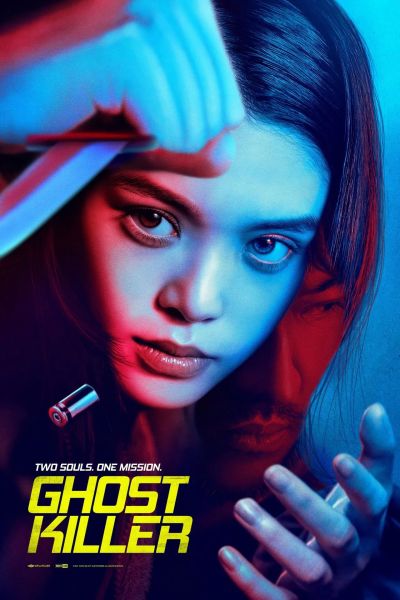
By coincidence, I watched this after Baby Assassins 3, without realizing the star here plays Chisato in that franchise; the director here was also its action director. Discovering the overlap is a minor demerit against Ghost Killer, because it counts as something of a waste of her talents. It’s a lovely idea – if you’re just an action fan in general, then it likely scores half a star higher. However, specifically as an action heroine film, there is room for improvement. It begins with the assassination of an assassin. Hideo Kudo (Mimoto) works for a criminal organization, and his death occurs in somewhat murky circumstances. The spent cartridge used to kill him, takes on his vengeful spirit, and the casing is picked up by an innocent college student Fumika Matsuoka (Takaishi).
After a period of mutual adjustment to being haunted and doing the haunting, Fumika agrees to help Kudo find out who was responsible for his murder, and take revenge. She is the only person who can see and talk to Kudo, and when she grasps his hand, that allows him to take over her body, with all the associated hitman abilities. Along the road to his vengeance, they will have to deal with a date-rapey triple tag-team, as well as another assassin in the same organization, a former student of Kudo, Toshihisa Kagehara (Kuroba). That pair’s relationship is a little fraught, even after Kagehara is convinced about the reality of what is happening.
The first half of this is very solid, highlighted by the performance of Takaishi as both a college student and a vengeful killer – simultaneously, which makes it all the more remarkable. It means she has to be an expert fighter, and somebody who wouldn’t say “Boo!” to a goose, as her and Kudo tussle for control. I feel as if that enough would have been sufficient to propel the narrative of the entire film. However, it ends up diverting into less interesting Yakuza-based activities in the middle, and it almost becomes easy to forget that Kudo is dead. There aren’t really any surprises once the framework of the situation has been established, heading towards the eventual and predictable confrontation between Kudo and his killer.
And that’s the problem. It’s between Kudo and his killer, not Fumika. It’s still “in her body,” and I enjoyed the scenes where Kudo is guiding her to hide – telling her when to go around a pillar, for example. But when battle is joined, the film shows Mimoto doing the fighting, not Takaishi. Don’t get me wrong: it’s a very good fight, and that’s why I’d say a general viewer is still likely to be satisfied by it. But I was looking forward to seeing the actress really getting to let loose. After all, having experienced the Baby Assassins trilogy, there’s no issue about her martial arts abilities. Seeing her largely sidelined at the end was a disappointing way to finish things off.
Dir: Kensuke Sonomura Star: Akari Takaishi, Masanori Mimoto, Mario Kuroba
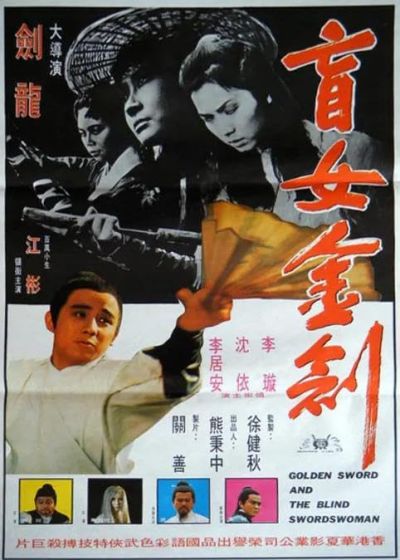
The rating above might actually be a little charitable, and would be for the film as originally released. The only version in which this is now apparently available, is both badly dubbed and pan-and-scanned to a 4:3 ratio. It certainly doesn’t help the film, when there are points at which all you can see of the participants in a conversation is an elbow, sticking in from one side of the screen. It’s close to unwatchable in this format, although I suspect it would barely pass muster, even in its original language and format. It feels like the Taiwanese makers saw Crimson Bat, The Blind Swordswoman, released the previous year and thought, “That looks easy.”
In reality? Not so much. It’s the story of the titular, visually challenged practitioner of the fencing arts (Lee), who is called “Elaine” in the dub. The basic plot sees her out for revenge against the evil Mr. Lee, who appears to be responsible for everything bad in the world, from the murder of her father, to her ocular situation. She isn’t the only one, as there’s another woman, similarly deficient in the eye-chart comprehension department, whose family has also suffered at the hands of Lee. She’s called “Sue-Ann” in the dub, and ends up getting sold off to a whorehouse. I suspect Mr. Lee was probably responsible for this too, if you dig deep enough. There’s another swordsman (Kong), who wanders in and out. In a shocking twist, he can see.
To be blunt, this is the sort of movie which explains why Taiwanese kung-fu films have such a bad reputation. The original Ocean Shores video was titled Zatoichi, the Blind Swordsman: a shameless conceit this version abandoned. As well as being a blatant knock-off (not that Crimson Bat was exactly original, itself being a Zatoichi knock-off of course), it doesn’t feel as if anyone involved in this can do anything more than wave their weapons in the vague direction of each other. This is not helped by the director’s inability to shoot an action sequence: I’m half-convinced he was blind too. The plot is incomprehensibly murky, and there are too many characters, whose purpose often remains frustratingly vague.
Meanwhile, any sense of nuance in the performances is bludgeoned to death by the English language soundtrack. It feels like the voice actors just got fired for incompetence from dubbing porn movies. Or perhaps were homeless people, pulled off the street into the studio at the last minute. Make no mistake though: this does not manage to make it into the “so bad it’s good” category of chop-socky flicks. It’s simply “so bad”. It might be worth trying to track down should you be after a test of cinematic endurance. If you can go longer than any ten minute period in this, without idly scrolling on your phone, you will be doing better than I managed.
Dir: Lung Chien Star: Lee Shu, Shen Yi, Kong Ban, Yee Yuen
a.k.a. Golden Sword and the Blind Swordswoman
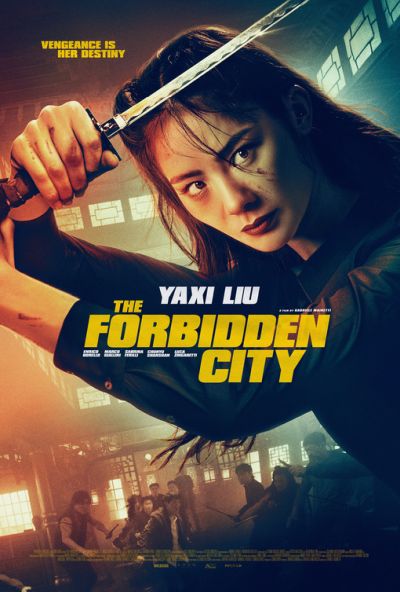
I don’t think I’ve ever seen an Italian kung-fu movie before. To be fair, the bulk of the lifting in that department is done by Chinese actress Yaxi Liu, who was a stunt double in the live-action Mulan. She plays Xiao Mei – yes, this leads to amusing confusion about Xiao and “Ciao!” – who comes to Rome in search of her vanished sister, Yun. The triad folk who brought her from China expect Mei to work as a prostitute, and soon discover that will not be happening, in impressively violent fashion. She flees, and finds an unexpected ally in Marcello (Borello), whose restaurant owning father knew Yun, and who has similarly vanished.
Meanwhile, behind the scenes is growing antagonism between Wang (Shanshan), who runs the local triad group, and Annibale (Giallini), in charge of the traditional organized crime in the area. Mei’s actions, attacking members of both gangs, are not helping, and things only escalate further when she and Marcello discover what happened to their missing relatives. You can probably work out the rest for yourself, providing the count of kung-fu movies seen previously is greater than about three. Just be prepared for it to take its time getting there. This runs a hundred and thirty-nine minutes, and I found that the main problem. While the basic story is solid, there’s a bunch of stuff on the edges that could be discarded, such as Wang’s rapper son.
There are really only four genuine action scenes in this, and given the duration, that spreads them perilously thin. However, all four are really good, to the point you will certainly wish it had more. There’s Mei’s escape from migrant processing (which has a lovely sequence of kitchen-fu); a battle against two of Annibale’s minions; her frontal assault on the restaurant which serves as a front for Wang’s activities; and, finally, her one-on-one fight with Wang himself. The last named felt like it should have been the climax: instead, it takes place when there is still thirty minutes left on the clock, leaving a long, slow march to the end-credits. I’ve not seen such an over-extended ending to a movie since Return of the King.
That said, I never particularly felt the film was boring: there’s stuff here’s which is superfluous, yet is still adequately interesting. This counts as a well-done gender reversal: typically it would be the male who shows up, looking for his sister, and is helped by a waitress. It helps that both Liu and Borello are left to act in their native tongues, communicating largely through Google Translate (!). This avoid the awkward “acting in a second language” which would otherwise have been necessary. I also enjoyed the backdrop of the Eternal City, filmed in a way which emphasizes its grandeur and history. I didn’t feel like my time – and it used up a lot of it – was wasted. Had Mainetti found reason to throw in a few more fights, this could have been a classic, rather than a well-rounded throwaway.
Dir: Gabriele Mainetti Star: Enrico Borello, Yaxi Liu, Marco Giallini, Chunyu Shanshan
a.k.a. Kung Fu in Rome
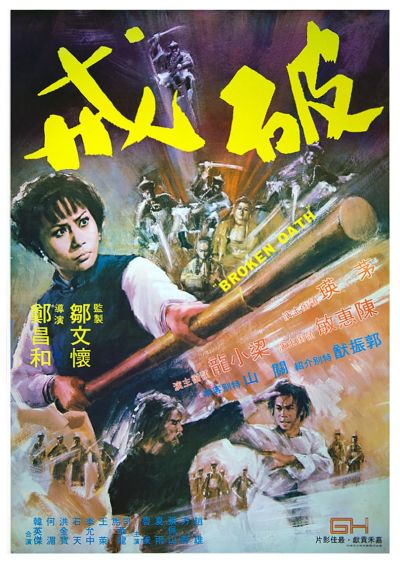
I guess, the old saying “just there for Godzilla” definitely applies to me. This movie is far from perfect, but as long as I see some skilled fighters in fancy costumes battling it out, I’m in. Additional points are given if the respective dub is at least tolerable. Broken Oath is actually an interesting movie. It is kind of a remake of Japanese classic Lady Snowblood with Meiko Kaji from 1973. The difference is that this Golden Harvest production, from producer Raymond Chow, stars Angela Mao.
She was probably the biggest female martial arts star at the time in Asian movies and had the status of a female Bruce Lee. She had starred with Lee in Enter the Dragon and one-time James Bond George Lazenby in two other movies, and also worked with classic directors like Chang Cheh and King Hu. Some of her famous films include Lady Whirlwind, When Taekwondo Strikes, Hapkido, The Fate of Lee Khan and many others. In the seventies. she could hardly walk down a street without being instantly recognized.
Broken Oath was to be her last movie for Golden Harvest which is quite inexplicable because she was a major star – did they let her go or was that her own decision? After that, she began working in Taiwanese movies with obviously lesser budgets. She lasted in movies for quite some time until the early 90s when she retired from film business. In a way it’s a pity that her golden era more or less ended in the 1970s, considering the success stars such as Michelle Yeoh, Jackie Chan, Jet Li or Donnie Yen would later enjoy – and continue to do so – in the West.
Broken Oath follows the story beats of Lady Snowblood quite closely – until it slowly becomes its own thing. It’s comparable to how Temptress of a Thousand Faces freely emulated the French Fantomas movies of the sixties. Like the Japanese original, it starts with a woman sent to prison where she gives birth to a child. On her death-bed she reveals her story of how her husband, General Liu, was killed by a gang of hoodlums; after resisting a rape attempt by one of them, she was sent to prison because the police didn’t believe her.
She gives birth to a girl and asks her “sisters” (inmates) to take care of the child, and to raise it to take revenge for the death of her parents. Instead, one of them, subsequently referred to as the girl’s godmother, gives her to a Buddhist nunnery with the blessings of the abbess who doesn’t think that the cycle of violence should continue. In the English dub, the little girl is called “Lotus”; the subtitles call her Jie Lian, though her original name was Xiao Mei. In any case, she has violent tendencies, though for some unspecified reason these Buddhist scholars are constantly fighting when not listening to the wisdom of Buddha. Lotus ends up killing three drifters in the wood when they try to rape her.
As she has “broken her oath” (to Buddha, I guess), she has to leave the nunnery and goes to live with her godmother, from whom she learns how to become a pickpocket and gets to know her friend and colleague Ah Shu. From there on, the movie loses connection to the original movie which I see as a good thing. Jie Lian finds the murderers, though the plot is essentially hardly more than the bones of a story, rather than a fully fleshed-out narrative. It unnecessarily complicates itself with the introduction of new characters and side-stories, but in the end the overall simplicity is indeed for the better of the movie.
For some time, I wondered if this movie was really worth my attention: I just wanted to see Angela Mao show me how hard and high she could kick. Fortunately, the film didn’t let me down. But it has to be said, it needed more than half of the movie until the whole martial arts machinery kicked – as it were! – into high gear. After being saved by an old, wise man named Qi Feng from the poisonous dust of one opponent. and his subsequent death at the hands of uber-villain Zhao Cai (both took part in the raid on Jie Lian’s parents, with Qi Feng now getting redemption by saving Lotus), things escalated quite quickly.
I have to say, I personally still prefer the melancholic elegiac beauty of Lady Snowblood and Meiko Kaji’s unmistakable charisma (I’m aware that Jim gave that movie a low rating, but for me that Japanese chanbara movie is an absolute high-ranking classic. To each their own, as they say), but the sheer number of ideas that this movie here bombards you with is remarkable. Let’s see… Steel claws as weapons; a liquid, one villain uses to spit fire and burn his victims to death; blades on a string used like a yo-yo. by an opponent played by Sammo Hung; a hat that goes over the whole head of Master Yun (later revealed to be Zhao Cai); sword fights; butterfly needles; group attacks, attack scorpions; and secret passages through stone caves hidden behind book shelves.
Really, the last 30-40 minutes of this go like gangbusters! I only wish the first half of the movie would have been like that, too. Granted, a story needs time to be built up, but let’s be honest: there is not much of a story here. Just the outspoken will for revenge, and that only happens after the godmother tells Lotus about her past. It is revealed at the end that the villains had planned to overthrow the government 20 years ago; General Liu discovered their treachery and was therefore killed. Better a good reason late than never, I guess. These things can’t quite disguise some carelessness in the story-development.
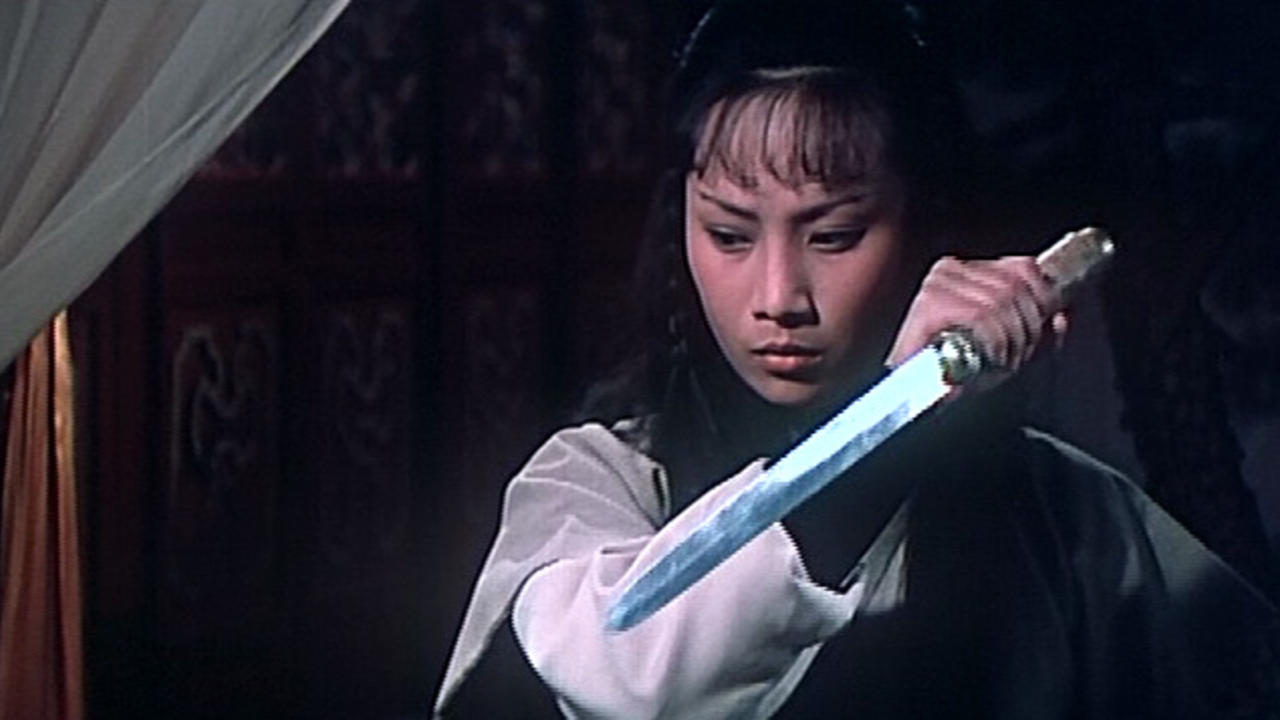
For example, Ah Shu seemed to be built up as a love interest. But he is killed off in a way, as well as the heroine’s reaction to it, which is so casual I wondered why he was even in the story. There is another character supposedly killed – silly me, believing that – who is suddenly back there to support the combatants in their fight again. The whole “she is poisoned and has to be cured” episode feels like a pointless story element, with no good reason except for extending the movie’s run time (admittedly I saw the theatrical version at 98 minutes; there is an extended version around 5 minutes longer), and giving Mao the chance to lay down and take a short break.
The actors here… well, they are Chinese actors in seventies wuxia and act accordingly. One shouldn’t expect Oscar-worthy performances here. The evil villains are evil and the rest of the actors hardly make much of an impression. Angela Mao is adequate as expected, though of course I’m more interested in her fighting skills than her acting talents. She moves elegantly and swiftly and I do believe she can fight off and kill more than half a dozen men, attacking her all at once. She is great “hero material”, and I applaud every action of hers. But I can hardly detect any burning pain underneath, or an insatiably hot appetite for revenge. Comparing that with the painful, tragic, almost longing for death portrayal of Kaji might be unjust. But it is also inevitable.
Of course, the dubbing doesn’t help. Yes, one should see movies like this in the original language version with subtitles, but I prefer a dub when I can get one. I don’t know from when this one comes (possibly the movie’s release in 1977), but the performances aren’t Anthony Hopkins and Jodie Foster acting, to say the least. I’m just happy to get lip-synched dialogue. It mostly plays inside buildings, temples or halls, giving the impression this is first and foremost a studio production. There are only a few scenes on location, though these are nice to look at. While I don’t rank the movie lower for it, I liked the beautiful, natural surroundings of Lady Snowblood much more. It’s just a matter of taste.
That said, as a whole I liked the production design, which makes you feel that the movie’s budget went into it, along with the historical Chinese costumes and some effects. It’s in contrast to Mao’s later Taiwanese films, where I can confirm she was working on a notably lower quality standard. This movie definitely has its qualities. As an old saying (incorrectly attributed to Oscar Wilde) goes: “Imitation is the sincerest form of flattery”. This might be true not only for Lady Snowblood, which Quentin Tarantino paid tribute to in Kill Bill – Vol. 1, but also for Broken Oath, as the fight between Sammo Hung and Angela Mao is definitely mirrored in the one between Chiaki Kuriyama and Uma Thurman.
This is not our first time here attending the Godfrey Ho rodeo. Indeed we wrote quite warmly about Lethal Panther., and Cynthia Rothrock vehicle Undefeatable had its moments. But this is our first experience on this side of the heady, WTF? to be obtained when Ho does what he’s best known for doing. Which is, splicing entirely new footage into an unrelated movie, to fit whatever marketing end he’s aiming towards. He was most notorious for this during the ninja film craze of the eighties, when he used this tactic to splice a couple of scenes into either cheap or unfinished movies from the far East, so they could be sold to the ninja-crazy VHS audience.
However, as this example shows, he wasn’t above taking basically the same approach for the then popular girls-with-guns genre out of Hong Kong. We’ve already covered many examples of these, such as Angel. Its success spawned any number of follow-up, both official sequels, and unofficial knock-offs with the word “angel” in the title, e.g. Angel Force or Angel Terminators 2. This would be one of the latter, which takes what appears to be a Thai action film of the same general kind – cops vs. drug dealers – and wraps around it footage about Paula (Bells), an American reporter who gets hold of photos incriminating a businessman as a drug lord. She has to survive, while back in Thailand, the police do battle with the drug runners.
You can tell, because the only points at which the original film overlaps with the new footage is during awkward phone conversations. I think I would far rather have watched a decent i.e. wide-screen print of the original movie, rather than this badly-dubbed hack job. Sadly, I’ve not been able to determine the original movie used, but we’ve seen our share of decent Thai girls-with-guns action. I won’t lie, I was amused here by the pirating of various New Wave songs from the Pet Shop Boys and The Art of Noise. This reaches its ludicrous peak during a disco scene where customers dance to A Flock of Seagulls song, Telecommunication. The footage is sped-up, like some of the action scenes – which is a shame, because the fights really do not need it.
It’s very equal opportunity too, with both sides having their share of women, giving and receiving damage. Indeed, the best fight sees two female cops brawl against four thugs sent to kidnap them. It escalates from fists to crossbow-fu, with a number of highly wince-inducing moments. But all too soon, you’re back in the crappy insert footage, which ends with the laughable line of dialogue quoted top. Though to be a hundred percent sure you get the point, this is followed up with, “Criminals aren’t able to escape the net of justice.” There’s likely a decent film buried somewhere in here. You just need a pick-axe and a wheelbarrow to find it.
Dir: Godfrey Ho Star: Laura Bells, Richard Gibb, Brent Gilbert, Daniel Welk
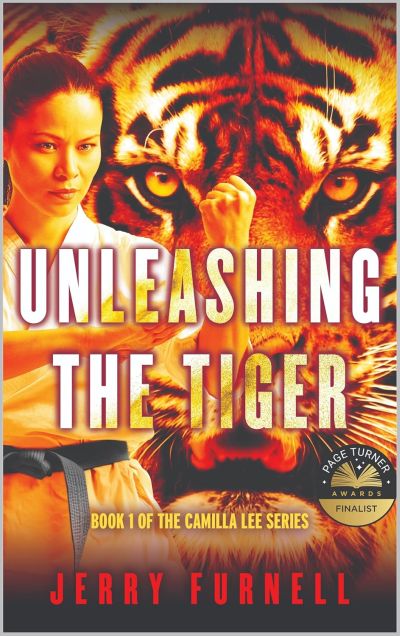
I don’t subscribe to the belief that authors need to be the same sex, race, religion or whatever as their characters. A good author can put you inside the head of their heroine, even if they’re a different species, an extra-terrestrial, or whatever. But there needs to be an authenticity of voice for it to work. This is where, for example, Quentin Tarantino fails for me: his characters almost always end up sounding like Quentin Tarantino. And I wrote that before noticing the blurb on Amazon actually says, “Jerry Furnell exudes a Quentin Tarantino vibe in his narrative.” That’s meant as an incentive; I’d have taken it as a warning.
For the problem here is similar, exacerbated by the adoption of a first-person narrative. The heroine is Camilla Lee, described as “an eighteen-year-old Kung Fu black belt”, of Chinese extraction, who lives in Australia. The author, however, is a British man in his sixties, and frankly, it shows. Camilla never comes off as anything except sounding like a fairly dubious fantasy of what a teenage girl is like. Not least because the instant Camilla turns eighteen, she immediately becomes a raging nympho. It’s borderline creepy. And indeed, one scene of sexual assault removes the word “borderline” from that sentence. I’m not sure if it’s intended to be repellent or arousing, and as a result ends up in a very odd place.
The story is okay, if familiar. Camilla’s parents are murdered in a home invasion, and she barely survives. She’s convinced this wasn’t a burglary gone wrong, and eventually discovers it’s connected to her father having betrayed his Triad employers back when he lived in Hong Kong. She heads back there – pausing only to give the passenger sitting next to her a hand-job, I kid you not – to confront Mr. Wu, the leader of the Seven Dragons gang and make him pay for his crimes. Oh, and she’s also getting bullied at school. She makes them pay too, in no uncertain fashion. Although only after Camilla has engaged in self-mutilation, and been prevented from committing suicide by the unexpected arrival of a friendly dog in the park.
To be fair, in the “From the author” section on Amazon, Furnell cheerfully admits, “The mix of sex and violence will appeal to some readers and appall others. Reviews suggest you will either love it or hate it.” He’s not wrong, and no prizes for guessing on what side of the fence I fall. Which is weird, because regular site visitors will know, I’m hardly averse to gratuitous sex and senseless violence. Here, the latter is fine, with some interesting fights as Camilla works her way through the Seven Dragons to meet her nemesis. But even here, she has to dress up as a prostitute to get into the building. And did I mention the lesbian sex? Though Furnell does lag Tarantino in one department. At least there’s no foot fetishism.
Author: Jerry Furnell Publisher: Self-published, available through Amazon, both as a paperback and an e-book Book 1 of 3 in the Naked Assassin Series.
I’m very cautiously giving this one our middest of mid-tier ratings, which I reserve the right to change in future. Because this one showed up on one of the… “less official”, let’s say Chinese movie channels on YouTube. While the likes of Youku and iQiyi make the effort to deliver subtitles which are typically at least intelligible, I’d say the subs here reached such a level, only about one line in five. Then I still had to figure out cultural context for this period piece, which also seemed to reference local folklore. I guess I should be grateful the soundtrack here was intact. The previous night, I’d watched another film on the same channel which, I kid you not, had random bursts of musak injected, presumably to avoid YouTube’s automated copyright system.
I have to discuss all this, because consequently, I really can’t describe the plot in more than the vague terms. It takes place in Shang Dynasty China, the earliest period for which there’s evidence, when the country was under threat from invasion by the Luo people. A heroine arose to stand against them, Fu Hao (You), who was destined by fate to be the country’s saviour. [There’s something here about her being descended from a heavenly bird, but I am absolutely vague on the details there!] She teams up with the Emperor’s heir, Wu Ding (Ma), despite the objections of his father. For the emperor wants him to marry a noble-born, yet less heroic woman (Li), rather than a peasant girl like Fu Hao.
It reminds me of the various versions of the Mulan legend, with a plucky heroine coming out of nowhere, when the country needs her most. There doesn’t appear to be quite the same element of needing to hide her identity; though for reasons discussed above, it’s hard to tell. I will say, it looks better than I anticipated, with some impressively large-scale battles. I was a bit concerned they were going to make her fly, in line with her avian lineage. Fortunately, Fu Hao’s talents appear to lie particularly in things like mountain climbing; there’s a nice moment where she and Wu Ding jump out a high window to escape, landing on a kite being flown by an ally.
If the broad strokes here are all decent, there’s a severe lack of detailed depth – again, that may be me more than the film. It does also feel rather comfortable and safe. It ended up exactly where I expected – she basically sends the Luo leader home, after giving him a good telling-off – and I don’t think any significant plot development (of the ones I understood!) came as the slightest surprise. I get the sense it may have been quite jingoistic, pitting the heroic Chinese against evil foreign invaders. Hardly the first there, and it wasn’t especially egregious. If this ever appears in a more intelligible version, I’ll probably give it a re-review. I feel it deserves that.
Dir: Dong Wei Star: You Jingru, Ma Xueyang, Ma Shuliang, Li Linfei
This was originally titled after its heroine, but since that obviously wouldn’t work in the West, it was changed to become about as generic a title as you could get. Behind this is a decent little flick, which is also worthy of note, because it may be the first Shaw Brothers action film to be directed by a woman. Pao-Shu Kao had been an actress with the studio since 1958, but this ended up being her sole movie as director for Shaw, as she started her own company, Park Films, with her husband. But this, her debut, is the highest-rated on the IMDb of the eleven features she helmed, at a respectable 6.8.
The heroine is Feng Fei Fei (Ho), who gets distressing news when her nephew, Hu Tou (Meng) shows up. He narrowly escaped with his young life after he and his mother, Fei Fei’s sister, were set upon by brigands, with Mom being killed. Fei Fei isn’t having that, so immediately sets out to take revenge on those responsible. She tracks down the first one, but this is where things get awkward. Because it turns out he’s Chin Lien Pai (Nam), the scion of a family friend, and worse, is the person to whom Fei Fei has been betrothed since they were young. While it’s a bit vague on the details, I guess vengeance would bring dishonour to her relations. Or, at least, make subsequent family get-togethers more than a little uncomfortable.
The first half-hour of this is really good, likely peaking with a hellacious fight at a brothel, where Fei Fei takes on what appears to be the entire population of China. It’s also notable, because next door, Hu Tou is also fighting, and it’s quite impressive too. East Asian films, be they Chinese, Taiwanese or from Hong Kong tend to use kids as comic relief, and the results tend to be grating and irritating. Not so here, with Hu Tou taken seriously, and allowed to take part in battles that work because he uses quickness and agility, not strength. But it is mostly Ho’s film and she gets a slew of solid fights, including against her fiancé’s mother, defending her son.
Unfortunately, after the brothel brawl, the film does tend to become a bit chatty and, worse, spends too much time on Chin and the other bad guys. It may be an attempt by Kao to deepen the portrayal of the villains beyond the shallow. However, guess what? I don’t care. The original attack firmly cements them as murderous scum-bags who deserve to die, and nothing is going to change my mind on this, thank you very much. The only interesting section sees Chin’s parents sharply differ in reaction to their son’s crimes: Dad thinks it brings shame on the family, Mum (as noted above), not so much. Fortunately, the ending gets back to the fighting, though it’s disappointing how Fei Fei needs help. Entertaining enough, yet after how if began, it seems a lost opportunity.



 Despite this being from Hong Kong, I’m actually tagging this one in the “Pinky” category, because in a lot of ways, it feels closer to a pinky violence movie from Japan, being basically the story of a posse of bad girls. Except, this being Hong Kong in the seventies, where even juvenile delinquents were expected to hold down a responsible job. In the case of Fung Ying (Ping), this is working in a massive garment shop. It feels almost like prison labour, not least because of various predatory types, to whom Fung takes exception, becoming an unofficial shop steward. It helps she’s a bit of a bad girl herself, a former gang member.
 Of late, it seems that the Western action heroine has been staggering from one disaster to another, culminating in one of the year’s biggest flops,
  For a film which barely scrapes past the seventy-five minute mark, it feels like there’s a lot going on here. In addition, of course, to the martial arts promised by the title. It likely also claims the title for heroine with the shortest name, this being A Xi (Li). I’d have said her first name might be “Ah”, but the subtitles and other sources are quite insistent on her being “A”. Anyway, she’s a rural village girl, who is being brought to Shanghai to act as a nightclub hostess. Except the martial arts skills she rapidly demonstrates after her arrival, killing one of the local crime bosses after he murders another hostess, make her better suited for another position.
  While this follows on from the events of its predecessor, the sequel seems very different in tone. Less comedic, it may also be more traditional, in particular with a heroine who uses a style of alcohol-enhanced fighting, most well-known through Jackie Chan’s Drunken Master films. After losing her one true love A Xi (Li) has abandoned city life in Shanghai, and become a wandering champion of the downtrodden. Her latest target is bandit and warlord wannabe Xia Ba Tian (Yang), who think she’s going to become his latest wife. Not only is he wrong, turns out his three existing wives are also vengeful undercover vixens, although he survives their initial attempt on his life.
 Our favourite drunken mistress, A Xi (Li), returns for the third – and, so far, final – installment of the series. After the rural excursion of part two, it’s back to a more urban setting. Albeit only after a quick excursion home because Xi is trying to escape the criminal life – this goes about as well as it usually does. She returns to Shanghai with her sister Yu (M. Ma) – at least, I’m assuming it’s her sister, explanations are kinda vague. Could be they just trained under the same martial arts master, rather than sharing DNA. However, Shanghai is under the control of Western gangster Hanks (C. Ma – seriously, half the people in this film have the same last name).
  By coincidence, I watched this after
  The rating above might actually be a little charitable, and would be for the film as originally released. The only version in which this is now apparently available, is both badly dubbed and pan-and-scanned to a 4:3 ratio. It certainly doesn’t help the film, when there are points at which all you can see of the participants in a conversation is an elbow, sticking in from one side of the screen. It’s close to unwatchable in this format, although I suspect it would barely pass muster, even in its original language and format. It feels like the Taiwanese makers saw
  I don’t think I’ve ever seen an Italian kung-fu movie before. To be fair, the bulk of the lifting in that department is done by Chinese actress Yaxi Liu, who was a stunt double in the live-action
  I guess, the old saying “just there for Godzilla” definitely applies to me. This movie is far from perfect, but as long as I see some skilled fighters in fancy costumes battling it out, I’m in. Additional points are given if the respective dub is at least tolerable. Broken Oath is actually an interesting movie. It is kind of a remake of Japanese classic
  Broken Oath follows the story beats of Lady Snowblood quite closely – until it slowly becomes its own thing. It’s comparable to how
  For example, Ah Shu seemed to be built up as a love interest. But he is killed off in a way, as well as the heroine’s reaction to it, which is so casual I wondered why he was even in the story. There is another character supposedly killed – silly me, believing that – who is suddenly back there to support the combatants in their fight again. The whole “she is poisoned and has to be cured” episode feels like a pointless story element, with no good reason except for extending the movie’s run time (admittedly I saw the theatrical version at 98 minutes; there is an extended version around 5 minutes longer), and giving Mao the chance to lay down and take a short break.
 This is not our first time here attending the Godfrey Ho rodeo. Indeed we wrote quite warmly about
  I don’t subscribe to the belief that authors need to be the same sex, race, religion or whatever as their characters. A good author can put you inside the head of their heroine, even if they’re a different species, an extra-terrestrial, or whatever. But there needs to be an authenticity of voice for it to work. This is where, for example, Quentin Tarantino fails for me: his characters almost always end up sounding like Quentin Tarantino. And I wrote that before noticing the blurb on Amazon actually says, “Jerry Furnell exudes a Quentin Tarantino vibe in his narrative.” That’s meant as an incentive; I’d have taken it as a warning.
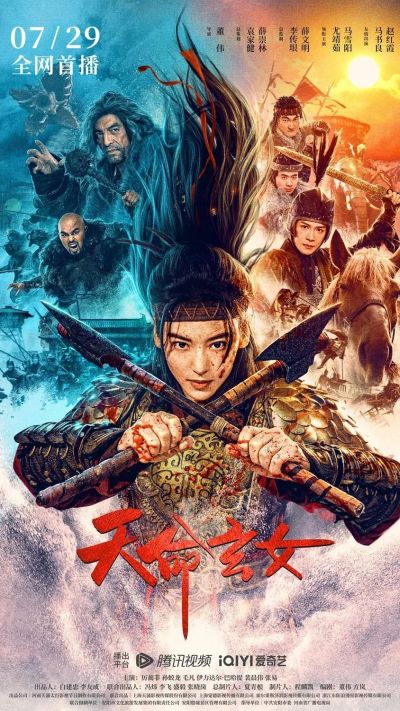 I’m very cautiously giving this one our middest of mid-tier ratings, which I reserve the right to change in future. Because this one showed up on one of the… “less official”, let’s say Chinese movie channels on YouTube. While the likes of Youku and iQiyi make the effort to deliver subtitles which are typically at least intelligible, I’d say the subs here reached such a level, only about one line in five. Then I still had to figure out cultural context for this period piece, which also seemed to reference local folklore. I guess I should be grateful the soundtrack here was intact. The previous night, I’d watched another film on the same channel which, I kid you not, had random bursts of musak injected, presumably to avoid YouTube’s automated copyright system.
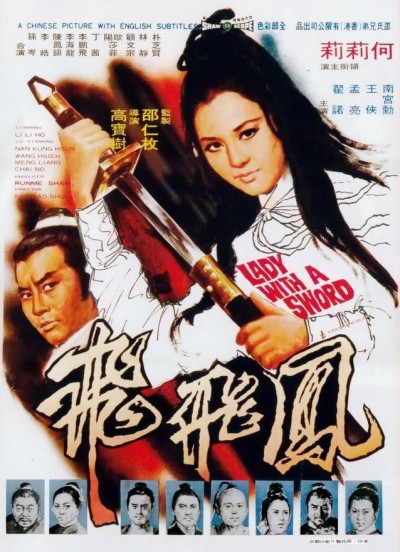 This was originally titled after its heroine, but since that obviously wouldn’t work in the West, it was changed to become about as generic a title as you could get. Behind this is a decent little flick, which is also worthy of note, because it may be the first Shaw Brothers action film to be directed by a woman. Pao-Shu Kao had been an actress with the studio since 1958, but this ended up being her sole movie as director for Shaw, as she started her own company, Park Films, with her husband. But this, her debut, is the highest-rated on the IMDb of the eleven features she helmed, at a respectable 6.8.