

★★★
“Social soap with some punch.”
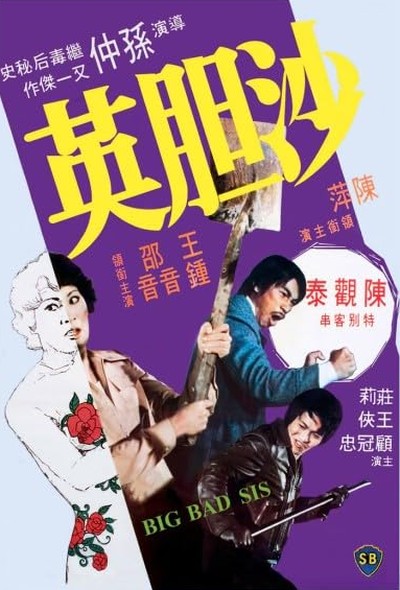 Despite this being from Hong Kong, I’m actually tagging this one in the “Pinky” category, because in a lot of ways, it feels closer to a pinky violence movie from Japan, being basically the story of a posse of bad girls. Except, this being Hong Kong in the seventies, where even juvenile delinquents were expected to hold down a responsible job. In the case of Fung Ying (Ping), this is working in a massive garment shop. It feels almost like prison labour, not least because of various predatory types, to whom Fung takes exception, becoming an unofficial shop steward. It helps she’s a bit of a bad girl herself, a former gang member.
She teams up with a couple of colleagues, and starts helping her co-workers solve their problems. For instance, one girl has been forced into prostitution to pay off her brother’s gambling debts, or another who was dumped by her sleazy boyfriend after she got pregnant (once you get past the first five minutes, there’s a theme here that, if not all men are scum, all scum are men). Needless to say, Fung’s past comes back to haunt her. The factory owner, who I guess is fairly decent as sweatshop proprietors go, is subject to a hostile takeover attempt by her old boss Dai Goa (Hsieh). When Fung derails this, he’s none too happy, and kidnaps her with the intention of burning her alive.
The middle of this is rather too much social drama for my tastes: if Ken Loach was to make a martial arts movie, the end result might be something like this. Fung and her allies seem more concerned with social equity, forming a union to fight against the exploitation of the working classes, sexist men, and so on. Not quite what I expected from a Shaw Brothers production in the mid-seventies. It all comes off as a bit earnest, though the copious nudity – all female, naturally – makes it a little difficult to accept fully any messages of feminist empowerment. It does, however, act as a lovely time-capsule of Hong Kong in that era, in every area from hairdressing through to home decoration.
While well-made, it’s a bit dull until the end. Fung’s kidnapping is followed by a rescue attempt, which leads to a massive extended brawl on a building site, that’s as good as I’ve seen from any heroine of the era. This takes full advantage of the environment, Fung swinging a shovel as if born to it. Naturally, violence cannot be seen to prevail, so this ends in the moralistic style you would, with the authorities – notable by their absence to this point – showing up. Fung and her old pal Shing (Chen) take responsibility for their actions, and are led off to the cheers of their workmates. This finale goes a long way to redeem things, though it’s still guilty of putting its message before the mayhem.
Dir: Chung Sun
Star: Ping Chen, Chung Wang, Chen Kuan-Tai, Hsieh Wang
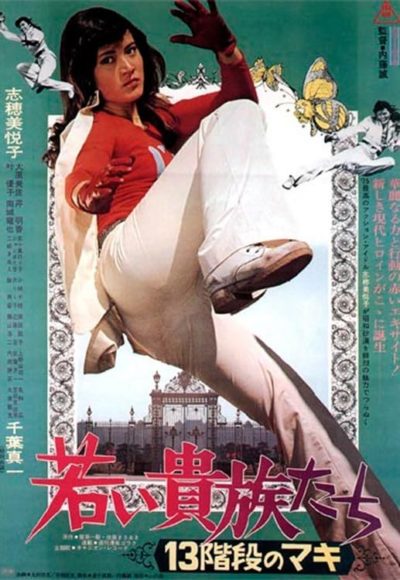 Made by Toei, this is very much a straightforward “pinky violence” film in concept, telling the story of the Wildcats and, in particular, their leader Maki Hyuga. What separates this – in ways both good and bad – from the pack is that Maki is played by Sue Shiomi, best known for her roles in the
 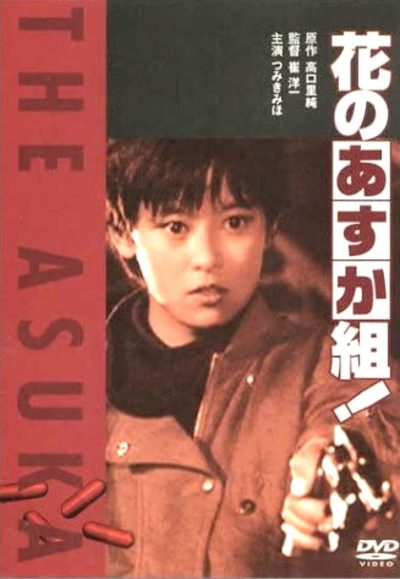 This is based on a 34-volume manga series by Satosumi Takaguchi, which began publication in 1985. It is far from the only adaptation. There have also been two OVAs, a live-action drama series, a different feature version made in 2009, and even a pair of drama CDs. This feature, however, is the only one available in the West to date with subtitles. It takes place at an indeterminate point in the future – the year is given as 199X – when “the streets are overflowing with drugs and violence”. There’s a battle for control, which conveniently seems to be along gender lines. The unfortunately naned male “Red Nose Gods”, under boss Toki Masamune, are going up against the all-girl Hibari Group. They are named after their leader (Mikari), who speaks only through her lieutenant, or with the aid of an artificial voice-box.
 This was among the very last of the “pinky violence” films made by the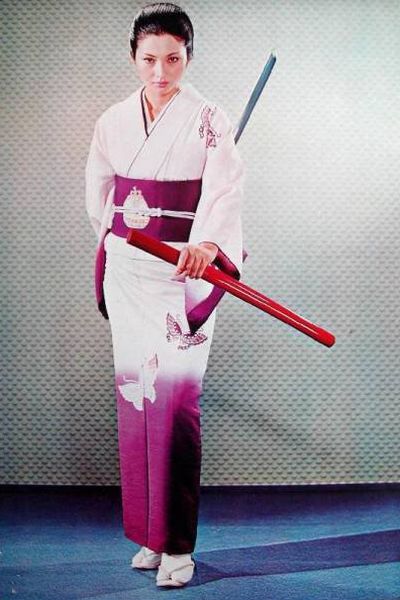

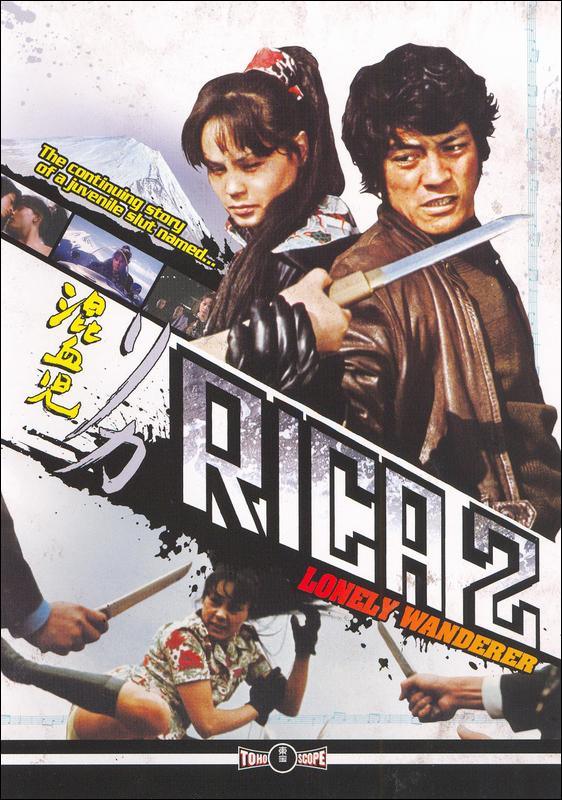
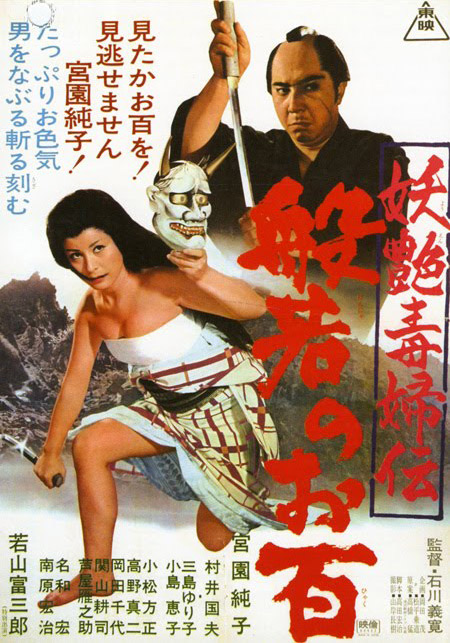
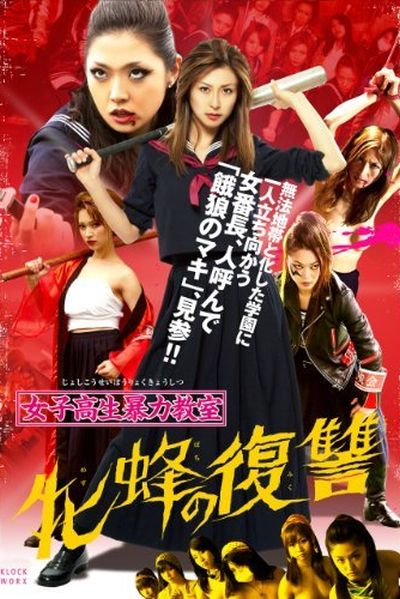
 Following on more or less directly from the events of