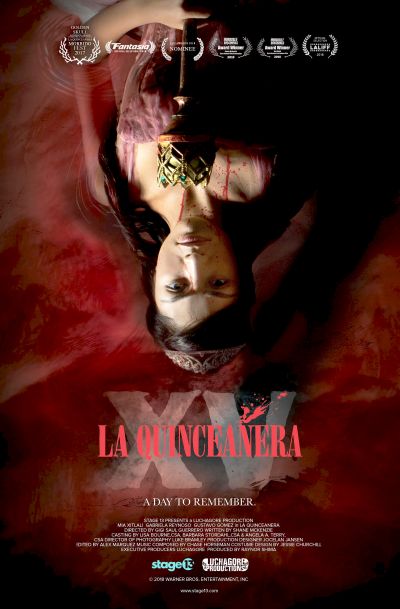
If it hadn’t been for the lack of an ending, this would likely have got a seal of approval. The problem is, this web series came out in 2017, and as we close in on a decade later, I am beginning to suspect we may never see all the loose ends addressed. It begins with a quinceanera party, the traditional Mexican celebration to mark the coming of age of a young woman. In this case, it is being thrown in honour of Alejandra Santos (Xitlali), whose father Reynaldo (Mendoza) runs a Mexican restaurant. She really doesn’t want to be there, and her doubts prove well-justified, because it gets gate-crashed by Chavo Del Rio (Retamal) and his thugs.
I was going to tag this as “Die Hard at a quinceanera“, since initially that’s what seems to be happening. Turns out Dad made a business deal with very sketchy people to “hold” various items. When some of these go missing, he is blamed (it’s actually due to ne’er-do-well son Santiago and his pal), leading to the unexpected arrival of Chavo. Reynaldo’s denials lead to things getting very bloody, but Alejandra is able to get the drop on one of the thugs: there’s a death by sceptre which has to be the most symbolic weapon used, since Zoe Tamerlis used an iron to crack a rapist’s skull in Ms. 45. It’s after this, where things divert significantly from the expected route.
I will admit that Alejandra’s transition from truculent teenager to avenging angel is rather abrupt. However, it does eventually become clear that she has a lot of heritage on her side, not least her abuela or grandmother (Reynoso), who clearly has some history of her own. Indeed, on the Del Rio side there’s no shortage of bad-add mujeres either: the matriarch, Bertila (Bertila Damas), has some very strong views on this topic. By the end, it’s almost girls with guns the whole way down on both sides (albeit for some quite loose definition of “girls”, in regard to their age!). There has been a lot of ground covered, in around only seventy minutes: this is a web series of seven episodes, each being little more than ten minutes long.
I was very surprised to discover this was a Canadian production, filmed in and around British Columbia. There’s a strong Southwestern feel (something I’m familiar with, living just a couple of hours from the Mexican border), and I will certainly be checking out more from the makers. At first, I had concerns it would end up being more of a teen soap opera – think The OC, with a side of salsa. Fortunately, the company name, Luchagore Productions, is a clue that it won’t pull its punches: I think the moment I realized this was where a party guest had his mustache carved off his face with a machete. Yeah, it’s like that, and the red stuff flows like the Rio Grande thereafter. Just do not expect any resolution.
Of late, it seems that the Western action heroine has been staggering from one disaster to another, culminating in one of the year’s biggest flops, Supergirl. I’m not too concerned. The business is cyclical, and I’ve been covering the genre long enough to have survived similar downturns in the past. We lived through Cutthroat Island, Catwoman and Aeon Flux. I think we’ll survive the commercial failures of Furiosa, Ballerina and Madam Web. But a reduction in quantity out of the major Hollywood studios seems likely. However, as in other fields, the Chinese appear willing to step in and pick up the slack, filling the need with lower-cost imports, of varying quality.
I first got into the Chinese streaming services like Youku and iQIYI for their creature features, in early 2022. The oddly charming title Escape of Shark proved the gateway through which I discovered the kind of movies that the late, lamented SyFy Channel used to screen on Saturdays. Not just sharks, but crocodiles, snakes, bees and even cockroaches were the threat to humanity, and I’ve been covering these When Chinese Animals Attack films on my other site. Of course, YouTube gonna YouTube, and the more of direct-to-streaming Chinese films you watch, the more crop up in your feed. I realized they weren’t limited to those movies, but regular action as well. And that included titles which were very much a fit for this site.
It looks like the first such was a cross-over title: Huge Shark, an entry definitely inspired by The Shallows. But since then, there have been a steady stream of such entries: while the quality has been variable (to put it mildly), the best of them are as good as any straight-to-streaming product produced in the West. Sniper Goddess, for example, was among the most purely enjoyable films I saw in 2025. Some have proved successful enough to kick-start their own franchise – that’s not something we’ve seen much here of late. I previously wrote about the Angels of Vengeance trilogy, and figured it was high time to dip my toe into the Chinese waters once again. So, here’s another trilogy: this time, three period pieces set in and around Shanghai between the wars.
The Queen of Kung Fu
★★★
“The queen is crowned.”
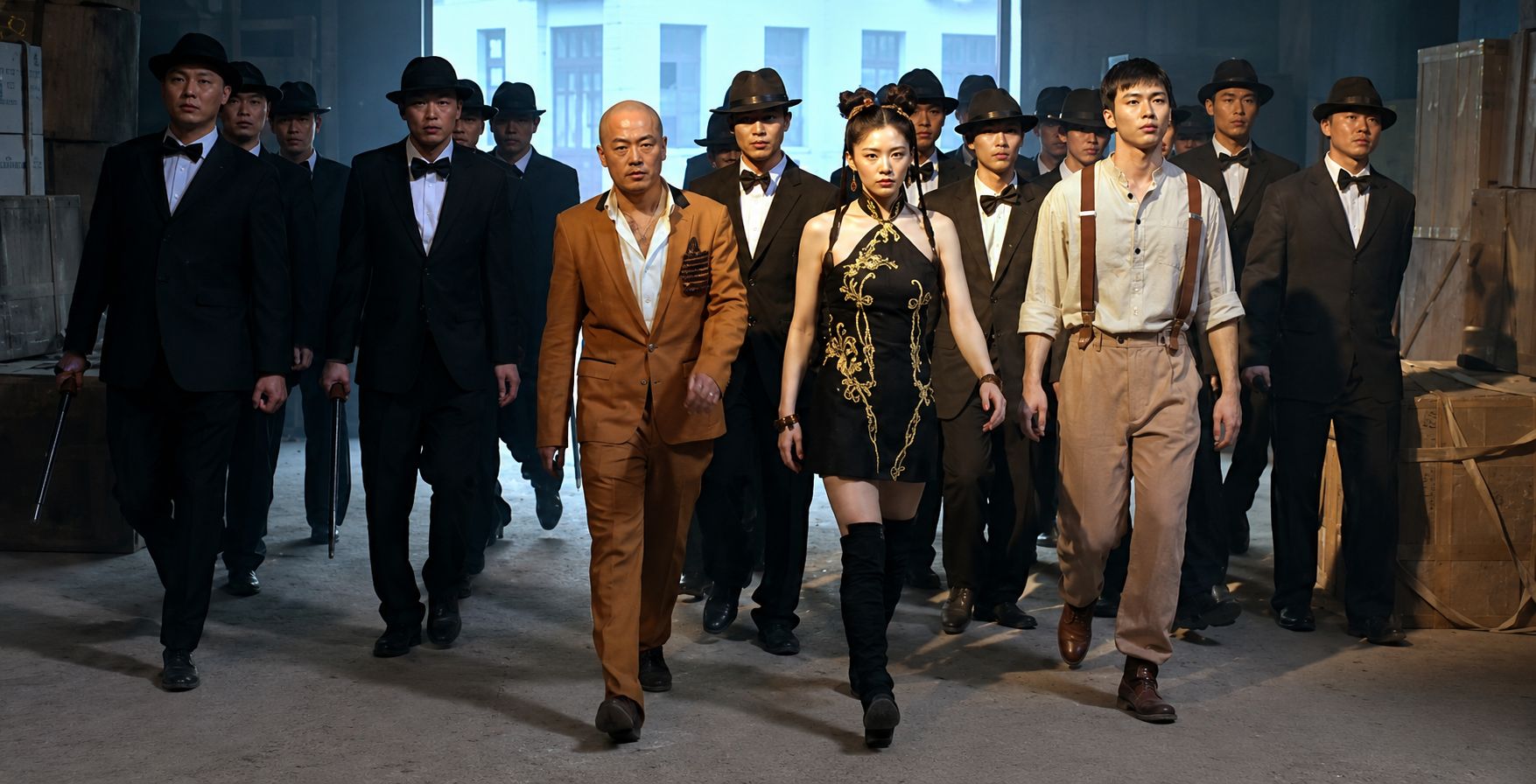
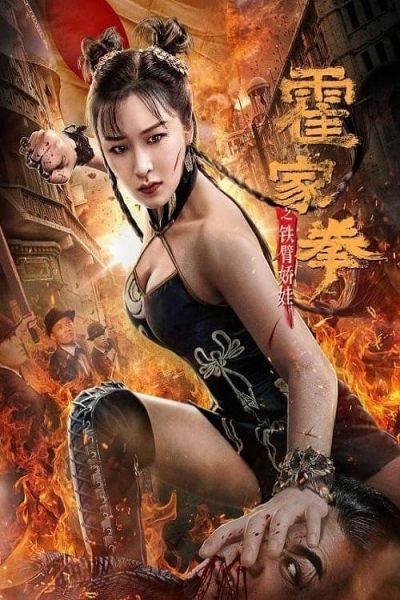
For a film which barely scrapes past the seventy-five minute mark, it feels like there’s a lot going on here. In addition, of course, to the martial arts promised by the title. It likely also claims the title for heroine with the shortest name, this being A Xi (Li). I’d have said her first name might be “Ah”, but the subtitles and other sources are quite insistent on her being “A”. Anyway, she’s a rural village girl, who is being brought to Shanghai to act as a nightclub hostess. Except the martial arts skills she rapidly demonstrates after her arrival, killing one of the local crime bosses after he murders another hostess, make her better suited for another position.
After further proof of her abilities, she’s taken under the wing of the overall head of the area, the eunuch Pei Xiang Lan. She is given her own nightclub to run, and adopts a strict policy of wholesome fun: so, no opium, prostitution or gambling. Whether despite or because of this, the venue flourishes. But when she tries to expand this policy to the rest of the entertainment district, she begins to get significant push back. She is helped by her consigliere (or whatever the Chinese equivalent might be!), Huo Yun Sheng (Ye). He has the schooling to assist the illiterate Xi, who is smart, but more inclined to solve problems with her fists than her brain or tongue.
Not helping matters: the increasing influence of the Japanese in Shanghai, who regard the local population as their inferiors. Or the cops, both good and bad. Oh, and Xi faints at the sight of blood, which is probably not the best trait for a martial artist. So, yeah. this is a busy little film, which helps ensure that the (sometimes sizeable) gaps between the fights are generally interesting enough to keep your attention engaged. I think it’s the characters which are key here. Even relatively minor supporting players are efficiently drawn in a way which I found engaged them. Although there were some plot points and elements which I strongly suspect lost a considerable amount in translation. This applies particularly to the comedic aspects: some moments had the pacing of humour, but I was baffled regarding the joke.
In terms of martial arts, it’s solid rather than spectacular. The action is quite heavily wire-fu, but it’s not as if it’s trying to hide this in any way. While the editing can charitably be designed as crisp, there are occasional moments where Li is present for long enough to give the impression she knows what she is doing. I also have to give a special shout-out to the sets and overall production design. These have a quality which is at a level befitting a movie of a far bigger budget, and the whole thing looks a solid piece of cinema. Good enough to leave me interested where things might go.
Dir: Liu Bayin Star: Mengmeng Li, Leif Ye Xiao-Kai, Qing Feng, Shengli Wang
The Queen of Kung Fu 2
★★★½
“More fun when drunk than Supergirl…”
While this follows on from the events of its predecessor, the sequel seems very different in tone. Less comedic, it may also be more traditional, in particular with a heroine who uses a style of alcohol-enhanced fighting, most well-known through Jackie Chan’s Drunken Master films. After losing her one true love A Xi (Li) has abandoned city life in Shanghai, and become a wandering champion of the downtrodden. Her latest target is bandit and warlord wannabe Xia Ba Tian (Yang), who think she’s going to become his latest wife. Not only is he wrong, turns out his three existing wives are also vengeful undercover vixens, although he survives their initial attempt on his life.
He has a plan to set up a fake tea factory, in reality an opium plant, and compel the locals to work for him. Except, the village chosen for the location just happens to be the home town of A, and her parents still live there. Her mother falls victim to the brutality of Xia, driving her father into madness, not helped by opium addiction. Naturally, A isn’t going to stand for that. With the moral support of local guy Mo Bu Yan (Gong) and the more direct assistance of The Ex-Wives Club, she goes up against Xia and his pugilist sidekick, Huang (A). But there may be a more dangerous enemy at hand, in the shape of the army officer with whom Xia was working.
I think it’s interesting the makers opted for a very different direction, though it still has an underlying, and rather communist, subtext of liberating the workers. However, this improves simply by concentrating more on the action. It felt like the original movie put more effort into establishing the setting and the characters – which is why I was a little surprised to see both virtually discarded for the sequel. It does seem like the production values here are less impressive, with “generic Chinese village” replacing the neon glitz of thirties Shanghai. But against that, I found the pacing better, despite a notable lull in the second act. The way it ties back to A’s original sale to Shanghai works, though I’m surprised nobody in town recognizes her, even her own parents.
Yang makes for an impressively hissable villain, despite hair which reminded me of the late Keith Flint from The Prodigy. However, it’s actually Huang who has the best martial arts skills here, with a physical presence which is quite commanding. I wish the final battle had pitted him against our drunken mistress, as the army bosses who actually get that job are a bit underwhelming in comparison. While the editing does continue to teeter on the edge of nausea-inducing at times, I think the fights here are better overall. Li definitely looks to have learned from her previous experience, to the extent I initially thought she was a new, better trained actress entirely.
Dir: Liu Bayin Star: Mengmeng Li, Da Chuan Yang, Xiao Jun Gong, Nuo A
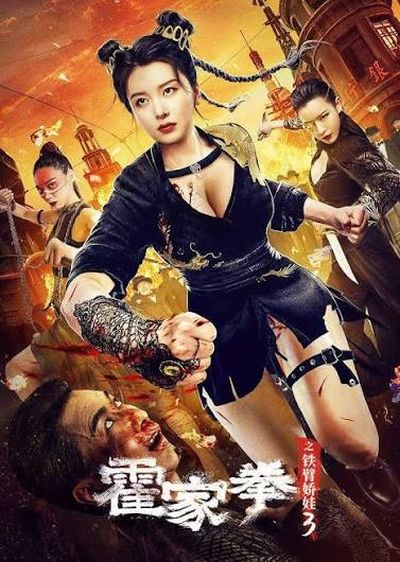
The Queen of Kung Fu 3
★★★
“One more for the road.”
Our favourite drunken mistress, A Xi (Li), returns for the third – and, so far, final – installment of the series. After the rural excursion of part two, it’s back to a more urban setting. Albeit only after a quick excursion home because Xi is trying to escape the criminal life – this goes about as well as it usually does. She returns to Shanghai with her sister Yu (M. Ma) – at least, I’m assuming it’s her sister, explanations are kinda vague. Could be they just trained under the same martial arts master, rather than sharing DNA. However, Shanghai is under the control of Western gangster Hanks (C. Ma – seriously, half the people in this film have the same last name).
As well as trying to put together a school of martial artists who can oppose Hanks, A has to deal with dissension in the ranks. Yu loses an eye during a fight, taking a thrown knife intended for her sister, and is fully intent on getting revenge, regardless of the problems it causes. This eventually leads to a split, and the final fight see A having to take on her friend. To be honest, it’s underwhelming, both in content and resolution. I’ve watched it twice now, and am still not exactly sure what happens at the end. There are certainly considerably better fights earlier on, with A leaning heavily into her drunken boxing style of martial arts from the second movie.
It does feel like the director is gradually getting a better handle on the comedy side. It’s more restrained in this installment, and consequently, more effective. I appreciated a particularly deadpan joke where Yu does, indeed, get revenge by stabbing one of the enemies in the eye, after he calls her a “single-eyed loser.” He then proceeds to stagger around in the background for the rest of the scene, while the rest of the characters calmly discuss their situation. Yet there are also moments of undeniably heartfelt drama, with Yu generally at the heart of these. It’s an odd combination, which probably shouldn’t work, yet in the main, I’d say it does the job well enough – albeit with varying degrees of success across the genres.
Naturally, we’re here for the action in particular and that remains decent in the main. There’s a series of battles over that old standby, who’s the best martial artists, and the struggle for control of the city provides no shortage of opportunities for further conflict even if, as noted, the ending proves a bit of a damp squib. In addition to the unresolved sibling issues mentioned earlier, the storyline remains open in other ways as well, with A basically just wandering off. It appears the makers were interested in continuing the saga (perhaps with further conflict between the sisters). But four years later, we still await the further adventures of A Xi. Maybe the character decided to enter rehab instead and is now teetotal.
Dir: Liu Bayin Star: Mengmeng Li, Muxuan Ma, Osborn Ma, Chao Ma
Coincidentally, I watched this the night after Sinners, another period piece which looks at the place of a specific culture in society. There, it was music in predominantly black society of the thirties; here, it’s professional wrestling in the overwhelmingly white society of the fifties [the presence of in this WWE champion Naomi as Ethel Johnson, feels very much a token gesture]. Definitely fewer vampires in this, however. It’s the story of Mildred Burke (Rickards), who went from working as a waitress in a diner, though wrestling at carnivals, to become one of the biggest draws in the ring of her time. The end of the film calls her the first woman to become a millionaire through sports.
It’s not an easy journey, being both helped and hindered along the way by sometimes manager, sometimes promoter, sometimes husband, sometimes abusive bastard Billy Wolfe (Lucas). She also has to deal with scepticism regarding her talent, other wrestlers and promoters trying to muscle in, and even legal barriers, with many states forbidding women’s wrestling bouts outright [In the UK, the city of London banned such matches until as late as 1979]. All while also being a single mother, trying to bring up her son. This builds to a battle for the Women’s Wrestling World Championship in 1954, pitting long-running title holder Burke, against her now ex-husband’s wrestler, and Mildred’s long-time rival, June Byers, whose dislike of the champion goes back to the carnival shows.
Definitely the best thing about this is Rickards, who very much looks the part of a wrestler: fit and well-toned, without ever seeming muscle-bound. Though it is odd how little she seems to age over the course of proceedings – likely close to twenty years all told, if the age of her son is any guide. Beyond the mere physicality, the Mildred we see here is also a warm and winning personality, and it’s very easy to root for her. As a fan of wrestling in general, I enjoyed the glimpse into the past of the pastime, and it treads a decent line between being accessible to non-fans, without dumbing everything down too much. Though there are some goofs, in terms of period wrestling: tapping out in submission only started in the nineties.
The main problem, and it’s a significant one, is the film is far too long, at a hundred and forty minutes. It’s clear that writer-director Avildsen was in love with his own script, but there are long chunks – mostly in the second half – which feel closer to soap opera. The whole scene with Burke and Wolfe buying out a whole hotel, so their black wrestlers don’t have to go somewhere else, seemed like pure virtue signalling, and caused me literally to cringe. There simply isn’t enough going on here to justify the running-time, and while the good stuff here is often very good e..g the lesson on how to cut a good promo, it definitely feels like a case where less would have been more.
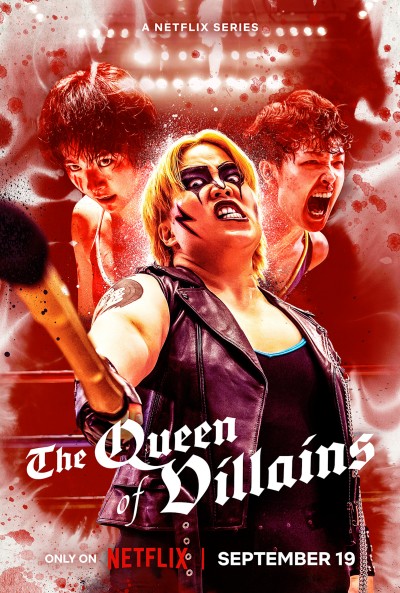
Not long ago, I tagged Black Doves as the best television of 2024. If I’d seen this before December 31, it would have beaten it out. It’s a top-tier depiction of the world of Japanese women’s professional wrestling in the eighties, weaving truth, fiction and legend together in a way that’s highly effective – probably even if you’re not a particular fan of sports entertainment. It’s the story of Kaoru Matsumoto (Retriever), who escaped a dysfunctional family to join All Japan Women’s Pro Wrestling (AJW). Initially struggling to achieve success, she found her niche as nightmare villain Dump Matsumoto, feuding with former friend Chigusa Nagoya (Grace), until the pair faced off in a legendary, brutal battle, destined to lead to public humiliation for one of them.
We all know professional wrestling is staged, with the outcomes predetermined, right? [Do not used the word “fake”: I will cut you!] Here, things are… murkier. This treads a delicate line between that and kayfabe, the wrestling term for promoting it as reality, and genuine competition. The stance here is interesting, suggesting that while those in charge, like promoter Toshikuni Matsunaga (Saitoh), can have a result in mind, that relies on those in the ring agreeing to it. This isn’t always the case [one wrestling show I remember attending definitely had a genuine fight, for backstage reasons], and here, Matsumoto is a loose cannon, prepared to go to any lengths to put herself over. Or her character: the lines are certainly blurred here, to the point of near invisibility.
What matters, is that the audience believed it was real, to the point that Matsumoto received death threats as the feud intensified. It’s perhaps hard to understand just how popular AJW was, but their TV shows were getting considerably bigger ratings in Japan at its peak, than WWE or WCW were during the Monday Night Wars. It was a true cultural phenomenon – oddly, with teenage girls at the front of fandom. Nagayo and tag partner Lioness Asuka (Goriki), known as the Crush Gals, were basically Taylor Swift: they actually had a successful music career. Below, you can see the video of the real match mentioned, between Nagayo and Matsumoto. I defy you to find any wrestling bout, anywhere, where the crowd were so utterly into it.
The show does a fabulous job of capturing this, and the bouts as well are very well-staged – the real Nagayo worked as a technical advisor. Wrestling at the time was very different from what it is now, especially for women, and Matsumoto’s brutal style was unprecedented. She could chew up and spit out current WWE champion Rhea Ripley, using her as a tooth-pick. Indeed, it feels as if the final match is the dramatic pinnacle, and should end the fifth and final episode. It doesn’t and it feels like it’s heading for an anti-climax thereafter, until recovering [while not mentioned, it’s caused by AJW’s rule that wrestlers had to retire at age twenty-six!] But the drama behind it also has a great deal of nuance, depicting her troubled family life, and willingness to do whatever was necessary for her career.
This came at personal cost – not least her friendship with Nagayo. But it also affected her relationship with her family, in particular her mother and sister. Matsumoto initially wanted to become a wrestler, so she could protect them from her abusive and alcoholic father, but in the end, even her family were not safe from the ripples of her in-ring “villainy”. It all works on multiple levels, and provoked genuine emotions in me, to a degree rarely managed by any TV show, least of all one based on (lightly fictionalized) reality. Towards the end, the promoter lets a young girl in to see the show, and I was left wondering whether this was perhaps intended to be someone like Manami Toyoya, the greatest woman wrestler of all-time.
Another series, perhaps The Queen of Heroines? We can but hope.
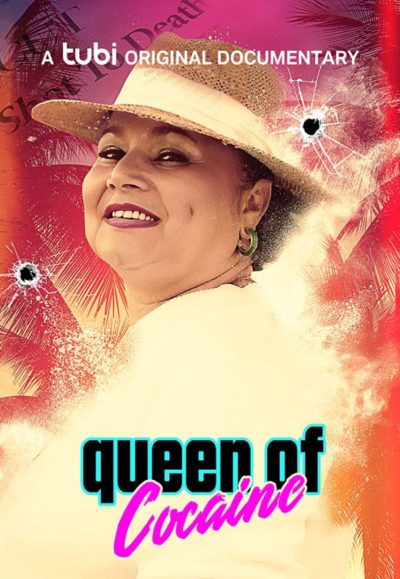
We’ve written about Griselda Blanco before. In particular, we reviewed telenovela La Viuda Negra, which was loosely based on her life and compared it to the facts. We also covered Cocaine Godmother, in which Catherine Zeta-Jones took on the role of Blanco in a bio-more-or-less-pic. She remains a fascinating character, so you won’t be surprised that when I heard about a new documentary concerning her life, it went straight to near the top of my watch-list. I was a little concerned, since it came out as a “Tubi Original”. I’ve been burned by some of these before, and so was expecting a lurid, shallow TMZ-style expose which played fast and loose with the truth.
To my pleasant surprise, that’s not the case at all. Obviously, there’s a certain allure here, but it doesn’t needlessly glamourize or condemn its subject, and instead manages to do a good job of painting both sides, and depicting Griselda as a surprisingly complex character. This is particularly clear at the end, when her youngest son – named, amusingly, Michael Corleone – says of his mother, “Yes, it’s a legacy of violence. But she was a woman that had to become savage in a world that wasn’t made for her.” Then Detective Diaz, who headed the Miami task force charged with bringing her down, counters, “We have this bitch from hell who decides she wants to be meaner and more powerful than anybody else… Violence. Arrogance. Greed. That is her legacy.” Take your pick!
It covers Blanco’s entire career, from growing up poor in Cartagena, through her (illegal) emigration into America, where she got into the drug business, and built an empire which brought her a fortune estimated (likely conservatively) in hundreds of millions of dollars. With this came enemies on both sides of the law, but Blanco almost seemed to feel she was invulnerable, and continued acting with impunity, until first the authorities and then her foes, eventually caught up with her. They’ve got some very good interview subjects, with Michael in particular standing out. His description of how he witnessed his father being gunned down on a Colombian street is chilling.
Cops, journalists and even other criminals also chip in, and it’s edited skilfully together to tell a complex story with clarity. Another interesting character I’m going to have to look into is Jemeker Thompson-Hairston, the “Queen of crack” who served time alongside Blanco in federal prison. One of the key players in the eighties crack epidemic, she’s now an evangelist, and came over as very well-spoken and thoughtful. I do have to say, something about narrator Elena Hurst’s voice kinda grated on me. Perhaps it was the way she’d apparently adopt an outrageous Spanish accent, any time she said the subject’s name: “Greez-hel-dahh”. Overall though, this manages to be both informative and entertaining, even if it is perhaps helped by having a story it would be difficult to screw up.
Dir: Victoria Duley Star: Michael Corleone Blanco, Bob Palombo, Raul Diaz, Dr. Amy Shlosberg
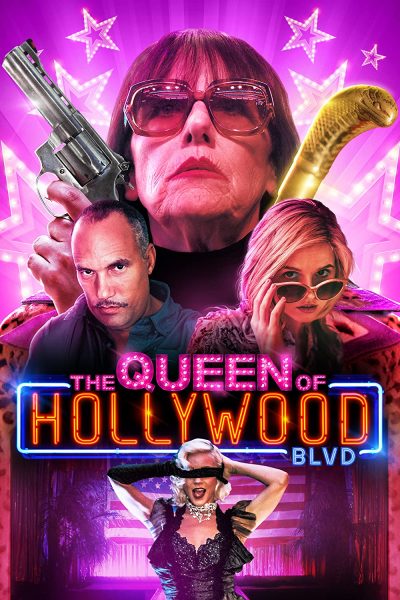
This is definitely not your typical action heroine. For it’s Mary’s (Hochschild) 60th birthday when the events of this film unfold. She runs a long-running strip club on the titular location, when Duke (Smith) spoils the party, by demanding she hand over ownership of the establishment, to settle a loan taken out decades earlier. Mary isn’t having any of it, and when Duke’s lackie Punk Rock Charlie (Berkowitz) shows up to take over, she beats him up and leaves him for dead in the Bronson Caves – which, as the film helpfully tells us, was used as the Batcave for the Batman TV series. But Duke is ahead of her, and has kidnapped Mary’s son. To free him, he demands she do another job: kill an accountant who is being too talkative for Duke’s liking.
Unfolding over the course of a single day, there are some interesting elements to this, yet it’s very definitely a mixed bag. Not least among the former: the director is Hochschild’s son, and also plays her son in the movie. She is probably the film’s strongest card; in virtually every scene, without a good performance, this could well have been unwatchable. She puts over a proud, fiercely independent character, who refuses to compromise her morality. We see this early, when she rescues underage Grace (Mulvoy-Ten) from the pimp trying to sell her. Yet she has no qualms about later using Grace to get to the accountant, because her son is simply more important to her. It makes for a fascinating character, one not often seen on-screen among women her age.
Less successful is… Well, a lot of the other stuff. The supporting characters, in particular, rarely rise above a series of clichés. [I’ll give an honourable pass to cult star Michael Parks, in his final role before passing away, even if he does look like death not very warmed up] The pacing is also off, especially at the end, where 45 seconds of action takes about 10 minutes to unfold, thanks to some extraordinary languid dialogue, plus Oblowitz’s love of slow-motion and the glaringly obvious. I mean, did we really need to have her friends cart a throne into the strip-club for Mary to sit on, purely to emphasize the title?
A number of other reviews have compared Oblowitz’s style to Nicolas Winding Refn, and as far as I’m concerned, that’s not a good thing. There are times when I had to suppress an urge to make a “hurry up” gesture towards the screen. Considering her son had been kidnapped, Mary’s lack of urgency seemed questionable, especially when it seemed to be for no other reason to allow Oblowitz his directorial flourishes. The strength of Mom’s performance renders the flashier elements superfluous, and they may even take away from it. Oh, not that it matters, but I strongly suspect the exterior of the club is actually “played” by legendary strip-club Mary’s in Portland, which at one time employed Courtney Love.
Dir: Orson Oblowitz Star: Rosemary Hochschild, Ana Mulvoy Ten, Roger Guenveur Smith, Matthew Berkowitz
Season 4: ★★★★
Season 5: ★★½
“There’s only one way to be safe in this business — be powerful enough that no one can touch you.”
I only just realized that I had not reviewed the fourth series of Queen of the South at the time of its broadcast. I’m not 100% sure why that slipped my mind; it may have been a reaction to the rather underwhelming nature of the third season. In some ways, the show did get back on track – it did, at least, stop trying to fake badly Arizona, largely relocating to New Orleans. This brought with it a new slate of rivals and enemies for Teresa Mendoza (Braga). This was a necessity, the show having sent the main antagonist from the early series, Camila Vargas, into exile at the end of season three.
The main replacement was likely Cecil Lafayette, a corrupt local judge who seemed to have his finger in every pie, as well as cooking up a few more of his own. He wants an ever-increasing slice of Teresa’s endeavours, as he comes to realize how large her empire is. There’s also Marcel Dumas, a well-established gang leader in New Orleans, who initially wants to co-operate with her. Their relationship becomes increasingly fractious over the first half of the series, and Judge Lafayette sees the opportunity to pit them against each other, while apparently acting as a mediator.
Meanwhile, inside Teresa’s organization, we see the first inklings of dissension in the ranks. Boaz, who had been running her operations South of the border in Sinalioa, is beginning to show dissatisfaction with Teresa’s approach. But there are new opportunities too. I guess, perhaps to replace Vargas, we get Oksana Volkova (Cherny), who is the public face of the Russian mob in New York, operating on behalf of her extremely reclusive boss, Kostya. She offers a potential pipeline into the lucrative East coast market, from Miami up the coast through Atlanta to the Big Apple, for Teresa and her product. However, there’s opposition to her expansion, in the form of an existing Cuban mob, under El Gordo.
After the weakness of season three, this was a strong return to form. It got back to the basics, of Teresa Mendoza seeking to expand her empire and consolidate her power, despite opposition from existing players. The violence which almost inevitably flows from such a struggle was present in copious quantities, with at least one shocking and unexpected death (well, we only expected it about two seconds before it happened!). In Judge Lafayette, well portrayed by David Andrews, there was a solid villain, whose cunning, along with his local connections and allies, proved a tough nut for Teresa and her cartel to go up against.
Probably my only complaint was our heroine not quite getting as deeply involved in the action as previously. Outside of an assault on the base of some mercenaries sent to kill her, there hardly seemed to be any significant firearms use for Teresa. Perhaps that was an indication that she was beginning to seek an exit strategy, moving into more legitimate businesses, and away from those where killing is a standard technique of operations. The news that the fifth series would be the show’s swansong, seemed to support this theory.
To start at the end of it, however, the grade for this season loses a full star simply on the basis of its chosen ending. While skirting around spoilers, we utterly called almost every aspect, down to the specific beach-side location of the final scenes, as early as end of the previous episode. Maybe we’ve just seen too many telenovelas in which this particular plot twist has been done to death. There was a real lack of any sense of karmic balance, considering the number of dead bodies Teresa had left in her wake. We also kept hoping, right up until the final credits rolled, that we would get closure for Camila Vargas. If the actress playing her, Veronica Falcón, just wanted to leave the series after #3, the character deserved a far better send-off. Meanwhile, Teresa Mendosa barely appeared in the final episode, which instead focused on long-time sidekick, Pote (Madera).
Up until that point, however, the season had not been terrible. It was fairly broad in scope, mostly hopping between New Orleans and New York, though with a side-trip to “Berlin” [quotes used advisedly, since unlike the Maltese excursion in series three, I’m fairly sure the production did not go to Germany, instead throwing in a couple of bits of stock footage and faking the rest]. As expected, Teresa was seeking to diversify into legal business, in particular property development. Though she quickly found out that “legitimate” did not necessarily mean those involved could be trusted. Still, no problem there, that methods from her usual field of work can’t solve.
Particularly effective was her ongoing dealings with the Russian mob. I will admit, I did wonder for a while whether their supposed leader even existed, since Oksana was the only person who ever seemed to talk to Kostya. There were a number of tense moments, as Teresa tries to convince the Russian to turn on her boss, because the Mexican offers a better long-term future. While Oksana was not up to the level of Camila Vargas, she did offer a good foil. She possessed an impenetrable air, reminding me of the famous Churchill quote about Russia being “a riddle, wrapped in a mystery, inside an enigma.” You just never knew what she was planning.
And so, it all ends – not with a bang, but in a considerably more peaceful way than I expected. I think that. perhaps, after so long, writers tend to fall in love with their characters a bit too much. I’ve lost count of the number of shows, from Buffy through Dexter to Game of Thrones, which have had trouble creating a satisfactory ending, and we can now add Queen to that list. Its departure does still leave a gap on television. In terms of truly bad-ass heroines, prepared to go to any ends to reach their goals, Teresa Mendoza is without parallel. Now, let’s get a US remake of Rosario Tijeras…
Star: Alice Braga, Hemky Madera, Peter Gadiot, Vera Cherny
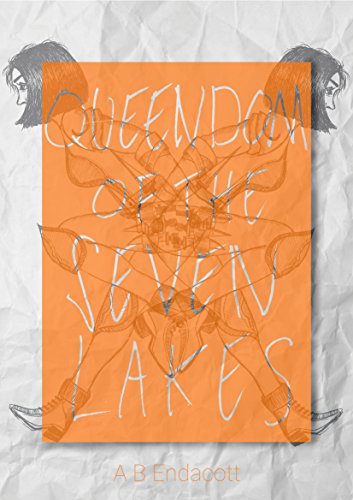
There is an interesting set-up here: unfortunately, it’s one which truly doesn’t get developed far enough. Elen-Ai is a 21-year-old woman, who has been brought up since birth to be an assassin for hire, part of “The Family.” Her latest commission is a little different: it’s not to kill, but to protect. For she is hired to make sure that Gidyon, the teenage son of Latana, Queen of the Second Country, stays alive. This is a matriarchal society, where power passes down the female side. But Latana has only her son, and is set to upset the traditional apple-cart by proclaiming Gidyon as her heir apparent. This decision will potentially be rejected by some among the seven clans who comprise the queendom, and may make him a target for those who’d rather see him out of the way. Hence, Elen-Ai’s presence, to make sure that doesn’t happen, as he begins a national tour around their estates, seeking support for his position.
I suspect it’s pretty obvious where this will end up going, based on Gidyon’s plan to defuse the clans’ concerns by marrying someone outside of the nobility entirely. I would bet his bride ends up being Elen-Ai, given by the gobbets of unresolved romantic tension which pepper proceedings, together with the wild swings between like and dislike. Given his age though, we’re probably a few volumes away from that. For now, this is more of a travelogue than an action novel. There’s one assassination attempt on Gidyon while they’re on the road, but otherwise, Elen-Ai’s skills are more seen in the stealth department. As well as her abilities with weapons, she can make herself invisible, a useful talent when it comes to obtaining information regarding the conspiracies against Gidyon. However, she’s far from infallible; indeed, her momentary inattention proves to have tragic consequences.
Despite some interesting wrinkles, e.g. the identity of Gidyon’s father is a closely-guarded secret to avoid political repercussions and enforce neutrality, this doesn’t capitalize on the worldview. Indeed, by using a male heir instead, it largely negates much of the role reversal which has gone before. I’m also hard pushed to imagine Latana is the first ever queen who failed to have a daughter. The main issue though, is I really would have liked to know more about Elen-Ai. The very concept of the Family – a tacitly-accepted guild of assassins – merits considerably more exploration. How she reached the point of being commissioned by royalty as a bodyguard, seems considerably more interesting than her traipsing across country as some kind of lethally mobile baby-sitter. This seems like a sad waste of her talents, a bit like reading a Sherlock Holmes book devoted entirely to his post-retirement life as a bee-keeper. While I didn’t feel like I’d wasted the time, there wasn’t enough here to convince me to go further into the series.
Author: A B Endacott Publisher: Amazon Digital Services, available through Amazon, both as a paperback and an e-book 1 of 6 in the Legends of the Godskissed Continent series.
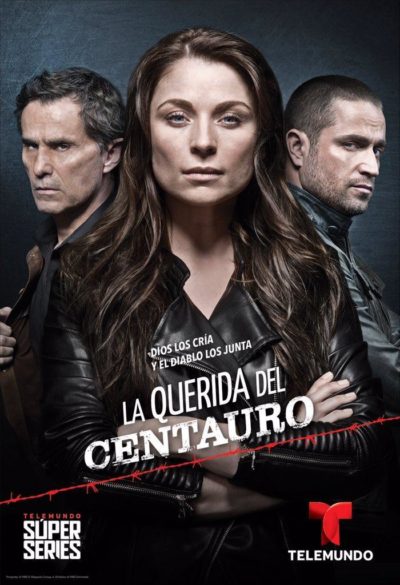
A sold enough entry, this benefits from a well-written script, but gets marks taken off for having a heroine who is rather too passive. Yolanda Acosta (Paleta) is sent to a higher security facility when she is recaptured, following an escape from her previous prison. It’s a mixed-gender facility (common in Mexico), and she comes to the attention of Benedictino Suárez (Zurita), a.k.a. “Centaur”, a local crime boss who is also incarcerated. He falls hard for Yolanda – the title translates as “Centaur’s Woman” – and when his escape plan comes to fruition, offers to bring her along with him, to the ranch on which he’s hiding out. And that’s where the problems really start for Yolanda.
Firstly, her teenage daughter, Cristina, is on the outside, being taken care of by Yolanda’s sleazy step-mom., who is trying to sell off Cristina’s virginity. Second, is the ensuing power struggle between Centaur and a rival; using Cristina as leverage, Yolanda is coerced into going undercover at a local gym where they operate. Third? Local cop Gerardo Duarte (Brown) who wants to use Yolanda to arrest Centaur. Initially, he offers immunity to her, but eventually their relationship becomes more… personal. Finally, and by no means least: did I forget to mention Centaur is married? And his wife, Julia (de la Mora) does not take kindly to rivals; on her orders, one of Yolanda’s cellmates has an eye gouged out.
You have to feel for the heroine, whose chief concern is simply wanting the best for her daughter. But every time Yolanda tries to do the right thing, circumstances conspire to foil her, and she inevitably ends up mired in deeper trouble. It reaches almost Shakespearean level of tragedy, with death following in her wake, from prison to the ranch. Even Duarte ends up believed by most to be dead, though this is mostly for the benefit of his health. since there’s a mole inside the police department who is funneling information to the cartel. He’s left to carry on his investigation as a “ghost”, with the help of allies on the force, which complicates his efforts to help Yolanda and Cristina extricate themselves.
The performances are solid enough, and the characters here almost all occupy a morally grey middle-area. You may not endorse their actions, yet you can see why they decided there was a need for them. I was particularly impressed by de la Mora, whose portrayal of Julia puts her over as both smart and brutal. She knows her position as Centaur’s “legitimate” woman leads to both power and risk, and wields the former to mitigate the latter. She also keeps incriminating evidence about Centaur elsewhere, with a “dead woman’s switch” of regular text messages, and instructions to release it in the event the messages stop. That’s genius.
I’d like to have seen Yolanda be rather more active. Admittedly, her options are limited, especially once her daughter comes under the control of Centaur as well. However, she is set up in the prison as a character with no qualms about getting tough when necessary. Once she’s back on the outside, that physicality seems almost to evaporate for 30-odd episodes. When she goes undercover in the gym, she ends up having to face Lola, a relation of Centaur’s rival who has taken a dislike to Yolanda, in an unsanctioned match. Otherwise, she seems curiously reluctant to get her hands dirty, even in defense of Cristina, and with no shortage of firearms around, of which she could take advantage.
The rest of the show, however, is quite savage for a TV series; one death in particular is by head-shot of impressive nature, more befitting The Walking Dead. It ticks along quite nicely, though it’s never less than obvious whereabout we’re going to end up, more or less from the point Yolanda arrives on the ranch. We eventually get there, and the table is set for a second season. Not sure the sequel will exactly become a priority, yet I’ll leave this show on my Netflix watch-list for potential viewing.
Created by : Lina Uribe and Darío Vanegas Star: Ludwika Paleta, Humberto Zurita, Michel Brown, Alexandra de la Mora
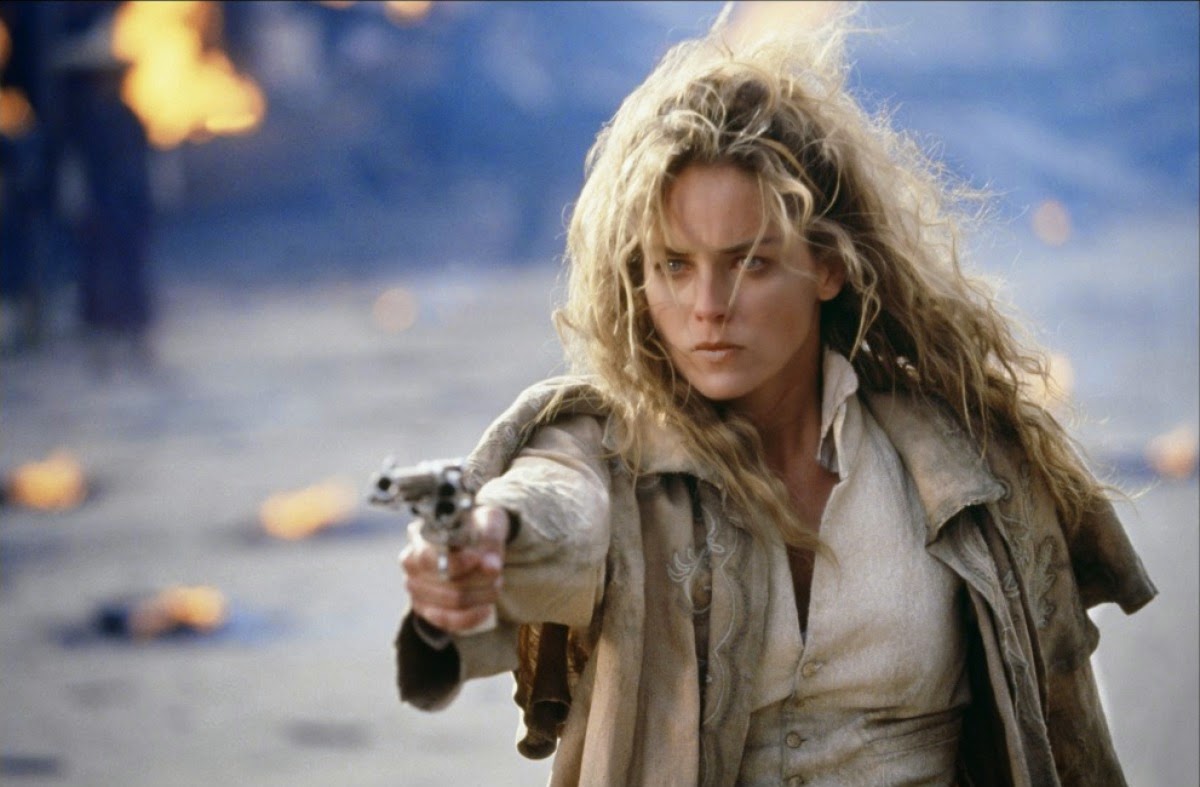
1995 possibly marked a recent low for the commercial appeal of action heroines in Hollywood. December would give us one of the biggest disaster movies of all time, in Cutthroat Island and March saw Tank Girl bomb. Together with this attempt to give the Western a female spin, the three movies had a combined budget of $155 million, but grossed less than $33 million. While Westerns were enjoying a return to popularity in the years after Unforgiven, it was almost as if Sony had learned nothing from Fox’s dud in the same area the previous year, Bad Girls. They instead doubled down on something which was not just a Western, but specifically a pastiche of the spaghetti Western subgenre.
In hindsight, its commercial failure was almost inevitable, even though after Basic Instinct in 1992, Sharon Stone was one of Hollywood’s hottest actresses. So when Sony bought Simon Moore’s script the following year, they approached her to star. She not only came on board as the lead actress, she also became one of the film’s producers, and had no hesitation in wielding that power. For example, she insisted that Sam Raimi – then, largely known only for his work on the Evil Dead trilogy – had to direct it, or she would not be involved. Similarly, she went to bat for then largely unknown actors Russell Crowe and Leonardo DiCaprio, going so far as to pay the latter’s salary herself. The subsequent Oscars for both men suggest she had a good eye for upcoming thespians.
Moore was eventually fired, with the studio bringing John Sayles on board. However, Moore was re-hired three weeks before shooting was scheduled to start, due to the movie becoming excessively long: he simply discarded all of Sayles’s changes, and Sony accepted what was basically the original version. However, during shooting, Raimi realized he had an issue. “I came to the studio and said, can you find me a writer? I’ve shot this movie, and the end isn’t quite working… They suggested Joss Whedon, who was doing Buffy, so I met Joss and he saw the movie, and he helped me solve this ending in one afternoon,” adding one more name to the list of future stars who worked on the film.
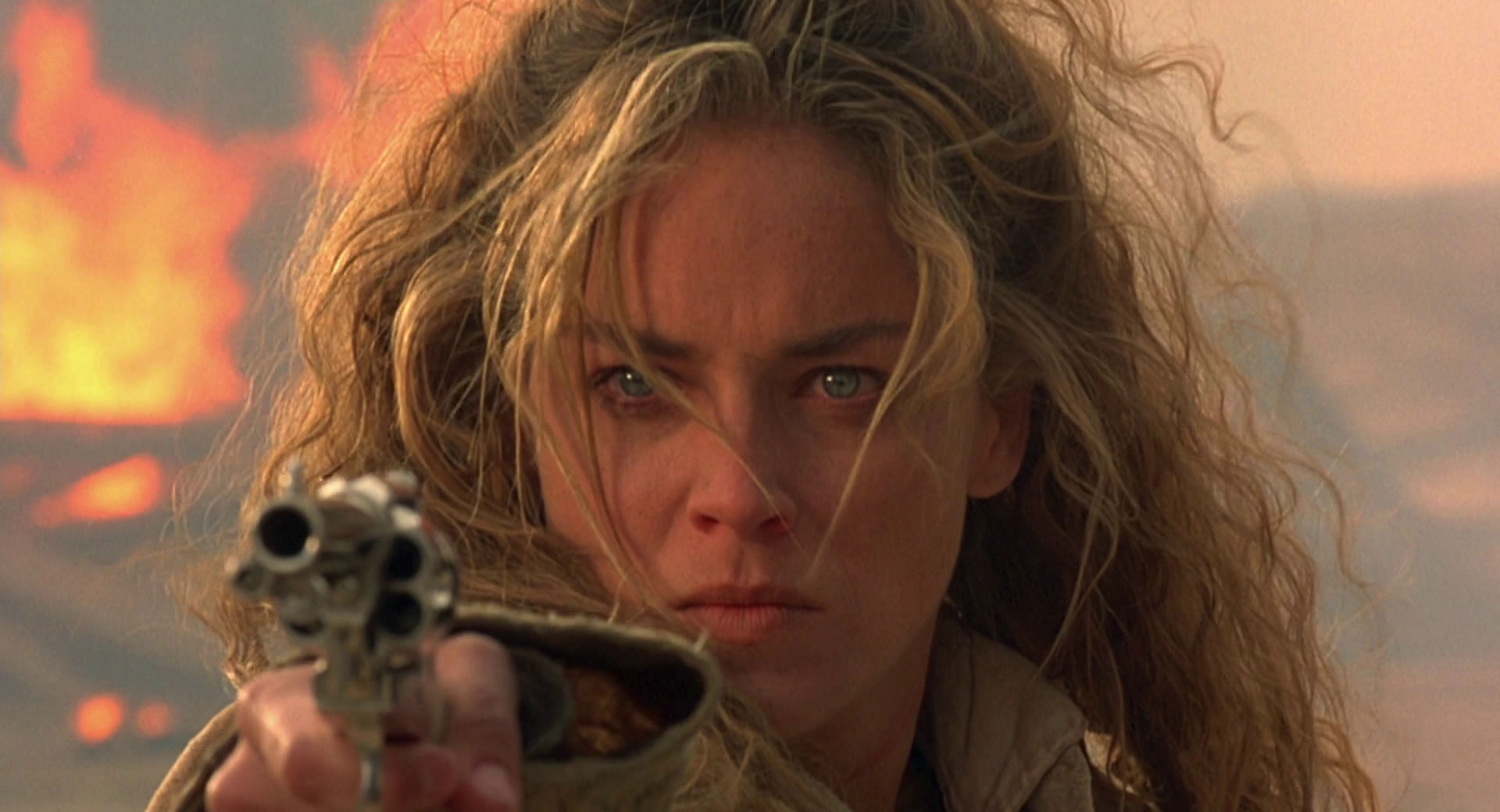
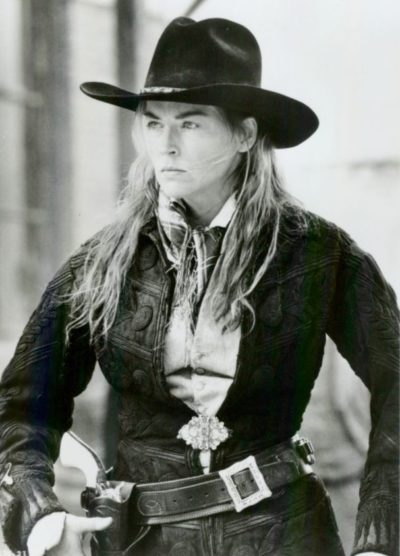
The concept here is pure gimmick. The town of Redemption lives under the iron hand of Herod (Hackman), who organizes an annual gunfight contest he always wins, partly to flush out anyone who might be plotting against him, mostly because he enjoys it. This time, 15 other entrants are drawn by the $100,000 prize, as well as other reasons. The more or less willing participants include Herod’s son (DiCaprio), former partner Cort (Crowe) and a mysterious woman (Stone), named in the credits as The Lady, actually called Ellen. She has a particular grudge against Herod, since his involvement in the death of her father, though things are more complex than you initially suspect. Getting revenge, however, requires Ellen to get through a tournament increasingly stacked against her.
The Varietyreview at the time nails the main problem: “Given the inevitability of an Ellen-Herod showdown, despite a couple of twists [Moore] has thrown into the last reel, the film quickly becomes hamstrung by the rigid dramatic constraints imposed upon it by the gun tournament format. No matter how many fancy ways Raimi invents to stage the shootouts, the tedium is quick in coming, and there’s nothing else going on between times to build up suspense, character or interest.” Moore has failed to grasp that while Westerns often climaxed in a gunfight, this does not mean that more gunfights = a better film. They are the full-stop at the end of a cinematic sentence. And like. Those, when. You use them. Too often, the. Results are jarring rather. Than effective.
It’s a shame, because the supporting cast is quite stellar, and deserve better. Outside of those already mentioned, there’s also Tobin Bell, who’d go on to become horror icon Jigsaw in the Saw franchise; Lance Henriksen; Keith David; and, although his scenes were deleted, Raimi’s long-time friend, Bruce Campbell. Seeing the talent which gets rushed in and out of the story in about five minutes makes me wonder if a feature film was the best medium for the idea. It might have worked better as an ongoing television series, each episode telling the back story of the participants and ending in their duel. A rotating series of guest stars would have worked very nicely, with the season covering one of Herod’s contests, leading up to the final gunfight in the last installment.
I’m not certain Stone is perhaps the best candidate for the role, since she seems to think staring really hard is the key to dramatic success. You’d think she might have known better, given apparent action heroine ambitions from relatively early in her career. Even before breaking through to stardom in Total Recall, she was in her fair share of adventure flicks – albeit not very successful ones – such as King Solomon’s Mines and Allan Quatermain and the Lost City of Gold. Unlike Geena Davis, however, Stone didn’t seem to persist in her efforts: the critical acclaim she received the same year for Casino, pushed her career back toward more dramatic pastures. This therefore stands out as something of an oddity in her filmography.
Time has perhaps been slightly kinder to this than its companions in action heroine failure for the year. Raimi eventually showed an ability to deliver this kind of comic-book spectacle with his work on the Spiderman franchise, and that may have been a better home for his stylistically excess flourishes than this. Naturally, as an Arizona resident, this film now triggers a certain amount of native pride, having been filmed largely around the state, in particular at Old Tucson Studios [unfortunately, a good portion of which burned down a couple of months after Quick was released, forcing its closure for two years] and Mescal, 40 miles southeast of Tucson.
It may not be the greatest Western – or even a particularly good Western. Yet two decades later, it likely remains the biggest production in the genre with a female lead, and as such, it deserves a certain respect. Especially when the commercial failures in recent years of Jane Got a Gun and Woman Walks Ahead, suggest that position at the head of the class probably isn’t going to be under threat, any time soon.
Dir: Sam Raimi Star: Sharon Stone, Gene Hackman, Russell Crowe, Leonardo DiCaprio




 If it hadn’t been for the lack of an ending, this would likely have got a seal of approval. The problem is, this web series came out in 2017, and as we close in on a decade later, I am beginning to suspect we may never see all the loose ends addressed. It begins with a quinceanera party, the traditional Mexican celebration to mark the coming of age of a young woman. In this case, it is being thrown in honour of Alejandra Santos (Xitlali), whose father Reynaldo (Mendoza) runs a Mexican restaurant. She really doesn’t want to be there, and her doubts prove well-justified, because it gets gate-crashed by Chavo Del Rio (Retamal) and his thugs.
  Of late, it seems that the Western action heroine has been staggering from one disaster to another, culminating in one of the year’s biggest flops,
  For a film which barely scrapes past the seventy-five minute mark, it feels like there’s a lot going on here. In addition, of course, to the martial arts promised by the title. It likely also claims the title for heroine with the shortest name, this being A Xi (Li). I’d have said her first name might be “Ah”, but the subtitles and other sources are quite insistent on her being “A”. Anyway, she’s a rural village girl, who is being brought to Shanghai to act as a nightclub hostess. Except the martial arts skills she rapidly demonstrates after her arrival, killing one of the local crime bosses after he murders another hostess, make her better suited for another position.
  While this follows on from the events of its predecessor, the sequel seems very different in tone. Less comedic, it may also be more traditional, in particular with a heroine who uses a style of alcohol-enhanced fighting, most well-known through Jackie Chan’s Drunken Master films. After losing her one true love A Xi (Li) has abandoned city life in Shanghai, and become a wandering champion of the downtrodden. Her latest target is bandit and warlord wannabe Xia Ba Tian (Yang), who think she’s going to become his latest wife. Not only is he wrong, turns out his three existing wives are also vengeful undercover vixens, although he survives their initial attempt on his life.
 Our favourite drunken mistress, A Xi (Li), returns for the third – and, so far, final – installment of the series. After the rural excursion of part two, it’s back to a more urban setting. Albeit only after a quick excursion home because Xi is trying to escape the criminal life – this goes about as well as it usually does. She returns to Shanghai with her sister Yu (M. Ma) – at least, I’m assuming it’s her sister, explanations are kinda vague. Could be they just trained under the same martial arts master, rather than sharing DNA. However, Shanghai is under the control of Western gangster Hanks (C. Ma – seriously, half the people in this film have the same last name).
  Coincidentally, I watched this the night after Sinners, another period piece which looks at the place of a specific culture in society. There, it was music in predominantly black society of the thirties; here, it’s professional wrestling in the overwhelmingly white society of the fifties [the presence of in this WWE champion Naomi as Ethel Johnson, feels very much a token gesture]. Definitely fewer vampires in this, however. It’s the story of Mildred Burke (Rickards), who went from working as a waitress in a diner, though wrestling at carnivals, to become one of the biggest draws in the ring of her time. The end of the film calls her the first woman to become a millionaire through sports.
  Not long ago, I tagged
  We all know professional wrestling is staged, with the outcomes predetermined, right? [Do not used the word “fake”: I will cut you!] Here, things are… murkier. This treads a delicate line between that and kayfabe, the wrestling term for promoting it as reality, and genuine competition. The stance here is interesting, suggesting that while those in charge, like promoter Toshikuni Matsunaga (Saitoh), can have a result in mind, that relies on those in the ring agreeing to it. This isn’t always the case [one wrestling show I remember attending definitely had a genuine fight, for backstage reasons], and here, Matsumoto is a loose cannon, prepared to go to any lengths to put herself over. Or her character: the lines are certainly blurred here, to the point of near invisibility.
 To my pleasant surprise, that’s not the case at all. Obviously, there’s a certain allure here, but it doesn’t needlessly glamourize or condemn its subject, and instead manages to do a good job of painting both sides, and depicting Griselda as a surprisingly complex character. This is particularly clear at the end, when her youngest son – named, amusingly, Michael Corleone – says of his mother, “Yes, it’s a legacy of violence. But she was a woman that had to become savage in a world that wasn’t made for her.” Then Detective Diaz, who headed the Miami task force charged with bringing her down, counters, “We have this bitch from hell who decides she wants to be meaner and more powerful than anybody else… Violence. Arrogance. Greed.
  This is definitely not your typical action heroine. For it’s Mary’s (Hochschild) 60th birthday when the events of this film unfold. She runs a long-running strip club on the titular location, when Duke (Smith) spoils the party, by demanding she hand over ownership of the establishment, to settle a loan taken out decades earlier. Mary isn’t having any of it, and when Duke’s lackie Punk Rock Charlie (Berkowitz) shows up to take over, she beats him up and leaves him for dead in the Bronson Caves – which, as the film helpfully tells us, was used as the Batcave for the Batman TV series. But Duke is ahead of her, and has kidnapped Mary’s son. To free him, he demands she do another job: kill an accountant who is being too talkative for Duke’s liking.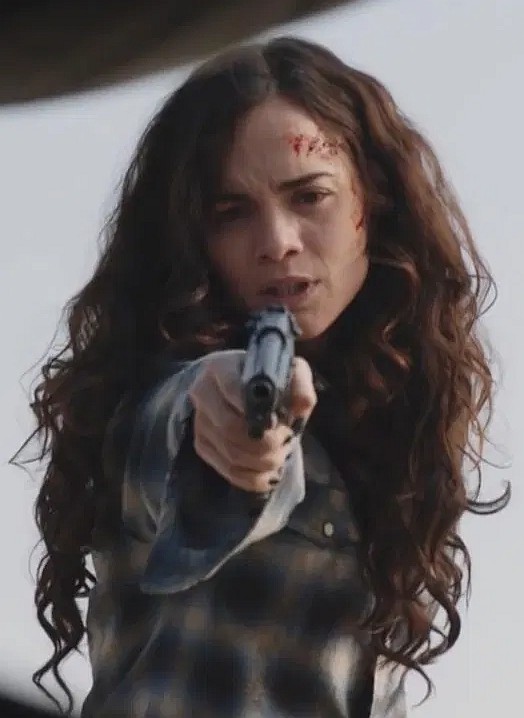
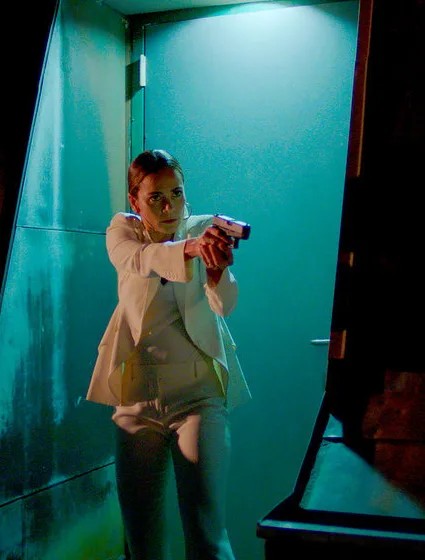
 There is an interesting set-up here: unfortunately, it’s one which truly doesn’t get developed far enough. Elen-Ai is a 21-year-old woman, who has been brought up since birth to be an assassin for hire, part of “The Family.” Her latest commission is a little different: it’s not to kill, but to protect. For she is hired to make sure that Gidyon, the teenage son of Latana, Queen of the Second Country, stays alive. This is a matriarchal society, where power passes down the female side. But Latana has only her son, and is set to upset the traditional apple-cart by proclaiming Gidyon as her heir apparent. This decision will potentially be rejected by some among the seven clans who comprise the queendom, and may make him a target for those who’d rather see him out of the way. Hence, Elen-Ai’s presence, to make sure that doesn’t happen, as he begins a national tour around their estates, seeking support for his position.
 A sold enough entry, this benefits from a well-written script, but gets marks taken off for having a heroine who is rather too passive. Yolanda Acosta (Paleta) is sent to a higher security facility when she is recaptured, following an escape from her previous prison. It’s a mixed-gender facility (common in Mexico), and she comes to the attention of Benedictino Suárez (Zurita), a.k.a. “Centaur”, a local crime boss who is also incarcerated. He falls hard for Yolanda – the title translates as “Centaur’s Woman” – and when his escape plan comes to fruition, offers to bring her along with him, to the ranch on which he’s hiding out. And that’s where the problems really start for Yolanda.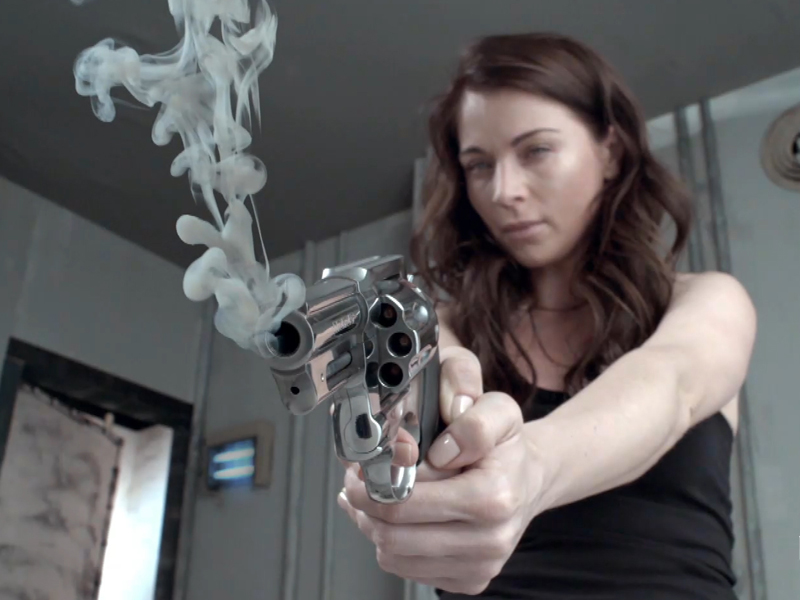
 ★★★
★★★ Moore was eventually fired, with the studio bringing John Sayles on board. However, Moore was re-hired three weeks before shooting was scheduled to start, due to the movie becoming excessively long: he simply discarded all of Sayles’s changes, and Sony accepted what was basically the original version. However, during shooting, Raimi realized he
  It’s a shame, because the supporting cast is quite stellar, and deserve better. Outside of those already mentioned, there’s also Tobin Bell, who’d go on to become horror icon Jigsaw in the Saw franchise; Lance Henriksen; Keith David; and, although his scenes were deleted, Raimi’s long-time friend, Bruce Campbell. Seeing the talent which gets rushed in and out of the story in about five minutes makes me wonder if a feature film was the best medium for the idea. It might have worked better as an ongoing television series, each episode telling the back story of the participants and ending in their duel. A rotating series of guest stars would have worked very nicely, with the season covering one of Herod’s contests, leading up to the final gunfight in the last installment.