
★★½
“Which witch is which?”
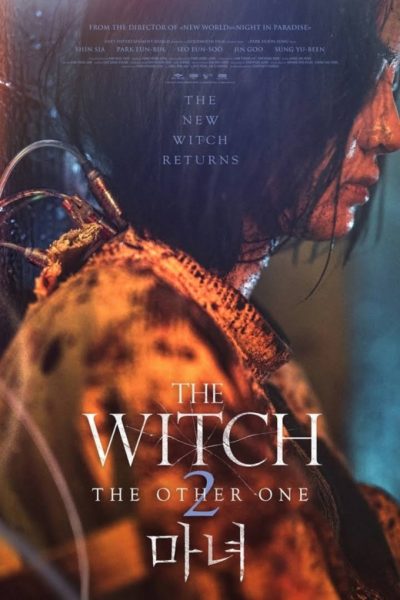 This showed up as a bit of a surprise. Obviously, even the title suggested that the makers were looking for a sequel to The Witch: Part 1. The Subversion. However, I had no idea whether or not it had been successful enough to merit a follow-up. Clearly the answer is yes, though I would certainly recommend you either re-watch, or at the very least read up on, the preceding entry. Even at a rather bloated 137-minute running time, it does not provide any “Previously, on The Witch…” recap. You’re entirely on your own, and after a brief prologue, you will be dropped right into things, though any connection to the previous film only becomes apparent at the very end.
It begins with the escape of “Ark 1” (Shin) from the research facility where she has been undergoing experiments. Stumbling onto a road, she’s picked up by a car containing Kyung-hee (Park), a young woman who is in serious trouble with the gangsters also present in the car. Ark 1 handily defeats them after they get a bit too friendly, quickly earning Kyung-Hee’s gratitude. She takes Ark 1 back to live with her and her brother, Dae-gil (Sung), introducing Ark 1 to the delights of food. The gangsters are none too happy with getting their butts kicked, and regroup for another attempt. They’re not the only ones after Ark 1 either, as her former “owners” sent out an agent, Jo-hyeon (Seo), with talents of her own, to retrieve their property.
As the rather clunky sub-title implies, this is mostly about an entirely different character to the preceding movie. This feels like a bit of a cheat, as if you’d carefully studied for a pop quiz, only for it to be for another subject entirely. Instead, you get a plot which, even at the extended running time, feels rather too over-stuffed. The remarkable coincidence of Ark 1 stumbling into a car containing the very person who can help her, and that simultaneously needs her help, is just the first in quite a few moments where people happen to be in the right place at the right time. I suspect there’s also a plot thread or two more than is beneficial to overall coherence.
This is especially true at the end, where the various factions converge and have a massive battle in poorly-lit conditions. Going by what I saw earlier, this may have been the makers’ way of disguising the CGI. It’s an area with scope for improvement, especially when Ark 1 is demonstrating her remarkable super strength, by hurling people. cars, etc. around with enthusiasm. I suspect this is a victim of second movie syndrome, being the entry in a trilogy that has neither a start nor an ending. I do have to cut it some slack on that basis, and presuming the series is finished (and this was a top 10 film in Korea for 2022), I’ll still be tuning in for the finale. There’s just enough potential, even if my expectations are quire restrained.
Dir: Park Hoon-jung
Star: Shin Si-ah, Park Eun-bin, Seo Eun-soo, Sung Yoo-bin
 This has a fair amount in common with the disaster which was
 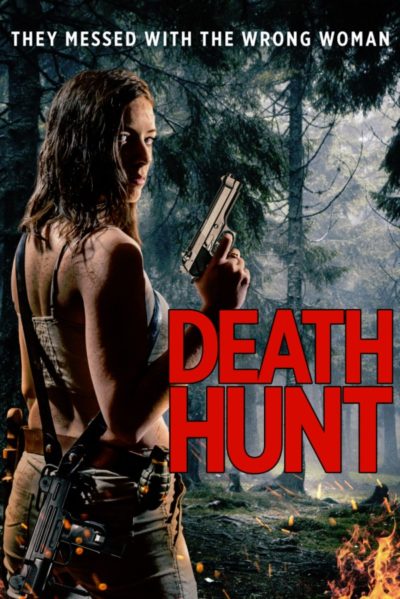 Despite a striking poster (well played, PR team), for the first hour, you’ll probably be wondering why this is included here. Corporate lawyer Ray Harper (Tucci) is on the road, trying to convince reluctant local farmers to sell their land for development. He’s also taking advantage of the away time to hook up with his bit on the side, Brooke Hamilton (Malcolm). Both these enterprises are rudely interrupted when the couple are pulled over by corrupt cop, Williams (Johnston), and abducted at gunpoint. They are the next “guests” on an island run by TJ (McDonald), where he and his pals can get together to hunt… The Most Dangerous Game. Except, they can’t find any of that, so have to make do with a middle-aged executive and his other woman.
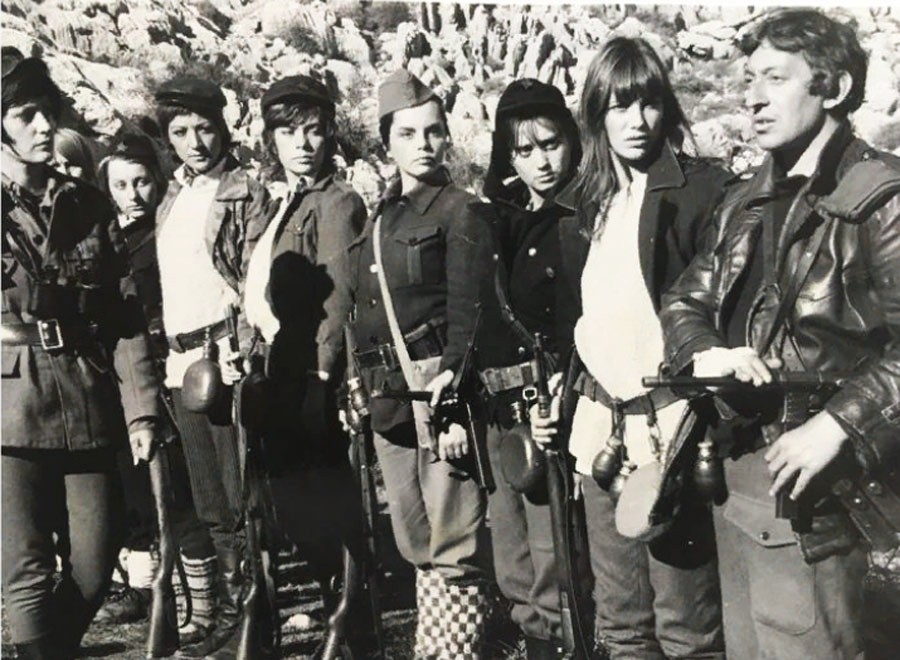
 There is certainly room for reworking of the tale of Beowulf and Grendel, and making the heroines of this version female is what got me interested in it. However, the warning signs were out very quickly. Opening titles which said “Denmark… 500 AD… (-ish)” are a good sign of what to expect, for it’s clear that the makers were not happy to leave their changes at that. Indeed, they consciously embrace anachronism, especially in the dialogue, which is thoroughly modern, and could not be further from the epic poetry of the original if they tried. And I suspect they
  While omnibus editions of series are often a good way to pick up a large volume of content for a discounted price, they do have their downside. Especially for someone like me, who is basically bloody-minded and regards the dreaded Did Not Finish as a badge of failure. So even when a book is not that entertaining, I still find myself slogging on: and when there are three volumes in one, its a process which naturally takes that much longer. I think if I’d had just the one story here, I’d perhaps have looked upon this with a kinder eye. Three was tough, not least because the final story was the longest, occupying a solid forty percent of the set, and is also the least entertaining of the trilogy.
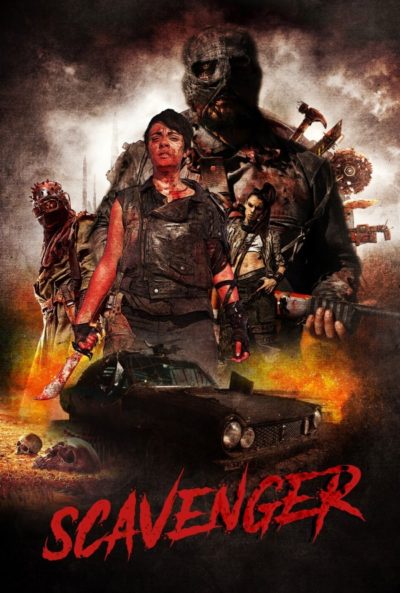 This should be right up my alley. For it’s a grungy, post-apocalyptic story of revenge, which is heavy both on the carnage and the nudity. Throw in disapproving reviews containing lines like, “Downright nasty movie that takes all the worst bits of exploitation cinema and proudly puts it on display,” or “Scavenger is truly appalling,” and you’ll understand why it was fast-tracked for viewing. However, the weird thing is… those reviews aren’t wrong – it is a bad movie, just not for the reasons they espouse. The bigger problem is simply poor execution, in a way that manages to take the sex ‘n’ violence, and make it all painfully dull. Of all the cinematic sins, that’s one I find hard to forgive.
 ★★
★★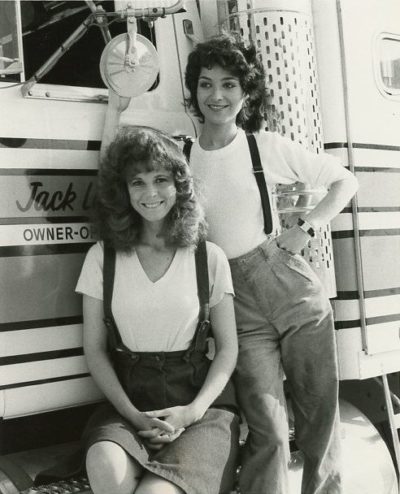 After her truck-driving husband is injured in an attempted hijack, Sweetiepie (Darby) finds herself in a bind. They’re way behind on payments for the truck, to the point that it’s about to be repossessed by C.W. Douglas (Stanton) of Vehicle Retrievals Incorporated. In desperation, she hires experienced driver Flatbed Annie (Potts) to partner with her, working the necessary delivery routes to pay off their debt. However, Douglas is not the only threat the pair face on the highway. The failed hijack was intended to recover a package which has surreptitiously been placed in the truck during a run to Mexico, and its owners remain very keen to recover their merchandise from the new operators,
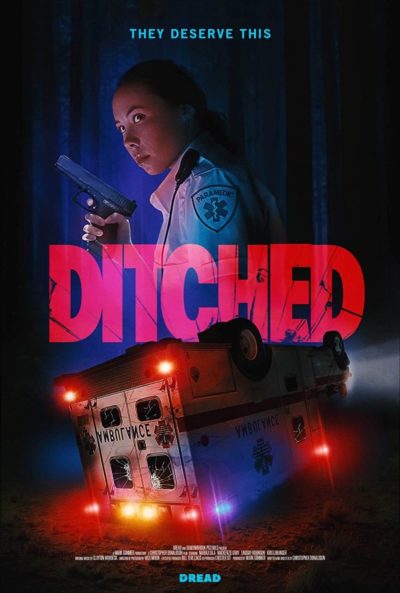 Paramedic Melina (Sila) regains consciousness to find herself in the back of her ambulance, along with her patient, Franson (Loranger), and the rest of the crew in various states of health. The vehicle had gone off the road and fallen into a ravine, along with the accompanying police car. It turns out they were transporting Franson and another prisoner to hospital when the crash took place – and it quickly becomes apparent that what happened was far from an accident. A posse of camo-clad hunters close in on them, led by Caine (Gray). Their mission to make all the vehicle’s occupants, both criminal and otherwise, pay for the sins of their pasts. They’ve brought with them the wronged parties in question, to exact bloody revenge.