




★★½
“Olympic-level self indulgence.”
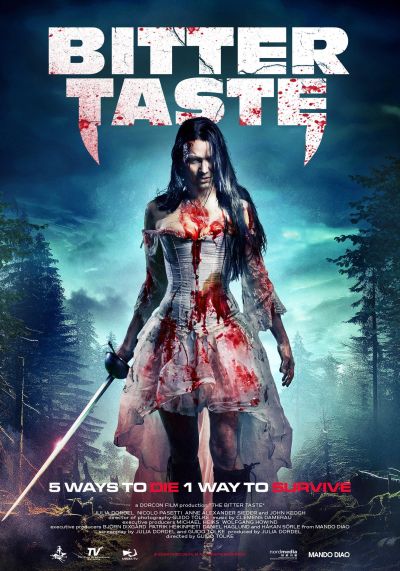 I have to give this credit for being something different. A vampire sports movie? Not a genre cross I’ve seen before. Especially when the sport is… um, modern pentathlon, the least-watched member of the modern Olympics. It’s a five-discipline event, based on the skills needed by a cavalry officer: running, shooting, fencing, swimming and horse-riding. All five play their part here, mostly in the form of Marcia Lorenz (Dordel), a former pentathlete, who is now a hunting guide. Well, was. She just got fired, and has absconded with valuable antique documents belonging to the customer who was responsible. Driving through remote woods, she stops to help a woman by the road, and that’s where things kick off.
Turns out the woods belong to the Countess Badesky (Wolf), a Bathory knockoff who escaped execution with her four henchmen, but have been locked in their estate for centuries courtesy of a magic spell. They’re not happy about it, but maintain their eternal youth by drinking the blood of penathletes, who are considered the ultimate warriors. It’s unclear what they did before the sport was invented in 1912. Kinda lucky Marcia was an expert in the sport, before injury ended her career. And what are the odds? Those documents she lifted are key to lifting the occult lockdown and letting the Countess roam free. Only Marcia, plus possibly plucky fisherman Josh (Paseti) and local cop George Balough (Alexander-Sieder), stand in her way.
There is actually more going on, as you would expect in a film running one hundred and thirty-one minutes. Logic is not its strong suit, stuff happening simply because the makers think it looks good. Marcia donning a wedding dress she finds in the castle is one such conceit. Not only does it fit perfectly (okay, it may be a little small in the bust, if you know what I mean and I think you do), she keeps it on while swimming. This kind of thing will eventually elicit derisive snorts, but is perhaps inevitable, with Tolke and Dordel having written, directed, produced, starred, edited and shot the whole thing between them. The film desperately needed an outside perspective to say, “Hang on – that’s a bit much, isn’t it?”
Dordel was previously in Mission NinetyTwo, which also seems to have been inspired by her real-life activities. There, it was a background in forest science; here, it’s Dordel actually being a fairly adept pentathlete. Her skill-set is spun off in this case, into a batshit crazy film which wears a grab-bag of horror influences on its sleeve. from the hedge maze of The Shining through to blatantly lifting Evil Dead II‘s “Swallow this!” line. Sometimes it works, but it is in desperate need of editing down. A streamlined version of this – with less jerky editing – might have had cult potential, along the lines of Bloody Mallory. Instead, it comes over too often as bloated and self-indulgent, when it needs to be lean and mean.
Dir: Guido Tölke
Star: Julia Dordel, Rita Wolf, Nicolo Pasetti, Anne Alexander-Sieder
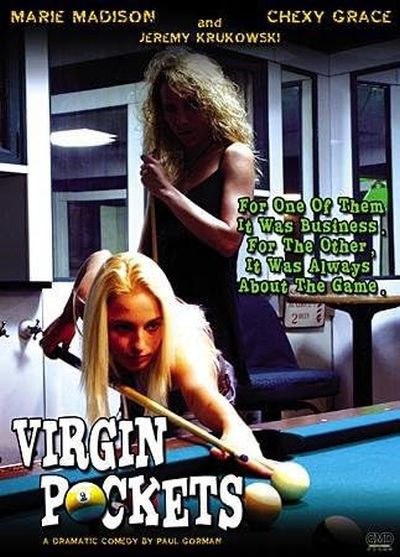 In sports films is, actors don’t necessarily have to be able to play the game in question. But they should be able to fake it – if not necessarily at a level capable of fooling professionals, at least to get it past the casual viewer. When it comes to ball and cue games, I am certainly a casual. Unfortunately, the two players are the core of proceedings here do not look like pro players. They look considerably closer to me, down the pub, after a few pints. The major difference is, they at least do not look pleasantly surprised when they knock in a ball. But when one half of the “sports drama” equation is unconvincing, it puts a lot of weight on the other.
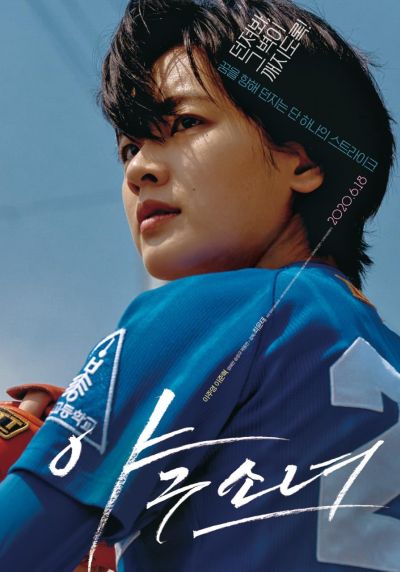 And if the above phrase doesn’t make any sense – it’s basically an underwhelming outcome during a baseball game – then you are probably not the target audience for this sporting drama. After almost a quarter-century living in America (much of it spent running a site about the local team as a sideline!), I’m fairly well-versed in baseball’s intricacies. But in contrast to some of the other Korean movies in this genre, such as
 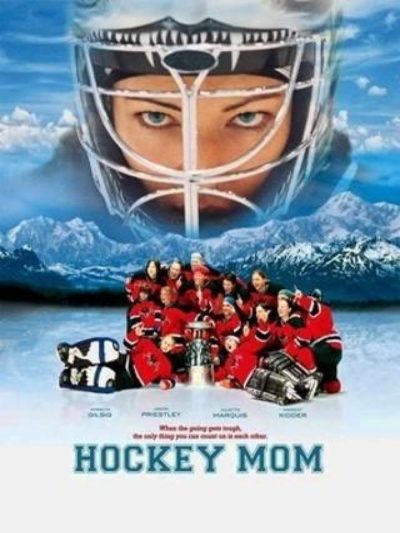 Printed directly from the finest template of sports movie tropes, this is less a script than a bullet list of plot points you’ve seen a thousand times before. Struggling single mom (check) Paula Taymore (Gilsig) had to give up a promising ice hockey career to take care of her son (check). A bar argument leads to a challenge match against a local men’s team (check). Paula has to assemble a women’s side (check), from a ragtag group (check), including an ex-convict (check), sassy Black girl (check) and a witch (check). Can she overcome adversity and local prejudice (check), find love with hunky single dad Steve Cooper (Priestley, and check) and triumph in the big game? (BIG BOLD CHECK, LARGE FONT).
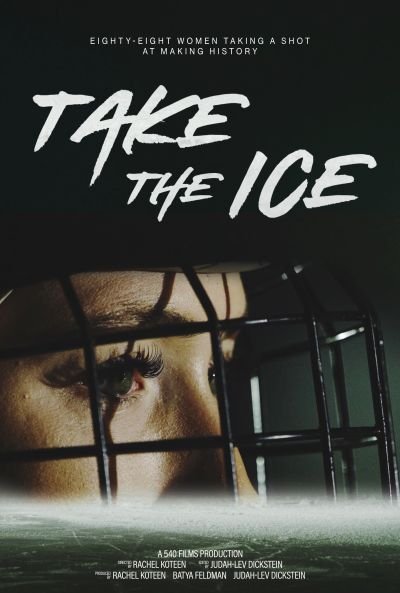 There’s no doubt that women’s sports very much plays second fiddle to their male equivalent, though the gap varies from sport to sport. The WNBA is experiencing a surge of popularity, though the NBA is still a financial behemoth. This documentary focuses on ice-hockey, and the debut season in 2015 of the first professional women’s competition in the US, the National Women’s Hockey League. Though
 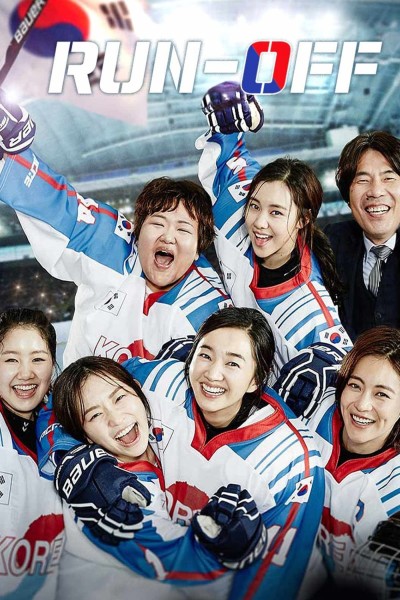 It feels as if South Korea is going through all the Olympic sports, making films based on each of them. Indeed, this film’s alternate title makes it a sequel to Take Off, about ski-jumping. I’ve seen two of the previous entries, covering archery (
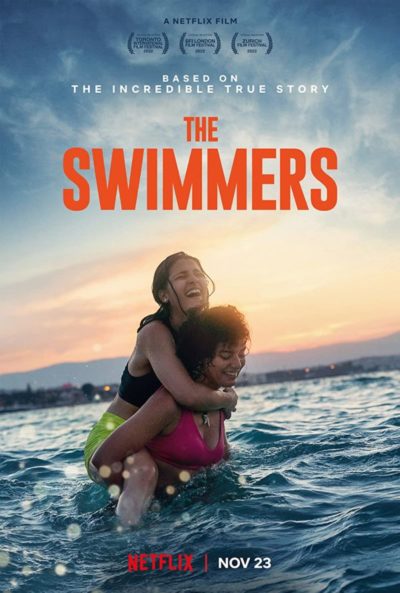 This is the story of Syrian sisters Yusra Mardini and her sister Sarah, played by real-life sisters Nathalie and Manal Issa. Growing up, they were trained by their father, a professional swimmer himself, and had the goal of reaching the Olympics for their country. The (still ongoing) Syrian Civil War led to the sisters leaving their homeland, and this is mostly the story of their journey, through Turkey, across the Mediterranean in a
 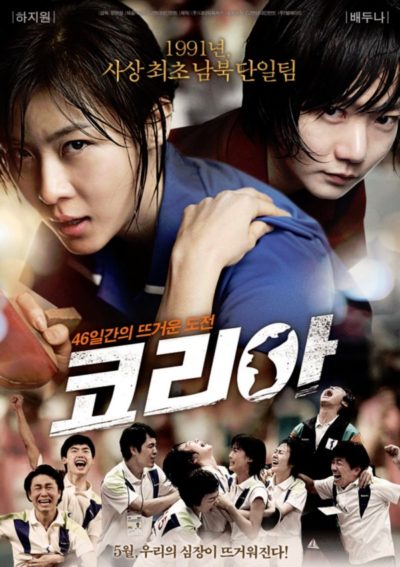 After the bombing of a South Korean jet by North Korean agents in 1987, relations between the two nations sank to perilously low levels. In an effort to help mend fences, the countries agreed to join forces and send a unified squad to the 1991 World Table Tennis Championship in Japan, to take on the all-powerful Chinese. The process was not without its bumps, as the South’s star player, Hyun Jung-hwa (Ha), and her counterpart in the North, Ri Bun-hui (Bae), struggle to overcome their differences and become a cohesive doubles partnership. Their respective coaches (Park and Kim) also have to learn to navigate shoals both sporting and political on the way to the gold medal match in Tokyo.
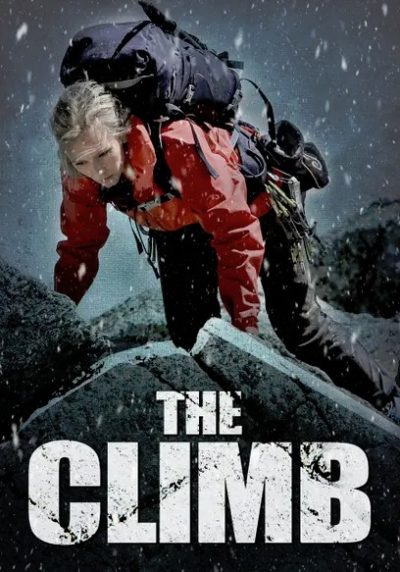 I was really surprised to discover that this French film is actually made for television. It has a certain gravitas and thoughtfulness to it, that you rarely find in a genre which is (often rightfully) derided as being formulaic and cliched. This doesn’t escape those criticisms entirely – in particular, there’s a “Disease of the Week” subplot, which does feel as it it might have strayed in from Lifetime or Hallmark. However, even there, it feels handled in a relatively natural manner, rather than being shoehorned in there to elicit sympathy from the viewer. It definitely looks better than most TVMs out of Hollywood. Whether this is down to Félix von Muralt’s cinematography, or simply the stunning Alpine landscapes, is open to debate.
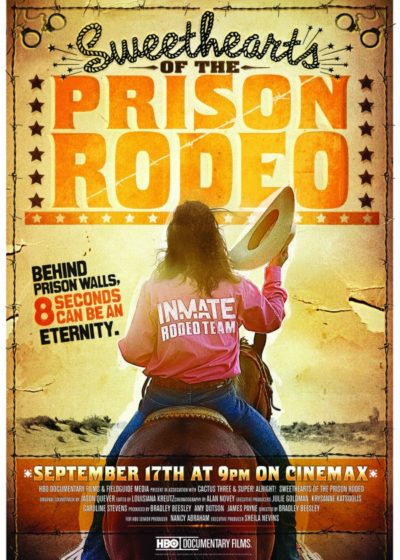 Well, this is certainly the first film I’ve reviewed here which drops both into the “women in prison”