




Literary rating: ★★
Kick-butt quotient: ☆☆
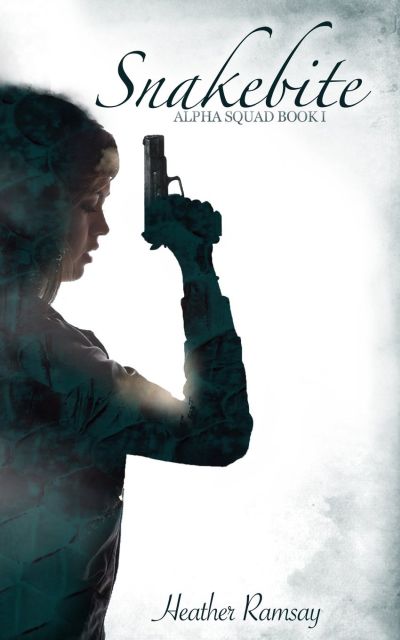 I believe I have previously written disparagingly about “cinematic amnesia”, where a plot revolves around the lead character’s loss of memory. Inevitably, it comes back at exactly the points required for the plot, and to maximize drama. Unless the maker is very skilled, it always seems highly contrived, and I tend to find it distracting. This may be the first time I’ve read a case of such blatant literary amnesia, and much the same problems result. As soon as “the A word” cropped up – page 37 – I was bracing myself for what was to come. The book did not disappoint in this area.
The heroine is “Phoenix” – not her real name, since she can’t remember her real one. She was picked up out of a burnt-out grocery store, and taken to become a member of an elite military unit run by the United Nations (there’s another clue, since the UN cannot actually organize the proverbial piss-up in a brewery). They roam the world, with their mission being to “track, contain or terminate threats to global safety”, under General Cobra. No, really: that’s what he’s called. He’s a former Colombian government operative, who left the country after his hardcore tactics made him too many enemies. But he’s now going back, with Phoenix as his undercover wife, to take out weapons dealer Li Julong and his associate, Dr. Max Devereaux.
You will no doubt be shocked – SHOCKED! – to hear that the pair have a previous connection to Phoenix and, indeed, might perhaps have something to do with how she ended up in the grocery store. Before we get there though, we have to grind our way through so much Unresolved Sexual Tension between Phoenix and Cobra. Initially, she hates him, but as soon as they start having to play house, her thoughts immediately become hot ‘n’ sweaty. A sample: “I didn’t want to admit it, but I had it bad for him… Only a few days ago I hated the sight of him; now I wanted to rub up against him like a cat in heat. I had to do something about it.” Yeah. It’s like that.
Then the switch in her head gets flicked, all of her memories come back, and Cobra is all but forgotten. I’m not sure this is how amnesia works, though to be fair, this isn’t your usual “bang on the head” flavour of that. After a brisk opening, this is more or less downhill all the way, and there’s not even particularly much in the way of action. Between first her UST, and then discovering the truth about her pre-amnesia life, there isn’t much room for anything else, and consequently, this becomes an increasing drag. About the only bit to stick in my mind is an extended near-death experience, which is well-written, yet doesn’t add much. Preferable to more UST or amnesia, however.
Author: Heather Ramsay
Publisher: Titan Inkorp, though it appears weirdly unavailable on Amazon at this point/
Book 1 of 3 in the Alpha Squad series.
 Alma Siracine (Vacth) was a black ops agent for the French government, until an assignment in Syria went pear-shaped, and she resigned her position. Seven years later, she’s living quietly with her policeman husband in Morocco, until he’s the victim of a drive-by shooting. She finds the attackers and terminates them. Unfortunately, they are the sons of local arms dealer Manour Khoury (Dazi). Not helping, he is under the protection of the French government, being allowed to operate in exchange for funneling information to them about terrorist attacks. Spymaster Joanna Walter (Bercot) decides Alma is a loose end in need of tidying. Alma, naturally, is of a different opinion, and won’t be easy to clean up.
 We have written about some of the women who worked behind enemy lines for British intelligence during World War II. Names like
 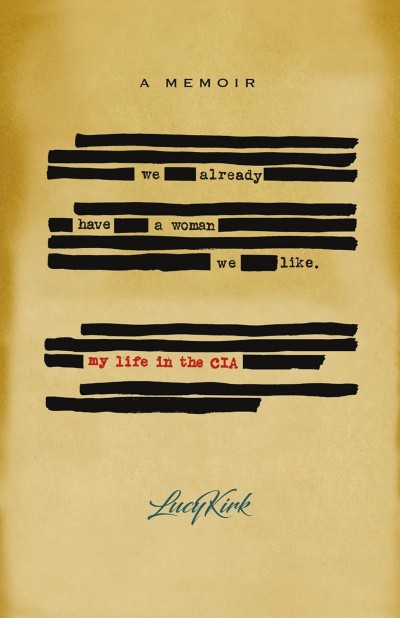 I suspect the issue here is partly my own expectations. When I read a memoir of somebody who spent more than three decades working for the Central Intelligence Agency, I was half-expecting a life somewhere between
  This Indian movie flopped at the local box-office, and comes limping onto Netflix with an IMDb rating of just 3.2. Reviews there are largely scathing, calling it “unrealistic.” Oh, sure: but people bursting into song for elaborate musical numbers – that totally happens in Mumbai. To be clear, I love the likes of RRR. But realism, or anything in that solar system, is pretty low down on the list of reasons I watch Bollywood films. This is… well, serviceable, is what I’d call it. It is too long for the material, at 137 minutes, but again – length goes with the territory, it’s more a question whether the film is capable of filling it adequately. Here, not so much, at least in the second half.
 Or, um, something, I guess. Maya (Dynevor) is at her mother’s funeral, when she gets a surprise, in the appearance of her long estranged father, Sam (Ifans). He wants to reconnect with her, and to this end, offers her a job with his real-estate company in Cairo. Despite qualms, Maya accepts, but not long after her arrival, Sam is kidnapped. To obtain his release, the kidnappers order her to recover a package and deliver it to them. Things turn out to be more complex than that, naturally, and the resulting trail takes Maya first to India, then on to South Korea, with various parties keenly interested in the outcome. She discovers the murky truth about her father’s business activities too.
 Well, this is a real roller-coaster ride of style and incompetence. It’s been a long time since I’ve seen a Chinese film where the subtitles were quite so incomprehensible. Even though this one is on the YouTube channel for an official Chinese streaming service (iQiYi), the soundtrack was entirely muted at some points, and the soundtrack replaced by jaunty elevator musak at others. Despite being a mere sixty-six minutes, the presentation is therefore something of a test of endurance, and I am also not prepared to guarantee the accuracy of the plot synopsis, character names or actors. There was heavy use of Google Translate required, there being no IMDb page for the movie. I did my best.
 Right in the middle of us watching this, Chris got a text from our daughter: “I think we rented the wrong version of Ballerina…” Yes, independently, she was watching the same film. The difference is, we understood what we were getting into. We knew this was a mockbuster from infamous purveyor of such things, The Asylum. I thought the concept of people mistaking Asylum movies for the real thing was an urban legend. Courtesy of our daughter, we now know better. Or worse. For this is, of course, not fit to lace up Ballerina‘s shoes, and anyone expecting it will be sorely disappointed. Yet it’s not irredeemable. I’ve seen considerably worse. From The Asylum, in particular.
  I quite liked the idea here, but the execution just wasn’t quite good enough to do justice to the concept. It feels like a matter of resources to some degree. But I also feel that a few tweaks to things would have paid significant dividends. The heroine is Tara Croydon (Fox), a CIA agent who experiences a crisis after an operation means she’s not around when her father passes away. In her depression, she signs up for a cutting-edge but rather dubious experimental project under the oversight of Hype (Medina). This involves her being given the ability to transform, physically, into one of fifteen different personas which have been implanted into her.
 This is a solid, no-nonsense combination of spy and science-fiction. Though, to be honest, it is skewed towards the former genre, with the latter mostly window-dressing. It wouldn’t take much to change the setting from a solar system whose ownership is disputed by a couple of galactic empires, to a city whose ownership is disputed by a couple of countries. The planet is Hudson, claimed both by the Star Kingdom of Prometheus and the Koratan Confederacy. Heather Kilgore is among the best agents of the Promethean King’s Order, and is dispatched to Hudson after the suspicious death of a man who had betrayed the Kingdom, former commander Connor Monroe