Heather Day Gilbert (who’s also a Goodreads friend, and one of my favorite writers) earned high marks from me with her earlier Vikings of the New World duology. Here, she teams up with a new-to-me fellow evangelical Christian writer, Jen Cudmore, to deliver another solid work of historical fiction (the opening volume in a projected series) set in the same era. My trade paperback ARC of this novel was generously given to me by Heather herself; no commitment that my review would be favorable was asked for or given.
Our setting here is partly in Viking-ruled northern Scotland (“Caithness”), but mostly in Scandinavia –specifically, in Tavland, a fictional large island west of Norway. (A map of the island is provided, but it has no scale and doesn’t show it in relation to any other body of land. I picture it as about midway between Norway and Iceland, and perhaps about the size of the latter.) Novels set in fictional countries aren’t unheard of (The Prisoner of Zenda comes to mind). In this case, I’d guess the reason for the device is that the authors wanted to be able to depict a Viking polity, but not to have to be bound to the historical personalities or events of any of the actual ones. The time frame is mainly 998-999 A.D. (with a short prologue set in 989). This was a time when Christianity was spreading in the northern lands, but far from universal. So polygamy and concubinage are still legal, as is slavery (and sexual exploitation of slaves). Warfare and violence are common, life expectancy can be short, and women are under a yoke of patriarchy –though in some ways it’s not as heavy a yoke as it is in the more “civilized” lands of the south in that day.
We have two co-protagonists and primary viewpoint characters here, both young women. Tavland native Ellisif, born into a land-owning family, is about 26 in 998, mother of two little girls, pregnant again, and trapped in an abusive arranged marriage. Somewhat younger at around 20, Inara was born in slavery in the islands north of Scotland, to a now-dead Tavish mother kidnapped into slavery some years earlier. Tall and strong, tough-minded and blessed with some sword skills (long story!), we meet her on the Scottish mainland hiding out from her former master. (We learn the backstory behind that only gradually.) Her goal is to become a warrior. (Although relatively rare, shield-maidens weren’t unknown in Viking society, and could be accepted as such on their merits.) Circumstances are about to bring these ladies’ life-paths together. Their viewpoints are supplemented by those of two Tavish male characters, both single: young jarl (a Viking noble title, cognate with the English “earl”) Dagar, who as a teen was engaged to Ellisif, before her parents died in a accident and her oldest brother got the bright idea of selling her like a cow or a mare to her present husband, and ship-builder and occasional warrior Hakon.
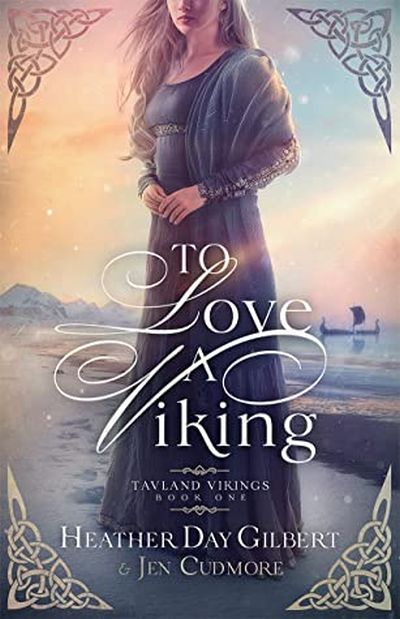 As you’ve no doubt already surmised, yes, this novel does have a romantic component –and, indeed, two romances for the price of one. :-) But it offers more than that, as serious writers know that fiction must if it depicts romantic love as a realistic (and good!) part of the totality of human life; and our two authors here are definitely serious writers. We’re looking here at family life, social relationships, implicit questions of social justice and the relationship of Christian faith to conduct; and we’re also getting a crash course (which sadly is as relevant in 2022 as it was in 998!) in the grim realities of spousal abuse and what is or isn’t a helpful way of dealing with it. (The “Word from the Authors” at the end is constructive in that regard.) Questions of gender roles, and the relationship of career goals vs. family life, are also front-and-center here, and again very relevant.
One thing that quality historical fiction such as this tends to show is that human nature and needs haven’t really changed over the centuries. (In opposition to that idea, it’s often asserted by modern would-be critics, who know little of history, that romantic love was only invented in the 1700s, and was a concept totally unknown and unimaginable before that. Plenty of primary-source evidence exists to belie that claim; it was not only a known concept, but felt by lots of people, then as now. It just wasn’t always as readily taken into account by people making the decisions about marriages then as now –and, as Ellisif and Dagar would tell us, the ones getting married weren’t always the ones making the decision.) And though this is a “romance,” it’s no bodice-ripper.
The quality of the writing here is very good, and the collaboration is seamless; I’ve read and liked several of Heather’s books, but I couldn’t tell any stylistic difference between the various parts of this book to suggest different authorship. Past-tense, third-person narration is used throughout, however, rather than Heather’s characteristic present-tense first person. (I like the one as well as the other, so that was no problem for me.) A textured picture of Viking daily life is presented, clearly based on solid research; but the research isn’t intrusive. Like Norah Lofts, our authors here avoid archaic-sounding diction in their dialogue; there are touches that suggest the setting, but we basically understand that the characters’ Old Norse is translated for us into conventional modern English with an “equivalent effect” (which explains the single use here of “okay” in conversation). References to Christian faith are natural in the circumstances of the story, and not “preachy.” Our Christian characters are Catholics (one minor character is an abbot), but denominational distinctives aren’t much in evidence. (I’d have liked more reference to the development of Inara’s faith, which is actually treated very sketchily.) Directly-described violent action scenes only occur in three places, and aren’t very graphic, but Inara shows her mettle enough to earn her “action heroine” status from me.
As a concluding note, we use “Viking” today as a general term for the ancient and early medieval Nordic inhabitants of Scandinavia, men and women, old and young. In the book, though, it’s used as it was then, as a term for a warrior. (It comes from the verbal form, “to go a-viking,” that is, trading/raiding, as inclination or circumstances dictated, in the lands to the south.) With that understanding, the title has a special meaning that will become apparent by the end of the book. :-)
Authors: Heather Day Gilbert and Jen Cudmore.
Publisher: WoodHaven Press; available through Amazon, both for Kindle and as a printed book.
A version of this review previously appeared on Goodreads.



 This is a slim little book – more of a booklet, really, coming in at only 74 pages in length. But since it combines both our topic of discussion and local interest, because I live in Arizona, it was an easy decision to pick up a copy, after Dieter brought it to my attention. It does use quite a loose definition of “outlaw” – it is something only really discussed in the book’s epilogue, dividing them into three categories. Most obviously, are the ones Gavin calls “The Breakers of Law”, such as stagecoach robber Pearl Hart, whose exploits were dramatized in The Woman Who Robbed the Stagecoach. “Their crimes were against the statutes of the state.”
 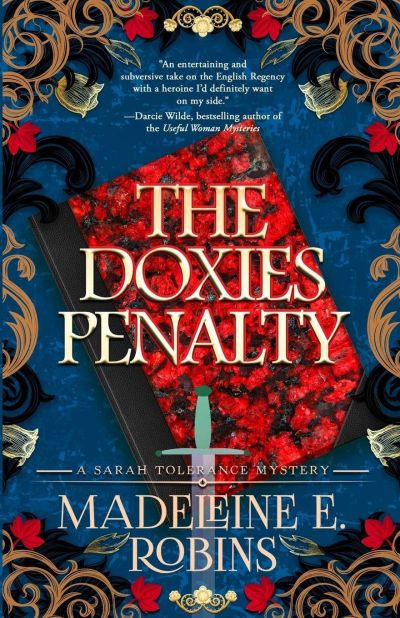 So, for the benefit of readers who haven’t read, or don’t remember, the earlier books or my earlier reviews, Miss Tolerance (born Sarah Brereton) is a scion of a lower-nobility family, which disowned her as a teen when she ran off with her brother’s fencing master. (The pair were in love, and would have married if her father hadn’t forbade it.) After her man died young, Sarah took shelter with the one relative who’d have her, an also-disowned aunt who owns a high-end brothel (fortunately, there’s a small cottage out back); and rather than resort to prostitution like many young women in her situation, she’s created a profession for herself as an “Agent of [discreet] Inquiry.” (She’s smart, inquisitive, able to blend in a variety of social settings and pass as a man if she has to; and since she packs pistols and learned how to fence from her late life-partner, she can handle rough stuff if it’s thrown at her.)
 We have written about some of the women who worked behind enemy lines for British intelligence during World War II. Names like
 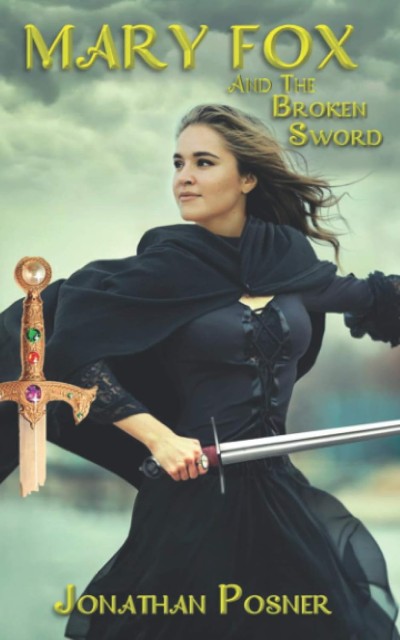 I’m not sure I’ve read a book with a 16th-century action heroine before, so the setting here certainly appears a fresh one. Things take place during the reign of King Henry the Eighth of England, when Mary Fox had been brought up alongside her three older brothers. From them she had secretly learned how to wield a sword and ride a horse, among other unladylike skills. But having now reached adulthood, her father is intent on marrying her off, to the particularly repellent Sir Reginald de Courtney. Mary is having none of that, so packs her bags and leaves the family home.
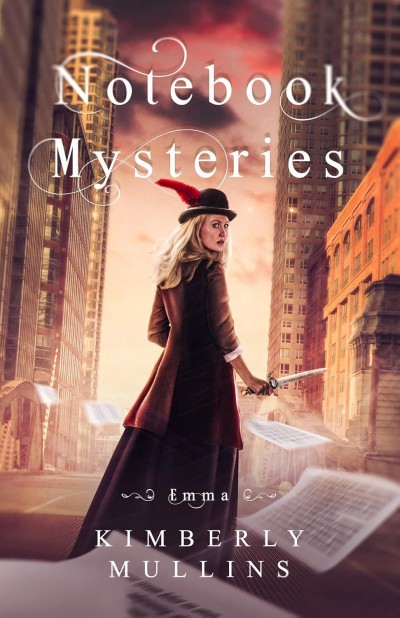 This begins with the Great Chicago Fire, an 1871 conflagration which killed around three hundred people. One of those is the mother of Emma Evans, and ten years later she’s a bright, inquisitive 16-year-old. She works part-time in the family bakery her mother previously ran, and also helps our her civil engineer father, but is also learning more… unusual skills, such as escapology and self-defense. These come in handy, as when she’s out carrying out deliveries with her friends Tony and Tim, Emma’s observational skills allow her to notice suspicious behaviour. When she has gathered enough evidence, she can then pass matters on to the appropriate authorities.
 Yes, I went there again. After
  I am, probably, biased here. Scottish action heroines are pretty rare, to the point I am hard pushed to think of a single one I’ve covered previously, in the twenty years I’ve been running this domain. [I just made myself feel
 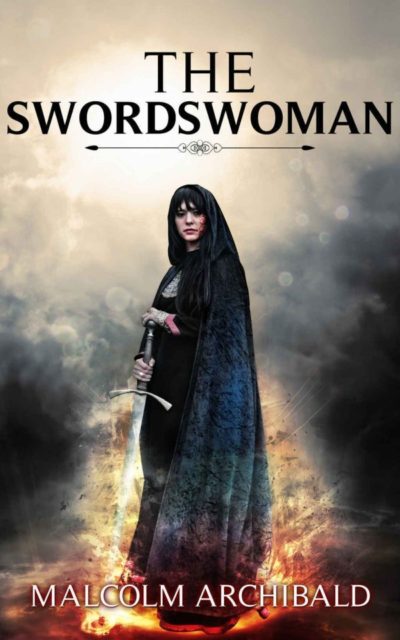 That peace is shattered when someone is washed up on the Western Isles island of Dachaigh where 20-year-old Melcorka lives with her mother. It turns out the Norse are invading, and the king must be notified of the threat. Melcorka and the rest of her clan head towards the capital, only to arrive too late: the army of Alba (as Scotland was then called) has been routed and the nobles scattered. However, Melcorka has a destiny to fulfill… And also inherits a large sword, Defender, with a history dating back centuries, whose powers transform her into the titular character. It’s up to her to rally forces, including the ferocious Picts from the North, to take on the invaders, and send them back across the North Sea to Scandinavia.
 I had forgotten how much I really did not like the
  The latest entry in the Predator franchise has resulted in sharply divided opinions, partly for reasons that I’m not even going to get into. And, for roughly the 11th millionth time, the reality lies somewhere in the middle. It is probably the best entry in the franchise since Predator 2. However, let’s be clear: Sharktopus vs. Whalewolf would also satisfy that criteria. So, let’s dig in. The year is 1719, and the Northern Plains see a new arrival, in the form of an extraterrestrial visitor, looking to test its mettle against any species unlucky enough to cross its path. They could be animal, or human – the latter include both French trappers and the local Comanches.