Note: My previous reviews of this series had incorrect information on the series numbering, and about the relationship of this printing to the first one. That first printing had seven volumes. If Lincoln Square Books reprints all of the series, their edition will have six, because they combined the original Real Dangerous Girl and Real Dangerous Job (which form a single story arc) as Parts I and II of a single novel with the first title. However, they did NOT combine any of the later novels, which all have their original titles; the next two, including this one, were divided into Parts I and II to start with. I apologize to readers for the earlier misleading information; but a late correction is better than no correction!
Having read (and reviewed) the previous volumes in this action adventure series, all of which got high ratings from me, I was glad to follow along with this next installment. Most readers of this book will probably have read the earlier ones –and should have, since this series is one that absolutely needs to be read in order. (This review will contain some spoilers for the preceding book, though not for this one.) Likewise, most readers of this review will most likely have read my takes on the preceding volumes, so will already have a basic idea of Kim’s personality, family situation, and back history.) The main body of this story takes place on one day, mostly in a tense hostage situation, and Part I ends in a cliff-hanger in the very middle of that situation.
 The most obvious difference between the previous installments and this one is that we’re no longer in our familiar upstate New York setting. Landing on her feet at the conclusion of her previous adventure, our rough-edged heroine had wangled herself a job as chief of security for her deceased boss’ erstwhile newly minted partner, Mr. Karsh (whose business practices unfortunately aren’t any more ethical or strictly legal than the late Mr. Falcon’s, though he also aspires to a veneer of legitimacy). In the interim between the two books, his far-flung business enterprises have taken him to L.A. for an extended stay, so he’s re-located Kim and Donnie (I’d say she’s now at least 18, if not 19, and Donnie’s 12-13) there along with him. When our story opens, Kim’s making better money than before; she and Donnie can afford a better apartment, and Karsh’s gotten him into a private school that caters to special-needs kids. She’s thinking that their situation is looking up; but with her luck, it can go south very quickly. And then things get really hairy, when she finds herself, in a Karsh-owned equipment truck, in the middle of a late afternoon traffic jam on an elevated L.A. freeway, in which Donnie’s school bus is also stuck –and shooting and explosions start to happen.
That brings us to another difference, or set of differences, from the previous books. Here, the unity of time and location is much tighter. Events are also, in a sense, more straightforward. True, Kim doesn’t have a clue why a gaggle of heavily armed thugs have set off vehicle explosions that block 50 or 60 cars between them, with no escape, and neither do we as readers; Jeter will disclose their leader’s plan and motivation only very gradually. But figuring out who the enemy is here isn’t going to be a problem; they’re toting their assault rifles quite openly. There are also a number of scenes and events here to which Kim isn’t privy at the time. Given that she’s our first-person narrator, that’s a challenge to pull off, but Jeter does it successfully. He’s already used the technique, in previous books, of her describing a scene the way she imagines it went. (But as Kim says, “The thing about my imagination, though –I’m not usually wrong about whatever I come up with. Kind of a gift, that way.” :-) )
Here, he just has to use it a great deal more. Finally, there’s not a lot of moral ambiguity or grey areas in this tale; anybody who’s not morally brain-dead can recognize that the perpetrators aren’t doing good things, and Kim doesn’t need to agonize over whether it’s right to try to mess up their plans and hopefully get Donnie to safety -and herself and maybe others as well, if she’s lucky. That’s pretty much a given. The real question is whether she can rescue anybody. (The cover art here is highly misleading; Kim never has a pistol in her hand in this book.) Her treasured .357 is in her shoulder bag in her boss’ car (long story), and the head thug quickly relieved her of the Ladysmith in her thigh holster. So she’s unarmed, and not blessed with a physique that gives her much advantage in hand-to-hand combat, nor martial arts skills. But she does have guts, smarts, and determination; and her colleague Elton (whom we met in the previous book), who’s with her in the truck, has the same qualities.
The action-adventure aspect of the story is more prominent here than in the previous books (though Kim herself gets to display her chops only towards the end –she’ll more than make up for that, however!), and is presented with a good deal of tension, suspense, and excitement, punctuated by explosions and mayhem. (Hollywood disdains to adapt indie or small-press books as films; that’s their loss in this case, because the narrative has a highly cinematic quality. It would be tailor-made for adaptation as an action film, and would probably be very popular at the box office.) Strong characterization is an asset, as always in this series; Donnie in particular comes into his own here (and we actually learn what his medical condition is; it’s esophageal atresia, and compounded in his case with complications from surgical infection, it’s life-threatening). And don’t sell him short in a crisis, either; yeah, his legs are useless, but his big sister isn’t the only sibling in that family who’s got fighting spirit…. Bad language is restrained (no obscenity, and not much religious profanity), and there’s no sexual content; Jeter’s prose is vivid, and the narrative is fast-paced.
Continuity/editing issues, as in the previous book, are the one significant flaw here. An important plot point results from a scuffle that supposedly took place earlier; but in the earlier part of the book that describes that encounter, there was clearly no scuffle at all. At one point, Kim refers to being aware of something she actually couldn’t have known until later. Most glaringly, a character who’s shot dead with a close-range pistol bullet between the eyes appears two pages later, walking, talking and menacing people. In fairness, I had to deduct a star for those issues, but they didn’t keep me from really liking the book. (All of them could be fixed with fairly slight editing.) For series fans, it’s a must-read; and I think most fans of clean action-adventure, especially those who appreciate a protagonist from the distaff side, would greatly like this series if they’d try it.
Author: K. W. Jeter
Publisher: Lincoln Square Books; available through Amazon, both for Kindle and as a printed book
A version of this review previously appeared on Goodreads.




 Tubi TV has become a goldmine of obscure, weird and, very occasionally, wonderful content for me. When I say “obscure”, I mean their selection includes films like this, about which the IMDb has only the barest of information. No external reviews; no user reviews; not even a rating. The film exists, and at the time of writing, nobody on the Internet has apparently noticed. To be honest, there is good reason for this: it’s another one of those modern blaxploitation vehicles, which seem to exist mostly for the director’s pals to show up on the soundtrack. Yet even by the low standards of that genre, this is technically inept, with woefully shoddy audio and almost no storyline to speak of.
 I spent much of the first thirty minutes here going “That can’t be Juliette Binoche.” Yet, it is, the French actress looking thoroughly unglamorous and very convincing in her portrayal of white trash trucker Sally. Her brother Dennis (Frank Grillo, whose role isn’t as big as the poster would have you believe) is in prison, and under pressure from even sketchier parties, so Sally has been delivering packages for said parties as she criss-crosses the country. He’s about to get out, so this will be her last run. She’s still shocked to discover the item in this case is a
 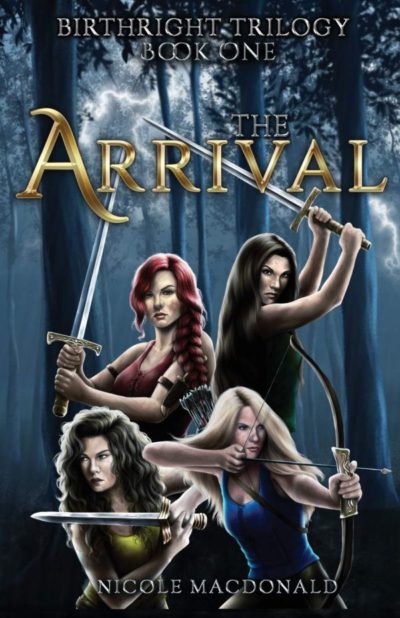 I’ve made a terrible mistake. I don’t recall exactly at what point in reading this, I first came to that conclusion. It may have been the multi-page description of dress fitting. It could have been the lengthy shopping expedition. But it’s safe to say that, if I hadn’t been running behind on book reviews, this would almost certainly have been a Did Not Finish, and consigned to the recycle bin of oblivion. The main problem, if definitely not the only one, is the mismatch between the description and reality. The Amazon page describes it, rather breathlessly, as “An Epic Fantasy Romance Adventure.” Silly me, I expected this to mean about equal amounts of those elements, especially given the cover. A more accurate description would be, “A Romantic Epic Romance Fantasy ROMANCE Romance Adventure ROMANCE, with added
 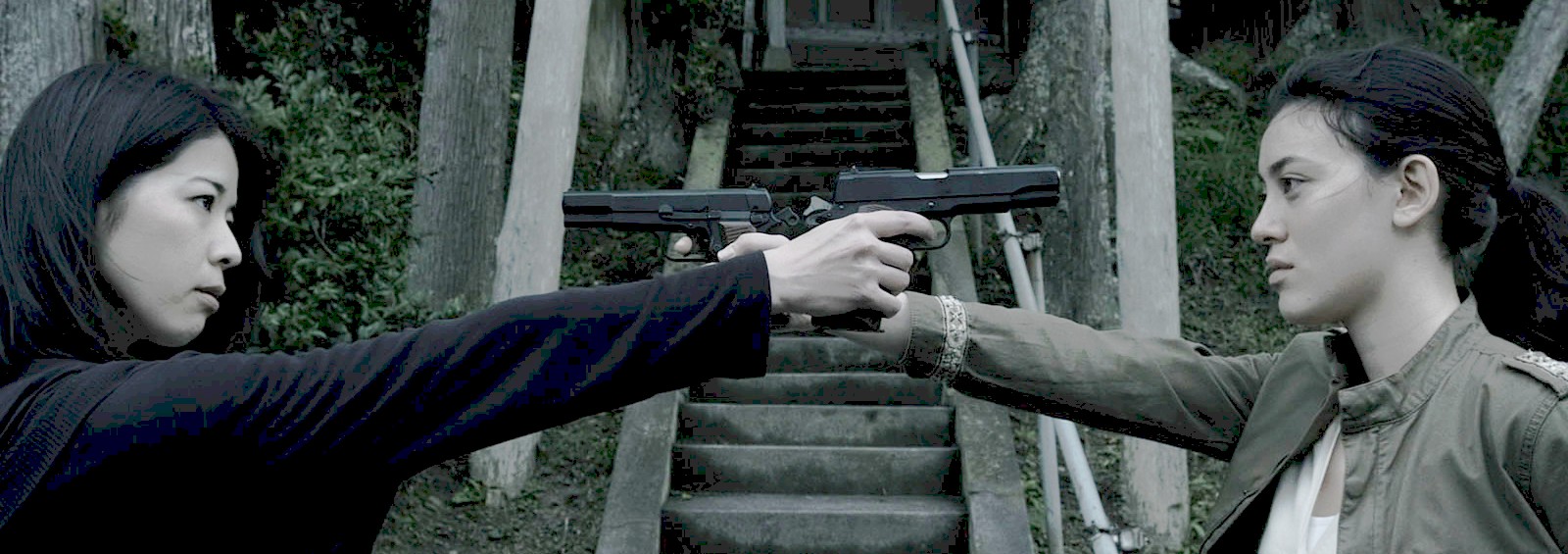 ★★
★★ Oh, dear. Where to start? Let’s get the positives out of the way. This looks reasonable enough, and clearly was not a poverty-row production. The central idea isn’t bad either: while a vigilante killer taking out misogynistic online sexists is a fairly ludicrous concept, if you squint a bit, you can see how it could have become an acerbic comment on the toxicity of social media. And that’s all I’ve got. For any potential is ruthlessly exterminated by staggeringly feeble execution. We’re there inside two minutes, when an unnamed Russian supermodel wakes, to get a video message from two pals vacationing in Morocco, then turns on the TV immediately to see a news report about them being executed by ISIS, with the video online for all to see. Wait, what?
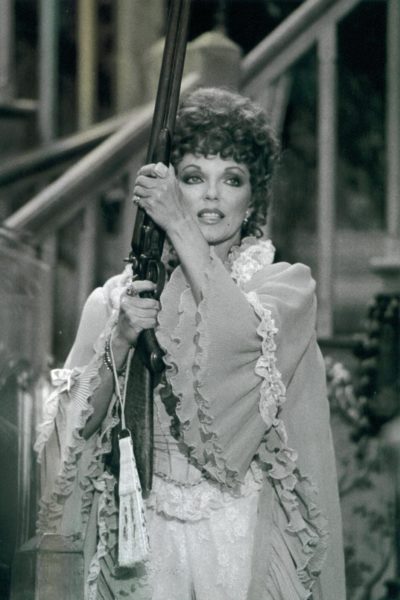 This sprightly TV movie from 1982 boasts a rather decent cast and, at least in the first half, manages to go in unexpected and interesting direction. It does end up descending into rather familiar territory thereafter, and the finale doesn’t manage to be as rousing as it should be. Yet it managed to keep my interest, and as this genre goes, that probably makes it better than average. It takes place in the last stages of the American Civil War, when the Southern women of Sweetwater have been left bereft of men, after the Confederate Army has recruited them all to their cause. Newly arrived in town is doctor Maggie McCulloch (Barnes), who has arrived to help her ailing aunt, Annie (Collins). She is shocked to discover Annie is less the mine owner touted in her letters, and more the owner of the town brothel.
 That aside, the plot unfolds largely as you’d expect. There’s the initial tension between whores and housewives, and the women struggle to come to terms with the everyday business of running the town. For example, there’s a fire drill, which ends up with half the ladies thrashing around in shallow water, and some other slapstick involving whitewash, that is somewhere between lightly amusing and embarrassing. However, Barnes – at the time a sitcom star in Three’s Company – does a very good job of keeping the film grounded, and the supporting cast help admirably in that aspect. Collins is particularly good, projecting an attitude which clearly proclaims she will take no shit from anyone.
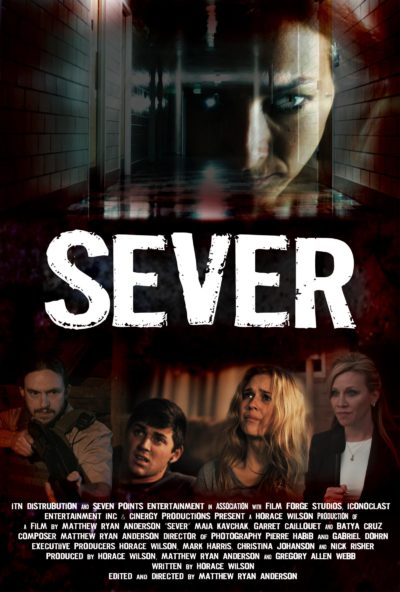 The French film
  It has been a very quiet year for big-budget action heroine movies so far. Here we are, more than one-third of the way through 2023, and this Netflix Original is likely the highest profile entry to date. There is a certain pedigree here, albeit of the direct-to-streaming variety, with director Caro having also helmed the (considerably more expensive)
 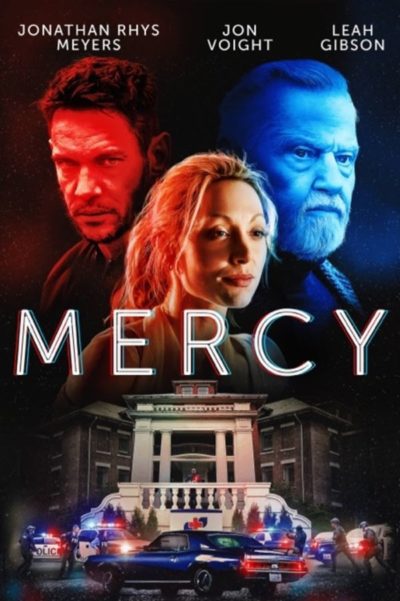 I’m almost tempted to leave it at that, because there are points where it feels like writer Alex Wright left it at that as well. Heroine Michele (Gibson) gets down to her vest? Check. Takes a walkie-talkie off a bad guy? Check. At one point, she even lost a shoe. If she’d gone crawling through an air-duct, I’d have flipped a table. Anyway, Michele is a former military doctor, now working in a civilian hospital. Rushing in one day is an FBI agent with Ryan Quinn, son of an Irish crime family, who was shot in an ambush after agreeing to flip on his relatives. Not far behind is family boss Patrick (Voight) and Ryan’s brother, Sean (Meyers), the latter intent on finishing the job.