Parallax View
Literary rating: ★★★
Kick-butt quotient: ☆☆☆½
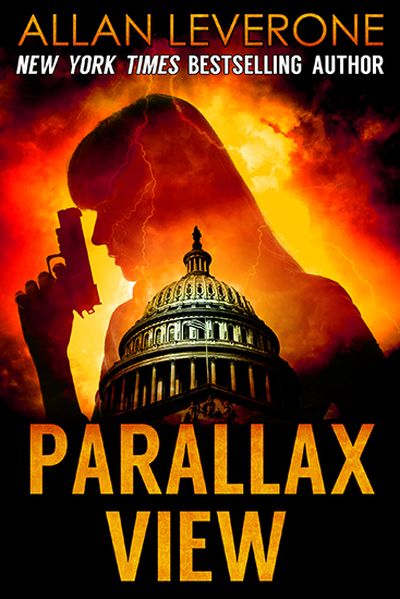 This largely unfolds over the period of about a week in May-June 1987. History buffs will recall that being the time when the Soviet Union was beginning to fall apart, and it’s that which provides the background to the novel. President of the USSR, Mikhail Gorbachev is trying to shepherd his country into a more open era, but is facing strong opposition from some elements within the government. He writes a letter to his American counterpart, Ronald Reagan, whose contents are potentially explosive, and which the anti-Gorbachev faction in the Kremlin will do anything to stop. They fail to stop the communication being handed to American courier and CIA agent Tracie Tanner in East Berlin, but that’s only the start of their efforts to prevent Tracie completing her mission.
This is the kind of book I liked despite its flaws – and there are quite a few of those. The plot really wouldn’t stand up to scrutiny: it’s the old “She can’t trust anyone” trope, and it’d take about five minutes of thought by a trained intelligence operative to figure out how she could bypass that. Meanwhile, Tracie has no qualms putting her complete faith in the male lead, hunky (but thoroughly doomed – he just found out he has an inoperable brain tumour) air-traffic controller Shane Rowley. No surprises for guessing where those two end up. Despite the period setting, there’s not much sense of that very specific era, and Leverone does spend too much time diverting into background information on characters who, in truth, are not more than fringe players. Finally, while it’s clear who the “bad guys” are, it might have helped if there had been a particular antagonist, rather than a series of relatively faceless Russian agents and American traitors.
However, you shouldn’t necessarily let any of the above dissuade you, since they are largely the kind of criticisms I only realized after I’d finished the book, and was contemplating this review. The author does a fine job of managing the pace, keeping things moving at a fast and furious rate. There’s one hurdle after another for Tracie and Shane to overcome, as they hurtle towards the final confrontation, atop a building in Washington. There are even occasional moments where I was genuinely impressed by Tracie’s smarts, such as her taking two motel rooms on opposite sides. Leverone has a very good eye for action, and some of the set pieces are positively cinematic, such as the fight on board a B-52, and its subsequent marginally controlled descent. Could quibble about the way Tracie needs “rescued” at the end, except it’s foreshadowed well enough to make sense.
All Enemies
Literary rating: ★★★½
Kick-butt quotient: ☆☆☆
 After finishing Volume 1, I was pleased to discover I’d been smart enough to pick up Volumes 1-3 as a freebie (you can also get the first seven books for ten bucks). Having been solidly entertained by the first book, I headed more or less straight in to the next two, figuring that it would be a good candidate for our first ever featured book review. I wasn’t disappointed. This is another slick page-turner, albeit one with some of the same issues as its predecessor.
It begins only a couple of days after the events which ended the first volume. Traci is already back out in the field, even though she is still healing – both physically and mentally – from the damage she suffered while completing her mission.Only the personal intervention of President Reagan saved her from being drummed out of the CIA by Director Aaron Stallings, but it’s clear she is not exactly his flavour of the month.
A couple of months later, in September 1987, things kick off properly with the abduction of US Secretary of State J. Robert Humphries from his home in Georgetown. He’s a close personal friend of the President, who orders Stallings carry out an off-the-books operation, using a lone operative, to find out what happened and who’s responsible. No prizes for guessing to whom the director gives this fraught mission The initial evidence all seems to point to it being a Russian plot, this being the peak of the Cold War, but the more Tracie looks into the matter, the more it seems the Russians are being set up to take the fall, and the real culprits are elsewhere. Trying to tell Stallings this only gets her fired from the CIA; naturally, this is barely an inconvenience for the heroine.
As in the first book, the circumstances do throw Tracie back onto relying almost exclusively on her own talents. While she does get some help from CIA Analyst Marshall Fulton, it’s mostly information, which helps her put the pieces together. He’s a desk jockey, and although brave enough, ends up literally dropped off by the side of the road, as Tracie speeds off on her rescue mission. There is a slight sense of romantic tension between them; it doesn’t amount to much, yet still feels a bit awkward, considering how close we are to the personal tragedy Tracie endured in book #1. Her stoic refusal to call for back-up also felt a little strained. I get she no longer had official standing, yet there’s a point where this seemed a tad contrived.
It is a bit more of a stealth mission, which is what leads to the slightly lower kick-butt quotient for this: there’s more creeping around, trying not to be detected, in place of plane crashes, gun battles and chases. However, it feels more coherent and has a better ring of plausibility to it. Each piece of the story connects well to the next, and does a good job of drawing the reader along, towards the eventual climax on an small island off the East coast. My reading is usually split, with one book on my phone and a different one on the tablet. So it likely says something that, as soon as I finished this, I loaded up volume three on both my devices, the better to get into it.
The Omega Connection
Literary rating: ★★★
Kick-butt quotient: ☆☆☆☆
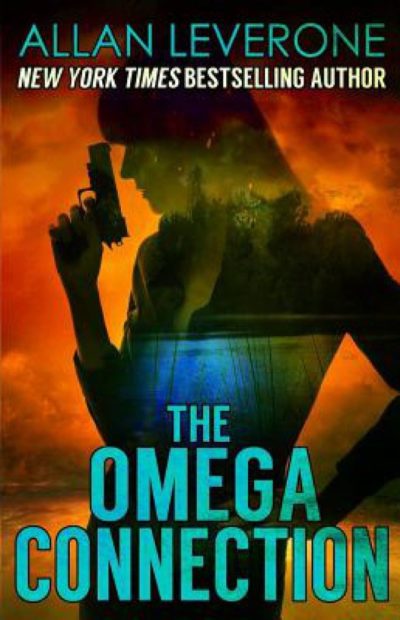 Again, there’s no much of a pause between the end of one story and the beginning of the next. No matter how much Tracie may have been taxed by her exploits, she’s thrown back out there by boss Stallings, on another hazardous mission. I do wonder about her motivation, since she’s now entirely off-books, no longer even being a CIA employee: why love your country so much, and be prepared to put your life on the line for it, when its agencies treat you in such a disrespectful manner? I’d be high-tailing it towards the private security sector after all she’s gone through. That might just be me though.
This begins with an electronics company being decimated by a bomb attack, with its CEO also murdered in his hotel room. Threatening letters had been received, blaming the corporation for its role in the Bay of Pigs fiasco over a quarter of a century previously, an abortive invasion attempt against Fidel Castro’s Cuba, which cost the lives of many Cuban expats. Now, it appears, someone is out for payback. Tracey is assigned, first to bring in the only surviving member of the board, its R&D genius, Edison Kiley, then find out the person or persons responsible and make them stop. The task will take her into the darker corners of the expat community in Miami, over into Cuba itself, before she has to go deep into the almost unexplored territory of the Florida Everglades.
There is a certain sense of deja vu, in that as in All Enemies, the culprit for whom Tracie is seeking, is not who it initially appears. Neither book makes much effort to hide this fact: they’re not really whodunnits. However, it is a little too familiar for my tastes, and she also accepts what she is told regarding this by a certain party as the truth. While she is limited in what she can do, due to her unofficial status, I’d still expect her to be a little more “Trust, but verify…”
The best thing here is likely the main antagonist. They spend most of the film in the background, with Tracie dealing mostly with the results of their action. However, the eventual face-off is worth the wait, a downright brutal and savage brawl in the depths of the Florida swamps. It’s good enough to make me wish they’d met up earlier in the story, and had more than one such encounter. By the end, I’d be hard-pushed to say Tracie had shown much character development. She’s more or less in the same place she was at the start of volume 3 – just with a bullet wound in her leg, and a nasty concussion. However, the whole trilogy proved to be more than an adequately fun read, and I would not bet against further volumes showing up here, down the road.
Author: Allan Leverone
Publisher: Rock Bottom Books, available through Amazon, both as a paperback and an e-book
Books 1-3 of 9 in the Tracie Tanner Thrillers series.




 This is not to be confused with the rather higher profile i.e. it’s available on Netflix, Japanese film with the same title, made the same year, and covering a not dissimilar theme. Both are about a woman who is prepared to commit murder, in order to save their best friend from an abusive relationship. However, after the killing in question, the films take divergent paths. The Japflix version becomes a road-trip movie, with the killer and her friend going on the run. This, however, focuses heavily on the killer, whose already fragile mental state falls apart completely, after she discovers that things weren’t quite as she had been led to believe. It’s not her first time at the homicide rodeo either.
 Well, at the very least, we get to cross another country off the map, in the Action Heroine Atlas. This comes from Bulgaria, and seems to have been a labour of love for Sophia, who co-wrote, directed, produced and starred in it (her daughter plays the younger version of the lead). You don’t see that often, especially in our chosen field. Yet I suspect it could end up having caused more problems than it solves. I’ve often found that films where one person wears so many hats, end up being too “close” to be entirely successful. By which I mean, the maker is so involved they can’t see the flaws, when another pair of eyes might have been able to identify and correct these issues.
 I am, probably, biased here. Scottish action heroines are pretty rare, to the point I am hard pushed to think of a single one I’ve covered previously, in the twenty years I’ve been running this domain. [I just made myself feel
 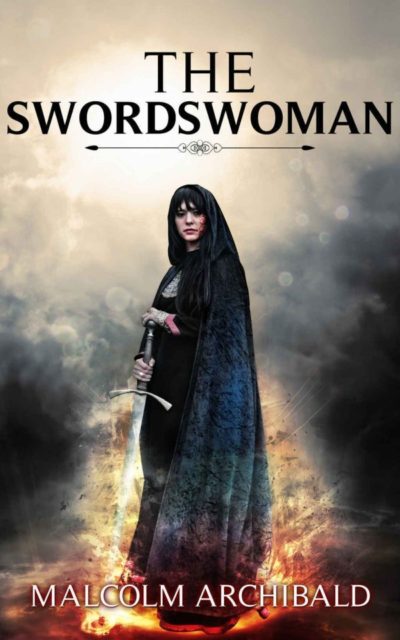 That peace is shattered when someone is washed up on the Western Isles island of Dachaigh where 20-year-old Melcorka lives with her mother. It turns out the Norse are invading, and the king must be notified of the threat. Melcorka and the rest of her clan head towards the capital, only to arrive too late: the army of Alba (as Scotland was then called) has been routed and the nobles scattered. However, Melcorka has a destiny to fulfill… And also inherits a large sword, Defender, with a history dating back centuries, whose powers transform her into the titular character. It’s up to her to rally forces, including the ferocious Picts from the North, to take on the invaders, and send them back across the North Sea to Scandinavia.
 This opens with a scene that is almost a direct life from the similarly titled
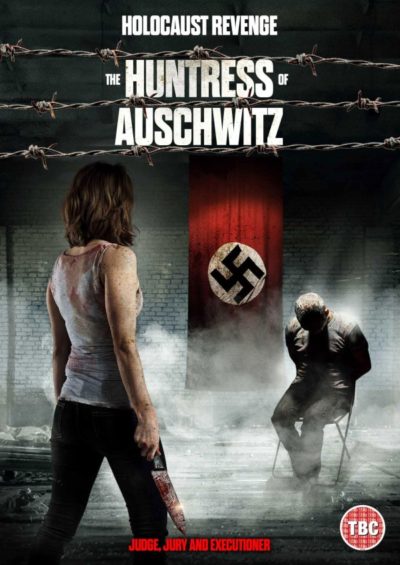 I came into this somewhat braced, given its 3.0 IMDb rating, and reviews which tended to be scathing e.g. proclaiming “This May Be The WORST Movie I’ve Ever Seen!” While it’s clearly not
 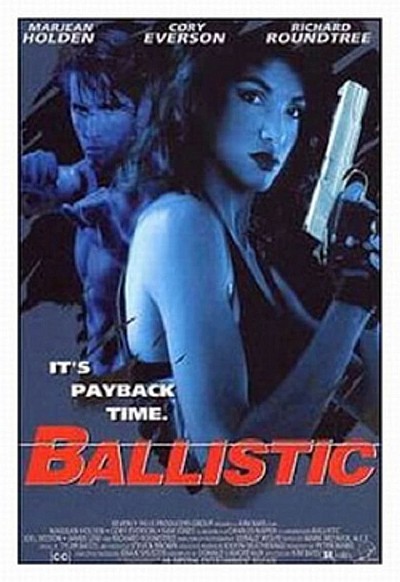 You know you’re in for a slice of stinky, nineties action cheese from the opening sequence. Undercover cop Jesse (Holden) has just taken down a sleazy yuppie drug-dealer, and a homeless woman tells her, “You know what you are, sweetie? You’re ballistic!” We probably need to explain why the film is titled that way, because there’s really not an enormous amount of great action here to justify it. Jesse is your typical, no-nonsense cop, who has just transferred from homicide to the Urban Crime Taskforce, where she is meeting resistance from her new colleagues. She is also trying to help her father (Roundtree), a former cop now doing 20 years after being framed with kilos of coke.
 Quite often, in films featuring women who are supposed to be boxers, they simply do not look the part. Safe to say, this is not an issue here. That is apparent from the opening scene, in which Kaylee (Reis) is preparing for a fight. As she warms up with her trainer, the speed and power of her punches is clear, and not cinematic trickery. It’s unsurprising, since Reis is, at time of writing. the current WBA, WBO and IBO light-welterweight world champion. It’s just a shame this movie chooses not to make more use of her undoubted talents in the combat field, and is a tad too earnest to be value as entertainment.
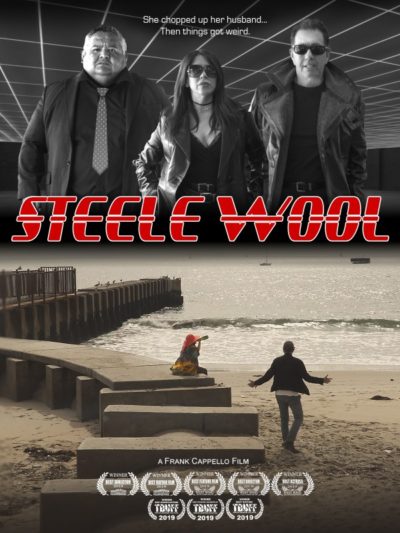 Daphne Wool (Varela) has finally had enough of her abusive husband, so has killed him, chopping up the corpse and keeping it in a storage locker. Which actually is a good thing, because it turns out he was wanted by the Mob, and there was a price on his head. For their “help” in carrying out the hit, Daphne and pal Tony Steele (Cappello) are rewarded, but things go further. Daphne becomes a full-time assassin for the gangsters, learning to kill with everything from a paper-clip up, while Tony acts as her facilitator. However, they quickly become a liability to the organization, and are given a “poison pill” contract, being sent to kill weapons inventor Vincent McCabe.