This is a solid, no-nonsense combination of spy and science-fiction. Though, to be honest, it is skewed towards the former genre, with the latter mostly window-dressing. It wouldn’t take much to change the setting from a solar system whose ownership is disputed by a couple of galactic empires, to a city whose ownership is disputed by a couple of countries. The planet is Hudson, claimed both by the Star Kingdom of Prometheus and the Koratan Confederacy. Heather Kilgore is among the best agents of the Promethean King’s Order, and is dispatched to Hudson after the suspicious death of a man who had betrayed the Kingdom, former commander Connor Monroe
Her job is to find out the truth behind the event, but things are complicated in a number of ways. She and Connor had been lovers previously – while part of a mission, it might have been more than that. Also, she’s partnered with her former mentor, Tabitha Lowry. There’s history there as well, the pair having parted on poor terms during a previous case. They’re going to have to put the past aside, in order to figure out who – if anyone – was behind Monroe’s passing. And it quickly becomes clear that certain parties, with the Koratans the lead suspects, have a strong interest in not letting the truth be discovered by Heather and Tabitha, and will do anything to prevent this.
This is 258 pages, but felt shorter, which is generally a good sign, with a healthy quota of action, both given and received. Heather is undeniably able to take care of herself, even against multiple opponents, but is certainly not bulletproof. Indeed, at one point she has sit things out for several days, after getting hurt. She just chills in a remote cabin with a local kid, learning to appreciate the joys of things like fishing; this could have felt like needless padding, but ends up providing the heroine with additional depth. [The cover pic seems an accurate depiction of her as described; Kilgore is not exactly an under-the-radar kind of operative!]
My main complain was pacing. It felt as if the first eighty percent of the book contained eighty percent of the plot. Then the last twenty percent? Well, that contained eighty percent of the plot as well. As well as going from investigation to resolution in what seemed like just a few pages, it’s there where we discover Heather and Tabitha’s history. To be honest, this didn’t add particularly much, and seemed at odds with the very hard-nosed attitude shown by Heather. Since it wasn’t a secret between them, I would have brought it out far earlier. Despite such missteps down the stretch, this was an entertaining read, with a memorable central character, and a story I could see unfolding cinematically in my mind’s eye. The next volume is on my list for future consideration.
Author: Skyler Ramirez Publisher: Persephone Entertainment Inc., available through Amazon, both as a paperback and an e-book Book 1 of 3 in the A Star Nation in Peril series.
This is is a very small-scale bit of science fiction, with barely a handful of speaking parts, and mostly taking part in a single room. Despite this, and some qualms about the use of cinematically convenient amnesia, it works rather well. Eileen (Mitich) wakes to find herself in a room without windows or doors. A disembodied voice (LeBlanc) tells her to move a pencil on the table. She does and is knocked out. Regaining consciousness, the voice repeats the instruction. Except, Eileen is now chained to her chair. And if she doesn’t complete the test quickly enough, Eileen is informed her daugher, Eve (Loiselle) will be killed. OK, the movie has my attention.
Turns out, Eileen has psychokinetic skills, the ability to move things with her mind. The tests are an escalating series of experiments, designed to force this talent up from her subconscious, to the point where she can control it. Part of the process involves adding her husband, Roger (Tchortov) into the room. Though they’re clearly in there for a lengthy period, leading Chris to pose the question at the top of this review. No answer is ever obtained, and that’s probably the film’s biggest weakness. Not specifically the toilet question, just a tendency to handwave its way past issues. The way Eileen’s lost memories return at the pace needed by the script is also a bit weak, though the validity of these is questionable.
Despite these weaknesses, there’s a lot here that is done right. The positives begin with Mitich, who hits all the points in a fine performance. She shifts from sympathetic through to scary, as the strength of her abilities becomes apparent, then back to poignant when we discover – albeit through that cinematic amnesia – the truth about her situation. Inevitably (and this is kinda obvious, so barely counts as any kind of a spoiler), the decision to torment someone with paranormal talents ends up with Eileen using them against her captors. This is done mostly in an extended sequence where she walks through the complex at a sedate pace, absolutely unstoppable. The effects are more restrained than, say, Marvel or DC, yet are certainly up to the task.
Despite the cover, I don’t remember Eileen actually holding a gun at any point. Not with her hands: one of the trials does involve her assembling a pistol from its component parts, purely with her mind (below). Admittedly, she doesn’t need a physical weapon: the telekinetic abilities she has pose more than enough threat. In hindsight, she does go for more spectacular methods of dispatch than necessary: a simple squeeze of the heart would suffice. However, I’m happy to err on the side of style over substance, and by this point, I was sufficiently invested in Eileen’s past, present and future to buy into whatever might happen. If there’s similarity to another slice of Canadian SF, Cube, the better-defined plot here means it’s something I’m prepared to tolerate.
Dir: James Mark Star: Sara Mitich, George Tchortov, Evie Loiselle, Karen LeBlanc
Yes, I went there again. After Barbie Spy Squad, I’ve gone back to the plastic fantastic, for another entry in the crossover action heroine animated industry. This isn’t the first review here to cover a female take on the classic novel. La Femme Musketeer had already gone there, but the major difference there was, as the title implies it only had one woman, who had to keep her sex under wraps. Here, while the setting remains pre-revolutionary France, the wannabe Musketeer is openly a lady. On the high level, it is a fairly loyal adaptation, with teenage heroine Barbie – here called Corinne (Sheridan) – heading to Paris to fulfill her long-held ambition of becoming a Musketeer.
There, she’s initially spurned – albeit more for her lack of relevant experience than her gender – and has to prove herself. Naturally, there are no women Musketeers with whom she can bond, but she literally bumps into other young women, such as Viveca (Tozer), Aramina (Johnson), and Renée (Bell), with whom she finds employment as a maid in the palace. Naturally, she encounters the similarly teenage Prince Louis, and discovers that the skills of her coworkers are not limited to light housework. Together, they have to protect Louis from various attempts on his life, such as a falling chandelier, carried out by those who have designs on the royal power, before Louis ascends to the throne on his imminent eighteenth birthday.
Y’know, I did not hate this nearly as much as I feared I might. Corinne is established early on as smart, athletic and competent, though I could probably have done without her talking animals. But in general, the voice acting is enthusiastic and effective, though the women do sound a bit as if they have interchangeable heads. Bonus points for the unmistakable tones of Tim Curry, playing malevolent regent Philippe, who is next in line after Louis. The animation is… okay, I guess, considering the era. Nobody is going to mistake this for Pixar, yet it does the trick, and on occasion is actually more detailed than I expected (just not on the character’s faces – though, again: plastic, duh).
Messaging is probably considerably lighter than in the live-action Barbie movie. There’s a few statements that “girls can’t be Musketeers” – I mean, this was 17th-century France, it’s not wrong – and the resulting need to prove them incorrect. That’s about it. Instead, there’s a training montage set to the riff from EMF’s Unbelievable, which I did not have on my Barbie Bingo Card. The action is better than I expected, too, though obviously no blood, despite all the pointy objects being energetically wielded, both by the heroines and their enemies. At the final ball, no weapons are allowed in, so they have to make do, with creative use of fans, ribbons, etc. [Weirdly I read one review which said they never get to use swords, which they clearly do.] There’s also refreshingly little romance here. All told, perfectly watchable, to my near-shock.
Dir: William Lau Star (voice): Kelly Sheridan, Tim Curry, Kira Tozer, Willow Johnson, Dorla Bell
I was rather surprised to see the name of Alexander Witt pop up as the director, at the end of the first movie in this Chilean trilogy. He has been a stalwart second-unit director in Hollywood for decades, going back to Speed in 1994. With regard to the site, he fulfilled the same role on Aeon Flux, but is best-known as the director of the second film in the Resident Evil franchise, Resident Evil: Apocalypse. That was his sole directorial credit prior to Sayen, and I must confess… I was today years old when I discovered he was Chilean. I presumed he was German, based off his name and his work on the Berlin-shot Apocalypse. But, no. Born in Chile, albeit of German descent. He returned there to take the helm, almost 20 years later – again with an action heroine story.
Sayen
★★½
This takes place in the Araucanía region, where Sayen Coñuepan (Montenegro) has just returned to her indigenous homeland. Her grandmother is presented with an offer for her land, but a suspicious Sayen discovers it’s a front for a mining company. Things escalate, with Antonio (Piper), the junkie son of the company’s head, Máximo Torres (Arce), shooting the old woman dead. Sayen vanishes into the jungle, with Antonio and his henchmen in hot pursuit, knowing that if Sayen is allowed to go public with what she knows, it could make things very difficult for the company. However, this is very much her territory, and she has skills to make things potentially very difficult for them.
As a jumping-off point, this is… okay, I guess. It begins with a po-faced caption which informs the viewer this is going to be an Important Message Movie. The early going is a bit of a slog, leading to me coming to the conclusion, just because something is “traditional” doesn’t necessarily make it any good. Once granny is gunned down, the film shifts gears and gets more energy. However, I was expecting Sayen to go full Rambo, using the environment to her advantage. She doesn’t really, short of crafting a bow, which she uses one (1) time, and a bit of impromptu first-aid. Meanwhile, the bad guys could hardly be less subtle about their villainy, if they were given wax mustaches to twirl.
Admittedly, this may be necessary to make things clear for the international audience, who may not be up to speed on the intricacies of indigenous politics at the bottom of South America. We need black hats and white hats: keep things simple. Oh, and Chilean rap. Okay. It is interesting how Sayen doesn’t kill anyone – at least not directly. Oh, people die in her wake. Quite a few of them. However, it’s things like death through careless driving, for example. Or pointing a speedboat at a pier, then leaping off. Given the circumstances, surely no jury in the land would convict. After this lacklustre opening, while I can’t say I was keen to get to the next installment, I’m reluctant to quit any story in the middle.
Sayen: Desert Road
★★★
However, I felt the sequel works a little better. It takes place in an entirely different environment, relocating from the southern forests to the Atacama desert, one of the driest places in the world. The enemy remains Actaeon, the predatory industrial corporation headed by Torres, who have built a lithium extraction facility, after bribing their way to approval. Sayen, now with a businesslike crew-cut, is looking to find evidence of this corruption, and gets help from Qumal (Sánchez), a young woman whose father was among those who accepted the money. A SD card contains the required proof, but Acteon and their minions remain hot on Sayen’s trail, and prepared to stop her, by any means necessary.
This is at least somewhat more nuanced and less simplistic. While Torres remains the personification of evil, things are greyer elsewhere. A good example, is Qumal’s father: turns out he used the money received from Acteon to build a school for the town. There’s also one of the minions, Gasper, whose loyalties seem flexible, and who makes good points about the realities of life in the area. Sayen, though, is largely unbothered by these, though still defiantly proclaims herself not to be a murderer, despite what the authorities and media are saying about her. The desert locations provide some good opportunities for vehicular mayhem. I’d say Actaeon should probably look at revamping their driving courses, because some of their employees literally can’t steer to save themselves.
I’m still not entirely on board with Sayen’s mission: I tend not to feel eco-terrorism is better than any other flavour. However, this benefits from not needing to spend time on set-up, though does mean you really can’t watch it without having seen the first part. I was definitely surprised by a couple of twists at the end, where one character I expected to survive into the next movie, ended up dead, and one I thought was already dead, turned out to be alive. This set things up for the third installment, with Actaeon’s parent company Greencorp proving, in the corporate world, there’s always someone bigger and more morally dubious than you. Will Sayen be able to continue her battle, and also maintain her “clean hands” policy? Guess we’ll find out…
Sayen: The Huntress
★★★
There’s a further shift in setting here, the series moving to an urban location, of the Chilean capital Santiago, where Sayen has joined up with a group of activists. They are seeking evidence that Greencorp, under its CEO Fisk (Aarón Díaz), has bribed senators to vote against a bill protecting the country’s water from exploitation. There’s treachery on both sides, with a mole in Sayen’s group bringing heat on their heels, in the particularly interesting shape of female enforcer Jo (Niav Campbell – not to be confused with Neve Campbell!). On the other hand, they receive help from an unexpected source, because it’s not just eco-terrorists who have had enough of Fisk’s shenanigans…
There are some positives here, with the city landscape providing another fresh set of locations for Witt to work in action sequences, including zip-lines, base jumping and cycling. I particularly enjoyed the multiple battles between Jo and Sayen, although the director is still too inclined to go with the quick cuts, as he did in RE: Apocalypse. There’s a decent balance between the action and drama, with the high-level political intrigue working well. On the other hand, the film suddenly drops in a romantic interest for the heroine, which had me wondering where this came from. I wouldn’t worry about it. He isn’t around for long. It all ends a little too neatly, Sayen apparently able to sustain her position on the moral high ground.
All told, if you said this was a South American take on The Millennium Trilogy, I would not be inclined to disagree. In both cases, you have a young woman with a grudge against the powerful, who has the skills to make them pay for their unpunished crimes. Sayen is more hands-on than Lisbeth Salander, although the latter could take care of herself. I think the heroine here is probably less unstable: without the death of her grandmother to propel her down this path, you could easily see Sayen living a normal life, getting married, having kids and perhaps opening a legal help centre for the local residents. Instead, she ended up hunting the head of a global corporation, seeking justice for relentlessly putting the quest for profits ahead of everything else.
After a bit of a shaky start, putting the message ahead of the medium, the second and third films made for decent entertainment. They were all close to the ninety minute mark, avoiding the cinematic bloat we see too often in movies that do not need to be two-plus hours, and Witt’s experience in well-staged action is apparent. Having a heroine who won’t directly kill, but who is not averse to cracking heads if necessary, is a tricky needle to thread, and I’m not sure this is always successful. On the other hand, Sayen comes from a fresh and interesting background, and the trilogy as a whole does explore new territory. I can’t truly recommend it, but if you are interested in watching these, nor would I argue against it. You do you, gentle reader – you do you.
For the first hour and forty minutes, you may well be wondering why this is here. You will need to be patient: it gets there… eventually. However, to start with, it’s the story of the battle between crime boss Nikka Shaitan (Grover) and dogged cop Inspector Sidhu (Kumar). After members of the former’s gang are caught attempting a bullion robbery, Sidhu seeks to leverage them to reach their boss. But Shaitan uses all the power – both legal and illegal – at his disposal, to avoid justice. Initially, a state of martial law (the title translates as “emergency”) gives the cops the edge, but after that is declared over, the balance shifts, culminating in Shaitan’s gang invading Sidhu’s wedding and gunning everybody down.
Shaitan again avoids justice, getting a corrupt politician to give him an alibi, leading to his acquittal. This is where we finally achieve GWG relevance, for the Inspector’s bride, Shikha (Sabah), vows to take revenge on every single person responsible for the death of her husband. She delivers, taking them out in a variety of ways, from shooting repeatedly in the head after removing their tongue, through burning alive, to hacking apart with a sword. It’s certainly enthusiastic, though the execution isn’t nearly as much fun as it should be. It demands a lot more blood. Naturally, Shikha uses the gang’s tactics to escape legal punishment, the film ending in a large caption asking the audience, “Do you agree with this?”
Well, since you ask… It’s a typical early nineties Indian pot-boiler, with all that implies. So, it’s overlong at 144 minutes, stuffed with terrible songs (and I like some Bollywood music – Singh is Kinng is one of only two soundtracks I actually listen to outside the film), and painfully simplistic, rarely approaching any level of delicacy. By most standards, this is not a “good” movie. But I did find it interesting. As depicted here, Indian cops do not give a damn about civil rights; how much of that’s due to the declared state of emergency is unclear (there was such a two-year period in India, but earlier, from 1975-77). On the other hand, the courts are depicted as incompetent and/or corrupt, basically useless at dispensing justice.
The sudden blossoming of Shika in the final act is also surprising. It’s rare for a film to end up with its hero or heroine being one who is barely even a supporting role during the first two-thirds. However, Rao manages to pull the switch off, albeit mainly through killing everyone else who you liked to that point. Shikha, assisted by her friend Razia, as well as another survivor of the massacre, then goes to work after the legal system has failed her, in a way which makesCharles Bronson look like subtle understatement. This is a clarion call to the vigilante inside the audience, about as subtle as a brick, and all the more fun for that. I’d edit this down to eighty minutes and call it a vast improvement.
This is not to be confused, in any way, with the Jennifer Lawrence spy movie, which is missing the definite article. What we have here is a hyperactive Chinese movie, where it feels as if almost nothing is real. Chris walked in during it, and her first reaction was, “Is that anime?” It’s not, but it definitely has a similar vibe to things like the Ghost in the Shell universe. The other obvious influence might be the first Matrix movie, both in the superkinetic action, and with its tale of a hero who rises to lead a human rebellion against a technological threat. Though as Wachowski movies go… Speed Racer is a better visual reference point.
That’s especially true in the opening scenes, which takes place in 2060. The corporation belonging to Mr. Ron (Zhang) is putting the finishing touches to their human/robot combination, with the first such child, Yi Ni, is about to be born. The facility comes under ferocious attack, and to be honest, the depiction was so frenetic, I needed a bit of a nap by the time it was over. We’re talking giant automated cannons popping up out of the landscape, mecha being dropped to aid in the assault, and thousands of rounds of ammo being expended. It’s all barking mad and completely over the top, ending in infant Yi Ni being sent out in an escape capsule and she’s lost to the company.
Twenty years later, the now adult Yi (Han) is living on the edge of society in a megalopolis, when her innate abilities are triggered. The bad news, is this brings her back on the radar for Ron, who has never quite been able to reproduce the success of Yi, and wants to bring her in. He aims to use her DNA to create an army of super soldiers, with which he can conquer the world. After escaping his clutches, she teams up with the rebels, under Qiu De (Jiang), and becomes part of the resistance. If you’re thinking this might lead to further hypersonic action sequences? Yeah, especially as Yi approaches her final form of “Dark Phoenix”. Incoming cease and desist from Marvel in 3…
There’s a LOT to cram in to a mere seventy-six minutes, and doing so basically requires the sacrifice of any effort at characterization. From a technical point of view, it is quite impressive. I don’t know what the budget was: likely, less than it looks, and I sense it’s the wave of the future. However, this comes at the cost of almost any humanity. As a result, at times it feels you are simply watching someone playing a video-game on ultra-hard level. Certainly, the action sequences are closer to subliminal flashes, where you don’t follow the action, so much as desperately cling on for the ride. I hope this is not the wave of the future. And now, if you’ll excuse me, I am off for that nice lie-down in a dark room I mentioned.
Dir: Ji Zhizhong Star: Han Cong Cong, Jiang Zheng Hao, Zhu Hong, Zhang Xuan Mo
I don’t subscribe to the belief that authors need to be the same sex, race, religion or whatever as their characters. A good author can put you inside the head of their heroine, even if they’re a different species, an extra-terrestrial, or whatever. But there needs to be an authenticity of voice for it to work. This is where, for example, Quentin Tarantino fails for me: his characters almost always end up sounding like Quentin Tarantino. And I wrote that before noticing the blurb on Amazon actually says, “Jerry Furnell exudes a Quentin Tarantino vibe in his narrative.” That’s meant as an incentive; I’d have taken it as a warning.
For the problem here is similar, exacerbated by the adoption of a first-person narrative. The heroine is Camilla Lee, described as “an eighteen-year-old Kung Fu black belt”, of Chinese extraction, who lives in Australia. The author, however, is a British man in his sixties, and frankly, it shows. Camilla never comes off as anything except sounding like a fairly dubious fantasy of what a teenage girl is like. Not least because the instant Camilla turns eighteen, she immediately becomes a raging nympho. It’s borderline creepy. And indeed, one scene of sexual assault removes the word “borderline” from that sentence. I’m not sure if it’s intended to be repellent or arousing, and as a result ends up in a very odd place.
The story is okay, if familiar. Camilla’s parents are murdered in a home invasion, and she barely survives. She’s convinced this wasn’t a burglary gone wrong, and eventually discovers it’s connected to her father having betrayed his Triad employers back when he lived in Hong Kong. She heads back there – pausing only to give the passenger sitting next to her a hand-job, I kid you not – to confront Mr. Wu, the leader of the Seven Dragons gang and make him pay for his crimes. Oh, and she’s also getting bullied at school. She makes them pay too, in no uncertain fashion. Although only after Camilla has engaged in self-mutilation, and been prevented from committing suicide by the unexpected arrival of a friendly dog in the park.
To be fair, in the “From the author” section on Amazon, Furnell cheerfully admits, “The mix of sex and violence will appeal to some readers and appall others. Reviews suggest you will either love it or hate it.” He’s not wrong, and no prizes for guessing on what side of the fence I fall. Which is weird, because regular site visitors will know, I’m hardly averse to gratuitous sex and senseless violence. Here, the latter is fine, with some interesting fights as Camilla works her way through the Seven Dragons to meet her nemesis. But even here, she has to dress up as a prostitute to get into the building. And did I mention the lesbian sex? Though Furnell does lag Tarantino in one department. At least there’s no foot fetishism.
Author: Jerry Furnell Publisher: Self-published, available through Amazon, both as a paperback and an e-book Book 1 of 3 in the Naked Assassin Series.
Fair play to Woollard and his team for making a feature movie with no resources to speak of. The problem is, watching this, it’s painfully obvious that they had no resources to speak of. Two space-suits and a fog machine are not enough for a film, especially in a genre like science-fiction, which tends to rely on spectacle. Oh, smaller scale works can still be remarkably successful: the night before this, I watched glorious and highly recommended time-travel film Beyond the Infinite Two Minutes. But if you’re not going to offer epic scale, you need to have something else to repay the audience. An hour and three-quarters of watching characters stumbling about in the gloom is not it.
I was lured in by this synopsis: “After crash-landing in an escape pod on a dark and misty planet, a mother is hunted by an alien creature which is drawn to the lights she must use to find her missing son.” That high concept sounds pretty cool, and I hoped I was in line for an action heroine take on Pitch Black, perhaps. It just never materializes. There are, indeed, two women who have crash-landed: Tallie (Lilly) and Nia (Ann-Roche, under the name of Chrissy Randall). It’s the latter who is desperately seeking her son, Luccas, only to be hampered by the presence of the hungry creature. She and Tallie have some things in common. However, it’s what separates them, which might be more important.
Turns out the pair’s presence on the planet is not coincidental, because the monster’s excrement is a precious stone – think oysters and how they make pearls. Some parties therefore have a definite interest in providing a steady stream of sustenance for it. However, the potentially interesting ideas here are utterly undone by the woeful execution. 90% of the scenes are one or other woman, shot in close-up to try and hide the lack of scale, while they talk to each other over the radio. It’s boring after about ten minutes of this. The bad news is, you’ve got another hour and twenty of the same thing, before they finally come into each other’s presence for a (brief) spot of plot resolution. Don’t expect to be impressed by the creature, either.
It’s never a good sign when you have to read the director’s comments on Reddit to make sense of a film. I also learned the film was a metaphor for illegal immigration. Yeah. That whirring sounds is this legal immigrant’s eyes rolling. On the plus side, it’s muddied enough in its plotting that this was unclear at the time, so I guess it wasn’t heavy-handed, albeit more through incompetence than design. Admittedly, I may potentially have tuned-out during the scenes which alluded to this moral topic. However, if a film is going to do such a dismal job at holding my attention, I don’t feel responsible for missing out on any nuances of plot.
Dir: Matt Woollard Star: Christine Ann-Roche, Gia Lily, Tedroy Newell. James Woollard
The easiest way to describe this is a Thai version of Wanted. You could make a case that the central character is not female. But like Wanted, there’s easily enough going on around him to qualify for this site. The similarities don’t stop there either. In both films, you have an innocent, totally unaware office worker, who is recruited into an ancient order of super assassins, just as they are going to war. Here, the rookie is Charlie (Ngamnet), an insurance salesman – sorry, he’s a sales manager, as he would no doubt correct you – who is caught up in the affairs, and eventually becomes a member, of a lethal organization known only as The Agency.
In something perhaps nicked from Naked Weapon, they recruit by using orphaned young girls, who are trained in the ways of murder for hire. They form cels, each overseen by a manager, in this case codenamed Grey Fox. The last incumbent, Keng (Semglad), drew the wrath of upper management for his unauthorized actions, and designated Charlie as his heir apparent. Which is news to Charlie, who eventually accepts and after an extended training montage, has to deal with the assassins. The most potent of these is Dina (Thangprapaporn). Though there are a number of others, of various experiences and skills, all the way down to Mina, who must be aged about eight [Yes, their names do all end in -ina, thank you for asking].
Fortunately, their enemies appear to sit back while Charlie gets up to speed, with the subplot about a stolen stone with mysterious qualities conveniently back-burnered. Instead, we watch fairly lengthy flashbacks, detailing the past of various characters. This is the movie’s main weakness, with a middle which is close to being free of action, filling in gaps that we never particularly cared about to start with. Given a running-time of almost two hours, this padding feels especially egregious. It also has a somewhat odd mix of tone, things like Charlie’s reactions to events largely being played for comedy. I guess at least it isn’t the toilet-based humour of certain Asian entries I’ve seen, and I will admit to genuine laughter on more than one occasion.
Pleased to report, the film gets back on track with a strong final act. This brings Dina back to the centre, and sees Charlie and her having to team up to take on the Agency’s #1 killer, the masked Nina (Ying Donnaporn Sukprasert). I can only presume the organization is capped at 26 killers, for alphabetical purposes. I pity the poor assassin called Wina. Anyway, the action is fairly solid, albeit somewhat prone to being over-edited. It’s largely hands-on, with swords the preferred weapon of choice, though I suspect the lead performers are actresses first, rather than martial artists. While it’s far from the most original movie I have seen this year, it does some interesting things with those influences. It’d be a better ninety minute film however.
Well, this crashed and burned at the box-office in no uncertain fashion, taking in less than ten percent of its $55 million budget. While not surprising – dark fantasy doesn’t exactly have a good track record of late – it is a bit of a shame. I loved the look of the film, which is often spectacular, reminding me of things like The Chronicles of Riddick in a willingness to step back and overwhelm the viewer with scale. I am, of course, contractually obliged to watch anything with Milla Jovovich in it, and she’s her usual good value here. Bautista had a solid track record too, and he’s certainly appropriate for the role. But then, there’s the plot…
This all takes place in a harsh post-apocalyptic world, ruled over by Overlord, with his rule maintained by the church and its inquisitors, who tolerate no heresy. That would be the witch Gray Alys (Jovovich), who can compel anyone meeting her gaze to do her bidding. She is tacitly contacted by Overlord’s wife (Okereke), who wants Alys to give her the power to change her form. Doing so means Alys must journey into the Lost Lands outside civilization to find such a shapeshifter, and she hires Boyce (Bautista) as a guide on that quest. However, they are also pursued by church enforcer Ash (Joven), who is keen to bring the blasphemous Alys to heel for her reluctance to toe the line.
The stuff in the Lost Lands is great, and is where the film genuinely lives up to the “epic fantasy” tag. Frankly, that budget seems quite cheap for what you get, with some stunning landscapes and great set-pieces, including one on a cable-car which is likely to be among the best action sequences I’ll cover on the site this year. The problems arise when the film drifts away from the most basic of plot: Alys and Boyce hunting a shapeshifter, while Ash hunts them. That would, of course, be far too simple for a film based on a story written by George R.R. Martin. As you’d expect, the creator of Game of Thrones has a lot of other palace-based shenanigans involving the Overlord and his queen.
These are muddled, confusing and, frankly, not very interesting. This kind of heavy plotting is certainly not in director Anderson’s wheel-house either. If you look at his filmography, his output tends to be at its best when its most streamlined. The same applies, in microcosm, to this film. Give us Milla and Dave slicin’ and dicin’ their way through Ash’s minions, and we will be happy. The further it drifts from this elegant simplicity, the less firm is the ground on which it operates. To the point that, too often, it ends up sinking under the weight of what the script thinks is gravitas, yet in reality is nothing more than stuff we have no reason to care about.
Dir: Paul W. S. Anderson Star: Milla Jovovich, Dave Bautista, Arly Jover, Amara Okereke




 This is a solid, no-nonsense combination of spy and science-fiction. Though, to be honest, it is skewed towards the former genre, with the latter mostly window-dressing. It wouldn’t take much to change the setting from a solar system whose ownership is disputed by a couple of galactic empires, to a city whose ownership is disputed by a couple of countries. The planet is Hudson, claimed both by the Star Kingdom of Prometheus and the Koratan Confederacy. Heather Kilgore is among the best agents of the Promethean King’s Order, and is dispatched to Hudson after the suspicious death of a man who had betrayed the Kingdom, former commander Connor Monroe
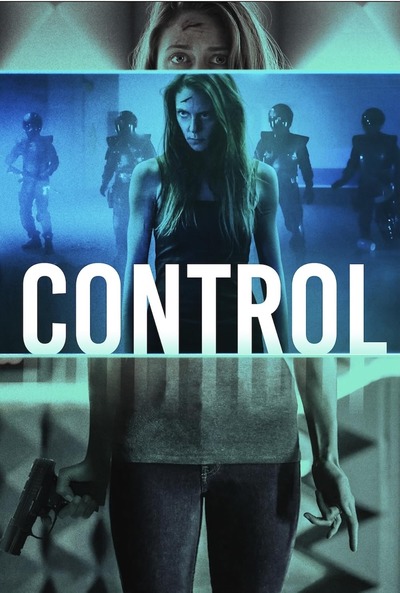 This is is a very small-scale bit of science fiction, with barely a handful of speaking parts, and mostly taking part in a single room. Despite this, and some qualms about the use of cinematically convenient amnesia, it works rather well. Eileen (Mitich) wakes to find herself in a room without windows or doors. A disembodied voice (LeBlanc) tells her to move a pencil on the table. She does and is knocked out. Regaining consciousness, the voice repeats the instruction. Except, Eileen is now chained to her chair. And if she doesn’t complete the test quickly enough, Eileen is informed her daugher, Eve (Loiselle) will be killed. OK, the movie has my attention.
  Yes, I went there again. After
  I was rather surprised to see the name of Alexander Witt pop up as the director, at the end of the first movie in this Chilean trilogy. He has been a stalwart second-unit director in Hollywood for decades, going back to Speed in 1994. With regard to the site, he fulfilled the same role on
  As a jumping-off point, this is… okay, I guess. It begins with a po-faced caption which informs the viewer this is going to be an Important Message Movie. The early going is a bit of a slog, leading to me coming to the conclusion, just because something is “traditional” doesn’t necessarily make it any good. Once granny is gunned down, the film shifts gears and gets more energy. However, I was expecting Sayen to go full Rambo, using the environment to her advantage. She doesn’t really, short of crafting a bow, which she uses one (1) time, and a bit of impromptu first-aid. Meanwhile, the bad guys could hardly be less subtle about their villainy, if they were given wax mustaches to twirl.
 Sayen: The Huntress
 For the first hour and forty minutes, you may well be wondering why this is here. You will need to be patient: it gets there… eventually. However, to start with, it’s the story of the battle between crime boss Nikka Shaitan (Grover) and dogged cop Inspector Sidhu (Kumar). After members of the former’s gang are caught attempting a bullion robbery, Sidhu seeks to leverage them to reach their boss. But Shaitan uses all the power – both legal and illegal – at his disposal, to avoid justice. Initially, a state of martial law (the title translates as “emergency”) gives the cops the edge, but after that is declared over, the balance shifts, culminating in Shaitan’s gang invading Sidhu’s wedding and gunning everybody down.
 This is not to be confused, in any way, with the
  I don’t subscribe to the belief that authors need to be the same sex, race, religion or whatever as their characters. A good author can put you inside the head of their heroine, even if they’re a different species, an extra-terrestrial, or whatever. But there needs to be an authenticity of voice for it to work. This is where, for example, Quentin Tarantino fails for me: his characters almost always end up sounding like Quentin Tarantino. And I wrote that before noticing the blurb on Amazon actually says, “Jerry Furnell exudes a Quentin Tarantino vibe in his narrative.” That’s meant as an incentive; I’d have taken it as a warning.
 Fair play to Woollard and his team for making a feature movie with no resources to speak of. The problem is, watching this, it’s painfully obvious that they had no resources to speak of. Two space-suits and a fog machine are not enough for a film, especially in a genre like science-fiction, which tends to rely on spectacle. Oh, smaller scale works can still be remarkably successful: the night before this, I watched glorious and highly recommended time-travel film Beyond the Infinite Two Minutes. But if you’re not going to offer epic scale, you need to have something else to repay the audience. An hour and three-quarters of watching characters stumbling about in the gloom is not it.
 The easiest way to describe this is a Thai version of
  Well, this crashed and burned at the box-office in no uncertain fashion, taking in less than ten percent of its $55 million budget. While not surprising – dark fantasy doesn’t exactly have a good track record of late – it is a bit of a shame. I loved the look of the film, which is often spectacular, reminding me of things like The Chronicles of Riddick in a willingness to step back and overwhelm the viewer with scale. I am, of course, contractually obliged to watch anything with Milla Jovovich in it, and she’s her usual good value here. Bautista had a solid track record too, and he’s certainly appropriate for the role. But then, there’s the plot…