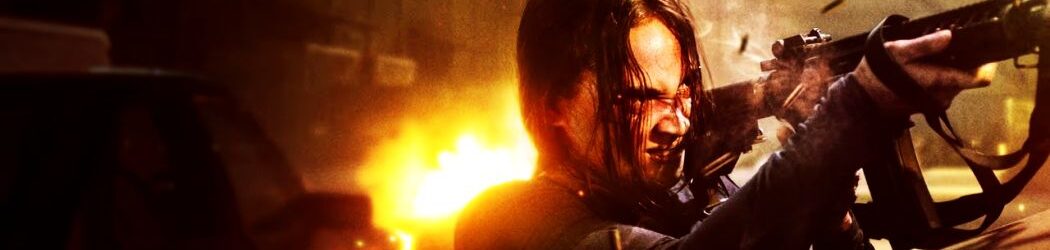
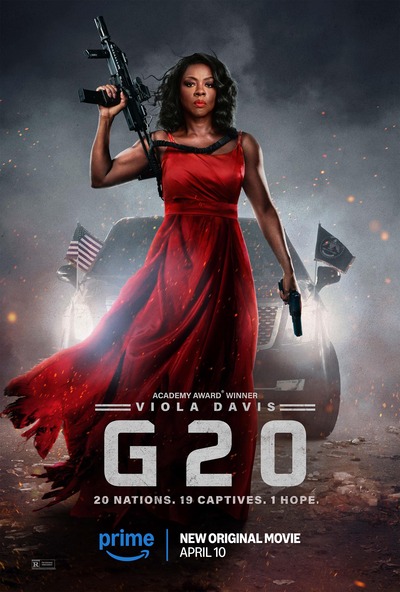
Amazon Prime doesn’t have the best reputation for its original movies. Indeed, I’m hard pushed to think of one which I’d want to watch again. That record is unchanged after this, a fairly ludicrous Die Hard knock-off which even an Oscar winner like Viola Davis can’t do much to salvage. It’s another in the recent series of “president in peril” films. When your movie takes inspiration from the likes of Olympus Has Fallen, you’re setting the bar low from the get-go. Then cobble together a script involving the three boogeymen of current culture – AI, cryptocurrency and white men. Finally, pretend Kamala Harris won the election, and was a military-trained bad-ass. Given all this, two stars is probably an achievement.
US President Danielle Sutton is in South Africa with her family to attend a conference and get agreement for her plan to… [checks notes] “empower struggling sub-Saharan farmers through access to digital currency.” Where’s DOGE when you need somebody to shut down this blatant waste of taxpayer money? The conference is taken over by Edward Rutledge (Starr), a formee Special Forces soldier whom I thought was South African, but turns out to Australian. I blame Starr’s ropey accent. He plans to use the gathered leaders to create deep fakes which will tank the economy and boost the value of his crypto holdings. Naturally, President Sutton is able to slide away with the help of Secret Service agent Manny Ruiz (Rodríguez), and… Oh, figure it out yourself.
I’ll never be averse to a good Die Hard knockoff. Unfortunately, this isn’t much cop. While Davis does what she can, being decent dramatically, and just about credible on the action (if you squint hard enough), she can’t negate the stupidity and cliché-ridden nature of the script. For example, Sutton’s whiny and rebellious teenage daughter, who – what are the odds? – turns out to be a world-class hacker, so can counter Rutledge’s plans, when necessary to the plot. And even Davis looks unconvincing when going toe-to-toe with men significantly larger than her, then straight-up outmuscling them. There are ways to handle this kind of thing, e.g. Air Force One used stealth for its hero more than strength. Director Riggen doesn’t bother, damaging the movie’s credibility.
It doesn’t help that it’s currently hard to make politicians of any colour seem sympathetic. I have a deep cynicism about them, and frankly, Rutledge makes some credible points in his inevitable anti-government rants. I also felt a rather unpleasant racist tone to the script, with enough of the fights being interracial to leave me going “Hmmm…” Go through this thinking “White people bad”, and you’ll probably be fairly accurate at predicting the script’s twists. If generally competent on a technical level, there are still mis-steps like some obvious CGI. All films in the Die Hard genre are wish fulfillment to a certain degree. This, however, takes it to a near-stupid degree, and doesn’t provide the escapism for which I was looking.
Dir: Patricia Riggen Star: Viola Davis, Antony Starr, Ramón Rodríguez, Anthony Anderson
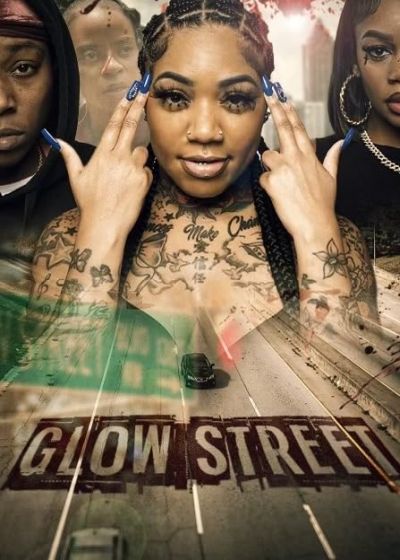
This would be a creditable little film, if the makers could ever be bothered to finish it. Yeah, it ends in what is supposed, I presume, to be some kind of cliffhanger. But it botches the landing badly, first by leaping forward two weeks instead of showing us the climax to which things have been leading up. Then, it just… ends, without resolution in any of the major plot threads. It’s a shame, because to that point, if doing nothing particularly new, this is competent in its execution, and I’ve seen a lot worse. It gets the basics right, with a half-decent story and characters: in the urban genre, this is sadly less common than you would hope.
It takes place in Atlanta, where the fictional Glow Street is the centre of the drug trade, with various factions fighting for control, with their battles spilling over into the neighbourhood, where innocent bystanders sometimes bear the brunt. After a brief “Tsk-tsk” about this in a detective’s speech at the beginning, however, morality is hard to find here. Instead, we’re plunged into the activities of Jahdai (Lynn) and her colleagues, who initially act as enforcers for Troy. But after they disobey a direct order from him, in order to take care of some personal business, they are no longer employed. In need of cash to meet their own liabilities, they decide to rob a stash house. Naturally, this doesn’t go as planned.
The main thing this probably has going for it is Lynn. She has some spectacular skin art, so looks the part, and has the attitude to match. Jahdai is certainly not somebody I would want to cross, yet manages to become someone who is not one-dimensional (another common problem in this sub-genre). Indeed, there are a slew of subplots, including a mother with lung cancer, a father who just got out of jail, and so on. It probably takes about forty minutes for the main story – the stash-house robbery, and subsequent betrayal – to kick in. Then there’s Trav (Stagg), the brother of someone killed in an earlier incident, who is out for revenge on Jahdai, largely what leads to the non-ending discussed above.
Escobar does an acceptable job of keeping the various threads coherent, and there’s no shortage of enthusiastic carnage. On the downside, there’s far too much unconvincing CGI blood, while often leaves the film looking like a Grand Theft Auto side-mission. All told, however, I was kept reasonably entertained and engaged, and it definitely looks and sounds like a professional work, rather than shot on somebody’s phone. Until things fall apart at the end, I would have been interested in seeing subsequent tales from this hood. But the writers’ inability to finish the job, leave me wary that further entries might end up pulling a similar trick. Tell me a complete story, dammit – if it’s good enough, I don’t need tricks to drag me back for more.
Dir: Vincent Escobar Star: Destinee Lynn, Kierra Shiday, Caleb Stagg, Natasha Eli Pearson
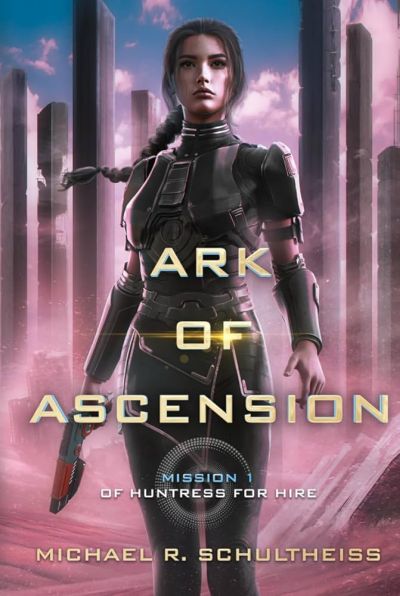
I don’t necessarily expect to understand a literary universe from the first page. These things take time: I get that. But I do expect that, as I go through the chapters, things will become clear. If I reach the end, and am still vague on a number of significant plot points, then something has gone wrong. Sadly, it’s the case here, and that largely hampered the effectiveness of the narrative. In this case, it had a cascading effect. Because I didn’t understand one situation, that rendered a character’s purpose uncertain, and this then meant the heroine’s motivation wasn’t clear.
Her name is Evalla Taryu, and she’s a bounty-hunter, tracking down those who are looking to escape justice, after having previously served in the Commonality Legion. During this military service, her strength, speed, reactions, etc. were artificially enhanced, abilities which come in handy for her new profession. Then, out of the blue, her estranged and fairly disreputable uncle, Kard, contacts her. Evalla’s sister, Ashta, has fallen in with a religious cult, the Disciples of Fire, under their leader Centom. Ashta needs to be rescued, because she is about to become an “ark-ascendant”. What is that exactly? I’m glad you asked. Unfortunately, I don’t know the answer. Some kind of religious transformation, apparently; but exactly what results and why it’s both so terrible and so valuable, is uncertain.
Putting that to one side, Evalla heads off with Kard to the planet in question, only to find Ashta has no interest in being rescued. However, it becomes clear (or, at least clear-ish) that there are a lot of bigger forces at play, and whatever it is that Ashta is going to become, is of interest on a trans-planetary political scale. Kard, who until recently was in prison for treason, has his own agenda too, leaving Evalla to try and negotiate her way through a maze of treachery, family loyalty and religious zealotry. But since we don’t have any real information regarding what’s going to happen to Ashta, we don’t know what’s so bad about it, and consequently why Evalla is prepared to risk life and limb to save her sibling forcibly.
There are some good aspects here. There was previously an incredibly-advanced race, the Makers, who are no longer around: but some of their technology is, and their presence almost hangs over everything that happens. We get a decent amount of action, with Evalla very much able to take care of herself, and I liked that she cares about the taking of life, only doing so as a last resort, in situations of extreme necessity. But there are key pieces of the puzzle missing, in particular from the reader’s perspective. The story almost feels as if it has been built from the top down, rather than the bottom up, and it makes for a frustrating experience.
Author: Michael R. Schultheiss Publisher: Lyamgallal Press, available through Amazon, both as a paperback and an e-book Book 1 of 1 (so far) in the Huntress for Hire series.
The Chinese title is 狙击之王:暗杀, which Google Translate informs me translates as “Sniper King: Assassination”. I don’t want to assume anyone’s gender, but I think I’m going to go with the alternate title above, as more appropriate, over the one on the poster. Because there’s no doubt about the amazing talents possessed by Anna (Yang), for whom a shot at three kilometers range is barely an inconvenience. We get right into the action with her being committed as a psychopath after begin captured, following her assassination of a drug lord. Yet another drug lord, actually – she has a deep hatred of them, for reasons we eventually discover, and has been taking them out with regularity.
It’s not long before someone tries to kill her in the psychiatric facility, but she’s able to escape (somewhat), with the help of struck-off former doctor, Nasipan (Tao). However, she is forced, with the aid of a nano-bomb injected into her bloodstream, to take a mission for Artest (Mak). There’s a war of succession going on in the country of “Libiwala”, with the prospect of drug production becoming legal in the country – to the joy of crime boss Roger (Lee). Artest requires Anna to liquidate all those in line for the leadership to prevent this. Or maybe encourage this. It’s all a bit murky, and the plot twists and turns until the very last scene, though never gets incoherent.
This one captivated me inside five minutes, with the hellacious firefight in the asylum, culminating in Anna sniping a sniper right through their scope. The action doesn’t let up for long thereafter, with some excellent set pieces involving both weapons and hand-to-hand combat. For the latter, Artest probably gets the bulk of it. But on the opposing side is a henchwoman who makes Gogo Yubari look like the picture of mental balance (I think she may be played by Guo Muhan, but I don’t recall hearing her name), and cuts a striking figure in her long blond hair and sword. It’s just one of the numerous things this film gets right, including occasional moments of comedy that genuinely made me laugh out loud, the movie winking at its own excesses.
It’s simply a fun experience, with characters you can get behind, and an impressively strong anti-drug message. All the players are given depth to their roles, and the chance to develop them. Even the little kid, playing the third in line to the Libiwalian throne, is not irritating – and that’s high praise coming from me, as far as child actors go. All told, this is one of the most purely enjoyable ninety minutes I’ve spent of late, easily surpassing bigger budget films like Cleaner or The Gorge, and given my expectations, is likely going to be the most pleasant surprise of the year. The whole movie is embedded below. Take five minutes to check out the opening sequence, and see if it hooks you as well as it hooked me!
Dir: Huo Sui-qiang Star: Yang Xing, Henry Prince Mak, Tao Tao, Lee Dong Hyuk
a.k.a. Sniper King: Assassination
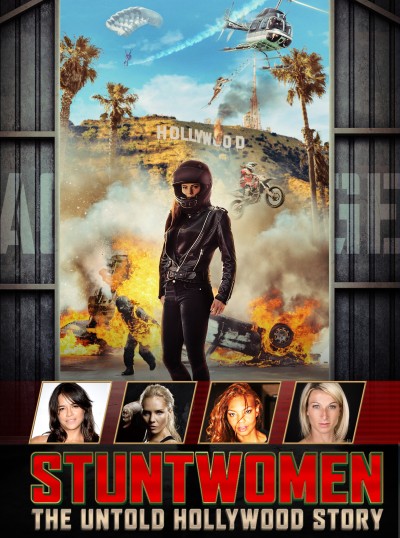
Regular readers will already be aware of the long history of stuntwomen, going back a hundred years to the serial heroines of the silent era. But there’s still a lot to be learned from this documentary about these fearless, and largely unsung, daredevils. Narrated by Rodriguez, it’s mostly a series of discussions between OG stuntwomen, like Epper, who was Lynda Carter’s double in Wonder Woman (and who passed away earlier this year), and members of the current generation, such as Amy Johnston, of Lady Bloodfight fame. The anecdotes shared by the former are an often fascinating insight into the struggles to be taken seriously, in a time when many directors would rather slap a wig on a stuntman.
In comparison, the modern equivalents seem a little bland. It almost feels like the adversity through which Epper and her contemporaries went, reinforced their characters. I mean: doubling for Pam Grier, as David did, feels like it would be rather more of an influential experience than doubling for Scarlett Johansson. Not that this stops some of the modern stuntwomen from complaining about inequalities in the business. To be honest, this aspect does come off as a little whiny in nature. Rather more inspiring are statements like, “I didn’t want to be respected for a girl. I didn’t wanna be good for a girl. I just decided I was gonna be really good.” That’s the kind of attitude which I respect more than blaming sexism and racism.
Another slight weakness is, it’s quite easy to lose track of who’s who, especially once you get past the main participants, and people you recognize. Not that there is much chance of failing to recognize Jessie Graff, of Ninja Warrior fame. Though it’s a little surprising Zoë Bell – arguably the best-known of modern stuntwomen, albeit a crown perhaps now passed to Graff – doesn’t merit more than a passing mention. It’s fun simply being a fly on the wall as Graff hangs out with her colleagues, bouncing on her trampoline, or watching renowned stunt driver Evans fake drag-racing with her son, and doing handbrake turns on the roads around their property. As Rodriguez enthuses, “I love that your neighbors are cool with all this.”
It is a little weird that the two male directors talked to are Paul Verhoeven and Paul Feig. Verhoeven is his usual entertaining self, but Feig comes over as almost smugly “right-on”. Mind you, if you’ve seen his painfully earnest Ghostbusters remake, you’ll understand his mindset. The documentary does take a rather chilling turn, though justifiably so, discussing the risks faced by all stunt performers, including fractures, concussions, paralysis and even death. It’s easy to overlook, especially now when we assume everything is green-screened or CGI. Some of the stories from the veterans, of the days when safety standards were… less stringent, shall we say, are staggering. You should certainly leave this with a deeper appreciation for those willing to risk their lives and limbs, purely for your entertainment.
Dir: April Wrig Star: Jeannie Epper, Debbie Evans, Michelle Rodriguez, Jadie David
To be fair, for most of the time, this was likely hovering around the two-star range. Not brilliant: it was rather obvious why this had taken six years from being shot, to receiving distribution. But there was some heart evident, and I look kindly on projects which appear to be trying. Unfortunately, we then reached the end, which was clearly intended to work as some kind of stone-cold cliffhanger. Regular readers will know my aversion to these in books. It’s far worse in a movie, especially where you know – given the time elapsed – there’s precious little chance of a sequel to provide any resolution. I’m sure the entire cast has moved on to other things since.
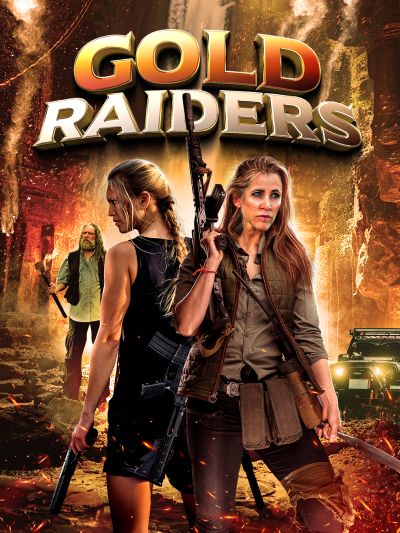
It’s the story of the Sierra sisters, Hera (Swenson) and Athena (Lee), who are part of a secret group called The Society. They have been feuding across the centuries against another secret group called The Order. Hera and Athena are now on the hunt for the lost treasure of the pirate Blackbeard, reported to be buried somewhere near the coast of Virginia. The sister think they have a good handle on it, and along with their local guides, head into the swampy territory in search of the buccaneer gold, guided by Hera’s psychic visions, which pop up conveniently, as needed by the plot. Naturally, The Order are also keen to get their hands on it, and not everyone in the Sierra’s party might be entirely trustworthy.
It begins with an unconvincing depiction of Blackbeard’s death and a somewhat rousing battle for a relic called the Eye of Quetzalcoatl. But once we get past that, the bulk of the movie consists of an awful lot of wandering around marshland here, in lieu of… well, anything much. For example, it might have been nice to have learned about the goals of both The Society and The Order, and why they have been pitted against each other for so long. Nah. Let’s instead just have another of Hera’s obscurist visions where figures, whose relevance remains uncertain, make cryptic statements like, “Remember, as I have risen, things can be buried – can be unburied. Your past journeys will reveal the clue to salvation.” Look, can’t you just email her a Powerpoint presentation?
It doesn’t help that, for a centuries old secret organization, the representatives of The Order are… well, a bit crap. There’s only about four of them to start, and let’s just say, rigorous competence doesn’t appear to be a requirement for selection. Mind you, when they do show an evil streak, shooting people dead in cold blood, Hera and Athena are so blase about it, that the moment is robbed of almost all power. Not that there’s a huge amount of power to begin with, even before we get to one of the most “Wait. Is that it?” endings in recent memory. Well played marketing department though, for the poster and changing the title from the original one of Sierra Sisters: The Hunt for Blackbeard’s Treasure.
Dir: Josh Relic Star: Kathleen Swenson, Celeste Lee, James Blackburn, Sam Barber
When the reboot (you hardly can call this just a remake) of She-Ra and the Princesses of Power – and please note the plural form! – was released by Netflix in 2018, it immediately drew fierce criticism. The main issue was re-designing the classic character of heroine She-Ra as well as others. The original animated series ran from 1985-87, and featured very feminine-looking characters. You could call them the feminine ideal: large in size, fit, attractive and yet still more realistic than the musclebound hero from mother series He-Man and the Masters of the Universe, of which She-Ra was a spin-off.
Though it has to be said: those characters then looked very much alike, as if the same model was used for almost all of them. In the new show, which ran for 5 seasons between 2018-20, the characters look more like prepubescent teenagers, and it was one of the things old fans took issue with. She-Ra and her allies were once an ideal of what a young girl might hope to look like as a grown-up, similarly to Barbie. The reimagined version stresses more diversity in body-shape. The character of Glimmer is more rounded – arguably a bit over-weight – which drew ire, too. But these characters also look more androgynous, essentially eliminating the feminine ideal. We seem to live in a time when female characters aren’t allowed to look stereotypically female, though there seems no such problem with heroes e. g. Hugh Jackman in Deadpool & Wolverine.
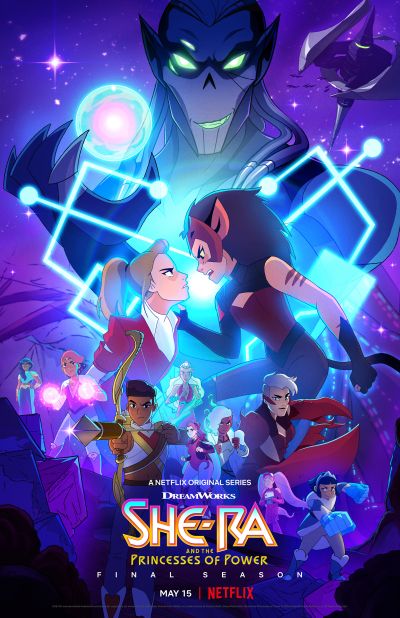
The show was soon called “woke”, but this is only justified, in that it fits the usual Netflix inclusion rules. So, the character of Bow, the archer, is black and has two fathers; there are indications some characters have relationships with people of their own sex; there is a lizard person whom we are informed online is transgender; then there is heroine She-Ra, who at the very end of the series (similar to The Legend of Korra), enters a relationship with her constant frenemy, Catra. I personally didn’t mind, though it may have something to do with me never caring for She-Ra in the 80s. It makes a difference if you create an original character like Korra, or take a preexisting character and change them drastically. I would have a beef, too, if let’s say James Bond in his next incarnation would be declared homosexual.
Though woke? Is it woke? Well… not in the sense I normally understand the word. For me, it means an agenda is being pushed. I can’t really say I see this here, unless the agenda is to stress that people exist who are not hetero-normative. Which… is true? The focus is on the story; we don’t get characters demonstrating against being sexually or politically repressed by the evil patriarchy, or talking about the problems of their gender orientation in modern society. This is no more woke than The Dragon Prince, another popular Netflix show. Part of the attention is probably due to creator ND Stevenson, who has stated he is – according to Wikipedia – “nonbinary, transmasculine and bigender,” as well as having bipolar disorder and ADHD. Well, whatever it is, is reflected in Stevenson’s work, in She-Ra as well as Netflix animated movie Nimona, based on his graphic novel.
But what is the story?
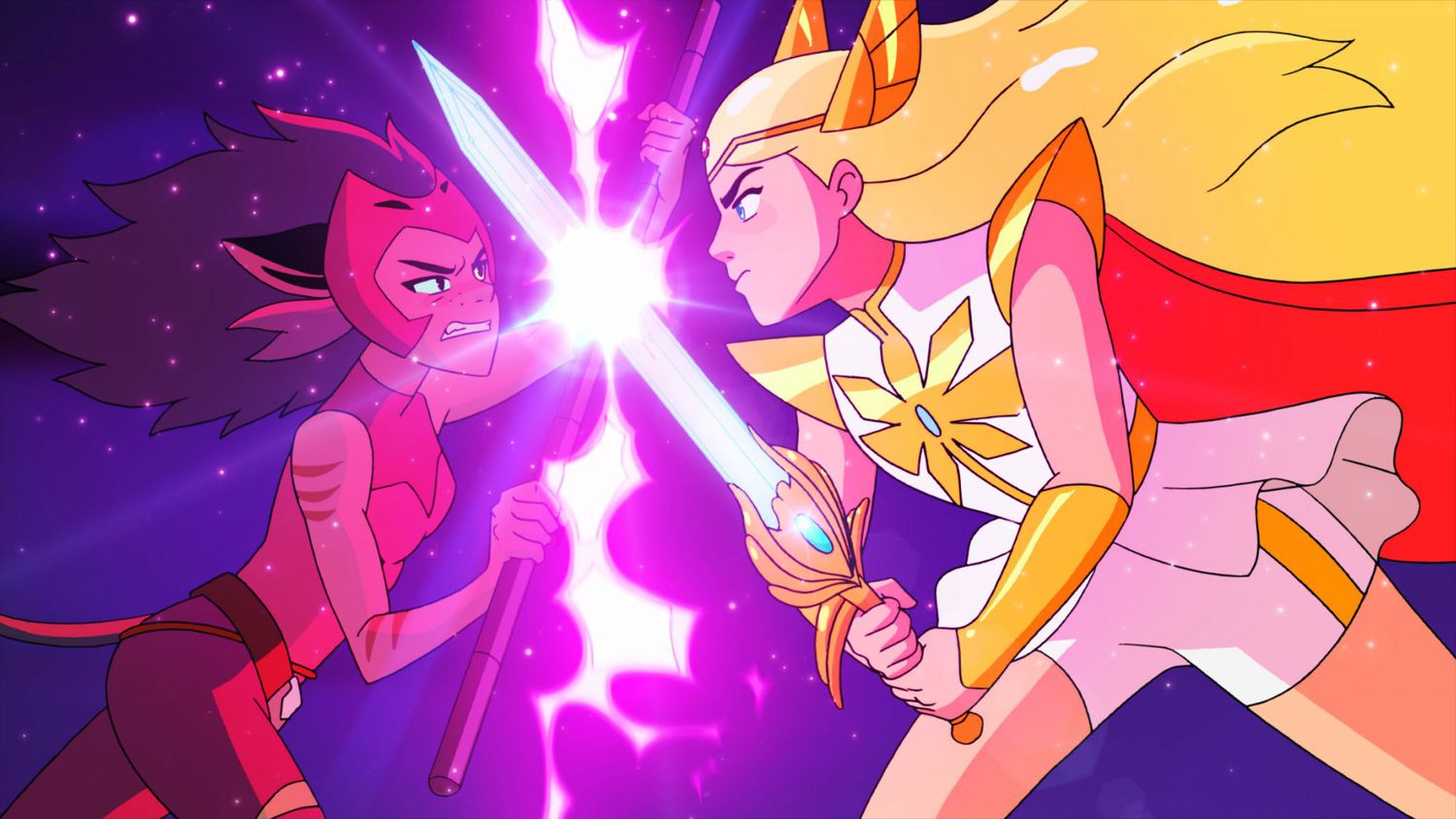
The core is the same. Adora, a human girl, has been raised as a soldier by the Horde, an alien race ruled by the evil Hordak, who is at war with the inhabitants of the planet Etheria. When Adora finds the magical sword of power that makes her She-Ra, Princess of Power, she learns the Horde aren’t the good guys. She swaps sides to fight them, with the support of several princesses living on Etheria, who all have special powers. However, there is no mention here of Prince Adam (a.k.a. He-Man), Adora’s brother, separated from her at birth when she was kidnapped by the Horde. This fits the modern animated He-Man series released by Netflix in 2021, which was in a totally different drawing style – its characters wouldn’t have matched. And as far as I know – someone correct me, if I’m wrong here – Adora’s childhood was not part of the original story. I’m also unaware she shared a sisterly childhood bond with Catra, a humanoid with cat-like features, in the Horde.
For it’s here where the new show differs from the old stories. And is all the better for it, as the relationships of the characters inform the story of the new series and are essentially the core of it. As Adora leaves the Horde, she puts herself essentially in opposition to Catra. Like her, Catra has been a childhood protégé of Shadow Weaver, a mysterious woman with magical powers and loyal servant of Hordak. Shadow Weaver has raised the two girls but has always been lying to them and treating Catra badly compared to Adora. This plants the seed of a competitive relationship between the two girls. There are definitely shades of Avatar – The Last Airbender in this.
Catra sees Adora’s defection as a personal betrayal, which leads her to fight against Adora more and more. At the same time, it becomes clear that Catra cares – in her own twisted way – for Adora. Her actions are, in some way, a logical result of her upbringing by Shadow Weaver, who later in the proceedings will turn to Adora’s side, too. In the end, Catra is on Adora’s side, declaring her love, which finishes the story.
The series got a lot of praise for inclusivity and character reinvention and has a quite enthusiastic fan-base. Though I don’t see anything here, I hadn’t seen before somewhere else, especially in the Avatar series, as mentioned. It’s not surprising a show like Sailor Moon and the style of Miyazaki films (though I fail to recognize the latter in the show), were cited as influences. The fan-base here, which may mainly consist of “non-heterosexual oriented” young people is definitely not the same fan-base as the original series. So if the intent was to enlarge interest in the franchise in general, I guess one could say: Mission accomplished!
On the other hand, it’s clear this new spin on an old title has split fandom – or, rather, created a second fandom. This is not necessarily a good thing. It can result in embittered online wars and open hostility between members of different fan groups, both claiming ownership of “their story” and how it should be portrayed or interpreted. It’s not the only case. See franchises like Star Wars (George Lucas’ or the Disney version?) and Star Trek (“old Trek” vs. “new Trek”?). If you are as old as I am, you may even remember a time, long before Internet and personal computer communication existed, when people argued over if Kirk or Picard was the better captain, or Sean or Roger the better Bond. Change, it seems, always creates controversies. Therefore, the new show – as good as it is – has created a problem for the franchise that won’t be solved in a foreseeable future.
The plot is interesting and captivating, depicting a cycle of childhood abuse that repeats itself later, with Catra attacking Adora and others – just as she was mistreated and psychologically manipulated by Shadow Weaver when she was a young child. It gave the characters a depth you probably wouldn’t have expected, from a reboot of an old animated show – one that itself was just a spin-off of another show, made more than 30 years ago. But that’s the thing, isn’t it? We always expect “our” franchises to continue year after year, decade after decade, telling us the same stories without changing. But the world constantly changes, and you can’t expect series and franchises not to reflect that in some way. It’s especially true, if we talk about series lasting more than a generation.
What I also liked here very much, were the action scenes. When Catra was being evil-sarcastic to Adora it did remind me a bit of Shego being mean to Kim Possible, or Callisto toying with Xena (another… princess…). But it also has to be said that the show needed some time to get going, had some episodes that felt like fillers, and while characters like She-Ra, Catra, Shadow Weaver, Entrapta, Scorpia or Hordak were mostly written interestingly, others felt a bit bland, underdeveloped and interchangeable. Though it might be a given, if you have so many characters in one show. It is true, the show didn’t break new ground, though I didn’t expect it to. These reboots typically repackage an already existing product, despite presenting it to the audience as something entirely new. Is so much praise justified for a show that essentially is recycled? Just because the main characters come out as lesbians at the end?
Additionally, it has been pointed out that the redemption of Catra is more than just a bit questionable. [Though she isn’t the main villain of the show: it’s still Hordak, who in the original show was also the mentor of He-Man’s archenemy Skeletor.] She has attacked and tried to kill Adora several times and went so far as wanting to destroy the entire world, rather than see Adora succeed in her goals. That’s pretty bad, and one wonders how such a character can just be forgiven. Admittedly, Etheria might have a different legislation and jurisdiction than planet Earth! But someone put it quite well: “Catra is a war criminal. Why is she not being treated as one?”
In the end the show is indeed comparable to Sailor Moon – it’s all in the name and power of love and forgiveness. Who wants to question logic here? For all its perceived “controversial” elements and flaws, the show is good entertainment, which is where my main focus always lies. Netflix’s streaming rival, Amazon, announced a while ago they wanted to do a live-action She-Ra series (recent news reports suggest it may be He-Man’s turn next). This caused something of an uproar among the fans of the Netflix show, obviously fearing She-Ra may become straight again! It’s history repeating, similar to the reactions of original series fans when they first saw the Netflix show. Though if indeed that She-Ra show is produced, its story-telling will have to match the quality of this one.
But it seems you can never make everyone happy at the same time!
Creator: ND Stevenson Star (voice) : Aimee Carrero, AJ Michalka, Karen Fukuhara, Marcus Scribner
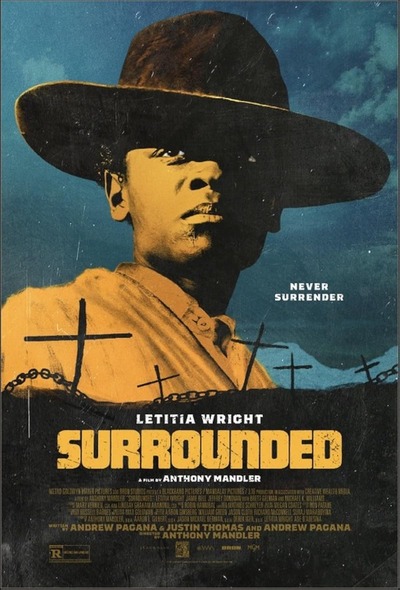
This is certainly a little different from the usual Western. It takes place a few years after the conclusion of the Civil War. Mo Washington (Wright) is on her way to Colorado to take up a piece of land she bought with her hard-earned savings. To avoid trouble on the journey, she is dressed as a man, though being black is problematic enough at that time. The stagecoach in which she’s travelling – or rather, on which, the driver not wanting a Negro inside – is attacked by brigands, led by notorious bank-robber Tommy Walsh (Bell). After a fierce fight, Walsh is captured, but the coach, complete with Mo’s documents, plunges off a cliff.
The good news? There’s a ten thousand dollar bounty on Walsh’s head, and Washington is left to guard the fugitive while another passenger, Wheeler (Donovan), goes to fetch the authorities. The bad news? That leaves her alone with Walsh overnight, and there are others interested in the fugitive, including those after the reward, and the remaining members of the Walsh gang. Because he’s the only one who knows the whereabouts of the very large pile of loot, resulting from their last robbery. Mo is going to have to figure out who she can trust. For instance, is Walsh’s offer, to split the loot if she frees him, legit? It would certainly more than cover the losses she suffered when her Colorado land went over the edge.
As with the Hong Kong movies which use the gender disguise thing, it does require a large suspension of disbelief. As soon as Wright opens her mouth, any illusion of her being able to pass for male goes out the window of the stagecoach. On the other hand, gender is almost irrelevant as things unfold. I suspect eliminating the need for concealment would not have helped the intended moral here. The racial element however, is much more pertinent, with Mo having literally walked off her owner’s plantation. Yet there’s more in common with Walsh then it initially appears. Well, providing you accept at face value and trust his story, about being orphaned at age eight by robber land barons. Which might or might not be wise.
It’s in their scenes together where the film is at its strongest, even if they’re just sitting by the campfire, talking. If it feels almost like a play, this is still engrossing, two actors in prime form. Less successful is the arrival of a third party, not least because this leads to a poorly-staged fight, unfolding in near total darkness, where it was impossible to see what was happening. Maybe it worked better in the cinema? At home, it severely took me out of the experience, staring at a blank screen. Fortunately, this recovers to a decent finale, with Mo deciding she is the only person she can truly trust. In the end though, her character seems less fully-rounded than Walsh, despite, or perhaps because of, all the talk. As a result, this only intermittently fulfills its undeniable potential.
Dir: Anthony Mandler Star: Letitia Wright, Jamie Bell, Jeffrey Donovan, Michael Kenneth Williams
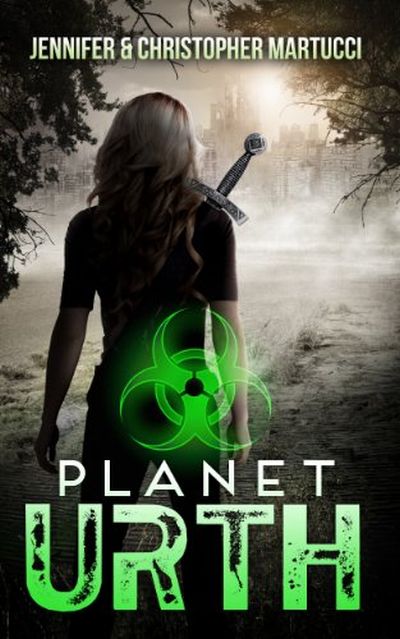
This is written by a husband and wife duo, which is a nice idea. I wonder how Chris would react if I suggested writing a novel to her? Unfortunately, the results are a little disappointing. It feels like the execution is better than the idea – usually it’s the other way around. For example, this is a post-apocalyptic scenario, except the book never details in more than the vaguest terms, what happened. It’s disposed of in about one page: a war, involving both bio- and nuclear weapons. Some humans went underground; those who didn’t, became “grotesquely distorted” mutants and calling themselves Urthmen. We’re now 200 years later, and they are still seeking to wipe out the dwindling number of “real” humans who abandoned their bunkers for some reasons. Those include Avery, in her late teens, and her sister, eight-year-old June, orphaned by the death of both parents: Mom killed by Urthmen, Dad… just kinda died, I guess.
They’re barely clinging on to life, in the face of all the perils around them. As well as the Urthmen, there are other nasties, such as “Lurkers” – also mutated, nocturnal wolf-like creatures – giant spiders, etc. However, hope arises when Avery discovers another family when hunger forces her to roam further than usual on a hunting expedition. This consists of the parents and three children, one of who is about Avery’s age, Will. And you can probably predict, Avery immediately falls for Will, and spends the rest of the book utterly gushing about him – “His eyes are a brilliant blue-green, pale, like tropical water I once saw in a picture, and his hair is a dark as a raven’s feathers.” Never mind the imminent, omnipresent threat of brutal death, or the daily struggle for survival. There’s a cute boy in the area, and of course he must be made frequent, repetitive gooey eyes at!
The other problem is June, who is the most middle-aged eight-year-old I’ve ever seen. While it is mentioned how “mature” she is for her age, June’s dialogue is thoroughly unconvincing, spouting lines like, “Be safe, Avery, You are my sister and my best friend,” or “Something is different about you, Avery. Something happened that you’re not telling me about.” While my knowledge of children is (mercifully!) limited, my grandkids certainly do not speak in that way. But when it’s just the heroine, this has its moments. There’s a sequence where she falls into a giant spider’s web, and it’s one of the more horrific and disturbing things I’ve read this year. The action in general is well-handled, though again, the ease with which Urthmen get dispatched – two adults and two teenagers wipe out a raiding party of “more than a dozen” – dilutes their threat considerably. While I reached the end okay, I’m just not interested in more romantic tension, unresolved or not, or pre-teens who sound like English lit majors.
Author: Jennifer and Christopher Martucci Publisher: Self-published, available through Amazon, both as a paperback and an e-book Book 1 of 6 in the Planet Earth series.
I’m very cautiously giving this one our middest of mid-tier ratings, which I reserve the right to change in future. Because this one showed up on one of the… “less official”, let’s say Chinese movie channels on YouTube. While the likes of Youku and iQiyi make the effort to deliver subtitles which are typically at least intelligible, I’d say the subs here reached such a level, only about one line in five. Then I still had to figure out cultural context for this period piece, which also seemed to reference local folklore. I guess I should be grateful the soundtrack here was intact. The previous night, I’d watched another film on the same channel which, I kid you not, had random bursts of musak injected, presumably to avoid YouTube’s automated copyright system.
I have to discuss all this, because consequently, I really can’t describe the plot in more than the vague terms. It takes place in Shang Dynasty China, the earliest period for which there’s evidence, when the country was under threat from invasion by the Luo people. A heroine arose to stand against them, Fu Hao (You), who was destined by fate to be the country’s saviour. [There’s something here about her being descended from a heavenly bird, but I am absolutely vague on the details there!] She teams up with the Emperor’s heir, Wu Ding (Ma), despite the objections of his father. For the emperor wants him to marry a noble-born, yet less heroic woman (Li), rather than a peasant girl like Fu Hao.
It reminds me of the various versions of the Mulan legend, with a plucky heroine coming out of nowhere, when the country needs her most. There doesn’t appear to be quite the same element of needing to hide her identity; though for reasons discussed above, it’s hard to tell. I will say, it looks better than I anticipated, with some impressively large-scale battles. I was a bit concerned they were going to make her fly, in line with her avian lineage. Fortunately, Fu Hao’s talents appear to lie particularly in things like mountain climbing; there’s a nice moment where she and Wu Ding jump out a high window to escape, landing on a kite being flown by an ally.
If the broad strokes here are all decent, there’s a severe lack of detailed depth – again, that may be me more than the film. It does also feel rather comfortable and safe. It ended up exactly where I expected – she basically sends the Luo leader home, after giving him a good telling-off – and I don’t think any significant plot development (of the ones I understood!) came as the slightest surprise. I get the sense it may have been quite jingoistic, pitting the heroic Chinese against evil foreign invaders. Hardly the first there, and it wasn’t especially egregious. If this ever appears in a more intelligible version, I’ll probably give it a re-review. I feel it deserves that.
Dir: Dong Wei Star: You Jingru, Ma Xueyang, Ma Shuliang, Li Linfei



 Amazon Prime doesn’t have the best reputation for its original movies. Indeed, I’m hard pushed to think of one which I’d want to watch again. That record is unchanged after this, a fairly ludicrous Die Hard knock-off which even an Oscar winner like Viola Davis can’t do much to salvage. It’s another in the recent series of “president in peril” films. When your movie takes inspiration from the likes of Olympus Has Fallen, you’re setting the bar low from the get-go. Then cobble together a script involving the three boogeymen of current culture – AI, cryptocurrency and white men. Finally, pretend Kamala Harris won the election, and was a military-trained bad-ass. Given all this, two stars is probably an achievement.
  This would be a creditable little film, if the makers could ever be bothered to finish it. Yeah, it ends in what is supposed, I presume, to be some kind of cliffhanger. But it botches the landing badly, first by leaping forward two weeks instead of showing us the climax to which things have been leading up. Then, it just… ends, without resolution in any of the major plot threads. It’s a shame, because to that point, if doing nothing particularly new, this is competent in its execution, and I’ve seen a lot worse. It gets the basics right, with a half-decent story and characters: in the urban genre, this is sadly less common than you would hope.
 I don’t necessarily expect to understand a literary universe from the first page. These things take time: I get that. But I do expect that, as I go through the chapters, things will become clear. If I reach the end, and am still vague on a number of significant plot points, then something has gone wrong. Sadly, it’s the case here, and that largely hampered the effectiveness of the narrative. In this case, it had a cascading effect. Because I didn’t understand one situation, that rendered a character’s purpose uncertain, and this then meant the heroine’s motivation wasn’t clear.
 The Chinese title is 狙击之王:暗杀, which Google Translate informs me translates as “Sniper King: Assassination”. I don’t want to assume anyone’s gender, but I think I’m going to go with the alternate title above, as more appropriate, over the one on the poster. Because there’s no doubt about the amazing talents possessed by Anna (Yang), for whom a shot at three kilometers range is barely an inconvenience. We get right into the action with her being committed as a psychopath after begin captured, following her assassination of a drug lord. Yet another drug lord, actually – she has a deep hatred of them, for reasons we eventually discover, and has been taking them out with regularity.
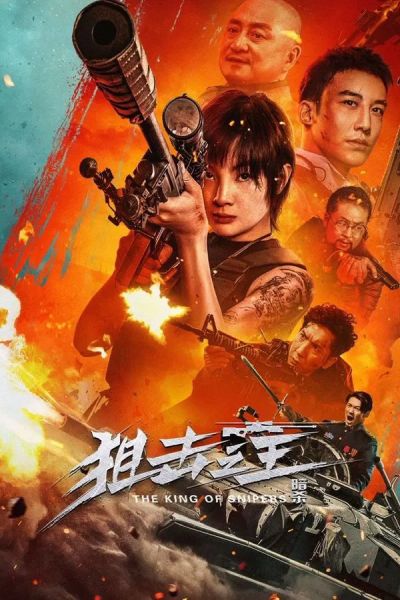 It’s not long before someone tries to kill her in the psychiatric facility, but she’s able to escape (somewhat), with the help of struck-off former doctor, Nasipan (Tao). However, she is forced, with the aid of a nano-bomb injected into her bloodstream, to take a mission for Artest (Mak). There’s a war of succession going on in the country of “Libiwala”, with the prospect of drug production becoming legal in the country – to the joy of crime boss Roger (Lee). Artest requires Anna to liquidate all those in line for the leadership to prevent this. Or maybe encourage this. It’s all a bit murky, and the plot twists and turns until the very last scene, though never gets incoherent.
 Regular readers will already be aware of the long history of stuntwomen, going back a hundred years to the
  To be fair, for most of the time, this was likely hovering around the two-star range. Not brilliant: it was rather obvious why
  ★★★½
★★★½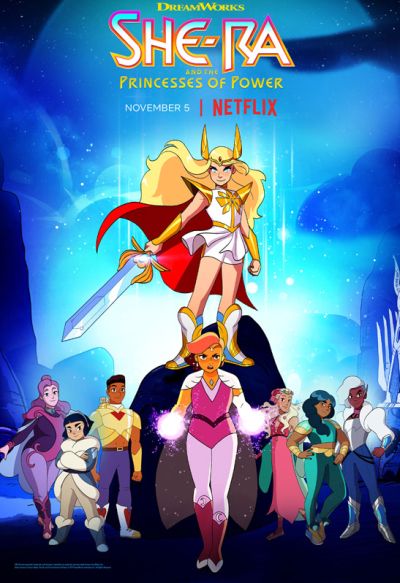 Though woke? Is it woke? Well… not in the sense I normally understand the word. For me, it means an agenda is being pushed. I can’t really say I see this here, unless the agenda is to stress that people exist who are not hetero-normative. Which… is true? The focus is on the story; we don’t get characters demonstrating against being sexually or politically repressed by the evil patriarchy, or talking about the problems of their gender orientation in modern society. This is no more woke than The Dragon Prince, another popular Netflix show. Part of the attention is probably due to creator ND Stevenson, who has stated he is – according to Wikipedia – “nonbinary, transmasculine and bigender,” as well as having bipolar disorder and ADHD. Well, whatever it is, is reflected in Stevenson’s work, in She-Ra as well as Netflix animated movie
  On the other hand, it’s clear this new spin on an old title has split fandom – or, rather, created a second fandom. This is not necessarily a good thing. It can result in embittered online wars and open hostility between members of different fan groups, both claiming ownership of “their story” and how it should be portrayed or interpreted. It’s not the only case. See franchises like Star Wars (George Lucas’ or the Disney version?) and Star Trek (“old Trek” vs. “new Trek”?). If you are as old as I am, you may even remember a time, long before Internet and personal computer communication existed, when people argued over if Kirk or Picard was the better captain, or Sean or Roger the better Bond. Change, it seems, always creates controversies. Therefore, the new show – as good as it is – has created a problem for the franchise that won’t be solved in a foreseeable future.
 This is certainly a little different from the usual Western. It takes place a few years after the conclusion of the Civil War. Mo Washington (Wright) is on her way to Colorado to take up a piece of land she bought with her hard-earned savings. To avoid trouble on the journey, she is dressed as a man, though being black is problematic enough at that time. The stagecoach in which she’s travelling – or rather,
  This is written by a husband and wife duo, which is a nice idea. I wonder how Chris would react if I suggested writing a novel to her? Unfortunately, the results are a little disappointing. It feels like the execution is better than the idea – usually it’s the other way around. For example, this is a post-apocalyptic scenario, except the book never details in more than the vaguest terms, what happened. It’s disposed of in about one page: a war, involving both bio- and nuclear weapons. Some humans went underground; those who didn’t, became “grotesquely distorted” mutants and calling themselves Urthmen. We’re now 200 years later, and they are still seeking to wipe out the dwindling number of “real” humans who abandoned their bunkers for some reasons. Those include Avery, in her late teens, and her sister, eight-year-old June, orphaned by the death of both parents: Mom killed by Urthmen, Dad… just kinda died, I guess.
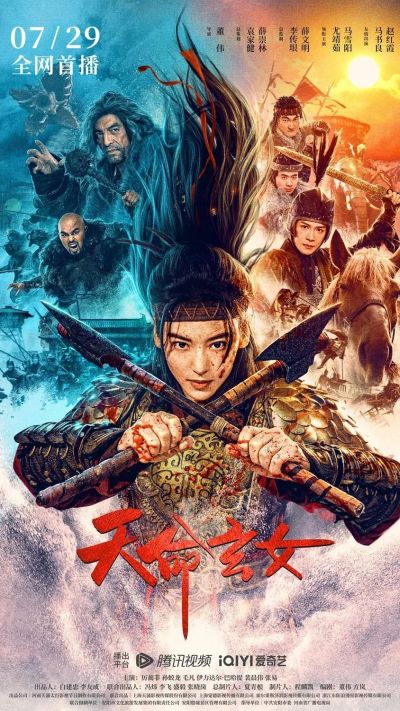 I’m very cautiously giving this one our middest of mid-tier ratings, which I reserve the right to change in future. Because this one showed up on one of the… “less official”, let’s say Chinese movie channels on YouTube. While the likes of Youku and iQiyi make the effort to deliver subtitles which are typically at least intelligible, I’d say the subs here reached such a level, only about one line in five. Then I still had to figure out cultural context for this period piece, which also seemed to reference local folklore. I guess I should be grateful the soundtrack here was intact. The previous night, I’d watched another film on the same channel which, I kid you not, had random bursts of musak injected, presumably to avoid YouTube’s automated copyright system.