




 ★★½
★★½
“WTF?”
No, really. What we have here may well be the most bemusing film I’ve ever reviewed on the site. It almost exists in an alternate dimension, where concepts such as “good” or “bad” have no meaning. This simply is, and it’s entirely up to you to deal with it. This takes place in a future where humanity was driven off Earth to find other habitable planets. The titular one here had a nasty side-effect, in that it killed off all the men: “Their hairs grew inside because of the atmosphere.” Wait, what? Anyway, it’s now matriarchal, and living in small communities based on nationality. There appears to be some friction between France and Poland, and it’s key to what happens.
On the beach one day, Roxy (Luna) discovers a woman (Buzek) buried up to her neck. Rescuing her proves a mistake, because she kills Roxy’s three friends before departing. Turns out she was a criminal the Poles buried there so she’d drown, and is called Katajena Bushovsky. Or Kate Bush for short, which eventually leads to unforgettable lines like, “You shaved Kate Bush an hour ago.” This is not a sentence I expected to hear when I woke up this morning. [What the director has against body hair, Polish people and Kate Bush, remains positively opaque.] For Roxy’s sins, she and her mother, Zora (Löwensohn), are sent to the mountain which is Kate’s hideout, meeting and/or fighting a slew of wild and weird characters along the way.
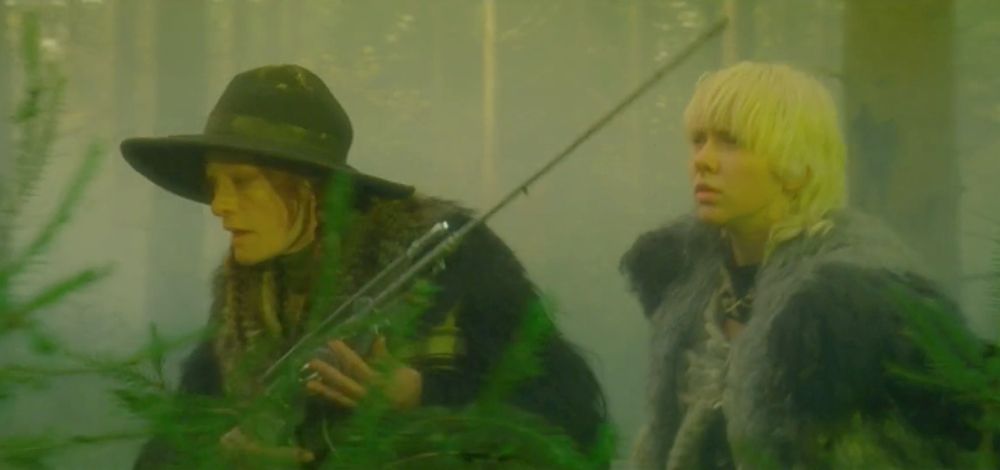
It’s considerably less coherent than the above makes it seem, feeling like a fever dream filtered through far too many French bandes dessinées. There are some cool elementsL the hats frequently worn by the women (top) seem to have been bought of the rack at Pinky Violence R Us, and the guns are named after fashion labels. “I’ll shoot with my Gucci. It can put a hole through rock, through wood, through bones,” is also not a subtitle I expected to read. If you are into the works of someone like Panos Cosmatos, you might enjoy this. I, however, am not, and at a hundred and twenty-nine minutes, I must confess my full attention tapped out, with about thirty still to go.
However, that is considerably further than I expected. This was something I threw on, thinking I’d discover it was nothing but pretentious art-wank, bail quickly, and pretend it never existed. Yet here I am, writing a review. It probably is nothing but pretentious art-wank, to be clear. Yet there is something to be said for a film-maker who gets to unleash his fully unfettered imagination onto the screen. How it got funded, is another question: laundering drug money would seem a plausible explanation. Then again, it’s French, so… /Gallic shrug. This certainly is not a film I would recommend, and being made to watch it again could be seen as cruel and unusual punishment. But I didn’t feel my time was entirely wasted.
Dir: Bertrand Mandico
Star: Paula Luna, Elina Löwensohn, Vimala Pons, Agata Buzek
a.k.a. Dirty Paradise
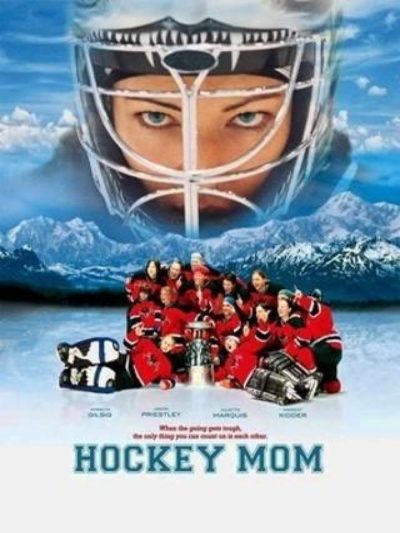 Printed directly from the finest template of sports movie tropes, this is less a script than a bullet list of plot points you’ve seen a thousand times before. Struggling single mom (check) Paula Taymore (Gilsig) had to give up a promising ice hockey career to take care of her son (check). A bar argument leads to a challenge match against a local men’s team (check). Paula has to assemble a women’s side (check), from a ragtag group (check), including an ex-convict (check), sassy Black girl (check) and a witch (check). Can she overcome adversity and local prejudice (check), find love with hunky single dad Steve Cooper (Priestley, and check) and triumph in the big game? (BIG BOLD CHECK, LARGE FONT).
 “What I need is stories where men get kicked in the chest. Stories where guns only run out of ammo for dramatic effect. I need pulp. I need exploitation. I need fun.” I used to read a lot of comics, before moving to America. As in, most weekends involved a trip to Forbidden Planet, Gosh!, or Mega City Comics, coming home with a carrier bag of new issues. Then there were the trips to Paris… But I just kinda stopped – no particular reason – when I emigrated. There is still a large cardboard box, unopened from the move 25 years ago, in our boxroom. Some are probably worth a bit, e.g. the first issue of Hellblazer. But reading the first issue of Gehenna makes me want to restart. Well, if space, time, money and aging eyesight weren’t issues, anyway.
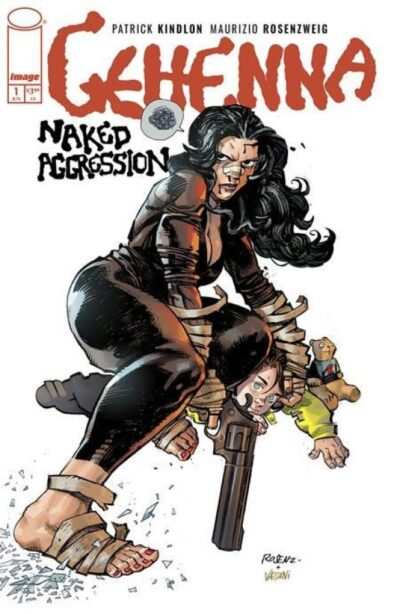 “This book is equally for the diehard comic reader and someone who hasn’t read sequential art since Garfield,”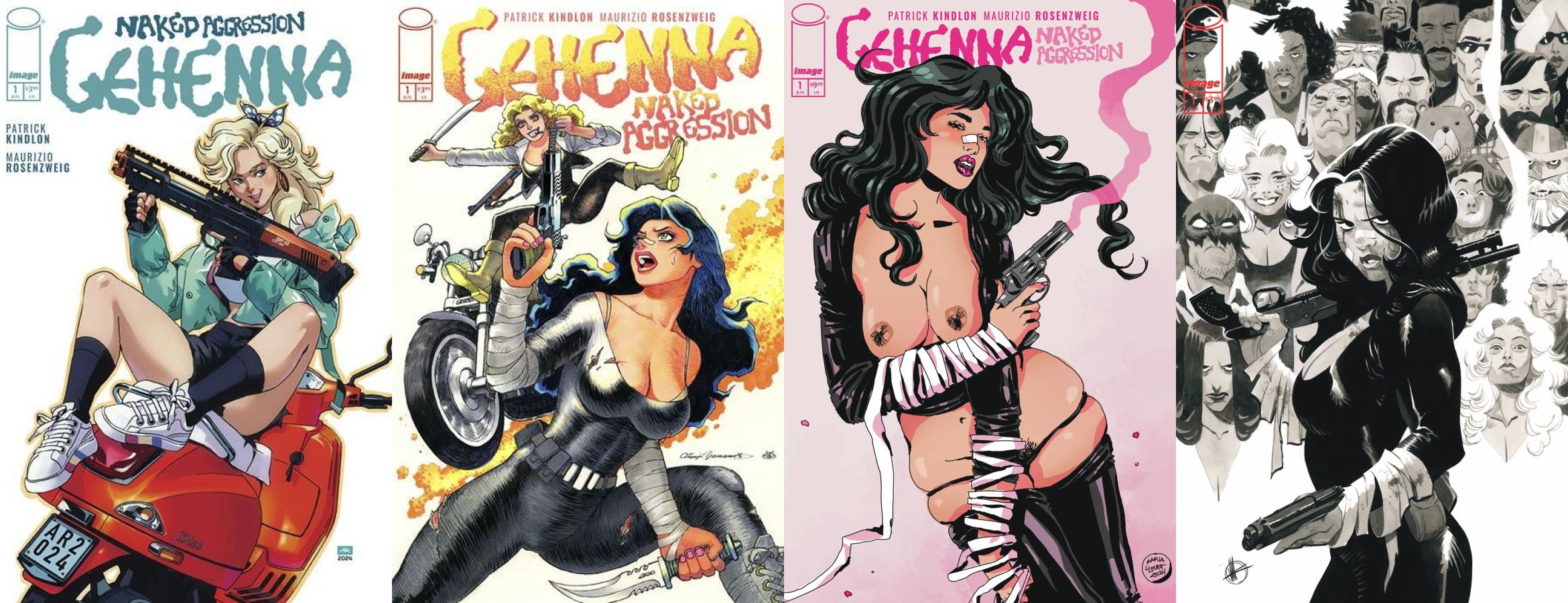
 ★★★½
★★★½ I would have sworn I had seen every example of Hong Kong girls-with-guns movies from the eighties. But this one had managed to escape my attention completely for 35 years, until accidentally stumbling across it on YouTube. It’s perhaps partly because it never seems to have received any kind of post-VHS release, being unavailable on DVD or streaming sites. Which is a little surprising since it combines two genres that have been quite popular in the West: not just GWG, but also hopping vampires, as in the Mr. Vampire franchise. It’s a rather awkward combo, and there’s definitely significant potential wasted. Yet I’m fairly certain it’s going to be unlike anything you’ve seen before.
 Under other circumstances, this six-episode TV series, would potentially be a marginal entry. But, just as I try to take the historical era into account, I think the location from which a film comes should also be a consideration. Some countries and cultures are simply more action heroine friendly than others. What would be groundbreaking in one region, might not even qualify from elsewhere. This is from Pakistan, and is almost the first such entry in our site’s history. [There’s just
 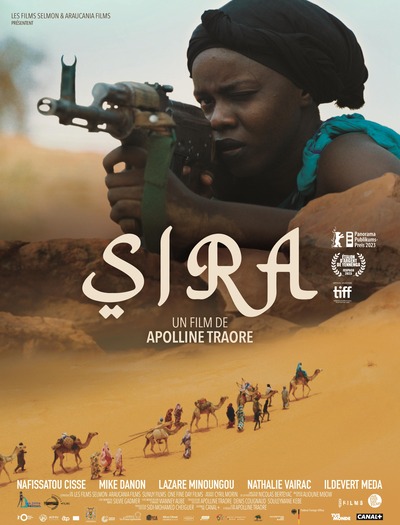 Sira (Cissé) is a young African woman, travelling through the fringes of the Sahara Desert in Burkina Faso, on the way to get married to Jean-Sidi (Barry). However, their caravan gets involved in an incident with Islamic terrorists, which escalates into murder, with Sira being abducted by the terrorist leader, Yéré (Minoungou). He changes his mind, raping Sira and leaving her in the desert, because she is “not worthy” to die by his weapon. She survives, and stumbles across the terrorist camp, and takes shelter nearby, sneaking in to obtain food and water. After a group of other kidnapped women show up, to be used as sex slaves, Sira begins to put a plan in motion, with help from an unexpected ally.
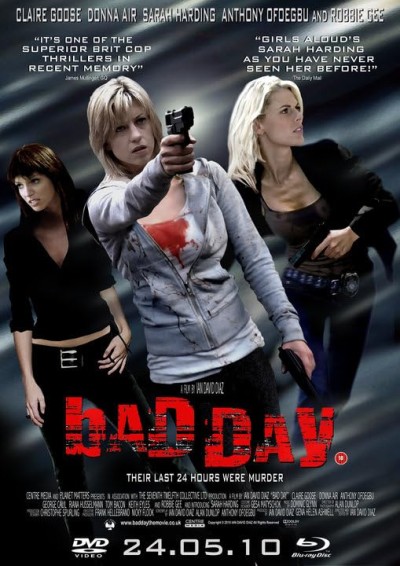 Rebecca Ryan (Goose) is an undercover cop, who has been working for three years as “Margaret”, infiltrating the McCann family, a South London organized crime outfit, with Darius Cruise (Ofoegbu) as her handler. He’s just been given a new partner, Abby Barrett (Air), and isn’t happy about it. Rebecca, meanwhile, has fallen in love with Harry McCann (Calil), but his sister, Marla (Riana Husselmann), recently out of jail, suspects something is up with ‘Margaret’. When an incident appears to blow her cover, and Rebecca returns home to find her daughter murdered, she decides it’s time to make the entire McCann family pay for their actions. As the title suggests, everything subsequently unfolds over the course of a single day.
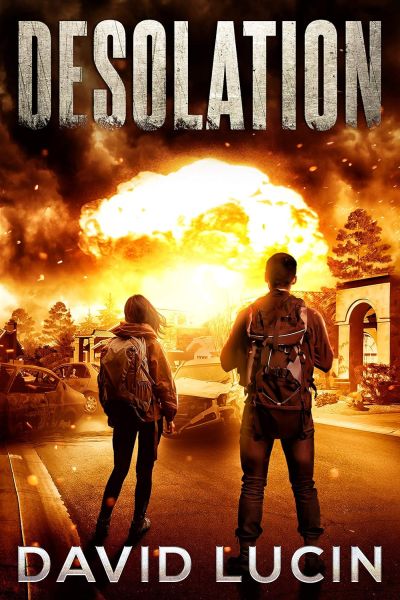 When the apocalypse comes, if popular fiction is any guide, it’s going to be undead and craving brains. But not far behind in terms of literary popularity, appears to be an EMP. This is a high altitude nuclear detonation, which would unleash an electromagnetic pulse – hence the name – capable of frying anything with a circuit board, continent-wide. It is generally not good for civilization. I think this is the first such book I’ve covered, and I was particularly intrigued, because it’s set here in Arizona. Which is a little weird, because the author appears to be based out of Vancouver, British Columbia. I presume some connection to the state.
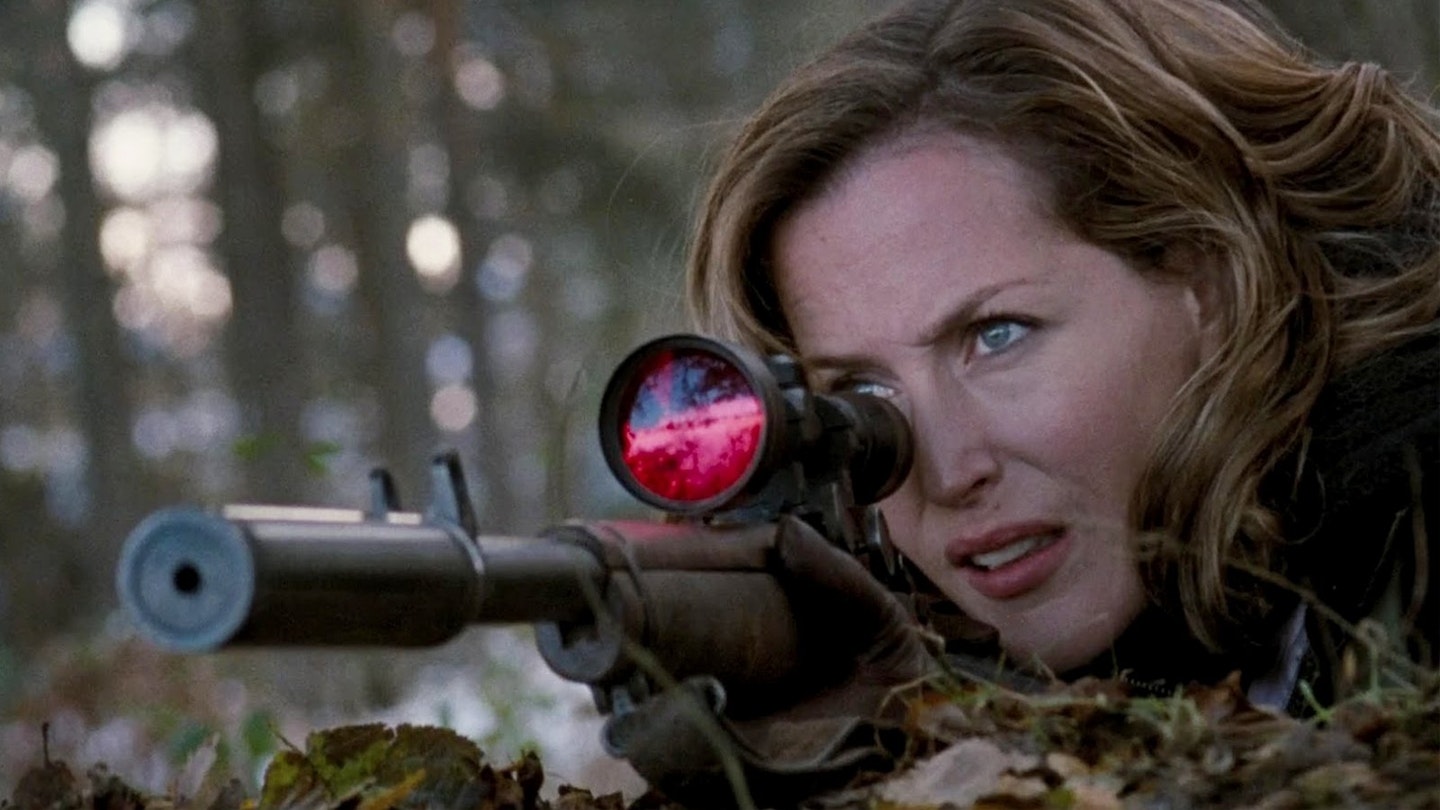 I guess these two sides of the coin, and their contrast, are key to the film’s message, though the sudden way in which it ends might leave you wondering if there’s any genuine message intended at all. Maybe it was all the fulfillment of some weird, albeit understandable, Gillian Anderson fetish for writer-director Reed (there are a couple of scenes which lean towards that interpretation). She is certainly the best thing about this, and her journey from predatory cougar through to