



★½
“Deceptive Advertising department, please.”
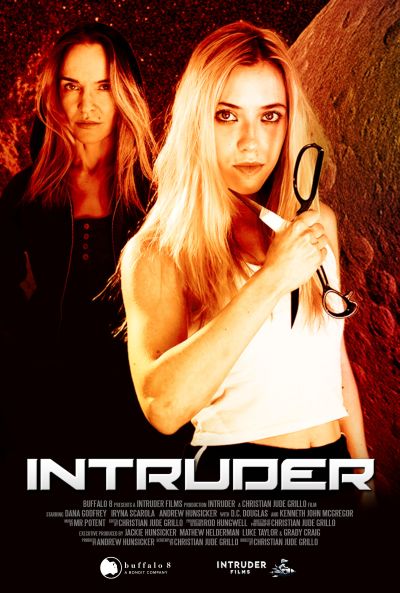 “An underground fighter and her estranged father steal a spacecraft to escape a dying Earth, only to face a deadly stowaway who sabotages their life support, forcing them into a fight for survival in the claustrophobic confines of space.” That’s the film I wanted to watch. Unfortunately, it actually occupies only about ten minutes or so, of the hundred for which this runs. The rest is mostly painfully obvious, and not particularly innovative, helpful or even funny, attempts at social satire. It feels like writer-director (as well as cinematographer, editor and producer) Grillo saw Don’t Look Up, and thought, “That was okay, but it needed to be much less subtle, and made on a budget of around forty grand.”
It takes place in a world where tech billionaire Elon Musk Jude Micah (Douglas) is predicting doom, with the moon about to crash into the Earth. For the low, low price of fifteen million dollars, you too can have your own escape shuttle – the Intruder of the title – and fly off to join the other emigrants in an outer-space sanctuary. After initial denials from the authorities, turns out Micah is completely correct. Eventually (and we’re talking forty minutes in), we get to the point where Bree Hewitt (Godfrey), the fighter mentioned in the synopsis, does indeed hijack an Intruder and head off-planet. After odd occurrences on-board, there is a brief period, as noted of maybe ten minutes, where she does indeed fight the stowaway (Scarola). Then, it’s back to the social satire.
I suppose, had I gone in with accurate expectations, this might have merited a better rating. There are a couple of moments which actually did amuse me: there’s a faux version of Frank Sinatra, singing a song whose lyrics are basically a serial killer ballad. And the final scene, just before the moon does indeed crash into the Earth, where a TV presenter professes his love for an increasingly horrified colleague. Those were genuinely clever and well-executed. But after the opening cage fight, showing Bree in action – and getting tossed from a pro career because of her failure to stop at the bell – we have to wait almost an hour for her to swing another fist in anger. Which is the reason I was watching.
The reality is, had I gone in with accurate expectations, I simply wouldn’t have gone in at all. I have no objection to films with messages, but this is a prime example of one where it feels the movie is a delivery mechanism for the message, rather then first and foremost being concerned with entertaining the viewers. As soon as I realized this, I tuned out, because – agreement or otherwise with the specific message aside – it’s simply not why I watch films in general, and action heroine movies in particular. If I want a clumsy and blatant lecture on social issues, I will… Oh, wait. I don’t. At all.
Dir: Christian Jude Grillo
Star: Dana Godfrey, Iryna Scarola, D.C. Douglas, Andrew Hunsicker
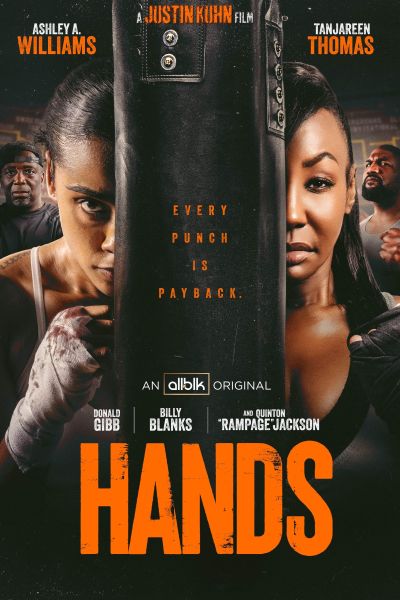 This is a film I wanted to rate higher than I have. The performances are generally decent to good, and I don’t doubt the sincerity of those involved. However, both the script and the core action leave a bit to be desired. To start with the former, I’m not saying this story was written by AI. But if you did train ChatGPT with every combat sports cliché, and then ask it for a script… You probably wouldn’t be too far from what you get here. There’s Naomi (Williams) and Carter (Black), a couple united by their love of mixed martial arts. Until, that is, Carter refuses to take a dive in an underground tournament final, as ordered by the slimy Mindy (Thomas).
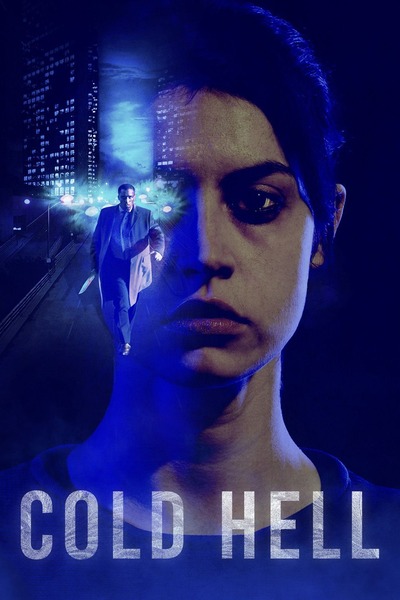 This an interesting entry, with a complex lead character who is quite some way from being conventionally “likeable”. Özge Dogruol (Schurawlow) is a Viennese taxi driver, who is harsh, abrasive and has severe anger issues. Indeed, anger is arguably among the least of her issues. She practices Thai boxing as an outlet. Or did, until a sparring session goes wrong, and she ends up breaking her partner’s nose in two places. One night, from her apartment, she sees the dead body of a woman in the opposite building, and the killer (Sheik) standing over the corpse. Unfortunately, he also sees Özge. The police won’t provide protection, and soon after, her cousin is murdered, in an apparent case of mistaken identity.
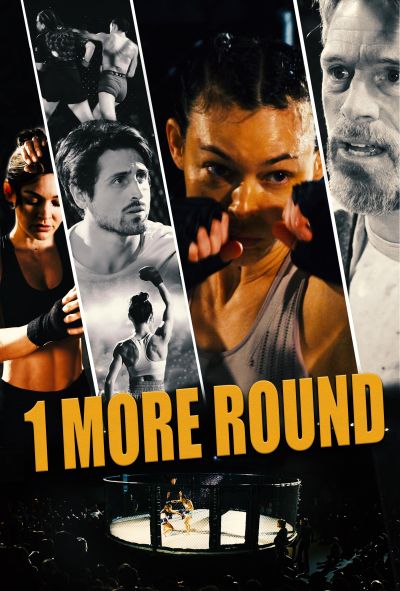 Reading the comments on YouTube, there’s an awful lot of “inspirational” and “motivational” to be found there, and these are not wrong. This is as template-based a sports movie as you can imagine, to the point that it feels almost more like a Victorian melodrama, in terms of its saintly heroine, fighting (literally) for what she believes in. This sort of thing would normally be completely ludicrous, and isn’t helped by James Schafer’s soundtrack, which leaves no orchestral cliché uncued. However… I found a genuine sincerity on display here, helped by a very good performance from Stone, and this really sells the sub-Hallmark conceit at its core. Her character believes, so you do.
  When you think of the martial art form known as Muay Thai, New Jersey is probably not the first place to come to mind. But it’s in the town of Toms River, on the Jersey Shore, that Prairie Rugilo set up an all-women’s gym with the aim of teaching students Muay Thai. It began as occasional classes she taught in the Brick Police Athletic League, but demand allowed her to set up her own, dedicated space. If you don’t know, Muay Thai is described here as “the art of eight limbs”, which personally, raises more questions than it answers. What are the other four limbs? Was it developed by Thai spiders? Let’s just call it a form of kickboxing, and move on.*
 Bec ‘Rowdy’ Rawlings is an Australian mixed martial-artist, who fought in the UFC for a bit, and then became the first woman to win a bare-knuckle boxing world title. This documentary covers her life, from growing up as a teenage tearaway, through motherhood transforming her character, her discovery of mixed martial-arts, a disastrous and highly toxic first marriage, and escaping that to become eventually the Bare Knuckle Fighting Championship federation’s Women’s Featherweight World Champion. Phew. That’s quite a lot to get through in less than eighty minutes. The film does a decent job of covering its bases, through interviews with Bec, and her family and friends, plus no shortage of archive footage of Rawlings, both in and out of the ring.
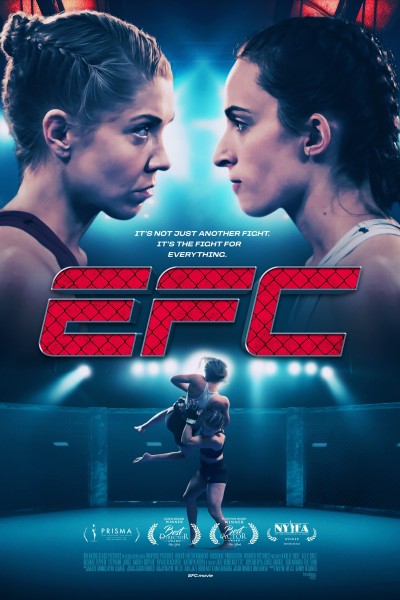 I wanted to like this more than I did, because the makers are aware of the tropes of the mixed martial arts genre, and in the first half, make a concerted (and largely successful) effort to avoid them. However, the movie is much less successful in the second half, and ends up replacing those cliches with a different set. The result leaves the film just as formulaic – albeit not in the direction I expected. It begins in expected fashion, with a title bout in the EFC, between Alexa Star (Aboya) and Cassady Jones (Rose). The former prevails, but the champion is then attacked after the bell by her opponent.
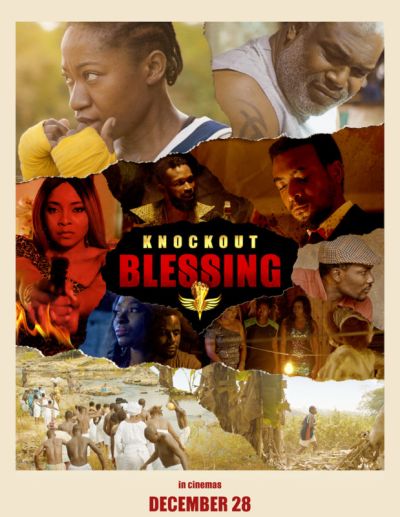 Always a pleasure to cross another country off the map, and this is the first movie we have ever reviewed here from Nigeria. Indeed, entries from anywhere in Africa have been very limited, and in general, I found this a pleasant surprise. In some countries, film-makers appear to be trying simply to imitate Hollywood. That’s not the case here: this
  If you fed an AI all the sports movies ever made, and then asked it to write a script, what you’d get is likely something close to this. Here’s a challenge: write down ten clichés you find in a film like this, then watch the movie (conveniently embedded below), and see how many show up. I’m willing to bet most of those on your list would be present here. The main saving grace is that the execution is done with a complete lack of self-awareness. It feels as if the writers genuinely had no clue they were treading a path which was more of a groove. Everyone involved in this is so earnest, it just about gets away with it.
 There’s something to be said for sparse simplicity, and this delivers on that concept in spades. Except for occasional flashbacks, the entire things takes place in one location: a facility somewhere in Europe. It’s where Cassie ends up, locked in a cage, after being abducted while on a trip from Britain, intending to find herself. She’s then deposited in a hall and made to fight for the amusement, gambling or whatever of online spectators. She starts off facing animals, but through pharmaceutical treatment, her strength, speed and savagery are enhanced, and the opponents – both fauna and, eventually, her own species too – become more vicious. The shock collar around her neck ensures her compliance.
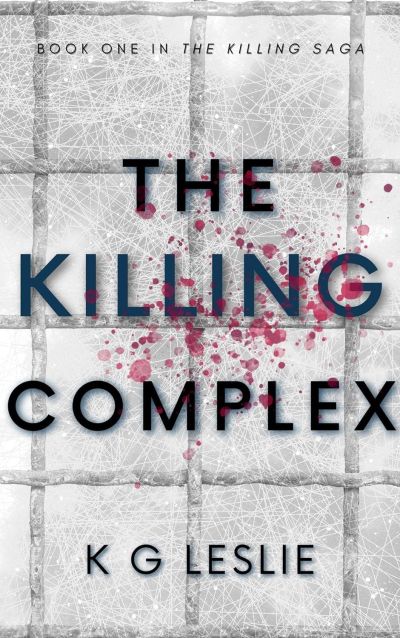 In the early going, much of this unfolds inside Cassie’s head, as she goes through what perhaps seems inspired by the five stages of grief, from rejecting the reality of her predicament, through anger, and ending up in a personal commitment to do whatever is necessary in order to survive – even if this comes at the cost of her own humanity. But just when she’s on the edge of becoming a soulless killing machine, she’s relocated, and placed next to another prisoner, Thomas. He was also abducted, but more recently, so hasn’t been ground down by his situation yet, and his optimism reignites Cassie’s own interest in life. But is everything quite what it seems, or are there other agendas at work?