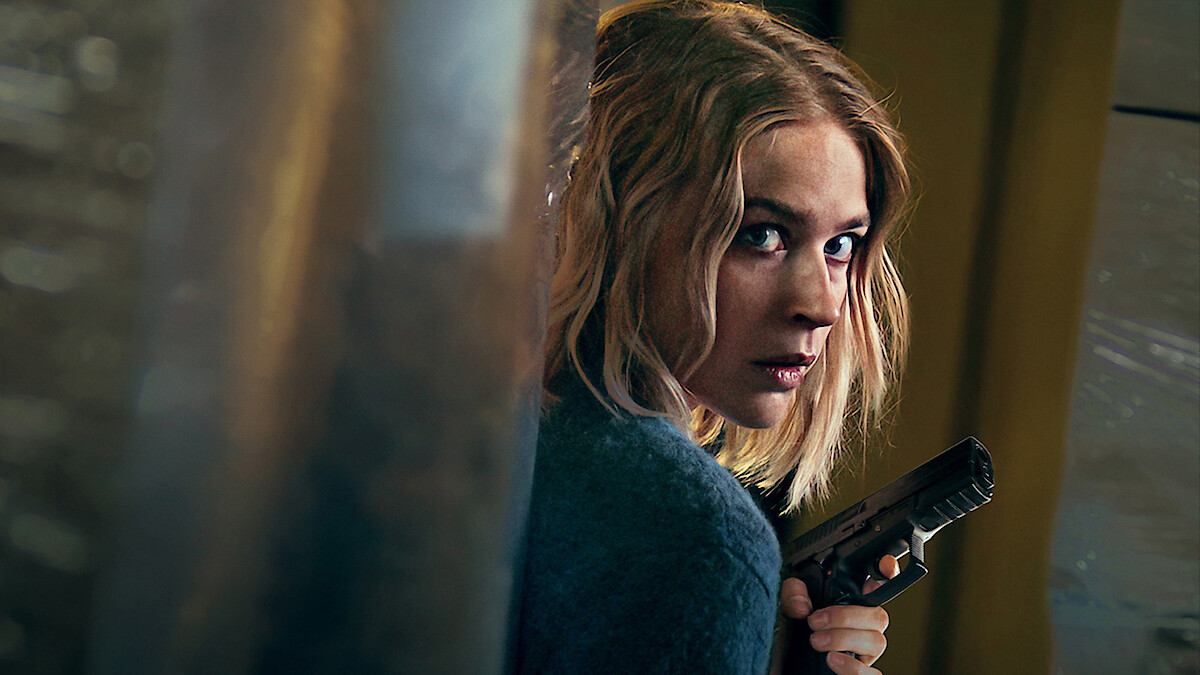

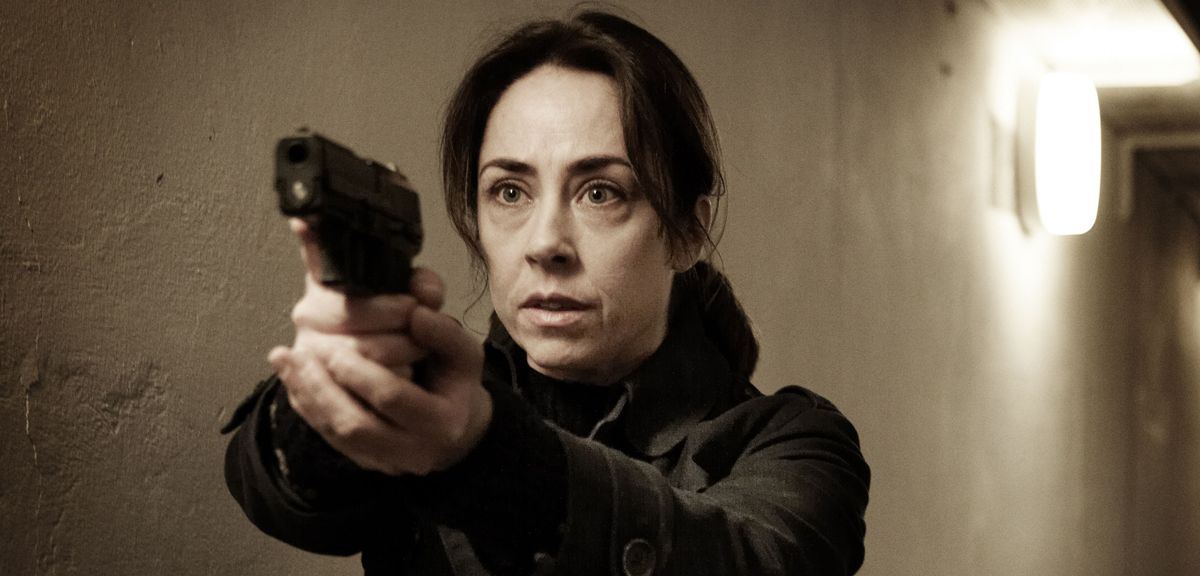
 ★★★★
★★★★
“Happy endings are for losers!”
Spoilers will follow! At one point, Scandinavian noir, was a genre mostly well-known only in Europe and to die-hard crime novel readers. But the ground-breaking female characters who have made the genre recognized worldwide in the past two decades consists of a trio. In addition to the most well-known, Lisbeth Salander of the Millennium series, there is Saga Norén of Bron: The Bridge, and Sarah Lund of The Killing. All of these have been remade in a number of other countries – not only America. But I think it’s uncontroversial to say that none ever came close to the originals. There is something to the way these series are constructed and conceptualized by our Scandinavian neighbours, that film crews in other countries just can’t re-create.
It’s not just, for example that American productions have higher budgets. Other, non-American remakes or “new versions” aren’t able to re-create that special “air” either. It’s a specific atmosphere these series have, even though those in charge of production usually understand the attraction of the original. Although Scandinoir existed well before those three series. Elements like more realistic depictions of criminal acts, very often with social aspects interwoven, and investigators with personal problems, can be traced in literature back to the 1960s, and on television to the 1970s and 80s. A realistic local background with more down-to-earth investigators, as opposed to classic Anglo-American super-detectives like Sherlock Holmes, or private investigators like Philip Marlowe, started around then, and can still be found in long-running classic German TV crime series, Tatort (literal: “scene of the crime”).
Though before these new shows, some starring some quite “damaged” women, hardly anyone except die-hard fans of crime stuff noticed. The show that served as a wake-up call for everything was The Killing. This Danish-German co-production ran for three seasons, from 2007-2012. [It seems whenever there is a new Scandinavian crime series, ZDF, the second public TV channel of Germany, is involved. They also co-produced the Millennium and Bridge shows, among other Scandinavian series.] The original version totalled 40 episodes of 55 minutes; some countries broadcast it as 20 episodes of around 110 minutes. The German version was like that: you always can tell the break between episodes, by the two-minute montage, with music underneath. It received a number of remakes, in America, Turkey and Egypt.
As typical for these Scandinavian shows, they are slow-burn mysteries. This means taking their time, introducing countless suspects and going far beyond the case, such as adding a political dimension to the scope. I was astonished to discover they did really only cover one case for an entire season. In an average episode of Tatort the case would be solved and finished after the usual 90 minutes. Here, it takes longer – much longer! – especially in the first season. It started to drag a little bit, as solving the single case of a vanished girl lasted almost nineteen hours on screen. That said, the longer experience definitely has its advantages.
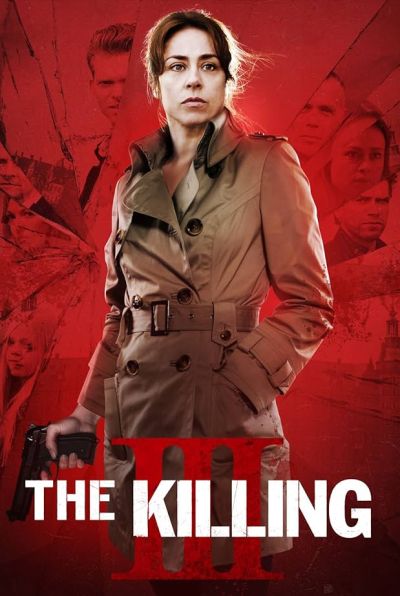 For perhaps the first occasion, the suffering of the family members left behind after a beloved person dies, is shown in what feels like almost real-time. That’s remarkable, as in almost any crime story I have ever seen, these feelings are usually only vocalized in one or two sentences. Just recently, I watched an old Italian giallo and it felt almost ridiculous how the main character seemed hardly moved at all, as her entire family was exterminated, one by one. Is such behavior normal? Normal people mourn their beloved ones. Maybe some do it more quietly than others, but most movies or series leave this, very important, aspect out, with it usually secondary to finding the perpetrator. The Killing takes that time, showing us the after-effects on a family barely able to go on, needing psychological help, and taking pointless, misguided revenge, with acts that can’t bring back what has been lost.
Admittedly, they might have gone on in this direction a bit too much – especially in the first season, which is twice as long as the others – and I was starting to look at my watch. Though things are always happening, you may lose a bit of patience as yet another suspect is presented to you. What, they are proven innocent? Okay, how about this one? Oh, and there is new evidence, it might actually have been the one we let off the hook last episode! And so on.
In all three seasons, a pattern of political involvement is found. For example, a pool car belonging to a political party might have been involved in a kidnapping, with the story taking place in the run-up to elections. Suddenly, the whole process of parties in electoral battle mode can be affected by the outcome of the investigations, as well as individuals’ dirty laundry being brought up by the other side or the police. One of the main politicians in the first season is played by Lars Mikkelsen (Mads’ brother), who’d go on to play a great villain in the Benedict Cumberbatch “Sherlock” show. In other seasons, the police have to deal with other institutions and organizations hampering their work, such as the military or the secret service. The third season deals with a major industrial corporation, as the company chief’s daughter is kidnapped and might be held in one of his shipping containers.
But the main character is always the introverted police commissioner, Sarah Lund (Gråbøl). Lund doesn’t come across as the most accessible character, to say the least. It’s a character trait she shares with her sisters in spirit, Salander and Norén. Though of the three, she might be the most “normal”, and her biggest problem an inability to communicate. Maybe it’s too cold in Denmark, and you don’t want to open your mouth if it’s not necessary? She can be quite talkative – when it’s about the case. But it’s always about the case and not her family. In season one, Lund’s fiancé and son wait for her to come to them in Sweden. Though she wants it, there is always something. Her superior insists she has to continue her work, as the only one who can, despite her successor already waiting in the wings. Even after boarding the plane, she returns once again to solve crime for another day in Copenhagen. Then everything changes when her colleague gets shot.
She gets smarter in the second season, now carrying her gun with her at all times. This will save her life at the end of the series, which deals with a series of murders of former Danish soldiers. Sometimes you can’t solve everything just with your mind! But there is always an apparent lack of social competence. Lund doesn’t seem to understand the emotional needs of her family (and others) and that’s why she loses them. The case is always more important for her. She becomes quite obsessive in her investigations – even after everyone, including her new chief Brix (Morten Suurballe) sees a case as solved. You thought Columbo with his, “There is still a little question I have…”, could get on your nerves? Wait, until you meet Sarah Lund!
There is a learning curve and character arc for the character. She is hesitant to come back to work in season 2, and in season 3 realizes that she has failed, not only as a mother but in her social life in general. She would like to have a closer relationship with her son, but he doesn’t want anything to do with her anymore. She manages to take care of his pregnant girl-friend, though even in front of the hospital room where the girl and her son are holding her newborn grandchild, she still turns around because… Well, you know… The case… Ultimately, the show can be seen as a tragedy. Yes, the cases all get solved in the end. But that doesn’t mean that we get a truly happy ending.
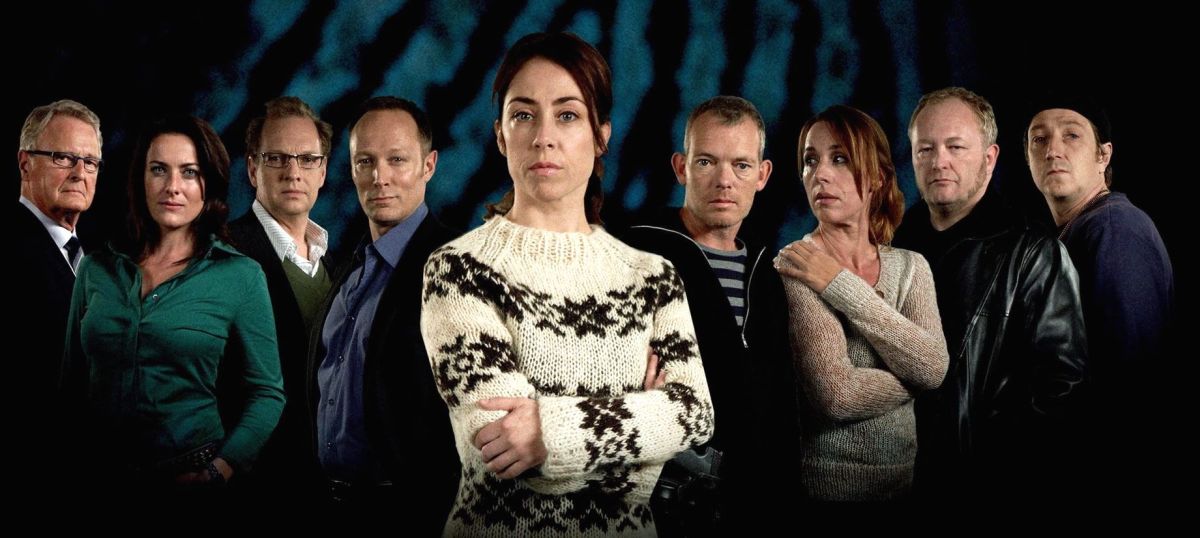 Season 1. The father of the murdered girl kills the murderer, and will most likely go into prison for that. Season 2. The minister of justice uncovers the corruption of the ruling government, but can’t do anything against it, as everyone is covering it up. He can only decide between joining them, thereby keeping his career, or quitting. Season 3 is the worst of all. While the kidnapped girl is saved, the industrialist must remain silent about the cover-up of his board of directors, in order to keep the company going. Meanwhile, Lund finds out who raped and murdered another girl years ago, and sees no alternative but to shoot the murderer. The ending has her leaving her home country, perhaps to return one day with new evidence to justify the killing, instead of finally getting together with a past love from her youth (Kass, who would later enjoy success as Jussi Adler-Olsen’s Carl Mørck).
As there never was a fourth season, she might still be searching that evidence abroad. But happy endings certainly look different in Scandinavia. After all is said though, this is a good show with great and convincing actors. You can enjoy its complex story-lines, its gritty, sometimes almost cynical, world view and darkness, if you are willing to be patient and have enough time. The second and third seasons are much easier to watch than the first. The Scandinavian approach to crime series is definitely different one from what other European or American series offer their audiences. But if you get used to them, they can be quite addictive as this show showed. On its release, The Killing became especially successful in Great Britain, which might then have drawn the attention of American producers in this direction.
It started the new wave of Scandinavian noir in 2007, which seems to have lasted for about a decade, ending ten years later in the Hollywood adaptation of Jo Nesbø’s The Snowman, with Michael Fassbender as Harry Hole. But if you are in the mood for more psychologically damaged, Scandinavian, anti-heroines, you’ll find plenty of others, such as Annika Bengtzon or Rebecka Martinsson. There are also reports that Amazon Prime is planning a new show on good ol’ Lisbeth Salander. Who knows, maybe the era of troubled Scandinavian female investigators isn’t over yet?
Creator: Søren Sveistrup
Star: Sofie Gråbøl, Søren Malling, Mikael Birkkjær, Nikolaj Lie Kaas
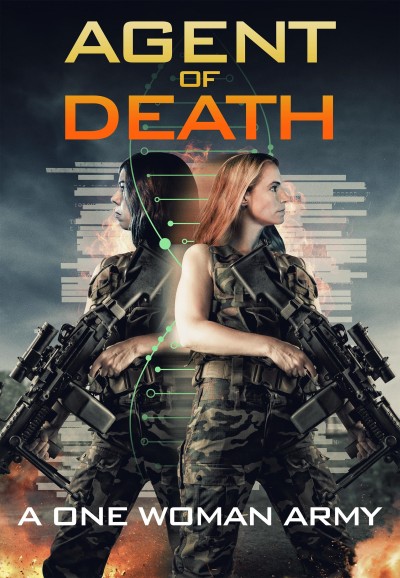 I quite liked the idea here, but the execution just wasn’t quite good enough to do justice to the concept. It feels like a matter of resources to some degree. But I also feel that a few tweaks to things would have paid significant dividends. The heroine is Tara Croydon (Fox), a CIA agent who experiences a crisis after an operation means she’s not around when her father passes away. In her depression, she signs up for a cutting-edge but rather dubious experimental project under the oversight of Hype (Medina). This involves her being given the ability to transform, physically, into one of fifteen different personas which have been implanted into her.
 Sheesh, they’ll adapt anything into a movie these days. Hey, I guess if Clue, Battleship and Ouija can become films, why not Cand… Yeah, to be clear I am joking. Do not, for the love of God, mistake this as about the quest for King Kandy. Though I am amused the Wikipedia page for the game specifically says, not to be confused with this film. For it’s actually about truck-stop hookers being stalked by a murderous psychopath. Which could, I admit, probably be adapted into a pretty decent board-game. The central character is Remy (Luccardi), an escapee from a religious cult, who finds herself stranded at the truck-stop, and befriended by Sadie (Quartin) and the other “lot lizards” there.
 Remy eventually becomes part of the “team,” also including gay-for-pay Levi (Campbell), who service the truckers who pass through the high-altitude location – as well as local sheriff Rex (Baldwin). It’s a tough life, with violence a risk they face on an everyday basis, such as when a trucker shows up in a toilet stall with his throat slit, or someone decides Levi is a bit of rough. However, things escalate considerably, because the problem is: you can take the girl out of the cult, but you can’t take the cult out of the girl. After getting a visit from another member, Remy decides, as she puts it, “We must cleanse the world before we can cleanse ourselves of it.”
 Having very much enjoyed the
  The first volume is free on Amazon at time of writing, but all four are available for 99 cents, so you certainly can’t complain about value. It’s an interesting concept, too. Axira is a “spacer”, a member of an alien race feared to such an extent that they are almost legends. For centuries, she has been mentally chained up by a member of the Kore sects known only as “Master”, and compelled to do his bidding. Which usually involves copious amounts of violence, directed toward his enemies. Finally, Axira is able to break free and regain her independence, and vows to take revenge on Master.
 I wanted to like this more than I did, because the makers are aware of the tropes of the mixed martial arts genre, and in the first half, make a concerted (and largely successful) effort to avoid them. However, the movie is much less successful in the second half, and ends up replacing those cliches with a different set. The result leaves the film just as formulaic – albeit not in the direction I expected. It begins in expected fashion, with a title bout in the EFC, between Alexa Star (Aboya) and Cassady Jones (Rose). The former prevails, but the champion is then attacked after the bell by her opponent.
 Make no mistake, this is a cheap and tawdry excuse to show nekkid women, which may well leave you with a more cynical view of human nature. But if you’re going to watch a cheap and tawdry excuse to show nekkid women… You could probably do a lot worse. The main area in which this punches above its weight is in the script, which has had some thought put into it. The viewer may actually leave the film knowing more about Nevada gaming regulations than they did going in: nekkid women
  Cross another country off the map: Guatemala, in this case. I should probably start by explaining the title. The “cadejo” is a dog-like spirit from local folklore, which comes in two varieties. The black (negro) one is malicious, appearing to and trying to kill travellers, while the white (blanco) is benevolent. According to Wikipedia, it “protects people, including drunks, vagabonds, and people with grudges from all evil. Emphasis added, because now and again in this, there appears to be one watching over the grudgeful heroine here, Sarita (K. Martínez). She is on the hunt for her sister, Bea (P. Martínez – maybe they’re real sisters?), who vanishes one night, after the siblings have an argument at a local nightclub.
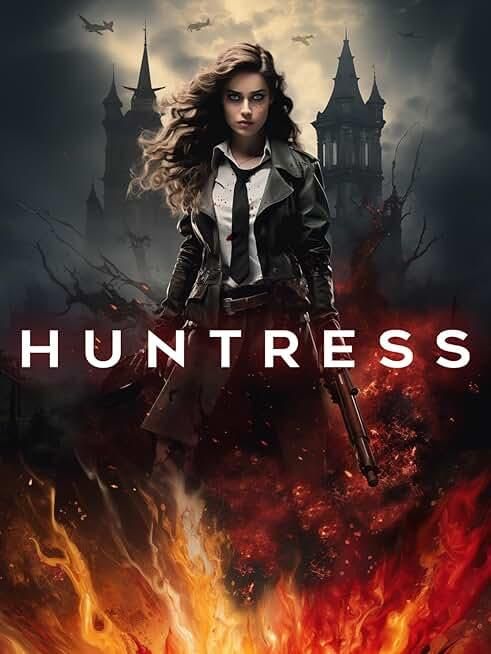 The Texas Chainsaw Massacre was fairly notorious in Britain in the eighties and nineties, being famously banned on video. Naturally, this meant I had to see it, and… I was initially underwhelmed. However, I’ve gradually come to appreciate its raw intensity over the years. If I ever doubted its merits, watching this largely shameless knockoff should act as a reminder. Because it shows how flat and uninteresting the premise can be, when executed poorly. This relocate things from seventies Texas to Germany in the last days of World War II. A medevac team is trying to get injured and grumpy officer, Colonel Franklin (Christian) to a hospital before his leg falls off from sepsis.
 ★★★
★★★ Also, German “elite forces”? I don’t know. I won’t say it is impossible: there are probably certain groups for specific tasks that I am not aware of. But having done my – at that time obligatory – army service in the Bundeswehr 30 years ago, I have my doubts. I’m willing to suspend my disbelief here. The movie echoes popular action thriller plots of the past such as Jodie Foster’s Flight Plan and Panic Room, Angelina Jolie’s The Foreign Son, and of course Liam Neeson’s Taken. So, the plot won’t win any awards for originality. It’s also happy to re-use elements from other sources: Tom Cruise window climbing; Mel Gibson shoulder dislocation; or a MacGyver-like improvised explosives.