
Literary rating: ★★
Kick-butt quotient: ☆☆
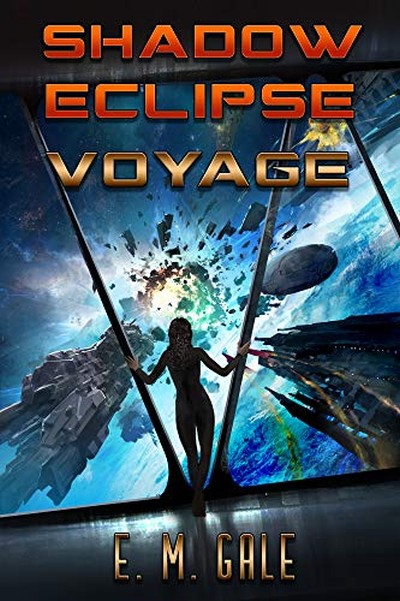 After a brisk and entertaining start, this gets increasingly bogged-down in its own universe as it goes on. And, boy, does it go on. At a thousand pages in the print version, this became a severe slog, and ends in a unsatisfactory way. A second novel seems promised, but this came out in 2019, and has yet to be forthcoming. Maybe the writer got bored of the whole thing too?
As mentioned, it opens promisingly. Florentina Clarke (who hates her first name so much, she insists everyone just calls her Clarke) is having a really bad day. First, she has been turned into a vampire. Then, she and her grad student friends are thrown through time and space when an experiment misfires. They end up two hundred years in the future, on a far-off planet, and have to learn how to come to terms with a whole new way of life. Clarke is best-suited, and ends up getting them passage on a smuggling ship, where helped by her new vampire skills, she becomes part of the mercenaries who defend the ship. However, it turns out her future self – vampires being immortal – is rather famous and/or notorious, and she finds herself having to cope with that, and the resulting threats to her life.
Which all sounds considerably more exciting than it is. There’s a lot, and I mean a lot of agonizing over whether or not to look herself and her pals up in the history books, to see their fates. It’s a painfully responsible approach to time-travel which really doesn’t do much for the reader. The same goes for her relentless angst about whether or not to tell her friends about her vampiric status. Do or don’t, then move on. Matters aren’t helped by a clunky structure in which it fells like every conversation becomes a three-way dance with Clarke’s internal thoughts chiming in after every single sentence. A long way before the end of the book, I was mentally screaming “STFU!” at her inner monologue.
The action components also seem to decline over the course of the book. There’s a point where the ship – which may not be quite what it initially appears – seems to be under almost constant attack, keeping Clarke and her merc colleagues very busy. However, this fades away and a vampire duel is about all it feels like the second half has to offer. I did like Gale’s world-building, with different races kinda-somewhat getting along, and some thought has clearly gone both into the vampires and the time-travel aspects. However, it’s not clear what Clarke’s eventual place in the universe is going to be, and her friends are also rendered increasingly irrelevant as the story progresses. It ends with her vampire boyfriend getting the chance for revenge he has been seeking, though this felt almost painfully foreshadowed and doesn’t provide much satisfaction in terms of tidying up the threads. Can’t say I’m too bothered whether or not volume 2 ever appears.
Author: E.M. Gale
Publisher: Lightbulb Works, available through Amazon, both as a paperback and an e-book
1 of, uh, 1 in the Shadow Eclipse series.
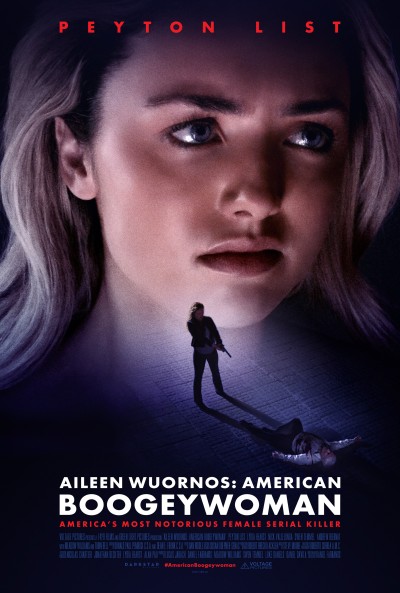 Almost twenty years after her execution, Aileen Wuornos remains a cultural icon. A very rare example of a genuine female serial killer, she was killed by lethal injection in 2002, after being convicted of six murders, and confessing to a seventh. The following year, Charlize Theron won an Oscar for her portrayal of Wuornos in
  We’ve previously written about
 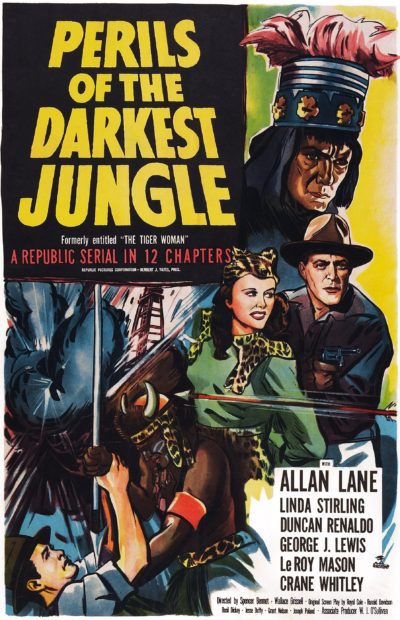 But for the purposes of this site, Republic leaned heavily into the “jungle girl” trope. This was a popular way of stepping around the mores of polite society, allowing the portrayal of female characters less fettered by the standards of civilized society. It’s an archetype likely founded in H. Rider Haggard’s She, where the immortal Ayesha ruled her isolated subjects. Another early example is the 1904 novel Green Mansions by William Henry Hudson, the story of jungle girl Rima, who falls in love with a Venezuelan traveller. It was later made into a 1959 movie starring… um, Audrey Hepburn and Anthony Perkins. Yes, Eliza Doolittle and Norman Bates. It was not a success. Unsurprisingly, Edgar Rice Burroughs got in on the act: the fourth novel in his signature franchise, The Son of Tarzan, introduces an example of the character in Meriem.
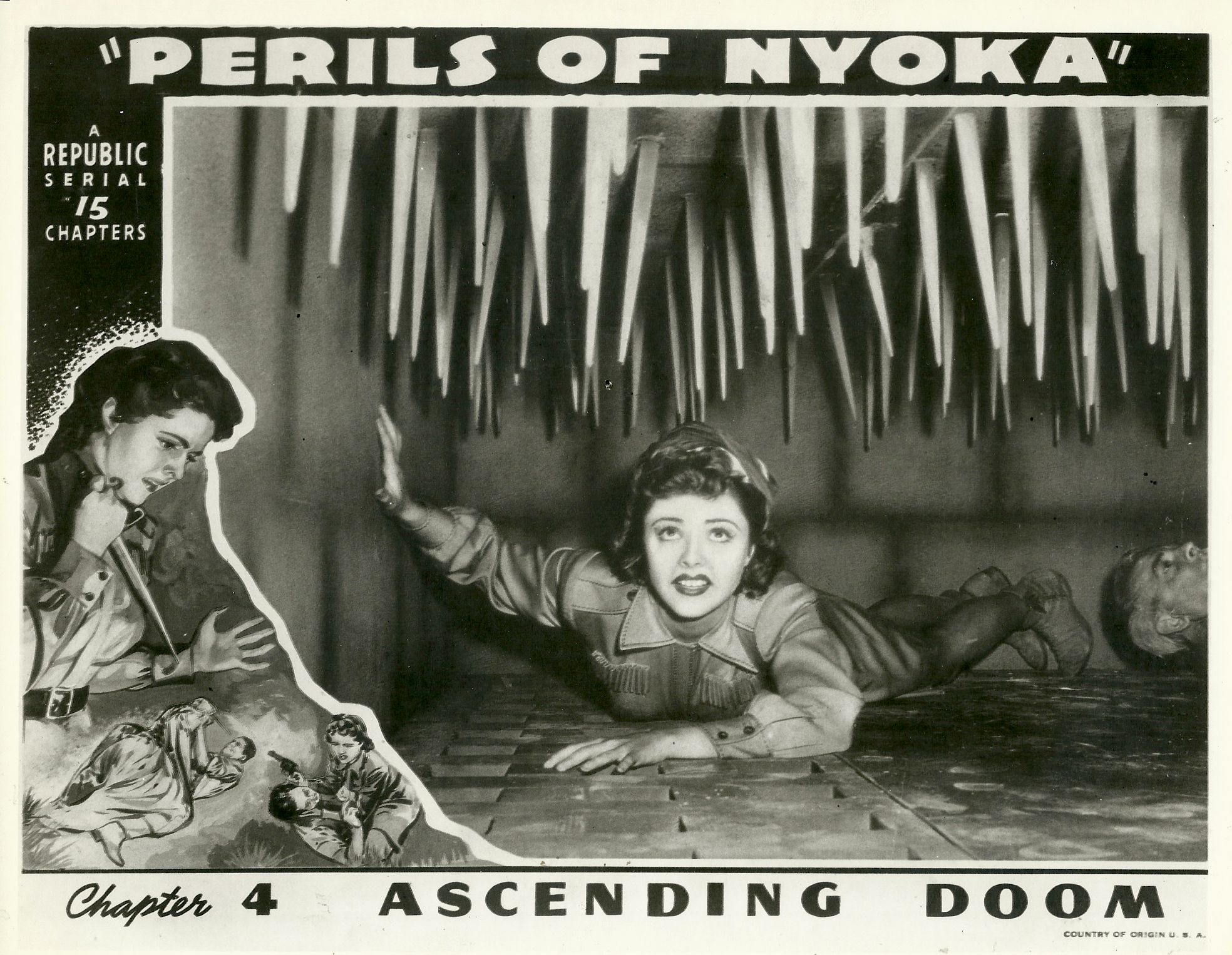
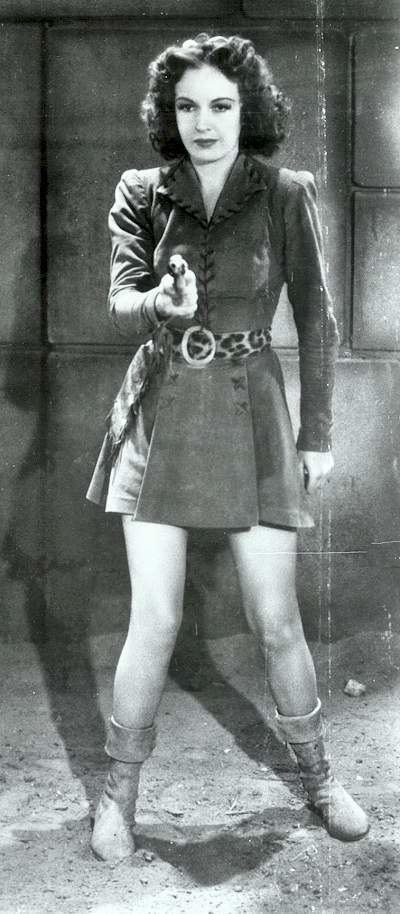 This is nominally based on Edgar Rice Burroughs’s 1932 novel of the same name, also known as The Land of Hidden Men. Though there’s very little beyond the title in common. The book was set in Cambodia, and told the story of explorer Gordon King, who finds a civilization which has been lost for a thousand years. This… isn’t. It is instead the story of Nyoka Meredith (Gifford), the daughter of a doctor working with the Masamba tribe in the middle of Africa. “Nyoka” is Swahili for snake, and she seems to spend most of her free time swinging through the forest on vines.
 ★★★½
★★★½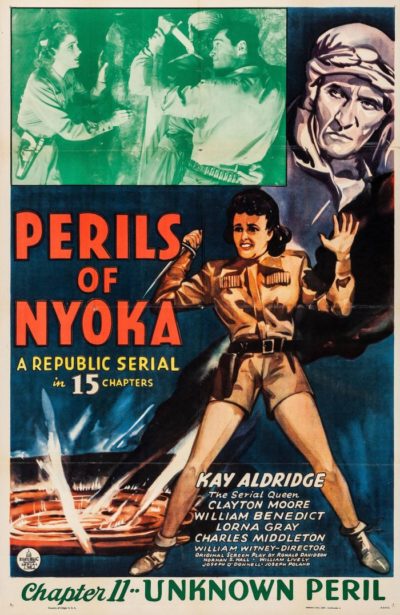 This was the first serial I had watched since
 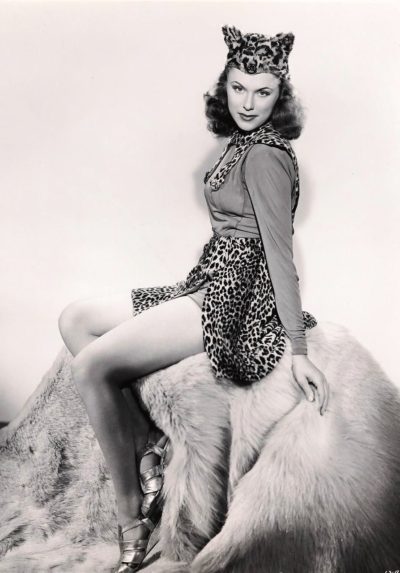 As mentioned, we’re in South America, where two competing oil companies are seeking to establish their territory. The Inter Ocean Oil Company are the current occupants, and have been working in association with the indigenous population, under their white queen (Stirling), known as the Tiger Woman. But if they don’t strike oil soon, their franchise will expire. A predatory, far less friendly (but unnamed) company, is standing by, to make sure that doesn’t happen, allowing them to take over. But Inter Ocean has sent top troubleshooter, Allen Saunders (Rock Lane), to work with the Tiger Queen and block their enemy’s attempts. Those get more desperate as the deadline approaches and Inter Ocean appear to be succeeding. Complicating matters is the Tiger Queen’s original identity as missing heiress, Rita Arnold, something her enemies want to use to their advantage.
 This 12-part serial from Republic was a spin-off from the success of Zorro – though despite the title, the Z-word is never mentioned. It moves the legend from Spanish California to Idaho in the 1880’s, just before a vote to decide whether it would become a state. Villainous Dan Hammond (McDonald) begins a violent campaign to prevent this, and is opposed by local newspaper owner Randolph Meredith, who has a secret identity as The Black Whip, a masked vigilante. When he is shot dead, his sister Barbara (Stirling) takes up the cape and whip, along with the help of undercover federal agent, Vic Gordon (Lewis). Together, they foil Hammond’s increasingly-desperate plots as voting day nears, and escape from 11 precarious positions. Well, it
 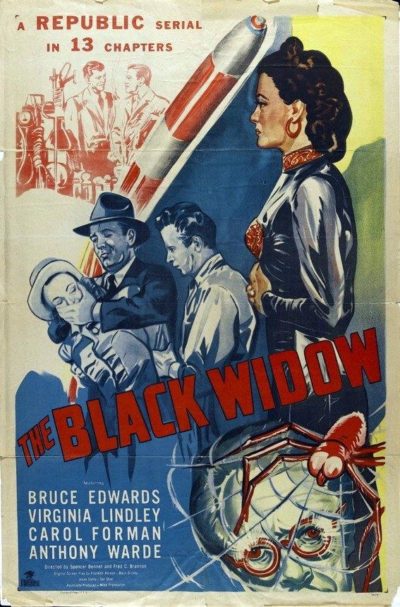 This is something of a fringe entry, and illustrates a few of the issues with Hollywood of the time. In particular, a severe reluctance to let female characters act with genuine independence. We see this on both side of the story here. The title character is Sombra (Forman), a vaguely Asiatic woman who is engaged in a plot to steal nuclear secrets from the United States. To this end, she has been trying to bribe acquaintances of a notable scientist, but the trail of spider-envenomed corpses resulting from their refusal to help has brought her to the attention of the Daily Clarion and its ace girl reporter, Joyce Winters (Lindley). Which would be fine, if the women were allowed to go head-to-head on their own terms, in the same way as
 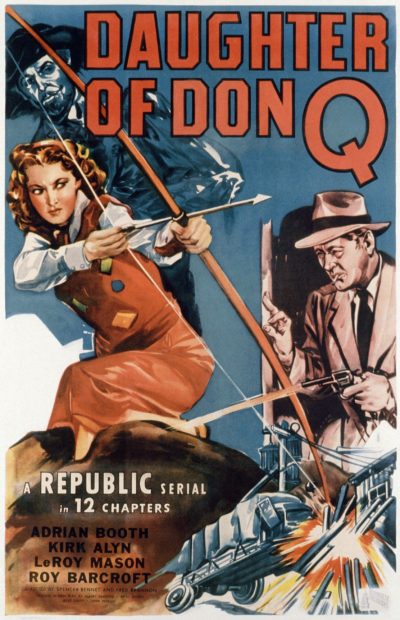 Lorna Gray, the lead here, had been the villainess in
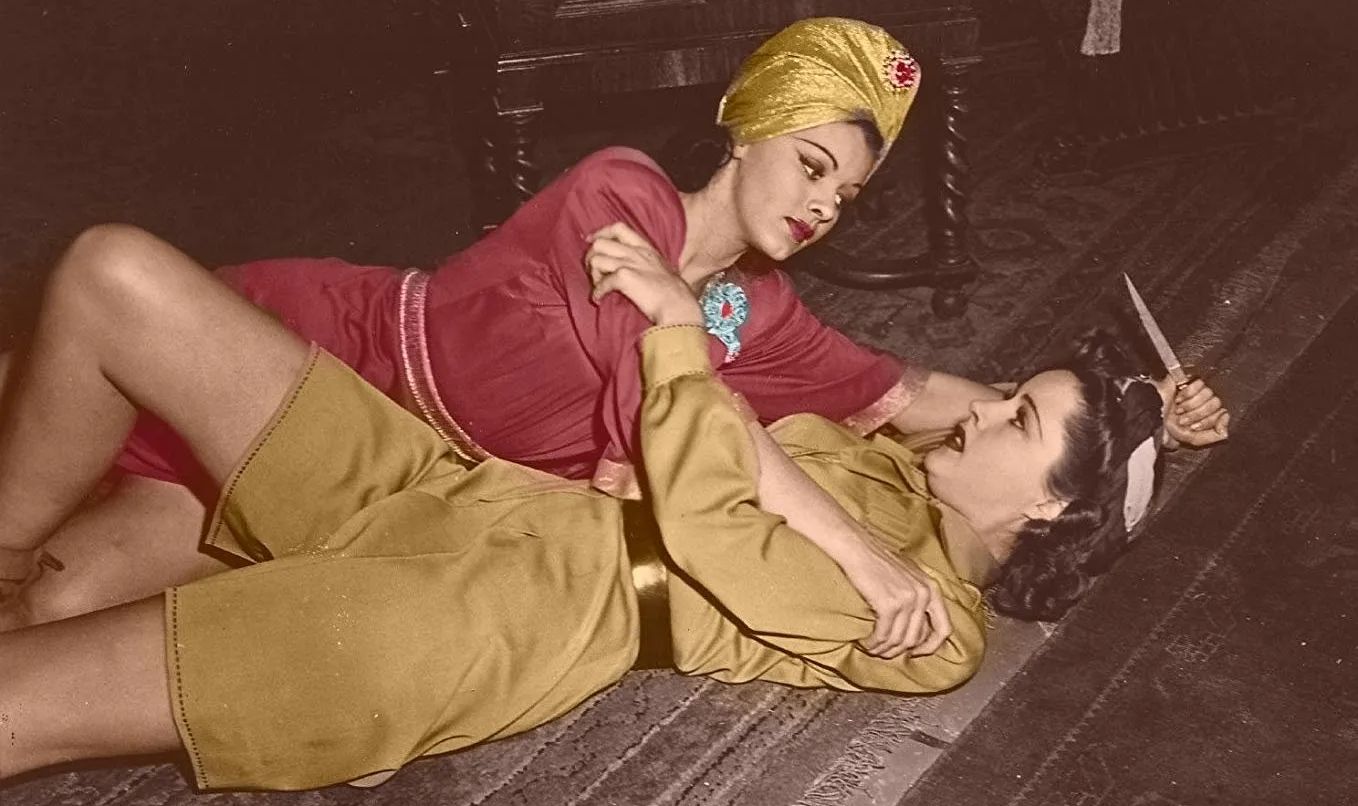
  This is probably a good one and a half stars more than I expected, based on the synopsis and screen shots, which made it seem considerably more like porn with a minor wrestling subplot. Okay, it is not exactly fun for all the family, to put it
 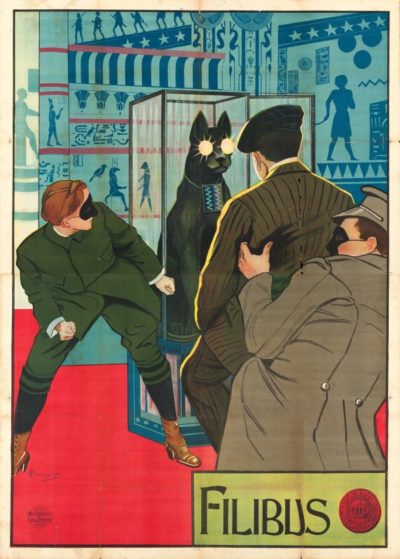 Ladies and gentlemen, we appear to have a new record holder for the earliest action heroine feature film. Dating from all the way back in 1915, and thus pipping
  This is as much about the philosophical underpinnings of karate, and how it can be used for personal growth. The instigator in this case is Chae-yeong (Jung), a teenage girl who has just transferred to a new school after issues at her previous educational establishment. Her long-suffering father, a karate master has barely registered her there, when trouble finds Chae-yeong. She uses her skills to rescue a student, Jong-goo (Oh), who is refusing to help some bullies cheat in an upcoming exam. This turns out to get her an unwanted high profile, as the school is basically a gangsters’ paradise.
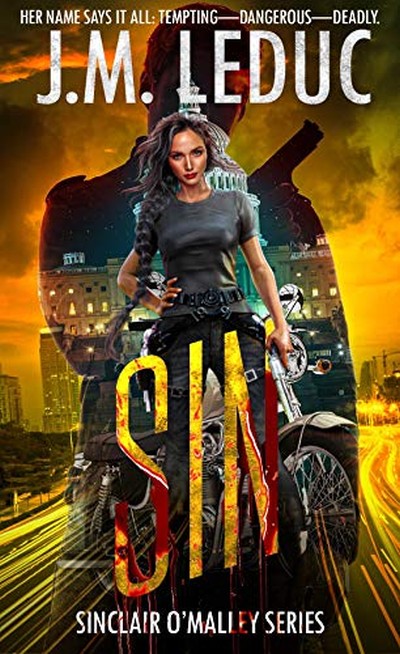 Sinclair O’Malley, known to everyone as Sin, is a bit of a wild card. She was initially an FBI agent, but was released by the agency, largely for her refusal to stay within the lines. In particular, she went off-book to end a human trafficking ring in Nicaragua. She is the kind of person whom we first meet interrupting a funeral, by rolling up to it late, on a Harley. But this is just the book’s first misstep. For rather than demonstrating her bad-ass credentials, it just made me feel she was a selfish and egocentric narcissist, shrieking “Look at meeeeeeee!” everywhere she went. Subsequent actions did little to disavow me of this belief.
 As I write this, in December 2021, abortion is again a bit of a hot topic on the American political scene. I am, personally, fairly neutral on the topic. Or, at least, to the point that I’d need to spend the entire review outlining my position. Such nuance tends not to fly on the Internet, where you are either a baby-killer or want to turn America into The Handmaid’s Tale, and moderation is for pussies. On that basis, this film is a bit of a losing proposition, likely destined to satisfy no-one with its relative fair-handedness. These days, it feels like everyone just wants their echo chamber reinforced, rather than challenged, even in the mild way this offers.
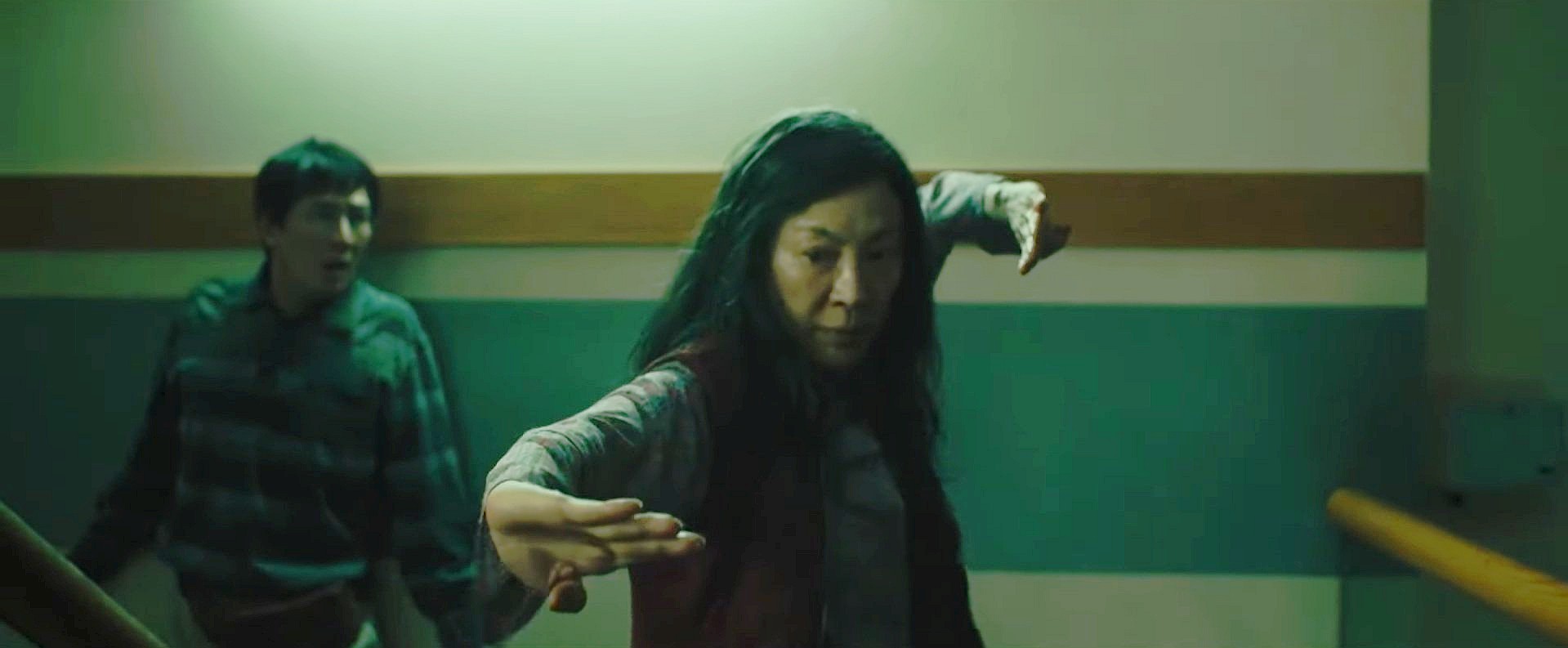 ★★★½
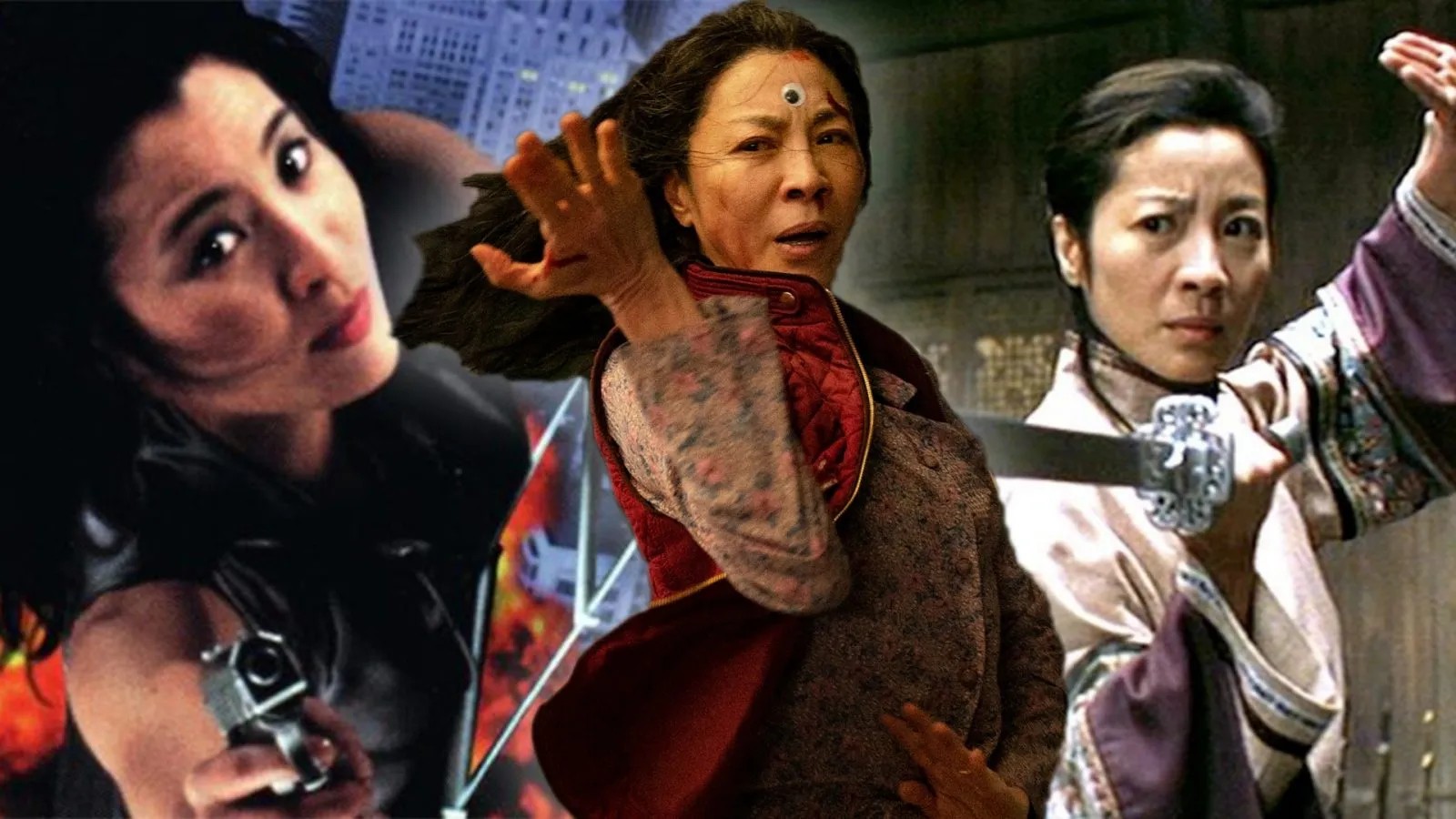
★★★½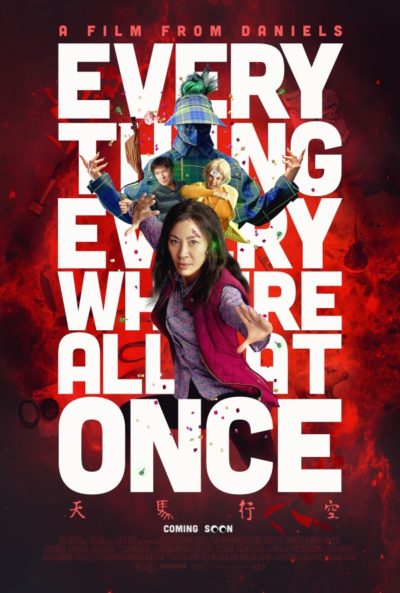 Like I said: almost infinite in scope. Apparently, co-writer/director Kwan was diagnosed with ADHD during the creative process: to be frank, it shows. While the imagination on view is admirable, the film bounces about between ideas at a ferocious rate, almost regardless of whether they deserve it. We spend an inordinate amount of time in a multiverse where everyone has long, floppy fingers. Yet there is also buttplug-fu, which is an example of the movie going places you’d never have expected could be so entertaining. Or a lengthy, surprisingly engrossing, scene in which two rocks in an otherwise lifeless multiverse have a conversation in captions. Because why not?