




★★★
“Flips the bird at the bad guys”
 While obviously cheap, and occasionally laughable, the straightforward nature of this helped it remain generally entertaining. It’s not over-burdened with unnecessary plot complexities and this gives it a clarity of focus that works to its advantage. Dove (Atkins) is an assassin for the mob, but her boss, Teddy (Mensoza) wants her and her handler father (Sanford) out of the picture. So he begins setting Dove up to fail, giving her bad intel on a job, hoping that will lead to her death. She survives the unexpected scenario, so on her next hit, Teddy “forgets” to mention the presence of a young child, whom Dove ends up shooting as well as her target. That gives Teddy the excuse he needs to unleash his dogs on her and her father. But Dove is not going to be easy to eliminate, especially after Teddy makes it considerably more personal than business.
It’s the kind of film which would be quite easy to pick apart. The relationship between Dove and her father, for example, is so scantily drawn, you wonder why they bother at all, and there is also an odd flashback sequence to Dove being tortured. Was this some kind of origin story? It’s purpose is never made clear. There are gaffes and mistakes to be found, if you try. After killing the child, Dove’s gun suddenly vanishes between shots, and later there’s a bizarre moment where she sews up a wound in her arm through a bandage. As you do…? Most of the mobsters are hardly convincing in their roles, lacking the necessary sense of threat you’d expect from them, and quite why Teddy feels so compelled to get rid of Dove, since she’s clearly more competent than any of his operatives, is not explained to any satisfactory level.
And, yet…. Probably the biggest compliment I can give this is, if I made a girls-with-guns flick, it would probably look not too dissimilar to Silent Dove. For example, the script is not lumbered with any unnecessary romantic angles. Atkins’s performance, while so low-key as arguably capable of being called flat and disinterested, somehow seems perfectly fitting for her role, capturing someone who appears to be emotionally dead inside (which may be part justification for the flashback sequence?). Though relatively long, at 105 minutes, there didn’t feel as if there was any real amount of slack, in the way of unnecessary scenes, and it has at least one memorably imaginative kill, involving a significant quantity of sulphuric acid.
The bottom line is, I was always kept watching, and was never bored, even if it was generally fairly obvious where things would end up. It more or less does, though there’s a pleasant final twist that I did appreciate. Filmed in ten days on a budget of $15,000, the makers have put the whole thing up on YouTube, and I’ve certainly seen far worse movies given away for free there.
Dir: Paul Dupree
Star: Chelsee Atkins, Johny Mendoza, Gary Brumett, Malcolm T. Sanford
 This is briskly entertaining, and feels like a female version of Blade, with an extra good-girl vampire as a bonus. Yet it’s definitely best not to pause and think about some aspects, because the story will likely fall apart under close scrutiny. Matters are complicated by a flashback-heavy structure, on occasion multiple levels deep, and an apparent desire to overstuff proceedings, at the expense of some elements. That said, it hangs together and is entertaining, mostly thanks to a likeable pair of lead performances. There is a decent quantity of hand-to-hand action, even if some of it does leave a little bit to be desired on the quality front.
 What I’ll remember about this one is the arc. Not so much of any character, more as to whether or not this would qualify for the site. The story began on solid enough ground, but around the end of the first volume (this omnibus contains parts 1+2), it plummeted well below the threshold needed. I almost gave up reading at that point, but persisted, and the book did rebound with an extended, gory finale in which the heroine and her ally took on what felt like an entire city. Okay, it’s back in. But I’m not happy about it, for reasons I’ll get to in a bit.
 This documentary is about the field of women in aviation, combining archive footage with interviews, covering the range from those who aspire to fly (giving their Lego aircraft lady pilots!) to those who have been into space, fought combat missions in the Middle East or dodged death in aerobatic displays. There’s not any particular structure to proceedings, choosing instead to bounce around between its topics and subjects. This helps keep things fresh, yet at the cost of any narrative beyond, I guess, “Women can do anything men can”? Which, to be fair, deserves saying in the aviation field particularly: how much strength is needed to handle a joystick?
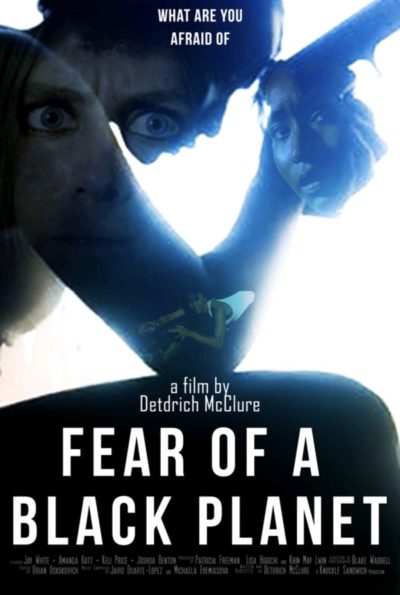 It’s interesting to look at the film’s IMDb page, and contrast the reviews, where there’s nothing less than an 8/10, with the rating, where 73% of votes are a 1/10. One “review” was actually a rant about other reviews which appear to have been removed? Something odd there. There’s no doubt, the film is not so much tackling a contentious topic, as driving head-first into it at 80 mph. Even the title (obviously inspired by the Public Enemy LP of the same name) is an incendiary one, guaranteed to raise the hackles of many – and, to be honest, not without reason, because of the assumptions it makes. It’s a shame, since the film is at least slightly more nuanced than the title makes it seem.
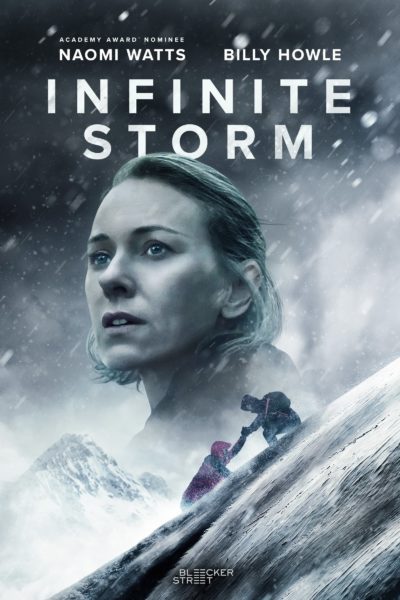 The “based on a true story” label covers a broad range of cinematic outcomes. However, a general rule of thumb is, the closer a movie stays to the facts, the less interesting the result will be. On that basis, I suspect this is a true and accurate deduction of the life of Pam Bales, and one particular incident therein. Because it’s largely lacking in excitement, and worse, seems to know it. Unless you have a fondness for watching someone trudge uphill for 30 minutes, then downhill for another sixty, I’d recommend giving this a pass. Despite some attractive scenery (Slovenia standing in for New Hampshire), there’s not enough to generate the necessary amount of drama or tension.
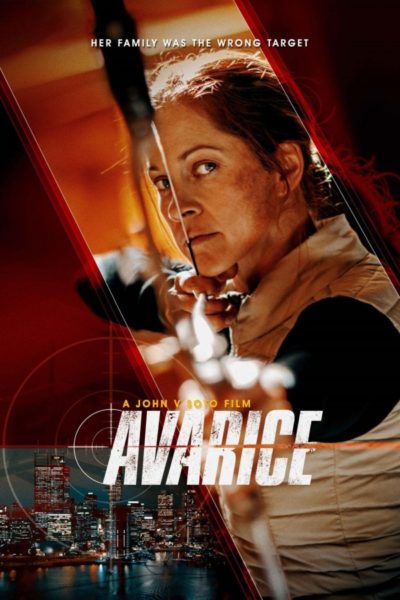 I’m not 100% sure, but I suspect this may be the first film I’ve tagged as both in the “sport” and “home invasion” genres. It’s not a crossover you see every day. However, it is fair comment in this case, even if takes its own sweet time to get there. Kate Matthews (Alexy) has various bits of static in her life. Her husband, Ash (Ford), spends too much time at his Very Important job in high finance, rather than on their relationship. Daughter Susan is being a teenager. Kate just lost an archery tournament. Oh, and their house has been invaded by Reed (Nell) and her band of thugs, who are now intent on forcing Ash to transfer thirty million dollars into their offshore bank-accounts.
 There are spells where I find myself going through a stream of mediocre movies, wondering when I’ll see something genuinely good. Then, I stumble into the likes of this, which leaves me yearning for the heady delights of mediocrity. It was in trouble right from the start, with five minutes of opening voice-over that did nothing but leave me confused. Then again, if your story requires five minutes of opening voice-over in the first place, you should probably rethink your storytelling techniques. The same could be said for a post-apocalyptic scenario in which food is in short supply, yet black pleather cat-suits are apparently easily available, in a range of sizes to fit all needs.
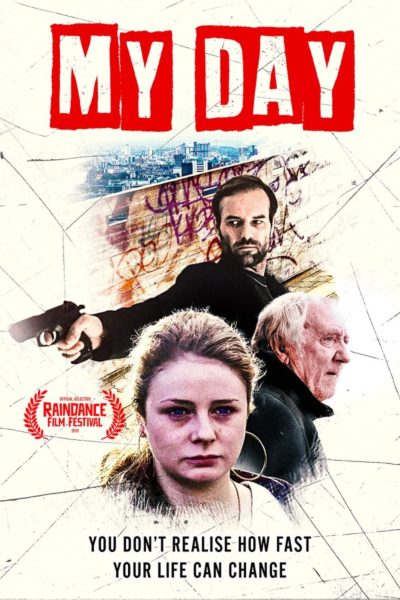 Sixteen-year-old Ally (Smith) is living her life very much on the fringes of society. Coming from a broken home, she is now homeless on the streets of London, relying on the dubious charity of questionable friends. Though Ally does have her limits as to what she’s prepared to do, she has no issue with occasional bits of work, delivering drugs for dodgy couple Carol and Gary. It’s this that gets her into trouble: a job goes wrong, after the customer tries to rape her, and Ally flees – without either the drugs or the money. Carol and Gary are bad enough. Yet even they live in mortal fear of their boss, Eastern European gangster Ilyas (Adomaitis). He wants his merch back – and Ally, as interest, for sale to his sex trafficking friends.
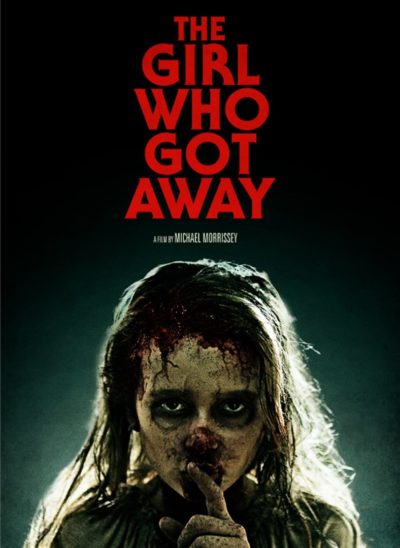 This isn’t the first movie I’ve seen, in which a woman escapes apparent death at the hands of a serial killer, only for them to track her down years later. However, the twist in the narrative here, which perhaps pushed it over the necessary boundary for inclusion on the site, is that the killer is also female. The victim is Christina Bowden (Johnson), who as a young girl was the sole survivor of Elizabeth Caulfield (Tuckerman) and her “child farm”, for want of a better phrase. Bowden has slowly put her life back together and is now a school teacher. She’s also looking to adopt another troubled teen, Lisa Spencer (McCarthy), and pay it forward. Then she gets a visit from local sheriff Jamie Nwosu (Iwuji).