


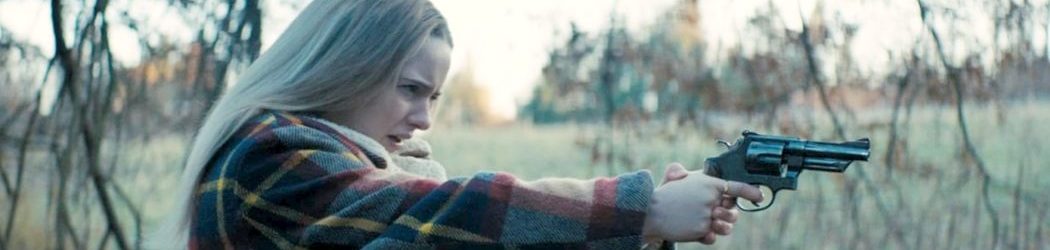

Twenty or so years ago, I wrote a piece which compared the historical French heroine, Joan of Arc, to a number of the cinematic treatments of her life, from silent epic Joan the Woman through to the then recently released TV movie, Joan of Arc, starring Leelee Sobieski – which remains perhaps my favourite version of the story, hitting the sweet spot between action and drama most effectively. However, I recently found myself falling down the rabbit hole of further versions of the story. It began with me stumbling across the duelling French two-part versions, made by acclaimed French New Wave director Jacques Rivette, and the most recent take on the story, by countryman Bruno Dumont.
 But it turned out to be only the beginning. It seemed that everywhere I looked, there was another film about Joan, waiting to be found. A 1957 filmed stage play, shown on television of the time. A pre-war propaganda piece made by the Third Reich film office. A contemporary take, in which Joan becomes a right-wing political terrorist. Or all the way back to 1900, when legendary pioneer Georges Méliès made a short film, potentially the first biopic. Finally, I had to stop looking, simply because I needed this project to go to press. It remains incomplete. There are still items I’ve been unable to locate, such as 1999’s experimental feature, Wired Angel. But it has been an interesting enterprise. I think I’ve learned that, like many legendary figures from history, people will see in Joan what they want to see. The historical narrative is, as we’ll see, incomplete, and the gaps are open to personal interpretation.
For the purpose of this, I did stick to feature-length adaptations. Anything else, such as some of the estimated 20,000 books about Joan, will have to wait for another time. But beyond that, I did want to say a bit more about Méliès’s version, which opens the YouTube playlist below. Even if it runs only 10 minutes, the features the first depiction on film of Joan’s full story, and potentially that of any historical heroine. [While there is an 1898 short, Exécution de Jeanne d’Arc, by Georges Hatot, at 43 seconds, it’s basically inconsequential] Long believed lost, it was rediscovered in 1982, albeit missing the opening scene, so begins a bit abruptly with Joan’s vision. The role of the heroine is played by Jeanne Calvière, who had been a stablewoman, before joining Méliès’s troupe. The director himself plays no less than seven roles, from Joan’s father to a wood-carrier who collapses at her execution.
This was back when the language of cinema was still very rudimentary. It feels more like you are sat in the audience for a stage play: almost all the scenes are shot from the same depth, with no close-ups or changes of angle. Despite its brevity though, it hits most of the main points, from her becoming a leader through her initial success, to capture by the English and death by burning. There’s even some primitive efforts at spectacle, and you can only imagine their impact, on an audience with absolutely no experience of such things. I did like the ending, which seen Joan – at the point this was made, still not canonized – rising into heaven to be greeted by the angels. It’s a rather happier finish for her than many versions provide.
See also:
- Joan the Woman
- Joan Of Arc (1948)
- Saint Joan
- The Messenger: the story of Joan of Arc
- Joan of Arc (1999)
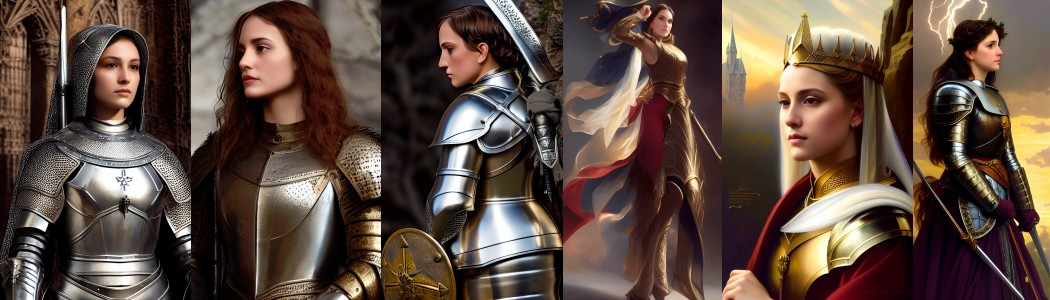
Elsewhere on the artistic front. I found myself increasingly fascinated by the recent surge of AI art generation software. Items like Midjourney, Dall-E and NightCafe take text prompts regarding the subject and style, and will do their best to generate a never-before seen image based on that input. I’ve been using the engine provided by Unstable Diffusion to create images of Joan of Arc, and some of the results are stunning. To be honest, some are awful: these applications all seem to have terrible difficulty with hands for some reason. But it’s a numbers game, and with repetition and gradual tweaking of the prompts to enhance what works, and take away what doesn’t, you can get content that, to my eye, is as good as any professional content. Some examples are above, and I’ve also uploaded a full gallery of these creations.
For the next week plus, an additional review will be posted here daily. You’ll be able to find them from the front page of the site, or they’ll all be collated here. If you’re showing up after November 2022, there’s a lot to get through. You might want to get a cup of coffee. And possibly a sandwich…
La merveilleuse vie de Jeanne d’Arc
By Jim McLennan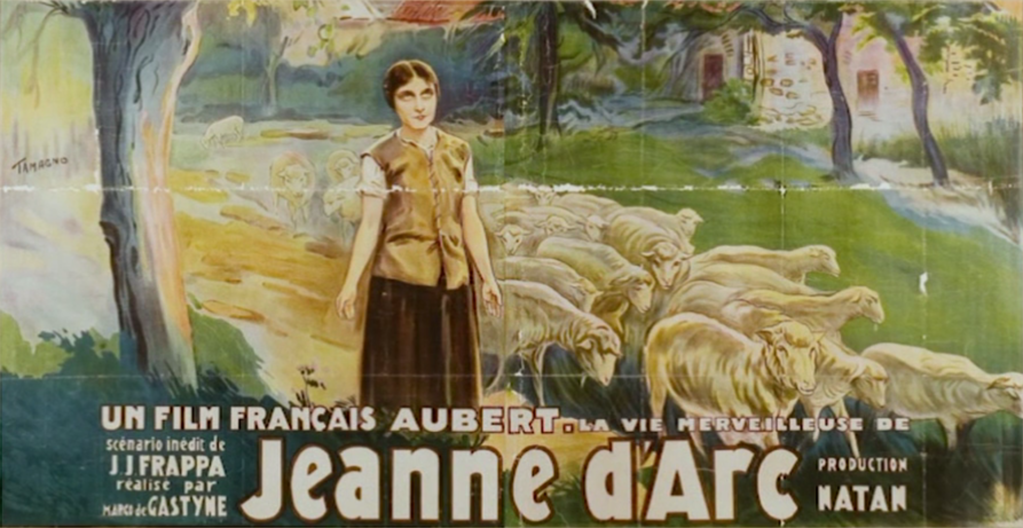 ★★★★
★★★★
“Merveilleuse is the word for it.”
 I generally make it a rule not to review foreign movies without subtitles, simply because it’s difficult to judge them reasonably if you can’t understand them. I made an exception for this 1929 French film for a couple of reasons. Firstly, it’s silent, so comprehension is limited only to the intertitles: I can read the language better than I can understand it spoken. Also, it was approximately the eleven millionth version of the Joan of Arc story I’d seen in the past month: I think I had a pretty good handle on the plot by this point. Boy, am I glad I did, because it’s the best silent film I’ve seen, albeit in my quite limited experience of them.
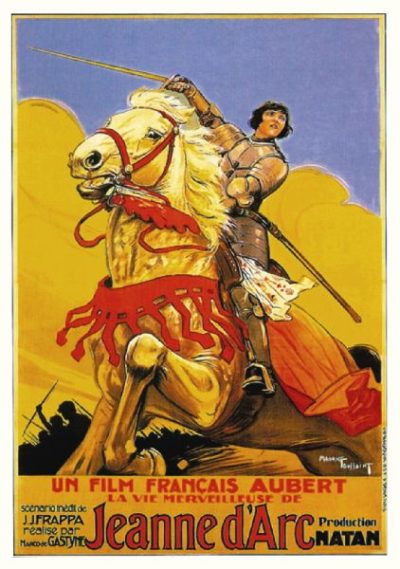 History has largely forgotten this version, in favour of Carl Theodor Dreyer’s La Passion de Jeanne d’Arc. Both movies were produced concurrently, interest in the topic apparently having been spurred by the canonization of Joan at the start of the twenties, and the approaching 500th anniversary of the events in her life. However, delays during filming meant this adaptation was beaten to the cinema by Dreyer’s. It perhaps was also impacted commercially by the arrival of the new-fangled “talkies”, leaving silent movies like this looking old-fashioned. Half a century later, the film was eventually restored, and can be found on YouTube as well as the Internet Archive.
At over two hours long, it’s certainly epic, yet is almost constantly engrossing. Its main strength is Genevois in the role of Joan, who has an incredibly impressive face, which more than counters the lack of dialogue. She was only 15 when the film went into production, but already had a decade of experience in making films, including another silent epic, Abel Gance’s Napoleon. It was quite a stressful production, with the actress enduring heavy costumery. She said, “They made me a very light suit of armour, but I ended up with real armour. At the Battle of Orleans I had to wear a 22-kilo suit of chain mail. As soon as I finished a scene, they would lay me down and I would sleep on the ground because I couldn’t take the weight.”
Those battle scenes are extraordinary, especially for the time, overcoming the constraints of the 4:3 aspect ratio. The siege at Tourelles is a phenomenal set piece, involving 8,000 extras, largely recruited from the French army. There’s additional poignancy to the spectacle, Joan realizing the horrors of the battlefield, which have been unleashed as a result of her actions. While I’ve yet to see the Dreyer version (by most accounts, it seems rather talky for a silent!), it’s hard to imagine anyone improving on Genevois’s performance. Inevitably, things do become a bit of a slog during the trial; the dialogue heavy nature of those scenes are always going to be tough. Yet even here, there are moments of exquisite beauty; Joan sat, her head bowed, as her accusers file out past her.
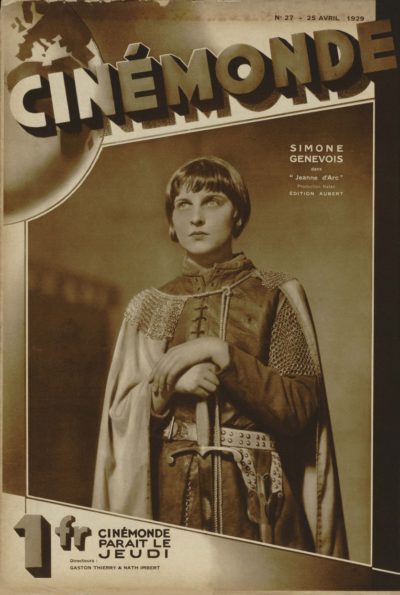 Then there’s the burning at the stake, another scene which came uncomfortably close to historical accuracy for Genevois. “The moment the wood caught fire I yelled ‘It burns!’ [The director] Marco was so sure I was afraid, that he did nothing at all. All of a sudden the cameraman, Gaston Brun, shouted ‘She’s burning!’ and everyone ran towards me, because I was tied up and couldn’t budge. I was very frightened.” Even putting that aside, there’s no denying the emotional wallop it packs, particularly in the extended shot of Joan walking towards her death: Simone’s face, again, sells this in a way which left me genuinely distraught. This doesn’t happen often, and never before while watching any silent movie.
de Gastyme then simply stops the film. It’d seem an abrupt ending almost anywhere else; here, it acts as a force-multiplier for Joan’s death, letting it resonate in the silent darkness which follows. Finally, I have to give credit to the sadly unknown composer who provided the score accompanying the movie. It’s top-tier stuff, complementing and enhancing the on-screen action to great effect, whether rousing the blood during the battles, soaring to the heavens for her visions, or mourning the inevitable fate of the heroine. Over its 125 minutes, this hits all the expected moments with precision, and Genevois – who retired from movies at the ripe old age of 23! – deserves to be far better-known in ranks of actresses to have taken on the iconic role of Joan.
Dir: Marco de Gastyne
Star: Simone Genevois, Fernand Mailly, Georges Paulais, Jean Debucourt
a.k.a. Saint Joan the Maid
Das Mädchen Johanna
By Jim McLennan★★
“It’ll be all Reich on the night.”
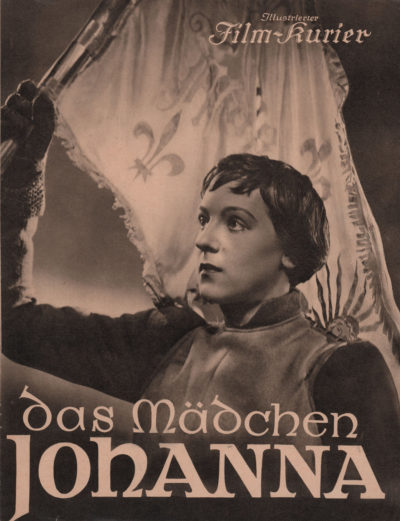 It’s basically impossible to separate this from the time and place in which it was made: that being Nazi Germany, just a few years before the outbreak of World War II. The portrayal of, not only Johanna/Joan of Arc, but the rest of the participants, has to be read in this light. It certainly explains why neither the English nor the French sides exactly come over as covered in glory. From the former camp, we have Lord Talbot, who is cruel to an almost cartoonish degree. On the latter we have King Charles VII (Gründgens), who is cynical to a fault, and has no qualms at all about using Joan when convenient, then discarding her when she isn’t.
While Johanna (Salloker) is certainly the hero here, her screen-time is surprisingly limited. She doesn’t show up until about the 25-minute mark, her appearance rescuing the King from a mob, who are about to tear him limb from limb for his decision to abandon Orleans. However, the only person who genuinely cares for her is Maillezais (Deltgen), and even he is powerless to stop her becoming a pawn, blamed for the outbreak of the Black Death, once she has outlived her usefulness to the French nobility. I was expecting this to be a parallel between Joan and Hitler, but it doesn’t quite seem that simple.
Admittedly, the film ends, 25 years after the war, with Joan’s reputation salvaged. No longer a heretic, the last lines proclaim “Joan’s memory forthwith as a memory to her who freed France from foreign rule, as a memory to the state’s most faithful servant, who had by her sacrificial death ended disastrous warfare and who gave glory and greatness to the country and peace to the people.” That sounds fairly Fuhrer-like – except for the awkward “sacrificial death” thing. It’s possible King Charles may be a better candidate as the Hitler figure, prepared to do whatever is necessary to save his country. To the latter end, he proclaims “I know the people. The dead Joan will be all-powerful. Inviolable. A thousand times stronger! And her death will engender new miracles.”
Contemporary reviewers like Graham Greene (author of The Third Man) also drew parallels between the French King ridding himself of advisers he saw as treacherous, and The Night of the Long Knives, or the burning of Joan with the burning of the Reichstag. Me, I’m here purely to review it as a movie, and as such it’s quite lacklustre and plodding, concentrating more on the political machinations behind the scene. Salloker looks the part, especially when clad in her silver suit of armour. However, she rarely gets the chance to do much: the only significant bit of acting coming when she realizes she is about to die. Matters are perhaps not helped by the confusing way both the English and French speak German, and the battle scenes are no great shakes: certainly not as good as those in Joan the Woman, two decades previously. This is largely forgotten, for all the right reasons.
Dir: Gustav Ucicky
Star: Angela Salloker, Gustaf Gründgens, Heinrich George, René Deltgen
The Lark
By Jim McLennan★★
“The play’s the thing…”
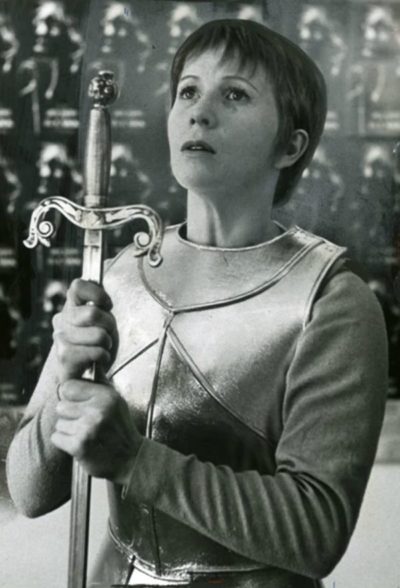 This was originally a French play, L’Alouette, written by Jean Anouilh in 1952. Three years later, a translated version was brought to Broadway, where it ran for 226 performances from November 1955 until June 1956. Julie Harris played Joan, and there was quite a star-studded cast behind her, including Boris Karloff as Bishop Cauchon, Christopher Plummer and Theodore Bikel. It was critically acclaimed, Harris winning that year’s Tony Award as Best Leading Actress, and Karloff being nominated as Best Leading Actor. The following February, a TV adaptation was screened in the United, though wasn’t the first or the last such. In November 1956, the BBC screened their version, with Hazel Penwarden as Joan, and a supporting cast including Michael Caine. Additionally, 1958 saw an Australian version, though it seems notable only for having Olivia Newton-John’s father in the cast.
Neither of those versions appear to have survived, while a low-resolution version of the US one has, probably a Kinescope recording. It was part of the long-running “Hallmark Hall of Fame” series, and was broadcast on January 10, 1957. This explains the adverts before, after and during the intermission, for Hallmark products, in particular related to Valentine’s Day! Harris and Karloff reprised their roles from Broadway, with Plummer being replaced in the role of Warwick by Elliott, and Wallach as the Dauphin. It begins with Joan’s trial, the events leading up to that point being told in flashback, including the usual things such as her visions, encounter with the Dauphin, etc.
Although not a “live” transmission, this is very much a recording of a stage play, and that’s likely the biggest problem here. Treading the boards requires a different style of acting, with emotions needing to be projected to reach the back of audience. There are no close-ups on stage. Harris had film experience (being Oscar nominated in 1952 for The Member of the Wedding), and would go on to win 11 Emmys, as well as being one of the Hallmark Hall of Fame’s most frequent leading ladies, Here, however, it feels as if she didn’t adapt her performance here for the small screen, and as a result it comes over as rather shrill and almost hysterical. I wonder if Milla Jovovich used this portrayal as a template in The Messenger? It didn’t work there either.
The supporting cast fair better. Elliott in particular comes over as a genuinely nasty piece of work – there’s no question about where the play’s sympathies lie. But there’s no getting away from this version’s origins as a play, with basically nothing in the way of action worth mentioning. To use a good old British turn of phrase, “it’s all mouth and no trousers,” and the chat doesn’t add anything of significant to our knowledge about the character of Joan. To some extent, it’s less the fault of the program makers than the nature of TV at the time. It was still struggling to establish its own identity, in ways that would take advantage of the format. Underwhelming reproductions of other media were clearly not the answer.
Dir: George Schaefer
Star: Julie Harris, Boris Karloff, Denholm Elliott, Eli Wallach
Joan the Maid, Part 1: The Battles
By Jim McLennan★★★
“Eventually…”
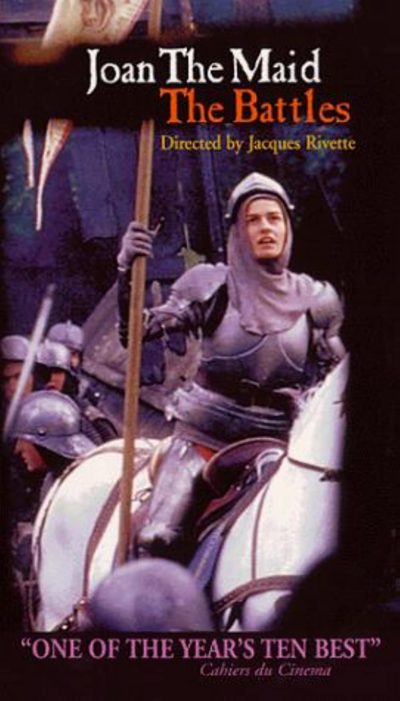 The above refers to the title, and in particular “The Battles”. It is a solid two hours before anything more than handfuls of English and French troops lobbing rocks at each other show up. So if you are here for large-scale spectacle, keep on walking. You will be disappointed. I had a certain idea of what to expect, having seen Rivette’s immediately preceding film La Belle Noiseuse. Admittedly, I saw it largely because I had the hots for Emmanuelle Beart at the time. Otherwise, a four-hour movie, containing lengthy sequences of real-time painting would probably not have been on my radar. But I kinda liked its languid pace (the copious Beart nudity didn’t hurt, let’s be honest!), and so was prepared for things in this to unfold at a similarly leisurely pace.
They do. If you’re more interested in Joan’s character and personality, rather than her deeds and actions, this will rank higher than the above score. Its main strength is Bonnaire, whose depiction is probably the most competent portrayal of Joan that I’ve seen. She may not know how to read or write (there’s a nice scene where she learns how to “draw” her signature), but she is not stupid. Despite the religious visions, she is thoroughly down to earth, and does not take any guff from anyone. For instance, she slaps the hell (literally) out of her brother after he takes the Lord’s name in vain. It’s a Joan who is easy to like.
Indeed, from a secular point of view, it may be the best depiction of why she could lead an army. Some other versions lean heavily on the “God told her to”, almost as their sole justification. But here, even the non-religious should get an idea of why The Maid was able to inspire loyalty in those around her. Yet, she isn’t an emotionless automaton either, getting upset when the British yell taunts at her. To be honest, however, those scenes could not avoid reminding me of Monty Python and the Holy Grail. I suspect Rivette may not have seen it, though who knows? Maybe it’s the deadest of deadpan tributes to John Cleese.
If this film gets the heroine almost exactly right, the same sadly can’t be said for some of the other elements. There’s a clunky framing structure, almost documentary like, with people recounting events as if they had previously happened. It took me out of the movie every time it happened. When we eventually do get to those promised battles… Yeah, they probably shouldn’t have bothered. It’s clear Rivette’s heart isn’t in them. For instance, the French break down a section of wall, only for the soldiers scaling next to it, to ignore the gap completely. There’s not even much sense of either climax or resolution, since we know there is another entire movie, waiting in the wings. Bonnaire makes this worth a look, yet I was left wishing for a combo of this with The Messenger.
Dir: Jacques Rivette
Star: Sandrine Bonnaire, Tatiana Moukhine, Baptiste Roussillon, André Marcon
Joan the Maid, Part 2: The Prisons
By Jim McLennan★★★
“Eventually. Again.”
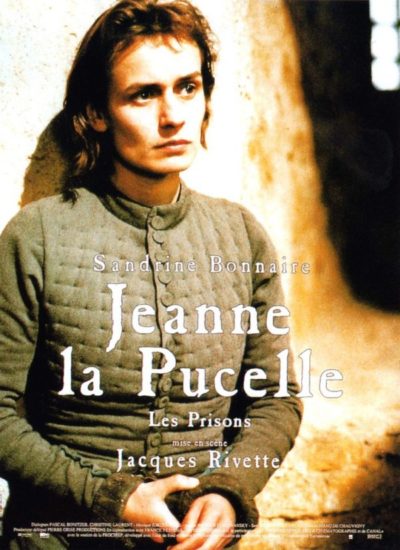 Just as part 1, The Battles, meandered its way towards anything approximating conflict at a pace charitably described as leisurely, so anyone expecting hot Joan of Arc saint-in-prison action will probably want to get a cup of coffee. It’s around an hour and fifty minutes into this before Joan is even captured. Though as the whole thing does run for 176 minutes, there’s still plenty of time for subsequent events. But when the title says “prisons,” it means exactly that. Joan of Arc’s trial, an event that is typically depicted at length in most versions, is here discarded with a single intertitle. One moment, she’s standing on a ship being sent to the English, then there’s a caption “after four months of trial,” and the next scene sees her being sentenced.
This seems like Rivette, through and through. He doesn’t care what anyone else is interested in. He’s going to show the elements of the story which he wants to depict. I can understand where this approach comes from, simply because the trial of Joan is such a fixture of the story. If you can’t find anything new to say about it, why say anything at all? On the other hand, I’m not sure we needed to see, in its place, extended coverage of the coronation of Charles VII of France, apparently unfolding in real time. With Queen Elizabeth II’s funeral just a couple of weeks prior to viewing this, I had already reached my quota of royal pomp and circumstance for the month.
This does mark a turning point in the movie though. Thereafter, it becomes increasingly clear that Joan is losing her influence, being ignored or sidelined. After you have made a king, what more do you have to offer? She is fobbed off on to trivial, inconsequential missions, and Joan is ill-suited to survive the intrigue of court life. Her lack of value in a post-coronation world is driven home by Charles’s failure to ransom Joan after her capture; a price the English are happy to pay. “After four months of trial,” Joan is clearly broken, but they still aren’t done with her yet, intent on forcing her to become a relapsed heretic, with all the stake-related consequences.
Bonnaire is, as in the preceding entry, the main reason to watch this. The heroic confidence exhibited on her way up, is now replaced by a tragic sense of impending doom, which even Joan seems intuitively to sense. It’s all very naturalistic in approach, with Rivette keeping things simple to the point of sparseness. This does lead to the result feeling quite “dry”, and for a movie approaching three hours, there’s not a lot of emotional impact. Indeed, given the lack of spectacle, the movie puts almost all its weight on the shoulders of Bonnaire, and it’s fortunate her performance is up to the task. If it hadn’t been, this pair of films would have made for a very, very long six-hour double feature.
Dir: Jacques Rivette
Star: Sandrine Bonnaire, André Marcon, Jean-Louis Richard, Marcel Bozonnet
The Real Joan of Arc
By Jim McLennan★★★
“Live to fight another day?”
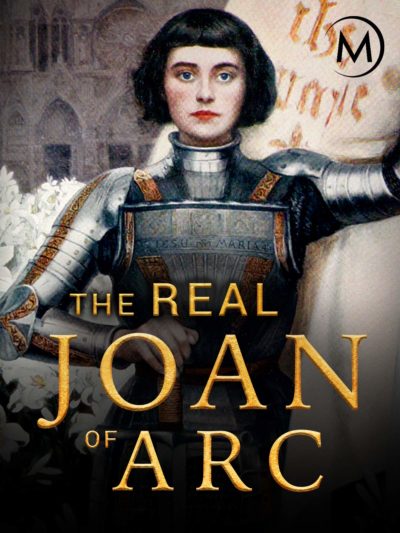 Pun mot intended, but the reality is, we know very little for sure about Joan of Arc. Not even what she looked like in detail, for there are no surviving portraits of her, dating from when she was alive. The facts about her life are equally as uncertain, because everything about Joan was subject to spin, depending on who was talking, when they were saying it, and what agenda they sought to achieve. Because everybody involved had an agenda of one kind or another: either elevating Joan up to the level of literal sainthood (finally achieved in 1920, almost half a millennium after her death), or tearing her down, as a tool of the Devil. Even basic facts – was Joan a shepherd when she was young? – are uncertain, with contradictory testimony.
It’s really in that light you need to view all this documentary shows. Indeed it largely opens by admitting to the above. This opens the door to questioning the standard narrative, in which Joan is a humble farm-girl, who heard divine voices and was inspired to lead France to fight back against the English invaders. However, I was also left with as much doubt about the alternative suggestions the film provides, because the evidence for them is little if any less sketchy. These theories are certainly interesting – and from a secular viewpoint, elements are perhaps no less plausible than the “voices of God” explanation. On other hand, it feels as if they raise as many questions as they answer.
The first is the suggestion that Joan was actually of noble birth, perhaps an illegitimate child. This could explain things like her reported ability to ride and wield a lance, and speak “proper” French, rather than the coarse dialect of her village. She was, in effect, created for the specific purpose of becoming a figurehead. It’s an intriguing idea – though given events unfolded over a period of several years after she came to public attention, whoever was responsible clearly had to be playing a remarkably long game. It is, though, small beer beside the theory which occupies the second half: Joan was not burned at the stake, but survived, resurfacing a few years later as Jeanne des Armoises, getting married and living a whole second life.
Yeah, big if true. The evidence for this begins with alleged oddities around her death. Joan’s head being covered on her way to the stake; an unusually high pyre; hundreds of English soldiers keeping the locals at bay. Yet there were a lot of people who were present, and subsequently provided, albeit years later, sworn testimony as to her fate. It would have been a remarkable cover-up, to put it mildly. I’m more convinced by the second element: someone, representing herself as Joan, did resurface a few years later, even getting as far as the royal court and meeting Charles VII of France. However, most accounts agree that de Armoises ended up admitting to the fraud, being unable to tell the King information Joan would have known.
I still enjoyed watching this, and the intellectual exercise it provided. It’s always good to keep an open mind about history, and contemplate alternative scenarios, whether they pan out or not. Though some of the recreations leave a little to be desired, this is a decent, well-assembled piece, with good “talking heads”. It did give me pause for thought, and no documentary which does so can be considered a failure.
Dir: Martin Meissonnier
Star: Marcel Gay, Francoise Michaud Frejaville, Colette Beaune, Philippe Contanime
a.k.a. Vraie Jeanne, fausse Jeanne
Jeannette: The Childhood of Joan of Arc
By Jim McLennan★★½
“Joan of Arc: The Musical”
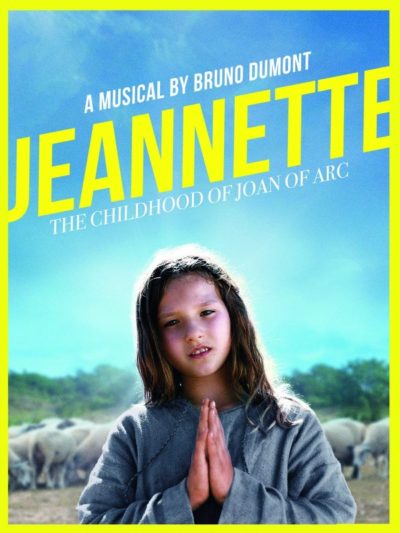 I initially intended to review this and its sequel, Jeanme, by Dumont as one entity, for a couple of reasons. They really only work as a single item. This confused the hell out me, because the second film turned up on a streaming service by itself. Five minutes in, I was so confused, I started searching the Internet, only to find I had, in effect, joined a movie already two hours in progress. Also, I suspected I would be hard-pushed to deliver 500 words on each of these. I’m not saying they’re slow-paced, but you’d overtake them riding a glacier. The first 90 minutes is basically Jeannete (Prudhomme when young, Voisin when older) standing around sand-dunes, looking after her sheep, with the occasional religious debate or vision. Three years pass here, in the blink of a caption.
Yet, here we are, since there are still topics to discuss. For example, I forgot to mention: it’s a musical. Yep, full-on songs and everything. Though not exactly contemporary to the 15th century. There’s rap. There’s rock. There’s a head-banging pair of nuns, who often speak their lines together, like a clerical version of the Mothra Twins. Now, I guess this kind of thing can work. Hamilton was very popular, though let the record show, I couldn’t sit through it. This is… Well, I can’t say it wasn’t interesting to watch. Though the overlap between “interesting to watch” and “never want to see again” has rarely been so resoundingly demonstrated. It’s apparently an adaptation of a play, The Mystery of the Charity of Joan of Arc, written in 1910. No clue if that had songs or not.
I’m really not sure what the intent here was. From what I’ve read, it seems to have been trying to recapture the spirit of naivety found in medieval passion plays, using non-professional actors. Sometimes this works, sometimes it doesn’t: the scenes featuring rapper Durand Lassois as Jeanne’s uncle are excruciating. Yet there are moments where, Voisin in particular, captures the serious intensity necessary. Do they justify the endeavour as a whole? I’m far less certain. Though matters were not helped by the distribution company going with white, unaliased subtitles that are often entirely illegible, given the variety of white backgrounds: sand, nuns’ habits, sheep, etc. Perhaps that simply was intended to add to the mystery of it all.
Even as an eight-year-old, this Jeanne seems deeply concerned about the Hundred Years’ War against England, which has been going on for far longer than she has been alive. But when three saints (at least somewhat restrained in their dance moves) show up, she doesn’t exactly leap into action. That’s when we get the three year caption mentioned above, and even further visions have her reluctant to leave her family. In the end, she bids them farewell, makes arrangements for her sheep, and hops on a horse to head off with her uncle in the direction of Orleans, and the second movie. That’s two hours of my life I’ll never get back. Though I didn’t exactly have other plans…
Dir: Bruno Dumont
Star: Lise Leplat Prudhomme, Jeanne Voisin
Joan of Arc (2019)
By Jim McLennan★★★½
“Joan the Younger”
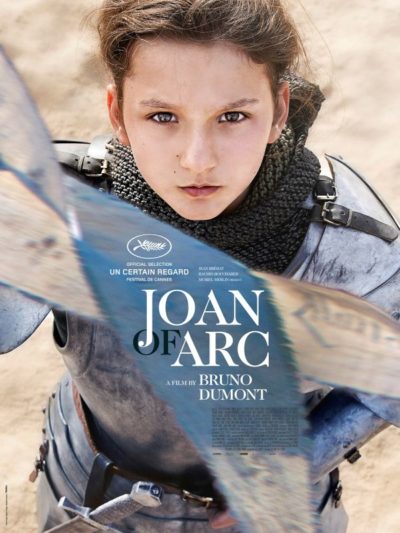 I liked this considerably better than its predecessor. Part of that was, perhaps, knowing what to expect going in: a minimalist retelling, with occasional musical numbers. Except, this proved rather more than minimalist (though still very restrained), and there was hardly any singing at all. Curse you, Dumont, for confounding my expectations. It begins, much as Jeanette ended: with a lot of standing around in sand-dunes, chatting. However, the cast this time cannot be counted on the fingers of one hand, and there aren’t any staggeringly bad performances to take you out of the movie. You still don’t get any great battles. Instead, these are basically represented by team dressage, two groups of horses and riders, swirling around near each other.
But, you know what? It works, far better than you might expect. Similarly, the capture of Joan (Prudhomme) is simply portrayed by her galloping off on her horse, then cutting to her horse trotting on without a rider. Again, it gets the point over, with an elegant simplicity, befitting the understated nature here. Most of this second part is concerned with her trial for heresy, and the church’s efforts to manipulate proceedings so they could let the secular authorities do their dirty work. Yet Joan’s refusal to co-operate proves increasingly problematic to this “show trial” end. There’s a great scene where she’s being lectured by one of the prosecuting clerics, and her silence triggers increasing frustration in her interrogator.
The way Prudhomme is a far younger actress than typical also merits discussion. She was only 10 when she made this, barely half the age of Joan at her death. This certainly enhances the elements of childlike innocence throughout, and it’s hard not to feel for the little girl. Yet her spiritual backbone is made of steel, and leaves her accusers in a no-win situation. I liked the little inserts where “common people” such as her guards would discuss the topic of the trial, which again brings some much-needed humanity to proceedings. The star of the second half though, is the amazing setting of Amiens Cathedral where the trial takes place. It looks stunning, and Dumont wisely decides not to pack it with people, a decision which allows its grandeur to shine.
There’s definitely a better sense of the sacred and divine here, or at least it is generated with a higher degree of effectiveness. That seems to have been the overall focus of these two movies, albeit successful only intermittently. I did appreciate the effort to try and do something different with the concept, even if – to put it mildly! – I would not have made all of the same artistic decisions. The results unquestionably fall into the “something different” category. After being distinctly underwhelmed by the first half of the story, I felt this was a significant improvement, though it’s not a spiritual journey I think I will take again, any time soon.
Dir: Bruno Dumont
Star: Lise Leplat Prudhomme, Jean-François Causeret, Daniel Dienne, Fabien Fenet
a.k.a. Jeanne
Regarding the Case of Joan of Arc
By Jim McLennan★★½
“Joan of Waco”
 Joan is always a figure who has the potential to be co-opted into other times and locations. Recently, we reviewed Maid of Baikal, a novel which relocated her to the Russian Revolution. This takes a similar approach, moving her from the 15th century to a contemporary setting, and also relocating it to middle America. It begins with largely unseen forces orchestrating the bombing of a federal building, also only heard. We then leap forward to the military tribunal trial of “Joan (LaLiberte – such a conveniently appropriate name for the role, I have to wonder if it’s a pseudonym), who is convinced her actions were in accordance with God’s will. Not everyone is in agreement, shall we say.
The main plus here is the lead actress, who is instantly plausible in the role, It’s clear that Joan, as first encountered, is absolutely possessed with unshakeable faith. However, things like an encounter with a relative of one innocent victim, begin to suggest her belief is not on the utterly solid foundation it initially appears. On the other hand, the main problem is an obtuse and distanced approach, which makes it hard to be sure what approach the film-makers are taking. It’s brave to position an extremist as the heroine of your film. Yet, it feels like they chicken out, and are unwilling to take that ride to its natural conclusion, instead swathing almost every scene in a haze of moral ambiguity.
The modern setting does cement the moral that historical – or, indeed, current – narratives are almost always subjective. At the time of her death, Joan of Arc was a heretic to the Catholic Church; now, she’s a saint to the same body. A similar angle becomes very apparent here: the script has Joan visiting locations such as Waco, Ruby Ridge and Oklahoma City, the stories of which depend largely on your own, pre-existing beliefs. Everyone surrounding the case seeks to manipulate it and Joan to their own ends, whether it’s chief interrogator Major Calhoun (Cook), or the Human Rights Watch advocate (Hunter), who wants Joan to use her rights, in order to help LGBT activists in Hungary. It’s agendas, all the way down. Hell, there’s even a character identified in the end credits as “The Deep State.”
I think I’d rather this had picked a lane and stuck to it. I don’t care particularly which lane: make Joan a terrorist who totally deserves to die for her crime of cold-blooded murder, if you want. Or a heroine, bravely fighting for what’s good in the country, a reminder of the awkward truth that the United States was formed by armed insurrection. This wants to be both, and neither, playing its cards too close for the audience to be willing to bet on it with any emotional investment. As a result, the ending doesn’t pack the wallop you feel its aiming for, though I certainly admire the attempt to spin the story in a new way.
Dir: Matthew Wilder
Star: Nicole LaLiberte, Christopher Matthew Cook, Erin Aubry Kaplan, Alice Hunter
a.k.a. American Martyr
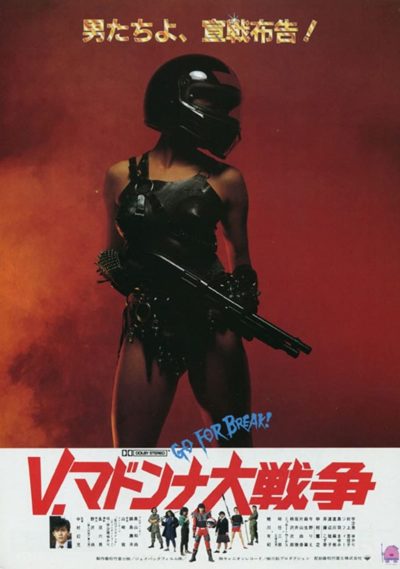 I have so many questions about the Japanese education system after watching this. It takes place in a high school whose student council is repeatedly being squeezed for extortion money by the Yagyu, a local biker gang. They ride up to the place, beating up and terrorizing the students, and generally making a nuisance of themselves. Where, exactly, is the principal when all this is going on? Teachers? Concerned parents? There is a throwaway line about how reporting things to the police would only make the gang attack harder. But you’d think
 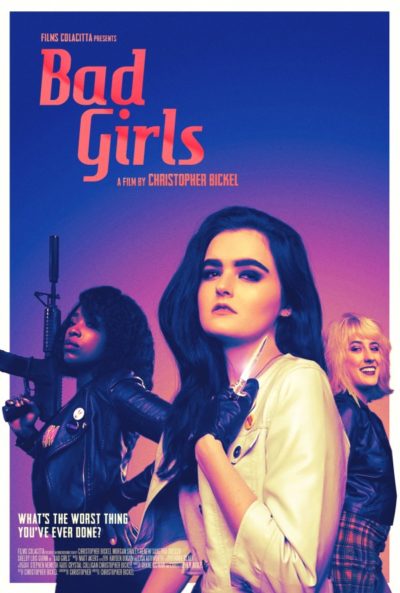 I didn’t realize until this started, it was by the director of the (non-GWG)
 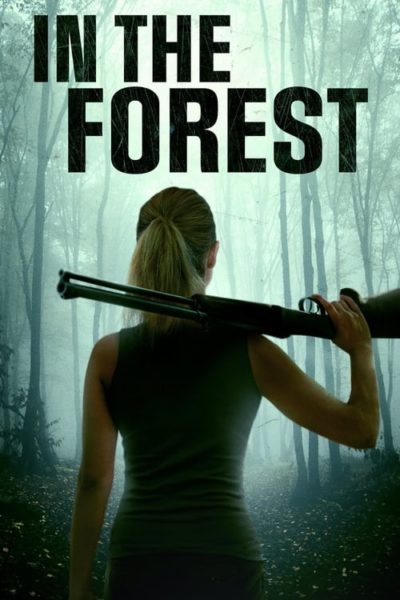 Three generations of a family take a trip into the woods in their mobile home. There’s grandfather Stan (Ward), his somewhat neurotic daughter Helen (Ayer), whose life has been falling apart around her, and Helen’s teenage daughter, Emily (Spruell), for whom a weekend in a forest with old people is
 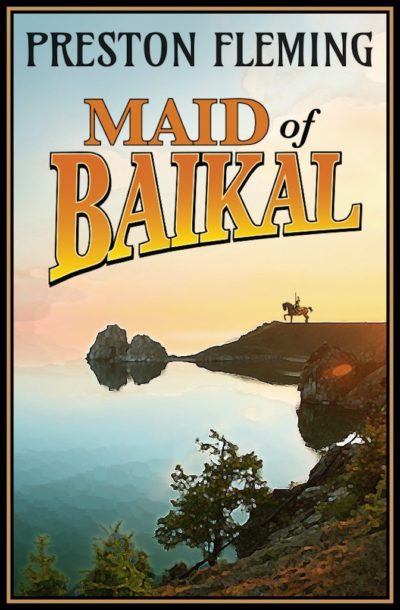 I have always been intrigued by alternate histories. These are bits of speculative fiction, which are based on a “What if…?” premise. For example, what if Napoleon had won the Battle of Waterloo? Or what if John F. Kennedy’s assassination had failed? Creators speculate on the way the world might have changed, in ways big and small. I find such creations endlessly fascinating, giving me a strong suspicion that, at certain points, history teeters on a razor’s edge, where a seemingly insignificant event can have an impact far beyond its scale. Here, it’s a single person who changes the course of history. For what might have happened, had Joan of Arc turned up, not in medieval France, but in Russia, during the aftermath of the 1917 revolution?
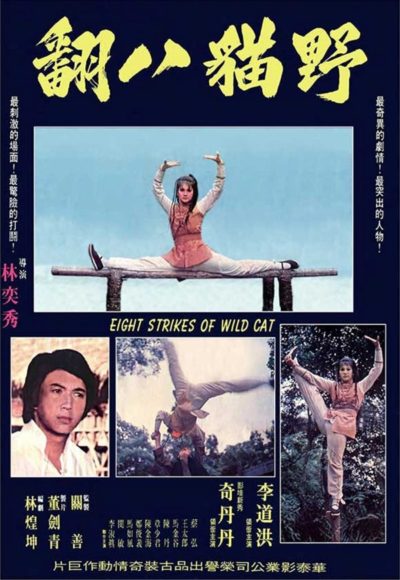 I guess this is, at its heart, about the quest for a treasure map that has been torn into two pieces. Though you could be forgiven for not really noticing, as most of the cast seem to forget about it for the bulk of the running time. The heroine is Shao Wa (Chi), whose father is killed by the Three Rats in their quest for the map. She ends up being punted off a cliff and presumed dead by them. Naturally – it’d be a short movie otherwise – she’s not as dead as they think. She’s rescued by the inevitable kung-fu master and his annoying sidekick, Lee Ta Fa (Hung), who nurse her back to health, and give her the skills necessary to beat the Three Rats.
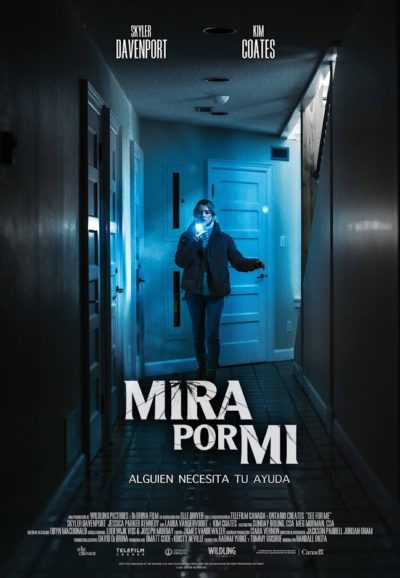 Yeah, as the above might suggest, this owes a rather large debt to
 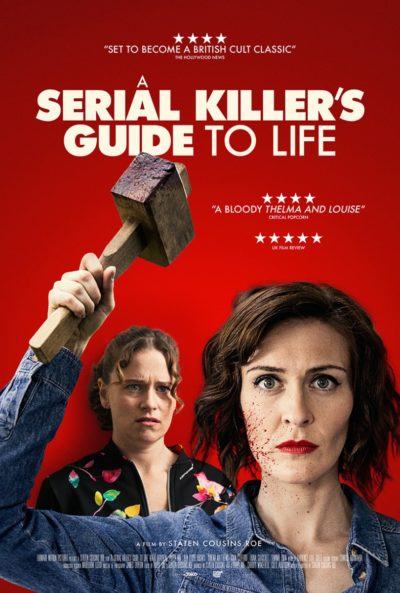 Lou Farnt (Brayben) is stuck in her life, with a dead-end job, no apparent friends to speak of, and still living with her domineering mother (Ball). She seeks escape from one self-help guru after another, spending her money on their books, DVDs and audio-tapes, though with little or no apparent positive results. Then, she meets the unconventional Val Stone (Roe), who lives in a seaside caravan and promises to change Lou’s life forever. After some qualms, she agrees to depart with Lou, who does indeed deliver on her promise. For, as the title suggests, Val is a psychotic if smart killer, who is specifically targetting those same gurus. Either she regards them as a curse on humanity with their vapid schemes, or she simply wants to dispose of the competition.
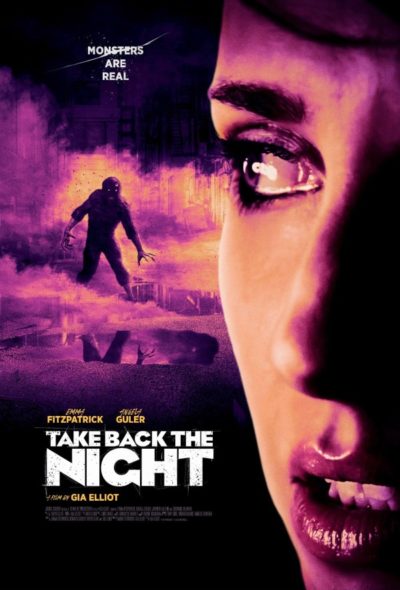 This is not exactly subtle in terms of its messaging, or the underling metaphor. But to be honest, I kinda respect that. I’d probably rather know what I’m in for, from the get-go, rather than experiencing a film which thinks it’s going to be “clever”, and pull a bait and switch. Here, even the title makes it obvious enough. The ‘monster’ here is sexual violence, and should you somehow make it through the film oblivious to that, you’ll get a set of crisis helplines before the end-credits role. However, it manages to do its job without becoming misanthropic, largely by having very few male speaking characters, and is adequately entertaining on its own merits, not letting the movie drown in the message.