




★★★
“Destroy me? They made me…”
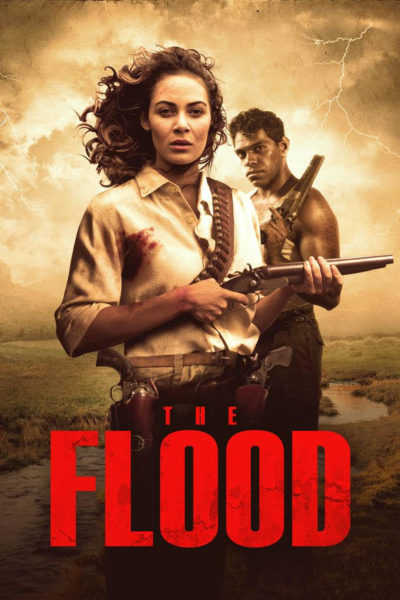 The first eighty or so minutes of this are really good: powerful, committed and extremely angry film-making. And justifiably so, I would say. Unfortunately, the film runs for a hundred and seventeen minutes, and definitely goes off the rails towards the end. The gritty realism which was perhaps the movie’s strongest suit is replaced by odd fantasy sequences, such as the fugitive couple suddenly dressed, in the middle of a forest, as if they were attending a Victorian embassy ball. I’m not certain what the point of these elements, or the anachronistic pop songs were. I am certain that they didn’t enhance my appreciation of the film in any way, and that’s a shame, considering how assured it had been in the early going.
There’s no doubt aboriginal Australians received a really bad deal from their government, up until very recent times. As this film documents, they were forced off their lands, and their children frequently taken away as wards of the state. Even those who served their country honourably in World War II, like Waru Banganha (Cook), were denied basic civil rights on their return to civilian life. Hard to blame Waru for going berserk, and killing some of the Mackay family who had sexually abused his wife, Jarah (Lane), and their daughter, Maggie (Williams), while he was fighting in the jungle. Worse is then to follow, as Jarah is gang-raped while in custody, in an attempt to get her husband’s location. “Don’t let what they did you destroy you,” a friend tells her. Jarah responds with the chilling line at the top of the review. She’s not wrong, as she takes revenge on the Mackays and their cronies, first rescuing and then alongside Waru.
What’s interesting is that, despite his military training, it’s largely Jarah – no mean shot with a gun herself – who takes the lead, and shows little or no mercy. She has decided that they must pay, even those who were only tangentially involved in ripping her family apart, and does so with a clear-headed intensity and ferocity which is wonderful to behold. This kind of story can easily feel like pandering, playing on liberal white guilt, yet McIntyre avoids that. The closest cousin to the body of this picture might be the blaxploitation flicks of the seventies, where the hero or heroine was pushed too far, and eventually stuck it to “the man”. Abosploitation? Though if we’re making up words, it also feels like a “Vegemite Western”, despite the post-war time-frame.
Throughout this, there have been flashbacks and memories that could be dreams. However, these have generally been restrained, and if not maybe adding too much to the film, don’t feel like they hurt it. That changed in the final third, with the pace dropping close to zero, just when it should be ramping up to a climax with all guns blazing. I will admit in particular to rolling my eyes at the redemptive fate of the main antagonist, who deserved considerably worse than he received. The energy and momentum this possessed, just about carries the film over the finish line. Yet I can’t help feeling. it should have been a great deal more effective.
Dir: Victoria Wharfe McIntyre
Star: Alexis Lane, Shaka Cook, Dean Kyrwood, Dalara Williams
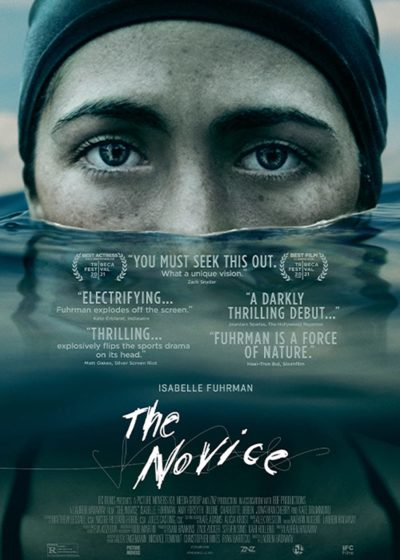 Rowing is not a pastime to which I’ve ever given much thought. It’s the backdrop for this, and is based (to some extent) on writer-director Hadaway’s experiences of the sport at college. Her cinematic background is in sound editing, where she worked on films such as The Hateful Eight and – probably of most relevance here – Whiplash. The latter was a study of obsession in the pursuit of talent, and is echoed in the story here.
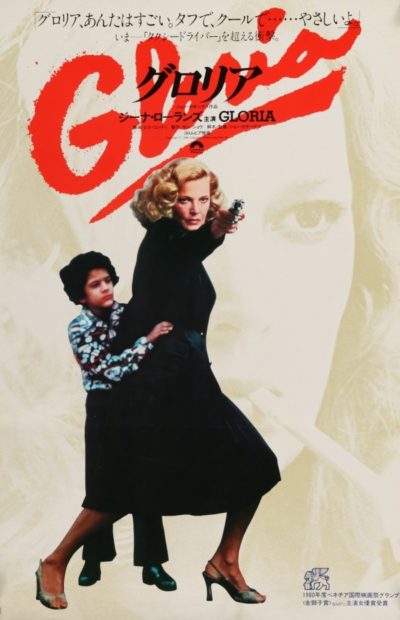 Yeah, I’ll confess to having Laura Branigan’s eighties hit running through my head on repeat almost the entire movie, even if its lyrics can only be tangentially tied to it. What also struck me is how strong of an influence this was on Luc Besson’s Leon, especially at the beginning. I mean: a criminal gang takes out an entire family in a New York tenement, except for one child, as punishment for the father having tried to steal from them. That survivor takes refuge with a very reluctant neighbour with mob ties, who then has to protect the child as they move about the city. There’s even a scene where one of the gang fires his gun at a nosy resident.
 Nineteen years after the original, four-time Oscar nominated director Lumet opted to remake Cassavetes’s movie. Though by some accounts, it was more a case of him wanting to work, rather than being particularly attracted to the project. If the results are anything to go by, he should have stayed at home. For the film was a bomb, and leading lady Stone received a Razzie nomination for her efforts. I wouldn’t have said she was that bad, though she’s clearly not at the same level as Gina Rowlands in the original. It does also address some of what I felt were its’ predecessor’s weaknesses. However, it tones down the central character, and this helps lead to what you’d be hard-pressed to argue is other than an inferior product overall.
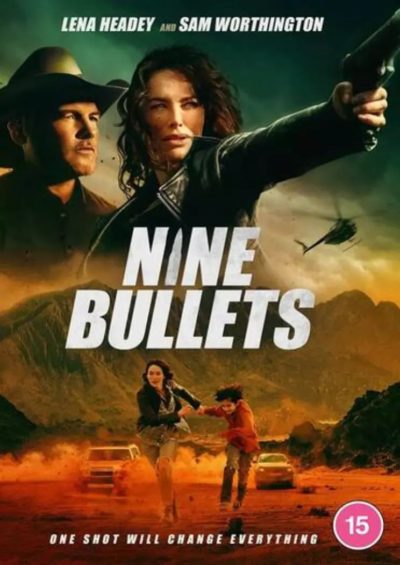 While this is not an “official” remake of Gloria, it’s so damn close that I have no problem considering it as one. Writer/director Gaston seems to have… um, a bit of a track record in this area, shall we say. She previously appeared here by directing
  Sorry, couldn’t resist it. For the recent string of suboptimal Netflix movies continues with this tedious bit of work, which feels like the first journey across the South Californian desert filmed in real time. It begins with Ellie (Hale), a botanist carrying out a survey near the Mexican border. She meets a teenage girl, Alex (Trujillo), who is skipping school and the two have an awkward conversation. I initially thought its stilted nature was intended to tell us something about the two characters, but nope. All the conversations here are awkward. Writer-director Harris just has no ear for dialogue, which may explain why so much of this is people wandering about instead.
 A Netflix original movie, the first thing to say is: thankfully, this is not as bad as
  This feel like it could easily have come out of the nineties, with the distinct whiff of a throwback to the golden age of Hong Kong “girls with guns” movies. That is, of course, not a
  This one was probably teetering on the edge of a seal of approval, except one aspect. For what’s supposed to be book one in a series, the author spends a lot of time discussing events prior to the book getting under way, such as the tragic loss of the heroine’s true love. However, subsequent research revealed that this is not the start of Caina Amalas’s history. The Ghost Exile series is actually a sub-set of her saga, which appears to consist of no less than 26 primary works. According to