★★★★
“The Family That Slays Together, Stays Together…”
 I’ve literally sprinted through from the living-room, where the two-hour season finale has just finished, leaving an aching void in our Sunday evenings that will remain until the third season starts in the fall. It was hard to see how the second series could live up to the first but, with a few relatively minor misgivings, it’s safe to say that the show has.
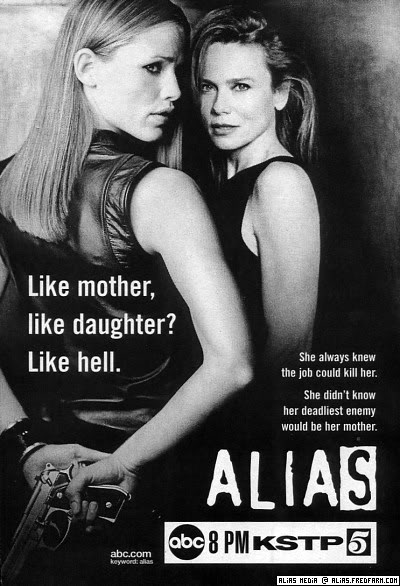 Would have to admit that the start was somewhat slow. It was hardly a surprise to discover that most of the characters who were “dead” at the end of the first series made a miraculous comeback in the second. It’s exactly the sort of thing you expect from shows like this, and you wonder why they even bother. Indeed, much of the first half of the series was too predictable, revolving around the can-or-can’t Sydney trust her mother dilemma. No prizes for guessing the right answer there either.
The recovery began when ABC handed Alias the coveted post-Superbowl slot (though once the score in the game reached 34-3, its impact on ratings for Alias became doubtful). Still, it proved a pivotal episode, giving Abrams a chance to reinvent the show, and introduce it to a whole new audience too lazy to change the channel (due to overconsumption of beer and nachos, probably). This was apparent in some rather clunky back-exposition, and also an opening which featured Sydney in two sets of lingerie – a shameless, gratuitous piece of shallow exploitation, clearly designed to appeal to nobody but the gridiron fans. :-) They probably mistook it for another Victoria’ Secret commercial…
Luckily, there was a lot of actual content, too: The CIA moved in to take SD-6 down, and from then on, no longer was Sydney struggling to maintain her secret lives. The show would become a quest for Sloane, trying to stop him before he…well, no-one was quite sure what he was up to, but it never seemed likely to involve puppies and flowers. This episode also marked the start of an increasing body-count with one character murdered and replaced by an evil doppelganger, while later on, two spouses would also bite the dust.
With the Rambaldi story making a welcome reappearance, the season picked up steam, helped by cool guest stars: Rutger Hauer, Danny Trejo & David Carradine (a Buddhist monk!) – we just needed Udo Kier and we’d have been in cult heaven. Apparently lost in the duplicitous double-crossing was the action element, a disappointing facet. For example, not until the last 10 minutes of the two-hour season finale did Sydney get in some serious butt-kicking; we wondered if this was connected with Garner’s apparent weight gain. Too much comfort ice-cream after her recent break-up? Perhaps; though if she’s pregnant, you heard it here first.
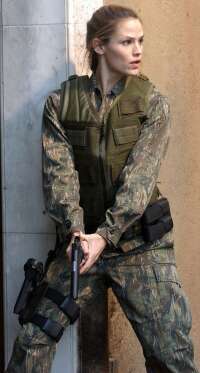 With so many threads too, the story arcs seemed disjointed: in some cases, you’d go for weeks without hearing anything, before an abrupt reappearance. However, a continuing strength was the development of the supporting cast, with Sloane switching from evil mastermind to sympathetic antihero, even within the course of a single episode. Dixon, too, enjoyed a spectacular character arc over the second half, going from committed SD-6 employee to a borderline psychopath, whose obsession with catching Sloane surpassed even Sydney’s.
Our favourite episode of the season had beloved uber-geek Marshall going on a mission to London with Sydney. It combined action, humour, drama and pathos to great effect, ending with one of the best cliffhangers the series has yet managed – admittedly, we speak as big Marshall fans, and look forward to the character receiving a spinoff series. Hey, if it can happen to a mopey vampire, anything’s possible.
Fortunately, the Vaughn/Bristow romantic angle that begin to lurk, iceberg-like, towards the end of season one, has been played subtly enough that we are mostly able to ignore it. More remarkably, the Will/Francie relationship managed to become a genuine plot thread, thanks to a startling twist which raised the hairs on the back of our necks every time they shared a scene. Let’s just say that Francie isn’t the woman she used to be. :-)
Despite ratings that generally remain disappointing – it ranked only 92nd in prime-time shows – Alias was still renewed, a decision for which ABC can only be commended. However, they still seem uncertain about how to promote the show. Here we are, two seasons down, still waiting for the first to arrive on DVD – they could learn a lot from Fox, which got a huge boost to the ratings for the second run of 24 from the first’s availability on disc. [By coincidence, both Alias Season 1, and 24 Season 2 are scheduled for DVD release on September 2nd, 2003]
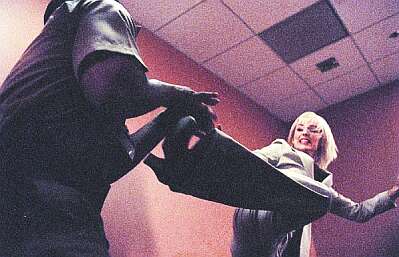 So where do we go in Series 3? We still have the Rambaldi machine; assembly now complete, but expect further machinations as they piece together the instruction manual, and discover they need a 240/110V convertor. :-) It looked for a moment like we would be missing one major character (who finally Got The Point), but sounds like he’s okay. However, the main thread appears to be Sydney, and her efforts to recover from what could simply be the mother of all hangovers – I mean, I sometimes wondered how I got home, but at least I usually woke up on the same continent. Funnily enough, I suspect there might be rather more to her blackout than one too many Babychams. The truth probably lies somewhere between that, and abduction by aliens, but we’ll have to wait until autumn to find out.
Star: Jennifer Garner, Victor Garber, Michael Vartan, Ron Rifkin



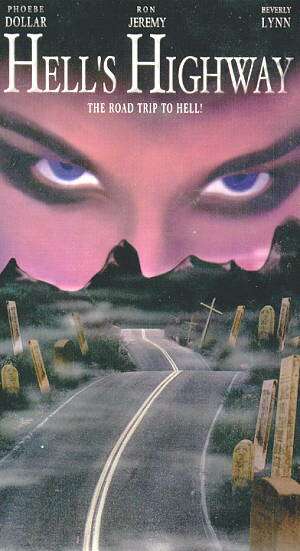 Chris’s chicken parmigiana is legendary here for its narcotic effect: eat it, fall asleep, simple as that. It thus perhaps means more than it seems that Hell’s Highway kept me awake, post-parmigiana. Sure, it’s cheap (cost about $5K, shot on video); sure, it’s dumb – but to counter that chicken, a film must have something going for it. The setup is simple and effective: a carload of college teens, two male, two female, meet evil hitch-hiker Lucinda (Dollar). No matter what they do, she takes a lickin’ and keeps on tickin’, whether it’s wielding a firearm, chainsaw, or generally bad-ass attitude.
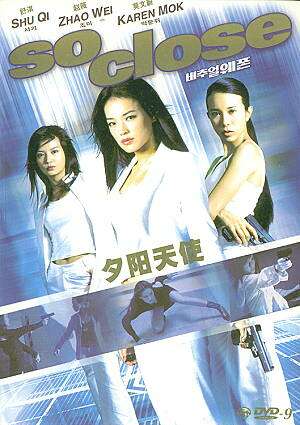 For action alone, this is certainly worth a look, with some stunning and imaginative set-pieces. But the bits between are so badly-handled, I actually dozed off – twice – which is barely permissible in a drama, never mind an action movie. It’s a tale of two sisters, who form a team of assassins: big sis Lynn (Shu Qi, from The Transporter) does the deed, little sis Sue (Zhao) is hi-tech backup, using gadgetry handed down from their father. But the police, led by eccentric forensics expert Hung (Mok), are on the trail, so a client opts to tidy the loose ends by targeting all three women, forcing a partnership between cop and killers.
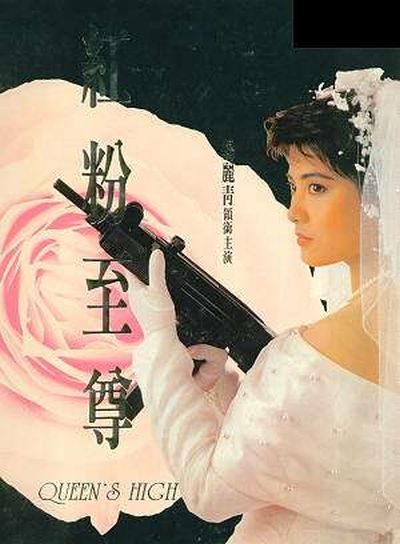 It’s surprising no-one has mentioned the similarity this 1991 pic has to Kill Bill, especially given QT’s liking, both for lifting plots and Hong Kong movies. Here, Cynthia Khan plays Kwanny, the daughter in a gangster family whose wedding day is interrupted by the treacherous slaughter of her intended (and a good few others). Thus explodes a spiral of revenge and betrayal, in which she gets plenty of chance to use her martial arts and gun skills. Of course, there are differences – she is unaware of her enemy within – but the overlap is striking. No doubt Tarantino will claim not to have heard of it – any more than he’d seen City on Fire, before making Reservoir Dogs…
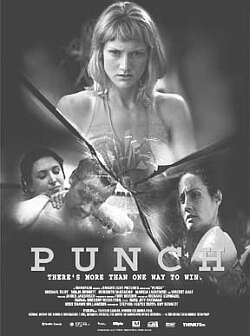 Topless Female Boxing. There. The reader is paying attention. Yet, if the subject has been covered in a less appealing way than here, I probably don’t want to see it. Indeed, as the toplessness is neither vital to the plot, nor visually pleasing, you wonder why they bothered. The main character here is 18-year old Ariel (Bennett), whose relationship with her father (Riley) is disturbingly close, to the point that she punches his date Mary (Laskowski) for using – entirely aptly – the word “creepy”. This pisses-off Mary’s sister, Julie (McGeachie), an even badder-ass than Ariel, who channels anger into the previously mentioned TFB, with a 38-0 record. She confronts father and daughter, aiming to make them fix their mistake. Viewers will likely eagerly anticipate Ariel getting her ass handed to her by Julie…
 Remind me again: why did I get this? Ah, yes: the DVD blurb. “Sam and her sorority sisters love to get in shape by pumping iron. But when a rival sorority tries to take control of their gym, all hell breaks loose… Sam and her sisters challenge the newcomers to a wrestling match… Will our heroines win back their gym? This is a cat-fighting, knock-down comedy you won’t want to miss.” Wrong in every important respect. The plot
  Going in, I knew this had a reputation for incoherent plotting, but after 10+ years watching HK movies, I figured I’d cope. Wrong: I sank within two minutes. An incomprehensible opening voiceover makes this feel like part 17 of an ongoing series; from there on, characters, sects, and magical kung-fu abilities (such as Shifting Stance, which lets you blink in and out of reality, or the self-explanatory Melting Stance) arrive with rush-hour frequency. Basic principle: various factions struggle for martial arts supremacy. Central to these battles are four women, who initally fight among themselves, before realising they must band together to face the ultimate enemy. If I said more, I’d be engaging in wild speculation.
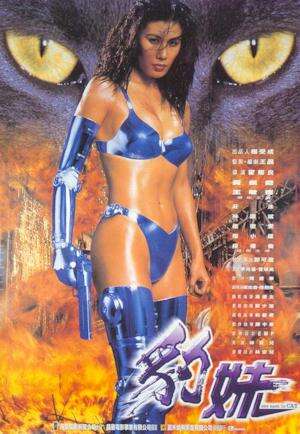 Clarence Ford seems to be after a PG-13 rated version of his hit, Naked Killer, reining in the sex while keeping the action. That it doesn’t succeed is more due to staggering ineptness in the superfluous attempts to give it emotional depth.
 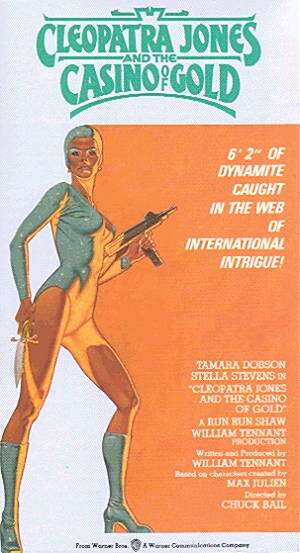 In the 70’s, Shaw Brothers hooked up with Western studios, to various effect, e.g. the inept Dracula and the Seven Golden Vampires, made in conjunction with Hammer. Co-production works rather better here, lending genuine exotic locations, and an endless array of stuntmen, prepared to hurl themselves off things. Jones heads to HK after a couple of her minions are captured by the evil, lesbian, sword-wielding Dragon Lady (Stevens), intent on bringing down the operation, with a little local assistance.
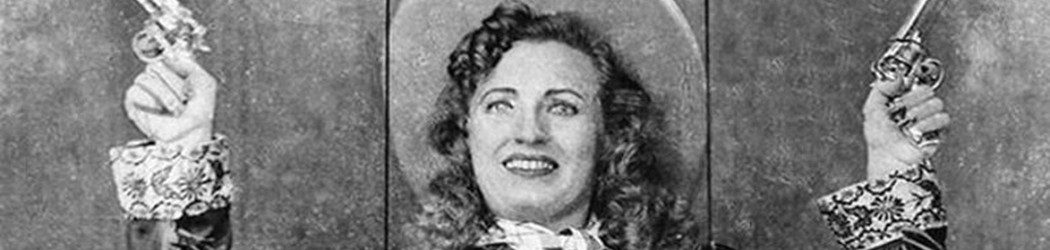
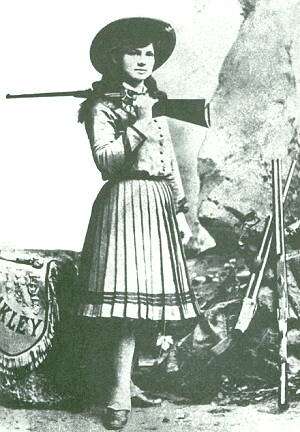 Annie Oakley was one of the earliest “girls with guns”. In her role as a sharpshooter, performing with the likes of Buffalo Bill’s Wild West show, she travelled the globe, appearing in front of Presidents, Kings and Emperors. She shot a cigarette held by the future Kaiser Wilhelm of Germany (accuracy later deplored by American newspapers, after the nations went to war in 1917). At 90 feet, she could shoot a dime tossed in midair, or hit the