Welcome to our 13th annual round-up of girls with guns calendars. This one seems to have caught up on me quietly and without warning: Thanksgiving is already in the rear-view mirror, and I’m just getting started. Perhaps it’s a sign that, after a couple of years which were definitely far from normal, things are returning back to something approaching that. Heck, we’ve even been going to concerts and stuff, hanging out with tens of thousands of other people, whose vaccination status was uncertain! We survived, somehow…
So here we are once more, ready to draw a line through a 2022 which had its moments, and move on to a 2023 which could see me making the most significant move i.e. to a different state, in over twenty years. That’ll be exciting, though I am not looking forward to the packing. I have already made it very clear to Chris that, the next I move after this, she will be the one carrying me out of the house in a box… :)
As ever, some depart and others arrive. The most notable loss from last year are Liberty Belles. They had been around since 2015, but their website is now empty, and the Facebook page hasn’t been updated since last December. Hens and Guns also appears to have gone dormant. But there are still quite a few for your browsing pleasure, including three brand new arrivals, which we ope will stick around. Therefore, below, you’ll find prices (generally excluding shipping), sample images and links to purchase for all the calendars we could find. We’ll add more if we see them, feel free to email us if you know of any others.
TAC GIRLS
TacGirls.com – $19.95
The Tactical Girls® 2023 Bikini Gun Calendar is our Best Girls and Guns Calendar yet, with 13 months of beautiful girls and exotic weaponry! Every 2023 Calendar comes with a 12X24 mini Poster with the cover girl Karina Killzone on the front that slides out of the calendar, no perforated tearing or staples to pull
The Tactical Girls 2023 (16th Edition) Bikini Gun Calendar has 13 months (1/23-1/24) of Beautiful Girls and Exotic Weaponry! The 2023 Tactical Girls Calendar brings you 13 months of gorgeous models with some of the world’s most exotic weaponry in realistic tactical settings. The 2023 Tactical Girls Calendar includes the Cadex CDX-40 Shadow Sniper Rifle, the Kel-Tec P50 Pistol, an HK MP5 -10 and the MG3 Belt Fed Machine Gun. These, along with a variety of AR-15 carbines, battle rifles, machine guns, pistols and sniper rifles make for a perfect Holiday gift for the Marine, Soldier, Sailor, Airman, Police Officer, Shooting Enthusiast, Hunter, Airsoft Player or History buff on your list. Fill that 2 foot square empty space on your Man Cave, garage, barracks or tent wall with 13 months of Girls and Guns.
10% of the print run of this calendar is donated to deployed soldiers and organizations that support them, notably AmericanSnipers.org.

GUNS AND GIRLS
GunsAndGirlsCalendar.com – $13.92
The 2023 GUNS AND GIRLS wall calendar is packed with beautiful pin up models and many of today’s most popular weapons, everything from handguns to AR-15’s. This 16-month large format calendar is 17″x 28″ when hung up and a perfect gift for any Armed Service Member, Police Officer or Shooting Enthusiast. Also includes a bonus 12-month poster inside giving you two calendars in one package!

ZAHAL GIRLS
zahal.org – $31.95
We are proud to present our new ZAHAL Girls Calendar which combines the best of both Former IDF Women and the best tactical gear. No gun bunnies! Only IDF veterans. Size is Approx A3

WEAPON OUTFITTERS
WeaponOutfitters.com
Well, they seem to have expanded their selection markedly since last year, with no less than four different options. The link above goes to the search page for calendars on their site, which should cover all eventualities. Here’s a quick summary of what’s available, in ascending order of price:
- Weapon Outfitters 2023 Calendar ($14.95) – The PG Calendar is much more reserved, with a focus on more gear and kit.
- WO After Dark 2023 Calendar – PG13 Version ($18.95) – The PG13 Calendar features lingerie, bikinis, and implied studio and outdoor shots.
- WO After Dark 2023 Calendar – R Rated Version ($29,95) – Our R rated, adult calendars feature nudity and are only for buyers over 18 years old.
- Weapon Outfitters 2023 Hailey Lujan Calendar ($44.95) – The 12 Steps to Psyber Psychosis with Hailey Lujan. Lujan is an artsy zoomer who joined up at 17, and has been making the rounds on the internet thanks to her funny video content so we collaborated on a 12 month calendar. Nothing nefarious (I think) but a themed calendar. -PG rated -It’s funny -It’s artsy

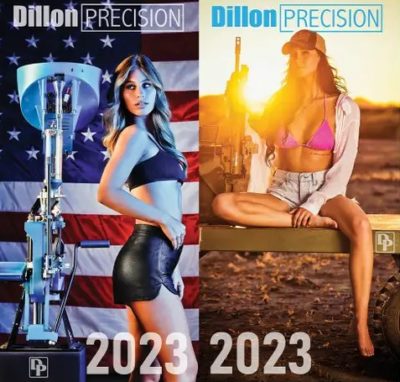
DILLON PRECISION
DillonPrecision.com – $19.99
We couldn’t make up our minds, so our 2023 Calendar has TWO Covers! *There is only one 2023 calendar, product image shows both front and back covers*
WILD DAKOTA GIRLS
wilddakotagirls.com – $17.00
Buying this helps a good cause, with the profits going towards the fight against breast cancer. A worthwhile endeavour. Be a shame if anything were to happen to these puppies. :) They also have various posters available.

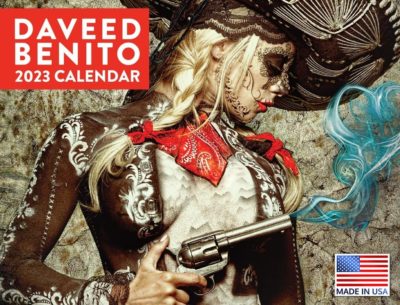
Daveed Benito Day of Dead Calendar 2023
Poster Foundry, $14.99
The Poster Foundry had a Women with Guns calendar last year. I wasn’t able to find that this time, but I did come across this, which is certainly an interesting twist on the idea. Not certain if all the months are the same, but from what I could tell, there’s enough for it to qualify here!
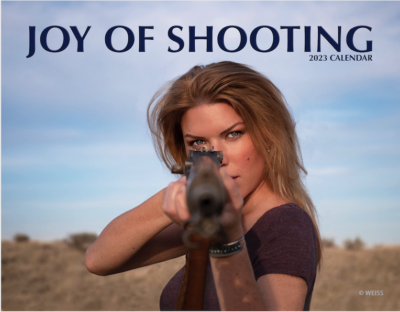
The Joy of Shooting
JoyOfShooting.com – $27.99 (but a 15% off coupon is available at the link]
Join me as we celebrate what we love about shooting and freedom! Your 2023 Joy of Shooting Calendar is filled with inspiring photography and carefully selected stirring quotes to propel you successfully through your year. Published on high quality paper stock complete with wired binding and vibrant color! As with every year, A portion of the proceeds from all calendars will be donated to non-profits & veteran organizations like Operation Heal Our Patriots. Autographed copies are also available, with bonus content.
The Bullets & Bikinis 2023 Calendar
bikinicalendarstore.com – $17.99
Beautiful Women and their Guns! 12 Months of your favorite Social Media Sensations gracing the pages of this one of a kind calendar. The Perfect Gift idea for the shooter in your life! 11 x 17 When Opened They also have other calendars that might be of interest, e.g. Bikini Spearfishing and Bikini Bowfishing.

Vanquish Magazine – Girls with Guns 2023 Calendar
magforest.com – $9.99 [PDF download only]
A stunning wall calendar for Vanquish Magazine showcasing it’s most gorgeous models. Featured in this Calendar. Cover + 12 Months





 I do admire a film which does not hang about, and this certainly qualifies. We begin with Ava Bravo (del Castillo) removing a hood to find herself in a very remote, snowbound mountain cabin. A cassette player nearby has a message. She has been abducted by Buddy King (Blucas), a millionaire with a fondness for kidnapping trauma survivors and hunting them through the wilderness. There’s a snowmobile parked five miles North, if she can make it across the winter terrain there. To make it fairer, Buddy has only three bullets for his gun. Oh, and he’s going to be coming up from the basement in ten seconds. Safe to say, this is the kind of start that grabbed my attention.
  For six months or so, our morning routine involved the consumption of an episode of Parks and Recreation with breakfast. Our favourite character on the show was Ron Swanson, but not far behind was April Ludgate, played by Aubrey Plaza. She was the mistress of deadpan misanthropy, delivering lines like “I’m just gonna live under a bridge and ask people riddles before they cross.” We’ve not seen her in much since the show ended, but the concept of April Ludgate, career criminal, was too delicious to pass up. So here we are, yet I must admit, Plaza is almost good enough to make us forget April. Well, except for one roll of the eyes, which was vintage Ludgate.
 She plays Emily, a young woman saddled with an inescapable pit of student loans, for a basically useless qualification, and an unfortunate felony relegating her to food delivery work. A chance encounter brings her into contact with Youcef (Rossi). She earns $200 for making a fraudulent credit-card transaction on his behalf, and is offered the chance to earn ten times that, for a larger, riskier purchase. With regular employment clearly not the solution, Emily embraces her new, illegal career, working with Youcef, much to the disdain of his Lebanese brothers. As their infighting escalates, Youcef decides to cut and run, only to be beaten to the punch. Emily won’t stand for that: “You’re a bad influence,” says Youcef, as he and Emily prepare to rob his brother. He’s not wrong.
  Giving your film a title like this is basically asking for trouble. It gives snarky critics an extremely easy weapon to wield against the movie. That’s especially so when it’s a low-budget effort, made with considerably more heart than skill. It’s not without merit, especially in the photography. It is crisp and does a good job of capturing some beautiful Montana scenery – there’s a reason the state is nicknamed Big Sky Country – and the rodeo action. The problems are in a script which never met a cliché it didn’t like, and performances that do little or nothing to elevate the material.
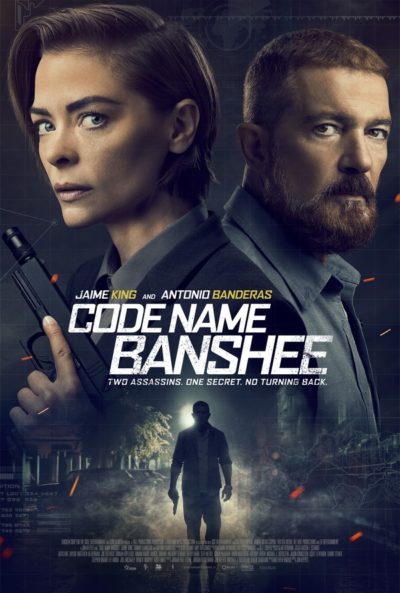 This seemed considerably better in the trailer, which makes it look like quite an action-packed extravaganza. The reality is much less interesting, with a murky and confusing plot, and what action there is, is often filmed in a murky and confusing way. It begins with an agent, code name Banshee (King), quitting the government agency for which she works. The handoff of an asset went wrong: one of the colleagues involved was her father, who vanished entirely. The other was Caleb (Banderas), who went off the grid thereafter. Five years later, Banshee is a private assassin, but her latest job is interrupted by Greene (Flanagan), who wants her to give up Caleb’s location.
  A disease sweeps the planet, killing billions. The only ones with any hope of surviving in the outside world are the young, a small number of whom appear to have a natural immunity. Five years on, and Ellie is one of the few to have endured, scraping for a life among the leftovers of civilization. But she and the other survivors are the targets for the Stalkers: roaming groups of biohazard-suit clad hunters in white vans. They seek to capture the immune, for use in a project to develop a vaccine that can allow the elite to come out of their safe havens. While trying to avoid them, she encounters Quinn (Smith), another survivor with a wealth of knowledge, and a hard-edged approach to life. Initially, Quinn wants nothing to do with Ellie, though eventually realizes two heads can sometimes be better than one, in the never ending struggle to stay alive and free.
 A woman wakes up in a bedroom, with no knowledge of where she is, how she got there, or even who she is. Gradually, she (and the reader) find out the answers to at least some of those questions. Her name is Diya, and the bedroom is on Luna, which has now been settled and colonised by humanity. That’s the simple part. The rest? It’s complex. But is summary, she is a cyborg, created as part of a black budget research project by the NeuroDyne Corporation (Earth’s biggest employer – they basically own Iceland). An employee who had moral qualms about the scheme, smuggled Diya off-planet, stashing her with his blind sister Terry and a robot caregiver. But NeuroDyne aren’t letting their investment just walk away.
 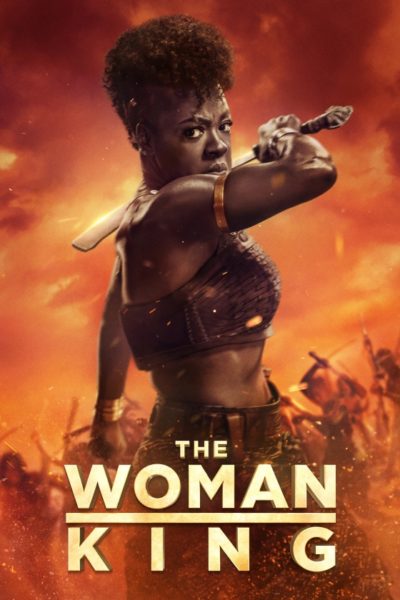 The above – though expressed rather more bluntly! – was Chris’s reaction to the opening scene, in which Nanisca (Davis) leads her female troops, the Agojie, in the ambush of slavers from the neighbouring Oyo tribe. The Oyo are rivals to the Kingdom of Dahomey, under King Ghezo (John Boyega), who relies on Nanisca and the Agojie to protect his territory, and it’s getting closer to all-out war. The Agojie get a new recruit, Nawi (Mbedu), whose father drops her off at the palace gate, because of her refusal to accept an arranged marriage. Nawi turns out to have a very close connection to Nanisca, but also ends up captured by the Oyo and needs to escape before being sold to Brazilian slavers.
 I had forgotten how much I really did not like the