



★★
“A more appropriate title – Valium: Feel the Pillow”
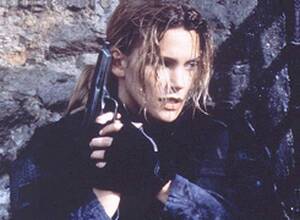 I’m still trying to work out what the title actually means; it certainly bears no relevance to the film. More generaly, the biggest point of interest is its similarity to Blade 2, which took the basic concept (hunt for the carrier of a virus that turns its victim into bald, psychotic bloodsuckers) and did a lot more with its Eastern European setting. Henstridge is Delon, a policewoman who has her partner dismembered while they search a house, and Lambert leads the backup team – they follow their target into some vents which connect to an old prison, and where they rapidly become the prey. All this is set just outside a post-apocalyptic (plague, specifically) Boston – though the cop cars have ‘POLICIA’ on them. There’s also a subplot about Delon’s son, and a black-market passport she bought for him, which is of no significance whatsoever, and is probably there only to get the running time up to feature length (and at 76 minutes, only barely!).
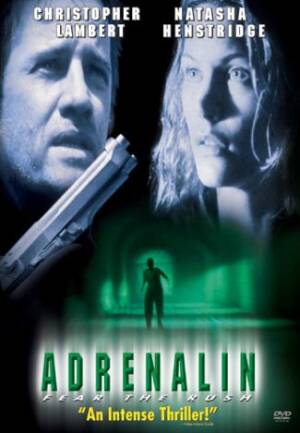 Shot in what looks like four rooms, it’s up to director Pyun to make the most of a higher-profile cast than he usually manages – unfortunately, he fails, though I liked the snap-zoom technique applied to bullet hits. This is straightforward ‘spam in a tunnel’ cinema, with little tension, character, or anything else that might elevate this above the mundane. Henstridge, bless her, does what she can, and comes over like a grubby version of Lara Croft; her undeniable action heroine potential has so far been wasted in stuff like this or the lame She Spies. Partly shot in the capital of Herzegovina, Mostar, the “just-bombed” look is likely genuine, from a conflict that only ended the previous year; it may be exploitative, but at least Pyun brought employment to the locals. I imagine he’s now scouting locations in Kabul and Baghdad.
Dir: Albert Pyun
Star: Natasha Henstridge, Christopher Lambert, Norbert Weisser, Elizabeth Barondes
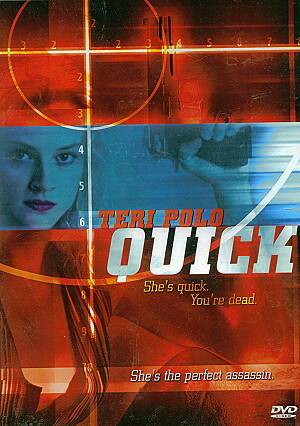 Polo plays Quick, an assassin whose job is to take out mob accountant Brewer (Donovan) after he turns stoolpigeon. When her employer tries to double-cross her, she goes on the run with her target, who has hidden $3m in ill-gotten gains. Her corrupt cop boyfriend (Fahey) also has designs on the money, raising the suspicions of his partner (Carrere, an effective but wasted performance).
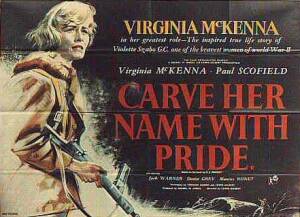 This is based on a true story, so we know from the start this is going to end in front of a firing-squad – at least until the Hollywood remake, with a happy ending. Given this, the film still tries to crank up the tension, but as written, Violette Szabo comes off as beyond saintly, without flaws or imperfections. Almost as irritating, she is shown as being mostly inspired by the death of her husband, rather than any innate patriotism (Charlotte Gray similarly portrayed a female SOE agent as passive-reactive). Having said that, the movie generally stays true to the facts, though the poem supposedly written by her husband was actually, in far less romantic reality, by her SOE codemaster – interestingly, the SOE’s name is not mentioned at all. Much of the end is fictionalised; details of her interrogation, for example, are obviously unavailable.
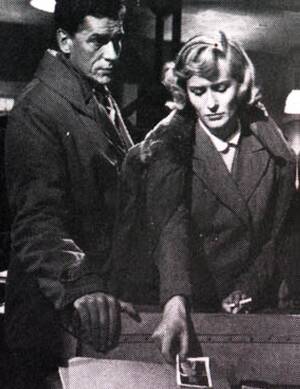 The film does take
 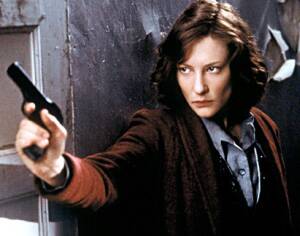 Love story or wartime thriller? The script here tries to have it both ways, and as a result of this uncertainty, the undeniable potential in the idea is unfulfilled. Gray (Blanchett) is dropped into Vichy France during World War II as an agent, but her bosses don’t realise she is more interested in finding her pilot lover (Penry-Jones), who’s been shot down nearby. While conflict between love, and love of country, would have been interesting, the former is almost ignored, then disposed of in a thoroughly unconvincing manner. Not that this diversion is uninteresting; you get a real sense of the terrors of war, with people being “vanished” in seconds, and the tension of living your life on a knife-edge behind enemy lines.
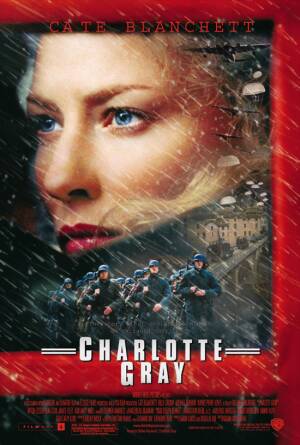 Mostly, the film is concerned with Charlotte’s protection of two Jewish children, and involvement in a resistance cell led by Julien (Crudup). They’re communists, so the British don’t really like them, but they’re convenient – and can be abandoned when necessary, the revelation of which provides the film with its most chilling moment. Blanchett has the right steely resolve for the role, and the cast is generally excellent; particular credit to Gambon (magnificently surly as Julien’s father), Ron Cook as Gray’s contact, and Anton Lesser, an oily collaborator who had us screaming “Die! Die!” at the TV set.
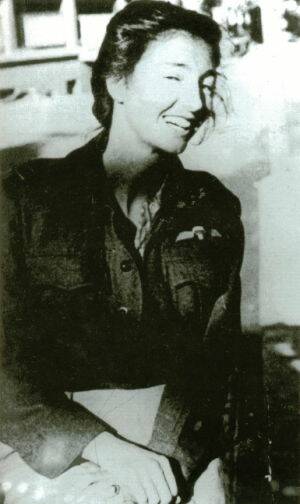 In World War II, the British SOE (Special Operations Executive) recruited and trained a number of women agents for insertion into occupied territory. There, they risked torture and execution, while carrying out missions of intelligence-gathering, subversion and sabotage. The exploits of some have received the recognition they deserve (such as Violette Szabo, who received both Britain’s George Cross and the French Croix de Guerre), but most seem to have slid through the cracks of time – Binney’s book is a solid and commendable effort to save at least a few from historical oblivion.
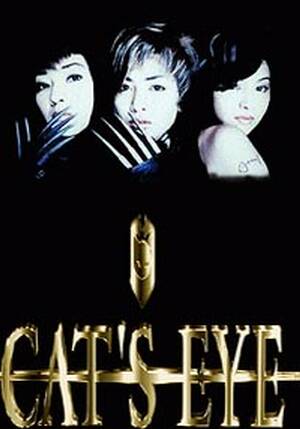 Despite an overall rating that is only mildly above average, when this is good, it is
  I keep buying DVDs like this, hoping against hope to strike gold. Not to say it doesn’t have the occasional guilty pleasure, but knowing the name used to stand for “Gorgeous Ladies of Oil Wrestling” (the second O eventually became “Outrageous”), should give you a rough idea of what to expect on this DVD, filmed in November 2002 at the Pennsylvania National Guard Armory. If not, then bouts such as the Battle of the High School Virgins or Hardcore Bra and Thong Match should provide a clue, and explain why Chris was rolling her eyes at the prospect.
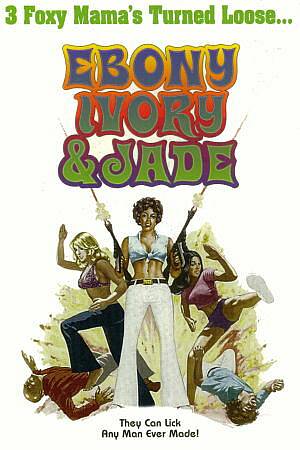 As well as its questionable use of the apostrophe, the cover kinda implies that three girls are involved here, which is only true for a small fraction of the running time. It starts off with
  The third series hit the ground running, Michelle Dockley taking evil warder Jim Fenner hostage, after stabbing him in the stomach with a broken bottle (to loud cheers here), and Nikki Wade breaking
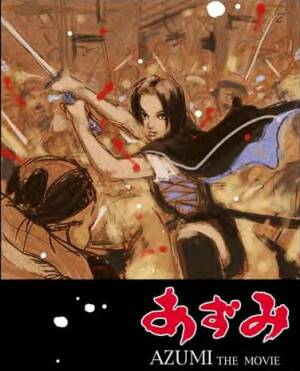 Cutting to the chase; the action is excellent, with several sequences which would be fitting climaxes to any other movie. When you see this one’s finale, you’ll realise why they’re not: Azumi’s master is captured, and an entire town of sword-wielding rogues and assorted scum is in her way, plus villain #1, a rose-wielding psychopath who dresses in white (Odagiri). Settle back, and pass the popcorn. While the swordplay itself is mostly nothing special (save one Very Special decapitation), Kitamura captures it beautifully, the visual highlight being a full circle around two characters – vertically. The sound is also fabulous; you could close your eyes and just listen to the battles.