
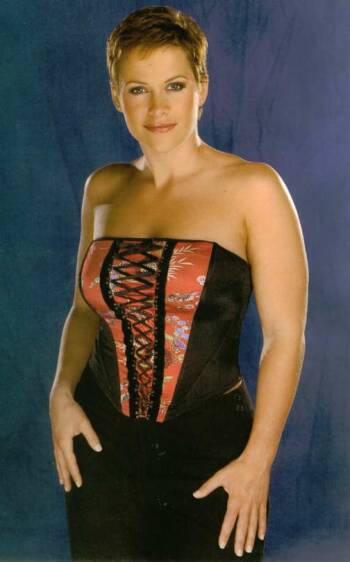
 Wrestlemania is the centre of the professional wrestling universe, and the list of women who’ve fought there is like a Hall of Fame for the sport over the past 25 years, with names like Wendi Richter, The Fabulous Moolah, Luna Vachon and Chyna. Wrestlemania XX in 2004 is widely regarded as one of the best ever, and part of that night saw Victoria beating Molly Holly for the women’s title, a result that led to Molly getting her head shaved in the middle of the ring at Madison Square Gardens.
How did Nora Greenwald, a former Subway employee, end up there and a two-time WWE women’s champion? Unlike certain “divas” (hello, Candice Michelle – though as she’s the advert spokeswoman for my employer, I’d best say no more!), Nora actually worked her way up. After training under Dean Malenko and Jeff Bradley, she wrestled at small events on the independent circuit in Florida before getting signed to World Championship Wrestling in 1999, where she was part of Randy Savage’s Team Madness. She eventually broke away from Savage, feuding with Madusa, but was released by WCW in the summer of 2000.
It wasn’t long before Vince McMahon came calling, and Nora’s new character, Molly Holly, made her debut on Raw in November. Molly briefly held the WWE hardcore title after a victory at Wrestlemania X-8 in 2001, and beat Trish Stratus to win the women’s crown the following June. Though she lost the belt back to Stratus later that year, she had a second title run from July 2003 through to February 2004 – in the 50-year history of the championship, only a handful of women have held it for longer.
But after Wrestlemania XX, perhaps Molly had nothing left to prove. Disenchantment with her use by the WWE grew – and it’s easy to see how, the women’s division entering one of its downturns, where wrestling ability became secondary to other, more superficial skills – and in April 2005, she requested a release from her contract. Since then, she has released an interview DVD, Shootin’ the Crap, and appeared at various independent events around the country. It was at the Impact Zone Wrestling show in Tempe, AZ, that we got to sit down with Nora, and talk about her career, her life, and her future plans…
What have you been doing since leaving the WWE?
Every day is totally different. I have so much stuff going on it’s ridiculous. I feel like I’m busier now than I was when I was travelling full-time. I’ve got lots of projects – my main income right now, is that I’m involved in real estate investments. I own a few properties, so I have tenants that I have to manage. I go to gymnastics every Wednesday; I go to a public-speaking club called Toastmasters on Mondays; I do massage therapy on Thursdays – I took a course so now I’m doing that at a spa. My church has a lot of fun things going on too: I just went downhill skiing for the first time in about 15 years.
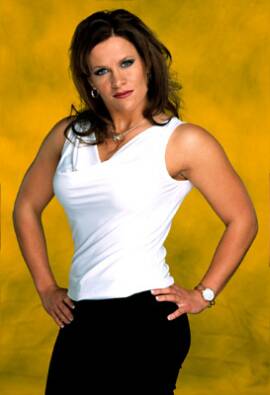 Do you miss anything about life in the WWE at all?
I miss all of the people backstage. A lot of the crew were good friends, and I never get to see them – the people on TV are my friends too, but I can flip it on and see what they’re up to. It’s the guys behind the scenes – I miss them so much, and I never get to see them, because they’re not on TV. That’s what I miss most: the people that I worked with. I don’t get to watch it as much as I would like to: I try to talk to Devari, keep in touch with what’s going on. I also speak to Shelton Benjamin and Trish Stratus, and usually get my info directly from them.
Some wrestlers grew up knowing this is what they wanted to do, but you kinda fell into it…
Yes, the closest thing to being a pro wrestler was I wanted to be an American Gladiator for a while. I liked the look of the female body-builders, and thought they were really cool. I did powerlifting when I was 14-18 years old, but as far as being a pro wrestler, it wasn’t a childhood dream – it wasn’t even an adult dream. When I started wrestling it was for fun, not necessarily thinking that I was ever going to be on TV.
When did you start thinking that you could make a career out of this?
There was a girl named Malia Hosaka, who worked with me on the independent scene, and she knew some of the people behind the scenes in WCW, and she started to say “Hey, you know we could make a lot more money than in the minor leagues.” So we started pursuing that together. It was actually a while after, that I got signed but that was the first time, with Malia Hosaka – she put it into my head that we’ve got a good thing going here, and we could probably make a career out of it.
It was a big step moving from the indie circuit into WCW and appearing in the arenas with Hulk Hogan and Randy Savage. How did you find that?
It was amazing. Those are people I watched, growing up as a kid, and then there I was in storylines with them – I mean, I got to slap Hulk Hogan across the face! It was like “Wow!”, just an amazing thing. The first time it really hit me what was happening was, I was in a limousine leaving the arena, and I’m looking around: it’s Gorgeous George, Madusa, Macho Man, Sid Vicious and myself. They all looked so famous, and had the muscles and tans and the pearly-white teeth and I thought, “I can’t believe I’m in a limousine with these people.” It just didn’t feel like I was supposed to be there, it was more like I was watching it in a movie, that I was behind the camera. That was the first time I realized that this was a big deal.
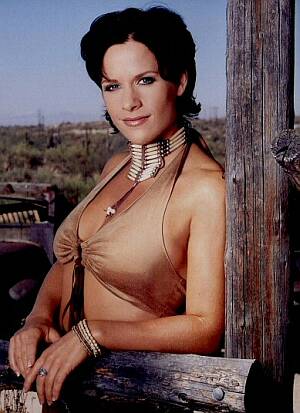 As fans we only see the front-part of the show. Is there anything you were surprised to learn about that goes on behind the scenes?
I guess the one thing that really surprised me is that part of me was still a fan. I’m watching the show, and not realising that the people on TV were not always what they were backstage. There were a few people that I thought to myself that I really did not like, and then when I met them in person, they were so friendly and so mild-mannered, I just thought, “Wow, I was fooled.” and I couldn’t believe I was fooled. Because I do pro-wrestling, I put on that act myself, but I was just shocked at how nice everybody was!
Do you prefer playing characters that are like you, or those that are not like you?
I prefer to play characters that are like me – the baby face Molly Holly, with the Spike Dudley gimmick, when he and I liked each other, that was my favorite time. Although if I were to choose a character that was not like me. it would be something really loud and obnoxious and funny: aome clown character or something that’s a little bit over the top and funny or goofy. I’m not particularly funny or goofy, but I think that would be fun to do.
Do you get much input into your characters?
Sometimes – usually they’ll give you a basic idea of what they want, and it’s your job to make it your own or to try and make sure the fans can connect with that character. I have chosen all my own costumes; I wear whatever I want to. When I first became Molly Holly, they said, just make your outfit like Crash’s. So I looked at his and thought, how can I do a female version of that. I took some clothes I already had, and sewed some stuff on to make it look like Crash’s.
You wrestled with both WCW and WWE. Would you say there were major differences between the two?
As far as my wrestling career, there was no women’s division in WCW. The positive of that, is that when I wrestled in WCW, I got to choose my opponents; they would say, “Can you find somebody to wrestle you for this TV taping”. I’d be like, “Ooh, yeah”, so would take my friends who I’d wrestled on the indies – Brandi Alexander, Lexi Fyfe, Dee Dee Venturi, people that I came up with. I thought, here’s my opportunity to pay them back for all they’ve done to help me; I would bring them in and we’d do a Saturday night TV taping for WCW. So it was fun: even though there wasn’t a women’s division, that we still got to do matches on TV. With WWE, there was an actual women’s division, there was a little more structure, there were more storylines, and a larger group of women that all knew how to wrestle which made it easier.
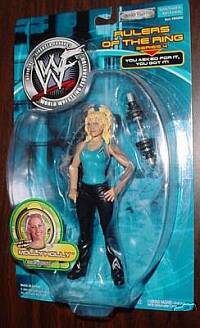 What did you think when you first saw the Molly Holly action figure?
I was ecstatic! I heard rumours they were going to make one. And they came to the show, the Jakks Pacific people came, with a prototype doll and they showed it to me, and I was like “Oh, my gosh!” and had my picture taken with the little doll. I mean, that’s every kid’s dream to have an action figure of themselves. But it’s really a bizarre thing to see a little doll that looks just like you, that people can buy in the store.
I actually went to a toy-store when I heard they were out, to go get them, and there were some kids looking at the wrestling figures, and they had their Triple-H, and all these ones that I was next to. And the kids were looking for the guy wrestlers, and without them turning around to see who I was, I said, “Hey, why don’t you get that Molly Holly doll?” and they go, “No – she sucks!”
Do you find yourself getting recognised in the supermarket?
No, I work really hard at not being recognised. I rarely wear any makeup – I’m a horrible dresser! But I wear hand-me-down clothes or thrift-store finds – I don’t. Every now and them, someone will look at me, and feel they recognise me from somewhere but they don’t actually come up to me and say, “Are you…” They just look at me like they know who I am. But it’s pretty rare that someone will come and ask me.
[This is true. We were doing this interview in a room full of wrestling fans, waiting for the IZW show to start. Only one person appeared to recognise Nora – and, personally, if I’d been asked to guess, I’d have pegged her as perhaps a kindergarten teacher rather than a two-time WWE women’s champion! :-)]
What do you feel is the highlight of your career so far.
Wrestlemania XX. Getting my head shaved at Madison Square Garden was definitely the highlight of my career. What can you do to top that, y’know? There’s nothing more shocking. It was my idea, and Vince McMahon was nice enough to let me do that. I had mentioned it months prior, and it kind of got lost in the shuffle for a while there, but a few last-minute decisions allowed that to happen. Nobody really knew what was going to happen on the show and a lot of my relatives were very upset. They didn’t know that I was okay with the idea of getting my head shaved and they were like, “Oh, that Vince McMahon – how dare he treat her like that! She worked so hard for him!” They were really upset, but I had to tell them later, no, it was totally fine: it’ll grow back!
Did you ever have any qualms or doubts?
No, I had no second thoughts about it. My Mom’s a breast cancer survivor and she had her head shaved for chemo, maybe a year before I did the Wrestlemania thing, and she looked totally fine with no hair. So I thought, shoot, if she can do it, I can do it – let’s give it a try.
 Your Christian faith is an important part of your life, which makes wrestling seem like a strange destination. Did you have any problems reconciling the two?
I think that Christians have a place in every occupation. If Christians only worked at churches, then we wouldn’t really know much about Christ! So I really feel that this was a great place to be a Christian and still be in the entertainment industry. As far as any conflict, there’s always things on the show that I absolutely hate – I think if I had kids, I would never let them watch this.
So I tried to share my faith more on a personal level. with the people backstage, and the fans after the shows instead of really bringing that out on TV. I’m just playing a character on a TV show: that’s my job. And so my faith and my acting weren’t really linked, except that it gave me a lot of opportunities to meet a lot of different people. Just the challenges of the job helped strengthen my faith as well: you really need God to help you get through that, without major mental issues!
Did you ever think about wrestling abroad, where women’s wrestling is taken more seriously, such as in Japan?
I don’t like Japanese women’s wrestling. I’m not tough enough for that. I think it’s brutal, I think It’s violent. I’m not really into violence – I like comedy and I like entertainment, but when it comes to actual brutality, I’m just not into it. I wish I could say I respect what they do: I respect their dedication, and their love, but I could never be that dedicated. These women, that’s their life, from the time they’re young to they retire. It’s just way too challenging for me! I have had a few offers to wrestle, in Japan and Italy and a few different places, but I just really enjoy being healthy. I wake in the morning, and my elbows work, I can turn my head – it’s fantastic! So I don’t have a strong urge to get beat up in the near future.
I don’t want to say I’d never go back, because you just never know. Maybe six months, a year down the road, something could happen, where they really want me to be a part of, and I might say, “That actually looks like fun”. But right now, I’m doing special guest refereeing and stuff on the indie scene. It’s fun to be a part of that, because on the independents, everyone has such a passion and heart for what they do. They’re not doing it for the money, they’re doing it because they love it, and that’s really a fun thing to be a part of.
 Looking back, is there anything in your career that you’d do differently if you had the chance over again?
There’s lots of regrets, but none that you’d see on television. Most of my regrets were just, if there was a person in management that I didn’t like, or I felt was treating me poorly, instead of keeping it to myself, I would talk about it in the locker room. And I regret doing that because, it just brings negativity where there doesn’t need to be negativity. That’s my biggest regret: not keeping a positive attitude backstage.
Finally, if you were running a federation, and had to pick five women wrestlers to be in it, who would you choose?
Ooh! That’s a good one. Jazz, Nidia… [pause] Victoria… [long pause] Gosh, two left. The last two are going to be tough. Gail Kim…and… it’s such a toss-up. There are so many that I just don’t want to, oops, forget!
Well, we can leave the fifth one blank…
[Laughs] Yes, let’s do that!
[Many thanks to Nora Greenwald for taking the time to speak with us; thanks also to Chris, Justin, Steve and Robert for their assistance. For more information on Nora and her future plans, keep an eye on the website: www.nora-world.org, and we also recommend her DVD, available through noradvd.com]
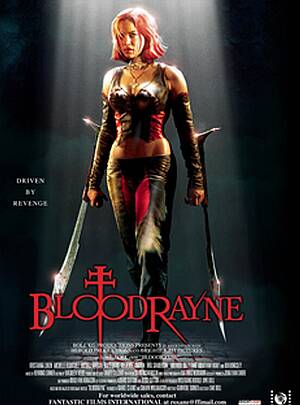 Director Boll has a rep as the worst filmmaker ever, making movies based on video games entirely for tax writeoff purposes. But have things got out of hand? I mean, Bloodrayne was in the IMDB All-time Bottom 50
 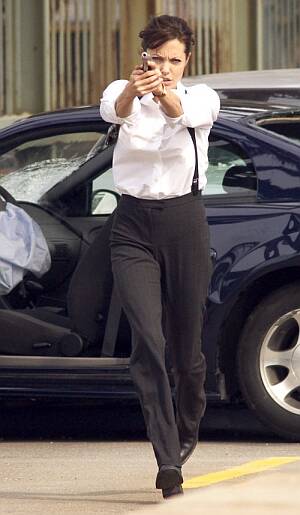 Rarely has a film started so promisingly, and gone so consistently downhill. The start is fabulous, with one of the most shocking moments I’ve seen…though if you’ve seen the trailer, you’ll have had it spoiled. But regardless, the first time we meet FBI profiler Illeana Scott (Jolie), on special assignment to Montreal, she’s lying in a grave. She is hard as nails, and takes absolutely no crap from anyone: her local friend, Captain Leclair (Karyo) hardly needs to bother protecting her, despite the nicely-handled cross-border tension. The case is that of a serial killer who, as the title suggests, inhabits the lives of his victims: the crack comes when his mother (Rowlands), believing him dead for two decades, spots him in Montreal by chance. However, the only other person to have seen the suspect is art-gallery owner James Costa (Hawke), but Scott starts finding her emotions getting in the way of her work…
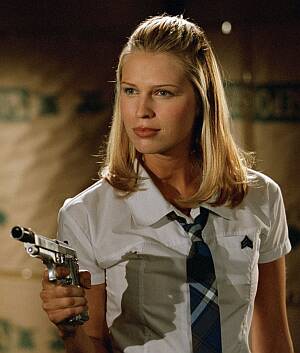 As Kim Possible proves, there’s certainly scope for a high-school action heroine who has to save the world from evil. Unfortunately, here, the potential largely gurgles down the plughole, in favour of a smug, self-satisfied romantic comedy, that manages to be as bland as a film about teenage lesbians could be. Amy Bradshaw (Foster) gets a perfect score on the test hidden within the SAT, and is recruited into a spy academy; there, with her classmates (Good, Ritchie and the always amusing Devon Aoki), she carries out secret missions, wears plaid skirts and agonises over her relationship with her boyfriend.
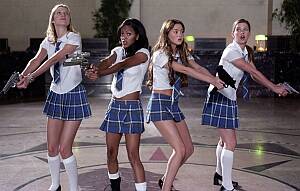 The action isn’t too bad initially, with a sprightly shootout in a restaurant. However, that’s your lot, save the “daring” lesbian angle. Though, being mainstream cinema, it’s just a couple of clothes-on kisses, and bad, unconvincing romance is no fun, regardless of a character’s orientation. This aspect is so po-faced and politically correct – it is, clearly, supposed to be taken Very Seriously – that proceedings come to a grinding halt, while what appears to be the director’s iPod on shuffle plays as a witless soundtrack. Look! An Erasure song! How appropriate! ‘Cos, y’know, they’re
 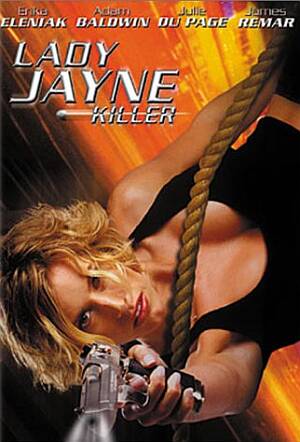 Memo to self: don’t tell your wife the star of a film was in Playboy. Chris’s interest, already somewhat on thin ice, evaporated entirely, pretty much the moment I made that mistake, and I almost had to handcuff her to the bed to prevent a sudden trip to the supermarket. The concept here is kinda cool: Mom Emily (Eleniak) vs. anti-Mom Jayne (du Page). The latter is a hitwoman for the Mob, with 20 kills to her credit when she decides to abscond with a million in cash. She ends up hitching a ride beside Emily and her 16-year old son Kerry (Lelliot) on their way to San Antonio, with the former owners of the money in hot pursuit. And the cops. And the FBI. Then Kerry – when not fantasizing about Eleniak in the shower [cue Chris’s neo-departure!] – decides to solves Mom’s financial problems with thievery of his own.
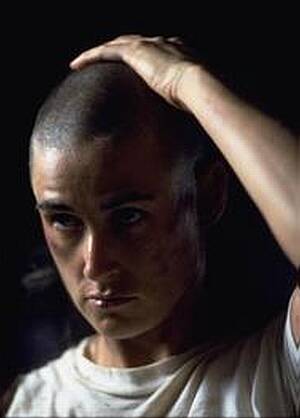 The opening hour of this must be great entertainment for sadists, watching Demi Moore get pummelled, ground-down, chewed-up and beaten into a bloody pulp by the war machine, as part of Navy SEAL training. The first woman to go through it, she could open the door for others if she succeeds – which is exactly why the stops are pulled out to ensure she fails. While the most obvious face of this is Master Chief Urgayle (Mortensen – his character here would eat Aragorn for lunch), her political mentor Senator DeHaven (Bancroft) also finds the pressure coming down to pull the plug on this social experiment. But Jan…er, Jordan O’Neil (Moore), won’t give up at any cost, demanding absolutely equal treatment. Of course, after what seems like a 75-minute training montage, she wins the respect of her colleagues, overcoming the Senator’s intervention thanks to a peskily imperfect fax machine.
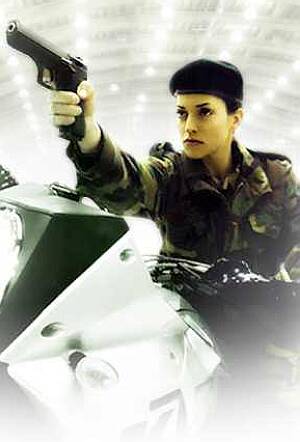 This SciFi Channel original movie is based on a comic-book series, but makes some radical changes to the storyline, though the basic idea is intact: a woman becomes immune to injury after the usual mysterious something happens to her [radioactive spider bite, barrel of toxic waste – the usual graphic novel contrivances, in other words]. In the comic, she was an undercover cop; here, she is a Special Forces soldier in Chechnya who is exposed to an experimental biological agent. Naturally, she subsequently finds herself much sought after, by both good and bad factions, since she’s the first to survive the treatment.
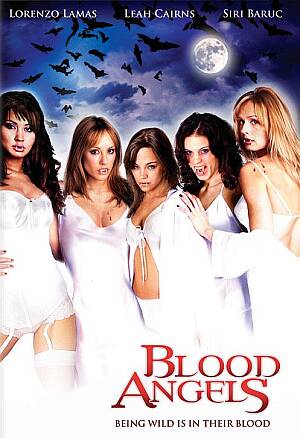 I’ve recently seen movies involving vampires who run a strip-club (Vamps), and witches who run a strip-club (Witches’ Sabbath). Now, we have vampires who’re putting on a rave. It’s nice to see creatures of the night who keep themselves busy. Actually, here, they’re not fully-fledged vampires: indeed, the aim of the rave is a ritual to complete the job, give them shape-shifting powers, etc. – generally, upgrade from the shareware version of vampirism. Of course, one of the vamps has a sister (Baruc) turn up – she looks like Dorothy from The Wizard of Oz, which is fairly appropriate, as she’s definitely not in Kansas any more. And their creator, Mr. Jones (Lamas), from whom they escaped, is keen to reel them back in…