If it hadn’t been for the lack of an ending, this would likely have got a seal of approval. The problem is, this web series came out in 2017, and as we close in on a decade later, I am beginning to suspect we may never see all the loose ends addressed. It begins with a quinceanera party, the traditional Mexican celebration to mark the coming of age of a young woman. In this case, it is being thrown in honour of Alejandra Santos (Xitlali), whose father Reynaldo (Mendoza) runs a Mexican restaurant. She really doesn’t want to be there, and her doubts prove well-justified, because it gets gate-crashed by Chavo Del Rio (Retamal) and his thugs.
I was going to tag this as “Die Hard at a quinceanera“, since initially that’s what seems to be happening. Turns out Dad made a business deal with very sketchy people to “hold” various items. When some of these go missing, he is blamed (it’s actually due to ne’er-do-well son Santiago and his pal), leading to the unexpected arrival of Chavo. Reynaldo’s denials lead to things getting very bloody, but Alejandra is able to get the drop on one of the thugs: there’s a death by sceptre which has to be the most symbolic weapon used, since Zoe Tamerlis used an iron to crack a rapist’s skull in Ms. 45. It’s after this, where things divert significantly from the expected route.
I will admit that Alejandra’s transition from truculent teenager to avenging angel is rather abrupt. However, it does eventually become clear that she has a lot of heritage on her side, not least her abuela or grandmother (Reynoso), who clearly has some history of her own. Indeed, on the Del Rio side there’s no shortage of bad-add mujeres either: the matriarch, Bertila (Bertila Damas), has some very strong views on this topic. By the end, it’s almost girls with guns the whole way down on both sides (albeit for some quite loose definition of “girls”, in regard to their age!). There has been a lot of ground covered, in around only seventy minutes: this is a web series of seven episodes, each being little more than ten minutes long.
I was very surprised to discover this was a Canadian production, filmed in and around British Columbia. There’s a strong Southwestern feel (something I’m familiar with, living just a couple of hours from the Mexican border), and I will certainly be checking out more from the makers. At first, I had concerns it would end up being more of a teen soap opera – think The OC, with a side of salsa. Fortunately, the company name, Luchagore Productions, is a clue that it won’t pull its punches: I think the moment I realized this was where a party guest had his mustache carved off his face with a machete. Yeah, it’s like that, and the red stuff flows like the Rio Grande thereafter. Just do not expect any resolution.
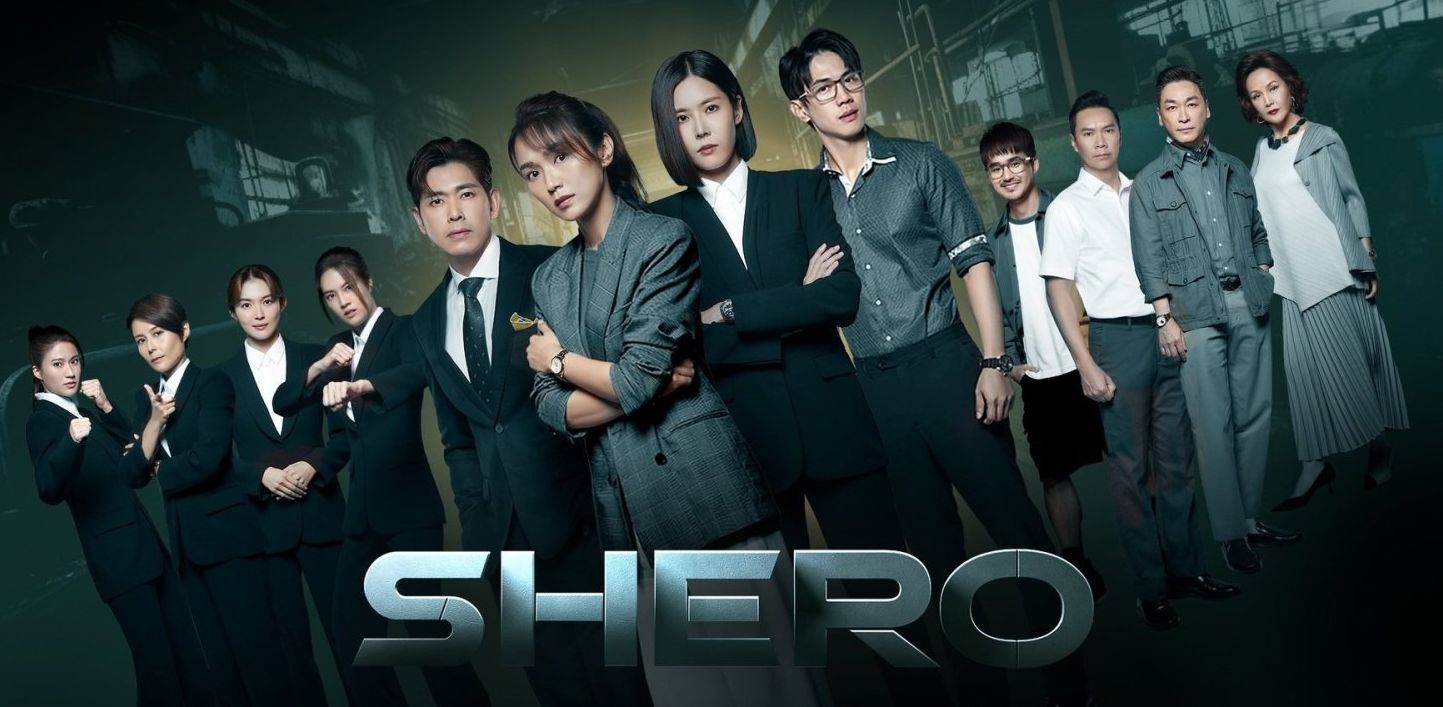
Not to be confused with Sheroes – because I know I did – this is a TV series from Singapore, marking the country’s first appearance on this site. So that’s nice. It’s the story of the Zhang sisters, Yin Xi (Wong), who runs an (almost) all-female bodyguard company, SHERO, and her younger sibling, photographer Yin Chen (Peh). While on a job in Australia, Yin Xi is attacked, and disappears: unknown to anyone, she is hospital, having lost her memory. Yin Chen takes over the company, and works to unravel the mystery of why her sister was attacked, with the help of Yue Rui Xiang (Tan), the CEO of a shipbuilding company who is a client of SHERO.
Turns out, there is a lot going on here – as you can imagine, given there are twenty episodes, each around 45-50 minutes long. Fifteen and a quarter hours, in total. So, for example, there’s an eventual connection to the murder of the sisters’ parents, seven years previously, which needs to be addressed. It also feels like SHERO need to ramp up the background checks on their employees, since it feels like all of them have secrets. Or as another example, there’s one worker who was a former drug addict – which is okay, this was known when she was employed. But her mother is a raging alcoholic, now victim to a blackmailer; a situation now seriously affecting her daughter’s work for the company.
So, really, there’s as much soap opera here as action, with romantic entanglements and family drama very much the order of the day. I was expecting something a little more like Pamela Anderson’s V.I.P. series (which I feel I must get round to reviewing), but this is much more one over-arching story-line across all twenty episodes, with occasional side-plots. Everyone in the show is almost weirdly attractive, and while I get that Singapore is one of the richest countries in the world, this feels almost a promotional video for the country [Makers Mediacorp are a state-owned media company, so that may be a factor]. Certainly, the Australian capital of Canberra gets its product placement in – and they are not the only ones.
There are some action scenes, mostly martial arts based, though guns seems to end up doing most of the killing. But they’re competent rather than particularly outstanding. The use of both amnesia and multiple personality disorder as plot points is hackneyed, both of these coming and going as the plot requires. Though I was impressed by how unexpectedly bleak the show ends up being. While I might not have made it to the end had I been more actively watching it, it was simply something not too demanding, to distract me while I got my daily exercise in. As such, it filled the gap in my morning regime adequately. Yeah, “adequate” seems like the right word for this overall.
Dir: Chen Yiyou Star: Joanne Peh, Romeo Tan, Carrie Wong, Nick Teo The whole series is available with subtitles on YouTube.
When we think of the tough women in the old West, the first ones that come to mind are usually, the criminals. Let’s face it, most people we celebrate as “legends of the old West” today were not really heroes. More often, they were people who broke the law, or highly questionable personalities such as Calamity Jane, Belle Starr, Pearl Hart or Etta Place. But we should not forget there is also the other side of the law! Though women were present in quite a number of job areas and were vital in the development of the country, very often history writing has focused rather on the achievements of men, overlooking the women’s part of the success story. But now and again, an interesting yet forgotten character is rediscovered and attracts new attention.
One of these characters is Kate Warne (sometimes spelled Warn), born in 1833 in New York. Coming from a poor background, life turned even more challenging after she became a widow at just 23 years old. She was working as a cleaning woman when she saw an advertisement in a newspaper. Allan Pinkerton, head of Pinkerton’s detective agency, was looking for new employees, interested in working for him. The agency were involved in quite a number of fascinating cases, such as the “Molly Maguires”. Those events were referenced in the Sherlock Holmes novel The Valley of Fear, and subsequently became the basis for a 1970 movie with Sean Connery and Richard Harris. Warne was able to convince Pinkerton to employ a female, arguing that women have an eye for details and are excellent observers. Indeed, it seems that Pinkerton grew quite fond of her as he spoke highly of her after her death.
Warne was active in solving crime cases and is said to have played an essential role in discovering a plot to kill Abraham Lincoln in 1861. She guarded him when his train passed locations where an attack was planned. (Unfortunately, she wasn’t around in 1865.) For the whole story I refer you to Warne’s Wikipedia page. But I especially like the following sentence there: “It is believed that Pinkerton came up with the slogan to his agency “we never sleep” as a result of Warne’s guard of Lincoln that night.” How much of that is true is difficult to say. Pinkerton himself was rumored to invent his own stories. He was definitely a man who knew how to blow his own trumpet. Though he had successes which prove the quality of his agency, and for a long time the Pinkertons were the most well-known and respectable detective agency.
The real Kate Warne
Kate had become the head of the female detectives department at Pinkerton’s, but died young, at just 35 years old in Chicago, of pneumonia. The Great Fire of 1871 there destroyed a lot of the company’s records, so not so much is known about Warne, apart from what Pinkerton himself reported about her and the cases in which she was involved. But in recent years this highly interesting character has had a resurgence in popular media. Among others, there have been a couple of children’s books, a novel, a non-fiction book about the female detectives at Pinkertons, a comic book and a low-budget movie on Amazon Prime, Pinkerton, in which she appears. She also played a very small role in the three-part TV series about Lincoln on the History Channel, and there has been talk of a big-budget Amazon MGM film, with Emily Blunt playing her and Jaume Collet-Serra directing.
I’m not quite sure when and why this new interest in Warne arose. But I wouldn’t be surprised if it started with this small, Canadian TV series from 2014, that ran until the following May. The Pinkertons was made by Rosetta Media and Buffalo Gal Pictures, in partnership with Channel Zero. Only one season with 22 episodes was produced, and obviously, it was not successful enough to get a second season. Which is, actually, kind of a pity, as the show ended with a cliffhanger. It’s a Western show, yes. But it is also a detective show, making it a very unusual hybrid. We are not used to seeing cowboys and detectives in the same series, and it is a smart way to cater to two different potential audiences: Western and crime fans.
It must be said, the budget was not very high: over the course of the series, we get to see the same sets again and again. The farm where Kate (Martha MacIsaac) lives for the time being, working for the elder Pinkerton, Allan (Angus MacFadyen). The local saloon in which she and young William Pinkerton (Jacob Blair) regularly meet. And the Sheriff’s office where suspects are imprisoned. Also, a lot of episodes take place in the woods or large fields, with single buildings housing the perpetrators or victims. The whole series is set in Kansas City, Missouri in 1865. Pinkerton Sr. thinks a lot of shady things happen here, which is why he insists that his son and new employee Kate stay there and work “undercover”. The Lincoln story discussed above is mentioned, but doesn’t play any role here.
The cases themselves are well-thought out. Not so complicated as to become ridiculous, nor easily and quickly figured out by viewers. They cover a wide range from murder and identity theft, to the killing of a dog. The three main characters are generally given equal attention, for this was before female characters in modern media started to become the center of everything (mostly by showing how inadequate or ridiculous men are, in the opinion of modern TV/film executives). There’s no such need here; while Will is initially not very happy about Kate, especially because his father makes her his superior, he quite quickly acknowledges her expertise and knowledge. They subsequently form a good team and work well together.
The pairing makes it possible for them to investigate different places and witnesses at the same time. Luckily, they also keep tabs on each other, with episodes where one would have been killed if the other hadn’t been around. Allan himself pops up now and again in the show, before he vanishes off to do something else. Other regulars include AnnaLee Webb (Jennifer Pudavick) who owns the saloon and the brothel in it; a black worker on Kate’s farm, John Bell; local sheriff Lawrence Logan; and Kenji Harada, a Japanese man who is initially a client, before becoming a Pinkerton apprentice. MacIsaac plays Kate Warne as a sophisticated young woman without attitude. She is neither a bombshell nor a spinstery type. She is always polite, well-dressed and appears a bit out of place in this typically Western town, as if she does belong more in the big city.
Meanwhile, Will is a bit of a rascal and wants to prove his worth as a detective to his grumpy but sympathetic father. But he and Kate get along well, developing a friendly working relationship. She doesn’t reveal much about her background. I wonder if screenwriters maybe wanted to set up something along the lines of the Benedict Cumberbatch version of Sherlock Holmes, without the extremes. She definitely has a scientific mind, quoting facts that indicate she is well-read, and uses what could be called early forensic investigative methods. But she is not set up as a genius and doesn’t solve the cases alone: this is genuine team work. In the beginning, I wondered if Kate really belonged in the “girls with guns” genre, since an investigator is not necessarily someone involved in much action. But I shouldn’t have worried: there’s enough to confirm her action heroine status!
Regrettably, the show had an open ending. Billy the Kid turns up with a new experimental rifle to take revenge on old Pinkerton, finally challenging young Will to a duel. They have a shoot-out but the outcome has to stay a mystery, as this is where the show ended. It was, of course, a gamble of the producers, in the hope that a second season would be ordered. Unfortunately it didn’t pay off, and we are left with an unfinished story. I do understand why it might not have been a big ratings success. For a Western fan, there might not be enough gun-fighting; and for a crime series fan, the Western tropes might be largely uninteresting. But I did like the mixture. All in all, this is a nice little show.
I did sometimes think there could have been better set design: in the interior of houses, everything looked a bit spartan. Also, I wondered if the way the three main characters were such a good team and got along so well, might have made the show too humdrum for many. Some stronger emotional conflicts or personal problems in their relationships with each other, could have made the whole thing a bit more interesting. But you don’t always need that. Sometimes it’s nice just to have a team that does its work, has a good relationship with each other, and that’s it. This is a well-done detective show that might have helped to reintroduce Kate Warne to the modern public. I liked it well enough, and am indeed curious what a big movie about her might offer, if the proposed production with Emily Blunt should indeed become a reality.
Creators: Kevin Abrams and Adam Moore Star: Martha MacIsaac, Jacob Blair, Angus Macfadyen, Jennifer Pudavick
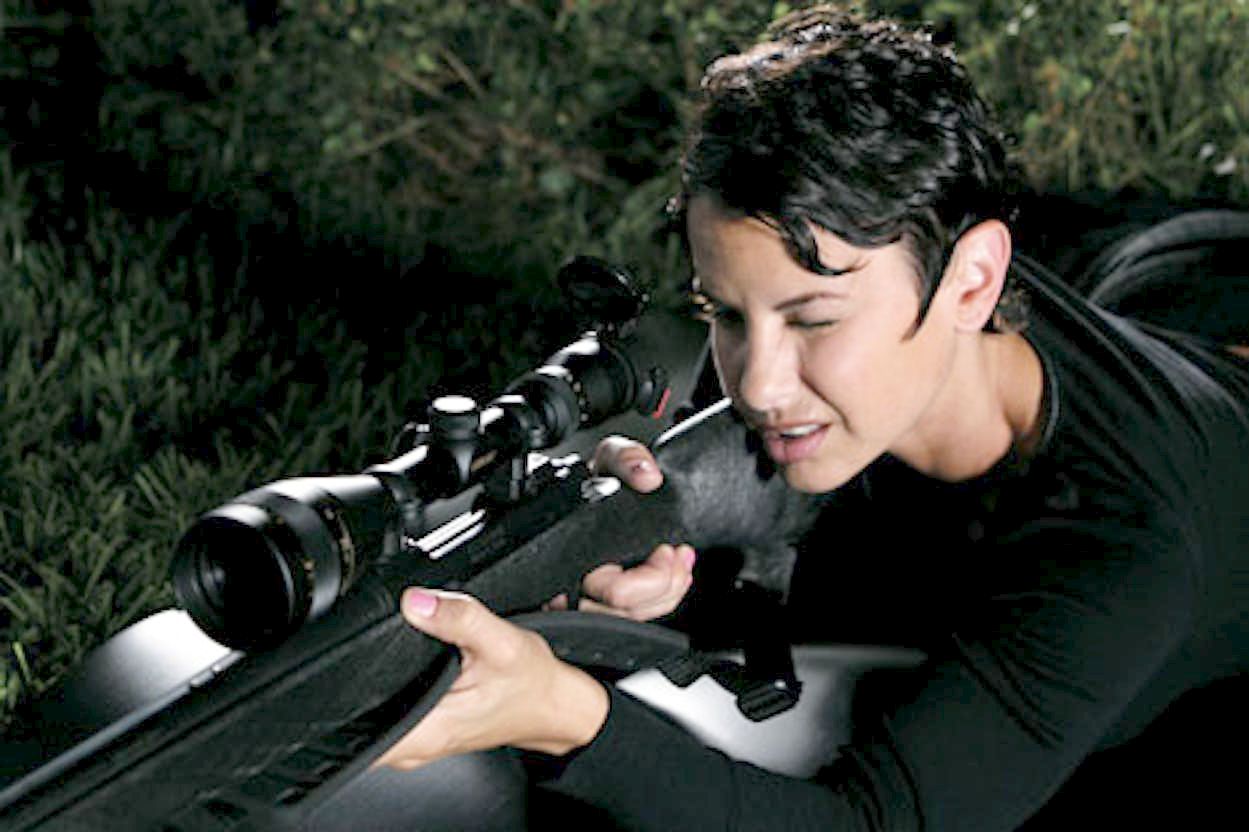
This has something of an interesting history. It was originally 35 episodes of a short-form web series, shown on Hulu, beginning back in 2007, at the time when they were just starting out. That may seem like a lot of content, but each episode was only three to five minutes long. So what you have here is a compilation of all those episodes into a single movie, running about two hours. And… unfortunately, the result is a complete mess, bouncing around in time without rhyme, reason or purpose. It spends too much time on things which don’t matter much, like silly college shenanigans, while galloping past – if addressing at all – matters which feel more important to the plot.
From what I could figure out (and I can by no means swear to any of this), the basic plot involves Natalie Cross (Raitano). She was brought up by her single father (Tompkins), who was a special forces operative. Or maybe black ops. It’s all very murky. As a result, she basically got Hanna‘d, learning all the skills necessary to follow in her father’s footsteps. Initially, she tries to be her own person, but while at college was recruited to work for a BLOC: a black ops corporation, private military who handle jobs governments want done with clean hands. After quitting, Nate found herself in prison, but is now back on the outside, having been promised freedom if she completes ten assignments.
That would be fine. Except, for whatever reason, the show spends far too much time and effort with college-aged Nate (Matula), which is very much the least interesting thing the show has to offer. Except possibly her “Gother than thou” room-mate, Rhonda, who naturally is the person to show the sheltered Nate the ways of the world. Well, the ones that don’t involve hunting and skinning deer, anyway. But who cares? If I wanted to watch that kind of thing, I would… Well, I guess I would watch that kind of thing. You get the idea. The series only achieves energy after Nate goes to work full-time for her BLOC, and is given a little apprentice, Bunny (a nice nod back to Nate’s childhood pet).
I get that the show was made in bite-sized episodes, and it might have worked better in that format. Or, alternatively, if they had shuffled them around for this feature version, into something closer to chronological order. Instead, the results here resemble somebody having fed the footage through a shredder, and then arbitrarily assembled it back together. It means on occasion, you’ll have adjacent scenes taking place decades apart, and on different continents. There was a time, fifteen or more years ago, when this kind of thing was seen as the future of entertainment on the Internet. The failure of things like Quibi proved otherwise. Based on the evidence here, it’s a mercy that never came to pass.
Dir: Blake Calhoun Star: Natalie Raitano, Sheree J. Wilson, Kim Matula, Matthew Tompkins
As a child, Oo-yi came to Thailand with her mother as a migrant worker. They had the misfortune to work for the cruel Madam Bussara (Kingpayome), who had a particularly nasty habit of pimping out young girls to her lawyer, Methi. When she tried to do the same to Oo-yi, Mom stood up for her – and was beaten to death for her pains. Oo-yi was able to escape, and raised by Ni Wai (Sirikul). Now, an adult (Luevisadpaibul), she is set on vengeance, and intent on destroying Madam Bussara’s life. To do so, she becomes Thicha, “accidentally” bumps into Bussara’s son, Phatchai (Chirathivat), and begins cultivating a relationship with him. But that’s the story of revenge: it’s messy. Since her feelings for him start becoming genuine.
On the one hand, it might seem rather soapy, and I won’t deny the melodramatic nature of things. But it is held together by a pair of great performances from Luevisadpaibul and Kingpayome. The latter, in particular, is close to an all-time villain. I’m not sure what happened to her husband, but it probably wasn’t good. Witness this monologue: “No one understands just how thrilling it is to watch a living being fight for its life. When it’s someone who always thought they were invincible, it’s even more entertaining. And if that desperate fight for survival is caused by my own hands? It’s almost as good as an orgasm.” Yeah: not somebody you want to mess with.
When her son shows up with Thicha, she knows instinctively that something is not right with his new girlfriend. From there, through the eight x 45-minute episodes, unfolds a slew of twists, revelations, nastiness and questions. Thicha is pregnant! Or is she? Phatchai discovers her deceptions! What will he do? Thicha’s informant inside Bussara’s house is exposed! How will she survive? It all builds to a rather brutal battle between Thicha and Madam, on the very spot where her mother was buried, years before. I was about to apply a demerit for Thicha having to be rescued by Phatchai there, until… Well, it doesn’t end exactly like that, this being a case where the pursuit of vengeance is not a rewarding and cathartic experience.
It is a little distancing. While Madam is a right c… not very nice person, it’s perhaps Methi who is in direst need of drastic punitive action. I feel it would have been more satisfying if he had been the bad guy from the start, rather than a peripheral villain. However, there’s a good sense of escalation, with each episode ending at a point which lures you forward into the next installment. It’s the scenes where Thicha and Bussara face off – be that verbally or (eventually) physically – where the series comes to life, and I found myself holding my breath more than once. If it does take a while to reach the final payoff, I’d be hard pushed to call it unsatisfactory.
I’m a little surprised I hadn’t heard of this, considering it is based on a concept by Luc Besson. What we have here, though, is a feature-length version of what was originally a ten-episode web series. I presume it was intended for distribution on something like Quibi (remember that?), but I’ve not been able to find out where it previously appeared, if anywhere. Anyway, it recently popped up on Tubi, looking like a “proper” film, though still with the chapter headings. While touted as “an original idea” by Luc Besson, let’s be honest: if you chucked Nikita, Leon and Hanna into a blender, the resulting violence smoothie might well end up tasting not dissimilar to this.
Amy Seely (Holm) is a teen orphan in New York (though the series was made in France), whose father murdered her mother, then killed himself, and is not having a good time in the foster system. She is more than happy to take the route out offered to her by Father (Abkarian), even though that means attending The Courtyard, a school for teenage assassins. There, life is certainly cheap, with the mysterious powers that be who run it, taking advantage of the fact that nobody basically suspects children of being killers. However, Amy becomes privy to disturbing information, which suggests that the Courtyard might have been involved in her parents’ deaths, and begins to rebel against her own conditioning. Not helping matters: the facility is attacked, and the order comes from above to shut it all down.
After an impressive opening, where Amy ambushes a group of four thugs, by pretending to be the target’s daughter, this is… merely alright. It feels a bit too “young adult’ for my tastes, and spends an excessive amount of time within the Courtyard, dealing with what I am inclined to describe as Teen Soap-Opera Bullshit. For example, there’s a bitchy girl who takes an instant dislike to Amy, a cute boy that she kinda likes, and so on. Therefore, when her first mission goes awry because somebody sabotaged her gun, it leads to an additional helping of unnecessary TS-OB. I’d have preferred to see more of them operating in the real world, and suspect the webisode budget acted as a constraint there.
The structure is also a little odd as a result, because rather than building to an obvious climax, you have ten mini-climaxes, corresponding to the end of each episode. In some ways, this pacing has more in common with a golden era serial. I was quite impressed with Holm, who has potential, although it was a little odd having her first mission involving a paedophile, considering Besson’s own… um, very “European” history in the area of teenage attraction. It’s also eye-rollingly fortuitous how that mission provides her with the first evidence that the Courtyard may not be as beneficent as they claim. Still, it’s probably no worse than anything Besson has done in the past decade.
Dir: Olivier Schneider and Pascal Sid Star: Amalia Holm, Simon Abkarian, Melina Matthews, Ann Skelly
Murder by the Lake is a TV crime series co-producted between the second public German TV channel ZDF and the public TV channel of Austria ORF. It started in 2014 with a 90-minute long TV movie, followed by a further movie each year until 2017, when the yearly output was doubled. Since 2024, there have been three movies each year. So far, 22 episodes have come out, with #23 scheduled for later this year. The German title Die Toten vom Bodensee translates as “The Dead of Lake Constance” – “Bodensee” is literally “Ground Sea”, but is called Lake Constance in English. When I saw the first movie I was struck by its surprising quality. If you have read my reviews here, you know I usually don’t think much of the quality of German film productions. This is different: not only is it a show that I always watched, but one where I bought the DVDs.
German crime shows tend to be boring and tedious, though I admit some have become much much better in the 20-odd years. This is one of those exceptions: The series captured my attention from the get-go; I found the single episodes remarkable and was quickly invested in the characters, who were very well portrayed by the actors. In short: It had a different dynamic and feel than most German shows. I wondered why it felt like that until I realized something: The creators of the show have borrowed heavily from successful recent Scandinavian TV crime series, so that you easily could call this “Scandinavian Noir, German style”.
It starts with Lake Constance, which is split between Germany, Austria and Switzerland. When a crime happens that falls under the jurisdiction of Germany and Austria, the commissariats of both countries decide to work together. A new special commission of “German-Austrian Crime Prevention” is formed, headed by German chief inspector Micha Oberländer (Matthias Koeberlin) and Austrian detective inspector Hannah Zeiler (Nora Waldstätten). Also involved, though more in secondary functions, are Austrian chief detective inspector Thomas Komlatschek (Hary Prinz), as well as a pathologist.
Sounds familiar? Well, then you probably have seen The Bridge. It had a Danish and Swedish inspector working together, in a concept used for many remakes around the world. Then there is the Swedish-German-Norwegian crime series The Sandhamn Murders, perhaps the first show to adapt ScandiNoir for a warm summer environment, rather than the usual harsh, cold surroundings of typical Scandinavian shows. The same goes for Lake Constance, whose beautiful surroundings immediately inspire viewers to plan their next holidays there. And last but not least is the character of Hannah Zeiler who is unlike any ever seen in any German TV show, let alone as a police investigator. With her hair combed back tightly, a nice Lara Croft braid, and a Spock-like mind, she moves like a cat. Unless she’s driving her 1971 Moto Gucci Nuovo Falcone motorcycle.
But most interesting is her behavior. When she first appears, she is strictly business. She says hardly a word otherwise, with no interest in getting to know the wife and daughter of her new colleague. She lets no one in emotionally, and shows an aversion to personal connection. Her behavior feels awkward, even upsetting, until you get used to it. Some watchers complained she mumbled her lines, but then, most characters here speak with an Austrian accent which can be a bit difficult to understand for Germans. It might also have something to do with the idea of a character who only slowly reveals her secrets to the audience. Because what I realized after a while, was that Hannah Zeiler is actually a more clinical, streamlined and slightly tamer Austrian version of Lisbeth Salander. Or at least her distant relative.
Similar to Lisbeth, Hannah has childhood trauma, as the sole survivor of a boat accident 20 years ago, where she lost both parents. While her mother died, her father’s body was never found. Hannah was raised by her adoptive father and now boss, Ernst Gschwendner (August Schmölzer), who plays an important role here. But in contrast to her Swedish predecessor, Hannah was never physically or psychologically abused, though the accident has left her with a fear of taking to the water. Also, the idea her father might still be alive has not entirely left her. This is a larger story arc that concludes four years later in episode 6, “The Returner”. It’s fascinating to realize how the “MCU method” of preparing a story arc over years, can pay off handsomely in the end.
Like Salander, Zeiler is a social recluse, and lives in a big house inherited from her parents. Her controlled external demeanor is in contrast to the chaotic life of Oberländer. He has family problems, with a wife who feels chained to the house and their child. He is constantly on the job, driving an old Volkswagen bus: he sometimes even spends the nights there, drunk, and it’s usually not very clean. Zeller and Oberländer are bound to clash; for a long time, it was the main reason for me to watch the series. Initially, their characters seem to come from different planets – the comparison of “like cats and dogs” is very fitting. Yet they learn to respect and rely on each other. It is touching to see Zeiler start to trust Oberländer, slowly open up to him, and their relationship develop.
There was a lot of personal development around the duo, which kept the audience coming back every year, and these were good storytelling moves. The original idea was to have cases with some kind of mystic or mythological touch, although after the first movie, it was then entirely forgotten for the next nine. Mind you, this isn’t The X-Files. The angle is more related to folk customs, superstition or single elements. For example, in the first episode a murder seems related to a Celtic mask found in the lake. In another, a dead girl is found in a mermaid costume. One episode happens during a traditional and ancient local parade. Another has a belief that a house is cursed because it was built on a former path. Or there’s a film that begins with finding a baby in a basket in the lake – was this meant to be a reference to Moses?
However, these serve only as local colour for the stories, and not much more. The stories themselves are often very complicated, with the present crimes related to ones in the past. There is a common theme of how the sins of the fathers (or mothers) are visited on the sons and daughters. Very often the results are tragic. Though thanks to the officials, these family stories are revealed and there might be a chance for a better future. For example, one episode involved two men swapped at birth by accident, and brought up by the other’s mother; when one of them finds out, it leads to tragedy. Another theme through the show, is the inability of characters to communicate with each other. and say what they feel or know. That begins with Zeiler, who is so tight-lipped in the beginning, you could get the impression that she keeps state secrets, though a logical and understandable explanation emerges later.
Yeah, tragedy is very much ingrained in the lives of the show’s protagonists. Oberländer in particular is faced with this a lot: An old love returns and tries to kill him with the rabies virus(!). His wife cheats on him, only then to die in a car accident. He has significant problems with his teenage daughter Luna, who doesn’t stay the lovely little girl she was in the first episodes. What Zeiler and Oberländer have in common, is that they are essentially both lone wolves whose main focus is their work, with Komlatschek in the middle as the well-meaning and warmhearted successor of Gschwendner. He partly balances out the behavior of Oberländer, who often appears overtly aggressive and angry, and Zeiler, who especially in the beginning seems cold-hearted, odd and a bit inhuman.
Action-wise, the show isn’t anything special, though for a German TV crime show, it moves with surprising narrative speed. Guns are drawn quite often, but shooting remains a last resort, even if a rabid dog roams the woods. But I really got to enjoy Zeiler driving her fast motorcycle over long empty roads, through beautiful landscapes. I will say, over time the show lost a bit of its attraction, after her epic arc finished; I cared less and less for Oberländer’s private problems. That said, I still watched every episode. Then in 2022, Zeiler left on a motorcycle trip, never to return. What had happened? Nora Waldstätten (seen in movies such as Carlos the Jackal, and next to Kirsten Stewart in Personal Shopper) had other projects she wanted to take precedence. Since the ZDF had endured a bad experience with an actress in another crime show, resulting in no new episodes for 4 years, they moved quickly to replace Waldstätten, though no-one directly admitted the actress was fired.
In episode 16 (“Nemesis”) Oberländer got a new Austrian partner in Luisa Hoffmann (Alina Fritsch, above). Zeiler was declared dead in the final scene, Oberländer getting a phone call informing him she had a fatal motorcycle accident – strangely in Spain. Honestly, I felt quite cheated by this cheap way to write a character out of a show. The powers that be could have come up with a better, more fitting and respectful way to get the character out of the series, especially considering she was the main reason to watch in the first place. I did get a strong feeling the writers and producers chickened out from what would have been the next logical step, after the relationship building over all those years: making Oberländer and Zeiler a couple! For let’s face it: both were so special, in their own way, that any relationship with a “normal” person was doomed. Yet, they connected with each other and always understood that “the job comes first”.
But the powers that be again ignored their own character and story build-up completely – see my review for Arcane season 2 – and pulled a former girlfriend of Oberländer out of nowhere. Unfortunately, she was a criminal that betrayed him and would be shot later by Komlatschek. I gave the new actress one quick glance and, without condemning her performance, realized that special… strangeness, charisma, aura, call it whatever you want, her predecessor exuded en masse, just wasn’t there at the slightest. You won’t be surprised that I didn’t watch any of the subsequent episodes.
Oddly, while Waldstätten lasted 15 episodes, Fritsch threw in the towel after 6 (her last one, “Medusa”, was shown January 2025). The final episode I saw had Oberländer and Komlatschek becoming the new investigative couple, and it apparently stays like that for the new episodes. It’s kind of sad when I think of how Waldstätten has been getting guest roles in other, definitely inferior TV crime shows since her dismissal. I wonder who will be the next woman colleague to turn up? After all, I think TV audiences like to see a good-looking interesting female character next to the boorish, angry Oberländer. As the films usually (and still) have between 6-8 million viewers for each new episode, it would be quite risky to change the recipe for success.
Creator: Sam Davis et al Star: Matthias Koeberlin, Nora Waldstätten, Alina Fritsch, Hary Prinz
a.k.a. Die Toten vom Bodensee English-speaking audiences can watch the series with subtitles, on MHz Choice, also through Amazon Prime.
With its combination of alternate reality sci-fi and stylized action, this feels like it could have come from the mind of Mamoru Oshii, creator of things such as Avalon and Assault Girls. It’s not. Instead, it was created by toy manufacturer Bandai – like most of their shows, it works largely as a 25-minute long advertisement for product, in this case specifically model kits. But there are some interesting ideas to be found here, though they are somewhat let down by action that clearly has no interest in being realistic, and a tendency towards maudlin emotion. I was left wondering who, exactly, it was aimed at, because the sentimentality feels at odds with the young men who are likely the target consumers.
It takes place in a high school where the favoured hobby of Koharu Tachibana (Shiraishi) is making plastic models. After buying kits of a gun and a figure called Alice, and assembling them, she wakes to find herself an unwilling participant in ‘Girl Gun Fight’. Four teams of three young women, are pitted against each other in battle, overseen by each team’s commander – hers being Alice (Ohara). Between rounds she’s returned to school, along with the other participants, but naturally, nobody believes this story. There’s an awkward twist, in that if you lose all three of your lives in the game, that’s it. You do not get back to the real world, with all trace of you, including other people’s memories, being wiped out.
That’s a wonderfully dark concept, which we see realized as members of the team’s try, and fail, to protect their last life. But it also possesses almost industrial levels of perkiness, particularly reflected in idol-like pop video inserts, and bumpers of enthusiastic model-making. Tonally, it’s all over the place. I suspect that might be the point, in the same way I don’t know at whom it’s aimed. I’m inclined to go for male wish fulfillment, with Koharu being about as far as possible from the typical model-building nerd. On the other hand, it has a lot in common with the “magical schoolgirl” trope, often found in anime, and it’s driven largely by the power of friendship.
That’s especially true in the final two episodes, when Koharu, Alice and the survivors meet the wizard behind the curtain. It all gets a bit too sentimental for my tastes, with the protagonists falling over themselves in a rush to self-sacrifice. The other weakness is action that, in the main, is nothing special – it’s very stagey, in a way at which Power Rangers might look askance. More hard-hitting fights would have added nicely to the contrast with the cheesier elements. Still, I burned through the ten episodes in three sittings, and was entertained, though the emotional impact I felt fell short of what the show was aiming to generate. I also do not feel any strong urge to take up kit-building as a hobby.
Dir: Yûsuke Taki Star: Sei Shiraishi, Yuno Ohara, Anna Ishii, Natsuki Deguchi
Under other circumstances, this six-episode TV series, would potentially be a marginal entry. But, just as I try to take the historical era into account, I think the location from which a film comes should also be a consideration. Some countries and cultures are simply more action heroine friendly than others. What would be groundbreaking in one region, might not even qualify from elsewhere. This is from Pakistan, and is almost the first such entry in our site’s history. [There’s just Hunterwali which… yeah!] I originally saw this in a condensed movie version, at an altitude of forty thousand feet and a ground speed of 555 mph. For I stumbled across it on the in-flight entertainment system while flying back from the UK to Arizona.
It adequately occupied a bit of time on what ended up being a fourteen-hour flight, thanks to an engine issue delaying the take-off. My grumpiness at this was, however, somewhat alleviated by unexpected GWG on the seat-back TV. By Western standards, it would definitely be considered mild, almost to the Lifetime TVM level (which makes sense, basically being a TV movie). But Pakistan isn’t exactly a beacon of empowerment. This female cop was “a giant step for womankind in the Pakistani drama arena”, according to local writers, so we need to cut it some slack. The heroine, Sabiha (the unfortunately named Butt), is the daughter of Inspector Saeed Shah, who was murdered in the line of duty while undercover. She wants to follow in his footsteps – her uncle Akbar (Ehteshamuddin) is also on the force.
He has a nasty revelation: her father, who was also his brother, had gone over to the side of the criminals. This was something covered up to avoid embarrassing the force to outsiders, though it’s an open secret within the police. Sabiha is devastated by this, adding on to problems with her self-confidence as she goes through the training, to the point she is unable to fire her gun, despite the encouragement of a friendly trainer. She eventually is able to cowboy up and persist. Passing the police exam gives her the access necessary to investigate her father’s case, find out the truth about his death, and dispense justice to those who were responsible.
To be honest, Butt doesn’t really look the part – too much make-up for a cop, by Western standards. Nor is she especially convincing in action, though it is cool when she whips off her burqa to reveal her police uniform underneath, and storms the villain’s headquarters. There are some decent emotional moments too. In this area, the heroine is outdone by her mother (Iffat Omar), who is impressively intense, such as when begging her husband not to go undercover. Writer-director Sarwar cuts up the time-line, so we bounce back and forth from Sabiha’s training to her childhood, but it always remains comprehensible. Despite not having seen Gunah, the series to which this is a prequel, it proved good enough to hold my attention. Though considering my location, guess I couldn’t exactly walk out…
I subsequently found all six TV episodes with English subs, and a playlist is embedded below.
Spoilers will follow! At one point, Scandinavian noir, was a genre mostly well-known only in Europe and to die-hard crime novel readers. But the ground-breaking female characters who have made the genre recognized worldwide in the past two decades consists of a trio. In addition to the most well-known, Lisbeth Salander of the Millennium series, there is Saga Norén of Bron: The Bridge, and Sarah Lund of The Killing. All of these have been remade in a number of other countries – not only America. But I think it’s uncontroversial to say that none ever came close to the originals. There is something to the way these series are constructed and conceptualized by our Scandinavian neighbours, that film crews in other countries just can’t re-create.
It’s not just, for example that American productions have higher budgets. Other, non-American remakes or “new versions” aren’t able to re-create that special “air” either. It’s a specific atmosphere these series have, even though those in charge of production usually understand the attraction of the original. Although Scandinoir existed well before those three series. Elements like more realistic depictions of criminal acts, very often with social aspects interwoven, and investigators with personal problems, can be traced in literature back to the 1960s, and on television to the 1970s and 80s. A realistic local background with more down-to-earth investigators, as opposed to classic Anglo-American super-detectives like Sherlock Holmes, or private investigators like Philip Marlowe, started around then, and can still be found in long-running classic German TV crime series, Tatort (literal: “scene of the crime”).
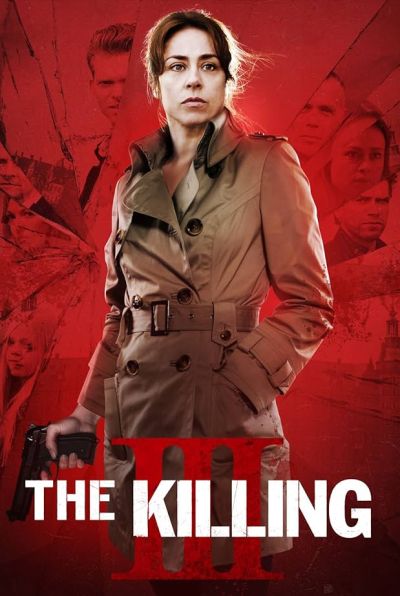
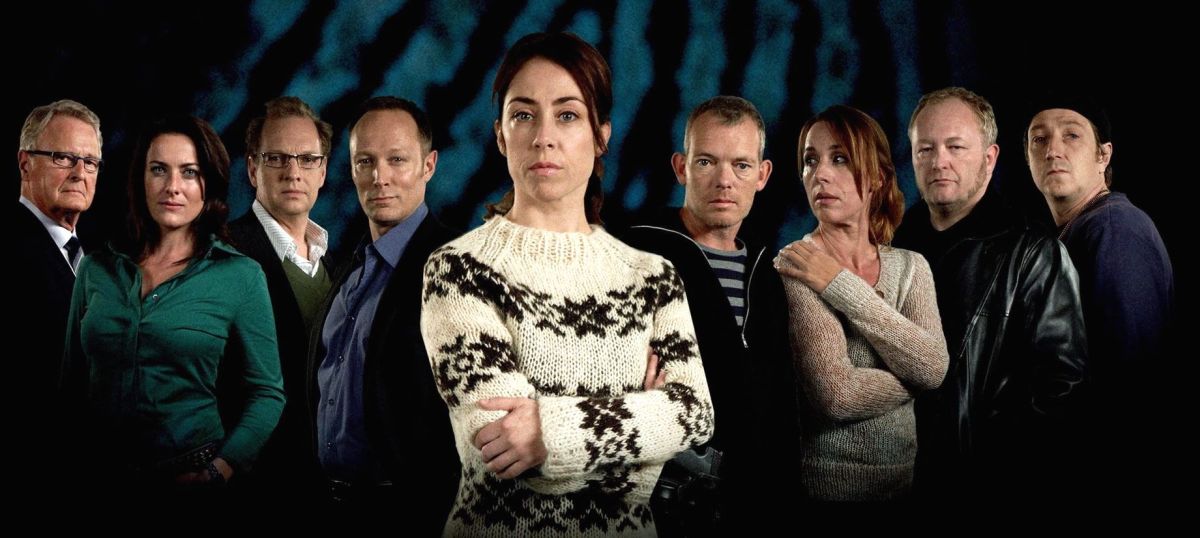
Though before these new shows, some starring some quite “damaged” women, hardly anyone except die-hard fans of crime stuff noticed. The show that served as a wake-up call for everything was The Killing. This Danish-German co-production ran for three seasons, from 2007-2012. [It seems whenever there is a new Scandinavian crime series, ZDF, the second public TV channel of Germany, is involved. They also co-produced the Millennium and Bridge shows, among other Scandinavian series.] The original version totalled 40 episodes of 55 minutes; some countries broadcast it as 20 episodes of around 110 minutes. The German version was like that: you always can tell the break between episodes, by the two-minute montage, with music underneath. It received a number of remakes, in America, Turkey and Egypt.
As typical for these Scandinavian shows, they are slow-burn mysteries. This means taking their time, introducing countless suspects and going far beyond the case, such as adding a political dimension to the scope. I was astonished to discover they did really only cover one case for an entire season. In an average episode of Tatort the case would be solved and finished after the usual 90 minutes. Here, it takes longer – much longer! – especially in the first season. It started to drag a little bit, as solving the single case of a vanished girl lasted almost nineteen hours on screen. That said, the longer experience definitely has its advantages.
For perhaps the first occasion, the suffering of the family members left behind after a beloved person dies, is shown in what feels like almost real-time. That’s remarkable, as in almost any crime story I have ever seen, these feelings are usually only vocalized in one or two sentences. Just recently, I watched an old Italian giallo and it felt almost ridiculous how the main character seemed hardly moved at all, as her entire family was exterminated, one by one. Is such behavior normal? Normal people mourn their beloved ones. Maybe some do it more quietly than others, but most movies or series leave this, very important, aspect out, with it usually secondary to finding the perpetrator. The Killing takes that time, showing us the after-effects on a family barely able to go on, needing psychological help, and taking pointless, misguided revenge, with acts that can’t bring back what has been lost.
Admittedly, they might have gone on in this direction a bit too much – especially in the first season, which is twice as long as the others – and I was starting to look at my watch. Though things are always happening, you may lose a bit of patience as yet another suspect is presented to you. What, they are proven innocent? Okay, how about this one? Oh, and there is new evidence, it might actually have been the one we let off the hook last episode! And so on.
In all three seasons, a pattern of political involvement is found. For example, a pool car belonging to a political party might have been involved in a kidnapping, with the story taking place in the run-up to elections. Suddenly, the whole process of parties in electoral battle mode can be affected by the outcome of the investigations, as well as individuals’ dirty laundry being brought up by the other side or the police. One of the main politicians in the first season is played by Lars Mikkelsen (Mads’ brother), who’d go on to play a great villain in the Benedict Cumberbatch “Sherlock” show. In other seasons, the police have to deal with other institutions and organizations hampering their work, such as the military or the secret service. The third season deals with a major industrial corporation, as the company chief’s daughter is kidnapped and might be held in one of his shipping containers.
But the main character is always the introverted police commissioner, Sarah Lund (Gråbøl). Lund doesn’t come across as the most accessible character, to say the least. It’s a character trait she shares with her sisters in spirit, Salander and Norén. Though of the three, she might be the most “normal”, and her biggest problem an inability to communicate. Maybe it’s too cold in Denmark, and you don’t want to open your mouth if it’s not necessary? She can be quite talkative – when it’s about the case. But it’s always about the case and not her family. In season one, Lund’s fiancé and son wait for her to come to them in Sweden. Though she wants it, there is always something. Her superior insists she has to continue her work, as the only one who can, despite her successor already waiting in the wings. Even after boarding the plane, she returns once again to solve crime for another day in Copenhagen. Then everything changes when her colleague gets shot.
She gets smarter in the second season, now carrying her gun with her at all times. This will save her life at the end of the series, which deals with a series of murders of former Danish soldiers. Sometimes you can’t solve everything just with your mind! But there is always an apparent lack of social competence. Lund doesn’t seem to understand the emotional needs of her family (and others) and that’s why she loses them. The case is always more important for her. She becomes quite obsessive in her investigations – even after everyone, including her new chief Brix (Morten Suurballe) sees a case as solved. You thought Columbo with his, “There is still a little question I have…”, could get on your nerves? Wait, until you meet Sarah Lund!
There is a learning curve and character arc for the character. She is hesitant to come back to work in season 2, and in season 3 realizes that she has failed, not only as a mother but in her social life in general. She would like to have a closer relationship with her son, but he doesn’t want anything to do with her anymore. She manages to take care of his pregnant girl-friend, though even in front of the hospital room where the girl and her son are holding her newborn grandchild, she still turns around because… Well, you know… The case… Ultimately, the show can be seen as a tragedy. Yes, the cases all get solved in the end. But that doesn’t mean that we get a truly happy ending.
Season 1. The father of the murdered girl kills the murderer, and will most likely go into prison for that. Season 2. The minister of justice uncovers the corruption of the ruling government, but can’t do anything against it, as everyone is covering it up. He can only decide between joining them, thereby keeping his career, or quitting. Season 3 is the worst of all. While the kidnapped girl is saved, the industrialist must remain silent about the cover-up of his board of directors, in order to keep the company going. Meanwhile, Lund finds out who raped and murdered another girl years ago, and sees no alternative but to shoot the murderer. The ending has her leaving her home country, perhaps to return one day with new evidence to justify the killing, instead of finally getting together with a past love from her youth (Kass, who would later enjoy success as Jussi Adler-Olsen’s Carl Mørck).
As there never was a fourth season, she might still be searching that evidence abroad. But happy endings certainly look different in Scandinavia. After all is said though, this is a good show with great and convincing actors. You can enjoy its complex story-lines, its gritty, sometimes almost cynical, world view and darkness, if you are willing to be patient and have enough time. The second and third seasons are much easier to watch than the first. The Scandinavian approach to crime series is definitely different one from what other European or American series offer their audiences. But if you get used to them, they can be quite addictive as this show showed. On its release, The Killing became especially successful in Great Britain, which might then have drawn the attention of American producers in this direction.
It started the new wave of Scandinavian noir in 2007, which seems to have lasted for about a decade, ending ten years later in the Hollywood adaptation of Jo Nesbø’s The Snowman, with Michael Fassbender as Harry Hole. But if you are in the mood for more psychologically damaged, Scandinavian, anti-heroines, you’ll find plenty of others, such as Annika Bengtzon or Rebecka Martinsson. There are also reports that Amazon Prime is planning a new show on good ol’ Lisbeth Salander. Who knows, maybe the era of troubled Scandinavian female investigators isn’t over yet?




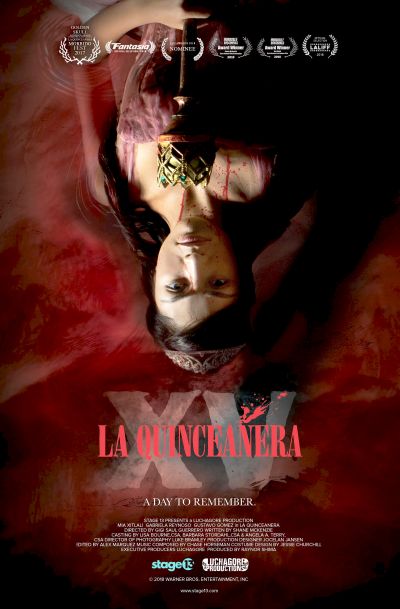 If it hadn’t been for the lack of an ending, this would likely have got a seal of approval. The problem is, this web series came out in 2017, and as we close in on a decade later, I am beginning to suspect we may never see all the loose ends addressed. It begins with a quinceanera party, the traditional Mexican celebration to mark the coming of age of a young woman. In this case, it is being thrown in honour of Alejandra Santos (Xitlali), whose father Reynaldo (Mendoza) runs a Mexican restaurant. She really doesn’t want to be there, and her doubts prove well-justified, because it gets gate-crashed by Chavo Del Rio (Retamal) and his thugs.
  ★★½
★★½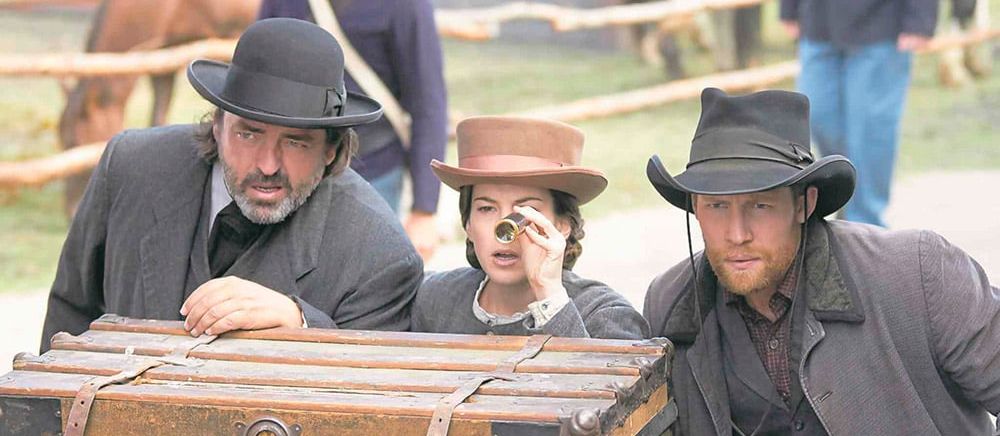 ★★★½
★★★½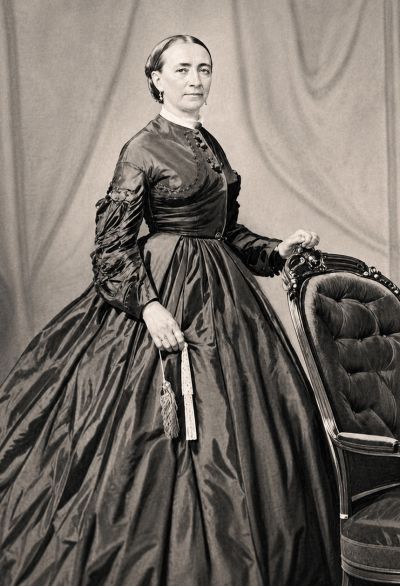
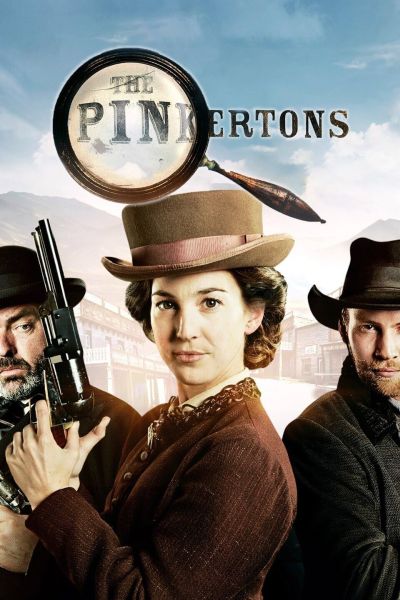 Meanwhile, Will is a bit of a rascal and wants to prove his worth as a detective to his grumpy but sympathetic father. But he and Kate get along well, developing a friendly working relationship. She doesn’t reveal much about her background. I wonder if screenwriters maybe wanted to set up something along the lines of the Benedict Cumberbatch version of Sherlock Holmes, without the extremes. She definitely has a scientific mind, quoting facts that indicate she is well-read, and uses what could be called early forensic investigative methods. But she is not set up as a genius and doesn’t solve the cases alone: this is genuine team work. In the beginning, I wondered if Kate really belonged in the “girls with guns” genre, since an investigator is not necessarily someone involved in much action. But I shouldn’t have worried: there’s enough to confirm her action heroine status!
 ★½
★½ As a child, Oo-yi came to Thailand with her mother as a migrant worker. They had the misfortune to work for the cruel Madam Bussara (Kingpayome), who had a particularly nasty habit of pimping out young girls to her lawyer, Methi. When she tried to do the same to Oo-yi, Mom stood up for her – and was beaten to death for her pains. Oo-yi was able to escape, and raised by Ni Wai (Sirikul). Now, an adult (Luevisadpaibul), she is set on vengeance, and intent on destroying Madam Bussara’s life. To do so, she becomes Thicha, “accidentally” bumps into Bussara’s son, Phatchai (Chirathivat), and begins cultivating a relationship with him. But that’s the story of revenge: it’s messy. Since her feelings for him start becoming genuine.
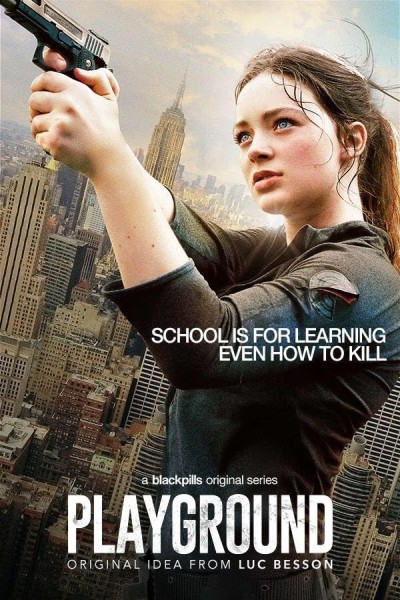 I’m a little surprised I hadn’t heard of this, considering it is based on a concept by Luc Besson. What we have here, though, is a feature-length version of what was originally a ten-episode web series. I presume it was intended for distribution on something like Quibi (remember that?), but I’ve not been able to find out where it previously appeared, if anywhere. Anyway, it recently popped up on Tubi, looking like a “proper” film, though still with the chapter headings. While touted as “an original idea” by Luc Besson, let’s be honest: if you chucked
  ★★★★
★★★★ Murder by the Lake is a TV crime series co-producted between the second public German TV channel ZDF and the public TV channel of Austria ORF. It started in 2014 with a 90-minute long TV movie, followed by a further movie each year until 2017, when the yearly output was doubled. Since 2024, there have been three movies each year. So far, 22 episodes have come out, with #23 scheduled for later this year. The German title Die Toten vom Bodensee translates as “The Dead of Lake Constance” – “Bodensee” is literally “Ground Sea”, but is called Lake Constance in English. When I saw the first movie I was struck by its surprising quality. If you have read my reviews here, you know I usually don’t think much of the quality of German film productions. This is different: not only is it a show that I always watched, but one where I bought the DVDs.
 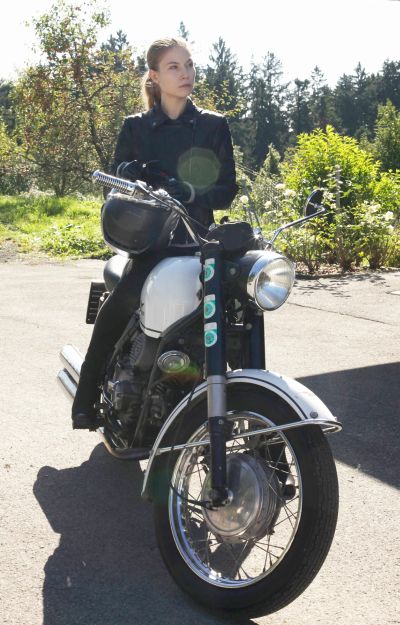 But most interesting is her behavior. When she first appears, she is strictly business. She says hardly a word otherwise, with no interest in getting to know the wife and daughter of her new colleague. She lets no one in emotionally, and shows an aversion to personal connection. Her behavior feels awkward, even upsetting, until you get used to it. Some watchers complained she mumbled her lines, but then, most characters here speak with an Austrian accent which can be a bit difficult to understand for Germans. It might also have something to do with the idea of a character who only slowly reveals her secrets to the audience. Because what I realized after a while, was that Hannah Zeiler is actually a more clinical, streamlined and slightly tamer Austrian version of Lisbeth Salander. Or at least her distant relative.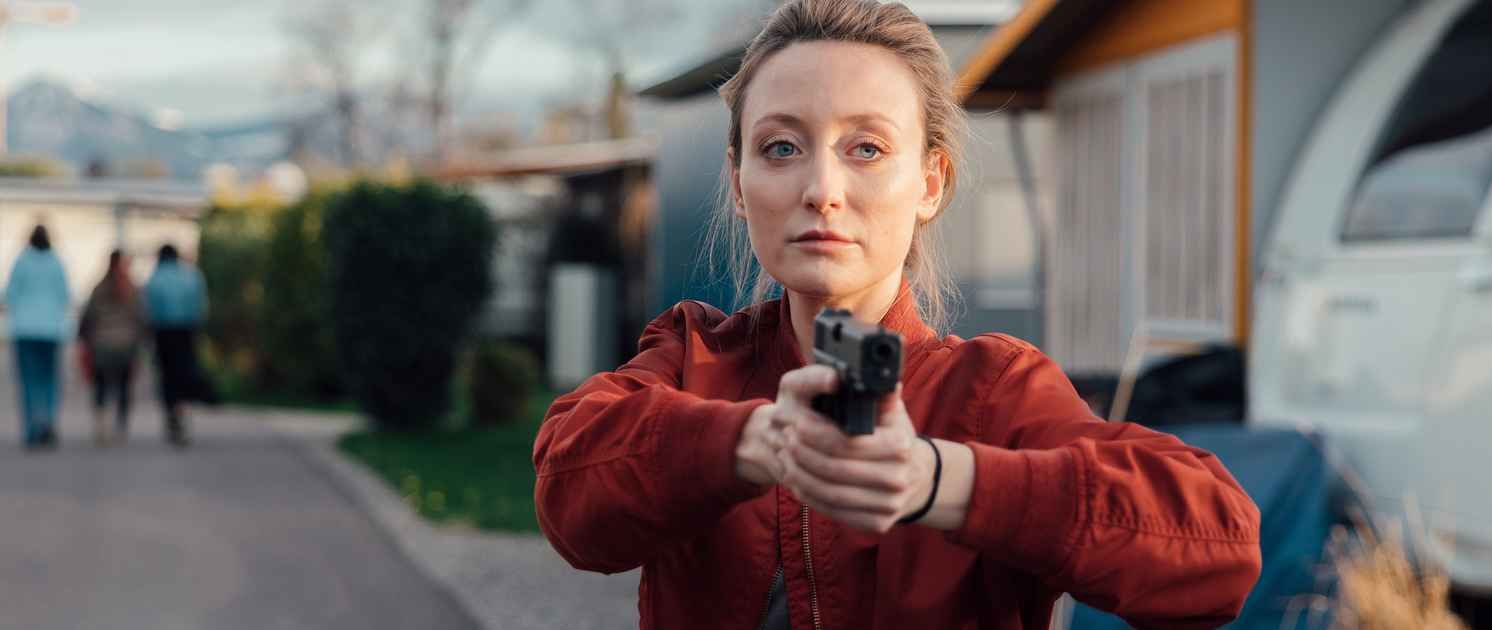
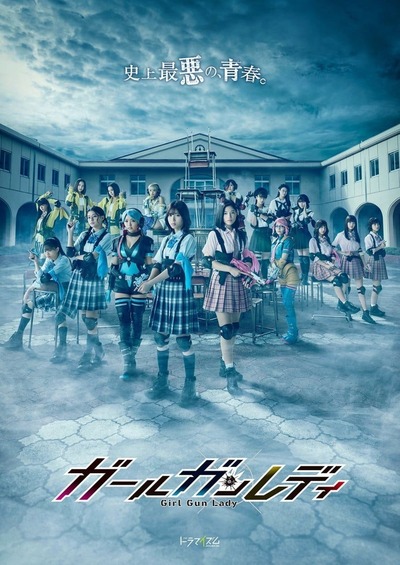 With its combination of alternate reality sci-fi and stylized action, this feels like it could have come from the mind of Mamoru Oshii, creator of things such as
 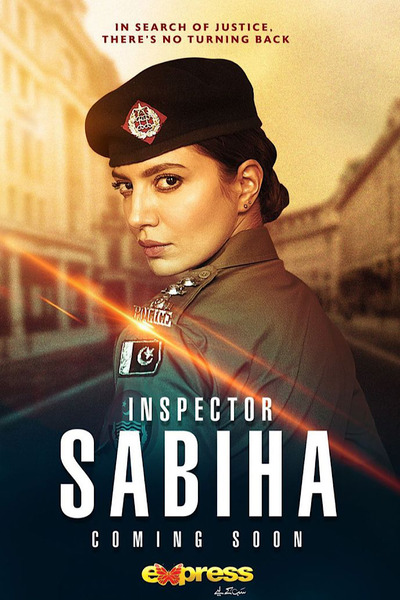 Under other circumstances, this six-episode TV series, would potentially be a marginal entry. But, just as I try to take the historical era into account, I think the location from which a film comes should also be a consideration. Some countries and cultures are simply more action heroine friendly than others. What would be groundbreaking in one region, might not even qualify from elsewhere. This is from Pakistan, and is almost the first such entry in our site’s history. [There’s just
 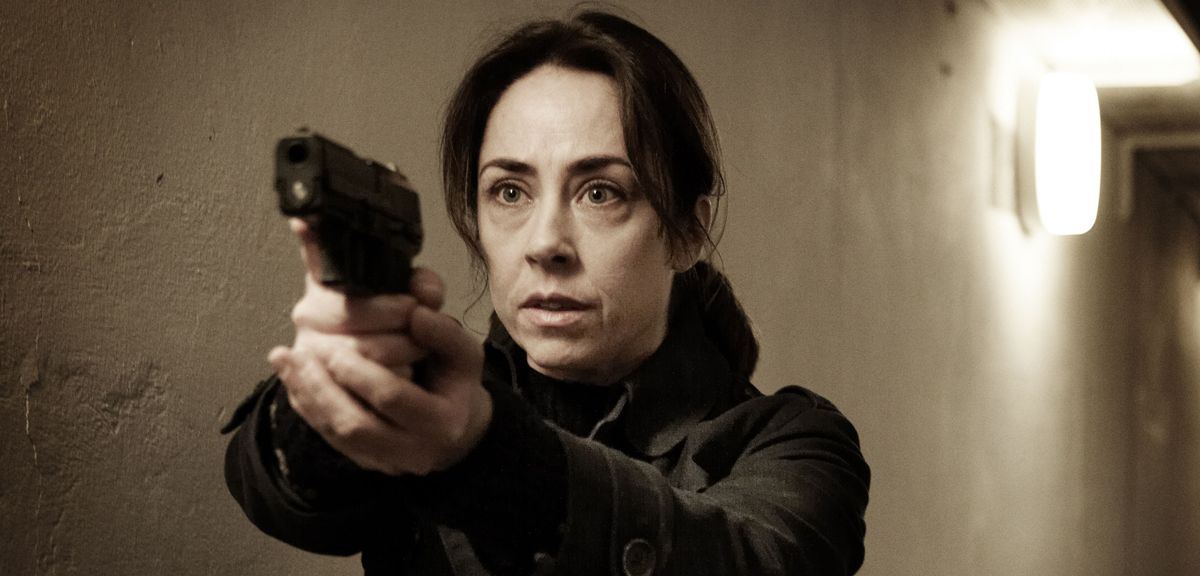 ★★★★
★★★★ For perhaps the first occasion, the suffering of the family members left behind after a beloved person dies, is shown in what feels like almost real-time. That’s remarkable, as in almost any crime story I have ever seen, these feelings are usually only vocalized in one or two sentences. Just recently, I watched an old Italian giallo and it felt almost ridiculous how the main character seemed hardly moved at all, as her entire family was exterminated, one by one. Is such behavior normal? Normal people mourn their beloved ones. Maybe some do it more quietly than others, but most movies or series leave this, very important, aspect out, with it usually secondary to finding the perpetrator. The Killing takes that time, showing us the after-effects on a family barely able to go on, needing psychological help, and taking pointless, misguided revenge, with acts that can’t bring back what has been lost.
 Season 1. The father of the murdered girl kills the murderer, and will most likely go into prison for that. Season 2. The minister of justice uncovers the corruption of the ruling government, but can’t do anything against it, as