




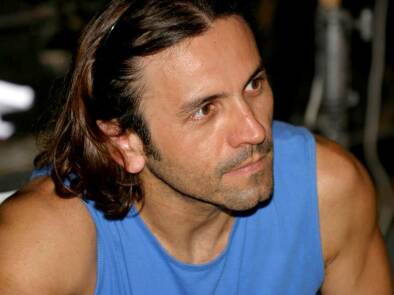
 Halder Gomes is a 4th degree black belt and blue belt in Brazilian Jiujitsu. He’s also a graduate in business administration with an MBA in Marketing, from the University of Fortaleza – so he can write your company a plan, then kick your ass if you don’t follow it. :-) However – and undoubtedly of more relevance to our current location, he’s also the director of Sunland Heat, what may be the first locally-produced action-heroine film from Brazil. In between jetting to festivals with his short film Cine Holiúdy – the Good Guy Against the Bad Guy, and attending the American Film Market, he talked to girlswithguns.org about the movie.
What came first, martial arts or film-making?
Movies brought me to martial arts, and martial arts brought me to the movies. Actually, martial arts films came first. The first movie I ever saw was in the martial arts genre back in the ’70s. The theater was so precarious – as was the print! – but it still had magic (and inspired my second film). After that screening I decided that I wanted to be a black belt and make movies, but I was only about six years old, just too young to figure out how to put those fantasies together. At that time I lived in a small town in the middle of nowhere in the country side of Brazil, but in spite of this, I that kept the dream in my mind.
Years later, in 1984, when I was doing an exchange program in Drayton Plains, Michigan, I did my first taekwondo class. It was funny, but the reason behind that was absolute boredom. A strong snow storm meant I had to stay in the house with my American family – not speaking any English, I spent time looking at the yellow pages, and I saw a taekwondo logo. When the storm ended, I went for a trial class. I believe that storm was a sign to put those dreams together – it was also just at the time that The Karate Kid was out.
When I came back to Brazil, I met André Lima, who became my taekwondo master; he was also a dreamer, and after the classes we used to talk for hours about going to Hollywood, working in films, etc. If you say that in the US, fine, but where we came from, we were absolutely lunatics! In 1991 André went to live in LA, and he started doing stunts in martial arts films for Philip Rhee, Art Camacho, Don ‘The Dragon’ Wilson, etc. That’s where I came along: Art Camacho was a great help, giving me bit parts in his films, and being very enthusiastic about teaching me the film making process.
 Where did the idea for the film come from?
Chatting on the sets of martial arts films. My city, Fortaleza, is a beautiful location: a great variety of natural scenarios, sun with no clouds for 6 months straight, fabulous beaches, etc. The city of Fortaleza has been film-friendly, since the ’40s, when Orson Welles spent a long time shooting his never finished It’s All True, but until Sunland Heat, no action films were done there – breaking this barrier was a matter of honor.. I had all those ideas, but no script. So I went to the local film school and placed a note on the hall saying that I was looking for a script writer with a story for an action/martial arts film. I also wanted to show the nice side of Brazil. Most of the movies only show “favelas” – misery, etc. I’m not trying to hide our social problems, but Brazil is not only about that.
What is the Brazilian film industry like?
Our industry is growing, but it’s very different than in the US: it’s all based on tax incentives. You have a project that is submitted to the Brazilian National Cinema Agency. If your project gets approved you are allowed to sell stock bonds to capitalize your budget – companies can buy these stocks, deducting taxes and becoming co-owner of the film. It looks simple, but isn’t. There are very complex bureaucracy issues, plus, it’s still the government’s money anyway. The marketing departments of these companies make the decision on where to invest, but of course only want the films that do well in the box office, and also get as much as possible exposure on the major media, which makes the competition very tough for independents. We don’t have much to offer to them, except our work and stories. We have to fight the majors for the same “food”.
There’s another way of investment, which also is very good for the majors. They are obliged to invest on local production – part of the tax-deductible profits sent to their headquarters in US. But it’s still the same thing: the money barely gets to independents, instead they use it for making co-productions with other big companies. Every state has their own tax incentives as well, and that’s where we fit in, even though, in short, if the Federal Government “pulls the plug”, our industry is over.
How did you go about getting investors?
It was crazy. I raised part of the funds through that local tax incentive program, which was just beginning. I had to spend many, many hours with accountants explaining how the legislation works, and ended up visiting 139 companies within 3 months – only a postman can break my record! – many of them, more than ten times. Out of all those, 13 said “Yes”. The funny thing was, for some of these who said yes, their words after closing the deal were, “You’re crazy, dude – so am I. You have my support, go get into the details with the accounting department”. But the money came little by little, in “homeopathic doses”. Here’s what’s interesting about my investors: I have a shoe store company, a juice company, a jeans textile, sunglasses store, construction material shop, electricity company, telephone company, and so it goes. It’s not easy to sell a film idea to people that have no clue about the entire process.
 Why did you decide to have a female lead?
The story that the writer had in mind had a female lead, and I had no objection at all, As a matter of fact, I really liked the idea, especially because the character was not stereotyped. As a matter of fact, my next two scripts have female leads. It’s very easy working with them on set. They listen better, and are more patient! I tried to interfere in the writer’s creative process as little as possible, however, when you have to direct and produce at the same time with a tight budget and schedule, it’s impossible not to have “production versus directing versus writer”. It’s quite normal, but you have to fragment yourself: in the end the lack of time and money wins, so you have to give up shots or full pages of the script.
Did you have specific actors in mind?
Yes, I even had a letter of intent from Cynthia Rothrock. I also had André Lima in mind as a bad guy (which he played), Mathias Hues, Athena Massey. But the entire process took so long due to many problems along the way, than I had to re-think about everything, and decided to open up casting for most of the characters.
Was it a lengthy casting process?
As a matter of fact the casting went fast. I did a two weeks ad in the Back Stage West, and it rained resumés and headshots, about 3,000 in total. I cut to 25 of each character and than started casting. It was a hard time to do it: 9/11 had just happened, the world was still a little bit confused, and many people were scared to death to leave their homes. One of the things that I had also to see was, if the ones I wanted had travelled across borders before. I didn’t want someone to chicken out or panic, because of some little tropical mosquitos or insects, for example! André Lima is an old friend, so is JJ Perry (both world-class taekwondo champions and stunt-men) and they would be the action pillars of the film. For the acting I had the experience of Jay Richardson and Laura Putney, and for the action and acting, I had the versatility of Alex.
Why did you decide to take a role yourself?
All the bit parts that I did in US martial arts films were getting my butt kicked, so, since it was my movie, I wanted to kick some ass and do a nice fight scene with JJ. Unfortunately I had to have anterior cross ligament surgery a little before the film; I never had enough time to heal and perform, which brought me back to where I started: getting my butt kicked! After that I didn’t care about being in front of the cameras anymore. I really like being involved with creation. In my second film, I only have my face on a poster that stands in front of a movie theater.
 It was Alex Van Hagen’s first film. Did you have qualms about putting a screen novice in the lead?
Not at all. Actually that was the spirit of the film. My first film, Alex’s first lead role, JJ Perry and André Lima’s first major part, the director of photography’s first feature, etc. Alex did a great job. Her role was not easy. It required very intense acting, especially in the final scene and during the fight in the gym. She prepared herself for that by taking acting classes and adjusting her kickboxing style to taekwondo and mixed martial arts. The film gave lots of opportunities and revealed many talents behind the cameras as well. To tell you the truth, I think producers in the US don’t use JJ appropriately, by not giving him major roles. He can act, and his fighting skills are fantastic. Labeling him as a “stunt man”, is a big mistake, though he is one of the best. He has a real star profile.
As a rookie feature director, how did you feel the first day on set? And overall, was it what you expected?
Absolutely calm. I had no obligation to make a masterpiece, nor the conditions to do it. My sole concern was to get all the shots done by end of day: we only had 4 weeks, due to other commitments for the actors. As a matter of fact, shooting was much easier than post – it’s a big help if you have a good production manager. Basically, it was like I used to see on other sets: people go crazy, yell at each other, hurry, rush and hustle, then hugs and kisses after the wrap shot. But to tell you the truth, filming in Brazil is more fun! Jokes crack people up all the time from everywhere, making the set more relaxed.
It looks like it was mostly done on location. Did that pose any special problems?
Yes, it was all done on location and we had many problems, epecially with sound. Brazil is a very festive country, and there’s always some wild, wasted dude with their stereo in the car at the highest volume. For the scene of Jennifer waking up, there was the sound of a dog barking, and we couldn’t find where it came from – it took us a long time until we found the house! And at the final scene where Jackie gets killed, there was a train route that would pass right by us every five minutes.
Were the action scenes planned out in advance, or created on the day?
I had some initial frames outlining the main action on storyboards – you can see some of them on my web site, in the “cinema” section. From these, JJ Perry could develop the action and fight scenes; we’d discuss it, and since he works fast on his creations, we could practice them right away. But the locations did also play a part in the decisions for certain shots.
You said that a lot had to be removed from the script. Can you tell us more about what was taken out?
Mostly, these were scenes that gave more information about the characters. I also had to remove a car chase on the sand dunes and most of the scenes of the parallel plot, about the casino money that’s been stolen by Laura Putney’s character. The first scene was much longer in the script with a lot more action and LA exterior shots. These cuts were made at the writing stage. During the shoot we had to cut a few things due to production problems along the way: we shot in the rainy season, so had to be very fast, and sometimes instead of covering with many shots, we had to shorten quickly the entire shooting schedule of the day.


It’s a dirty job, but someone’s got to do it.
Laura Putney gets bloodied up for Sunland Heat
After the movie was filmed, I had the option of editing in a more linear way (which I did in a first cut), but then decided to do something different from the usual for action films. I couldn’t afford to have that much action, so I had to keep the attention of the viewer in between these scenes – making the story full of U-turns was the way I found to do it. In the end it split opinions about the structure of the storyline, and that was the intention, otherwise it would have been something made to formula.
These days, it often seems easier to make a film than to find distribution for it. How hard was it for Sunland Heat?
It’s not easy, but I’m extremely persistent, very patient and I would say obsessive. A film is a product like any other, and you have to position yourself in the right niche. When I had the film in the can, I went to the American Film Market and researched what companies had the right profile for my film. After selecting these distributors, I did a check list based on point scores from 0 to 10 – time in the business, references, how they treat you when you approach, professionalism, presence in the major markets, how long their days were at the AFM, etc. It seems crazy, but it’s your film; given everything you had to go through, you don’t want to give it to anyone, just to say “I have a distributor”. After all, you have investors to pay back and finally get paid! Then I started sending screeners: I sent them to the top 3 first, and the #1 on the list, Artist View Entertainment, was the one with which we made the deal.
 In Brazil, it was different. When doing post production on Cine Holiúdy, I left a screener at a distributor (Casablanca Filmes), part of the same company as the lab. The film was in their drawer until its premiere in our State film festival. That was a sellout (right): more than 400 people couldn’t get in, causing security problems, and the festival organizers needed other screenings. By coincidence, the distributor’s publisher was there – so were the press and one very respected film critic, Kleber Mendonça Filho, published his review with a headline on the cover of Universo Online, the number one Internet magazine in Brazil. The next day the distributor pulled the film out of their drawer, called me and we made a deal memo. The next week, others did too, including one major distributor.
How has the film been received?
There were many different point of views, like any other film. Some very respected critics in Brazil wrote good reviews about it, pointing out where the movie did well and where not. As for the audience, some liked it because it was not the usual kind of script, some didn’t because they wanted something simpler with more action. Some liked it because there weren’t many gun shots, some didn’t because there weren’t enough. Some liked it because the lead actress had her fragilities as a human being, some didn’t because they wanted something like a superwoman! A good way is to compare reviews from different writers, with other equivalent films. By doing that, I would say it was not so bad for a first film. Cinescape gave a B+, Girlswithguns 3.5/5, Cinemascopio (Brazil) 2.5/5, Yourvideostoreshelf 5/10, ATN zone 2.5/5, and so on.

Halder being interviewed by Jô Soares on Programa do Jô – Brazil’s version of Jay Leno
What do you think about Brazilian cinema at the moment?
It’s growing, in spite of the complete dependency on tax incentives, but we still have a lot to do – especially to get better financial conditions for independents and distributors. Our Ministry of Culture plays an important part for new film makers, by creating funds for shorts, docs, and low budget films; the competition is tough, but it’s what we have. There was a time not long ago, when Brazilians were concerned about going to the theater to see our movies, because we had many problems, technically speaking. Now that’s history: the number one blockbuster this year in Brazil is a local movie, 2 Filhos de Francisco, and I believe it’s only a matter of time before a Brazilian film wins the Oscar for best foreign picture – we came close with City of God and Central Station. New talents emerge all the time: unfortunately, due to the low amount of money in the market, the percentage of good stories that are left to lie in a drawer is higher than in other places.
Looking at the finished product now – and trying to be unbiased! What do you think of it? Would you do anything differently if you had the chance to start over?
I see it in two different ways. One is, what is the film like compared to similar ones, by genre and budget? – and I’m very happy with it. The other way is, comparing it to the first film of known directors, and how they’ve improved. By that measure, after all is said and done, I’m satisfied. Being satisfied with the product doesn’t mean that I’m satisfied with myself. I’ve seen many great directors’ first movies, and their talent is like marble, waiting to be sculpted – sometimes rough, some times naif and primitive – but it’s there. Of course I’m comparing first films made under the same circumstances. I can’t forget where I came from, and that before Sunland Heat, I had never directed or produced even a wedding video. But you must learn the lessons from your own experiences; I’ve learned mine and I do know what I have to improve. I believe I did a bit in my second film; the rain of awards and prizes from film festivals supports that!
My biggest lesson is not to give in over what you want. After working on the production teams of top Hollywood directors, I’ve seen that they get their shots no matter what – and by seeing the final result, most of the time you agree that they were right about being obsessive about it. Looking back, after the film is made, you think many things: happy or lucky to do something this way, regretting not doing it that way. But when you’re there as director, producer, executive producer, production designer, stunt-man, actor, signing checks, etc, you can’t see it as clearly as on the screen, plus things move very fast.
No matter what happens in the future, this will be my most important film, even if I win an Oscar. Being very honest, if I didn’t know what I do now, I don’t know if I would have done anything different. But given the experience I have today, certainly I would take the time to rewrite the script, and have at least a couple of days with my cast for workshops. It’s hard to say that I could do much else different, given the same conditions and being involved in so many ways. I would do the editing different, like at the beginning of the film; I’d have done more pick up shots and have more flashback inserts; and I’d cut it the way I see now.
 Since then, you made Cine Holiúdy – the Good Guy Against the Bad Guy. Why did you decide on a short film rather than another feature?
Doing a feature is great, but I didn’t want to repeat the same experience right after. I wanted to do something faster and cheaper, however with great impact. I see the short film as a fight that ends in a knockout, while a feature is decided on points. And raising funds for a feature can take too long. To tell you the truth, I loved doing Cine Holiúdy, it was a script for which I had great passion, and that helps to tell a story of the time and place where I grew up – I’m a nostalgic person, and would say it’s autobiographical.
It turned out to be one of the most successful short films in festivals in Brazil over the past year. It won many best film awards, as well as other categories, and has been screened in festivals such as Raindance in London, and in Romania, Germany, Austria, Switzerland, etc. It has even been used by executives in Brazil as a tool and foundation, for business speeches and seminars on initiative, solving chaotic situations, creativity, agility, etc!
What are your next plans? Are you planning to stay in the action genre?
In between features, I’ll keep doing shorts for sure – as a matter of fact, my very next project is a short documentary (with an extended 50-minute TV version) about soccer fans in Brazil, with which I won a State writers’ funds contest. The good thing about Cine Holiúdy, is that I have a great “trailer” for a feature-length version and that helps find investors. I see shorts that way, as a bridge to bigger projects.
It’s hard to make plans in Brazil, but I have many projects rolling – the first to get financed will be made first! Another feature idea is also being shown to potential investors, called Sweet Dreams Cinderella. It’s an action/drama story about girls from Fortaleza that go to Europe with promises of decent work, and end up as sexual slaves – it’s based on true stories. There’s also the feature version of Cine Holiúdy, a psycho-thriller short film, and more scripts that I’m writing.
As for Sunland Heat, the film so far has been released in 12 countries, including USA, Japan and UK. In Brazil it will be re-released by Paramount Pictures, along with a comic book as a prelude, briliantly made by local artists. But I don’t want to stay only in the action genre – I like telling stories, no matter what the genre is. Doing a comedy like Cine Holiúdy, that worked for many different cultures in many countries: it definitely made me more confident for all my future ideas.
[Many thanks to Halder Gomes for making the interview – our first! – such a pleasure to do, and assisting with photos too.]
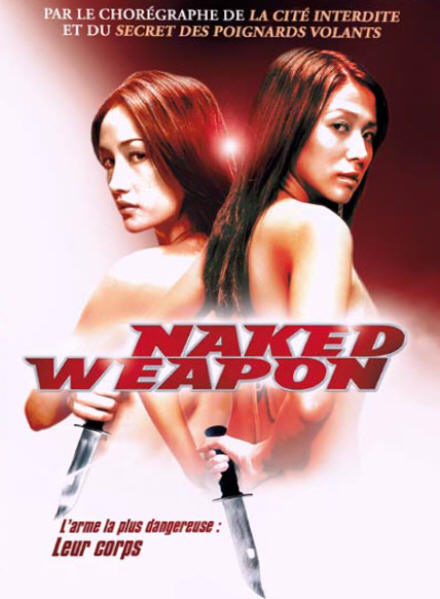
 After a decade of “sequels” that weren’t worth the video-tape they were apparently filmed on, Wong Jing finally went back to the well in 2002 for what is, in truth, a surprisingly-tame movie. Given the names of the lead actresses (“Maggie Q”, “Anya”) sounded more like porn starlets than anything, I was expecting loadsa sleazy fun, but they’re model names, and this is probably closer to
 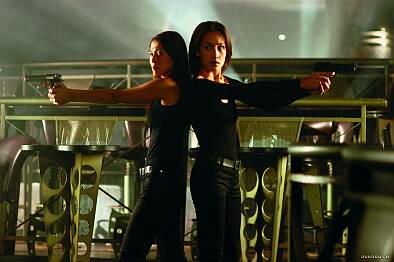 Instead, there’s a laughable scene after an assassination attempt on her by Jill, at the behest of Madam M, who realises she could lose Charlene back to her mother. Jack ends up carrying the wounded parent to the hospital, but keeps stopping to converse with Charlene, which had us screaming, “The hospital! It’s over
 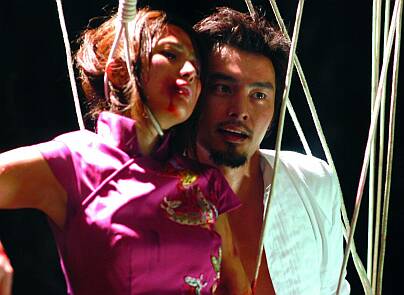 Is it better than Naked Killer? A difficult call, and one that likely depends on your state of mind – as well as whether the word “good” could ever be applied to Killer, a lurid blast that really could come from Hong Kong, and probably only from before the Chinese takeaway of the colony. Weapon is certainly better-crafted and has more crossover appeal: our son was going to pick it up in Blockbuster, till we informed him it was already part of our unwatched pile. On the whole, I think Weapon is the one more likely to be watched again in future – if only because Killer would require the room to be carefully swept for lurking minors and maiden aunts first.
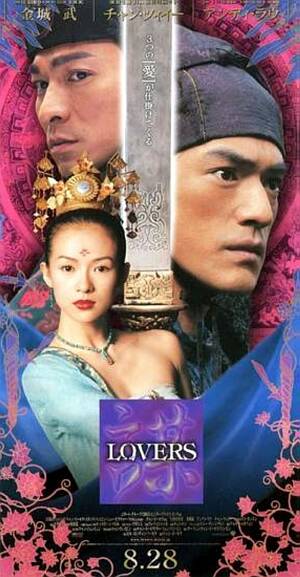 Since the success of Ang Lee’s Crouching Tiger, fellow arthouse director Zhang Yimou seems to have become obsessed with one-upping Lee. First was Hero, a sumptuous and multi-levelled tale of revenge and betrayal starring Jet Li; now, we get House which while slightly smaller in scale, is clearly going for the same tragically romantic feel as CTHD. Policeman Leo (Lau) suspects Mei (Zhang), an arrested blind prostitute, is part of the titular rebel group, so sends Jin (Kaneshiro) to win her confidence by helping her ‘escape’, then going with her to the Flying Daggers’s base. However, it gives nothing away to say that Mei and Jin start having feelings for each other, as they battle through the countryside, and it’s no surprise to discover that several other characters aren’t what they seem either.
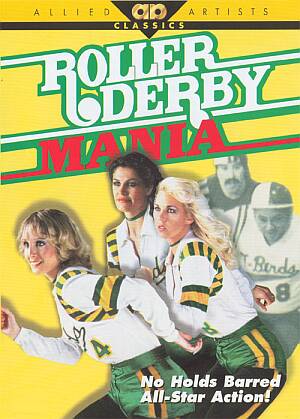 This dates back to 1986, which is a little odd, as the sport was pretty much in one of its down-turns at the time – the excesses of RollerGames were still a couple of years away at that point. This isn’t probably the best place for a novice to start, as there’s no explanation at all about the sport, since it assumes you know what’s going on, how bouts are staged, scored and what the rules are . There’s a little about the history (including a cute song from the 1940’s), but it’s mostly action featuring the Los Angeles T-Birds.
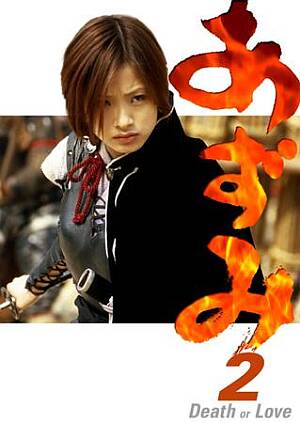 I went into this with low expectations, based on some scathing reviews and the lack of Ryuhei Kitamura, whose directorial style made the first such a joy. I’m pleased to report then, that this surpassed expectations, with some nice imagination and a bevy of action heroines (including Kuriyama, whom you’ll know as Gogo Yubari from Kill Bill, Volume 1), as well as the expected high body-count. It follows on loosely from the original, but heads in a slightly different direction; our heroine is still intent on her mission, but is diverted by a wandering samurai, part of a rogue gang, who reminds her of Nachi, her childhood friend she had to kill at the opening of the original film.
 This frothy concoction is light-hearted entertainment, which doesn’t exactly pack much of a wallop, but has some nice characters and situations. Heroine Chun (Kim), is a young cop, galled when her undercover mission is swept away by a rival; she gets another chance, but to her dismay, this involves going back to school to watch the daughter (Nam) of a gang member who has agreed to testify against his boss, but has since vanished. Of course, a hot-tempered cop with martial arts skills fits
  Perhaps I was expecting too much, after reading reviews that
 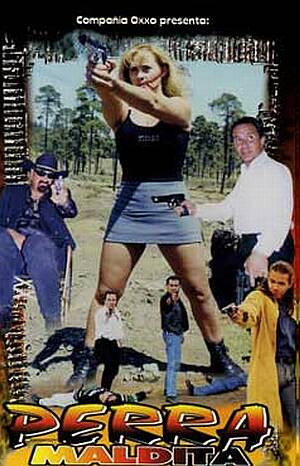 Camelia (Palmer) sees her way out of the ghetto in Ramiro (Saenz), a friend of her father’s who always has more than enough easy money. She convinces him to employ her as an apprentice, but discovers she likes sharing his life of drug-deals and casual slaughter. But they soon find out, they may not be the only ones capable of a good double-cross…
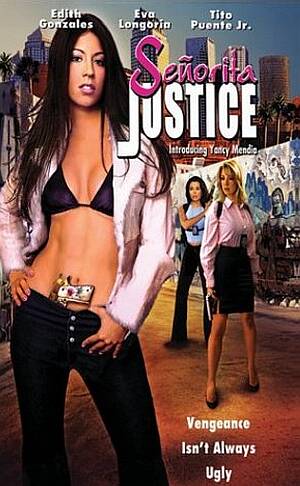 This is an interesting contrast to Sunland Heat which took a woeful script and executed it briskly enough to work. Here, the story isn’t bad – Anna Rios, a Hispanic lawyer (with a special forces background!) goes back to her roots, after her brother is gunned-down, and uncovers a maze of murky deals. It’s the execution which is largely inept, “Kantz” providing further evidence that one-name directors suck at GWG films – see also Charlie’s Angels: Full Throttle (McQ), Catwoman (Pitof), Ecks vs. Sever (Kaos) and Tomb Raider 2 (Jandebont).
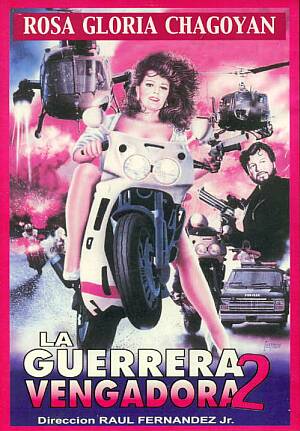 Chagoyan is perhaps the nearest thing Mexico has to offer to an action heroine. She best known for her role in Lola la Trailera (‘Lola the Trucker’), in which, she played the daughter of a haulier – she takes over his business and goes out for vengeance, after he’s gunned down for refusing to assist a drug-cartel. Almost a decade later, that director’s son would helm this, in which Chagoyan plays a teacher who moonlights as a crime-fighting vigilante. Not having seen part one isn’t much of a problem; presumably it explains her origins, and perhaps how she gets to spend so much time away from her job. All we see here is one class, before she and her midget sidekick take on a gang who kill one of her pupils (with a surprising amount of blood, it has to be said). Then, when she’s blamed for kidnapping the daughter of the police chief, she has to find the real culprits and clear her name.