



★★★
“A forest frolic which is bear-ly satisfactory.”
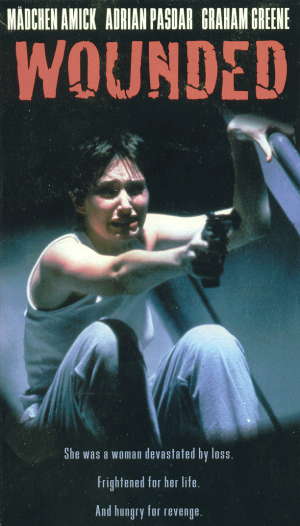 This starts off brightly, and ends not badly – if a little predictably – it’s the middle where it falls apart, spending the best part of an hour fiddling around to no particular purpose. Amick plays a forest ranger whose fiance is murdered by a bear poacher (Pasdar, looking disturbingly like Al Jourgenson of Ministry) – she nearly dies too and, rather than helping the authorities, vows to take revenge herself.
The wilderness portions of the film work well, with cool ideas like the poacher finding the bears through the radio collars put on them by the rangers, and there’s also a grisly grizzly graveyard scene which is quite spooky. After she’s shot, however, the movie wanders back into civilization. This could still have worked, with the poacher hunting down the only witness amid an “urban jungle” theme, but he just comes to town, taunts her a bit, kills a supporting character and heads back to the wilderness for the obvious finale.
Amick isn’t bad, conveying smouldering hatred effectively enough to make her unwillingness to help the police more than an obvious plot device. There’s also a nice twist where the buyer of the bear parts helps out, after deciding his supplier has become a loose cannon. However, the second act is so lacking in energy, with the heroine doing little more than sitting round, gazing into space and answering the telephone, that my attention wandered severely. A good idea, doomed largely by a serious lack of development.
Dir: Richard Martin
Star: Madchen Amick, Adrian Pasdar, Graham Greene
 Karen and Will Jennings have an idyllic life – money, a
 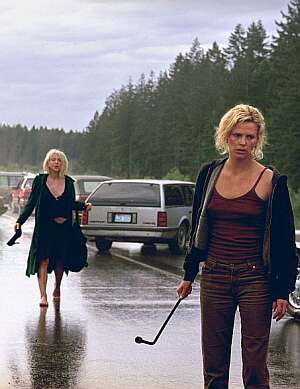 Karen has to handle the ever-dangerous Joe, while Will (Stuart Townsend) is kept occupied by Cheryl, and Joe’s cousin (Pruitt) looks after Abby, who turns out to be severely asthmatic. The cutting back in forth is designed, partly to increase tension – it does – but perhaps more importantly, cover some dodgy plot elements. As with all kidnappings, how do the criminals expect to collect the ransom? This is never made quite clear, and as the film goes on, it unravels to a frankly implausible finale involving a light aircraft, a logging truck and a mile of busy highway.
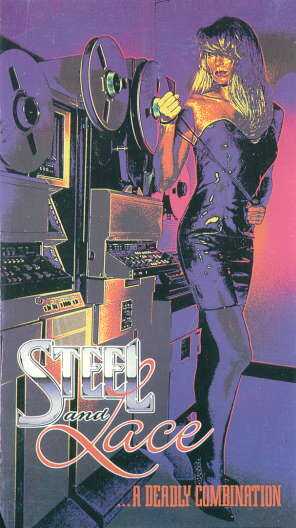 Inside ten minutes, we’ve had heroine Gaily Morton (Wren) raped and her attackers acquitted in court, not to mention her subsequent leap off a roof-top to her death – this isn’t a film which hangs around, boys and girls. Luckily, her brother is a NASA boffin (Davison – you might recognise him as the Senator from X-Men), who builds a robot in her image, in order to wreak gory revenge on the perpetrators five years later. Cleaning up behind are a cop (Naughton) and his ex-girlfriend, a courtroom artist (Haiduk) who joins the dots.
 To tide you over the summer until the new series starts, as well as an ‘official companion’, Random House has published two novels, which fill in the back story before the show. Recruited tells of how Sydney Bristow was brought into SD-6, while A Secret Life details her first overseas mission, infiltrating a Paris fashion house being used as a cover for gun-running.
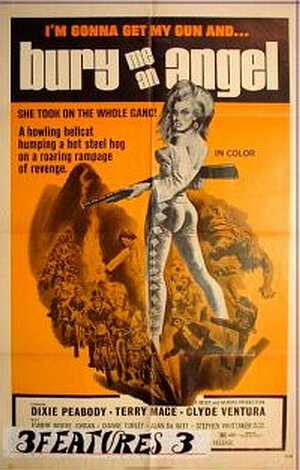 Though with a tagline of “A howling hellcat humping a hot steel hog on a roaring rampage of revenge”, how
  Few things are more painful than a film that wants to be cult, forgetting that such things grow organically and cannot be created at will. Witness this, which tries desperately to be hip, knowing and self-aware, but is permanently crippled by the fact that my bowel movements are more entertaining than its script. A new beauty salon opens in a sleepy town – and soon, residents are ridding themselves of “pesky body hair” thanks to its owner (Somers)…and also becoming mindless automatons. It’s up to the local exotic lingerie shop owner (Miller) to stop them, and save the world from depilation.
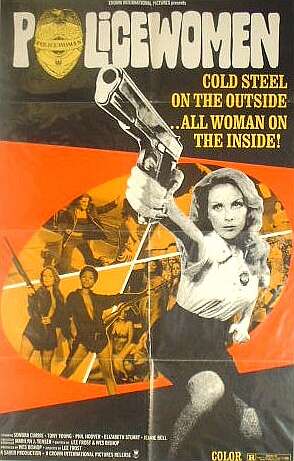 This is the kind of film Chris describes as “hokey”. I’m not quite sure what
  Yeoh’s English-language follow-up to Crouching Tiger was highly anticipated, but the end result is a disappointment. Yeoh plays Yin, the head of a family of acrobats who guard part of the key to a Sharira – a holy relic with potential for good or evil. The latter is supplied by Carl (Roxburgh), who hires Yin’s former boyfriend Eric (Chaplin) to steal the other elements needed to get the Sharira. Eric, however, switches sides, and teams up with Yin to race Carl to the prize.
 Worst of all, given a $20m budget, you’d think the climax would be more than extremely lame CGI, barely worthy of a Playstation game. Yeoh is her own best special effect, and the finale gives her little or no chance to shine. I suspect she’d have been better off taking a part in the Matrix sequels, which she turned down in order to make this mediocre action-adventure entry. Little wonder Miramax pushed the US release back to Spring 2004 – almost two years after the HK release. Do not be surprised if it quietly gets dumped to video.
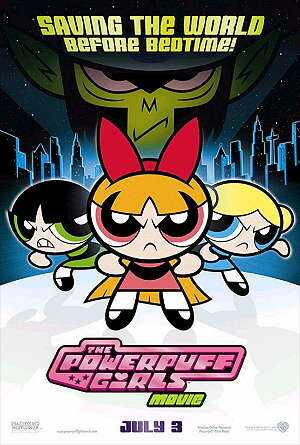 Rarely have the MPAA spoken truer words than that – crack open the highly-caffeinated, carbonated beverages, tuck into those sugary snacks and sit through the equivalent of eight straight Powerpuff Girls episodes. Preceded in theatres by a startlingly unfunny Dexter’s Laboratory cartoon, the weakness here is the obvious one of translating a ten-minute TV show to feature length; going by the lack of a crowd when we saw it, few people saw the point of paying $8 for what they could get at home for free. Though this is actually less like eight episodes than one, really stretched out, covering the creation of the girls and how they came to be Townsville’s protector, taking on former lab monkey Mojo Jojo and his evil plot to take over the world through the creation of super-powered simians.
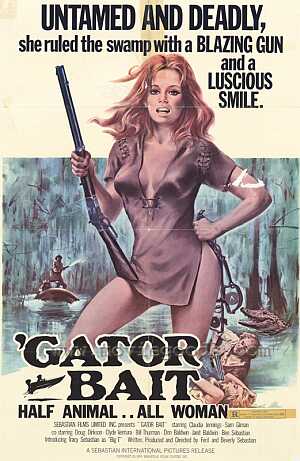 Between being Playmate of the Year in 1970, and her death in a car accident at the end of the decade, Jennings appeared in a slew of action/exploitation flicks which earned her the title “Queen of the B’s”. Despite unlikely casting as Desiree, an alligator poacher – with perfect hair and make-up, even in the Louisiana swamps – this film comes within an ace of getting our seal of approval, falling short only at the finale.