
Coral Hare: Atomic Agent by Clive Lee

Coral Hare, Atomic Agent, by Clive Lee

Literary rating: ★★★★
Kick-butt quotient: ☆☆☆☆☆

coral hareFull disclosure at the outset: the author, who’s a member of my Action Heroine Fans group on Goodreads, gifted me with a no-strings-attached free copy of this novel.

Most people who’ve read much at all about World War II are aware that Germany, as well as the U.S., had an active atom bomb development program. The information that Japan did too was only recently declassified. First novelist Lee draws on this new historical data to produce a riveting espionage-action thriller –and the adjective “high-octane,” for once, isn’t just hype!

After a blood-drenched prologue set in Tokyo in 1937, our story focuses on Mina Sakamoto, a Nisei (American-born offspring of Japanese immigrants to the U.S.), born and raised in Honolulu, who’s recently turned 14 at the time of Pearl Harbor. Largely Americanized and seeing herself as American, she’s the daughter of a medical doctor, who’s unofficially trained her to function as a practical nurse. She’s also good at languages (the Hawaii of that day was quite an ethnic melting-pot) and a bit of a tomboy, good at roller skating and rabbit hunting with a slingshot. This background is going to come in handy, because the events of Dec. 7, 1941 will propel her into becoming, before she’s 15, a full-fledged field agent of the OSS (Office of Strategic Services), the World War II-era forerunner of. the CIA. (“Coral Hare” is her coded radio call sign.) Out of 64 chapters, the last 50 focus on the spring and summer of 1945, when the now-17-year-old goes up against Japan’s A-bomb program.

The story arc is constructed well; the time devoted to Mina’s grueling OSS training provides the necessary believability for her transformation into a kick-butt warrior, and the intervening years between this and her climactic 1945 missions are handled very adeptly. Lee shows us some personal growth on Mina’s part, and her relationship with her mentor is nicely depicted. But I’d say that 80-90% of the book consists of either fighting action, in which absolutely no punches are pulled by the combatants or the author, or of horrific descriptions of the effects of bomb blasts, both conventional and atomic, on human beings. The mayhem is very graphic, gory and grisly; despite the teen protagonist, this is definitely not YA fiction (though some teens would like it). A lot of serious research to insure historical accuracy obviously went into this, and that’s a significant strong point of the novel; but Lee avoids the trap of shoe-horning all of his information into the tale via info-dumps. (He does use footnotes, which the reader can skip over or read. I found some of these quite educational; I wasn’t much interested in the military hardware specs, but serious World War II buffs might be.)

His prose style is clear and readable, with language and diction mostly handled capably, despite a few typos. (There are a few cases of incorrect sentence construction or misused words –a person can’t lie “prone on her back,” since “prone” means face-down, and Lee tends to confuse “flanking” with approaching from behind– and rare details that don’t ring true, such as Mina’s not being done with eating one hamburger when she’s been in a diner for two hours; but these aren’t big deals.) Several fascinating historical appendices make it clear how much real-life history (a LOT!) was incorporated into the narrative, as well as providing information on real-life Allied female spies in the war, and an honor roll of real Japanese-Americans who served in the OSS. Lee’s respect for the courage and sacrifice of the “Greatest Generation,” to whom the book is dedicated, is clearly evident, and commendable.

Even with a doctored birth certificate and some string-pulling, Mina’s age poses some credibility problems (the biggest one, which Lee mostly finesses, being parental consent for her going off in the first place). Despite this, Mina’s an unforgettable character, with an industrial-strength level of indomitable spirit and courage, and fighting prowess that’s second to none. Allowing for their differences in setting and weaponry, she actually has some similarities to Billy Wong’s epic-fantasy swordswoman protagonist Rose Agen in Iron Bloom: they’re both teens who’ve had to grow up quickly (but who yet retain some traces of the teen), both super-lethal fighters with massive kill counts, and both possessed of endurance and recuperative powers that amaze observers. But while Lee is by far the better stylist of the two, Wong has created a character who’s the more morally introspective. Rose is bothered by killing, even though she does a lot of it, and does so only to protect innocents from harm. Protection of the innocent plays into Mina’s motives, but she’s more driven by revenge, and if killing bothers her, she doesn’t show it; at times, she rather appears to enjoy inflicting mayhem. That makes her harder to like unreservedly –though I still did like her, and root for her.

Public domain, via Wikimedia CommonsFor me, the main weakness of the novel was a sense of missed opportunity for moral reflection. True, Mina’s trying to stop WMD’s from being built and deployed, which is certainly a commendable goal. She also doesn’t harm any civilians herself. But she knows about the Manhattan Project, which is a mirror image of the Japanese effort, and is present for the firebombing of Tokyo (shown left, and in which more civilians died than in both atom bomb attacks combined). We’re not told what, if anything, she thinks about any of this; the silence can suggest that she pretty much endorses an “us against them” ethic in which whatever “our side” does is okay, because OUR cause is just. For the time and place, of course, that attitude is realistic (for both sides), and Mina at least doesn’t have the racism that fueled a lot of that attitude.

But I missed the kind of grappling with the ethical issues that could have raised this into a five-point rating instead of four. (True, the graphic descriptions of human suffering from both atom and conventional bombs might inspire some of that grappling in some readers.) I’d also argue that by the summer of 1945, the Japanese could not have won the war even if they’d produced an operational A-bomb; and despite Lee’s historical research, I doubt that the OSS ever used torture to interrogate prisoners. (We know that the Axis powers did, and probably the Soviets, too –they used it to extract “confessions” in the Stalinist purge trials a few years earlier– but besides the ethical issues, I think U.S. intelligence realized how unreliable it is as a source of honest information.)

For all that, this book does what it does very well; it’s an unabashedly pulpy, edge-of-the-seat thrill ride through hell and back, with a take-no-prisoners heroine who’s in a new mortal jeopardy every time you turn around. (And remember, this isn’t a series book; there’s no guarantee that our gal’s going to make it home!) If you’re an “action junkie,” you’ll get your fix here, and then some. This would have real possibilities for a movie adaptation (which would definitely be R-rated for violence), and if one is ever made, it’s going on my to-watch list!

Note: There is a notable amount of bad language here, mostly of the d, h, and s-word type, but also some profanity, and eight uses of the f-word. (That’s arguably realistic for the speech of U.S. soldiers; less so for the speech of Japanese-language speakers, before the U.S. Occupation.) However, there’s no sex (except for a rape scene, which isn’t graphically described). It’s noted in passing that Mina wants to marry and have kids someday; but right now, she has other priorities besides boys. (Like staying alive!)

Author: Clive Lee
Publisher: Self-published, available through Amazon, both for Kindle and as a printed book.
Official website

A version of this review previously appeared on Goodreads.

Sweetwater

★★½
“Sweet but mostly sour.”

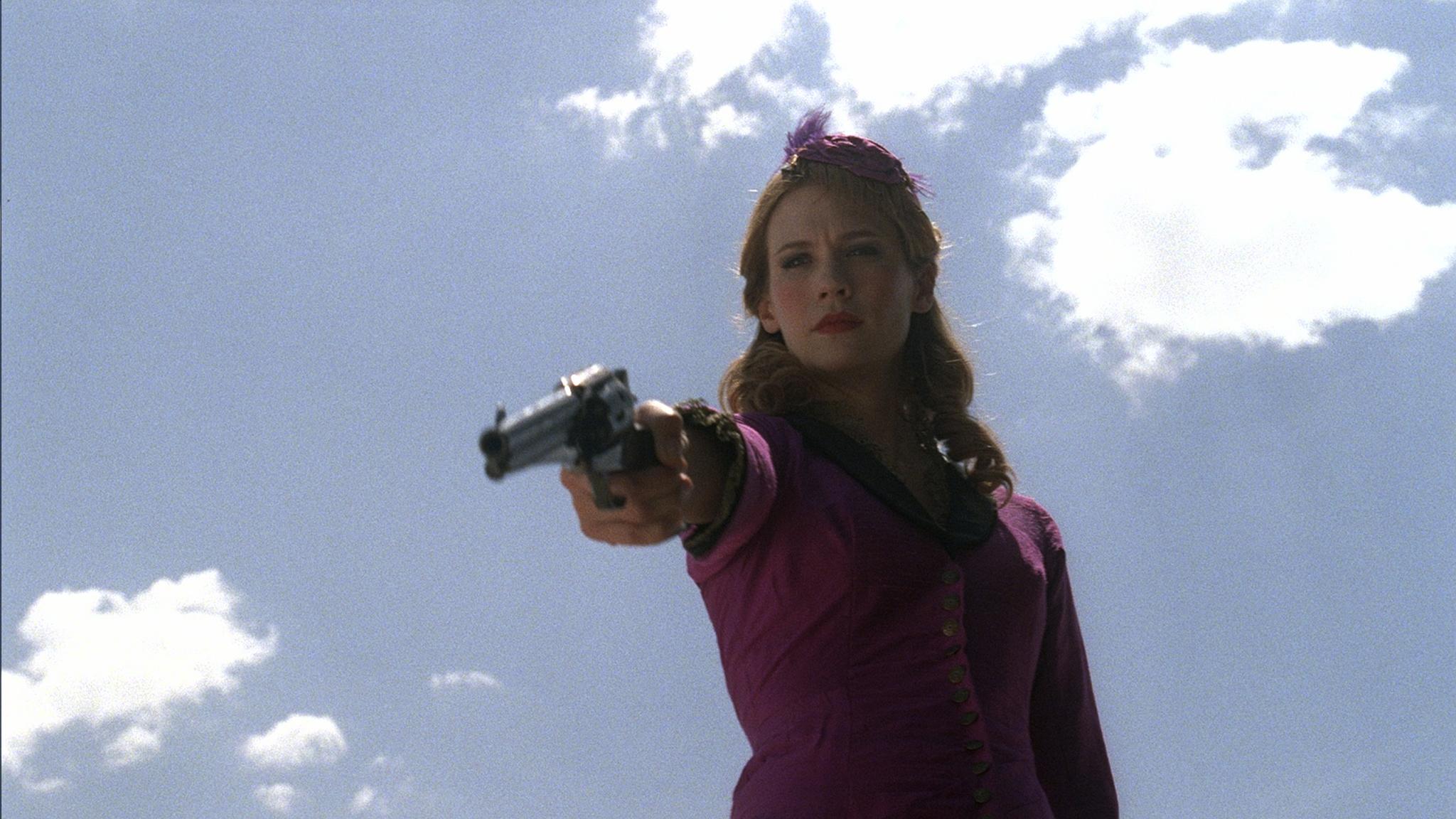
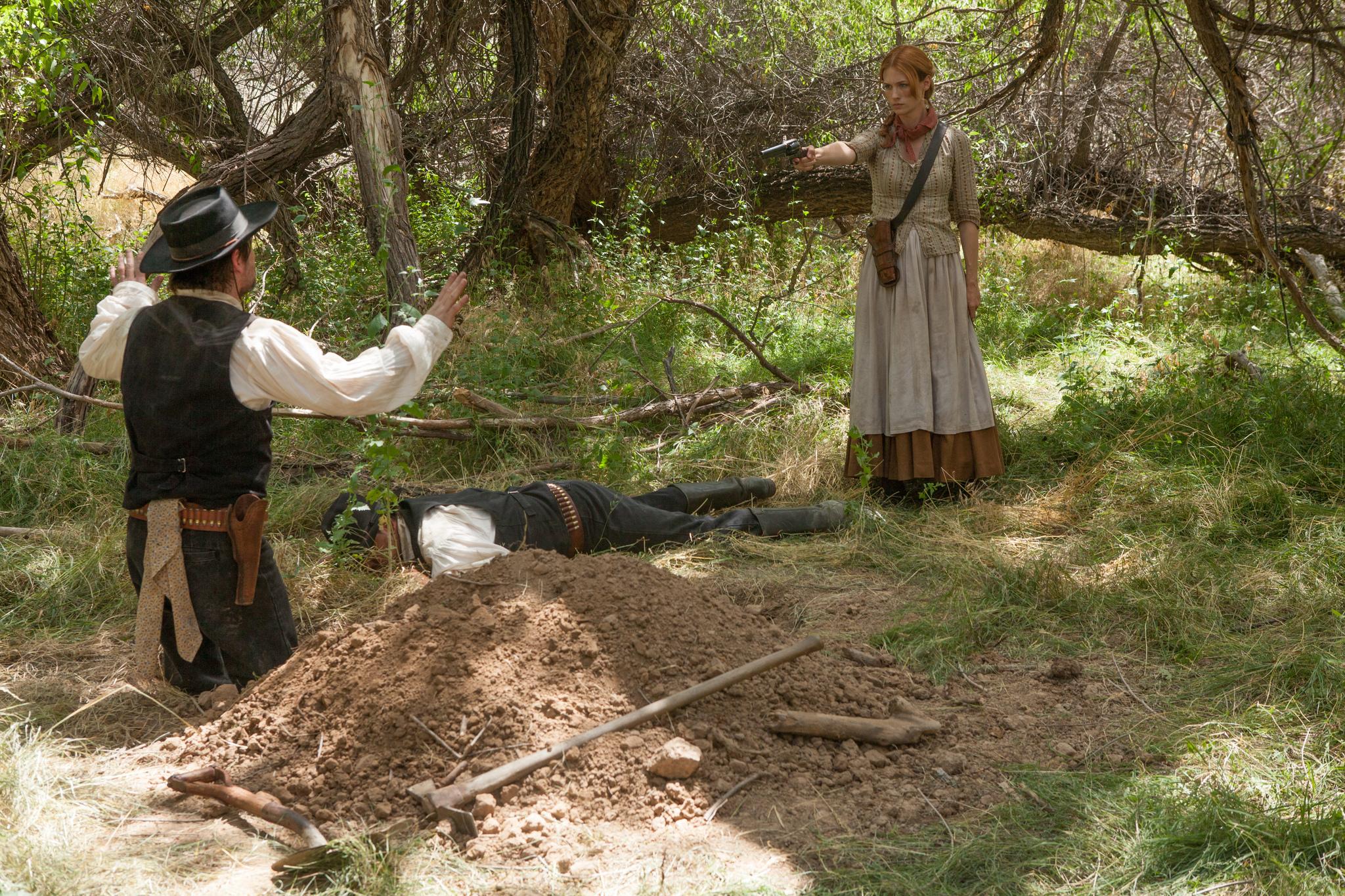
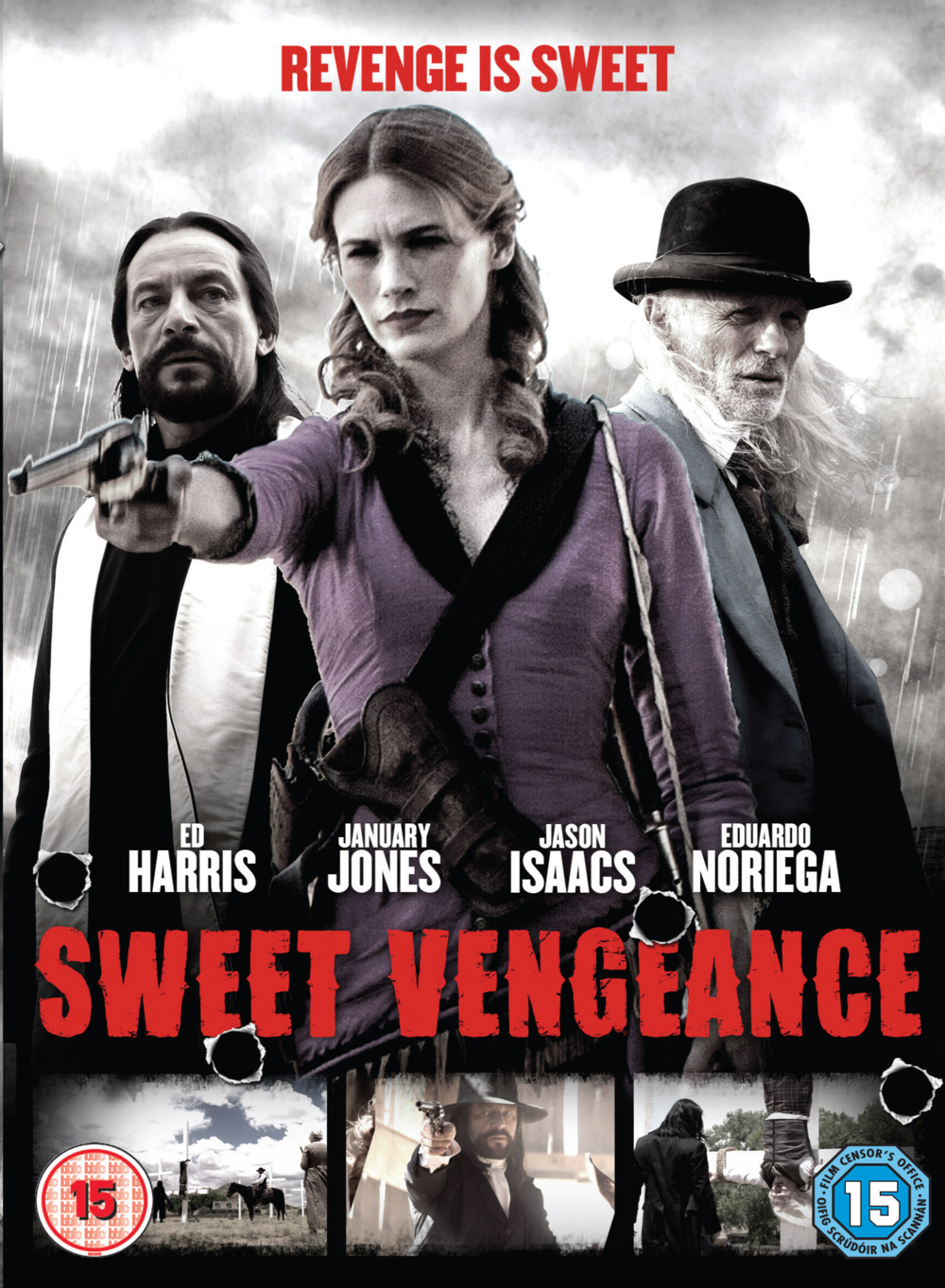
sweetwaterLife in the old West was tough. It was particularly tough if you were a woman, such as Sarah Ramírez (Jones), struggling to make an honest living with her farmer husband Miguel (Noriega), having escaped life as a prostitute. This movie shows it to be especially tough, after Miguel has had his throat slit by batty preacher Prophet Josiah (Isaacs) – it doesn’t help he has the hots for Sarah, apparently taking the “love thy neighbour” line very literally, and runs the local area as if it were his own personal fiefdom. Fortunately, she has an unusual ally in Sheriff Jackson (Harris). The lawman shows up, looking for two people who disappeared on a journey which took them right across Josiah’s territory, and is about the only other person willing to stand up to the lunatic religious fringe. Finally, Sarah has had enough, and embarks on her vengeance against, not only Josiah, but anyone else who has wronged her, such as the shopkeeper who spied on her in his changing-room.
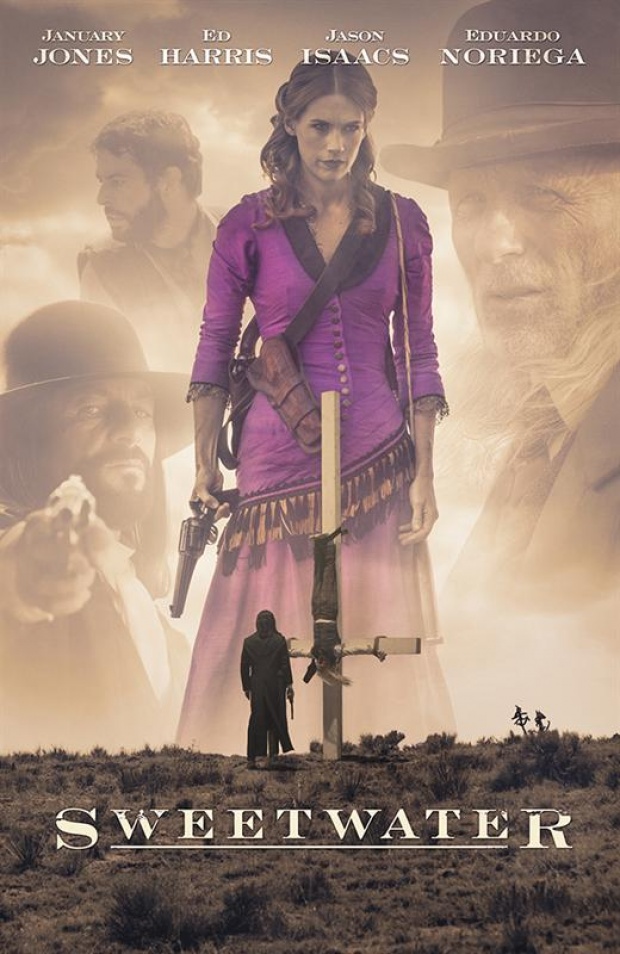


That final clause kinda illustrates the main problem here: an unevenness of tone which veers between the deadly serious and the ludicrously comic. That’s even the case for some individual characters, particularly Jackson; one minute, he’s waltzing by himself in the town’s main street, the next he’s carrying out forensic analysis, decades ahead of its time. While an intriguing character, the movie might have been better off concentrating on him or Sarah: they may share a common enemy, yet they hardly share a scene until the end, where Jackson’s sole purpose appears to be to provide a second firearm for our heroine. As for the ending, “Is that it?” will likely be your reaction, though in the film’s defense, I sense the emptiness of revenge is part of the point: once you’ve taken it, bringing to an end something which has consumed your life, what then?

I enjoyed the performances here, however: Jones’s understated style works towards her, while Isaacs and Harris both put over an unhinged air of barely-repressed violence. There are some fine moments, depicting Sarah’s willingness to use any means necessary, luring two of Josiah’s men to their doom by bathing in a river [pics from the scene “leaked” out: in no way was this a shallow publicity grab, I’m sure…]. The look of the film is also well done, with good use made of the New Mexico landscapes, and as the picture above shows, the heroine’s colourful garb is an interesting contrast – must have been hot and uncomfortable as hell to film in that. But the good intentions aren’t enough to overcome the lurches in tone and content, and the result is, frankly, a bit of a mess.

Dir: Logan Miller
Star: January Jones, Jason Isaacs, Ed Harris, Eduardo Noriega
a.k.a. Sweet Vengeance or Sherif Jackson


Miss Robin Crusoe

★★★
“Crusoe is not consent”

miss_robin_crusoe_poster_03A solid re-telling of the Robinson Crusoe story by Daniel Defoe, it switches things up by turning the hero into a heroine, Robin Crusoe (Blake, best known as saloon owner Kitty Russell from Gunsmoke). Taken to sea by her captain father as a cheap alternative to a cabin-boy, she is the sole survivor of a shipwreck, and stranded on a deserted island [albeit one apparently well-stocked with make-up and hair-care products]. The first half follows the story fairly closely, as she rescues Friday (Hayes) from her captors, and works on a boat with which she hopes to escape the island. But things then diverge, with the washing up of another survivor, Jonathan (Nader). With Robin having been severely soured on men by her previous ship-board experiences, one showing up on her island paradise is the last thing she wants, and she’s disinclined to trust the new arrival. But there’s another problem: the boat can only hold two people.

It’s much more effective before he shows up, with the two women holding their own against the perils and terrors of life with courage. A couple of moments which stand out are Friday gazing at the sleeping Ms. Crusoe (which, along with the former’s jealousy toward Jonathan implies an almost Sapphic aspect, decades ahead of the year this came out, 1954). and the spectacular manner in which the natives dispose of their other captive: Eli Roth’s Green Inferno will be hard pushed to match the concept. After Jonathan arrives, the film becomes much weaker. Oh, it starts innocently enough, with him popping over to borrow a saw, but you just know that Robin is going to end up falling for him – indeed, rolling around on the beach in a manner clearly inspired by the previous year’s From Here to Eternity. But getting there, requires him to push his attentions on her, in a way which would now certainly be considered sexual harassment and, on some campuses, likely assault. That aspect of the movie has not aged well at all.

While chunks of this are severely sound-staged, there are times where filming was clearly done on location, and things are a lot better for it. The score also punches above it’s weight, coming from composer Elmer Bernstein, before the first of his 14 Oscar nomination – perhaps thank Senator McCarthy for that, as this was around the period Bernstein was blacklisted from major motion pictures for his “Communist tendencies.” On the other hand, the finale ends up being a disappointing combination of macho heroism and deus ex machina that is a good deal less satisfying than the film merits. Still, the overall product is a good deal better than I expected going in, though falls short of the impressive standards set early on.

Dir: Eugene Frenke
Star: Amanda Blake, George Nader, Rosalind Hayes

The Lady Constables

★★★½
“Crazy people have to be good fighters.”

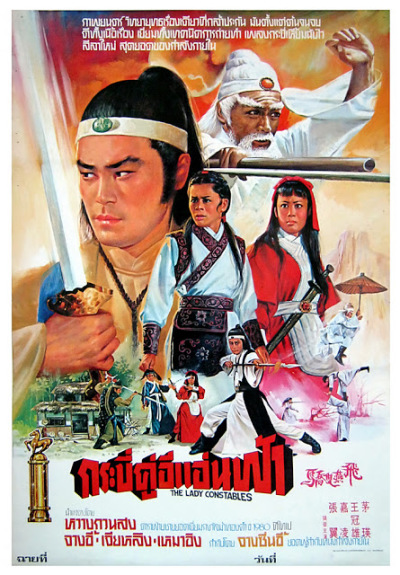
lady constablesI first encountered this in a dreadful copy on Youtube: dubbed, cropped to 4:3 and apparently filmed off someone’s TV during a Force 10 storm at sea. However, what was left after that, was still impressive enough to make me track down a better copy. Well, somewhat better: it had subs, albeit burned in and incomplete, while the 16:9 ratio was at least a vague approximation to the original widescreen print. Still, you take what you get, and this is certainly enough fun to overcome the adversity of any flaws in the format.
The film starts with a robbery, in which five priceless pearls are snatched by the Black Wind Fortress gang under Coldstar Tiger (Chang). They split up to avoid detection, reckoning without the investigative – and, more importantly, interrogative – prowess of leading ladies Ti Yung Hing (Mao), who despite the title, is the only actual agent of law-enforcement here, and Tang Lin (Lee), whose uncle was killed during the robbery. Although they have similar goals, they refuse to team up, each preferring to work alone; adding an extra angle is Hung Yi (Wang), the bodyguard to the prince for whom the pearls were intended. Gradually, and not without some bickering on the way, they work their way up the Black Wind Fortress chain of command, and finally reach Coldstar Tiger. Though someone appears to be trying to cover the trail by offing their prisoners…

Yeah, as stories go, it’s pretty basic, and it’s clear the invention here was reserved for other aspects, such as the characters and the kung-fu. All three leads have their own quirks and foibles. One of the weapon’s in Ti’s arsenal is the ability to shoot scarves out of her sleeves, like a mad magician, and use them to encumber her opponent. Meanwhile, Tang keeps a plentiful supply of coffins on hand for her revenge, and isn’t a follower of the Geneva Convention on the treatment of prisoners, to put it mildly. And finally, Hung doesn’t speak – not because he’s mute, mind, he just doesn’t like to talk. He communicates instead with prewritten scrolls, which always have exactly the phrase he needs on them, and which he unfurls with a tinkly sound-effect.

The fight scenes are heavily wire-assisted, but that probably contributes to the action having stood the test of time better than many of its era (1978). They are no less imaginative than the characters, particularly at the end, with Mr. Tiger (Coldstar to his friends) wielding a mean umbrella/drone, on which one of our heroines hitches a ride. That previous sentence likely makes no sense if you haven’t seen the movie: if you do, then it will all become clear. Trust me on this, it provides a fitting climax to an entertaining piece of bare-bones action. With not one but two fighting ladies, this Taiwanese feature is deserving of a better presentation than it has received to date.

Dir: Cheung San Yee
Star: Angela Mao Ying, Judy Lee, Wang Kuan Hsiung, Chang Yi

The Viking Women and the Sea Serpent

★★½
“Corman gonna Corman.”

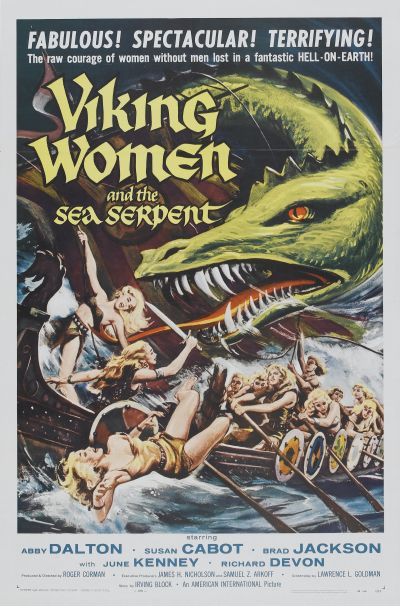
viking_women_and_sea_serpent_poster_01I can see why, purely for reason of brevity, the title above was preferred to the full one of The Saga of the Viking Women and Their Voyage to the Waters of the Great Sea Serpent, even though the latter is more accurate. For the Sea Serpent has a supporting role here, met once on their way in, and again on the way out – it’s much more about what happens in the middle. Three years after their men left, the women of the Stannjold clan leave their shores under the command of Desir (Dalton), trying to find out what happened to them. Encounter #1 with the monster leads them to be shipwrecked on the same shores of the Grimault tribe as their menfolk, whose king, Stark (Devon), has set them to work as slaves in his mines. After initially appearing to welcome the women, it becomes clear that Stark has plans for the new arrivals as well. Viking high-priestess Enger (Cabot) has her own agenda, however: having set her eyes both on Desir’s husband and, for more immediate and pragmatic reasons, Stark, she sabotages Desir’s first attempt to free the men.
Sometimes derided as among the worst movies of all time, it really isn’t that bad – it wasn’t even the worst movie I saw yesterday. Certainly, it’s guilty of biting off far more than it can chew. If the claims on the (quite lovely) poster above, of “fabulous” and “terrifying” are dubious, it’s the “spectacular” one that is widest of the mark, with a budget even the legendary Roger Corman subsequently admitted was woefully short of delivering on the concepts. [It didn’t help the scheduled lead actress demanded more money on the first day of shooting, so was fired, and replaced by Dalton] While Stark, for example, may be king of all he surveys, that appears to encompass about 12 men and a stretch of coastline obviously far more California than Scandinavia. And let’s not even get into rear-projection which dreams of reaching the heights of “utterly unconvincing,” or a sea-serpent which… Sorry, my supply of derogatory epithets falls entirely short of doing it justice, so best I don’t bother.

However, even if they look more like fashion models than Vikings, and act in some ways like giggly high-school girls, it’s still more laudable than, say, Mars Needs Women. The heroines here are actually portrayed as fairly competent – let’s face it, they survived without any men for three years – and brave, being willing to set sail in search of, and then attempt to rescue, their other halves. Both Dalton and Cabot are engaging, with the blonde naturally the good girl, though even the slutty one has an eventual crisis of conscience and is prepared to make a brave sacrifice for the greater good. At 71 minutes, it certainly can’t be accused of outstaying its welcome: while certainly dated, cheap and silly, this is definitely not boring, and its heart is in the right place.

Dir: Roger Corman
Star: Abby Dalton, Susan Cabot, Bradford Jackson, Richard Devon
[a.k.a. The Saga of the Viking Women and Their Voyage to the Waters of the Great Sea Serpent]

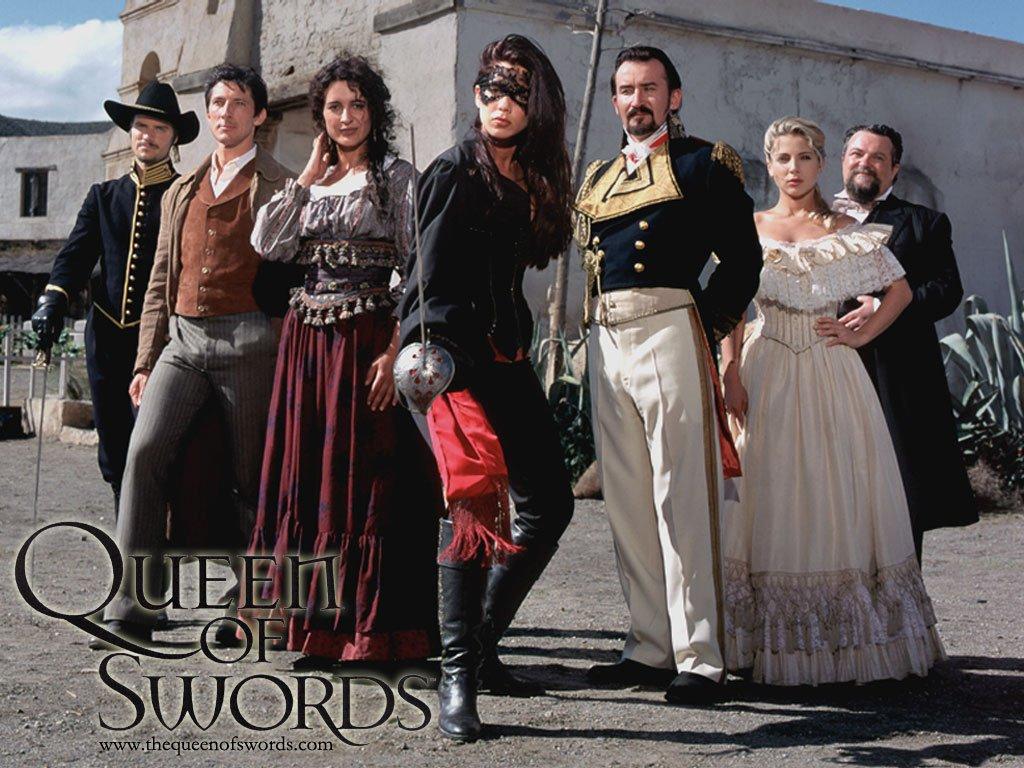
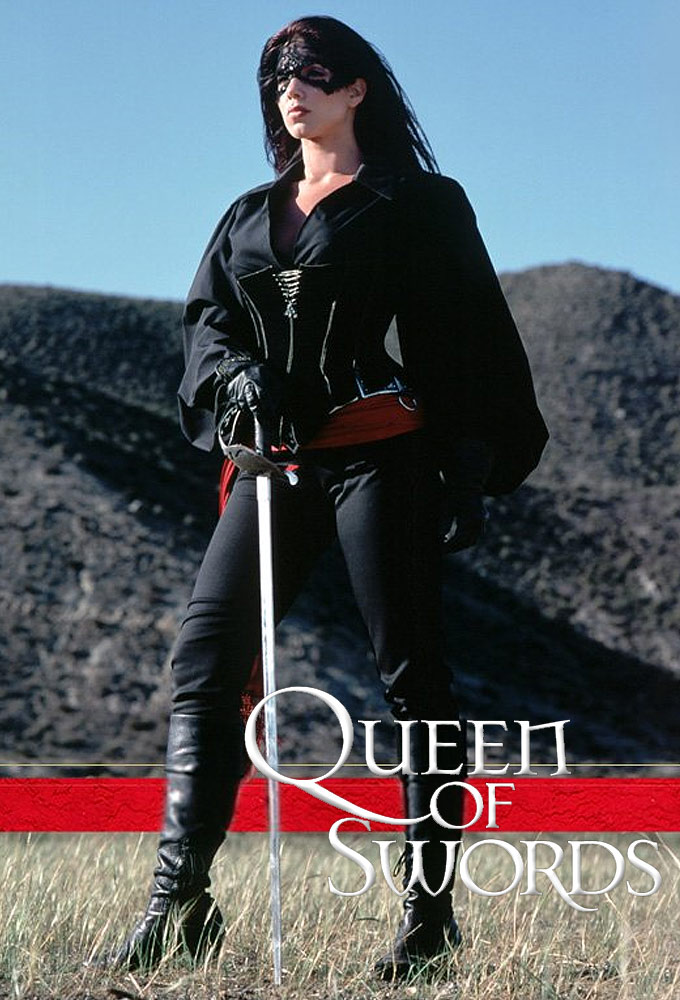
Queen of Swords

qos1★★★
“Leather, whips and lace – gotta love the type.”

In 1817, a young Spanish aristocrat, Tessa Alvarado (Santiago), returns to Spanish California after the death of her father and finds her home in ruins, her father’s manservant reduced to stealing. The town where she was born is run by militaristic governor Colonel Luis Ramirez Montoya (Pelka), who abuses his power, resulting in the miscarriage of justice and the poor living conditions of his subjects. Upset about the state of her birthplace and the murder of her father, Tessa’s path is revealed to her in a mysterious dream where her father comes to her and talks of his murder, his hidden gold, and of his “Avenging Angel”. She will take up arms to protect the people from the town’s governor and to avenge her father’s death. Tessa will do this in disguise behind a mask, becoming that “Avenging Angel”, The Queen of Swords.

Synopsis shamelessly cribbed from Wikipedia, but why re-invent the wheel? That seems to have been the approach taken by the makers here anyway, for their show which ran a single season from October 2000 through June 2001. The obvious, if unacknowledged, inspiration here is Zorro, in which another member of Spanish nobility, adopts a secret identity in order to defend the downtrodden populace from corrupt officials, etc. etc. Indeed, so close were the similarities that Sony sued Fireworks Entertainment, the producers of Queen of Swords, asserting that there was a breach of their rights. The resulting decision was murky: the court initially ruled the character was in the public domain, but later vacated that decision, and the suit was settled out of court, but it’s certainly possible the legal wrangling contributed to the decision to pull the plug on the show, after only eight episodes had aired.

qos2Certainly, in terms of quality, it’s by no means a disaster, and I enjoyed this more than other, recent shows which were yanked as fast, e.g. Killer Women or the Charlie’s Angels reboot. Of course, the central premise requires quite some suspension of disbelief: the concept that putting a little lacy mask on somehow transforms Alvarado and renders her completely unrecognizable by anyone, is nonsense. It’s not as if the town is full of similar-looking women, and she doesn’t even bother to change her voice. Still, if Superman can put on a pair of glasses to the same end, I guess we shouldn’t pick on Queen of Swords. What does work, is the interesting range of characters. Montoya is a bastard, always out for himself, but he’s quite a clever bastard with it, aided by captain of the guard Marcus Grisham (Lemke). On Santiago’s side, she assisted by her gypsy maid – who, like all gypsies, has psychic powers (I think it’s genetic) – and also by the local doctor, Robert Helm (Wingfield), who also has secrets of his own. These are all well-rounded characters whose interaction is fun to watch.

The action work is a bit of a mixed bag. Santiago was found at an open casting call, and underwent two months of training under swordmaster Anthony De Longis, who also plays Tessa’s fencing tutor in the opening episode. However, portraying the character required cobbling together a patchwork of Santiago with stunt doubles and other replacements, including Natalia Guijarro Brasseur, Roberta Brown, Gaëlle Cohen, Mary Gallien, Mary Jose, and even the occasional male for particularly difficult stunts. Again to quote Wikipedia, this “is exemplified in the Queen’s run up the hill away from the soldiers in Death to the Queen. Mary Gallien started the run, Roberta Brown performed the medium shot duel with swords on the hill, Tessie Santiago performed the spoken parts and was in the close-up, and Natalia Brasseur fell off the cliff.” The results are hardly seamless, and fall more into the category of competent than anything else, with the occasional moment that either impresses, or is painfully obvious in the doubling.

The shows did have some decent guest stars. Among the most memorable was perhaps Bo Derek, who played retired pirate captain (!)  Mary Rose, who is intent on seeing her son escapes a murder charge. She could, at least, do her own horsework, being quite an accomplished ride. David Carradine also appears, getting to wield a sword some years before doing so in Kill Bill, and Sung-Hi Lee plays another action heroine in a later episode, The Dragon, where she plays a member from a temple of Japanese warrior-priests, whose master (Burt Kwouk – not Japanese either!) is killed, and seeks vengeance on the Queen after being told by Montoya she was behind the attack. Elsa Pataky also has a regular role, playing the wife of a local landowner, who is having an affair with Grisham. Other guests in the series include Simon MacCorkindale and Ralf Moeller. Oddly, given the setting, there’s a high percentage of British actors in both the regular and guest cast, led by Pelka who, despite his accent, was actually born in Yorkshire – his exotic name is Polish, rather than Hispanic…

A few random other thoughts: I grew to despise the theme song, which sounds like a low-rent version of something by the Gypsy Kings. But the lack of over-riding romantic entanglement works in the film’s favour. While there’s a sense Tessa and Dr. Helm have an attraction, unlike certain shows I could mention, the storylines never gets bogged down in this ‘shipper drivel. I reached the end with a feeling of sadness that the show never quite did well enough to merit further season. If far from original, and not even the first female version of Zorro [which would be Zorro’s Black Whip], it was generally entertaining, with performances that were better than I expected. Even now, the legal status of Zorro remains undecided, and until that is resolved, I doubt anyone will head down the distaff version path again. Episode 1 is on YouTube.

Star: Tessie Santiago, Valentine Pelka, Anthony Lemke, Peter Wingfield

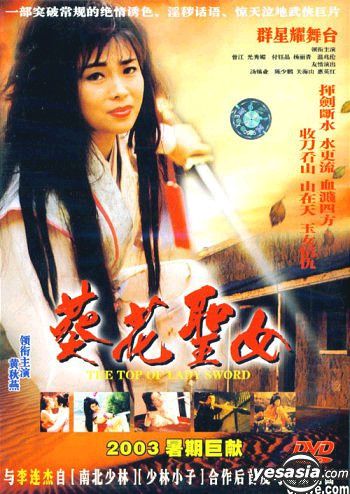
The Top Lady Of Sword

★★★½
“The Yung and the VERY restless…”

topswordThis Taiwanese production focuses on a martial arts get-together, organized by the honorable Chi (Tsang), as a way for all the local artists to settle any beefs with each other. Arriving in town are brothers Au Lung and Wong Hu (Wan), who are out for revenge on Lady Yung (Wong), who had killed another of their brothers, though it was actually an honourable battle. Au Lung is content to forget their revenge, until he falls under the spell of a local inn-owner, who has a plan to seduce him, and use Au Lung as a tool to steal Chi’s martial arts manual and become the top fighter. When Chi turns up dead, Yung is blamed,  and after that is sorted out, her husband and daughter as then kidnapped by Au Lung. Yung, her sister Shao Chung (Khan) and Wong Hu set off in a desperate effort to rescue the hostages.

There’s a lot to enjoy here, and about the only thing stopping it from getting a seal of approval is that it’s very wuxia – so if you’re not fully prepared for people flying through the air and severely undercranked action, this will seem laughable. It’s one of those occasions where less could have been more. But, personally, I still found it a great deal of fun, with a well thought-out plot, engaging characters and some nice twists on the usual themes. For instance, there’s a lovely bit of role reversal, where it’s Yung’s husband who is the stay at home one, and she is running around the countryside, fighting battles against, it seems, everyone who crossed her path. Additionally, I liked the brief diversion into almost a kung-fu “whodunnit” in the middle, and on the other end of the emotional spectrum, there’s a body-count which is surprisingly high. If I don’t want to spoiler who lives and who dies, let’s just say there’s more of the latter.

The bottom line, however, is the martial arts, and these sequences are copious and well-staged, under action coordinator Alan Chan. The various performers get to showcase a broad variety of their styles, and they mesh together well. Everyone gets their moments to shine, will all three of the leading ladies looking very impressive. This one is available on Youtube with subtitles, and even if the quality of the print leaves a fair bit to be desired, it still makes for an entertaining 90 minutes, and is a case where a film’s obscurity is no reflection of its merits.

Dir: Wong Hong
Star: Wong Chau-Yin, Deric Wan, Kenneth Tsang, Cynthia Khan
a.k.a. Lady Chrysanthemum Sword

300: Rise of an Empire

★★★★
“Faster than Greece-d lightning.”

300riseaI’m going out on a limb here, and predicting that Eva Green is going to be the next great action heroine. She seems very taken by strong female characters, from Morgan Le Fay in Camelot, through Vanessa Ives in Penny Dreadful, and we recently noted her contribution to the marketing for Sin City 2. But this was unexpected. We watched it, purely because we saw and enjoyed the original film, and didn’t expect this one to come anywhere near qualifying for the site. I mean, we were aware of Artemisia – almost a decade ago, Brian wrote a piece for the site, detailing why she’d be a good subject for a movie. However, we were expecting this to be an entirely macho film, likely bordering on the homoerotic, as mercilessly parodied in Meet the Spartans. We certainly didn’t expect her to be so pivotal to this sequel.

Well, technically, it’s neither sequel nor prequel to 300; it’s more of a companion piece, depicting events elsewhere around the same time, and focusing on the naval battle between the Persian forces, nominally under Xerxes (Santo), and the Greek ones of Themistocles (Stapleton). In an earlier encounter, Themistocles killed Darius, Xerxes’s father, which sent Xerxes off the deep end – carefully shepherded there by Artemisia (Green). She is a Greek citizen whose family was slaughtered by their soldiers when she was young, with her being subject to years of horrific abuse. Left for dead, she was rescued by Persians, switched sides and rose through the ranks, now seeing in Xerxes a chance to extract retribution on her former nation. Unlike Xerxes, who was portrayed in the original as Caligula with muscles, Artemisia is smart and resourceful, not making the mistake of under-estimating the Greeks in general, and Themistocles in particular. Indeed, as far as we are concerned, she was much more interesting than the hero, particularly in terms of back-story. She also kicks serious ass, both with a bow and her pair of swords.

As far as general film-making goes, this seems to have built on Spartacus, in much the same way that Spartacus built on the original 300. Indeed, there’s a fairly explicit nod to it, in the casting of Peter Mensah as Artemisia’s trainer, a similar role to the one he played in Spartacus. This means lots of slow-motion and buckets of digital gore, which seems to hit the camera lens more often than it hits anywhere else. It also perhaps means playing faster and looser with history: neither Darius’s death nor Artemisia’s fate are as depicted in the movie. But, hey, when facts conflict with drama, it makes cinematic sense for the former to give way. If what you have here occasionally topples over into video-game style, it rarely looks less than lovely, and if Artemisia wasn’t enough, we get a bonus action heroine at the end, as Queen Gorgo (Headey), leads the Spartan reinforcements into action. Now, will someone please give Green a full-on starring role in which she can kick butt, and tell me where I go to sign up?

Dir: Noam Murro
Star: Sullivan Stapleton, Eva Green, Rodrigo Santoro, Lena Headey

Hapkido

★★★
“Forbearance. It’s vastly over-rated…”

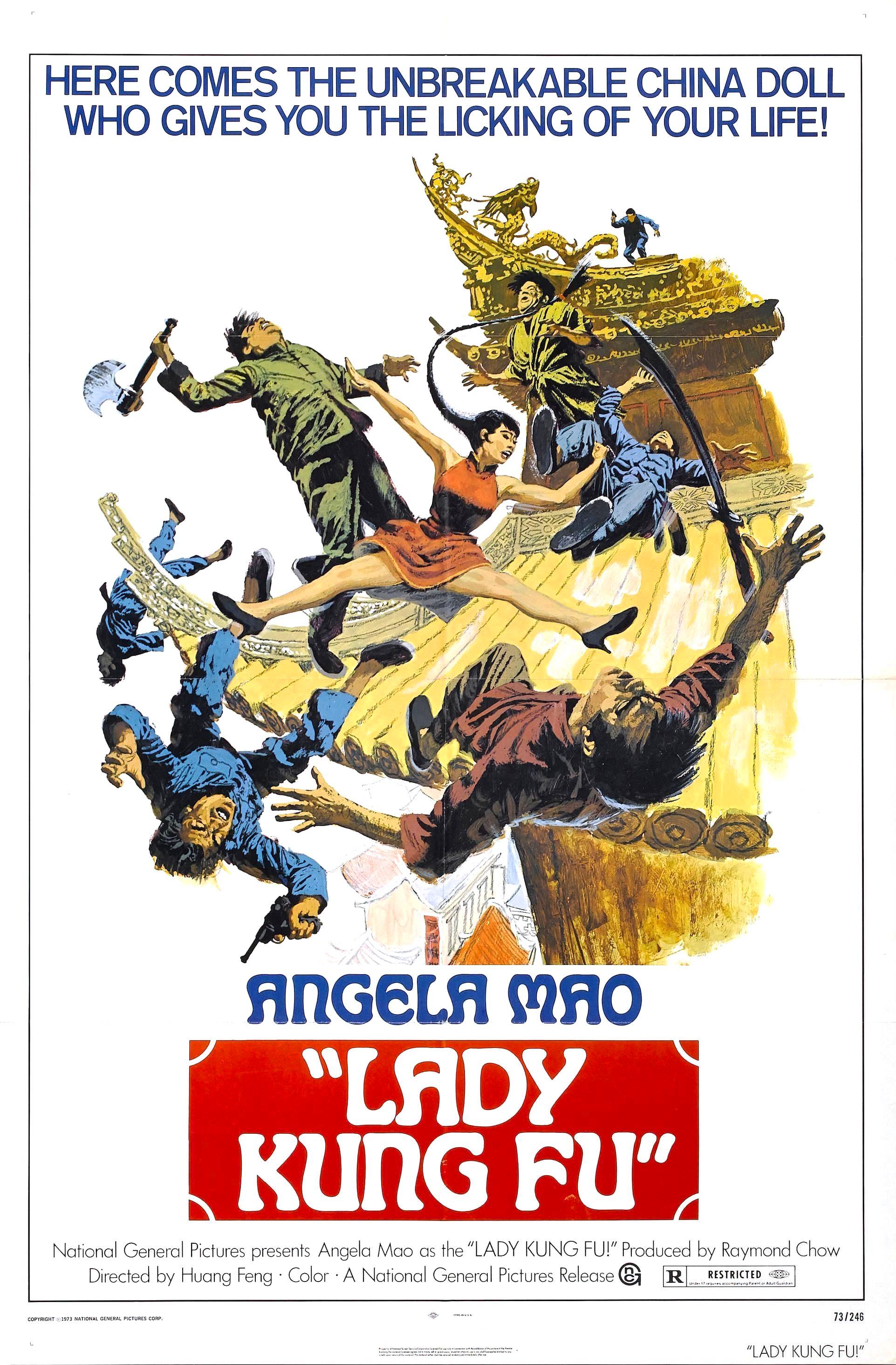
lady_kung_fu_poster_011934 Korea is under the yoke of Japanese occupation. At the hapkido school of martial arts, Yu Ying (Mao), Kao Chang (Wong) and Fan Wei (Hung) are learning the form. On graduation, they return to China and open an establishment of their own, only to fall foul of the Japanese Black Bear group, who bully both local residents and other schools, and try to run the hapkido practitioners out of town. Despite their teacher’s mantra of “Forbearance,” of which Ying has frequently to remind her colleagues, hot-headed Wei is eventually baited into fighting and killing some of the Black Bear students, and has to go into hiding. Chang’s efforts at diplomacy fare no better, leaving him beaten within an inch of his life, and the Bears seize the opportunity to tell Ying they’ll be incorporating her school into theirs. She finally realizes that turning the other cheek can only go so far before you have stand up for what’s right. Which, in this case, is some kicking of asses belong to the Japanese and their minions.

The film certainly loses points for obviously cloning Bruce Lee’s Fist of Fury, also released in 1972 and similarly based on a conflict between Japanese and Chinese martial arts schools. The strong anti-Japanese sentiment is no less shrill and strident here, and the style adopted for the fights is also largely similar, with one or other of our hero(in)es taking on a large group of rival students, before finally battling the big boss (or The Big Boss, if you prefer…).  Still, this is remarkable for the future output of those involved in the film. As well as being an early entry in the careers of Mao, Wong and Hung, there are minor roles for Billy Chan, Lam Ching-Ying (Mr. Vampire), Yuen Biao, Corey Yuen (director of Yes, Madam, She Shoots Straight and DOA: Dead or Alive) and Jackie Chan, who plays one of the Black Bear students.

But it’s mainly a showcase for the leads, and the action demonstrates why they’d all go on, to varying extents, and become stars in their own right. Mao is, obviously, of most interest here. After an early demonstration in Korea, which shows her as the smartest and sharpest of the trio, she largely takes a back seat in the middle, trying to keep the peace and practice that whole “forbearance” thing, before exploding into action again at the end. Particularly cool is the use of her weighted braids as a weapon, to whip her opponent about the face – you never saw Bruce Lee do that! And this is probably what defines the film. When it’s trying to be no more than a Lee-mitator, it comes off as second best, for obvious reasons. However, when the creators go their own way, it’s inventive and much more entertaining as a result. Shame the ratio isn’t tilted more heavily towards the latter.

Dir: Huang Feng
Star: Angela Mao, Carter Wong, Sammo Hung, Bai Ying
a.k.a. Lady Kung Fu

The Gang of Oss

★★★½
“A Dutch semi-treat”

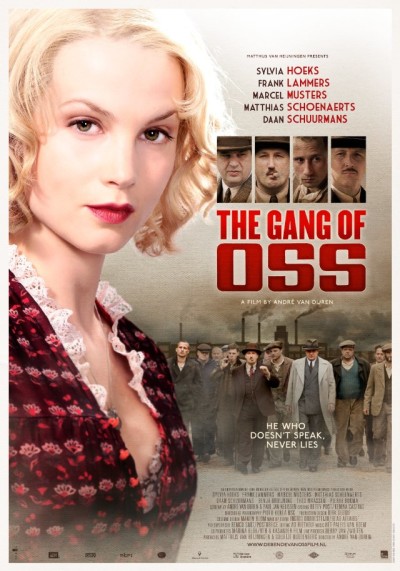
gang-od-ossI never really think of the Dutch as the organized crime type, but this film convinces me otherwise, based as it is on actual events from just before World War II. Oss is a town in the Southern half of the Netherlands and, it appears, everyone there is on the take one way or another, from insurance scams to larger scale shenanigans, all the way up to the mayor and the local priest. The federal government has sent military police to the town to keep order, but that only rankles the locals, for the cops are Protestants and they are Catholics. Johanna (Hoeks) hopes to escape a life of crime, planning to open a restaurant when her husband, Ties (Schoenaerts), gets out of jail. But it’s not as easy as it seems. Her spouse is happy to pimp her out, and local boss and Ties’s uncle, Wim de Kuiper (Musters), drags him back into his old ways. When Ties tries to force Johanna to have an abortion, she hatches a plan to have him killed by her lover (and client), Jan, although the plan only puts her deeper in the clutches of de Kuiper. But when she discovers just how low he is prepared to go, she decides he and the rest of his cronies are going down.

I really liked Johanna as a character. She’s comfortable enough with her position in life (even if normally, it’s on her back!), but still aspires to rise above her lowly origins – and do so honestly, unlike the rest of the inhabitants. Her husband is basically a Grade-A shit, but she eventually finds the resolve to stand up against him, and take control of her own destiny. Admittedly, you wonder why it takes quite so long, given she’s being forced to act as a prostitute by him – but, on the other hand, she quite happily refers to herself a “Johanna the slut”, and appears to come from a lineage of similarly-inclined women. It’s a nicely grey morality, and the same is true for most of the other characters; outside of Ties, they all have their own justifications for what they do.

I suspect some of the local atmosphere is probably lost outside of Holland – apparently, there’s a particular accent/dialect used, which doesn’t come across in the subtitles at all. And, as noted, it’s just odd to see the Dutch, whom I’ve generally found to be polite and well-mannered almost to a fault, killing each other, being brutal, and generally behaving in a manner more befitting Chicago during Prohibition than the south Netherlands. That’s less the film’s problem than mine, though there isn’t too much here which will be novel to anyone with a working knowledge of American mafia films, though having its focus on a woman, is certainly laudable. That, along with its strong local flavour, are enough to make this worth a watch, though outside of Hoeks’ strong performance, there likely isn’t much of long-term note.

Dir: Andre van Duren
Star: Sylvia Hoeks, Matthias Schoenaerts, Marcel Musters