



★★★★
“Memo to self: Scandinavian women were bad-ass.”
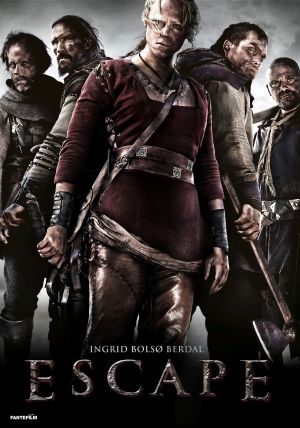
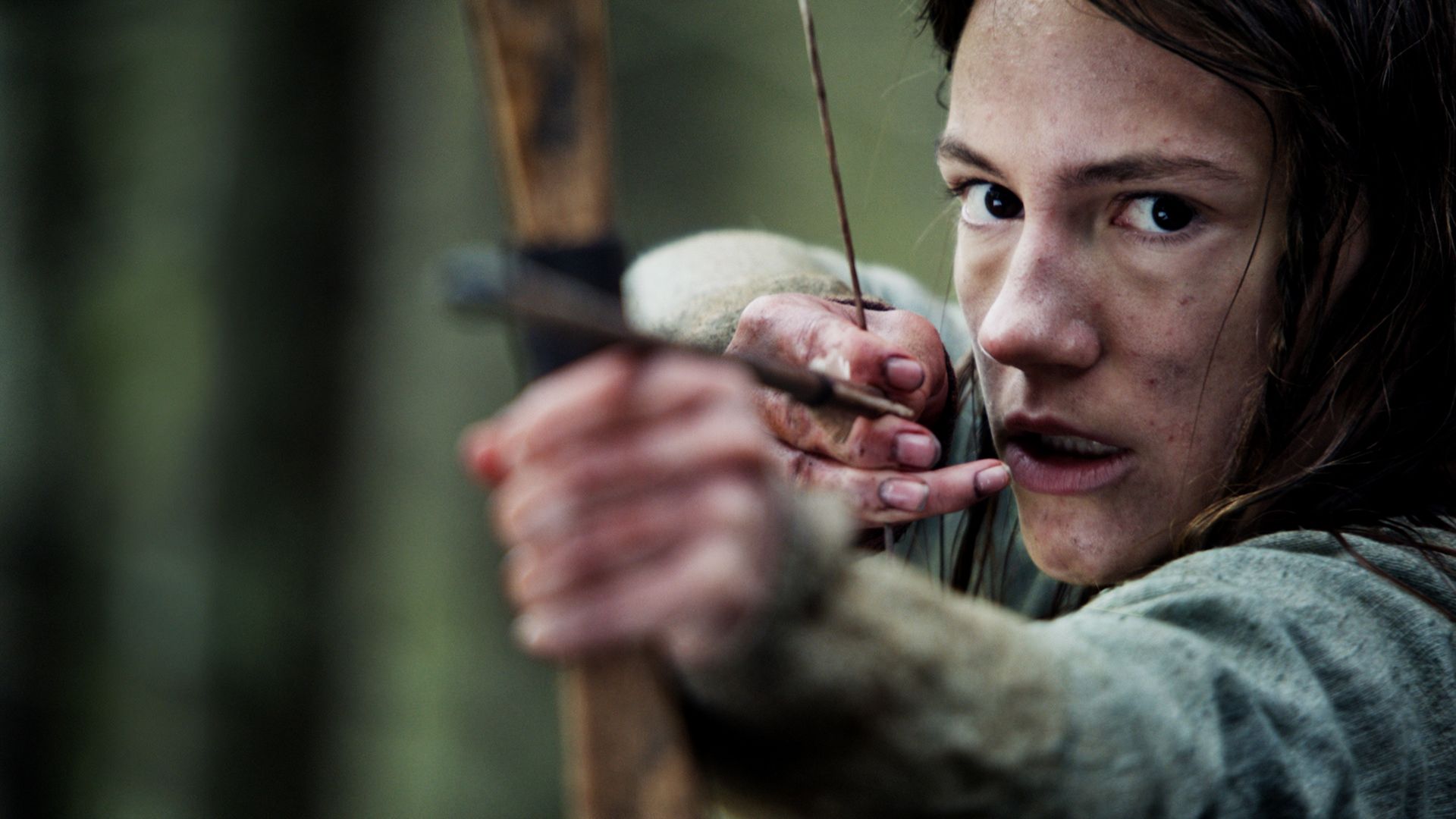
 14th-century Norway, not long after the Black Death has decimated the population. Signe (Andreasen) and her family are on the road, seeking a new life, when they are attacked by bandits. Signe is captured and taken to their camp, ruled by Dagmar (Berdal); she was expelled from the nearby town, whose inhabitants thought she was a witch. Signe isn’t the first girl abducted to give the matriarch a family; there’s also Frigg (Olin), a younger girl whom Dagmar is inducting into the ways of the clan. But Frigg is not there yet, and help Signe to escape: needless to say, an enraged Dagmar and the rest of her gang, are soon hot in pursuit, chasing them across the chilly (and beautifully-photographed) wilderness.
It’s a straightforward story, effectively told, and held together by very good performances from the two leads. It would have been easy for Signe to become some kind of teenage Rambette, but her transformation from plucky but inexperienced daughter into someone who can credibly take on a bunch of crypto-Vikings is well-handled. She hardly ever goes hand-to-hand with them, avoiding the obvious issues of size and strength, in favour of guild and wits. In the other corner, Dagmar, while being a complete bad-ass bitch, who looks like she would rip you head off for us, if she found herself short of a goblet, is given enough backstory to turn her into something of a sympathetic character, which is more than you can say for most villains in this kind of survival flick.
Of course, there are inevitably points where the characters behave in ways that are more necessary for the plot, than perhaps the most logical course of action. However, I can’t say those irritated myself or Chris too much – and she’s usually far less lenient of such things, especially in action heroine movies, where I want to give the film the benefit of any doubt. The action scenes are well-handled, and the deaths each pack more wallop than you’d expect, with the way in which they’re staged enhancing the emotional impact. It’s more than a little reminiscent of Pathfinder, another Norwegian film, made in 1987, which was also set in medieval times, and concerning a young boy abducted by a savage tribe [it was remade by Hollywood a couple of years ago, transplanting the story to North America].
However, the mother-younger daughter-older daughter triangle here adds a significant new angle, and clocking in at a brisk 82 minutes, there’s hardly an ounce of fat in the form of wasted moments, on its lean Scandinavian frame. What few such pauses there are, you can just admire the lovely Norwegian scenery.
Dir: Roar Uthaug
Star: Isabel Christine Andreasen, Ingrid Bolsø Berdal, Milla Olin, Kristian Espedal
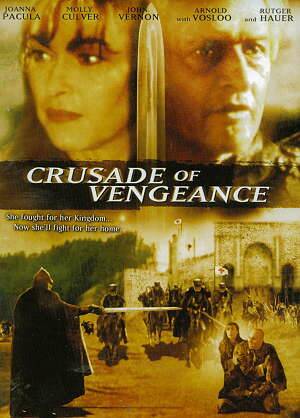 It’s easy to dismiss this, for its low production values, sometimes laughable dialogue and wildly-implausible plot – and I could hardly argue. Yet we still enjoyed this, thanks largely to performances which sustained us through the bad matte paintings, clunky lines, and mediocre action scenes. Of course, to use a pro-wrestling term, we’re huge Rutger marks, so seeing him as evil medieval warlord Grekkor is a big plus, harking back to his work in Flesh + Blood for Paul Verhoeven. Pacula is a “crusader mom” (for want of a better word), back from the Holy Land where she vowed to go after making a deal with God to let her son survive. However, she returns just after Grekkor and his sidekick (Vosloo) have swept her boy off with them. She goes to rescue him, teaming up with three other women on the way, as she heads towards the inevitable confrontation with Grekkor.
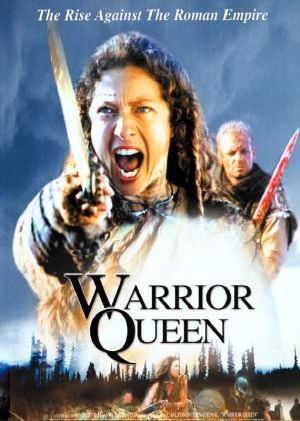 Probably best to approach this with few expectations of this being a factual representation of the time; more than once, it felt clearly like the writer was using the Roman occupation of Britain, and Boudica’s rebellion, as a metaphor for American’s involvement in Iraq. There are certainly enough anachronisms, particularly in the dialogue (the Roman Emperor chatting informally away with the leader of a British tribe, and references to “terrorists”), that it seems deliberate. The basic story is the one well-known of legend: after her husband’s death, and the raping of her daughters by the invading Romans, Boudica (Kingston) led her tribe in an initially successful revolt, only to be stopped when the full force of the Empire was turned on them.
 ★★★
★★★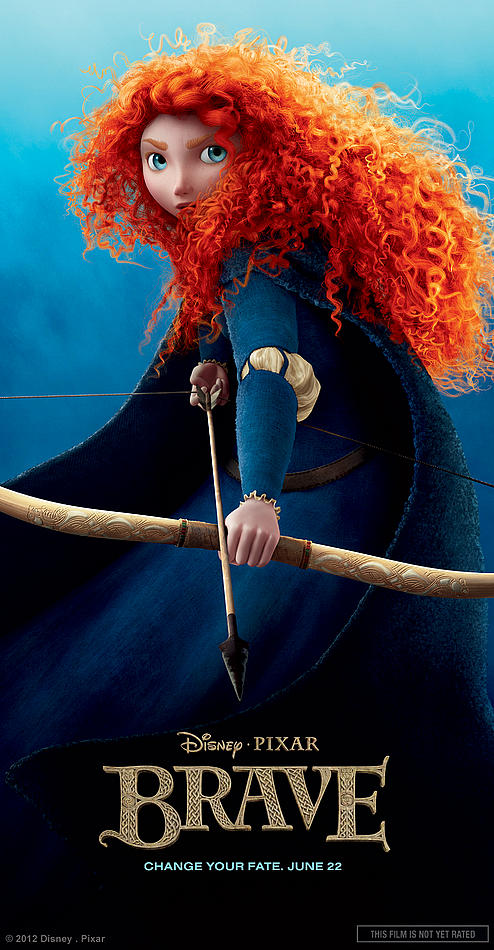 I was immensely stoked for Brave on a number of levels. First, Pixar kicks ass. With the exception of the underwhelming Cars and its pointless sequel, the quality of their work speaks for itself: Monsters, Inc is close to the finest animated movie of all time. Secondly, genuine action heroine films for the whole family are rare, to the point that they can probably be counted on the fingers of one hand over the past 25 years. Thirdly, it’s Scotland. Y’know, where I’m from. It’s the bit at the top of England. I feel I should mention this, because Pixar had originally tabbed Reese Witherspoon to voice the teenage, Scottish heroine, Merida. Fortunately, scheduling prevented this, and Pixar ended up with an all-Scottish lead cast.
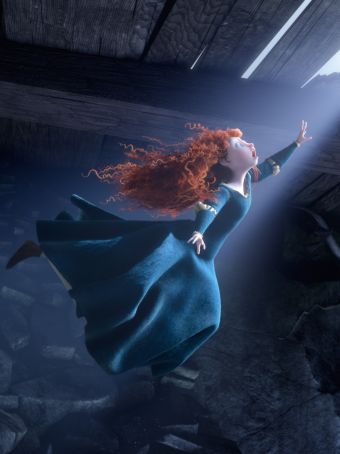 The problems are more with plotting – basically, the issue described above by Chapman is still present. The story starts in one direction, looking suitably action-oriented. It’s difficult to provide any specifics without giving spoilers – there’s a major plot-point not even hinted at in the trailers, which certainly surprised me. But I can see that it abruptly changes direction in the middle, going in a much less satisfactory direction, that seems almost to push Merida into the background of her own story. Even the climax relies less on any innate abilities of our heroine, such as her much-touted archery, or even her temperament, more the fortuitous toppling of a large geological entity [I doubt the film would have sold quite as well had it been named “Lucky”].
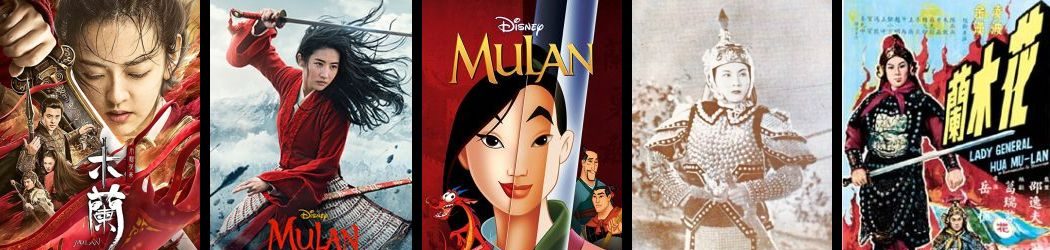
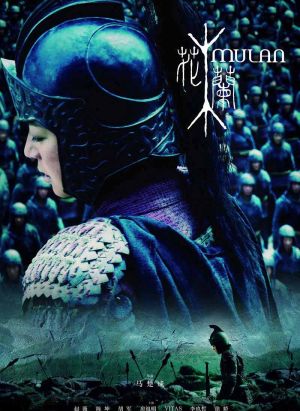 Inspired by the same poem as Disney’s much-loved feature, this has the same basic idea – a young woman impersonates a man in order to save her father from being drafted in the army. However, this takes a rather different approach, being much darker in tone, not that’s this is much of a surprise, I guess. It’s also a lot longer in scope, with Mulan (Zhao, whom you may recognize as the heroine/goalkeeper from Shaolin Soccer), rather than fighting a single campaign, becoming a career soldier and rising through the ranks as a result of her bravery in battle, eventually becoming a general, tasked with defending the Wei nation from the villainous Mendu (Hu). He has killed his own father in order to take control, and has united the nomadic tribes of the Rouran, amassing an army of 200,000 to invade Mulan’s home territory. She comes up with a plan to lure him into a trap, but when she is betrayed by a cowardly commander, things look bleak indeed for Mulan and Wentai (Chen), one of the few who know her secret.
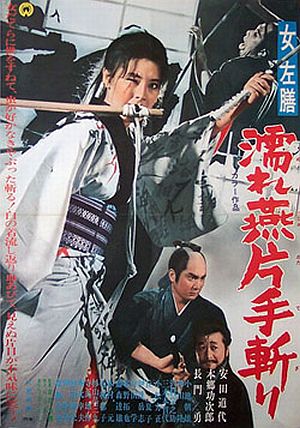 A sequel to One-Eyed One-Armed Swordswoman, this stands more than well enough on its own merits, with an interesting and complex storyline and engaging characters. As a young girl, Lady Sazen (Ohkusu) lost both an arm and her eye to the devilish Lord Daizen-dayu, who coveted the titular sword owned by her father. Sazen barely escaped with it and her life, and is now a wandering swordswoman, roaming the countryside. She saves a girl being chased by some thugs, and it turns out that she knows all the inside dirt on a corrupt priest, and he won’t stop until she has been silenced. Meanwhile, Daizen-dayu hasn’t given up on the sword, and has hired another samurai to get it from Sazen, bu any means necessary.
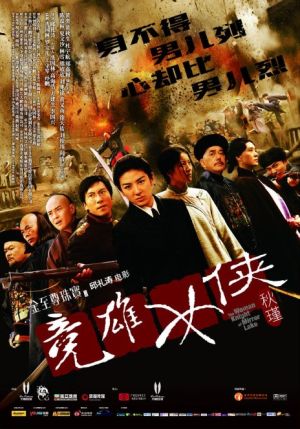 I find the line between “terrorist” and “freedom fighter” an interesting one, drawn not so much by any objective measure, but by the viewer’s perspective and historical hindsight. Qiu Jin is a good example: she fought against the perceived oppression – particularly of women – by the Qing dynasty in the early 20th century, and ended up getting publicly beheaded for her support of revolutionary factions, by the government of the time. Now? A heroine and a martyr, who has an official museum ‘n’ stuff. Funny how things work out.
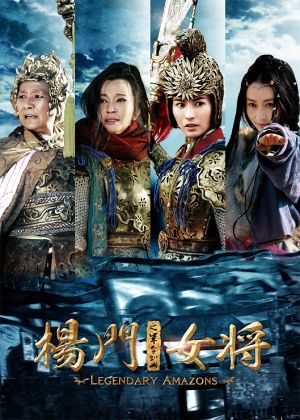 To be honest, I have very little clue about what was going on here. Oh, the basics are clear enough. After losing their patriarch General Yang Zongbao (Ren) in battle, a noble family opts to send everyone out to the West to defend the realm from the usual invaders. They’re almost entirely female, but all possess significant ass-kicking ability, with their own particular weapon of choice. These are listed, in rapid order, near the start of the movie, and I’d suggest taking copious notes, because you won’t be able to recognize them otherwise: one armour-clad woman looks very much like another when they’re in battle. It’d probably have helped if they’d had a number on the back of their helmets or something. Hey, it’s not like this is a model of historical accuracy to begin with.
 I could hear Chris’s eyes rolling when the title came up – I can’t blame her, as the viewing immediately followed Virgin Commandos, whose mere name sent her scurrying off to Facebook poker. This, however, was not the soft-porn flick she anticipated. Instead, it’s a comedy, somewhat spoofing Gladiator, but its closest cousin is likely Carry On Cleo. That said, it’s undeniably gynocentric, with the three heroines about the only competent characters on either side.
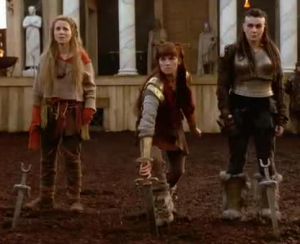 The action is undeniably limited, being played more for laughs than excitement – the much-fabled ‘Celtic Kick’, turns out to be not quite what you think. Of course, this being British humour, there are also fart and willie jokes, but works because the characters have foibles and quirks to render them human. Smirgut has lost her inner warrior since motherhood; Dwyfuc is thoroughly unimpressed by the men available to her, and Worthaboutapig has long-standing self-esteem issues – unsurprisingly, really, given her name. The results are heroines who are likeable, as well as being brave and resourceful. I found the results very refreshing, with better-drawn characters than many bigger budget movies. That was definitely