




★★
“Joan of Talk”
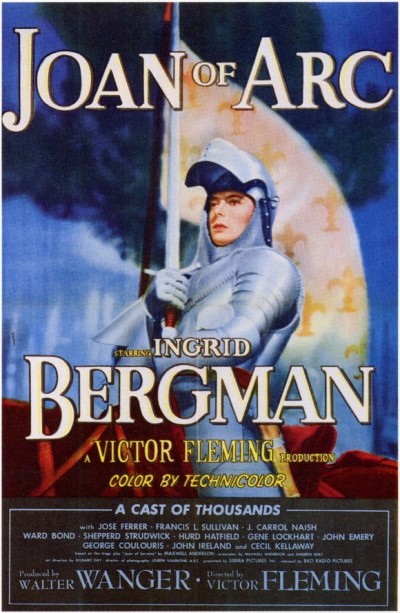 This film’s origins as a stage play are painfully apparent, and you can also see why the distributor’s felt it needed to have 45 minutes cut out before it could be released, as frankly, it’s a bit of a bore. The battle to recapture Orleans is the only action of note here, even though that represented the start of the Maid’s campaign to restore France to its proper ruler (Ferrer), rather than the end. After that, this more or less skips forward to his coronation, then Joan’s capture, spending the rest of the movie – and there’s a lot of it – going through the trial, and the railroading of the heroine into, first throwing herself on the church’s mercy, then recanting her recantation and returning to wearing men’s clothes, thereby sealing her fate. There’s not much here which you won’t have seen before, if you’ve seen any of the other versions of the story, touching the usual bases from Joan’s revelations that she’s going to be the saviour of France, through her trip to see the Dauphin, and so on. It does downplay the “voices” aspect, especially early on, perhaps a wise move since it’s difficult to depict, without making her seem like a religious fruitcake.
The other problem I find is Bergman. It’s not so much her performance here, which is actually very good, and help hold the film up when things get particularly static: she hits her emotional marks well, and the Oscar nomination she received was not undeserved. However, she was solidly into her thirties by this point, probably close to twice the age of the actual Miss of Arc [hat-tip to Bill and Ted!]; there’s only so far make-up can go in taking years off someone. It does seem to have been a character to whom she related: she’s play the role again later, for Roberto Rossellini in Joan at the Stake, when she was nearly forty. The other problem is Bergman’s Scandinavian origins, which poke through her dialogue persistently, also damaging the illusion; it might have been fine in forties Hollywood, where one European accent was considered much the same as another, but now, it sounds too much Joan was a Swedish exchange student or au-pair – especially when she’s wearing her headsquare, and looks ready for a spot of light dusting.
But there’s no denying it looks the part, with production value seeping out of every frame – the Oscars this actually won, for cinematography and costume design, are hard to argue. However, there’s only so far this can take a film, along with Bergman glowing her way through her scenes, in such a way you could probably read a newspaper by her incandescence. That distance is considerably less than 145 minutes, and by the time this is over, you might find yourself guiltily cheering for her arrival at the stake, knowing this means the end is nigh.
Dir: Victor Fleming
Star: Ingrid Bergman, Francis L. Sullivan, José Ferrer, J. Carrol Naish
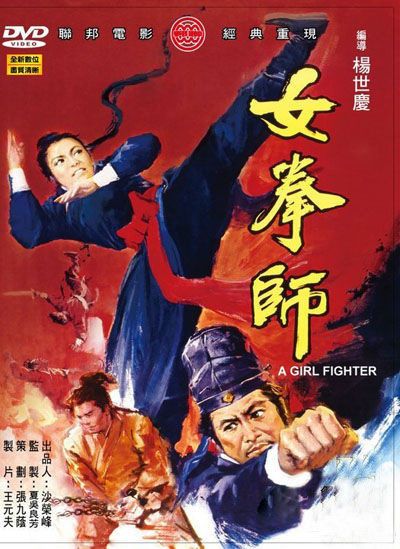
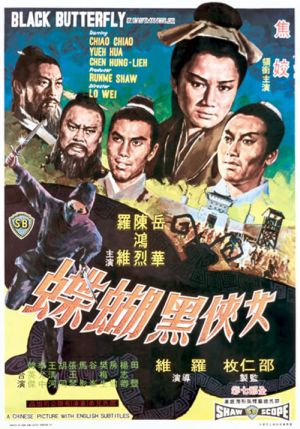
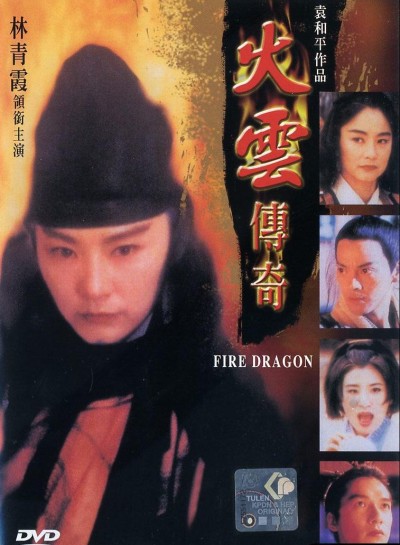 Prince Six (Tan) is plotting rebellion against the legitimate government, but Ming (Chu) has obtained a piece of compromising evidence from a dying Imperial guard. Before he can deliver it, the seal proving his identity is lifted by Tang Lyn-Yu (Ng), who runs a circus troupe, but has set her amorous eyes on Mind. He returns to the troupe, to try and locate the seal, but also there, undercover, is Fire Devil (Lin), who has been tasked by Six with locating and destroying the evidence of his treachery. However, after her involvement in a battle which leaves a young child orphaned, along with her beginning to fall for Ming, she begins to question whether she is on the right side of the fight. It doesn’t count as much of a spoiler to say that it ends with Fire Devil taking on Six, in a finale which involves so many things blowing up, you’d be forgiven for thinking the title of the film was as given at the top.
 ★½
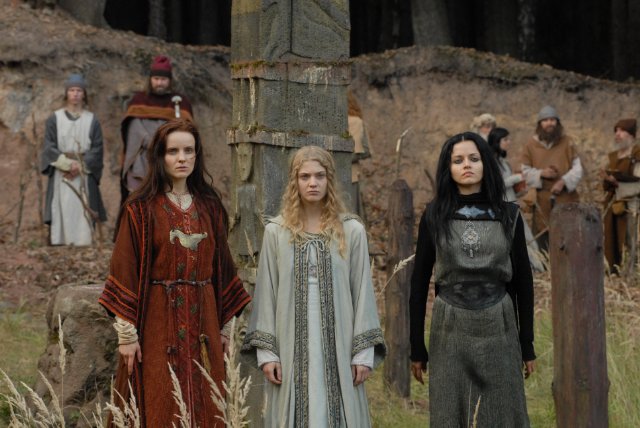
★½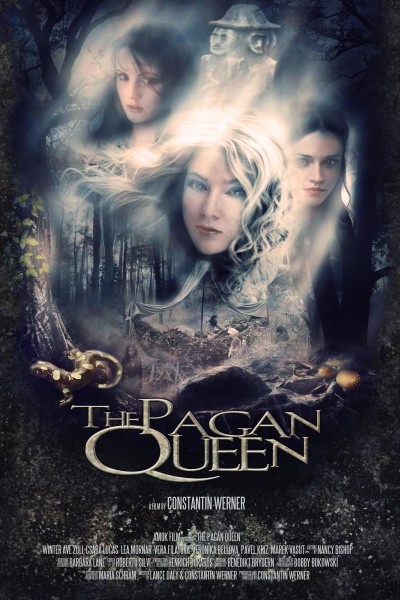 It really is nowhere near as good as this sounds, and the synopsis above is significantly more coherent. I swear, I didn’t fall asleep – but it felt like I did, the story lurching from scene to scene in a disjointed manner that rapidly drained all interest. Outside of the heroine, there was hardly any significant effort at giving the characters motivation or depth, and matters weren’t helped by the fact the entire nation seemed to consist of about 25 people. The scenery is nice, and the soundtrack has a full, orchestral feel which seems to have escaped from a higher-budget movie, but it doesn’t work as a historical piece or as a political one – and, certainly, not as an action film. However, I was amused by what I suspect is likely a realistic, if ruthless, depiction of what would probably happen when a warrior maiden comes up against her male counterpart.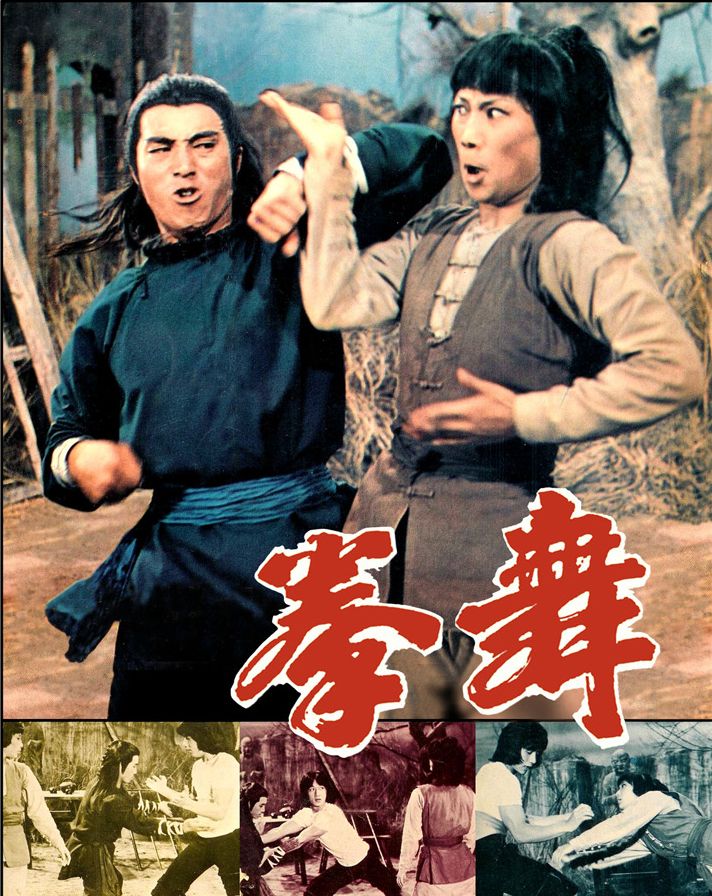
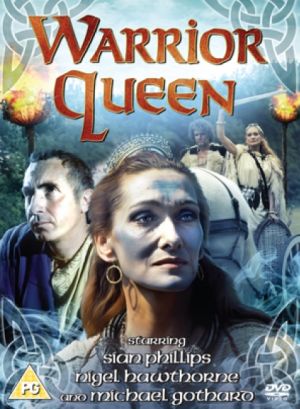 In the late seventies, British television was notable for series which generally kicked ass on the performance front, but suffered from woefully inadequate production values. The most well-known example is Doctor Who, but that was just the tip of a dramatic iceberg which included the likes of Blake’s 7 and this series: in some cases, you can look past or ignore the deficiencies, because the acting is good enough to counteract them. That, sadly, isn’t the case here, with Phillips (a compatriot of Diana Rigg and Glenda Jackson at RADA) sadly adrift as Boudicca, the queen of the Iceni who takes on the occupying Roman forces after her daughters are assaulted. Having enjoyed the 2003 version, with Alex Kingston in the title role, I thought I’d give this one a chance, but when a supposed army of 6,000 is represented by four chariots and, maybe, ten guys in animal skins, it’s hard not to notice.