




★★½
“Everything comes to he who waits. Eventually.”
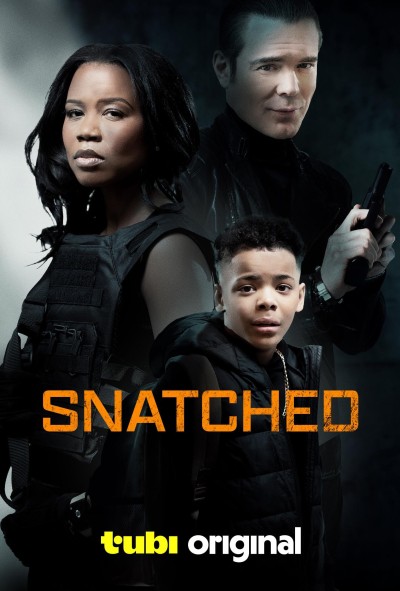 The title here seems quite deliberately a nod towards Taken, which similarly has an ex-government operative chewing up and spitting out bad guys, after they make the fatal mistake of abducting the operative’s child. In this case, it’s CIA operative Angela (Bozeman), who lost her husband Jason in murky circumstances, but subsequently put away Dmitri (Weber), the criminal mastermind responsible. Now, six years later, she can get on with living her life, bringing up son Jason Jr. (Cheatham), and hanging out with fellow agent Byron, who seems a possible husband replacement. Well, until Dmitri escapes from prison and starts killing off everyone he considers responsible for putting him behind bars.
Sooner or later – and as we’ll see, it’s not the former – that brings him into Angela’s circle, and ends up in him kidnapping Junior, with the aim of luring her into his (very well-appointed, it has to be said; I particularly liked the chandelier) lair. However, he doesn’t realize what he has done. Once this all gets going, it’s not bad. If hardly seeming an accurate portrayal of CIA practices, unless they’re utterly slipshot and incompetent, it’s kinda fun as long as you don’t ask awkward questions. Such as, where the heck does Angela get those groovy remote-controlled gun-toting little cars? Was Andy Sidaris having an estate sale? Dmitri also has a groovy bad-ass sidekick, Sophia (Camille Osborne), though her fight with Angela is disappointingly brief.
The problem is mostly the long, meandering, roundabout and largely uninteresting way in which the story gets to the amusing stuff. The first half or more is largely comprised of extremely conversational scenes of merely passing interest. In these, Angela talks to Byron about wanting to retire. Or talks to Junior about the realities of her career. Or talks to her mother, Carolyn (Hubert), about her not really a relationship with Byron. Dear lord, it’s far from the action-packed trailer, and you would certainly be forgiven if you gave up on all this soapy drama. Though I was eventually entertained by Carolyn’s ability to kick ass in a grandmotherly way, like Pam Grier on an AARP outing. At least until she encounters Sophia, anyway.
The score above is likely a composite, with two stars for the first half and three for the second, when things do reach an acceptable level of entertainment. Bozeman seems better known as a singer, but does a decent job of portraying the highly upset mother, and has a terse style of close-combat that is effective. On the plus side, it is quite gory, with a number of head-shots and other fairly graphic deaths. On the minus side, these are mostly CGI, as is apparent from the blood spray never landing on anything in the environment. You probably want to have something on hand for the sluggish early proceedings: either a good book, some snacks or an alcoholic beverage would all serve that purpose.
Dir: Chris Stokes
Star: Veronika Bozeman, Charlie Weber, Jered Cheatham, Janet Hubert
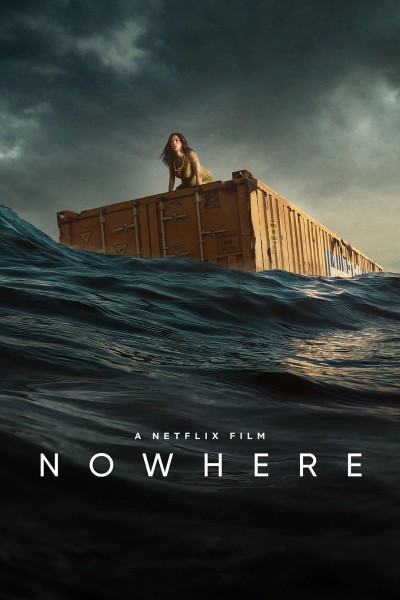 One of the shows we enjoy watching here is Alone, in which ten contestants are dropped off in a hostile location – typically chilly – with limited resources. The last one left standing wins $500,000. It’s a simple concept, yet endlessly fascinating. We sit on our comfortable couch, eating Doritos and passing comment on the failing of the competitors. Especially so when they are hoist by their own stupidity, such as losing their means of starting a fire. This feels not dissimilar, except rather than a survival expert, it’s a woman who finds herself thrown into utterly inhospitable circumstances, and forced to make do by any means necessary – not just for her own survival, but that of her new-born child.
 ★★
★★ DEA agent Jack Thorne and his wife are killed, and his reputation shredded after his death. His 12-year-old daughter Lou only escapes courtesy of her father’s sacrifice, and an unwanted innate talent, which she shares with her aunt, Lucy. Lou has the ability – sometimes without her choice – to transport herself through the shadows or through water to another, similar location. After the loss of her parents, Lou goes to live with her aunt and learns to control and use her skill. Fourteen years later, and now a grown woman, she is on a crusade of vengeance, to seek out and destroy every member of the Martinelli crime family responsible for her parents’ deaths.
 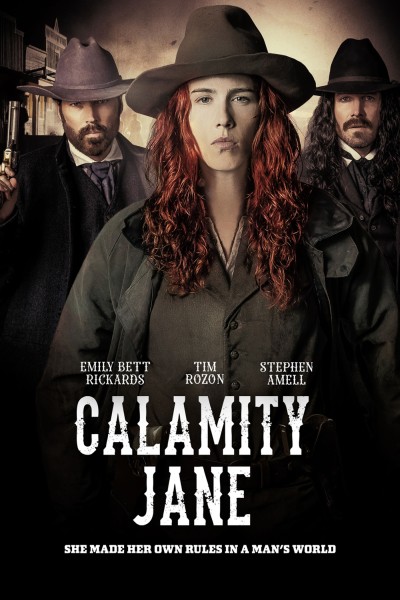 Calamity Jane and Wild Bill Hickok are two of the most well-known names in the culture of the Wild West, though the reality of both individuals is almost impossible to separate from the myths which surround them. So it’s kinda pointless to complain about historical accuracy in films which focus on them. Better just accept them as effectively being fictional entities, which can be used for whatever purpose a filmmaker desires. Here, it’s the death of Wild Bill (Stephen Amell, best known as TV’s Arrow) in a poker game, which sets his girlfriend Jane (Rickards, also from the same series) off. She goes on the trail of Jack McCall (Allon), the scumbag responsible, who has understandably opted to depart Deadwood.
 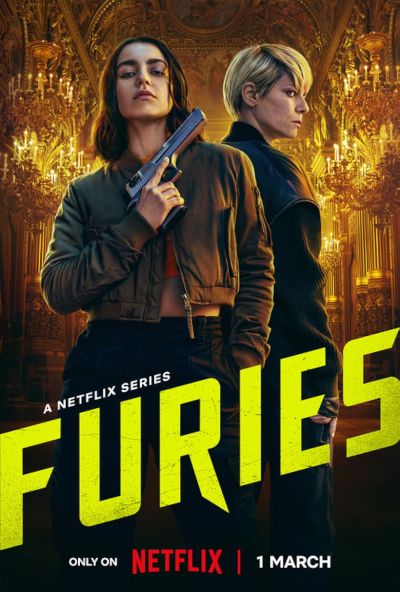 Not to be mixed up with
 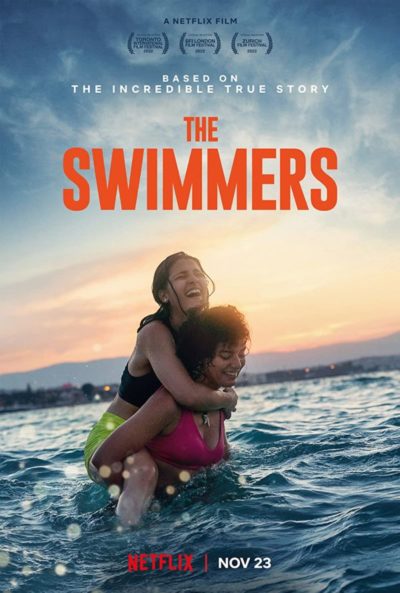 This is the story of Syrian sisters Yusra Mardini and her sister Sarah, played by real-life sisters Nathalie and Manal Issa. Growing up, they were trained by their father, a professional swimmer himself, and had the goal of reaching the Olympics for their country. The (still ongoing) Syrian Civil War led to the sisters leaving their homeland, and this is mostly the story of their journey, through Turkey, across the Mediterranean in a
  This is a sprightly and energetic Chinese knock-off, borrowing heavily from Resident Evil and Aliens in particular. There’s a research lab deep underground, in the middle of the Gobi Desert, which has suddenly gone radio silent. The research they were doing there was… well, I’m not 100% certain quite what it involved. While a lot of the dialogue in this is in “English”, I’m using quotes advisedly. Especially on the scientific front, it seems to be more of an enthusiastic word-salad, like “by chance, precise data from the gamma variable appear,” throwing jargon about radiation and DNA splicing into the mix, in lieu of anything coherent. Anyway, it seems Ohm Technology are into some fairly shady shit, to nobody’s surprise.
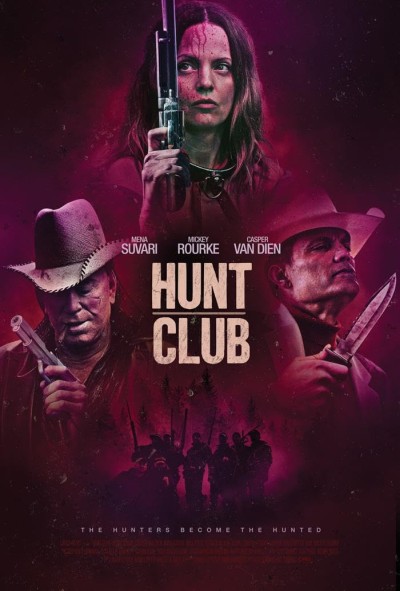 Oh, dear. I appreciate that actors have to work, like everyone else. Van Dien, in particular, has a reputation in our house as someone whose name is not typically a badge of quality. But it’s sad to see Suvari is now apparently in the same career boat. I can only presume the offers aren’t exactly flooding in, if this is the work she has to take on. It’s another variant on the old Most Dangerous Game story-line. Here, it sees redneck entrepreneur Carter (Van Dien) luring in women with the promise of $100,000, while remaining vague on the details. Turns out the victims then are pursued through the forest and have to survive for 24 hours. Spoiler: they don’t.
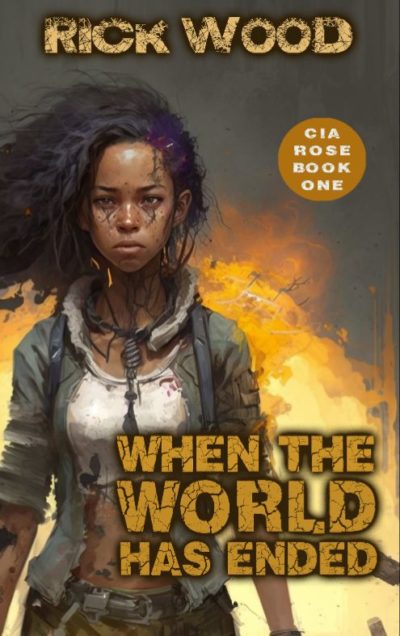 “It just seemed as if Hell opened up one day and that was that. Instant carnage, liberated monsters, death for all. They rose from somewhere beneath the ground, attacking for no clear reason and killing until God knows when.” That’s how this starts, so there’s no hanging around. Cia Rose is one of the few survivors, for whom every day survival is a perilous endeavour. She’s seventeen, and the daughter of a scientist. When the monsterpocalypse took place, the rich, influential and powerful – who, it appears, knew this was coming – headed for their shelters. Her father was allowed in, to research the invaders. Cia was not.