★★★½
“We kill people so we don’t have to get these annoying jobs.”
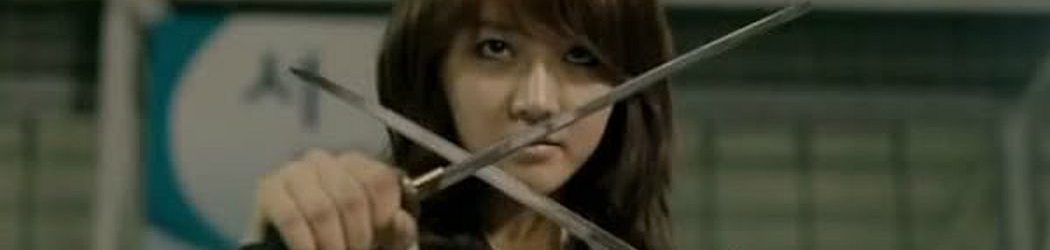
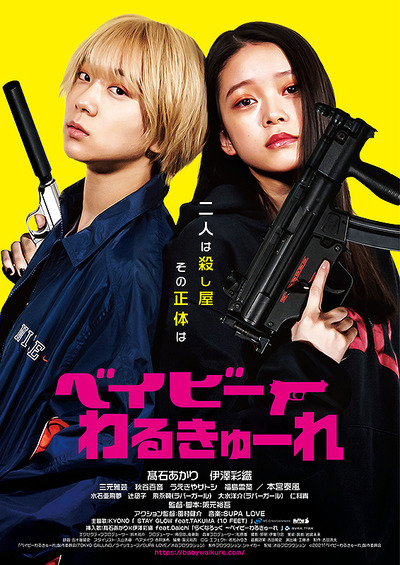
I’ve read complaints that the trailer mis-sells this, over-hyping the action components. Fortunately, I went in largely blind, so had no such preconceptions. I can see how it could be fair comment: while bookended by solid action, the middle is much more an oddball Japanese comedy. [If you’d told me this was directed by Sion Sono, I’d believe you] I still found it largely engaging, while occasionally hilarious and – sometimes simultaneously – utterly baffling. It’s about two teenage assassins, Chisato (Takaishi) and Mahiro (Izawa), who have been told by their handler they need to start fending for themselves. That means moving into an apartment, and finding work which doesn’t involve killing people.
As the line of dialogue above suggests, these are tasks for which both young women are singularly unsuited. Mahiro, in particular, is a self-confessed sociopath, who can barely keep up a normal conversation for five minutes, without wanting to shoot somebody. And it’s an urge that usually wins. We see this at the beginning, when a convenience store interview turns violent, and she has to fight her way out, past the manager and his (surprisingly loyal) employees. In the end, Chisato helps her get a job at the maid cafe where she works. I’d heard of those, but… yeah. Not sure if the depiction here is exaggerated for comedic purposes: it’s startlingly bizarre. Things ultimately go awry there when a Yakuza boss visits, and does not follow establishment etiquette, shall we say.
I was reminded of Violet and Daisy, in that this is as much about the relationship between the two young hired killers, as their actual killing. However, here the duo’s background is entirely opaque. How did they become hitwomen? Who is hiring them? Where are their parents? These are all questions that the film is utterly disinterested in answering. To be honest, the concept is a little shaky. Surely murder pays well enough that a part-time job in a 7-11 is not necessary? However, if you can roll with it, there’s a lot of amusement in getting a glimpse of what assassins do when not assassining, especially if you’ve ever lived in a similar arrangement.
Izawa, a stuntwoman who doubled for Rina Sawayama in John Wick 4, handles most of the action. In addition to the early convenience store brawl, there’s also a final fight against the much larger Mimoto. It works, because Mahiro makes no attempt to out-power her opponent or go toe-to-toe with him, instead opting to use her advantages in speed and agility to gain an edge. I would like to have seen more of this, and some of the humour here is perhaps trying too hard to be “quirky”, complete with air quotes. But these are a pair of characters with which it’s fun to spend time, and certainly provides more amusement than I needed. I’ll be checking out the sequel, Baby Assassins 2 Babies, in short order.
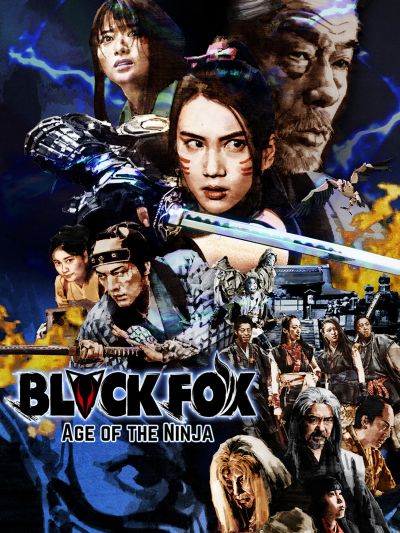
I’d not heard of this, and we pleased to find it was directed by Sakamoto, a well-respected action choreographer, best known for Power Rangers, but who also worked on 009-1: The End of the Beginning, among others. There’s an interesting back-story here, in that this was created as a live-action spin-off to accompany the anime film BLACKFOX, and was released on the same date. It’s a prequel, with one of the heroines here, Rikka Isurugi (Yajima), a distant ancestor of the heroine in the contemporarily-set anime movie – they have the same name. This, however, takes place back in feudal Japan, and we start with Miya (Yajima), a young girl with an unusual, if uncontrolled, power to manipulate electricity.
Her father was teaching her to use it, until he was killed by the Negoroshu clan, under Lady Hakku (Fujioka) – they are also after Miya. To get revenge on them, Miya seeks out a mercenary gang called the Foxes, run by Hyoe Isurugi (Kurata). They agree to take on the mission, and Miya befriends Hyoe’s grand-daughter, Rikka. However, Hyoe gets a better offer, and hands Miya over to Hakku. This causes a rift between him and Rikka, who feels they should honour a deal once struck. She sets out to rescue Miya, though that’s going to be tougher than ever, since she has now been passed on to the person who hired the Negoroshus in the first place.
While most of the plot unfolds as you would expect, there are enough twists and surprises along the way to sustain interest. In particular, loyalties are not necessarily what they seem, and as well as our saintly heroines, there’s more moral grey on view here than I thought there might be. Never mind the plot though. We are here mostly for the action, and Sakamoto does not disappoint, with Yamamoto doing most of the heavy lifting. There are perhaps too many times when she’s masked – albeit, usually with masks that are necessary to the plot – to give her full credit. But she definitely is executing enough of her own stunts to make me interested in seeing her elsewhere. And she’s a World Junior Wushu Championship gold medalist, so there’s that.
Fujioka also does well, both in action and acting, making Lady Hakku perhaps the most interesting and well-rounded character in the film. I will confess to initially suspecting I’d seen this before. But I was clearly confusing it with another film which had ninjas and/or samurai running around in the forest. There are quite a few, to be fair. It is clear that this was not a large-budget production, and the ending is a little too sequel-leaning. Yet the limited resources don’t often distract from the important things: the story, characters and action, which are all decently-handled. My expectations were low going in, until I saw the director’s name, and for something stumbled across by accident in the depths of Tubi, it punches well above its weight. It’s also available on YouTube, and is embedded below for your viewing pleasure.
I think it has been a long time since a film has so completely yanked the carpet out from under me. We might have to go back all the way to David Lynch’s Lost Highway, and that was 1997. So it has been a while. I’m not sure if it works here. It did in Highway; I’m just uncertain whether Khalili is as good a film-maker as Lynch. It’d likely require a second viewing to decide, and I wasn’t that impressed elsewhere to justify a repeat. I will remember it though, and that’s more than can be said for many of the films I review here. So it was not a complete waste of time.
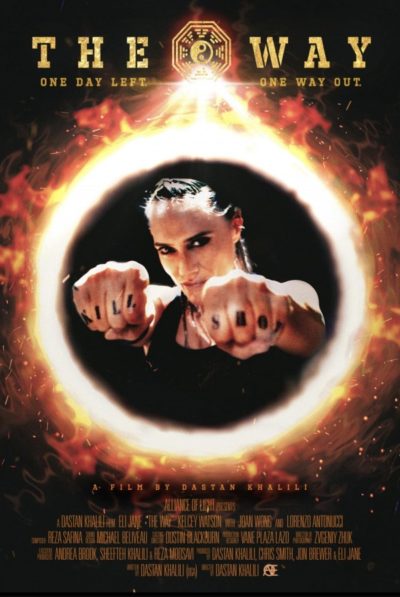
It’s the story of Jane Arcs (Jane), whom we first meet as she is on death row, preparing for her execution. Over a decade previously, she had killed another woman during an underground mixed martial-arts match, and was subsequently sentenced to death for it. Initially bitter and still filled with rage, in jail she met Qi Gong Master Xin (Wong), and learned from her how to manage her emotions, through both physical and mental training. Now, Jane is considerably more at peace with her imminent death than others around her. Most notably, guard Max Stone (Watson), who has come to care for Jane over the previous 13 years, and will go to any lengths to stop her being executed.
This is, at least for the first hour, more of a redemptional drama than anything. There are a lot of flashbacks to Jane’s life on the outside, and we see what happened there. First, there’s the fight in question: while undeniably brutal, I am still not sure why it was deemed a capital crime. That’s especially so, given the extenuating circumstances which we then see, going a long way to explaining why Jane was overflowing with anger at life. Oddly – and this is another Lynchian touch – Watson also plays Ben Jorden, the father of Jane’s child on the outside. Otherwise, though, it’s a fairly straightforward story, albeit one that leans heavily into cliché. For instance, Xin often sounds more like a fortune cookie, saying things like, “The only respect you need is self-respect.”
And then… Wait, what just happened? You will take a few minutes to figure that out, and even when you do, you may well not be able to wrap your head around it adequately. I even Googled for an interview with the director, hoping to get some explanation. No dice – and in the end, it may be better that way. I suspect it might well fall short of satisfying. By the end, I was left with a furrowed brow, and it’s perhaps a little unfortunate. For if the story is otherwise too obvious and with gaps in its logic, I did appreciate the performances. Jane puts over an inner strength that is impressive. Shame it is so thoroughly overshadowed by the abrupt left-turn towards the end.
Dir: Dastan Khalili Star: Eli Jane, Kelcey Watson, Joan Wong, Lorenzo Antonucci
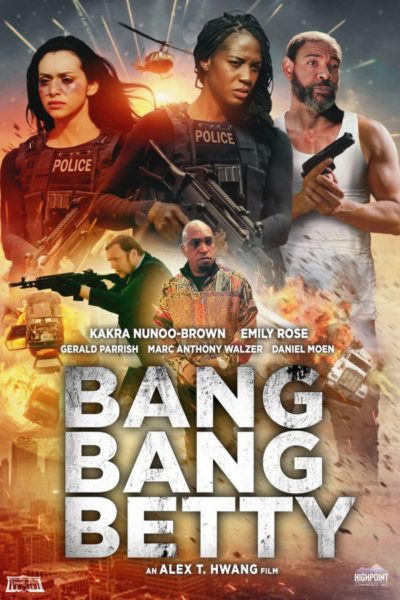
If I was feeling mean, I’d have tagged this as “Pretty shitty Bang Bang”. But while undoubtedly amusing, that wouldn’t be 100% fair. For in the field of low-budget urban action heroines, this is actually better than most. Now, by broader standards, that’s still not exactly great. However, I’ve seen enough of the genre to appreciate and welcome mere technical proficiency. Simply by having decent audio, I was already impressed. It’s the story of Kiara Sommers (Nunno-Brown), a former soldier who is now a prosecuting attorney. During a meet with one of her informants, she is shot and left for dead, but rescued by another veteran, Ray Smith (Parrish) and nursed back to health. [I’ve vague memories of a Chow Yun-Fat film with this plot]
She’s then able to take revenge on the man responsible, local crime-lord Darnell (Walzer). Which is a bit awkward, because he is her boyfriend. There’s also Valerie Mendez (Hernandez), who used to be a colleague of Kiara in the army, and is now walking a dangerous line, playing for both sides, as a cop and an inside woman for Darnell. It feels as if considerably more thought has gone into this than many in this field, whose plot could typically be written on the back of a beer-mat, and leave room for your pint. Some other elements also deserve praise, such as a soundtrack which isn’t just the director’s rapper mates on shuffle (though there is still a fair bit of that).
While Nunoo-Brown and Hernandez are decent enough in their roles, there are several elements that manage to stop this reaching three stars, which would be close to an all-time high for the genre. There’s a serious question over Kiara’s complete ignorance of her boyfriend being a organized crime boss. I mean, really? Some of the supporting cast are not very good: Walzer in particular struggles with his delivery. There’s also a point where a significant character is killed in front of another. It should have a devastating impact, yet their lack of reaction is notable. A few minutes later in the film, they’re cracking wise with Kiara and Valerie. The bruising on Valerie’s face is a continuity disaster.
My biggest issue, however, was the bad CGI. The muzzle flashes were marginally acceptable, but the explosions are poor, and the CGI blood close to the worst I’ve ever seen. Having no blood at all would have been a vast improvement. It’s a particular shame, as some of the hand-to-hand action is decent enough (again, compared to what I’ve seen previously), with both lead actresses occasionally impressing. I did laugh when Valerie attempted a lucha libre throw on Darnell’s henchman, only to be tossed aside, and told “That superhero shit doesn’t work in real life, does it?” More of this degree of self-awareness might have been welcome, yet it’s probably wise not to ask for too much. I’ll settle for competence, and there’s just enough here to leave me mildly interested in the sequel, already in post-production: Bang Bang Betty – Valerie’s Revenge.
Dir: Alexander T. Hwang Star: Kakra Nunoo-Brown, Gerald Parrish, Emily Rose Hernandez, Marc Anthony Walzer
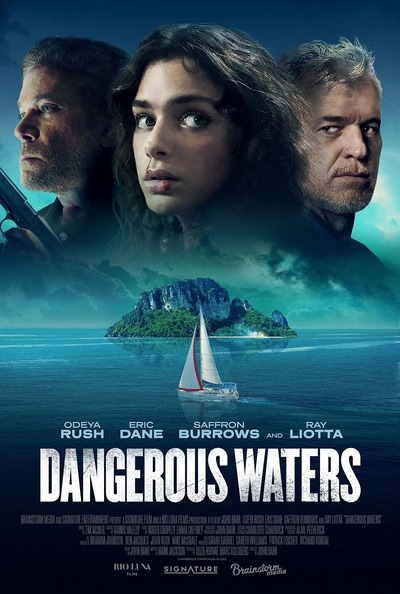
This was Ray Liotta’s last movie: he died during shooting. Cruel though it may be, I can’t help wondering if he died of embarrassment. Certainly, I note that his character never gets a proper send-off: while I must remain vague for spoiler purposes, you don’t see his face. Not that he’s in this much. A rambling conversation with the heroine is the bulk of it. But that’s getting ahead of ourselves. We begin with single mom Alma (Burrows) dragging unwilling teen daughter Rose (Rush) on a sailing trip from Florida to Barbados. The boat belongs to her new boyfriend, ex-cop Derek (Dane), and at first, things are pleasant, despite Rose’s obvious desire to be anywhere else but on the high seas.
She’s right to be concerned. A mysterious encounter in the middle of the night leaves one of the passengers dead, and the other two having to fend for themselves, on a badly crippled craft. Turns out, Derek wasn’t quite the above board law enforcement officer Alma thought. He was in cahoots with some very nasty people, in particular one individual known only as The Captain (Liotta). Surviving will require Rose to get on a liferaft, go to a desert island, get back on the liferaft, and finally get picked up by the boat belonging to The Captain. Fortunately, she is both the daughter of a deceased soldier, and has taken shooting lessons. Who better to take out a ship full of hardened criminals?
Yeah, that whirring sound are my eyes rolling. It’s all pretty dumb and largely implausible. I’m not sure what’s less credible: Rush as a teenager, or Burrows as a woman in her late thirties [Put it this way: I’d like to wish a happy 25th birthday in July to Saffron’s performance in Deep Blue Sea] Then there’s the plot, which wanders round in circles aimlessly, between sporadic bouts of action. I guess it gives the viewer plenty of time to try and figure out what Derek’s plan was supposed to be. Similarly, Rose swings between being an unbeatable bad-ass, and whimpering in the corner or unable to hold an oar. But since the movie opens with Rose telling her story to law enforcement, there’s no tension or threat to her. We know she’s going to survive.
I will say, it looks slick, and the action is fairly well-staged, especially once we get to the boat. This is certainly watchable, though I almost dozed off during one of the longer liferaft sequences. It’s the story that’s the problem here, not least because the big surprises are little or no surprise at all. Maybe the unscheduled loss of Liotta, and the obvious rewrite required was a factor. However, that tragedy can only go so far in explaining the welter of problems with the story. It’s the kind of thing which might pass muster as a TV movie on a lower-tier cable channel. I was expecting more, and certainly, Liotta deserves better as a memorial.
Dir: John Barr Star: Odeya Rush, Eric Dane, Saffron Burrows, Ray Liotta
It was a good run. There was a point, not long ago, when action heroines could do no wrong. In hindsight, the golden era may have started in 2012 when the Hunger Games franchise began, along with Brave. Summers which followed brought us blockbusters such as Gravity, Maleficent and Lucy. Subsequent years covered the entire run of the Hunger Games and the end of the Resident Evil franchises (or, at least, phase 1 for them), and things probably peaked with Wonder Woman in 2017. Thereafter things began to decline, though I’d say returns remained strong through much of 2019. That’s when Maleficent: Mistress of Evil and Alita: Battle Angel each made over $400 million worldwide, finishing in the top 25 movies of the year.
The cracks began to show with Captain Marvel, odd though it is to say, given it made over a billion. But to a large extent I suspect it mostly surfed on the success of Avengers: Endgame. Thereafter, Wonder Woman: 1984 flopped just before the pandemic hit, Black Widow underperformed, and since then it’s been almost entirely a series of failures, with only the arguable Hunger Games reboot reaching even $250 million worldwide over almost three years since. Instead, we had one of the biggest bombs of all time in the The Marvels, followed up by the disastrous box-office of Madame Web. And now the prequel to Mad Max: Fury Road, managed an opening weekend in North America of only $26.3 million. That’s forty-two percent below its predecessor’s opening, excluding nine years of inflation.
It’s not all action heroines’ fault (though some on social media are claiming so). This year has been dismal in general. With three midweek days left on the month at time of writing, box-office for May is down 36% on May 2023 – and even that was the lowest non-pandemic May since 2001, again without adjusting for inflation. People just aren’t going to the movies in anything like the same numbers. I can’t say I blame them, when films appear on streaming services as little as three weeks after their theatrical release. Going to the pictures is expensive, and especially with the improvements in home theatre, the overall experience can end up being worse than staying at home, between travel, over-priced concessions, idiots talking on their phones, etc. Why not wait?
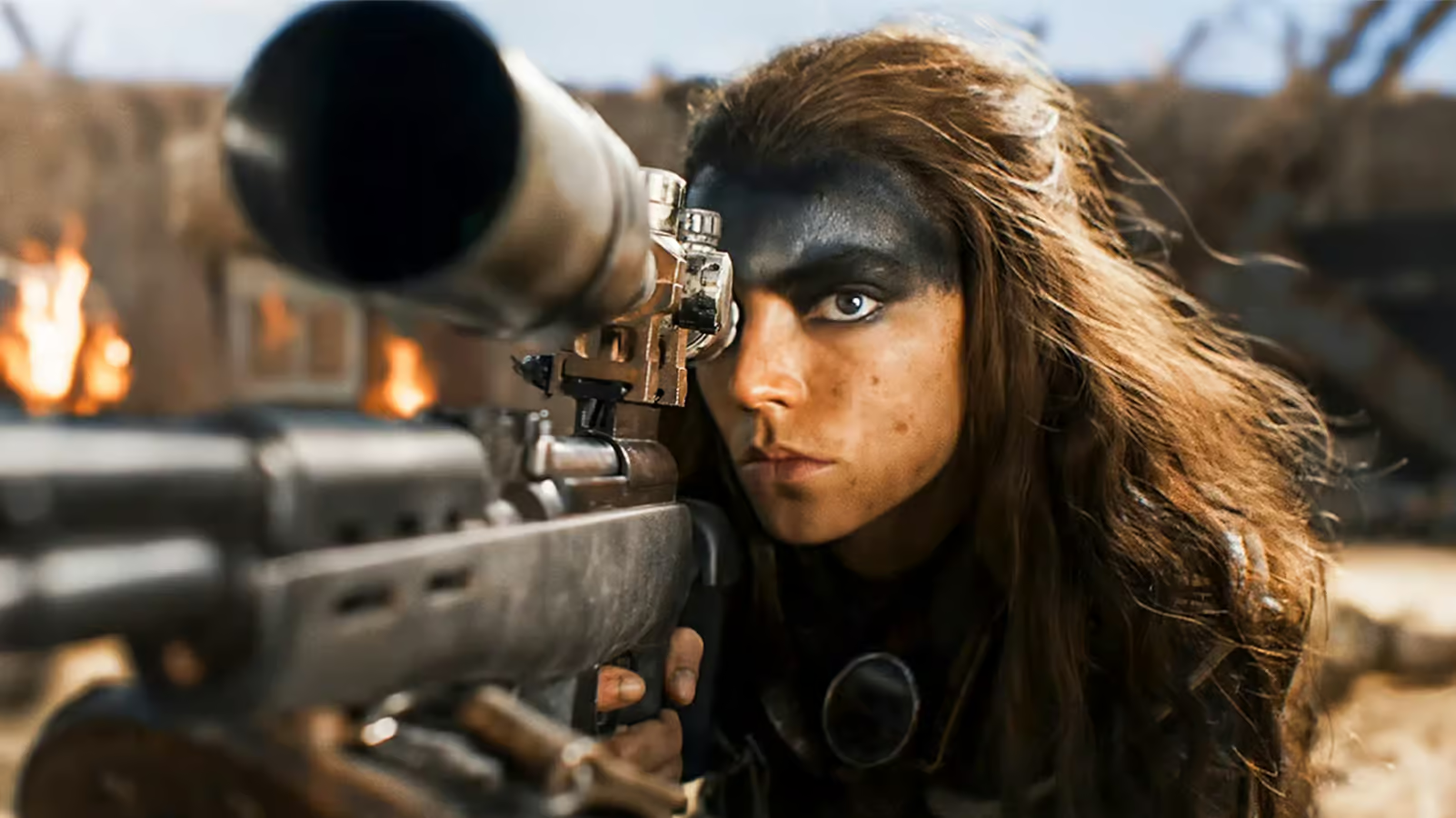
The counterpoint is experiences like this, a full-on, bombastic, in your face event that made full use of everything IMAX has in its locker, and surpassed anything I could get at home. Now, your mileage may vary. Poor Chris, in particular, found it too overwhelming, triggering motion sickness which forced her to close her eyes any time things got too kinetic – which was a lot of the time. We probably will not be IMAXing again in future. But the only recent comparable experience for me was Godzilla: Minus One. Re-reading my review of Fury Road, I’m a bit surprised I only gave it four stars. I’ve seen it again since, and I’ve just upgraded it an extra half-star. Put another way, Furiosa is every bit its equal. Different, but equal.
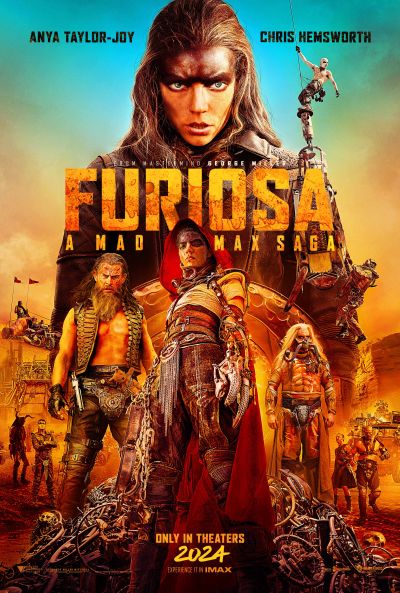
It’s a direct prequel, ending at the point when Furiosa (Taylor-Joy) leads the wives to escape from The Citadel. It begins with a much younger Furiosa (Browne) living in the Green Place, a rare place of plenty in the post-apocalyptic hell which Australia has become, along with the rest of the world. She’s kidnapped from there by minions of Dr. Dementus (Hemsworth), leader of the Biker Horde. Her mother is killed trying to rescue her, and Furiosa becomes the little, mute pet of Dementus, until he trades her to Immortan Joe, who runs the Citadel. Over the subsequent years, she becomes a key part of operations, becoming the partner of Praetorian Jack (Burke), who trains Furiosa and falls in love with her.
Dementus, meanwhile, is working to become the wasteland’s supreme ruler by taking over the Citadel, Gastown and the Bullet Farm. In an ambush at the last-named, Jack is captured and tortured to death, while Furiosa escapes only by tearing off her own arm. She returns to the Citadel, providing key advice to Joe in the ensuing war. But she never loses sight of her final goal: to make Dementus pay for what he did to her and her mother. Given she appears in Fury Road and Dementus does not… Well, you can probably figure out how this is going to end. Though the reported final nature of her revenge is not what you might expect, and has a certain poetic resonance, given what happened previously.
It isn’t quite the same relentless stream of action as Fury Road, and at almost half an hour longer, that’s no bad thing. There’s no shortage of action, but it tends to align with the way the story is broken into chapters. So you get a series of Drama-Action-pause segments – or occasionally for variety, Action-Drama-pause. There were concerns regarding the amount of CGI in the trailer, and I will say, it’s not as almost entirely physical as Fury Road either. However, what’s used is integrated very well, with only a couple of moment wheres the action momentarily seems obviously adjusted digitally. I suspect some of the landscapes were also enhanced: they and cinematographer John Seale’s work is so stunning, I don’t care there.
My other concern was having Taylor-Joy replace Charlize Theron, who simply has more presence. That does remain an issue, though to the new actress’s credit, to a lesser degree than I feared. It’s also countered by having much more of a real antagonist here in Dementus. The first film was mostly an extended chase sequence: Furiosa was running from Immortan Joe, after helping his wives escape, and they shared very few scenes together. Here, Dementus gives us a stronger “villain,” and the film as a whole is better for it. Hemsworth brings a charismatic power to his character, to the point where you can see why his henchmen follow him, unto death. Furiosa, in contrast, is really not much of a people person.
It’s difficult to pick out any one action highlight, because they are all very, very good. I think the ambush at the Bullet Farm might me the one which sticks most in my mind for now, though this may change on (the almost certain) re-viewing at home. It’s one which offers the most interesting environment, including buildings and smoke stacks, while the others are somewhat limited by operating in a desert. I mean, it is called “the Wasteland” for a reason. However, when Miller puts Jack and Furiosa in their rig, which is being stormed by almost endless waves of raiders, you really do not need a backdrop. Indeed, you could argue that any such would be at best irrelevant, and at worst a distraction.
You would be hard-pushed to argue that the $168 million budget is not up on screen. I lost count of the times when I wondered whether what I was looking at really existed in the physical world, or was matte paintings and CGI. Part of me wants to peer behind the curtain and watch the behind the scenes videos. However, part of me would prefer to sustain the illusion, which was a factor in the sense of wonder that often washed over me during the screening. It’s the quest for that sense of awe which keeps me going to cinemas, even if most of the time, I end up leaving disappointed [I’m looking at you, Godzilla X Kong…]
I also want to praise one other aspect, which may not transfer as well to my home environment (and I admit it is limited in this area): the audio. There are not many times when I can specifically point to this in particular as significantly enhancing the experience. I’m not an audiophile, and generally put what I see considerably ahead of what I hear. But in this case, Tom Holkenborg’s score and the rest of the sound elements were a notable and impressive component. From the rumblings of the engines through to the wind whipping across the Wasteland, the sonic design really worked, and allowed me to feel like I was being brought into the world of Furiosa. Well played
The problem from a business perspective is, it seems all but certain the makers are not going to recoup their investment, making it less likely you will see investments like this going forward. Fury Road probably just about broke even, so this was always going to be a gamble, especially without your leads. And, indeed, outside of the title, entirely without the character who has powered the franchise since its first installment, all the way back to forty-five years ago. In hindsight, a reaction of “What the hell were they thinking?” is probably understandable. But I am glad less-wise heads prevailed. If this is to be the end of the Mad Max universe, it goes out on another spectacular high, and not many franchises are able to say that.
Dir: George Miller Star: Anya Taylor-Joy, Chris Hemsworth, Tom Burke, Alyla Browne
This was watched, effectively as the B-feature before Furiosa, with expectations along appropriate lines, given that basis. And as such, this is fine. It’s glossy, shiny and well-crafted technically, albeit making little or no emotional impact. This is partly because, in the early going, it feels suspiciously like someone said, “Hey Siri! Rewrite the script for Aliens, replacing xenomorphs with bad AIs, and Sigourney Weaver with J-Lo.” She plays Atlas Shepherd, an AI expert, decades after a revolt of the robots killed millions before it was contained, with leader Harlan (Liu) vanished from Earth. Now he’s been tracked to a distant planet, and a military mission sent to capture Harlan. Atlas reluctantly goes along with the soldiers as an “advisor”.
Fortunately, on arrival, the story heads in its own direction. The force is ambushed and forced down, with Atlas and her AI-enabled mech, Smith (voiced by Cohan) as apparently the only survivor. She opts to forge on with reaching Harlan’s base, a choice which brings her into conflict with Smith, who insists on putting his pilot’s safety first. Complicating matters is the need for Atlas to allow a neural link from Smith into her mind, in order to complete the mission successfully. This is something which she is very loathe to allow. There’s more than paranoia here, with pretty good reasons for her reluctance, connected to Atlas’s past and how it was responsible for the previous AI rebellion.
Topical for this to come out the week Google’s AI search results suggest using glue to stop cheese sliding off your pizza. Yet, despite the initial scenario, it ends up being rather – some might say, suspiciously – pro AI. Not quite, “I, for one, welcome our new AI overlords.” But definitely suggesting, even haters are going to have to bite the bullet and accept them into their lives. I will say, Smith ends up a likeable character, with an awareness of things like sarcasm, which make him approach human. Some might say, more so than Atlas, and certainly more than one of the other mechs, who insists on informing people of her preferred pronouns. I rolled my eyes hard at that.
Between this and The Mother, Lopez seems to be aiming to carve out a career as a Netflix action heroine. In both cases, the films work better on the action front than the dramatic (Lopez as a boffin is always a stretch). This has some nice examples of mechanized set pieces, as the Atlas/Smith partnership makes its way across a hostile planet towards their goal. It’s refreshingly free of any romance, being unexpectedly close to hard SF. Admittedly, this isn’t a film I’m probably ever going to revisit. But it provided a decent two hours of mindless entertainment, and let’s face it, that’s largely why we still have a Netflix subscription. If J-Lo wants to keep making this kind of thing, I’m happy to keep watching them. Just so long as she doesn’t start singing.
Dir: Brad Peyton Star: Jennifer Lopez, Gregory James Cohan, Simu Liu, Sterling K. Brown
This shouldn’t be confused with the BBC series of the same name announced last year. This is very definitely American, another in the ongoing series of urban crime movies which seem to pop up, with some regularity on the likes of Tubi. I keep watching them, in the hope they’ll be good, but am usually disappointed, mostly due to cheap-jack production values and repetitive story-lines. This is at least watchable in the former department, though is definitely marked down for a startlingly abrupt “To be continued” ending. I hate cliff-hangers in books: they do not work any better on movies, and this isn’t exactly Dune Part One, shall we say. Not least because it runs only 75 minutes, including end-credits.
It’s the story of Dee (Pinckney), who comes out of jail with a grudge, and sets about trying to take over the drug trade in the city where she lives (I think it’s Philadelphia). The first obstacle standing in her way is CJ (Whitehurst); after she succeeds in facing him down, he hires an assassin to take her out. But the assassin is not a fan of CJ’s, so looks to switch sides and play for Dee. In her corner, she also has her cousin, Stephanie (Hicks), and a select group of other women with appropriate skills. The one of most note is Stasha Fields, also known as Star (Feindt), a dirty cop who is looking to make it on her own terms.
These make for an interesting set of characters. The film’s main problem is not doing nearly enough with them. Considering how short this runs, there is an awful lot of sitting around, talking about doing things, and not nearly enough actual doing of these things. Outside of the opening scene, in which Dee goes to confront CJ in his apartment, I’m hard-pushed to think of more than a couple of other significant moments of action. Although someone does get shot towards the end, it’s in a non-lethal manner, which is something of a surprise in this genre, since it usually can be depended on for a significant body-count. Here: not so much. There’s even preciously little dealing of the dope.
You’re therefore left largely to rely on the drama for interest, and that’s a bit of a mixed bag. As mentioned, there does seem to have been some thought put into the personnel. Pinckney and Feindt at least can reach convincing on some occasions, while director Deniro – and I’m wagering that is probably not his real name – knows the value of silence, rather than burying every scene in rap music, another staple of the field. In the end though, we reach the closing caption, without having moved an adequate distance from where we were after the first scene. We know a lot more people, to be sure. But to what extent do we know them? Maybe we’ll find out in Dope Girls 2. Maybe I can be bothered to watch it.
Dir: Black Deniro Star: Kenisha Pinckney, Eva Lin Feindt, Joaquin Whitehurst, Taria Hicks
This begins with the young Helena, living deep in the woods with her mother and father, Jacob (Mendelsohn). He’s teaching her the ways of the forest, including hunting and the need to be ruthless, with the top priority expressed in the tagline above. However, things aren’t quite what they seem: it feels like it could be a century ago, yet the tranquil illusion is shattered when a lost stranger on an ATV rides up. Mom makes a break for freedom with Helena, for it seems this is actually a kidnapping which has gone on for a long time. Fast forward twenty years: Jacob is in prison, mom killed herself and Helena (Ridley) is working a dead-end job, but married to Stephen (Hedlund), and with a daughter, Marigold.
Then Jacob escapes custody while being transferred, and all hell breaks loose. For Helena has changed her identity, in an effort to disconnect from her past. Stephen is entirely unaware of his wife’s history, until the authorities show up on their doorstep. Helena is naturally concerned that her father is going to make contact, or worse. Inevitably, that’s exactly what happens, and she is going to have to dredge up those long-abandoned skills in order to live up to the standards ingrained in her, when she was living in the woods. It will also require her to return to her childhood haunt, for a confrontation with Jacob which has been several decades in the making.
I suspect the main problem is that we know where it’s going to go, almost from the moment we are told Jacob has broken out of jail. The film, however, insists on dallying around, having Helena’s paranoia ramp up in a middle act that loses all momentum, creeping around at night and hearing the flute-like music which her father used to play. Does this indicate he is near, or simply that the stress is triggering some kind of psychotic episode? To be honest, we don’t particularly care. I kinda lost much sympathy for her, after realizing she had hidden everything from Stephen. You’d think the fact she has more tats than a Maori chieftain might clue you in to something of a checkered past, but that’s apparently just me.
Still, Jacob looms over the entire film even when he is not physically present, since he has, understandably, been living rent-free in his daughter’s head. There is a seasoning of Stockholm syndrome here, in the way the father has impressed his personality on his daughter. Yet none of it is particularly engaging. We’re left just waiting for the face-off which we know is inevitable, where Helena has to decide how far she is willing to go, in order to protect Marigold. Is that further than Jacob is prepared to go, for what he believes is the best interests of his daughter? I feel the answer to that question should be more interesting than this bland exercise in wilderness abuse ends up becoming.
Dir: Neil Burger
Star: Daisy Ridley, Ben Mendelsohn, Gil Birmingham, Garrett Hedlund
This certainly wastes no time. Malina (Martens) regains consciousness to find herself in the trunk of a car stopped at a petrol station. Things get worse, as she discovers her legs are paralyzed, and she has a nasty wound in her lower abdomen. How did she get there? And more importantly, what can she do to escape her predicament? It’s certainly one hell of a hook, and in the way it hits the ground running – as well as its Germanic origins, almost real-time approach and the plucky heroine with a sketchy boyfriend, forced to survive on her own – reminded me of Run Lola Run. Not as brilliantly executed, of course, but well enough done to keep my interest thereafter.
It does require a little suspension of disbelief to get things rolling, such as the way she has a mobile phone. What self-respecting abductor would not ensure their victim is kept well away from portable electronic devices? The fact Malina’s very first call is not to the police also seemed a bit iffy. But once the initial road bumps are overcome, I found myself increasingly drawn in to her predicament. Considering the film takes place almost entirely in a car boot, it works surprisingly well. Schießer uses all the tricks in his cinematic locker to keep the story moving forward, as find out about Malina, and her relationship with boyfriend Enno (Gilz), her father (Rettinghaus) and even the police operator (Helm) who is her best hope of survival.
Gradually, it becomes clear that this is not quite the simple abduction for ransom it initially appears. While her Daddy is certainly rich, why was the poverty stricken Enno apparently abducted too? Is there a connection to a bit of medical malpractice in which Malina, a trainee doctor, was involved? Then there’s the wound in her side, which is not just an accidental gash. Not all of these will end up relevant in the final analysis, and piecing them together is part of the fun. I figured out the key revelation only a couple of seconds before the film announced it, and this propels things forward in a very different direction, the rest of the way.
Obviously, given her circumstances – locked in a car trunk and with limited use of her legs – this is less “action” oriented in the traditional sense. But also given these limitations, I’ve no doubt that Malina qualifies here, having to use all the abilities at her disposal, from her medical knowledge to brute force, to try and survive, as her situation grows increasingly dire, e.g. she crosses the border out of Germany. I feel sure it’s the kind of plot where a less charitable reviewer could probably pick so many holes, it ends up resembling a lace garment. Martens isn’t Franke Potente either, though who is? However, I am prepared to give it the benefit of the doubt, and note that I wasn’t even tempted to pick up my cellphone once. These days, I’ll take that.
Dir: Marc Schießer Star: Sina Martens, Luise Helm, Artjom Gilz, Charles Rettinghaus



 I’ve read complaints that the trailer mis-sells this, over-hyping the action components. Fortunately, I went in largely blind, so had no such preconceptions. I can see how it could be fair comment: while bookended by solid action, the middle is much more an oddball Japanese comedy. [If you’d told me this was directed by Sion Sono, I’d believe you] I still found it largely engaging, while occasionally hilarious and – sometimes simultaneously – utterly baffling. It’s about two teenage assassins, Chisato (Takaishi) and Mahiro (Izawa), who have been told by their handler they need to start fending for themselves. That means moving into an apartment, and finding work which doesn’t involve killing people.
 I’d not heard of this, and we pleased to find it was directed by Sakamoto, a well-respected action choreographer, best known for Power Rangers, but who also worked on
  I think it has been a long time since a film has so completely yanked the carpet out from under me. We might have to go back all the way to David Lynch’s Lost Highway, and that was 1997. So it has been a while. I’m not sure if it works here. It did in Highway; I’m just uncertain whether Khalili is as good a film-maker as Lynch. It’d likely require a second viewing to decide, and I wasn’t that impressed elsewhere to justify a repeat. I will remember it though, and that’s more than can be said for many of the films I review here. So it was not a complete waste of time.
  If I was feeling mean, I’d have tagged this as “Pretty shitty Bang Bang”. But while undoubtedly amusing, that wouldn’t be 100% fair. For in the field of low-budget urban action heroines, this is actually better than most. Now, by broader standards, that’s still not exactly great. However, I’ve seen enough of the genre to appreciate and welcome mere technical proficiency. Simply by having decent audio, I was already impressed. It’s the story of Kiara Sommers (Nunno-Brown), a former soldier who is now a prosecuting attorney. During a meet with one of her informants, she is shot and left for dead, but rescued by another veteran, Ray Smith (Parrish) and nursed back to health. [I’ve vague memories of a Chow Yun-Fat film with this plot]
 This was Ray Liotta’s last movie: he died during shooting. Cruel though it may be, I can’t help wondering if he died of embarrassment. Certainly, I note that his character never gets a proper send-off: while I must remain vague for spoiler purposes, you don’t see his face. Not that he’s in this much. A rambling conversation with the heroine is the bulk of it. But that’s getting ahead of ourselves. We begin with single mom Alma (Burrows) dragging unwilling teen daughter Rose (Rush) on a sailing trip from Florida to Barbados. The boat belongs to her new boyfriend, ex-cop Derek (Dane), and at first, things are pleasant, despite Rose’s obvious desire to be anywhere else but on the high seas.
 ★★★★½
★★★★½ It was a good run. There was a point, not long ago, when action heroines could do no wrong. In hindsight, the golden era may have started in 2012 when the Hunger Games franchise began, along with
  The counterpoint is experiences like this, a full-on, bombastic, in your face event that made full use of everything IMAX has in its locker, and surpassed anything I could get at home. Now, your mileage may vary. Poor Chris, in particular, found it
 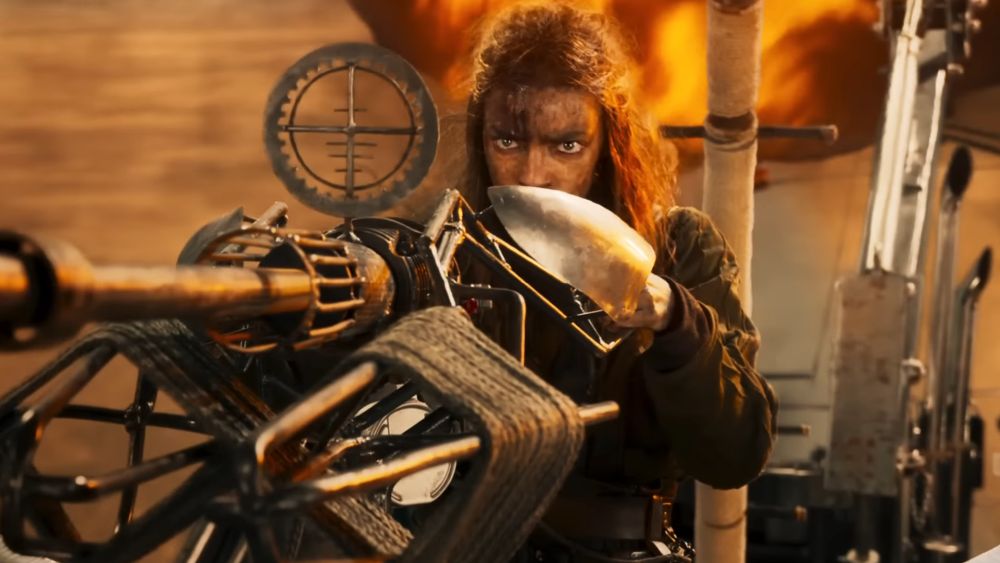 You would be hard-pushed to argue that the $168 million budget is not up on screen. I lost count of the times when I wondered whether what I was looking at really existed in the physical world, or was matte paintings and CGI. Part of me wants to peer behind the curtain and watch the behind the scenes videos. However, part of me would prefer to sustain the illusion, which was a factor in the sense of wonder that often washed over me during the screening. It’s the quest for that sense of awe which keeps me going to cinemas, even if most of the time, I end up leaving disappointed [I’m looking at you, Godzilla X Kong…]
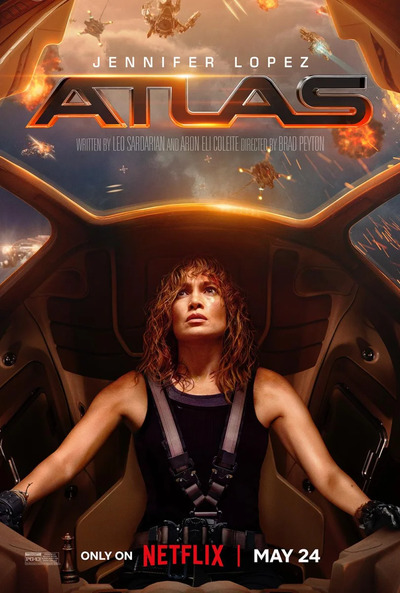 This was watched, effectively as the B-feature before Furiosa, with expectations along appropriate lines, given that basis. And as such, this is fine. It’s glossy, shiny and well-crafted technically, albeit making little or no emotional impact. This is partly because, in the early going, it feels suspiciously like someone said, “Hey Siri! Rewrite the script for
  This shouldn’t be confused with the BBC
 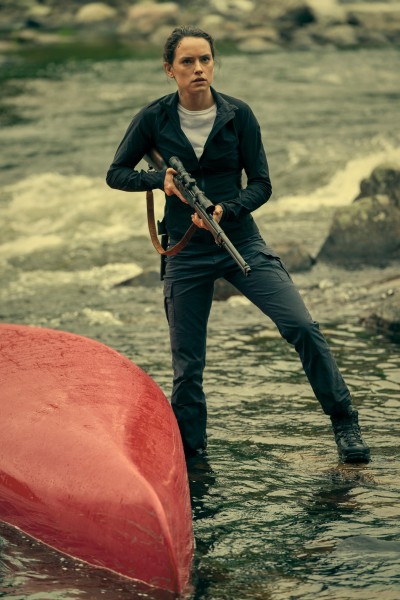 This begins with the young Helena, living deep in the woods with her mother and father, Jacob (Mendelsohn). He’s teaching her the ways of the forest, including hunting and the need to be ruthless, with the top priority expressed in the tagline above. However, things aren’t quite what they seem: it feels like it could be a century ago, yet the tranquil illusion is shattered when a lost stranger on an ATV rides up. Mom makes a break for freedom with Helena, for it seems this is actually a kidnapping which has gone on for a long time. Fast forward twenty years: Jacob is in prison, mom killed herself and Helena (Ridley) is working a dead-end job, but married to Stephen (Hedlund), and with a daughter, Marigold.
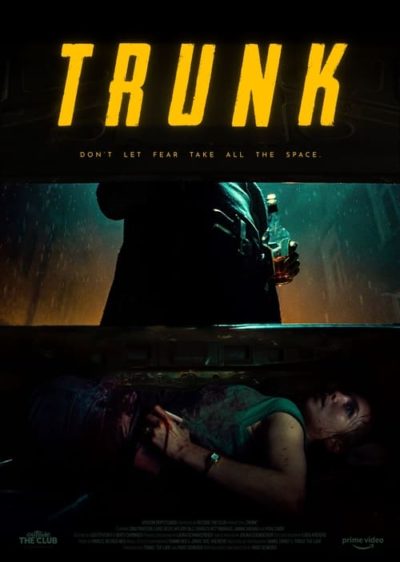 This certainly wastes no time. Malina (Martens) regains consciousness to find herself in the trunk of a car stopped at a petrol station. Things get worse, as she discovers her legs are paralyzed, and she has a nasty wound in her lower abdomen. How did she get there? And more importantly, what can she do to escape her predicament? It’s certainly one hell of a hook, and in the way it hits the ground running – as well as its Germanic origins, almost real-time approach and the plucky heroine with a sketchy boyfriend, forced to survive on her own – reminded me of