 ★★★
★★★
“Adventures in Babysitting.”
Having read quite a number of articles on (p)reviews for this movie and now having seen it myself, I’m beginning to think you can buy negative reviews to torpedo product that might compete with yours. I’ve seen this before, e. g. when the press tore down John Carter so that The Hunger Games could become the defining blockbuster franchise of the decade. Or when it became very obvious Disney had ties to RottenTomatoes.com: the Internet may recall this as the “Great Captain Marvel online war” :) It seems this takes place in particular with comic-book or superhero movies not from Disney/Marvel. It happened regularly with the X-Men movies, when 20th Century Fox still existed as an independent studio. It happened when the – admittedly, very often not so good – DC movies came out: neither Black Adam nor Aquaman 2 were as bad as the reviews made them.
And now, it seems to happen with “Sony’s Spider-Man Universe” (SSU). That the quality of these vary greatly is not in question. Of course they do. While the Spider-Man films with Tom Holland are beloved by fans, and seem to be well-regarded by critics, things don’t look so bright for the extended universe Sony is building. The first Venom movie with Tom Hardy was torn down by the media, but cheered by the cinema-going masses; the second was similarly split. Then Morbius with Jared Leto got almost entirely negative reviews and that trend continues with Madame Web. Things don’t look good for Kraven the Hunter, another entry in the universe due out later this year.
I’ll be honest and admit it: Madame Web is not a great cinematic revelation, it’s definitely not the “must-see” superhero film of the year and probably won’t blow your socks off. But – and this is where I feel I get justifiably angry – “not great” is not the same as “bad”. I’m coming to the conclusion you can’t trust sites like Rotten Tomatoes, and you shouldn’t read reviews before you watch. A movie review (and this counts for mine too) can’t tell if you will like a movie or not. Follow your instinct and make up your own mind, that’s my friendly advice to the dedicated film-goer. This is not to say Madame Web is perfect entertainment. But I will defend it against anyone saying it is a “bad” movie. You may call it bland, boring or mediocre if you like, but that’s not the same. I’ve seen enough bad movies in my lifetime to know, bad looks very different.
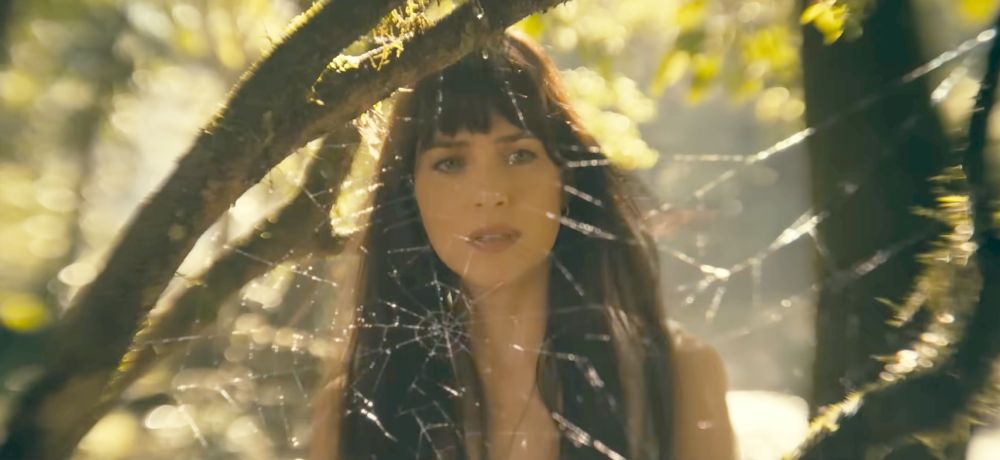
So, what’s up with Madame Web? The film starts in the South American jungle, where pregnant scientist Constance (Kerry Bishé) seeks a specific spider for its medical uses, but is killed by assistant Ezekiel Sims (Tahar Rahim), who wants the spider for himself. Apparently – though it is never explained how – he uses it to become a wealthy and still astonishingly young looking man (this prologue happens in 1973, than jumps to 2003, so he should be around 60?). The so-called “spider people” can’t save Constance, who was bitten by a spider before giving birth, but give her daughter up for adoption.
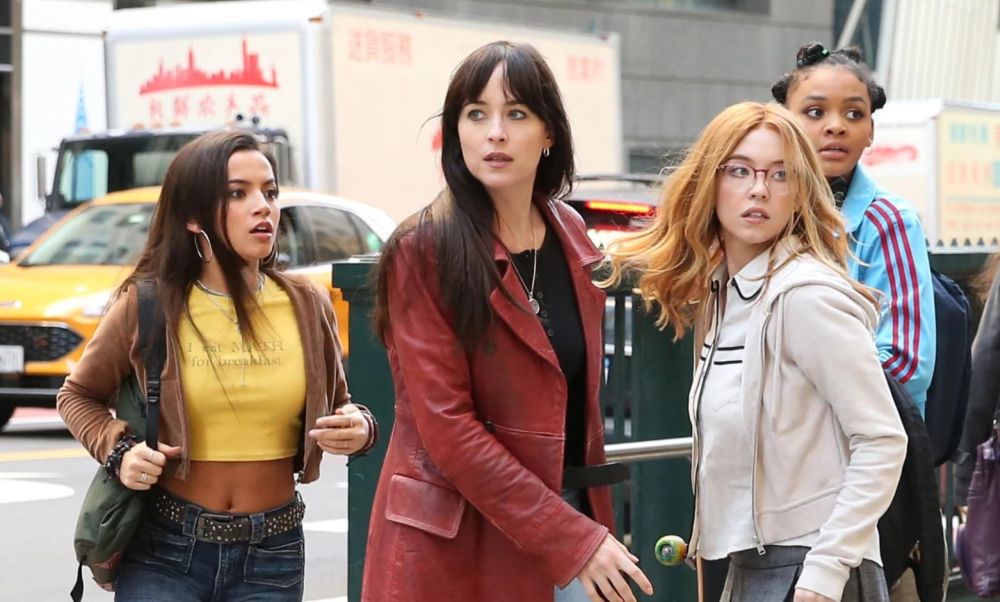
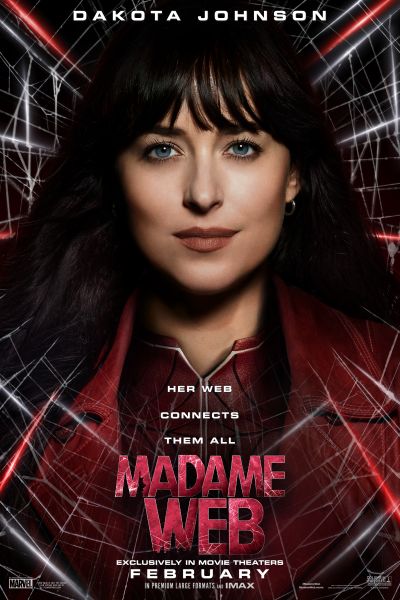 Jump forward to 2003. Cassandra “Cassy” Webb (Johnson), Constance’s daughter, is a paramedic who saves lives everyday, but is strongly averse to emotional attachment. I wondered what she does in her leisure time – but then, the same could be said about me! After being drowned, dead for three minutes, and revived, she has visions which turn out to be clairvoyant; she can glimpse the future moments before it happens. After experiencing the death of a colleague, she realizes she can act to stop her visions taking place. [What a revelation!] While on a train she foresees the death of three girls, killed by a masked man with superpowers. She tries her best to save them; no easy job as she has to improvise and out-think her pursuer constantly, while taking care of young girls who don’t necessarily follow her orders. That’s the moment you realize this movie might be made with 30-year-old moms as its target audience, which is something I have not seen before on the big screen.. Kudos for originality, I think.
Some changes from the comics were obvious. I’m no expert on all things and characters around Spider-Man but last time I saw Madame Web, was a 90’s animated series where she was an old, blind woman in a wheel-chair, She controlled the web of time and sent ol’ Spidey on a mission. This film goes full circle, having Cassie at the end in a wheel-chair and wearing dark glasses – enough time to age, when she needs to appear in a Spidey movie playing 20-something years in the future. Also, the three girls who will be Spider-Women and -Girls of the future (played by Sweeney, O’Connor and Merced) are not really characters I know. Having had a thing for the Spider-Woman comic an eternity ago, I remember that Mattie Franklin was white and the niece of J. Jonah Jameson. Here she is black and her background has totally changed. I guess the aim is to be as diverse as possible.
I personally don’t mind a movie centered on female characters in the Spider-Man universe. Heck, for decades I’ve been waiting for a Black Cat or Silver Sable movie, though right now that prospect seems quite dim considering the reaction here. But having this movie precede the Tom Holland Spider-Man does give me the feeling this is another attempt to give a hero’s tale a backstory based on an earlier woman (as done terribly by British TV classic Doctor Who). That said, this movie is not “woke”. Yes, the villain is a man but there is no male-bashing or ridiculing, as has become so common nowadays e. g. by Disney. It just puts female characters at the focus of the story and that’s absolutely okay by me.
What did surprise me is the main protagonist. Madame Web is neither one of many charismatic villains the Spidey-universe offers, nor what I’d call a “hero”. Making her the center of the story is a gamble, with the need for a scenario where she becomes the main character. Which the screenplay does quite well, I’d say. It would have been easier to make a movie about the Spider-Women or Spider-Girl, but here we are. Also, the title character has no super-powers which are interesting to watch. She can’t crawl up walls, jump from roof to roof, or has super-strength. She can just see a bit into the future. That’s it, until the end when she develops the ability to be in several places at once to help her girls (yeah, it’s definitely a movie for moms!). It means the screenwriters really had to think hard to provide the necessary action. and have their protagonist use her wits to counter her opponent, who unfairly uses early face-identifying computer programs to find the three girls.
A word on the actors. Dakota Johnson (daughter of Don Johnson and Melanie Griffith, granddaughter of Tippi Hedren) has long left the memories of her early Fifty Shades of Grey success behind her. She is a good, professional actress and I’ve never seen a bad performance from her. This movie is no exception. The “girl” actresses don’t register strongly here; their characters are hardly given much to do here, which can be considered a weakness of the script, except being kind of a pain in Cassie’s neck. Tahar Rahim as the villain, comes across a bit bland which might not be the actor’s fault – the character is just not very interesting. His main goal is to stop these girls, who may become dangerous for him later. Ironically, as Cassie realizes, it’s exactly this fear of the future which leads to his downfall here and now, at her hands.
Once again, I stress Madame Web is not a bad movie. It may be too long – though less than some of the bloated blockbusters Hollywood produces nowadays. It could have a more interesting villain, with better motivation. They could have chosen a more interesting main character. But if there is one real problem with all the new SSU movies, it is the lack of humor. A bit of it, integrated into the heroine’s or villain’s character, would go a long way in making a superhero movie a more entertaining product. But maybe that’s not the route Sony wants to go, perhaps to distance themselves from the style of Marvel. It would be regrettable: a surprise hit like Venom showed how that element is appreciated by audiences. If you give them drama, action and suspense, they must also have the chance to let go of the tension with laughter. An approach classic James Bond movies employed, to good effect, at the beginning of the action movie genre.
All in all, the movie, its direction, script, acting performances, etc., are solid. Not great. Also not terrible. It is an acceptable solid superhero comic-book movie, though the superhero thing comes across here as toned down. Just don’t expect the big typical blockbuster epic that too many people may nowadays associate with the genre. Who knows? If Sony continues in this manner maybe they can actually get their SSU to work for the large audience? If not, I imagine they can still put all of these newly released characters in the next Spider-Man movie with Tom Holland!
Dir: S. J. Clarkson
Star: Dakota Johnson, Sydney Sweeney, Isabela Merced, Celeste O’Connor




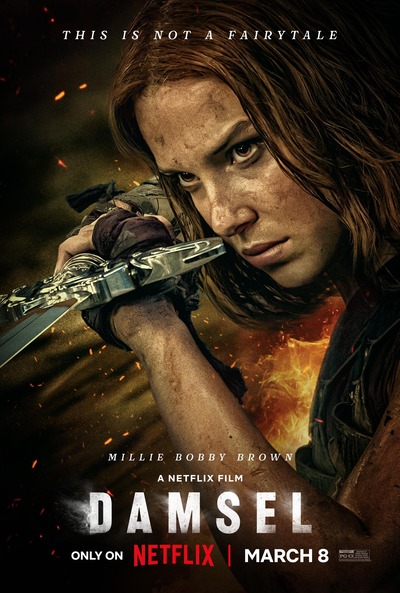 Brown is definitely among Netflix’s golden girls. After breaking out with an ensemble role in Stranger Things, she has taken an action turn, starring in Enola Holmes plus its sequel, and now is in this unconventional fable. If I was feeling snarky, I’d say I liked this better the first time I saw it, when it was called The Princess. That’s a little harsh, though I did feel it was superior. For example, this feels like it takes longer to get going, with Princess Elodie (Brown), daughter of a poor kingdom, married off by her father, Lord Bayford (Winstone), to Prince Henry, the scion of the rich land of Aurea, in a fairy-tale wedding.
 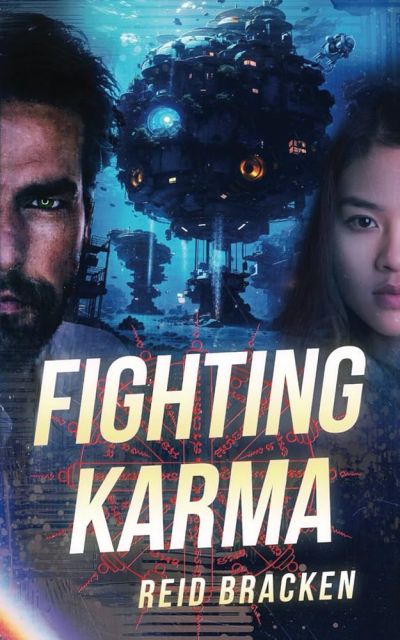 This is a sequel to
 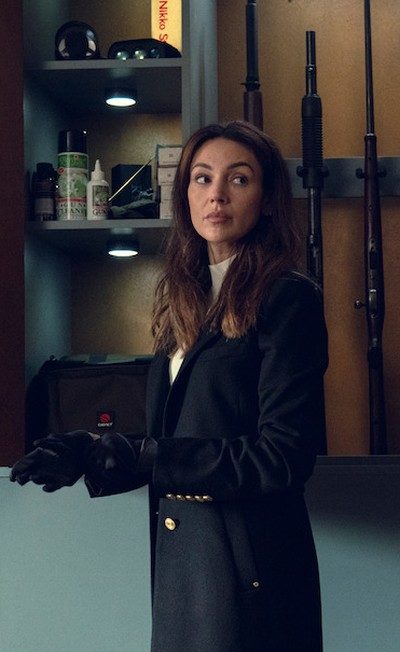 Maya Stern (Keegan) is having a rough patch. A former helicopter pilot in the military, she was sent home and discharged under murky circumstances. While she was away, her sister was killed in what looks like a botched burglary, and not long after her return, husband Joe is also shot and killed in front of Maya, when they are walking in the park. But is everything what it seems? Because when checking the nanny-cam monitoring her young daughter, Maya sees a shocking site: her supposedly dead husband visiting the house. This kicks Maya into an unrelenting search for the truth, which will send her down a rabbit-hole and uncover a lot of sordid secrets, dating back decades.
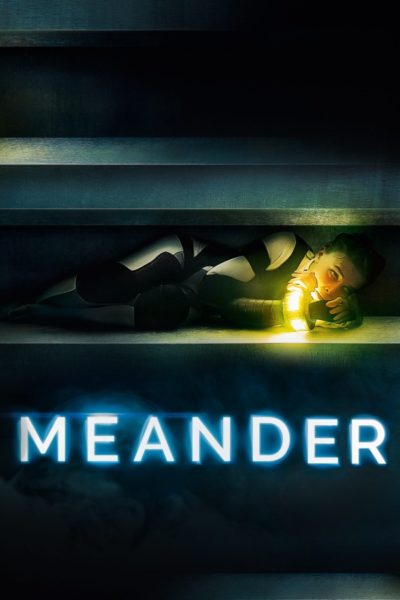 I guess, if you want to watch a woman crawling along a series of ducts for an hour and a half, this is the film for you. I’m afraid it’s just not a particular fetish I share, so the appeal of this is largely lost to me. Lisa (Weiss) lost her daughter in a tragic accident and has been plagued by guilt ever since. She wants to end it all, and to that end, is lying in the middle of the road, when she is convinced to accept a lift from passing drive, Adam (Franzén). Except, he turns out to be a roaming serial killer, who knocks her out. This is where it gets weird, since she recovers consciousness to find herself in a twisty little maze of passages, all alike.
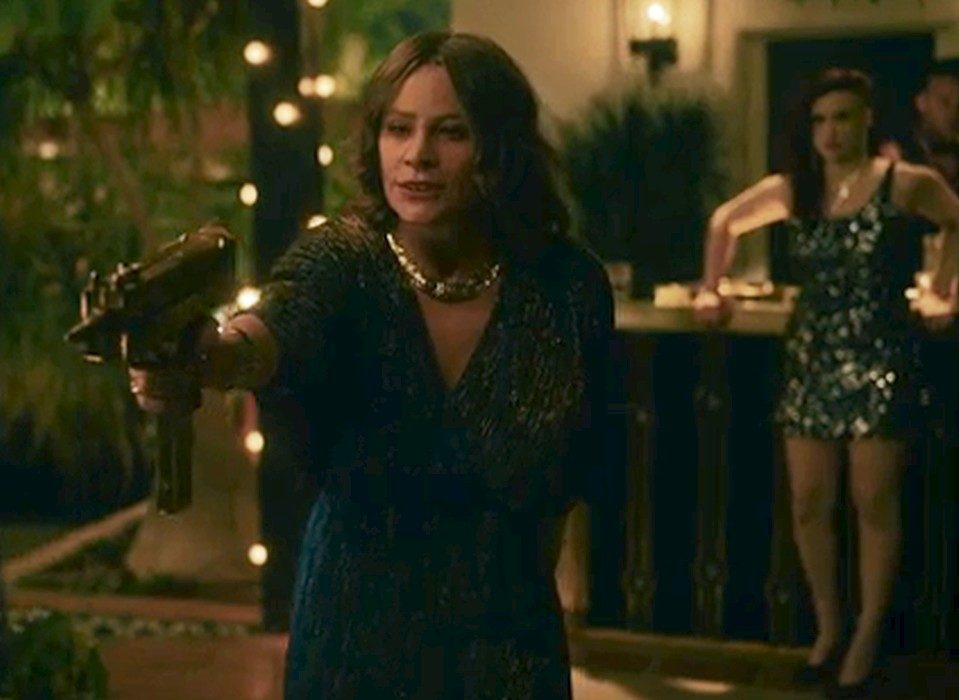 ★★★★
★★★★ This is far from the first time we’ve covered films, series or documentaries about Griselda Blanco, the drug boss who ruled Miami with a lead fist in the eighties. There was Colombia narconovela
  It’s kinda inspiring, weirdly. Early on, the series can be seen a twisted version of the American dream, where an immigrant can come to America, pull themselves up by their bootstraps, and anyone can achieve success if they work hard. The reality is, Blanco didn’t arrive in Miami seeking asylum from domestic abuse, but fleeing increased law-enforcement heat for drug trafficking in New York. Not exactly what Vergara
  In terms of production value, this is definitely several slices above the other efforts, even if Los Angeles stood in entirely for Miami (the latter no longer resembling what it was at the time). Of particular note is the make-up work on Vergara. It must have been a challenge, because events unfold over a significant number of years: your lead is, obviously, more or less fixed at a point in time. Initially, there’s little of note, but it gradually builds up, in a way that’s so subtle you might not notice. Until, by the end, you suddenly realize the character no longer looks like the actress. Though still rather prettier than the real Griselda.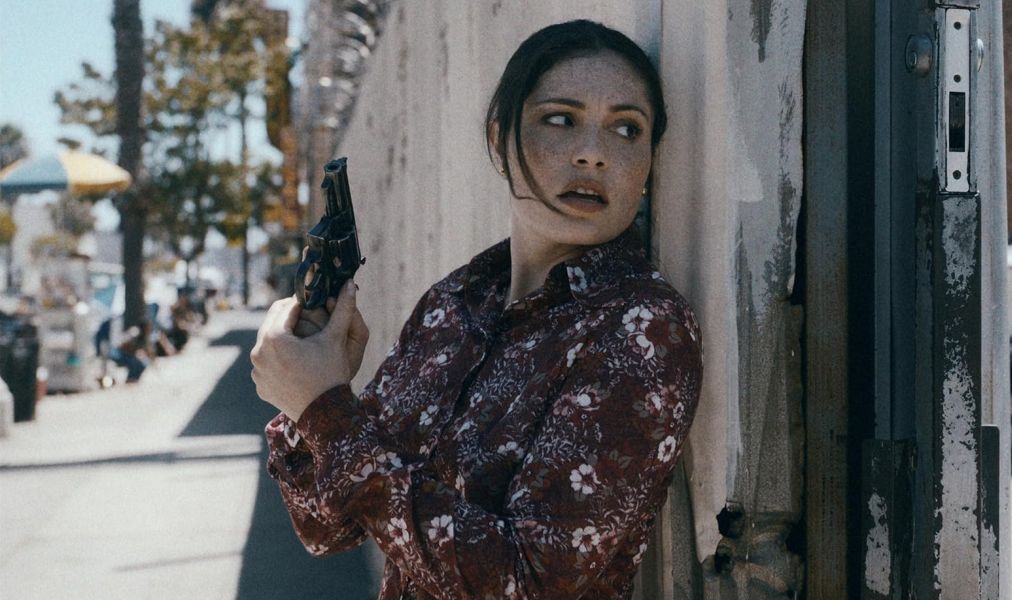
 This feels a little like a Dutch cross between the stories of Joan of Arc and William Wallace. It’s a couple of centuries later than either, taking place (as the non-Dutch title states!) in the 16th century. The Spanish armies of the Catholic King Philip II were sweeping across Europe, reaching as far North as the Netherlands. Some cities capitulated; others resisted. Among the latter was Haarlem (to use the Dutch spelling), where legend states a woman called Kenau Simonsdochter Hasselaer led an army of 300 women in defense of the city. The more prosaic reality is that she may have helped in fortifying the defense, though the amount of reliable historical data about her is scant in the extreme.
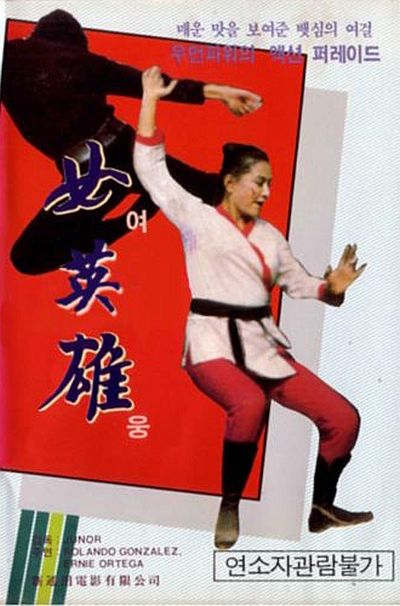 In various places, the title for this is “a Lady”or “the Lady” fighter: I’m going with what’s firmly stated on the opening credits of the print, ungrammatical as that may be. It’s a Filipino product, but unlike the New World Pictures of the early seventies, is an entirely domestic production. Though in many ways, it feels almost like a Taiwanese chop-socky flick, taking place in a rural village, beset by bandits. Into town strolls wandering martial arts master Ming (Ortega), who agrees to teach the locals his self-defense skills, albeit only following a stern warning about what will happen if they use them for revenge or gain.
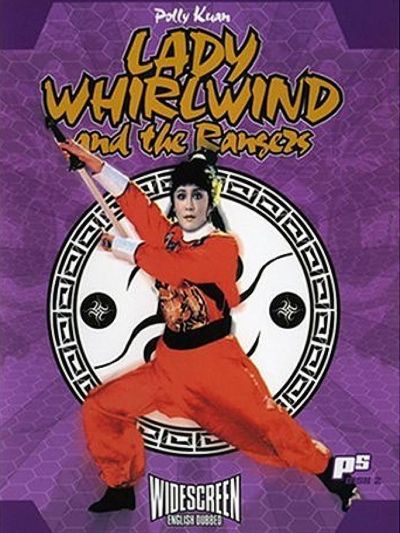 Not to be confused, in the slightest bit, with
  The first