I was intrigued by this, mostly due to the presence of Penn, an Australian champion in karate who appeared (albeit, in minor roles) in a number of Hong Kong action movies of the nineties. Her blonde hair made her stand out, as one of the few gwailo women to be seen in the genre. This TV movie, intended as a pilot for a series appears to have been her swing at stardom in the West. After it fell agonizingly short, she seems to have given up on acting entirely. She now appears to be the CEO of Signal 8 Security, a private security company back in Hong Kong – the celebrity clients listed on the company’s website appear to include Jackie Chan, ironically enough.
This is, in some ways, art imitating life, as here she plays Niki Knox, who… runs a private security company. On her wedding day to Jackson (Chong), her father Darrell (Lee Majors) is put in a coma by the villainous Delicious Malicious (Kessell) – yes, that’s apparently her name – who is seeking a trio of gemstones which Darrell has been guarding. As a sideline, Malicious runs a PPV website that streams her blowing up buildings and other acts of mayhem. But the gems are the main thing, and Niki has to stop them from falling into the wrong hands, otherwise… bad things will happen. She has to manage that with the help of former cop Steve Hardman (Calabro), who is now her employee, and despite the betrayal of someone very close to her.
Just as Cynthia Rothrock’s American movies are not a patch on her Hong Kong ones, so Penn’s action here is a pale imitation of her work in things such as In the Line of Duty V. I don’t know why I expected any more from a TV movie though, especially one making a lackadaisical effort to pass the city of Sydney off as a generic American metropolis (an endeavour largely undone by Penn’s noticeable Aussie accent). It still might have managed to work if it had stuck to a simpler scenario, just pitting Knox against Malicious, the latter chewing scenery to entertaining effect. It’s definitely a case where the sidekick outshines the main villain.
Instead, there are too many supporting characters who serve little purpose, and Calabro in particular sucks the life out of any scene he’s in. There’s no chemistry with Penn at all, and I’d much rather have simply seen this sister doin’ it for herself. As noted, I’m not sure there’s much of a stretch in Penn’s role here, yet she’s reasonably engaging. I might have talked myself into watching the show, albeit only if Steve Hardman suffered a quick and painful death in an early episode. That will remain hypothetical. For while the pilot did get a positive reaction in the United States, it appears that sales in the rest of the world were so weak, the production company was unable to proceed to series, and the project was scrapped. I’d be hard-pushed to call it a great loss.
Dir: Peter Bloomfield Star: Kim Penn, Thomas Calabro, Simone Kessell, Jason Chong
It’s often forgotten that America didn’t join World War II until almost three years after it started. In the early days, there was a strong isolationist movement, which saw the conflict as other countries’ problems, from people like aviator Charles Lindbergh and broad groups like the America First Committee. Indeed, there was a surprising amount of support for the Nazi regime: in February 1939, a rally at Madison Square Gardens drew twenty thousand people, and even after the war started in Europe, there was significant activity attempting to keep America out. It’s in this period, between the start of the war and the bombing of Pearl Harbor, that the story told here takes place.
Veronica Grace is an aspiring journalist who has just graduated college when her plans are upended. A dalliance with a married man blows up, resulting in her being blackballed from employment in New York. She and her widowed mother Vi opt to move to Los Angeles instead, but are shocked to discover the local community rife with Nazi sympathizers. Her attempt to report this fall on deaf ears, the authorities at the time being more concerned with the Red Menace. But a friend of her late father, a naval officer, is able to connect the Graces to Ari Lewis, who is running a semi-official anti-Nazi investigation. Their German ancestry make them perfect to go undercover, and they agree to do so, despite the risk, and knowing that exposure would likely mean a brutal fate.
Interestingly, this is based on real characters, with almost everyone having an equivalent in historical fact. For instance, Veronica Grace is based on Sylvia Comfort, a young woman who did indeed become an inside operative, initially as a secretary, working against the German American Bund and their members. MacNeal colours in a lot of the background; there’s no indication the real Sylvia wanted to be a journalist. I am a little uncertain about some historical elements too. For instance, the Nazis all want Wendell Wilkie to beat Roosevelt in the 1940 election. Except Wilkie was, per Wikipedia, “a forceful and outspoken advocate of aid to the Allies”, a stance key in winning him the Republican nomination. Not exactly a “fellow traveller”.
Still, I’m fine with bending history for the sake of a good story. This is at its best when capturing the steadily increasing sense of paranoia as Veronica embeds herself even more deeply, the struggle to maintain her own identity, and the tension between associating with people she has grown to like, and their abhorrent views. As her handler puts it, “Here’s the thing, Veronica. ‘Nice’ isn’t good.” Given the nature of her work, the amount of physical action here is inevitably limited; it’s mostly near the end, and neither Veronica nor her mother are involved. However, it remained an interesting read, with an unusual setting for a spy novel. I was certainly left wondering how things might have turned out, if not for the efforts of people like Veronica.
Author: Susan Elia MacNeal Publisher: Bantam, available through Amazon, both as a paperback and an e-book A stand-alone novel.
Incompetent on every level, this proves there’s a section of cult fandom which would praise a dog turd to the heavens, if told it had a “feminist” message. The title is probably – scratch that, certainly – the best thing about this, suggesting a throwback to the JD films of the fifties, filtered through the lens of Russ Meyer. “Suggesting” is the keyword here, since the reality is more like the finger-paintings of a developmentally challenged three-year-old. I guess the title is actually inspired by Blood Orgy of the She Devils, a film made in 1973 by Ted V. Mikels, one of the most inept directors ever to pick up a camera. This movie is poor enough Mikels would likely require his film’s name be taken off it.
The plot, such as it is, concerns four girls, who set about taking revenge for one of their number when she’s sorta-kinda-not-actually raped. Though any concepts of justice are fairly loose, since they were already gleefully committing crimes, including murder. Meanwhile, the least convincing detective in film history, Inspector Morton (Silverstein) narrates, offering a moral context with lines like, “When the maternal and creative forces of women become corrupted by the brutality of the every day world, a force of incredible violence is unleashed.” The women are similarly implausible as disaffected schoolgirls, with the gang’s leader, Sarah (Gingold), a Jew who has a shrine to Hitler in her bedroom, and goes to Catholic school. I’m very confused.
No, wait: not confused, just staggeringly bored. For Lucas doesn’t have the barest idea of film-making, such as basic framing. So we get violence that is completely unconvincing, utterly unsexy nudity, and what I can only presume are comedic moments landing like lead balloons. It’s all accompanied by Z-grade surf punk and other flatulent noises, likely provided by the director’s equally talentless mates. There’s one moment where self-awareness is almost achieved. The women go to a drive-in, hunting their last victim. An even worse film is playing, and the narrator – who no longer seems to be Morton, for unclear reasons – declares, “The movie dragged on. And on. And on.” So close to getting it.
Legend has it the director, unable to get her work distributed, committed suicide, only for her brother to take up the movie in her honour. Except she never existed, Michael Lucas making his sister up, in the belief it’d improve the odds of his film being taken seriously. That’s the level of artistic honesty we are dealing with here, and if there weren’t already a myriad of reasons to hate this, I want no part of it. I did sit through to the finish, mostly out of a stoic refusal to let myself be beaten by this piece of pretentious garbage. Trust me, when I say this isn’t even “so bad it’s good,” it’s closer to being so bad it’s unwatchable. Near the end, someone is sodomized with an electric drill. I can’t think of a more appropriate metaphor for the viewing experience.
Dir: “Meredith Lucas” (Michael A. Lucas) Star: Phillip Silverstein, Robin Gingold, Simoone Margolis, Melissa Lawrence
It feels as if South Korea is going through all the Olympic sports, making films based on each of them. Indeed, this film’s alternate title makes it a sequel to Take Off, about ski-jumping. I’ve seen two of the previous entries, covering archery (3 Heroines) and table tennis (As One), with the latter the more successful. This one comes up shorter than either. Less due to the technical side, which is always solid and occasionally impressive. However, the “true story” element is riotously inaccurate, the film completely rewriting reality in favor of what is not much more than a series of the most obvious sports movie cliches, for two hours and five minutes of increasingly sappy nonsense.
The story is of the first South Korean women’s ice-hockey team, formed to take part in the 2003 Asian Winter Games. There was basically no women’s ice-hockey in the country, so the team’s core players include a disgraced speed skater, a roller hockey player, a figure skater, and a North Korean defector, Lee Ji-won (Soo Ae). The national committee need to give the impression of trying, to boost Korea’s chance of hosting the games. But they can’t find anyone to coach, so end up hiring alcoholic deadbeat coach Kang Dae-woong (Oh D-s). Fill in the rest of the plot yourself, as the team goes from losing to an elementary school team, to facing North Korea – and Lee’s sister – with a medal at stake.
Except, it never happened. 2003 wasn’t even the team’s debut, as they played at the Asian Games in 1999. The results were… rather less heroic than depicted here, where they never lose by more than one goal. In reality, they were hammered in all four games, and outscored by a total of 80-1. Not quite as cinematic. The film ends by proudly announcing the team went on to qualify for the 2018 Olympics. Conveniently omitting the fact they got in automatically as hosts – the same way Team GB qualified for handball in 2012. The more I read about the reality, the worse the taste left in my mouth by the movie’s rewriting of history. There’s artistic license, and then… I’d be embarrassed to be one of the players involved.
Up until this wholesale factual butchery, it had been competent enough. Nothing outside the standard inspirational sports movie, e.g. training montages, clashes of characters, unsupportive families, etc. Yet the games are actually well enough staged, with camerawork that puts you right there on the ice, and it feels like the actresses are doing enough of the skating to pass muster (they had three months training before shooting). It’s just not an honest film. A better approach would have been like Next Goal Wins, covering the climb from embarrassing defeat through to redemption. If only they had waited. For the year after this came out, Korea had a 3-2 shoot-out win over China – the same opponent who had pounded them 30-1, fourteen years earlier. With a story like that, you don’t need to make stuff up.
Dir: Jong-hyun Kim Star: Soo Ae, Oh Dal-su, Oh Yeon-Seo, Jae-suk Ha
a.k.a. Take Off 2
Great poster. Solid trailer. In the light of those, unfortunately, the film can only be described as a significant disappointment. While it’s good, and occasionally very good when in motion, damn, there is a LOT of flapping of lips going on here. It’s clear that writers Chad Law and Shane Dax Taylor, as well as director Woodward, are in love with their dialogue. This is unfortunate, since it’s nowhere near as amusing, informative or entertaining as they think. There’s probably a decent twenty minutes in this, mostly when the lead character – nameless, known only as “Bride”, a conceit shamelessly stolen from KillBill – is kicking butt. Since the film runs a hundred and eleven minutes, that is a problem.
Indeed, nobody here gets a “proper” name. The Bride (Burn) decides at the last minute she is not going to go through with marriage to her fiance (Blain), and runs off to her family cabin. Her husband-to-be doesn’t take that lightly, and sends seven groomsmen, under the best man (Gigandet), to bring her back. not with polite discussion to convince her to return. For it turns out everyone involved is part of a shadowy organization of assassins called “The University”. You don’t get to leave, so the Bride has to defend herself from the consequences of her decision, still in her wedding dress. Which as Chris pointed out, is odd, considering it’s her family’s property. No clothing better suited to combat?
Confusing matters considerably further is a flashback (I guess) to happier times on a beach somewhere, whose purpose escapes me, except for providing a nice vacation for Jason Patric. What these lengthy scenes certainly do, is sap the film of any momentum as survival horror. Then again, the film does plenty of that itself, with endless scenes of the characters talking and talking and talking and… you get the idea. It’s a pity, because the violence, when it shows up, is done with some energy. Burn seems to be doing quite a lot of her own stunts, to good effect, and there’s nice use of improvised weaponry. The chainsaw shown on the poster is not just there for show either, providing perhaps the film’s most memorable moment.
Not that there’s exactly a lot of competition, admittedly. I found myself frequently thinking of ways this could have been improved. “Being roughly thirty minutes shorter” would be a good start. Alternatively, could potentially have been fun if the seven bridesmaids had also been assassins, fighting for the Bride. Why is it just the groomsmen? There, it feels like a sure-fire case of diminishing returns, with most of them more annoying than anything else. This is especially true of Gigandet whose character is perpetually droning on about the speech he has to give. Pancho Moler as T-Bone is perhaps the only one to make an impression. It’s all a garbled mess, which seems poorly constructed, and only occasionally delivering on the wildness of its premise.
Dir: Timothy Woodward Jr. Star: Natalie Burn, Cam Gigandet, Ser’Darius Blain, Orlando Jones
This is another in a recent burst of Thai action heroine movies, including The Secret Weapon. But it’s less successful, although the deficit is not entirely the movie’s fault. The only version I could find was a dubbed one on YouTube: over the years, I have developed a strong preference for watching films in their original language, unless absolutely necessary. Here, that proved to be the case, and it was basically a reminder of why I prefer subtitles. This isn’t just dubbed into English, it was dubbed into English by Indians. Imagine watching a gangster film set in New York, where everyone has a Swedish accent. It’s immensely off-putting, and I had great difficulty in getting past it.
The plot has a hitwoman, Chris (Kingpayome), who has worked for Mr. Ralph (Macdonald) since before the birth of her daughter, Rin (Prommart). The daughter is being brought up in the family business, along with another girl, Joi, who was rescued from a crime scene. However, Rin is now in those difficult teenage years, and is being distracted by a schoolgirl crush on Sun, a senior at her college. This causes her to lose focus and make mistakes in the assassinations she carries out with her mother, for “Ralph Elimination Ltd”. Coming under pressure from her boss, Chris decides to take the liability of Sun out of the picture. Needless to say, Rin is not exactly happy about this decision.
It’s better in the second half then the first, once it stops being badly-dubbed teen soap-opera, and turns into badly-dubbed action, which is tolerable. Things aren’t exactly what they seem initially, and the dynamics of the situation become considerably more interesting as a result. I’ve seen enough of this kind of thing to feel I knew where this was going. I was expecting it to have Chris eventually coming to terms with her daughter’s wish for a normal life, and then protecting Sun from Ralph’s murderous intentions. No. Does not happen. Well… it kinda does. But the way it gets there, is in a rather more plausible manner, with everyone from Chris to Ralph having credible motivation for their actions.
Outside of the dire dub, the main issue is perhaps the somewhat underwhelming action, both in quantity and quality. It’s only okay in both departments, except for Rin’s final assault, which is a nicely-staged attack on Ralph’s headquarters. That is a shame, since the script is one of the better ones, and Prommart feels a little like she is channeling Natalie Portman in Leon. Though that might just be a combination of her hairstyle, and the way the movie ends. It does teeter over into melodrama on occasion, not least with a lengthy, emotive video message from Chris to her daughter. Overall, however, there is an impressive fatality rate, and it would likely be close in entertainment value to the preceding entries – if only it was available in a similar format.
Dir: Isara Nadee Star: Metinee Kingpayome, Ray Macdonald, Nitchanart Prommart, Phiravich Attachitsataporn
a.k.a. Ladies First
[July 2025 update. A subtitled version has now shown up on Tubi, under the title of Viper. This would, needless to say, be the preferred option, despite it trying to look like a new movie with a claimed date of 2025!]
★½
“Do you know what the definition of insanity is?”
This is a question posed by the bad guy (Fears) towards the end of this, and of course, he provides the usual explanation in response: “It’s doing the same thing, expecting different results.” After watching this, I would choose to adjust it slightly. A valid definition of insanity is making the same movie, and expecting different results. Because it is, more or less, what Rankins has done here: it’s a remake of his own movie from fourteen years ago, Jack Squad. Now, there’s something to be said for that. I mean, Cecil B. DeMille did The Ten Commandants twice, while directors from Hitchcock to Michael Haneke have remade their own films.
The difference is, they were kinda busy. For instance, Hitchcock directed twenty-five features between his two versions of The Man Who Knew Too Much. Since the original Jack Squad in 2009, Rankins has made just one feature: Angry Kelly in 2014. Did he not manage to come up with more than one original idea in a decade and a half? And that count is presuming Angry Kelly is not about a man who is annoyed because he was drugged and robbed by a trio of women. I’ve not seen it, I can’t say. Here, we get a little variation at the start, where the original Jack Squad get hunted down, and a bit at the end, where there’s dissension in the ranks over hidden money.
In the middle though? It’s a blatant re-make. Three young women decide to make money by drugging and robbing men. This goes wrong, when one of the targets is a courier for a violent drug boss, carrying a large sum of cash. They make the ill-advised decision to hold onto the money, a choice which brings them into the crosshairs of its real owner. If anything, we have even less going on this time. It’s a good half-hour before the new trio, of Cassie (Green), Nikki (Alexander) and Cam (Lynn) put their scheme into action. I guess there is at least some altruism, the goal – at least initially, before the designer shopping kicks in – being to cover the medical bills run up by one of the trio’s mother.
The overwhelming sense of deja vu here is what knocks the overall rating here down below the original. I mean, the three characters feel almost like bad photocopies of their predecessors. There’s one who has qualms about the whole concept, while another refuses to give it up at any cost. It’s likely a little more technically competent, though at basically two hours long, is still painfully over-long. There’s a weird subplot where one of the women has a mentally challenged brother, who wants to be a baseball pitcher. This does eventually show relevance, though the way it does, might have you wishing they hadn’t bothered. If we don’t get Jack Squad 3 until 2037, I am completely fine with that.
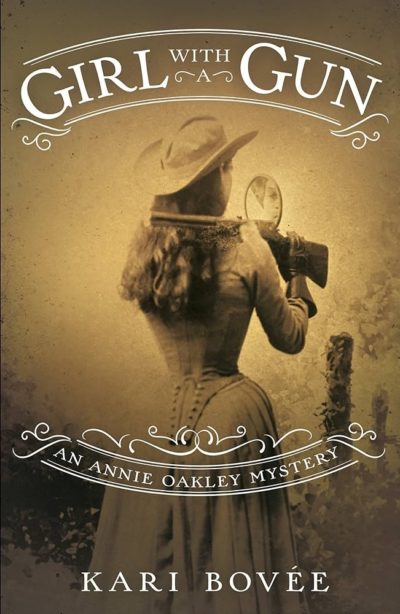
This is an interesting idea. Take a real-life historical action heroine, whose life provides the underlying framework, and write a fictional story around that. Obviously, Annie Oakley really existed, and the broad strokes of her life here are accurate. If you’ve read our article on her, you will already know she did indeed take part in a shooting contest against famed marksman Frank Butler. That helped win her a spot on Buffalo Bill’s Wild West Show, with which she traveled both the United States and the world, amazing crowds with her markswomanship. The book adheres to these elements faithfully.
However, there’s a lot more going on here, which Bovee has added in. Almost as soon as Annie starts working for the show, her tent-mate, a young Indian woman, turns up dead. She is not the last corpse to do so, and there are no shortage of suspects in the crimes being committed either. The show’s manager, Mr. LeFleur, who seems to carry a torch for Annie. Twila Midnight, a medicine woman of mysterious origins, who conversely, has a passionate dislike for the heroine. Vernon McCrimmon, with whom Annie had crossed swords in the past – ending badly for him. Or possibly even Frank Butler, whose skills are failing him, with Oakley taking over as the show’s top attraction, or Buffalo Bill himself, who has skeletons in his own closet.
It’s likely not much of a spoiler to rule out the figures who actually existed like Butler, but Bovee does a decent job of keeping you guessing among the other characters. The evidence points one way, then the other, before things come to a head after an attempt is made on Annie’s life. This is only foiled due to the hedonistic tendencies of her replacement tent-mate. I think it probably works better as a whodunnit, rather than as an action story. Though there are plenty of rounds fired over the course of the book, these are almost entirely in the show’s arena, and the descriptions don’t generate a great deal of energy. You are instead left with a sense that perhaps you needed to be there.
This is a fairly straightforward story, with a generally good sense of historical time and place, capturing 1885 in the mid-West. Though I was amused by Twila saying, “His fever is high. It may be a virus,” since the first virus was not discovered and isolated by science until 1892. There’s not an enormous amount of complexity to Annie’s character here either. She’s relentlessly good-hearted, even to people who really do not deserve her kindness. But that’s part of her heroic nature, I guess, and Annie’s desire to provide for her family, as well as her loyalty to her horse, Buck, who also comes under threat, make for admirable qualities. I’d call this a solid read, which doesn’t seek to push the envelope, and if not aiming high, does hit most of its targets. D’you see what I did there?
Author: Kari Bovee Publisher: Bosque Publishing, available through Amazon, both as a paperback and an e-book Book 1 of 3 in the Annie Oakley Mystery series.
SPOILER WARNING FOR THIS REVIEW: ESPECIALLY IF YOU HAVEN’T SEEN THE TRAILER!
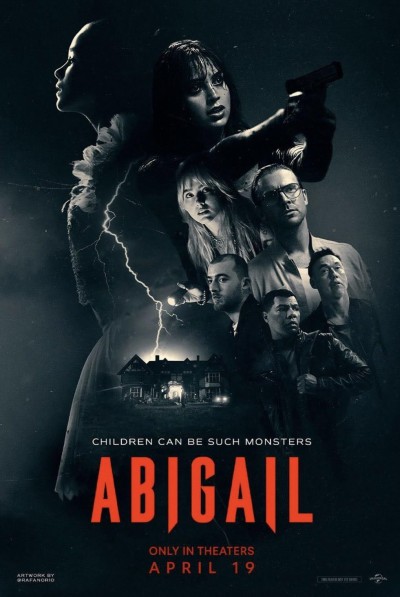
Trailers can do a lot of damage to a movie’s impact, and is definitely the case here. If the trailer hasn’t outright told us the idiot gangsters had kidnapped a little vampire girl, the first third could have been very suspenseful. To elaborate: we witness the kidnap of an innocent little girl; normally our sympathies would immediately be with the victim, worrying about her well-being. We explore the setting and characters are more or less established. Then a gruesome murder happens and the gangsters wonder, “Who’s killing our people? Why? The girl’s father is big in the (criminal) underworld and has a mysterious henchman named Valdez. What’s his story? Is it all a reckoning for past misdeeds?”
This potential homage to Bryan Singer’s semi-classic The Usual Suspects falls flat, as anyone who saw the trailer (and posters) already knows it’s the little girl who is pulling the strings and will murder the gang of misfits. It’s a total fail by the marketing department responsible, though you understand a wish to signal to horror fans it’s something for them. I guess it will pay a dividend in the end – though will keep people away who are not horror fans and might have gone, expecting a crime thriller. In any case, the big surprise is ruined and you can’t help wonder if that was the best way to go.
When Hitchcock released Psycho in 1960, no people were allowed into the cinema after the movie had started, and the audience had no idea what awaited them. You thought it was about Marion Crane stealing money and going on the run… until she got stabbed in the shower. That was a real shock. You won’t experience that here, and no-one cares for the first victim (played by the unfortunately now deceased Angus Cloud). At one time, a plot with a group of people in an enclosed space and a killer amongst them, would have made for fine suspense. The film makes no secret about taking inspiration from Agatha Christie’s 1939 thriller And Then There Were None (originally known by another, non-PC title!), and the same concept works in Alien – a fine horror/thriller in space with as much focus on characters as on suspense.
Today, it doesn’t seem to be enough. You instead end up with superficially drawn characters, about whom you just get to know enough to understand where they come from, and then you blast in with the gory action scenes. Don’t get me wrong; I liked the movie. But I would have liked it more if I had cared for the characters fate. They die here and there, they twist and they turn – and I just don’t care for them at all. The movie just has not the time to build its characters, or doesn’t want to take the time for it. Which is a pity but perhaps a sign of our frantic, “more, more, more” times. I recently saw a new BBC version of Christie’s story; while they took the time to tell it, they overloaded the plot because simple, storytelling has gone out the window in today’s film narrative.
The big problem is, the moment the main characters are established as gangsters, you don’t really feel pity for them. Why should you? They are mean spirited people – bad guys – and that is a minor flaw in the concept. Having largely sympathetic space travellers finding an alien life form is quite the opposite. We are supposed to side with them because it’s a vampire. But the necessary character building hasn’t been done, and because one twist isn’t enough the movie gives us two or three more. At the end we are supposed to root for Abigail (Weir) and last surviving gangster Joey (Barrera), fighting one of her own who turned against them. Directors Bettinelli-Olpin and Gillett are asking too much of us emotionally. Should we always side with the underdog? Why? In the end they are all monsters, therefore equally unlikable, though the movie tries to make us pity the little vampire, that big daddy doesn’t really seem to care about, until he shows up at the end.
The same directors did much better with Ready or Not, where you constantly felt for Samara Weaving’s character, thrown into the pit with an insane, blood-thirsty family. It doesn’t work well here, due to the basic premise. The leads are hardly more than sketches and even Joey doesn’t get much more than being a junkie mom who cares for her little boy. It’s not enough in the development department, folks! The actors all do good work – as far as I can tell. In Germany, you get distracted by the choice of dubbing actors: the voice actor for Cloud is hardly bearable and Kevin Durand’s German voice sounds almost like Patrick from SpongeBob Squarepants which is… distracting! Also, I feel in the German version, a lot of humour is lost, I guess something to do with line delivery. I can imagine a line like “I hate ballet!” being hilarious in English, but in the German version it has no real effect.
I don’t know any of the actors save Durand and supporting actor Esposito, but the greatness of Weir’s performance can’t be stressed enough. I did believe her helpless girl – or would if I hadn’t been spoiled before – as well as the frightening vampire. How many people can scare a bunch of grown-ups? Though, of course, it’s not new ground. We saw how effective such casting can be when Kirsten Dunst did it thirty years ago in Interview with a Vampire. The trope of the “scary, evil kid” in general reaches back until at least the 1950s. The production design is beautiful and luxurious for the old villa with bar and billiard table, a kitchen (strangely situated in the cellar?), secret tunnels in a library, a computerized control room and a pool underground for corpse disposal. Similarly great is Brian Tyler’s effective score which I would really like on CD instead of the digital release.
I was less impressed by Barrera who plays the main gangster role. She is set-up as the intelligent, tough and strong woman, but her actions constantly contradict this, e. g. she can’t imagine a kid could be evil. Why? Because she has a child of her own? Everyone knows children are natural monsters and only by time, education and life experience become “human”. Her colleagues turn out partly smarter than her there. And when she, a normal mortal, tells a vampire, “I’m going to kill you now!” you wonder how delusional she can be. There’s a big goof at the end, when she gets her mobile out to call her son and say goodbye. Weren’t all cells collected early on by Esposito’s character? If she had another, wouldn’t she have been able to call help? Why didn’t she? Perhaps I missed how she got it back – maybe in the control room when the two vampires were fighting. Someone please enlighten me? [Jim. I think when she’s in the control room unlocking the house, she sees the bag of collected phones and takes one from it. Not exactly highlighted though!]
Strangely, the movie is claimed to “re-imagine” Universal’s Dracula’s Daughter from 1936. Having seen the classic movie, I can hardly see any similarities, save the main character is a female vampire, and daughter of a vampire. Her father turns up in a last minute surprise, effectively adding nothing except for re-establishing the classic Hammer vampire, of the Christopher Lee variety. Still, despite these flaws this is a good, entertaining horror movie. It’s not really suspenseful as the main characters are disposable and not developed enough to care about. And the trailer… (see previous rant!) It’s also surprisingly gory. I remember a time when such a movie would have been for 18+ audiences in Germany; this is 16+. Well, it’s not the 1980s anymore and Catholic priests aren’t sitting in German censorship board meetings anymore, so… enjoy!
Dir: Matt Bettinelli-Olpin, Tyler Gillett Star: Melissa Barrera, Dan Stevens, Kathryn Newton, Will Catlett
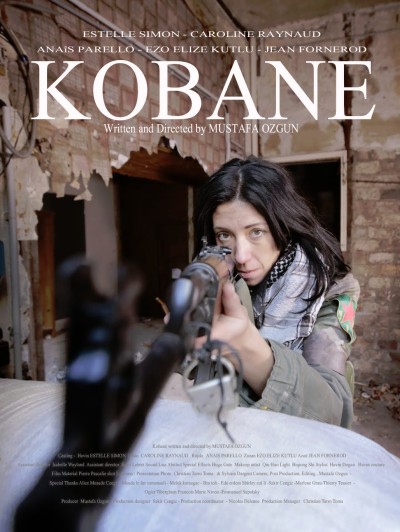
Yes, let’s get the obligatory Kurt Cobain joke out of the way quickly and painlessly. This is instead about the Kurdish city, located in northern Syria, which came under assault from forces belonging to the Islamic State (ISIS) in 2014-15. The defenders eventually repelled the attack in what has been called the Kurdish version of the Battle of Stalingrad. Even before that, we had covered how groups such as the YPJ put Kurdish women on the front-line, in a way rarely seen in modern warfare. One such woman is the focus of the film, Zehra (Arin), who is forced into a commanding role after backup is refused, and the city is cut off by the advancing ISIS army.
What follows is basically your traditional war movie, with a small group of defenders coming under attack from a numerically superior opponent. We’ve seen this often enough, in the likes of Zulu, Saving Private Ryan, 300, etc. But making the central character female is certainly unusual, and better still, the film ignores her gender entirely. Seriously, I don’t recall a single time it was so much as mentioned. Any Hollywood film would surely make an obvious point of it, with a male character questioning her competence, or worse still, shoehorning in a cringeworthy, Avengers: Endgame,”She’s got help” moment. Here, everyone is far too busy trying to survive to indulge in that kind of nonsense, and if you want an up-close street fighting experience, this certainly delivers.
However, there are issues. At a whopping 159 minutes, it’s overlong, and there are also times it feels you need a Wikipedia crash course on the complicated situation involving the Kurds, Turks and Syrians. For instance, there’s a point at which the defenders are set up for betrayal. Perhaps the logic of this makes sense if you know the situation, but it felt like I had to take the logic on trust. It’s also worth remembering that this is, at heart, a piece of propaganda, and sometimes it’s not exactly subtle about it. The ISIS soldiers feel as if they strayed in from a Disney class in villainy, and there are times when the story resorts to equally blatant emotional cliché.
I was impressed by the technical aspects, with a sense of destruction – they found a lot of razed city blocks – and deaths where people get shot, sit down, and slowly pass away. Reportedly, a lot of the cast were genuine fighters who took part in the siege: that’s a bit of a mixed blessing, as sometimes the lack of acting experience shines through. I’m not sure if Arin is among them: her IMDb listing has no other roles. But she’s fine, with a face which simply feels as if has been through a lot. The film is helped significantly by Mehmûd Berazî’s score, and I think it does work better that similarly-themed features such as Soeurs D’Armes or Sisters Apart, feeling more grounded and “real.”
The makers have put the whole thing up on YouTube with subtitles, below – and if it’s imperfect, I’d say it remains worth a look.




 I was intrigued by this, mostly due to the presence of Penn, an Australian champion in karate who appeared (albeit, in minor roles) in a number of Hong Kong action movies of the nineties. Her blonde hair made her stand out, as one of the few gwailo women to be seen in the genre. This TV movie, intended as a pilot for a series appears to have been her swing at stardom in the West. After it fell agonizingly short, she seems to have given up on acting entirely. She now appears to be the CEO of Signal 8 Security, a private security company back in Hong Kong – the celebrity clients listed on the company’s website appear to include Jackie Chan, ironically enough.
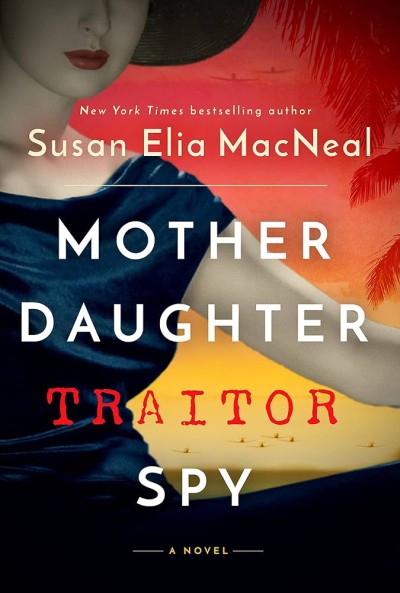 It’s often forgotten that America didn’t join World War II until almost three years after it started. In the early days, there was a strong isolationist movement, which saw the conflict as other countries’ problems, from people like aviator Charles Lindbergh and broad groups like the America First Committee. Indeed, there was a surprising amount of support for the Nazi regime: in February 1939, a rally at Madison Square Gardens drew twenty thousand people, and even after the war started in Europe, there was significant activity attempting to keep America out. It’s in this period, between the start of the war and the bombing of Pearl Harbor, that the story told here takes place.
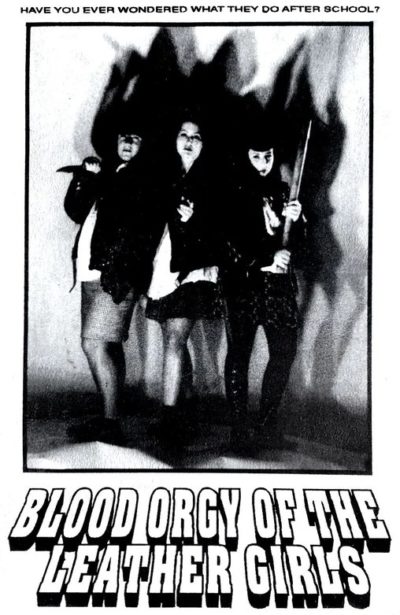 Incompetent on every level, this proves there’s a section of cult fandom which would praise a dog turd to the heavens, if told it had a “feminist” message. The title is probably – scratch that, certainly – the best thing about this, suggesting a throwback to the JD films of the fifties, filtered through the lens of Russ Meyer. “Suggesting” is the keyword here, since the reality is more like the finger-paintings of a developmentally challenged three-year-old. I guess the title is actually inspired by Blood Orgy of the She Devils, a film made in 1973 by Ted V. Mikels, one of the most inept directors ever to pick up a camera. This movie is poor enough Mikels would likely require his film’s name be taken off it.
 It feels as if South Korea is going through all the Olympic sports, making films based on each of them. Indeed, this film’s alternate title makes it a sequel to Take Off, about ski-jumping. I’ve seen two of the previous entries, covering archery (
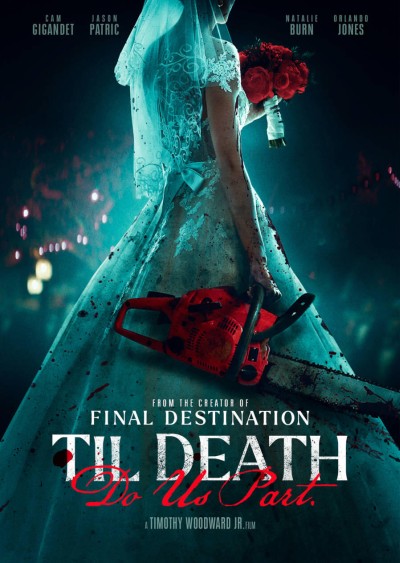 Great poster. Solid trailer. In the light of those, unfortunately, the film can only be described as a significant disappointment. While it’s good, and occasionally
  This is another in a recent burst of Thai action heroine movies, including
 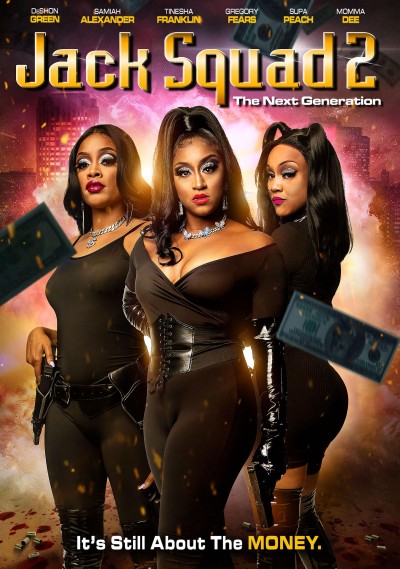 This is a question posed by the bad guy (Fears) towards the end of this, and of course, he provides the usual explanation in response: “It’s doing the same thing, expecting different results.” After watching this, I would choose to adjust it slightly. A valid definition of insanity is making the same movie, and expecting different results. Because it is, more or less, what Rankins has done here: it’s a remake of his own movie from fourteen years ago,
  This is an interesting idea. Take a real-life historical action heroine, whose life provides the underlying framework, and write a fictional story around that. Obviously, Annie Oakley really existed, and the broad strokes of her life here are accurate. If you’ve read
  ★★★
★★★ Today, it doesn’t seem to be enough. You instead end up with superficially drawn characters, about whom you just get to know enough to understand where they come from, and then you blast in with the gory action scenes. Don’t get me wrong; I liked the movie. But I would have liked it more if I had cared for the characters fate. They die here and there, they twist and they turn – and I just don’t care for them at all. The movie just has not the time to build its characters, or doesn’t want to take the time for it. Which is a pity but perhaps a sign of our frantic, “more, more, more” times. I recently saw a new BBC version of Christie’s story; while they took the time to tell it, they overloaded the plot because simple, storytelling has gone out the window in today’s film narrative.
 I was less impressed by Barrera who plays the main gangster role. She is set-up as the intelligent, tough and strong woman, but her actions constantly contradict this, e. g. she can’t imagine a kid could be evil. Why? Because she has a child of her own? Everyone knows children are natural monsters and only by time, education and life experience become “human”. Her colleagues turn out partly smarter than her there. And when she, a normal mortal, tells a vampire, “I’m going to kill you now!” you wonder how delusional she can be. There’s a big goof at the end, when she gets her mobile out to call her son and say goodbye. Weren’t all cells collected early on by Esposito’s character? If she had another, wouldn’t she have been able to call help? Why didn’t she? Perhaps I missed how she got it back – maybe in the control room when the two vampires were fighting. Someone please enlighten me? [Jim. I
  Yes, let’s get the obligatory Kurt Cobain joke out of the way quickly and painlessly. This is instead about the Kurdish city, located in northern Syria, which came under assault from forces belonging to the Islamic State (ISIS) in 2014-15. The defenders eventually repelled the attack in what has been called the Kurdish version of the Battle of Stalingrad. Even before that, we had